

1,374,720 active attorneys in the United States. That's the 2025 count from the American Bar Association. And yet, a SaaS founder I talked to last month watched his team spend three weeks Googling family law firms in Texas just to build a 200-contact spreadsheet. Half the emails bounced.
That's the gap. Massive supply of lawyers out there. Terrible tools to actually reach them. Whether you call it an attorney email list or a lawyer email list, the challenge is the same: finding contacts that actually work.
This guide breaks down how to get a reliable attorney email list. What works, what's a waste of money, and where the real opportunities sit in 2026.
Video: How to Find the Best Email to Contact?
- What Is an Attorney Email List?
- Why Businesses Need Attorney Email Lists in 2026
- How to Get an Attorney Email List: 4 Methods Compared
- What to Look for in an Attorney Email List Provider
- Real Companies Targeting Attorneys with Email Outreach
- Attorney Email Outreach Best Practices
- Attorney Email List by State: Where the Opportunities Are
- FAQ
What Is an Attorney Email List?
An attorney email list is a database of verified contact information for licensed lawyers and law firms. Simple as that. But the difference between a good one and a garbage one? Night and day.
A solid lawyers email list includes more than just name plus email. You want practice area (corporate, criminal, family, PI...), firm name, office address, phone number, state bar status, and ideally some indication of firm size. The more granular the data, the better your outreach converts.
Think of it this way: emailing 5,000 random attorneys about your legal billing software is spam. Emailing 500 solo practitioners who handle divorce cases in Florida about your family law CRM? That's a conversation starter. Same goes for a divorce attorney email list, a criminal attorney email list, or a personal injury attorney email list. The more niche your targeting, the better your results.
What Data Does a Good Attorney Email List Include?
The basics you'd expect from any attorney email list: name, email, phone. But that's table stakes.
What separates a useful attorney mailing list from a glorified phonebook: practice area tags, geographic data (state, city, zip), firm website, number of attorneys at the firm, Google Business profile data (rating, reviews, hours), and year of bar admission when available.
If your provider can't tell you whether an attorney handles criminal defense or mergers and acquisitions, you're buying a contact dump. Not a lead list.
Why Businesses Need Attorney Email Lists in 2026
The $380 Billion Legal Services Opportunity
The US legal services market is worth $380.36 billion in 2026, according to Mordor Intelligence. Growing at 2.82% CAGR. Projected to hit $437 billion by 2031.
That's not some niche vertical. That's bigger than the entire US advertising industry.
And here's what makes it especially attractive for B2B outreach: legal services show the highest commercial email response rate of any sector at 10%, versus a 4.5% B2B average (Hunter.io / The Digital Bloom, 2025). Attorneys respond at more than double the typical rate.
Why? Because lawyers are busy, they rely on email, and they actually read pitches that are relevant to their practice. A corporate attorney who handles M&A deals will open an email about deal room software. A PI lawyer will click through on case management tools.
The ROI math is simple. Email marketing returns $36 to $42 for every $1 spent (HubSpot / DMA, 2025). Combine that with a 10% response rate in legal, and an attorney email database becomes one of the most cost-effective B2B prospecting tools you can buy.
Here's a number that reframes the whole thing. As of August 2026, Scrap.io indexes 166,441 lawyer establishments across the US pulled live from Google Maps, of which 76,057 have a usable email (about 46%) and 105,787 have a website (about 64%). That's the real, addressable pool. Not a recycled CSV. The actual firms you can reach today (data from Scrap.io, updated August 2026).
Who Buys Attorney Email Lists? (Real Use Cases)
Not just legal tech companies. (Though they're the obvious ones.)
Here's who's actually buying attorney email addresses lists in 2026:
Legal tech SaaS companies. Practice management tools (Clio, Smokeball), CRM platforms (Lawmatics), billing software, document automation. Attorney leads for legal tech companies are the lifeblood of their growth. They all need targeted lawyer mailing lists to fuel their sales pipelines.
Litigation funding firms. They need to reach attorneys handling big cases. Personal injury, class actions, mass torts. A law firm email database filtered by practice area is how they find deal flow.
Marketing agencies. Agencies specializing in legal marketing (FindLaw, Rankings.io) need fresh attorney contact lists to pitch their SEO and PPC services.
Court reporting and legal services. Process servers, expert witness networks, court reporters, translation services. They sell to lawyers, so they need to reach lawyers.
Insurance companies. Defense-side carriers need to build panels of attorneys. That requires reaching thousands of firms across multiple states and specialties.
Recruiters. Legal headhunters targeting lateral partners at AmLaw 200 firms. The contacts are public-ish (most firm websites list attorneys), but the emails? Those take work to compile.
How to Get an Attorney Email List: 4 Methods Compared
Four ways to build a list. One of them is worth your time. Let's rank them honestly.
1. Buy a Pre-Built Attorney Database
The traditional route. Companies like UpLead, LakeB2B, and BookYourData sell pre-packaged attorney mailing lists. Prices range from $0.10 to $1+ per contact.
The upside: fast. You pay, you download, you start emailing.
The downside: everyone else is doing the same thing. These lists get resold dozens of times. The data goes stale within months. And bounce rates of 25-40% are common. Not great when your sender reputation is on the line.
Don't take my word for it. On r/b2bmarketing, the complaint about bought lists is a broken record: big databases stuffed with outdated contacts, generic info@ and support@ inboxes, and leads every competitor is already hammering. Sound like a deal to you?
Also, no real filtering. You might get "attorneys in California" but not "immigration attorneys in Los Angeles with 4+ Google reviews and fewer than 10 employees." That level of precision requires something different.
For a deeper dive on firm-level data, check out this law firm email list guide.
2. Scrape Real-Time Data from Google Maps
This is where things get interesting.
Google Maps has listings for virtually every law firm in the US. Name, address, phone, website, reviews, hours, business category. It's all there. The problem? Extracting it at scale is a pain if you're doing it manually.
Tools like Scrap.io automate email finding on Google Maps. You search "personal injury attorney" in Miami, apply filters (rating, reviews, firm size), and export verified lawyer email addresses USA-wide: a complete law firm email database with phone numbers and business details. The data is fresh because it's pulled in real time, not sitting in a database aging like milk.
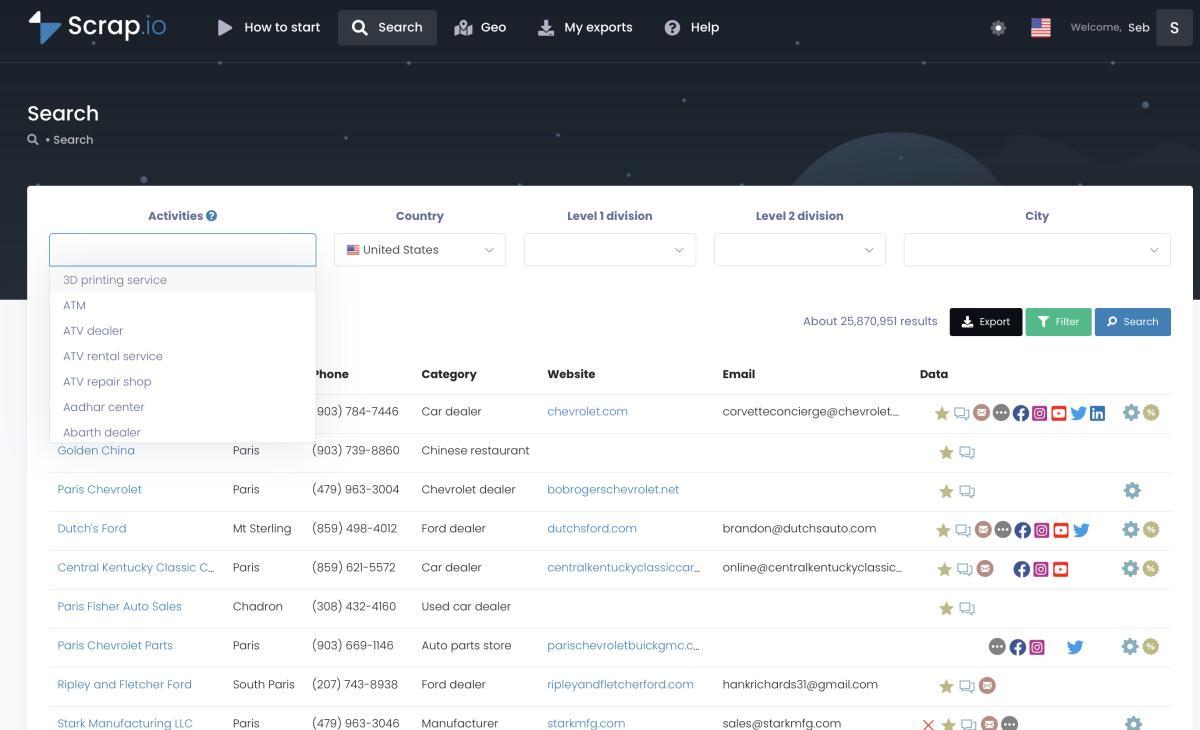
Remember that 166,441 lawyer figure? Here's the part that matters for your budget: only 76,057 of those firms have an email on file. With real-time filtering, you extract just those. You don't burn a single credit on the 90,000 firms you can't email anyway. That's the whole game.
The cost difference compared to traditional providers is dramatic. We're talking less than $0.01 per contact versus $0.40 to $1.00 for stale data.
And because you're extracting directly from Google Maps listings, you get data points that static databases never include: review count, average rating, photos, business hours, and whether the firm is currently open or permanently closed. (That last one saves you from emailing dead firms.)
Community threads back this up. On r/coldemail, one user framed the exact workflow: "Let's say I scrape a list of companies from Google Business Profiles. How can I get the emails of the business owners/decision makers from that list?" That's precisely the problem real-time extraction solves. Pull the listing, classify the email, reach out.
Video: Scrap.io - How to Start?
3. Build Your Own List Manually
Bar association directories. Law firm websites. LinkedIn. State bar lookup tools.
Can you build an attorney email list this way? Sure. Will it take you three months to get 500 usable contacts? Also yes.
Manual list building works for hyper-targeted campaigns where you need 50 very specific attorneys. It does not work for scale. And most bar directories don't even list email addresses. Just office phone numbers and mailing addresses.
If you're going this route for a niche like personal injury attorney contacts, you'll spend more on labor than you would on a data subscription.
4. Use Bar Association Directories
The ABA and state bars maintain directories of licensed attorneys. Some are searchable online. Most are... not great for marketing purposes.
Here's why: bar directories prioritize regulatory compliance, not lead generation. You'll get names and bar numbers. Maybe an office address. Rarely an email. And the search interfaces feel like they were built in 2004. (Because they were.)
That said, bar directories are useful for one thing: verification. Cross-reference your attorney email database against bar status to confirm licenses are active. Nobody wants to pitch legal software to a disbarred attorney.
What to Look for in an Attorney Email List Provider
Data Freshness and Verification
This is the single most important factor. A lawyer contact database with 95% accuracy today is worth ten times more than a 200,000-contact list that's 60% accurate.
Ask any provider: when was this data last verified? If they can't give you a specific answer, or if the answer is "six months ago," walk away.
Scrap.io pulls data in real time from Google Maps. That means the email you export on Tuesday was verified on Tuesday. Not last quarter. Not "regularly updated." Tuesday.
For a deeper look at why freshness matters, read the email validator guide.
Filtering by Practice Area, State, and Firm Size
A 1.37-million-record attorney email database is useless if you can't slice it. You need filters.
Practice area. Criminal defense? Corporate law? Divorce? Immigration? The best providers let you filter by Google Maps business category, which maps closely to practice areas.
Geography. State-level is the minimum. City-level is better. Radius-based search (everyone within 25 miles of downtown Chicago) is ideal.
Firm size. Solo practitioners have totally different needs than 50-attorney firms. If your product targets small firms, emailing BigLaw is a waste of everyone's time.
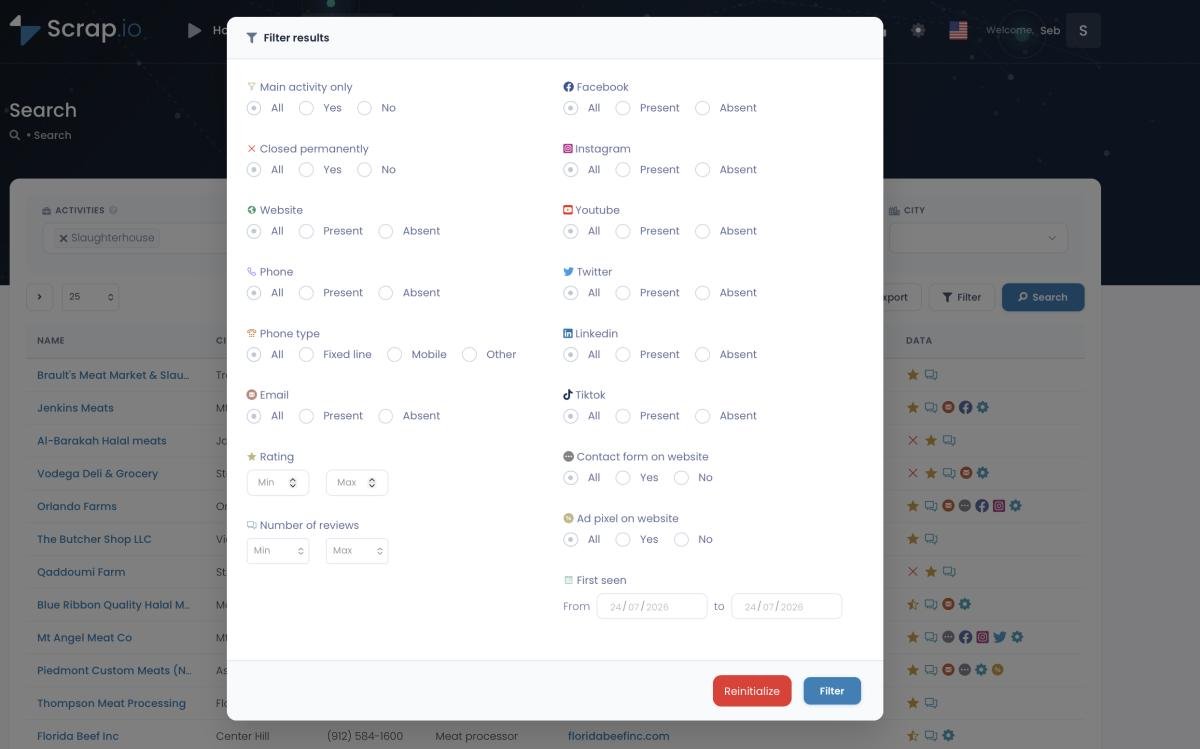
The trick most people miss: apply these filters before extraction, not after. That's how you go from 166,441 raw listings to just the 76,057 with an email, without paying for the rest. See it in action below.
Video: Finding Clients Through Google Maps Filters
Compliance and Deliverability
Two things that will kill your campaign before it starts: legal trouble and email bounces.
On the legal side, B2B email outreach is legal under CAN-SPAM. But you need to follow the rules. Clear opt-out mechanism. Honest subject lines. Your physical business address in the footer. For more details, see the full cold email compliance guide.
On deliverability: aim for a bounce rate under 2%. Anything above 5% and your sending domain starts taking damage. Real-time verified data keeps you well below that threshold.
Real Companies Targeting Attorneys with Email Outreach
This isn't theoretical. Real companies spend real money reaching attorneys by email every single day.
Clio, Legal Practice Management SaaS
Clio is the 800-pound gorilla in legal practice management. Cloud-based CRM, billing, doc management, the full stack. Over 150,000 legal professionals use it. Revenue north of $200 million ARR.
Their growth engine? Email. Clio Grow (their CRM module) tracks email engagement, opens, clicks, tied directly to client acquisition and revenue. They need attorney email lists at scale, filtered by firm size and practice area, to keep that pipeline full.
Lawmatics, Marketing Automation for Law Firms
Lawmatics bills itself as the #1 CRM and marketing automation platform built specifically for law firms. Email drip campaigns, intake automation, lead nurturing, all attorney-focused.
Their own case studies tell the story. Sterling Immigration Ltd doubled their client acquisition rate processing hundreds of leads per month. Attorney Taylor Darcy saves 20 hours per week through automated marketing workflows. Companies like Lawmatics don't just sell to attorneys who use email. They prove that email outreach to attorneys works.
Other Legal Tech Players
Smokeball (practice management with built-in email marketing and 14,000+ legal form templates), FindLaw by Thomson Reuters (the largest online legal directory and marketing platform, with one case study showing a 28% year-over-year website traffic increase), and Ghidotti Communications (a B2B marketing agency that drove 9,880 new website visits and 9,500 unique visitors for a law firm through content plus email strategy).
All of them need fresh attorney contact data. All of them rely on a targeted lawyer email list or attorney mailing list to fuel their pipeline. Pick the wrong data source and no amount of clever lead generation software saves the campaign.
Attorney Email Outreach Best Practices
Personalization by Practice Area
Generic emails to attorneys get deleted. Period. Doesn't matter if you paid $5,000 for a premium lawyer email list. Untargeted outreach is untargeted outreach.
A divorce attorney in Nashville doesn't care about your M&A due diligence tool. A corporate lawyer in Manhattan doesn't need your personal injury case management system. The more specific your message, the higher your response rate.
If you're wondering how to reach lawyers for B2B marketing, this is how. Reference their practice area in the subject line. Mention their state or city. If they have good Google reviews, say so. ("Saw your 4.8-star rating on Google, your clients clearly love working with you.") That's not flattery. That's showing you did 30 seconds of homework.
For templates and frameworks, check out this guide on how to write cold email that converts.
Timing and Frequency
Tuesdays and Wednesdays between 8 and 10 AM local time. That's the sweet spot for attorney inboxes, based on cross-industry B2B email benchmarks (Martal / LevelUp Leads, 2025-2026).
Don't email more than twice per week to the same contact. Three follow-ups max. After that, you're not persistent. You're annoying. And attorneys know exactly how to send a cease-and-desist. (Don't test them.)
Compliance Tips (CAN-SPAM, Bar Rules)
B2B cold email to attorneys is 100% legal under CAN-SPAM. But you need to follow the rules:
- Clear sender identification. Your real name, company name, physical address.
- Honest subject lines. No "Re:" tricks, no fake urgency.
- One-click opt-out. Must work within 10 business days.
- No purchased lists from sketchy sources. If the provider can't tell you where the data comes from, don't buy it.
One extra wrinkle with attorneys: some state bars have specific rules about solicitation. These mostly apply to attorney-to-client communications, not B2B vendor outreach. But it's worth checking. Florida and Texas bars are particularly strict.
Read the complete breakdown in the cold emailing strategy guide.
Attorney Email List by State: Where the Opportunities Are
Not all states are created equal. Here's where the attorneys actually are, and what makes each market interesting:
| State | Active Attorneys | Key Opportunity |
|---|---|---|
| New York | 190,015 | Highest concentration, corporate and finance law dominates |
| California | 181,048 | Tech law, entertainment, immigration, massive diversity |
| Texas | 99,867 | Fastest growth (+15% in 10 years), energy law hub |
| Florida | 80,976 | Personal injury, real estate, elder law hotspot |
| Washington D.C. | 65,824 | Government, regulatory, lobbying, unique market |
| Illinois | 61,945 | Corporate, IP, class action stronghold |
| Pennsylvania | 47,764 | Healthcare, pharmaceuticals, insurance |
| Massachusetts | 42,653 | Biotech, higher education, financial services |
| New Jersey | 39,670 | Suburban practices, heavy cross-border work with NY |
| Ohio | 37,086 | Manufacturing, insurance defense |
Source: ABA National Lawyer Population Survey, 2025
New York and California alone account for over 370,000 active attorneys. If your product serves lawyers in those states, you're looking at a TAM that dwarfs most B2B verticals.
But the less obvious states sometimes deliver better results. Texas is growing fast. Florida's PI market is enormous. And D.C. attorneys in government relations are underserved by most legal tech vendors. An attorney email list filtered by state lets you test smaller markets before going broad.
FAQ
How much does an attorney email list cost?
Prices swing wildly. If you want to buy attorney email lists for marketing, traditional providers charge $0.10 to $1+ per contact for static data, so a 10,000-contact attorney mailing list runs $1,000 to $10,000+. Real-time platforms like Scrap.io offer subscription access with fresher data at a fraction of the cost. You can start with a 7-day free trial and 100 leads to test before committing. (And no, there's no reliable free attorney email list download out there. "Free" lists are either outdated, tiny, or both.)
How do I build an attorney email list from Google Maps?
Four steps, start to finish:
- Search the "lawyer" category plus your target state or city.
- Apply filters (email present, minimum rating, firm size) before extraction.
- Preview the free result count to see your addressable pool.
- Export a verified CSV with names, emails, phones, and social profiles.
Are attorney email lists legal to use?
Yes. B2B email outreach to attorneys is legal in the US under CAN-SPAM, provided you include a clear opt-out mechanism, honest subject lines, and your business address. Always check state bar advertising rules for additional restrictions. Some states (Florida, Texas) have specific solicitation guidelines.
How do I verify attorney email addresses?
Use an email verification tool to check for invalid, disposable, or catch-all addresses before sending. Scrap.io verifies emails in real time at export. Aim for a bounce rate under 2%. Anything higher and you're risking your sender reputation, which takes months to repair.
Can I filter attorney email lists by practice area?
The best providers allow filtering by practice area. You can get an attorney email list by practice area covering personal injury, family law, criminal defense, corporate, and more. Scrap.io lets you filter by Google Maps business category, geographic area, firm size, and review ratings. Divorce attorneys in Phoenix with 4+ stars and under 10 employees? Done. It's a legal professional contact database built for 2026, not a recycled spreadsheet from 2023.
What's the average response rate for cold emails to attorneys?
Legal services have the highest commercial email response rate at approximately 10%, well above the B2B average of 4.5% (Hunter.io / Martal, 2025-2026). Personalized emails referencing the attorney's practice area and location perform best. Generic blasts perform worst. No surprise there.
Generate a list of attorney with Scrap.io