


- Why Bar Email Lists Matter in 2026
- US Bar Industry in 2026: Key Market Data
- How to Get a Bar Email List
- What a Quality Bar Email List Should Include
- Who Needs Bar Owner Email Lists? Real B2B Use Cases
- How to Use Your Bar Email List for Cold Outreach
- Compliance: CAN-SPAM, GDPR & Data Privacy
- FAQ: Bar Email Lists
A buddy of mine sells cocktail equipment wholesale. Last year he bought a "premium bar email list" from one of those big-name data brokers. Paid north of $800 for 5,000 contacts. The bounce rate? 38%. Almost four out of ten emails went nowhere. The owners had moved on, the businesses had shut down, or the addresses were just plain wrong.
Brutal.
That's the reality with static bar contact databases. And it's a real problem when the industry you're chasing is worth $39 billion. You're not selling to nobody. You're selling to the wrong nobodies, because your list rotted before you even opened the CSV.
Here's what actually works in 2026 for building a bar contact database that doesn't torch your outreach budget. No fluff, no recycled advice. Let's get into it.
Video: Scrap.io - How to Start?
Why Bar Email Lists Matter in 2026
The $39 Billion Opportunity
The US Bars & Nightclubs industry hit $39.0 billion in revenue in 2026, with 70,015 businesses operating across the country (IBISWorld). That's a 3.0% compound annual growth rate over the past five years. The broader US Cafes & Bars market? Projected to reach $159.45 billion by 2031 at a 9.83% CAGR (Mordor Intelligence).
So there's no shortage of bars to sell to. POS systems, payment processors, liquor distributors, marketing agencies, entertainment platforms: they're all fighting for a slice of this pie.
But getting in front of bar owners through email? That's where it gets tricky.
Why Finding Quality Bar Contacts Is Harder Than You Think
Bar owners aren't sitting behind a desk refreshing their inbox. They're behind the counter at 11 PM on a Friday, wrestling with a broken ice machine and a bartender who just called in sick. Their email? Often a generic Gmail they check somewhere between supplier orders and a health inspection.
And the industry has brutal turnover. New spots open, old ones close, constantly. A bar contact list that was 90% accurate in January might be 60% accurate by June. Static databases simply can't keep up with that churn. (The 2.2% CAGR in business count sounds tiny until you remember that's net growth. The actual open-and-close rate is far higher.)
One community thread on Quora captures the frustration perfectly. In "What are good ways a restaurant/bar can get people to subscribe to their email list?", operators keep circling back to the same headache: contact data goes stale fast, and the owner is the hardest person in the building to pin down. If reaching them is hard for their own suppliers, imagine doing it cold with a list somebody sold you last quarter.
The restaurant industry has the exact same problem, by the way.
Same churn, same stale-list tax.
US Bar Industry in 2026: Key Market Data
Market Size and Growth
Let's put some numbers on the table:
| Metric | Value | Source |
|---|---|---|
| US Bars & Nightclubs revenue | $39.0B | IBISWorld, 2026 |
| Number of bar businesses (industry) | 70,015 | IBISWorld, 2026 |
| US bars indexed on Google Maps | 228,084 | Scrap.io, Aug 2026 |
| US bars with a verified email | 78,805 | Scrap.io, Aug 2026 |
| US bars with a website | 133,275 | Scrap.io, Aug 2026 |
| Market projection (2031) | $159.45B | Mordor Intelligence |
Notice the gap between those first two data lines and the Scrap.io ones. IBISWorld counts 70,015 "bars and nightclubs" as a formal industry classification. Google Maps, which is where people actually find and rate these places, references far more: Scrap.io sees 228,084 bar listings in the US, of which 78,805 have a verified email and 133,275 have a website (Scrap.io, August 2026). That's nearly 79,000 reachable owners, pulled in real time, filtered before you spend a single credit.
These aren't hypothetical numbers. This is a mature, growing industry with tens of thousands of decision-makers who need products and services every single day.
Geographic Hotspots: States and Cities with the Most Bars
Not all states are created equal when it comes to bar density.
States with the most bars per capita: Wisconsin, Montana, North Dakota, Wyoming, South Dakota (Insider Monkey / Yahoo Finance). Wisconsin alone is basically bar country. You can't walk three blocks in Milwaukee without passing one.
Cities with the most bars per capita (Statista):
- Las Vegas: 51.81 per 100K residents
- Cleveland: 50.88 per 100K residents
- New Orleans: 47.33 per 100K residents
The biggest markets by raw volume? New York, California, Texas, Florida, Illinois. If you're building a targeted bar mailing list, start with these hotspots and work outward.
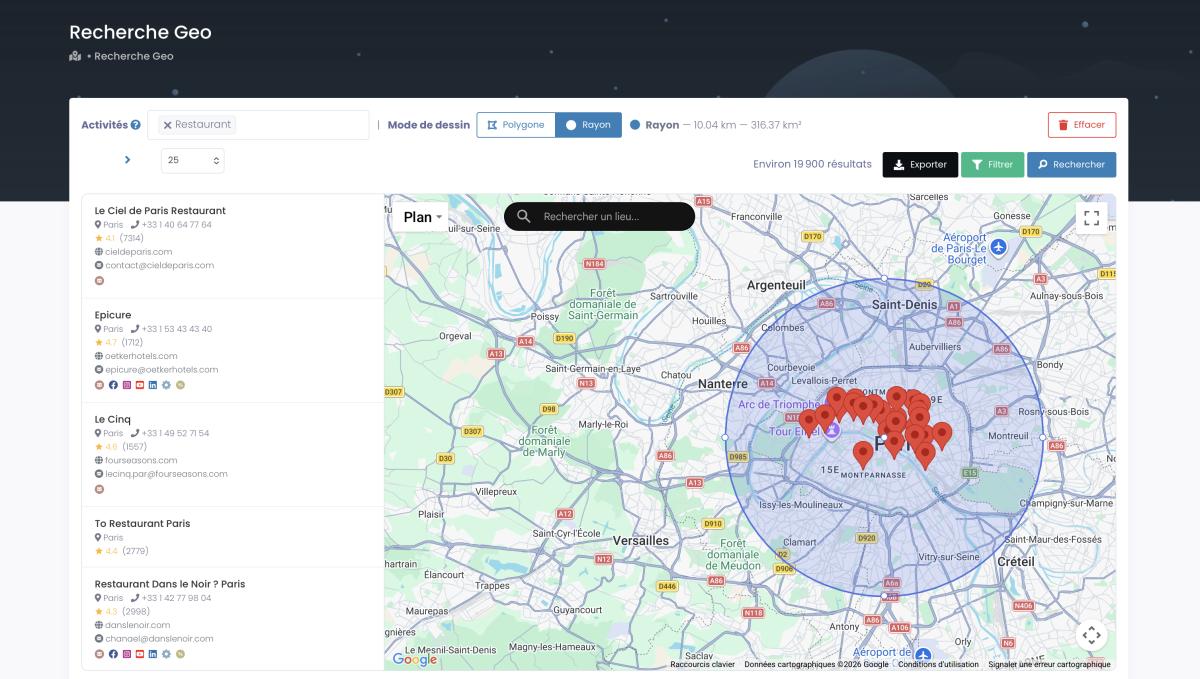
Platforms like Scrap.io let you pull fresh bar contact data from Google Maps in real time, right down to a single neighborhood or across an entire state.
How to Get a Bar Email List
Three paths. Each with trade-offs. Let me walk you through all of them, warts and all.
Option 1: Static Email List Providers
This is the "buy a file and go" route. Companies like BookYourData sell pre-built bar and nightclub databases: BookYourData advertises 17,314 contacts in their nightclub and bar segment, typically $0.10–$0.50 per contact. Openmart markets a bar database of 60K+ owner contacts and claims to keep it "real-time." Binary Clues sells a US bars-and-pubs executive email list broken down by job title.
The catch with the truly static ones: you're buying a snapshot frozen in time. By the time you download the CSV and load it into your CRM, some of those bars have already changed hands, closed, or switched emails. In an industry where roughly 60% of bars fail within the first year, that decay happens fast. And when your competitor bought the same "exclusive" list last week, you're both hammering the same inboxes. Not exactly a warm welcome.
Option 2: Real-Time Data from Google Maps
This is the approach that's picked up serious steam since 2024. Instead of buying a static file, you scrape live business data straight from Google Maps: names, emails, phone numbers, addresses, ratings, review counts, websites, social profiles. All public information the businesses posted themselves.
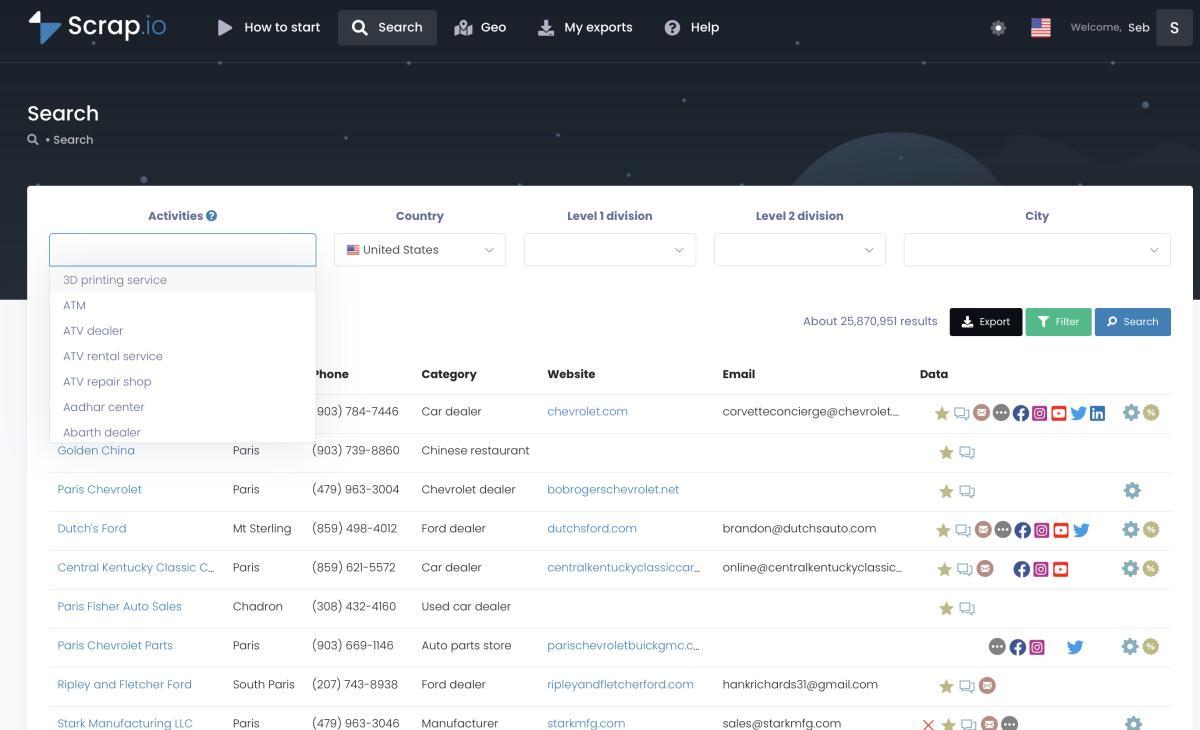
Tools like Scrap.io automate the whole thing. Type "bars" plus your target location, apply filters (minimum reviews, rating threshold, has email, has website), and export. 10,000 leads for about $50. That's roughly $0.005 per contact versus $0.10–$0.50 with static providers. Do the math: up to 100x cheaper.
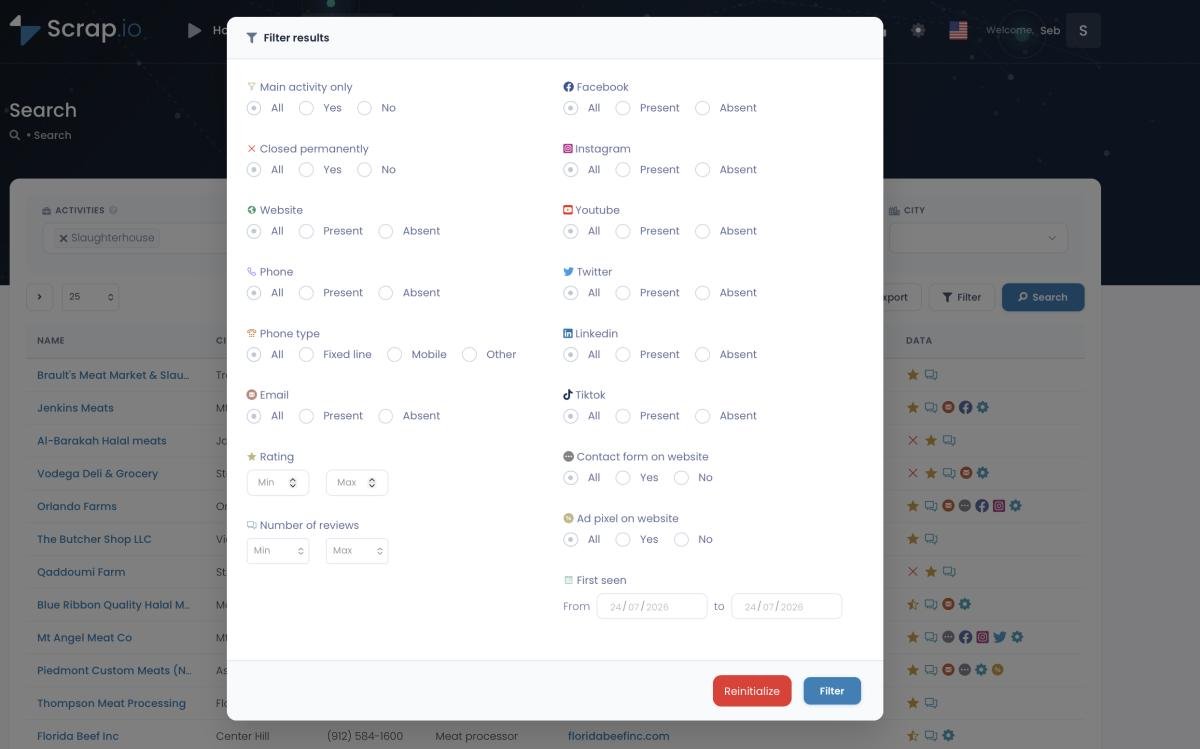
But the real edge isn't price. It's freshness. You're pulling data that's current right now, not data that was accurate six months ago. And because Scrap.io applies filters before credits are consumed, you never pay for a bar that has no email or shut down last spring. Zero wasted spend.
Need to cover a whole state or the entire country in one shot? That's exactly what the walkthrough below shows.
Video: How to Scrape Local Leads at the Country Level
For the technical side of pulling contacts at scale, this guide on how to find emails on Google Maps breaks down the full method.
See it live before you commit. Run a free count of every bar in your target city or state on Scrap.io, filter to the 78,805 US bars with a verified email, and pull your first 100 bar leads free. Real-time Google Maps data, 195 countries, filter before you pay. 100 free leads included.
Option 3: Manual Research (LinkedIn, Directories)
You can absolutely build a bar prospect list by hand. LinkedIn, Yelp, state business registries, Google Maps one listing at a time. It all works. For a two-person team targeting 50 bars in one city, it might even make sense.
At scale? Forget it. You'll burn 2–3 minutes per contact researching, verifying, copy-pasting. At that rate, a 1,000-contact list eats 50+ hours. That's a full work-week and a half of clicking, and by the time you finish, the contacts you found on day one are already going stale.
| Method | Cost per contact | Data freshness | Time investment | Scale |
|---|---|---|---|---|
| Static list providers | $0.10–$0.50 | Weeks to months old | Low | Medium |
| Real-time scraping (Scrap.io) | ~$0.005 | Live | Low | High |
| Manual research | Free (labor cost) | Current but slow | Very high | Very low |
Honestly, the math isn't close.
What a Quality Bar Email List Should Include
Essential Data Points
A bar mailing list worth paying for should include: business name, owner or manager name, email address (ideally a direct contact, not info@), phone number, physical address, Google Maps rating, number of reviews (a solid proxy for bar size and popularity), website URL, and social media profiles.
The more data points per contact, the sharper you can segment. A sports bar with 500 reviews and a 4.5 rating in downtown Austin is a completely different prospect than a dive bar with 12 reviews in rural Montana. Same category on paper. Totally different pitch in practice.
Freshness vs. Static Lists: Why It Matters
Email marketing delivers a 4,400% ROI according to SmartInsights/DMA. But that number assumes your emails actually land in inboxes. Every bounce chips away at your sender reputation, which drags deliverability down for your entire domain. One bad list can poison every campaign that follows.
Static lists degrade at roughly 2–3% per month in the bar industry. After six months, you're staring at 12–18% dead addresses. Real-time scraping tools fix this automatically: you get fresh data every single time you run a search. No decay, because nothing sits in storage.
Who Needs Bar Owner Email Lists? Real B2B Use Cases
POS & Bar Tech Companies (Toast, Untappd, BevSpot)
Toast serves thousands of bars and restaurants with POS, payments, and marketing tools. Untappd for Business powers digital menus and promotions for 20,000+ venues across 75+ countries. BevSpot handles inventory management for bars: stock tracking, supplier orders, analytics.
These SaaS companies need to reach bar owners at scale. Cold email is one of their primary acquisition channels. And they need verified bar email contacts accurate enough to justify the time their SDR teams spend personalizing each message. Garbage in, garbage out.
Beverage Distributors & Brands
Craft beer brands, spirits companies, wine distributors: they all want shelf space (or tap handles) in bars. A targeted nightclub email database lets them reach decision-makers directly instead of crawling through three layers of distribution.
Marketing Agencies Targeting Nightlife
Agencies specializing in hospitality and nightlife need a constant pipeline of bar owner leads for cold campaigns. The hotel email marketing space runs on the same dynamics: agencies prospect aggressively to fill their client rosters, and the freshest list wins.
Event & Entertainment Companies
Trivia night providers, live music booking platforms, DJ agencies, event ticketing companies: they all sell directly to bars. A segmented bar contact database lets them target by geography, bar size, and venue type. If your remit stretches beyond bars into halls and clubs, the same playbook powers an event venue email list too.
Reach bar owners the way Toast and Untappd do. Scrap.io pulls verified bar contacts straight from Google Maps: owner name, classified emails, phone type, rating, reviews, and socials, all on live data. Start with 100 free bar leads and judge the quality yourself.
How to Use Your Bar Email List for Cold Outreach
Segmentation Tips for Bar Outreach
Don't blast the same email to every bar on your list. That's amateur hour. Segment by:
- Geography: a bar in Miami Beach has different needs than one in Minneapolis.
- Size (use review count as proxy): high-review bars are established; low-review bars might be newer and hungrier for solutions.
- Type: sports bars, cocktail lounges, dive bars, wine bars. The pitch should match the venue.
- Rating: a 3.2-star bar might need reputation management; a 4.8-star bar probably doesn't.
The cold emailing strategy you pick matters as much as the list itself. A perfect list with a lazy sequence still flops.
Cold Email Best Practices for Bar Owners
Bar owners are drowning in sales pitches. Your email has about 3 seconds to prove it's worth reading.
Keep it under 125 words. Lead with something specific about their bar: their Google rating, a recent review, their location. Generic "Dear Bar Owner" emails get trashed on sight.
Cold emails customized around pain points yield 30%+ response rates according to SmartLead.ai. That's not a typo. But the key word is "customized." A 12-person roofing equipment supplier in Nashville saw callbacks jump from 3 per week to 11 after they switched from generic to personalized cold emails using Google Maps data. Same list size. Different homework.
Where do people even find those owner emails to begin with? On Quora's "Where can I find the email addresses of local restaurant owners?", the consensus is blunt: bought lists disappoint, and pulling contacts directly from public listings beats a broker's CSV nearly every time. Bars sit in the same bucket.
Need help with the actual copy? This guide on how to write cold emails that get replies covers the structure.
Video: How to Find the Best Email to Contact?
Expected Open & Response Rates
The restaurant industry sees email open rates 12% above average (Tablein). Bars fall in the same hospitality bucket, so plan for similar behavior.
For cold B2B outreach to bar owners specifically, here's what a clean, segmented list tends to deliver:
- Open rate: 25–40% (with a good subject line and a warm-ish approach)
- Reply rate: 3–8% on the first email
- Reply rate after follow-ups: 8–15% (more than half of responses come from follow-ups, not the initial send)
One bar client described the impact plainly: a single email generated a 2% response rate, which brought 30 paying customers through the door (Bar & Restaurant Magazine). That's the power of a targeted bar and nightclub mailing list. Not magic. Just fresh data and a message that respects the reader's time.
Filter, export, launch. On Scrap.io, filter US bars by rating, review count, and "has email," export the segment to CSV or Excel, and drop it into your cold email tool. 100 verified bar leads free, then roughly $50 per 10,000 contacts. No stale broker file, no wasted credits.
Compliance: CAN-SPAM, GDPR & Data Privacy
Using Publicly Available Business Data
All data from Google Maps is public business information that companies posted voluntarily. Under US law, using publicly available business contact data for B2B outreach is legal.
CAN-SPAM (the US email regulation) doesn't require opt-in for B2B email. It requires accurate header information, a clear subject line, a physical mailing address, and (this is the big one) a working opt-out mechanism. Honor unsubscribe requests within 10 business days. Period.
Best Practices to Stay Compliant
- Always include an unsubscribe link in every email.
- Never use deceptive subject lines.
- Include your business physical address.
- Honor opt-out requests promptly.
- For EU-based bar contacts, GDPR applies: you need a legitimate-interest basis, and consent rules are stricter.
- Keep your bar prospect list clean: remove bounces and unsubscribes before every campaign.
Scrap.io only extracts publicly available business data, is GDPR and CCPA compliant, and every data point is traceable to its source. No mystery databases, no scraped personal Gmails. Just business contacts that companies published themselves. For a wider view of what's on the market and what to avoid, our honest breakdown on buying email lists in 2026 and the email database hub both dig into compliance across industries.
FAQ: Bar Email Lists
How much does a bar email list cost?
It swings wildly. Static providers like BookYourData charge $0.10–$0.50 per contact, so 10,000 bar contacts run $1,000–$5,000. Real-time tools like Scrap.io do the same 10,000 for about $50 (roughly $0.005 per contact), with the bonus of live, filterable data pulled straight from Google Maps. Same volume, a fraction of the price, fresher records.
Is it legal to buy a bar email list?
Using publicly available business contact data is legal under US law. CAN-SPAM requires an opt-out mechanism and honest subject lines, not opt-in consent. For EU contacts, GDPR is stricter and may require documenting a legitimate-interest basis. The safest foundation is data from public sources you can trace, rather than a CSV with an unknown origin.
What information is included in a bar email list?
A quality bar owner directory includes business name, owner or manager name, email address, phone number, physical address, Google Maps rating, number of reviews, website URL, and social media profiles. Scrap.io also classifies emails (individual, contact, sales, marketing) so you know who's on the other end before you write.
How do I find bar owner email addresses for free?
You can manually search Google Maps, Yelp, LinkedIn, or state business registries. It works, but it's painfully slow at any real volume. Scrap.io offers 100 free leads to start, which automates the entire process: search a category, filter for "has email," and export in minutes.
How often should I update my bar contact database?
The bar industry has high turnover, with roughly 60% of bars failing within the first year. Refresh your list every 30–60 days minimum. Real-time scraping handles this for you, since every search returns current data instead of a saved snapshot.
Is a "bar email list" the same as a State Bar mailing list?
No, and it's a common mix-up. This guide covers bars, pubs, and nightclubs (the hospitality kind that serve drinks). A "State Bar" is the professional body for licensed attorneys, an entirely different thing. If you're prospecting drink-serving venues, you're in the right place.
Start Building Your Bar Contact List Today
Look, the bars-and-nightclubs email list market is dominated by stale-data providers charging premium prices for contacts that were accurate sometime last quarter. That's a terrible deal, and you deserve better.
Real-time scraping from Google Maps flips the model. You get current data, you filter by exactly what you need (location, size, rating, category), and you pay a fraction of the price. SaaS company, beverage brand, marketing agency, event platform: doesn't matter what you sell. The quality gap between static lists and real-time extraction is massive, and it only gets wider as the industry churns.
Anyway, the takeaway is simple. Fresh data wins.
Try Scrap.io free for 7 days. Get 100 verified bar owner leads included, no commitment, cancel anytime. Tap into 228,084 US bar listings (78,805 with a verified email), pull them by city, state, or the whole country, and filter before you spend a credit. Start your free trial and see the data quality for yourself.
Generate a list of bar with Scrap.io