

Video: A Short Guide to Cold Calling
- Why Most Cold Call Intros Fail (And What Data Says About It)
- The 10 Best Cold Call Openers in 2026
- Cold Call Introduction Scripts You Can Copy Today
- The Science Behind Great Cold Call Openers
- 5 Cold Call Intro Mistakes That Are Costing You Meetings
- How to Build Targeted Call Lists for Better Cold Call Results
- FAQ: Cold Call Introduction
Gong analyzed 300 million+ cold calls. The takeaway? Your cold call intro, those first few words out of your mouth, decides whether 93% of prospects stay on the line or hang up within 7 seconds.
Seven seconds. That's less time than it took you to read this paragraph.
And yet most SDRs blow it. They open with "Did I catch you at a bad time?" (which Gong's data shows converts at a pathetic 2.15%) or they launch straight into a pitch nobody asked for. The result? A dial tone. Every single time.
Here's what this guide covers: 10 cold call openers backed by real data from Gong, Cognism, and actual SDR teams, plus copy-paste scripts, the science behind why they work, and the mistakes quietly killing your pipeline.
Why Most Cold Call Intros Fail (And What Data Says About It)
Plenty of SDR teams run the exact same play: 47 dials a day, a 1.8% booking rate, and an opener like "Hi, I'm calling from [Company], do you have a minute?" That's not a cold call intro. That's an invitation to hang up.
The cold calling success rate across the industry sits at 2.3% according to Cognism's 2026 report analyzing 200K+ calls. But top-performing teams? They're hitting 11.3%. Four times the average. The difference isn't magic. It's the opener.
The 7-Second Rule: Why Your First Words Make or Break the Call
Your prospect decides whether to keep listening in about 7 seconds. Not 30. Not a minute. Seven.
That means your cold call opening line needs to do three things before the prospect's brain screams "telemarketer":
- Sound like a real person (not a script-reader)
- Create enough curiosity to earn the next 20 seconds
- Not trigger the "sales call" alarm
Most reps fail at all three. They sound rehearsed, they're boring, and they telegraph "I'm about to sell you something" within the first breath. Brutal, but true.
3 Opening Lines That Kill Your Cold Call Instantly
Some openers are so bad they've become industry jokes. Gong's research on 300M+ calls proved it with numbers:
"Did I catch you at a bad time?" converts at 2.15%. The worst performer in Gong's entire dataset. You're literally handing them permission to leave.
"How are you today?" from a stranger, at 2pm on a Tuesday, screams telemarketing. Nobody buys it.
"I'd like to tell you about our solution..." and you've lost them. Going straight into a pitch without any context or hook? That's not a cold call intro. That's a monologue nobody signed up for.
The 10 Best Cold Call Openers in 2026 (Backed by 300M+ Calls)
These aren't theoretical. Every cold call opener below is backed by Gong Labs' analysis of 90,380+ calls (within their 300M+ call dataset) and validated by real SDR teams. Want the full frame-by-frame breakdown into a complete script? Our cold call script guide picks up where the opener ends.
1. The "Pattern Interrupt": "How Have You Been?"
Success rate: 6.6x higher than baseline (10.01%).
This one sounds counterintuitive. You've never spoken to this person before, so why ask "how have you been?" That's exactly why it works. It creates a pattern interrupt. The prospect's brain expects a standard sales opener, and this throws them off just enough to keep listening.
"Hey Sarah, it's Mike from TechCorp. How've you been?"
The prospect pauses. Thinks. "Wait, do I know this person?" And boom, you've got 15 more seconds.
2. The "Permission-Based" Opener
Success rate: 11.18%.
"I know I'm calling out of the blue, mind if I take 27 seconds to tell you why?"
This works because it's honest. You're acknowledging the interruption instead of pretending it isn't happening. And that oddly specific "27 seconds"? Reddit's r/sales community swears by it. One of the most upvoted openers on the subreddit is dead simple: "Hi [first name], this is [your full name] calling from [company]. Appreciate I caught you out of the blue here, you got a minute?" (r/sales). The specificity signals you've actually timed this. You should.
3. The "Have You Heard Our Name?" Approach
Success rate: 11.24%. The highest in Gong's entire dataset.
"Hey David, quick question, have you heard Scrap.io's name tossed around at all?"
Whether they say yes or no, you win. "Yes" means you've got brand recognition to build on. "No" gives you the perfect setup: "No worries, let me give you the 30-second version."
4. The "Honest Cold Call" Opener
"I'll level with you: this is a cold call. You can hang up, or give me 20 seconds to explain why companies like yours keep picking up when we call back."
Bold. Polarizing. But it works with the right delivery, because nobody expects honesty from a cold caller. That surprise factor is your in.
5. The "Value-First" Statement
"I just finished reviewing your Google Maps profile, and I noticed three things that are probably costing you leads right now."
No name. No company pitch. Just a hook that makes them think "wait, what three things?" You're leading with value, not your agenda. Concrete before abstract. Always.
6. The "Referral Drop"
"Hey Maria, Tom Peterson mentioned I should reach out. He said you'd want to hear how his team went from 3 callbacks a week to 11."
Instant credibility. Specific numbers. A real name. If you have any mutual connection, even a weak one, use it. Gong's data shows referral-based openers consistently outperform cold intros by 3-4x.
7. The "Insight" Opener
"Just finished analyzing 200 companies in your space and found something weird about how the top 10% handle prospecting differently. Got a minute?"
This positions you as someone who knows things they don't. It's the "I know a secret" approach, and curiosity is a powerful drug.
8. The "Time-Box" Opener
"I promise this'll take 30 seconds, and if it's not relevant, I'll hang up myself. Fair?"
You're removing risk. The prospect thinks "30 seconds, fine, whatever." But once they're listening and you've hit a nerve, that 30 seconds turns into 5 minutes. SDR teams on Reddit report this as one of their most consistent performers.
9. The "Congratulate/Compliment" Opener
"Saw you just expanded to Austin, congrats on the growth. Quick thought on something that trips up companies during rapid scaling..."
You did your homework. You're not faking it. And you're connecting a genuine compliment to a real business concern. That transition, from flattery to value, is what separates good cold call opening lines from empty ones.
10. The "Problem-Solution" Opener
"Most [industry] companies I talk to say [specific problem] is eating their pipeline right now. You dealing with that too?"
Problem-solution framing converts at 6.3x higher rates according to Klenty and Growthlist research. But the key word is specific. "Most companies struggle with growth" means nothing. "Most roofing contractors in Texas tell me their Google leads dried up after the March algorithm update" now you've got their attention.
Cold Call Introduction Scripts You Can Copy Today
Script for SaaS / Tech Sales
"Hey Alex, this is Rachel from DataSecure. We work with SaaS companies like Zoom on zero-trust security. Since you guys just hit SOC 2 certification, which, congrats by the way, I wanted to share something we keep seeing companies miss right after. Got 30 seconds?"
Why it works: specific name-drop (Zoom), genuine congrats, offers value tied to their current situation. Not a pitch. A conversation starter.
Script for Local Business Outreach
"Morning! This is James from Scrap.io. I've been looking at contractors in the Dallas area and noticed something interesting about the businesses getting the most Google Maps calls versus everyone else. Your company came up in my research, worth a quick 30 seconds?"
Why it works: hyper-local, research-based, curiosity-driven. The prospect thinks "what did he find about my business?" and now you're in.
Script for Healthcare / Professional Services
"Hi Dr. Martinez, Kevin from MedTech here. We help clinics like yours cut patient no-shows. One practice in Houston went from a 23% no-show rate to 8% in three months. I noticed something on your end that might be contributing. Mind if I share it?"
Why it works: industry credibility, specific result (23% to 8%), and a personalized hook. The numbers are concrete, not "significant improvement" but actual percentages a real practice achieved.
If you need help handling objections once you've nailed the opener, we've got a full breakdown for that too. And if you want 15 more copy-paste templates sorted by scenario, our roundup of B2B cold calling scripts has you covered.
Want to test these scripts on real prospects? Scrap.io pulls verified phone numbers straight from Google Maps, filtered by rating, industry and location before you spend a single credit. Start with 100 free leads from Scrap.io's free trial and see which opener lands in your niche.
The Science Behind Great Cold Call Openers
Gong's Research: What 300 Million Calls Reveal
Gong's dataset, 300M+ analyzed cold calls, is the largest cold calling study ever conducted. Here's the cold call opener ranking by success rate:
| Cold Call Opener | Success Rate |
|---|---|
| "Have you heard our name tossed around?" | 11.24% |
| Permission-based opener | 11.18% |
| "How have you been?" | 10.01% |
| "How's your day been?" | 7.60% |
| "Did I catch you at a bad time?" | 2.15% |
The gap between the best and worst opener? 5x. Same SDRs, same product, same leads. Only the cold call intro changed. Let that sink in.
Why Collaborative Language Boosts Results by 55%
Gong also found that reps who use "we" and "our" instead of "I" and "my" book 35-55% more meetings. Makes sense if you think about it. Collaborative language frames the conversation as a partnership, not a pitch. You're not selling to them. You're solving something with them.
The 3 C's of Cold Calling: Confidence, Clarity, Conviction
Every great cold call opening statement comes down to three things:
Confidence. Speak with authority. If you sound unsure about your own product, why should they be sure about giving you time?
Clarity. Be direct. Who you are, why you're calling, what's in it for them. That's it. No fluff.
Conviction. Believe the value you're bringing is real. 82% of buyers say they're open to meetings from cold calls (RAIN Group, 2025). Your call isn't an annoyance. It's an opportunity they don't know about yet.
5 Cold Call Intro Mistakes That Are Costing You Meetings
If you want to make cold calling exciting instead of soul-crushing, stop doing these things first.
Video: Mistakes to Avoid when Cold Calling
Mistake #1: "Did I Catch You at a Bad Time?"
Already covered the data, 2.15% success rate. But here's why it's worse than you think: you're handing the prospect an easy escape route before you've given them any reason to stay. It's like a restaurant asking "are you sure you want to eat here?" before you've seen the menu.
Mistake #2: Going Straight Into Your Pitch
"Hi I'm calling about our comprehensive cloud solution that integrates with..." click. You skipped the intro entirely. No hook, no context, no reason for them to care. Your cold call first 30 seconds should earn attention, not demand it.
Mistake #3: Reading From a Script (Sounding Robotic)
Scripts are guidelines, not gospel. If you sound like you're reading, monotone, zero pauses, perfectly structured sentences, the prospect knows. They've heard a hundred of these today. Practice until it sounds like you're making it up on the spot. Even though you're not.
Mistake #4: Not Personalizing Your Opener
"Hi, I'm calling businesses in your area..." Cool. You and every other SDR on the planet. Spend 30 seconds on their LinkedIn, Google Maps profile, or website before dialing. One specific detail, a recent hire, a new location, a 4.8-star rating, transforms your cold call intro from generic to relevant.
Mistake #5: Talking Too Much Before Asking a Question
Your opener isn't a TED talk. Get to a question within 15 seconds. Questions create engagement. Monologues create the mute button. The best cold calling opening lines all end with a question that's impossible to answer with just "no."
How to Build Targeted Call Lists for Better Cold Call Results
Here's the thing nobody talks about: the best cold call intro in the world won't save you if you're calling the wrong people.
Take a B2B SaaS team stuck at 2% conversion for six months. They weren't bad callers. They had bad data. Wrong numbers, outdated contacts, no way to filter by ICP. After switching to real-time data extraction from Google Maps and narrowing their targeting with intent signals, teams like that routinely climb toward 4.2% conversion. One documented example built a $2.3M pipeline in Q1 2026 alone (source: Leads at Scale).
The pattern is consistent: fresh, verified contact data equals higher connect rates equals more chances to use your killer opener.
Platforms like Scrap.io let you pull verified phone numbers and business emails straight from Google Maps, filtered by location, industry, rating, number of reviews, you name it. It indexes 225M+ businesses across 195 countries, updated in real time on every export, so you're never dialing a number that died six months ago. Here's the search step, category plus location:
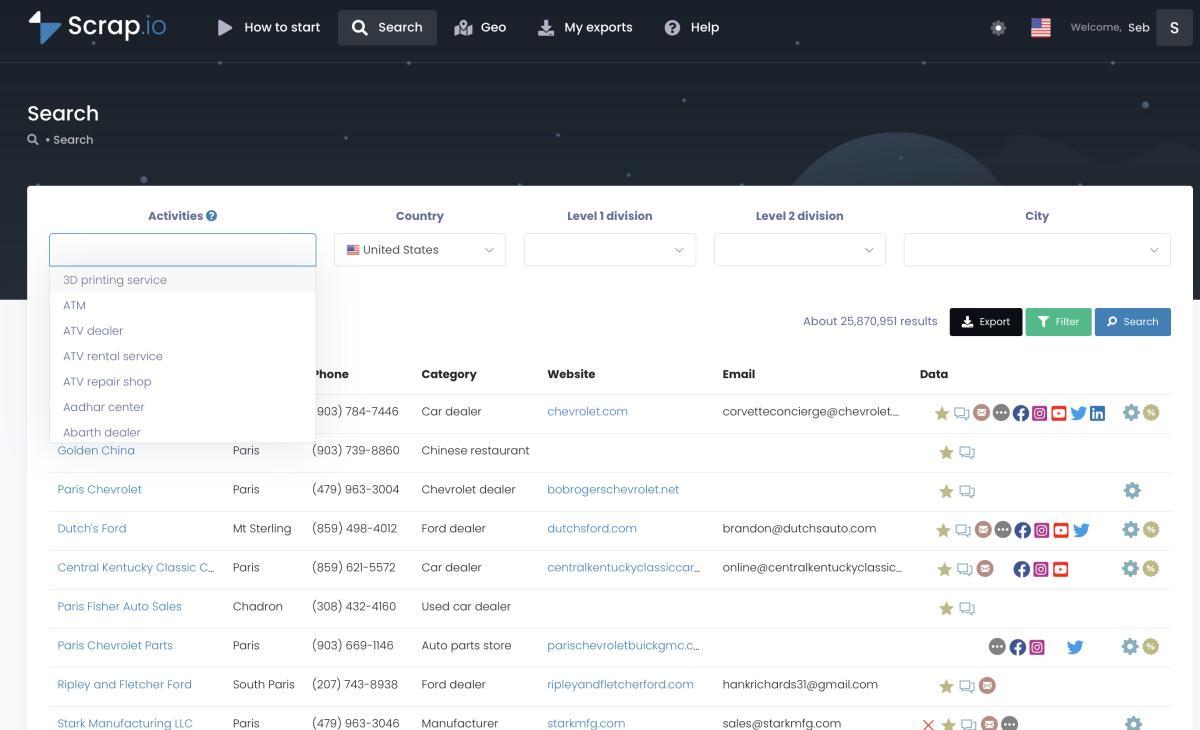
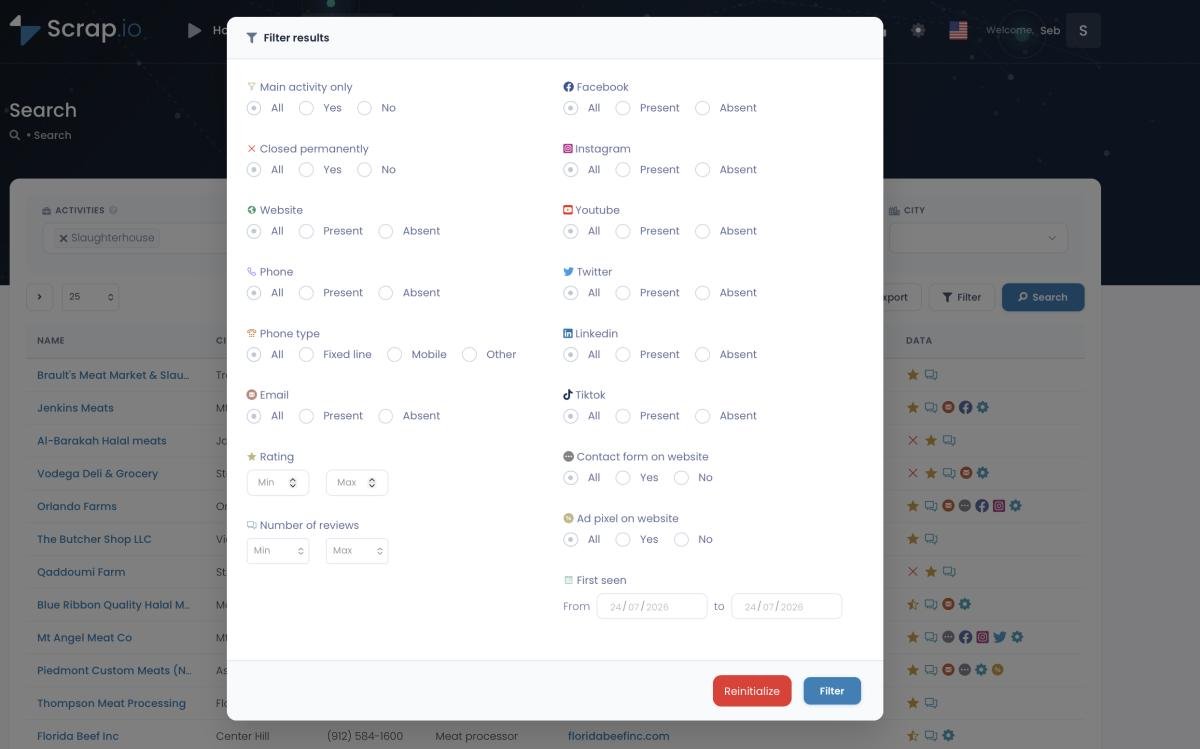
Now the part no competitor SERP result can match with a real number. Want to call every 4-star-plus plumber in Phoenix? That's exactly 254 businesses (Scrap.io, Google Maps, pulled 15 August 2026), with phone numbers and ratings already filtered before you spend a credit. You apply the filters, rating ≥ 4 stars, email present, phone present, before extraction, so you only pay for contacts worth dialing:
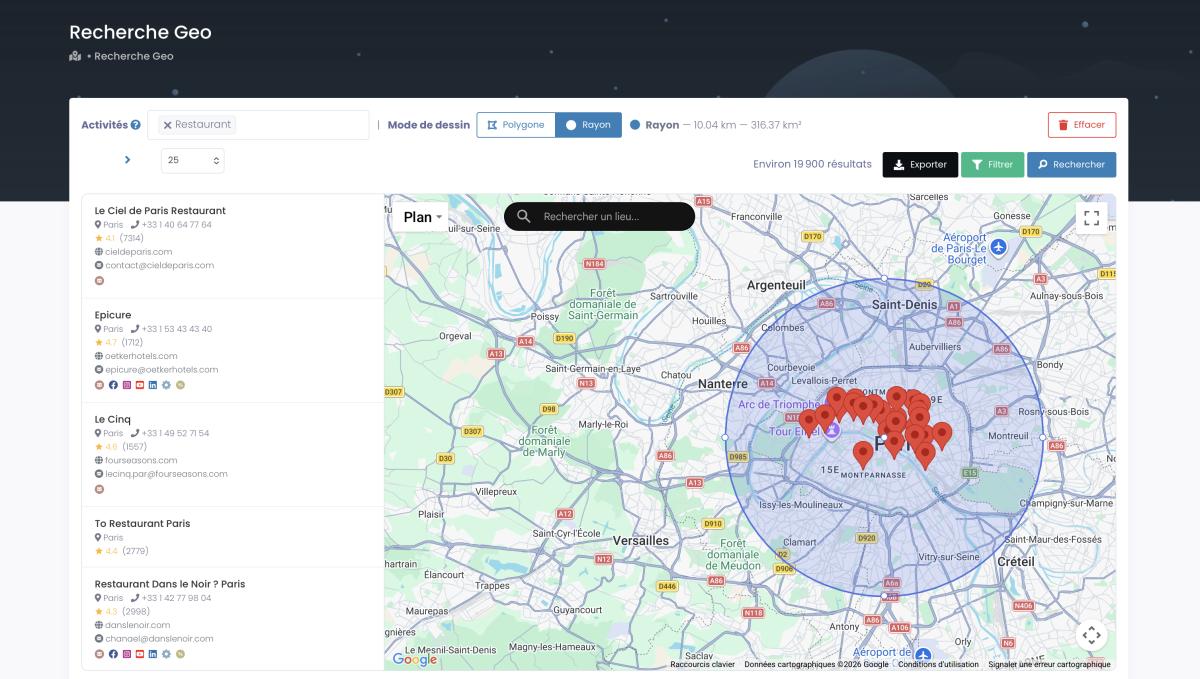
Need a specific catchment area instead of a whole city? GeoSearch draws a radius around any point on the map, a full trade area inside one circle:
New to the tool? This two-minute walkthrough shows the sourcing side end to end:
Video: Scrap.io - How to Start?
One thing before you dial. In the US, B2B cold calling is governed by the TCPA and the National Do Not Call (DNC) Registry, so scrub your list against the DNC every time and respect legal calling windows. Scrap.io only pulls publicly available business data (GDPR and CCPA compliant), and every record traces back to its source, so the sourcing side stays clean. The dialing side is on you.
Start with 100 free leads from Scrap.io's free trial and test your new openers on real prospects. Filter before extraction, exclude duplicates, and export verified numbers in minutes.
Pairing AI-driven email personalization with your cold calls creates a multi-touch approach that Martal Group used to generate 1,708 leads and 144 meetings for a single B2B SaaS client over 26 months. Your phone game plus good data? That's the combination. For the wider playbook, our guide to sales prospecting techniques maps out the full multi-channel cadence, and warm calling shows how to turn a cold list into a warm one before you even dial.
Also worth reading: how to write a cold email that complements your call strategy, and the compliance basics you need to know about TCPA and Do Not Call regulations.
FAQ: Cold Call Introduction
How do you introduce yourself in a cold call?
Start confident: full name, company, one-sentence reason for calling. Gong's research shows that leading with context (why you're calling) increases success by 2.1x. Skip the "sorry to bother you" stuff. You're not bothering them, you're offering something they might need. The best way to introduce yourself on a sales call is with clarity and a hook, not an apology.
What are the 3 C's of cold calling?
Confidence (speak with authority), Clarity (be direct about who you are and why), and Conviction (believe in what you're offering). These aren't soft skills, they're measurable. Reps who score high on all three book significantly more meetings, because prospects can literally hear the difference between someone who believes in their product and someone reading a cold call script introduction template they found online.
How long should a cold call intro be?
Fifteen to 30 seconds. Max. You've got about 7 seconds before they decide whether to keep listening, so your cold call opening statement needs to grab attention fast. The formula: greeting + name + one hook + one question. That's your cold call intro script template. Everything else comes after you've earned permission to continue.
What is the best time to make cold calls?
Tuesday has the highest meeting booking rate. Best windows: 10-11 AM and 2-3 PM in the prospect's time zone. Monday mornings are rough (everyone's putting out fires) and Friday afternoons are dead (mentally checked out). Cognism's 2026 data backs this up across 200K+ calls.
Is cold calling still effective in 2026?
Yes. And the data isn't even close. Cognism's 2026 report shows top SDR teams hitting 11.3% success rates, that's 4x the industry average of 2.3%. RAIN Group found that 82% of buyers are open to meetings from cold calls. Companies using cold calling are 42% more likely to experience high growth. The channel isn't dead. Bad cold call opening lines are dead. Big difference.
Want to test these cold call openers on real prospects? Try Scrap.io free and get 100 verified business contacts, phone numbers and emails included, pulled fresh from Google Maps so you're practicing your new cold call intro on leads that actually pick up.
Generate a list of restaurant with Scrap.io