
Bottom line: The average cold calling success rate in 2026 is 2.7%. That's the number Cognism pulled from over 200K real calls in their State of Cold Calling 2026 report (WHAM data). Up from 2.3% last year. Top performers are at 11.3%. Four times the average. On the same phones, calling into the same market.
The gap between those two numbers? That's the whole article, basically.
I know a B2B SaaS team — five SDRs, nothing fancy — who sat at 2% for the better part of six months. Swapped their data provider, narrowed their ICP hard, layered in intent signals. Within a quarter they hit a 4.2% cold call conversion rate. Pipeline went to $2.3M for Q1 2026. One documented case study from Comza among several showing the same pattern: better inputs, better output. Nothing groundbreaking about that.
Does cold calling work? It does. But not the way most people still do it. And before you ask — no, this isn't the "is cold calling dead in 2026" debate. We settled that one in a separate piece. This article is about the number itself: what a good cold calling success rate actually is, and how to beat the average.
Cold Calling Success Rate — 2026
Source: Cognism State of Cold Calling 2026 — 200K+ calls analyzed
Table of Contents
- Cold Calling Statistics & Success Rates 2026
- Success Rates by Industry and Business Type
- What Affects Cold Calling Success Rates
- How Top Performers Get Higher Success Rates
- AI & Technology in Cold Calling (2026)
- Cold Calling vs Other Sales Methods
- Step-by-Step Way to Improve Your Success Rate
- Common Mistakes That Kill Success Rates
- Cold Calling Compliance & Legal Considerations
- Frequently Asked Questions
Cold Calling Statistics & Success Rates 2026
The cold call stats worth caring about fit on one page. Most of the rest is noise.
Cognism's 2026 report — the biggest dataset out there right now — pegs the industry average at 2.7%. That's a rebound. We bottomed out at 2.3% in 2025 after a messy decline from 4.82% in 2024. Some of that 2024 number was inflated by how teams defined "success," but the trajectory is clear: cold calling took a hit, and it's slowly recovering.
What makes Cognism's own numbers wild is that their SDR team hit 11.3%. Same year, same economy. They credit verified mobile data, intent-based sequencing, and ICP discipline. Boring stuff, honestly. But boring stuff that quadrupled their hit rate compared to the rest of the market. (Cognism 2026 Report)
Don't just take one report's word for it. ZoomInfo's mid-2026 data lands in the same zone: top teams pulling 6–10%+, with connect rates swinging anywhere from 3% to 16% (ZoomInfo, June 2026). And focus-digital's July 2026 breakdown pegs the blended average at 2.35%, or roughly one sale for every 43 dials (focus-digital, July 2026). Different datasets, same ballpark. When three independent sources cluster around "low single digits for most, low double digits for the best," you can stop wondering whether the 2.7% figure is a fluke. It isn't.
Prefer to watch instead of read? Here's a tight little primer on cold calling before we go deeper into the numbers.
Video: A Short Guide to Cold Calling
Cold Calling Benchmarks by Performance Level
| Performance Level | Success Rate | Calls to Book 1 Meeting | Typical Profile |
|---|---|---|---|
| Below Average | < 2% | 150+ | No targeting, generic scripts |
| Average | 2–3% | 80–120 | Basic targeting, decent scripts |
| Good | 3–5% | 40–80 | Strong ICP, personalized openers |
| Excellent | 5–10% | 15–40 | Verified data + intent signals |
| Top 5% | 10–15%+ | < 15 | Full stack: data + AI + coaching |
Some other numbers:
Average call duration dropped to 82 seconds this year. Was 93 in 2025. People pick up and decide within 10–15 seconds whether to stay or bail. You've got roughly the length of an elevator pitch to earn the next two minutes. And reaching someone takes about 1.55 dials on average now (Cognism/WHAM 2026). Not great. Not as bad as it used to be.
Connection rate sits at roughly 16.6%. Five out of six calls — dead air, voicemail, or someone who hung up before you finished saying your name. Oh, and back in 2025, 87% of Americans already weren't picking up calls from unknown numbers (Hiya/FTC, 2025), and nothing about 2026 has reversed that. If you're dialing unscrubbed lists, you're competing against those odds before your script even matters.
What Real Reps Are Actually Reporting
Benchmarks are one thing. The unfiltered version lives in the community threads. On r/sales discussions about average cold call conversion rates, most reps land in the 1–2% range and treat anything above 5% as a genuinely good week. Over on r/salestechniques threads on realistic cold call conversion rates, the consensus is blunter: your list quality and your ICP explain more of the gap than your "closing skills" ever will. And a long-running Quora thread on the success rate of making a sale on the first phone call lands in the same place — first-call sales are rare, and the money is in the follow-up. Different rooms. Same conclusion.
Money Still Talks
Percentages can be misleading when the dollar amounts are big. REsimpli users pulled $15.7M from cold calling in 2024. That's 802 closed deals. Second-best channel in their whole funnel. Each deal averaged around $19,600. Two percent of a lot is still a lot.
Across B2B more broadly, cold calling conversion rates ticked up to 3.5% in 2026 from 2.8% in 2023 (Comza 2026). Gradual. But moving. That b2b cold calling statistics trend line is the one to watch.
Success Rates by Industry and Business Type
The cold calling success rate by industry varies so much that quoting one number for "cold calling" is almost meaningless. A SaaS SDR and a life insurance agent exist in completely different realities.
B2B vs B2C
B2B has a surprising edge. 57% of C-level executives actually prefer getting a phone call over an email for initial outreach (RAIN Group). Most reps I talk to don't believe that stat until they see it. And 82% of B2B buyers have accepted meetings that started with a cold call (RAIN Group). Not "were open to." Accepted. Past tense. It happened.
B2C can hit higher raw conversion numbers — up to 10% in some consumer verticals. But the hassle factor is brutal. Tighter regulations. Caller fatigue. You know the feeling — three robocalls before noon and suddenly you're not picking up anything from an 800 number. (Guilty.)
Regional Differences: US vs UK vs Europe
Cognism's 2026 data also breaks things down by region, and the contrasts are worth noting. US-based cold calls lean heavily on high-volume dialing with shorter conversations — the cultural expectation is "get to the point." UK teams tend to run longer conversations with a warmer opening style. European markets (Germany, France, Nordics) vary a lot by country but generally see lower connect rates on cold outbound because of stricter cultural norms around unsolicited calls and heavier GDPR enforcement. If you're running cross-border campaigns, one playbook won't cut it.
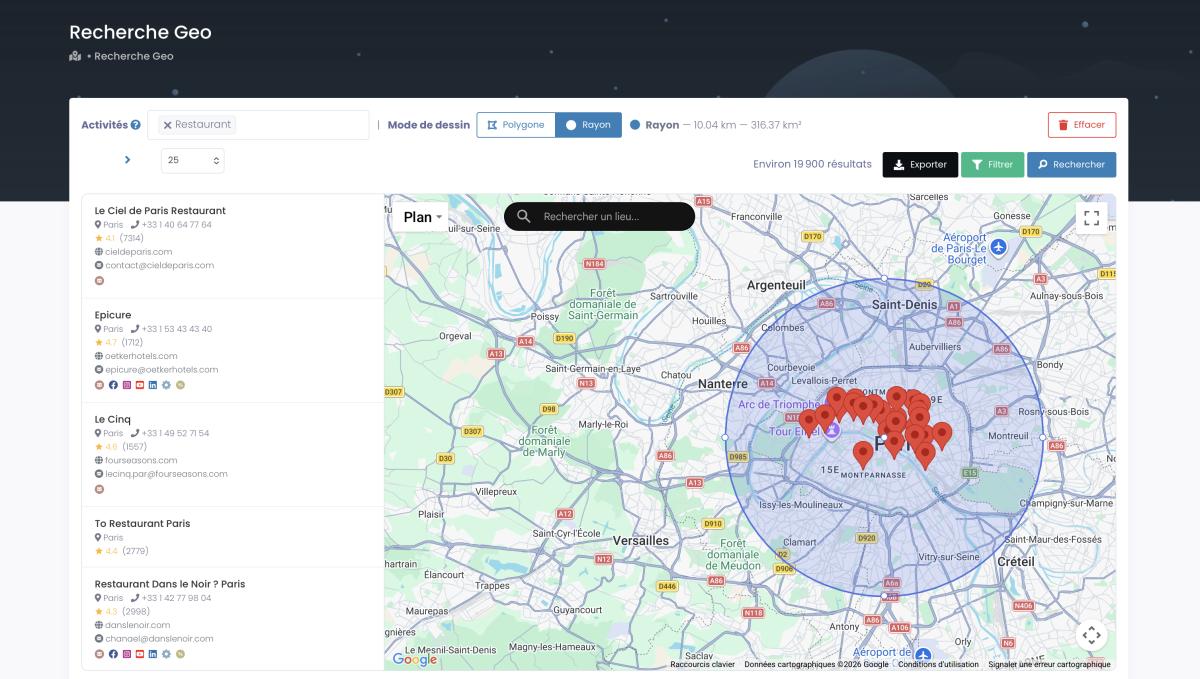
This is also where the tooling shows up. GeoSearch lets you draw a radius (or a hand-drawn polygon) around a specific market and pull only the businesses inside it — so your "US playbook" list and your "DACH region" list stay cleanly separate instead of getting mashed into one messy spreadsheet.
Industry Breakdown
Not every vertical plays fair. Technology and professional services do well because decision-makers in those spaces expect to get cold called. It's part of the job. A VP of Engineering at a Series B startup gets pitched weekly. They know the game.
Insurance and home improvement are rough. Really rough. Everyone and their cousin calls the same homeowner who just pulled a building permit. Competition kills connect rates for the entire sector. I know an insurance agent who burns through 150+ dials to land a single meeting. Meanwhile, a SaaS SDR on Reddit says he sits at 7–11% consistently. Same human on the other end of the phone — totally different context.
Average across all industries: about 209 cold calls per appointment (Baylor University study). Telecom might be 90+. Business services can be as low as 45. Real estate wholesaling — where REsimpli tracked their data — showed cold calling beating direct mail and PPC on cost-per-deal. Financial advisors? The financial advisor cold calling success rate skews lower because of heavy regulation, prospect skepticism, and an oversaturated market. Niche specialization helps a lot there. If you're targeting brick-and-mortar prospects, our guide to local business lead generation breaks down which verticals actually pick up.
Best Day to Cold Call in 2026
| Day | Relative Performance |
|---|---|
| Tuesday | Best — highest connect rates |
| Wednesday | Close second |
| Thursday | Solid |
| Monday | Below average. People are catching up from the weekend. |
| Friday | Worst. Mentally checked out by lunch. |
Best time to cold call in 2026: 4:00–5:00 PM in the prospect's time zone. That window converts 71% better than the late-morning slot. Worst window is around 1 PM. Post-lunch fog is real.
What Affects Cold Calling Success Rates
Three things. Data quality, what comes out of your mouth in the first 15 seconds, and when you pick up the phone. Everything else is a rounding error.
Data Quality
Bad data costs the average organization $12.9M a year, per Gartner's long-cited data-quality estimate (a figure still doing the rounds in 2026 reports). Not a rounding error.
Look at what happened with Meritt Agency. Outbound shop, been around a while. They switched from generic scraped contacts to verified data. That's it. Connect rate went from average to 20–25%. Bounce rate crashed from 35% down to under 4% (Prospeo case study). Same humans making the calls. Same scripts. Different numbers on the screen.
The difference between warm and cold leads is one thing. But even within cold leads, the quality of your phone numbers creates a whole separate tier system. Verified mobile number for the actual decision-maker versus a general company line that routes to a bored receptionist? Night and day. Literally different sports.
Here's the exclusive Scrap.io angle on this. Scrap.io indexes 225+ million businesses across 195 countries, with phone numbers and emails verified and extracted in real time from Google Maps at export — not pulled from a database that went stale eight months ago. That's the whole point: you build targeted call lists without inheriting the "97% verified contacts" that quietly tank your connect rate. And because filters run before extraction, you can keep only the fiches that actually have a phone number (mobile for SMS, landline for B2B cold calling) and never burn a credit on a dead entry.
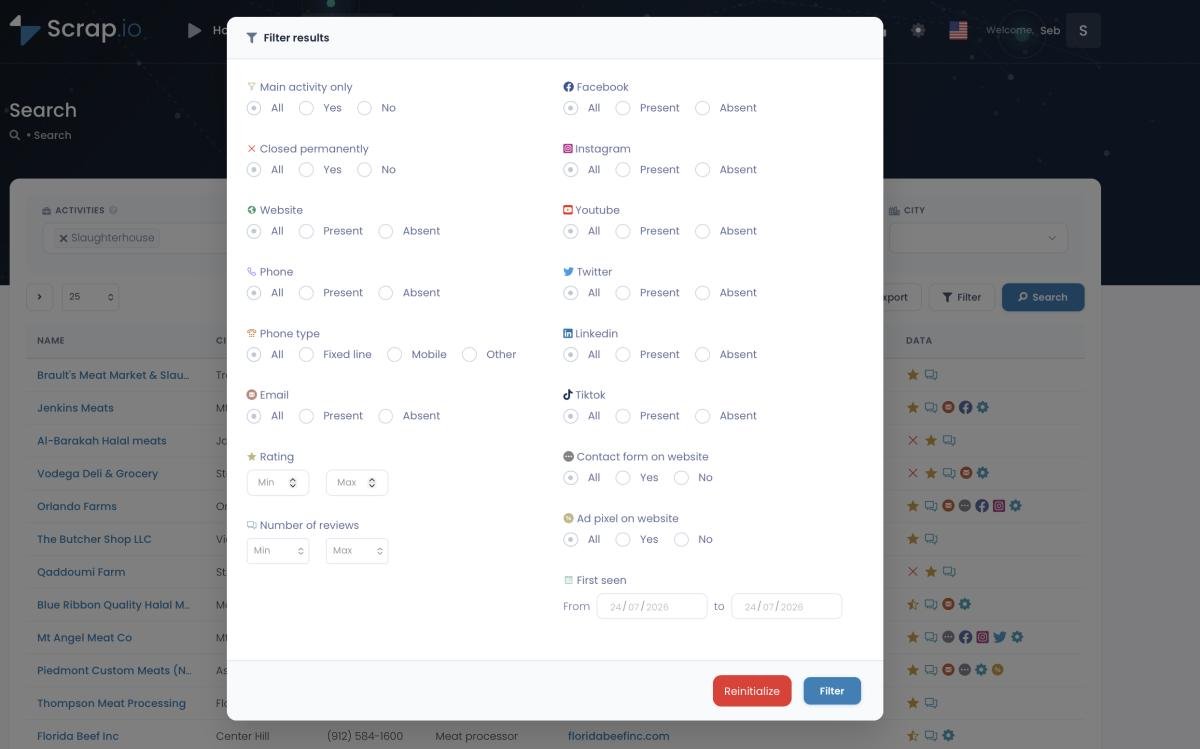
Quality contact data is what separates teams at 2% from teams at 5%+. Tools like Scrap.io pull verified business phone numbers and emails straight from Google Maps.
Stop calling dead numbers. Scrap.io extracts phone numbers and emails verified in real time from 225M+ Google Maps listings across 195 countries — filter by "has a phone number" before you export so you never pay for a fiche you can't call. Start your free Scrap.io trial — 100 leads included and see the connect-rate difference for yourself.
Your Opening Line (And Everything After It)
Gong.io ran the numbers on millions of recorded cold calls. Opening with "How have you been?" — a line that sounds like you already know the person — boosted conversion 6.6x (Gong.io). Wild for six words.
"Did I catch you at a bad time?" kills your odds by 40%. And "Is this a good time?" drops success to about 1%. You're literally handing them an easy exit.
Some less obvious stuff: using "we" and "our" instead of "I" and "my" improves conversion by 35–55%. Saying why you're calling in the first sentence — like, the actual reason, not some vague "I help companies like yours" preamble — makes you 2.1x more likely to keep them talking. For the full playbook on openers, we wrote up how to start a cold call script and a deeper dive into the best cold call intro lines. Worth 5 minutes.
Timing
Wednesday at 4 PM and Monday at 1 PM are not the same channel. They might as well be different marketing tactics entirely.
Calls over 5 minutes see a 61% drop in success. Sweet spot is 3–5 minutes. Long enough to qualify someone, short enough that you're not rambling. Productive calls run about twice the length of dead-end ones — makes sense, the prospect is actually talking back.
Questions > Pitching
Reps who ask 11–14 questions on a cold call hit success rates above 70% (Gong.io). Not rapid-fire interrogation. Actual curiosity. Good sales discovery questions pull double duty — they qualify the prospect while simultaneously building rapport.
I once called a VP of Sales at a mid-market company and launched into my pitch before he even confirmed his name. He hung up mid-sentence. Fair.
How Top Performers Get Higher Success Rates
Something like 85% of available business goes to the top 5% of cold callers. That stat gets thrown around a lot, and it probably overstates it a bit, but the directional truth is clear. A small number of reps close a disproportionate share of deals. The rest fight over scraps.
What separates them isn't talent, mostly. It's prep and persistence.
Research Before Dialing
76% of top sellers research prospects before calling. 42% of average reps don't bother (Bridge Group). That gap alone explains a lot.
The research doesn't have to be deep. LinkedIn activity, recent funding news, a competitor they just switched from, an industry pain point from a recent article. Three minutes of homework. That's it. But those three minutes change the entire texture of the call. You're not a stranger reading a script anymore — you're someone who knows their world a little. For a broader system around this, our guide to sales prospecting techniques walks through the whole phone-based workflow. And if you're working a small set of high-value logos instead of a giant list, account-based prospecting is the tighter, deeper play.
Snowflake — the data cloud company, not the insult — has cold calling as a core piece of their sales development motion. Emerald Maravilla, their Director of Sales Development, called phone coaching a "real emphasis" for the team publicly through Cognism's reporting. A company doing $3B+ in revenue still prioritizes cold calls. That should tell you something about whether the channel is "dead."
Preparation is also what makes the job bearable. If you want to make cold calling more enjoyable, start by actually knowing who you're about to talk to. The dread comes from uncertainty.
Following Up (Way More Than You Think)
80% of successful sales need five or more follow-ups. 44% of reps quit after one attempt (National Sales Executive Association). I'll let you sit with that for a second.
Almost half the salesforce abandons the process at attempt #1. And conversion typically happens at attempt #6. The people who win are just... still there when everyone else left.
93% of people who eventually convert are reached on the sixth contact. Average reps need 8 total calls to reach a prospect and book something. 80% of prospects say no four times before saying yes.
Each follow-up should carry something useful — a relevant article, a competitor insight, a quick note about their recent company news. Not "just circling back." Never "just circling back." Borrow from follow-up sequences that work for email and adapt the logic.
AI & Technology in Cold Calling (2026)
This is the year AI stopped being a slide deck talking point for sales teams and started being an actual competitive edge.
Here's the headline number: SDRs on verified data hit a 13.3% answered rate on cold calls. AEs making warm calls got 14.4% (Cognism State of Outbound 2026). Cold calls, with good data and AI-powered targeting, performing within spitting distance of warm calls. That would've sounded insane two years ago.
Outreach published data showing that AI-personalized calls — where the rep gets real-time company context, intent signals, and suggested talk tracks pushed to their screen — converted to meetings 36% more often than standard cold calls (Outreach 2025 dataset).
What's Actually Working Right Now
Phone verification at 98% accuracy — you stop wasting a third of your day calling disconnected lines. Gong and Trellus do real-time call coaching, whispering suggestions while you're mid-conversation. Sentiment analysis flags when a prospect is disengaging so you can pivot before they hang up. Clay aggregates data from dozens of sources into a pre-call brief that actually feels useful.
Net effect: reps save roughly 2 hours per day on admin and bad dials. Over a year, that's 500+ hours. 83% of teams using AI-assisted calling say revenue went up (Salesforce State of Sales). Hard to argue with the math.
Full breakdown here: best AI sales tools in 2026. And if you'd rather have your AI agent build the call list for you, Scrap.io exposes an MCP connector so tools like Claude or ChatGPT can search Google Maps and pull verified contacts in plain language.
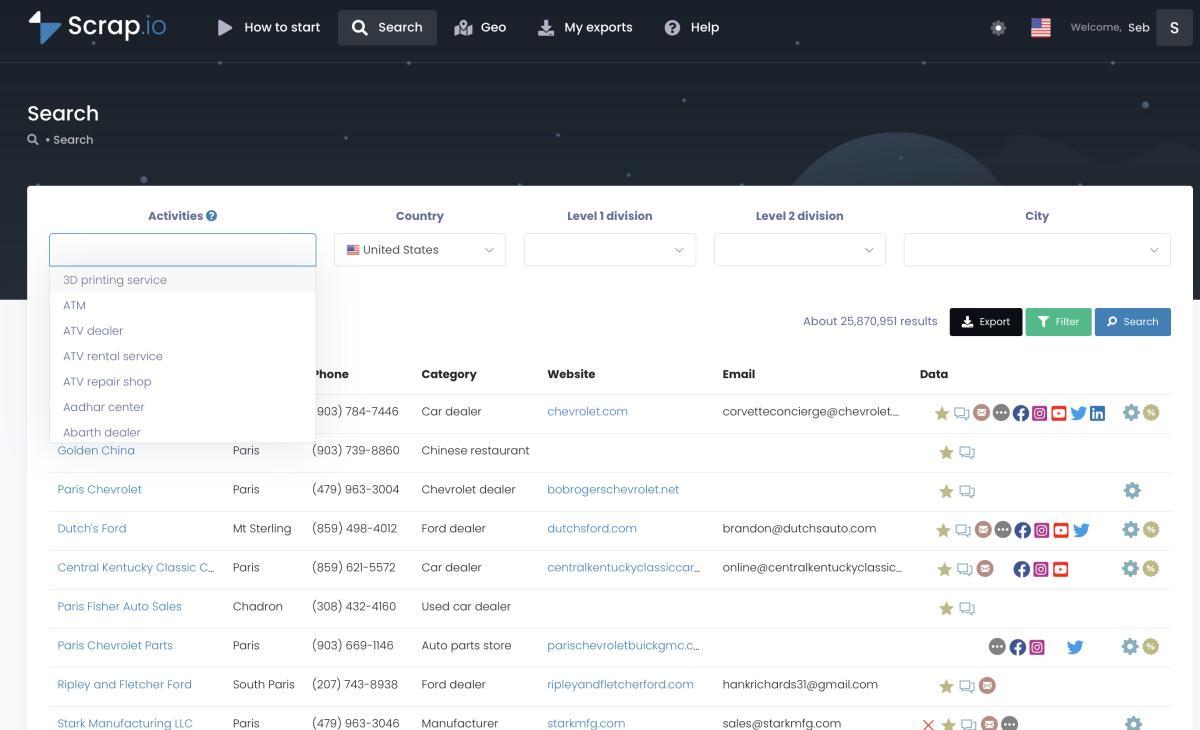
Better data beats a better script. Scrap.io gives you verified contact data for any of 4,000+ business categories, filtered by phone, email, reviews, website and more — the same "verified data" edge that pushes top teams from 2.7% to 11.3%. Try it free — 100 verified leads included.
Cold Calling vs Other Sales Methods
Quick comparison. How effective is cold calling next to the other outreach channels everyone's debating?
Cold Calling vs Cold Email vs Contact Form vs LinkedIn
| Method | Avg Success Rate | Scalability | Cost per Lead | Best For |
|---|---|---|---|---|
| Cold Calling | 2.7% avg, 10%+ top | Low-medium | Medium-high | High-ticket B2B, relationship sales |
| Cold Email | 8.5% reply, 0.2% close | High | Low | Volume plays, first touchpoints |
| Contact Form | ~100% read rate, varies | Medium | Low | Local biz, guaranteed eyeballs |
| 15–25% reply, 1–3% close | Low | Medium | Enterprise, warm intros |
Cold email looks better on paper — 8.5% reply rate sounds great until you realize only 0.2153% of those emails turn into actual deals. One closed deal per 464 emails sent. Cold calling gives you live objection handling, real-time qualification, and relationship signals in under 5 minutes. Different value entirely.
Contact form outreach is underrated. You get near-100% read rates because the message goes straight into the owner's inbox through their own website. Nobody filters those. Cold emailing as an alternative strategy works too — especially for volume.
The honest answer is multi-channel. Email first to plant a seed, then call. Voicemail, then LinkedIn message. Contact forms for local businesses who won't pick up a phone from an out-of-state number. Teams combining 3+ channels report 40–60% better results than single-channel teams. If you want the full coordinated system, we broke down omnichannel outreach step by step. And for the email piece, here's how to write effective cold emails.
Step-by-Step Way to Improve Your Success Rate
Theory is nice. Execution is what moves your cold calling conversion rate. Here's a phased approach so you're not trying to overhaul everything on a Monday morning.
Phase 1: Foundation (Weeks 1–2)
Start by measuring what you've actually got. Not just "closed deals." Track connect rate, conversation rate, meeting rate, pipeline created. Most teams skip the middle metrics and only look at the end — which is like judging a chef by the dessert and ignoring the appetizer that made everyone leave.
Next: define your ideal customer profile. And I mean really define it. Not "mid-market SaaS companies." More like "B2B SaaS between 30–80 employees that just posted their first SDR job on LinkedIn last month." That granular. The tighter your ICP, the fewer wasted dials. Steal our ideal customer profile template if you want the fill-in-the-blanks version with a scoring rubric.
Build a call framework. Opener with a stated reason for calling. Three or four discovery questions. A bridge into your value prop. A concrete next step. Done. If you need a starting point, grab ideas from B2B cold calling scripts and riff from there.
Phase 2: Optimize (Weeks 3–4)
Timing first. 4–5 PM, Tuesday through Thursday, in the prospect's timezone. Skip Monday mornings. Friday afternoons are dead.
Then work on your questioning. 11–14 questions = 70%+ success rate. That's the Gong data, and I keep coming back to it because it's the single highest-leverage change most reps can make. Current situation, pain points, what they've tried, how they decide, when they'd move. Real conversation. Not a qualification checklist.
Build a 6–8 touch cadence over 3–4 weeks across calls, emails, and LinkedIn. Every touch should carry a reason to exist beyond "following up." Closing techniques from cold outreach transfer across every channel.
Phase 3: Scale (Week 5+)
Add technology where it earns its keep. A CRM. Parallel dialer. Call recording for coaching. AI verification for phone numbers. Spending a quarter of your calling hours on wrong numbers isn't a strategy, it's a waste.
Ongoing training lifts cold calling conversion rates by 38%. Run weekly A/B tests — different openers, different objection responses, different CTAs at the end of the call. Listen to recordings as a team. The teams that review calls together improve faster than teams that don't. Every time.
B2B lead generation platforms that pull from Google Maps and LinkedIn are a smart combo for multi-channel prospecting.
Common Mistakes That Kill Success Rates
Same mistakes, every team, every year. I'll keep this short because you probably already know which ones apply to you.
Want the two-minute version before the list? This one's on us.
Video: Mistakes to Avoid when Cold Calling
Bad Data
27.3% of selling time — gone. Wasted. Because the numbers on the list are wrong. If your lead source charges $0.02 per contact and promises "97% accuracy," I have bad news.
Spray and Pray
200 random dials a day, zero research, generic opener, hope for the best. The math never works. Sixty focused, researched calls will outperform 200 random dials basically every time. 82% of B2B decision-makers say reps come unprepared (LinkedIn State of Sales). Don't be the reason that stat exists.
Awful Openers
"Did I catch you at a bad time?" — success plummets. Five-minute monologue about your product's features — they hung up at minute two and you didn't notice. Pitching before you've asked a single question about their situation.
Fix: talk less. Ask more. React to what they actually say. Starting a warm sales call uses the same core principles — adapt them.
Fumbling the Objection
Half of all objections are just reflexive brush-offs, not real rejections. The rep who argues loses. The rep who pauses, asks one clarifying question, and keeps the conversation alive wins. If "not interested" and "send me an email" make you flinch, steal the frameworks in our guide to handling sales objections.
Giving Up at Attempt One
44% of reps bail after one try. Conversions cluster around attempt six. There's no polite way to say this: if you quit after one call, you're leaving the deal for someone who won't.
Cold Calling Compliance & Legal Considerations
Get this wrong and your success rate becomes irrelevant because you'll be paying lawyers instead.
The TCPA (Telephone Consumer Protection Act) restricts autodialed calls, prerecorded messages, and unsolicited texts in the US. Fines go up to $1,500 per violation. Per call. Companies have settled for eight figures. It's not theoretical.
Do-Not-Call Registry: scrub your lists against it before every campaign. Not once. Every time. B2B gets partial exemptions, but partial doesn't mean total. Check your specific situation.
GDPR for European prospects adds another layer — you need legitimate interest as your legal basis, and you have to be upfront about where you got someone's number. This is one of the reasons cold calling success rates look different across regions. Stricter rules, cleaner lists, but narrower targeting options. For more detail: cold outreach compliance.
Companies that take compliance seriously tend to see better conversion rates, not worse. Clean lists, verified consent frameworks, scrubbed data — all of that removes junk calls from your funnel. And junk calls are what tank your averages.
State-level mini-TCPA laws are multiplying too. If you're dialing across state lines, each state has its own rules. California, Florida, and Oklahoma are particularly aggressive. Ignorance won't help you in front of a judge.
Frequently Asked Questions
What is a good cold calling success rate?
Industry average is 2–3%. Good is 5–8%. Excellent is 8–15%. If you're consistently above 15%, you're in the top 5% globally. Below 2%? Something's off — probably data quality or your opening line.
Is cold calling still effective in 2026?
82% of B2B buyers have accepted a meeting from a cold call (RAIN Group). Cognism's 2026 numbers show the average climbing for the first time in years. Teams pairing verified data with AI personalization are seeing cold call results that would've seemed unrealistic in 2024. Cold calling isn't dead. Lazy cold calling is — and if you want the full argument, here's whether cold calling is dead in 2026.
What are the 3 C's of cold calling?
Confidence, Clarity, and Conviction. Confidence: prospects can hear hesitation in two seconds, so speak like you belong on the call. Clarity: say who you are, why you're calling this person, and what's in it for them — no fluff. Conviction: actually believe the value is real. Some coaches swap in "Curiosity" or "Connection," and honestly the label matters less than the behavior behind it.
How many cold calls does it take to make a sale?
About 209 dials per appointment on average (Baylor University). Tech companies might need 150–200. Professional services: 100–150. The biggest variable isn't industry, though — it's data quality. Verified mobile numbers can cut your dial-to-connect ratio in half compared to generic lists.
How long do 100 cold calls take?
With a 16.6% connect rate, 82-second average connected call duration, and 30 seconds per unconnected dial — you're looking at 3.5–4 hours of pure phone time. Factor in CRM notes, breaks, and prep, and most SDRs budget a solid half-day for 100 quality dials.
How many cold calls a day is realistic?
Realistically, 40–80 targeted dials a day, not 200. A block of 100 dials eats 3.5–4 hours of pure phone time once you fold in notes and prep. And 60 well-researched calls into your ICP will out-book 200 random ones almost every time. Is 200 a day a lot? On paper, sure. In practice it usually just means nobody did the homework. Fit closes deals, not volume.
What are the 5 stages of a cold call?
Every good cold call moves through five stages, in order:
- Opener: state who you are and why you're calling this specific person.
- Hook: a quick reason to keep listening, tied to their world.
- Discovery: 11–14 real questions, not an interrogation.
- Value bridge: connect what they just told you to what you actually do.
- Clear next step: book the meeting. Don't leave it vague.
When should you NOT cold call?
Skip Monday mornings, Friday afternoons, and the dead zone around 1 PM. Don't dial lists you haven't scrubbed against TCPA and Do-Not-Call rules, and don't waste your breath on anyone outside your ICP. Your best window is Tuesday to Thursday, 4–5 PM in the prospect's local time. Everything outside that is a coin flip you're choosing to lose.
Does cold calling work for financial advisors?
It can, but the financial advisor cold calling success rate runs below average. Regulation (FINRA, TCPA), skeptical prospects, oversaturated market. Advisors who niche down — say, retirement planning for tech execs in Austin — and use verified local data do significantly better than generalists dialing purchased lists.
Best time to cold call in 2026?
Tuesday through Thursday, between 4:00 and 5:00 PM in the prospect's local time. Cognism's 200K+ call dataset confirms it. Wednesday is marginally the best single day. Avoid Monday mornings, Friday afternoons, and anything near 1 PM.
How does cold calling compare to email outreach?
Cold calling: 2.7% average success, much richer conversations. Cold email: 8.5% reply rate but only 0.2% close rate — 1 deal per 464 emails. Best play is combining both. Email first to plant a seed, call to advance the relationship. We broke down the cold calling vs cold emailing stats in a separate piece.
Ready to improve your cold calling success rate with better data? Start your free Scrap.io trial: 7 days and 100 verified leads included. 225M+ businesses, 195 countries, phone numbers and emails verified in real time from Google Maps. Filter before you export so every dial is one that can actually ring.
New to Scrap.io? Here's the 2-minute version of how the whole thing works before we get into the numbers.
Video: Scrap.io — How to Start?
Generate a list of restaurant with Scrap.io