


Last month a SaaS founder spent $400 on a "premium hair salon email list" from a provider I won't name. Loaded it into Instantly. Hit send on 5,000 emails. Woke up to a 38% bounce rate and a domain that got flagged inside 48 hours. Four hundred bucks. Gone.
His sender reputation? Worse than gone.
And here's the annoying part: that's not a freak accident. It's the default outcome when you buy salon contacts without knowing what's actually in the file. The US hair salon industry is a $60 billion market with over 1,077,381 businesses (IBISWorld, 2026). Huge. But salon owners are a nightmare to reach — 46% of their bookings happen outside business hours (Boulevard), they ignore generic inboxes, and their front desk is trained to shut down sales calls. So email wins by default. And a real hair salon email list is where it starts.
The problem was never demand. It's data quality. That's the whole thing we're fixing here.
Video: Before you buy a hair salon email list, watch this quick breakdown on what makes salon outreach actually convert.
- Why Hair Salon Email Lists Matter in 2026
- Hair Salon Market Data: The $60B Opportunity
- What's Inside a Good Hair Salon Email List?
- Hair Salon Directory vs. Email List
- Who Actually Buys Hair Salon Email Lists?
- Where to Get Hair Salon Email Lists in 2026
- How to Use Your Hair Salon Email List for Marketing
- Staying Legal: CAN-SPAM & Compliance
- FAQ
Why Hair Salon Email Lists Matter in 2026
I'll skip the sermon on why email marketing matters. You already know.
What you might not know is how weird the salon industry is next to other B2B verticals. Most salon owners are solo operators — 80% of US salons are independently owned (RentechDigital). No marketing team. No office manager screening the inbox. No procurement committee. One person runs the whole thing, and that same person is the one who signs off on every purchase.
They buy constantly. Products, chairs, color lines, booking software, insurance, furniture. The spend never stops. But they're also buried under vendor pitches they never asked for, which means your email either stands out in two seconds or it's dead. There's no in-between.
A verified hair salon email list — real owner names attached to real business emails — is the difference between "maybe they open it" and "straight to trash." Whether you're building a broader salon owner email list or a tight hair stylist email list for one metro, the same rule holds.
Who's actually buying these? Salon SaaS companies. Beauty distributors. Equipment suppliers. Agencies selling SEO and social to local shops. Basically anyone doing B2B in beauty. And if you also sell into adjacent niches like beauty salon email lists or spa services, the playbook barely changes.
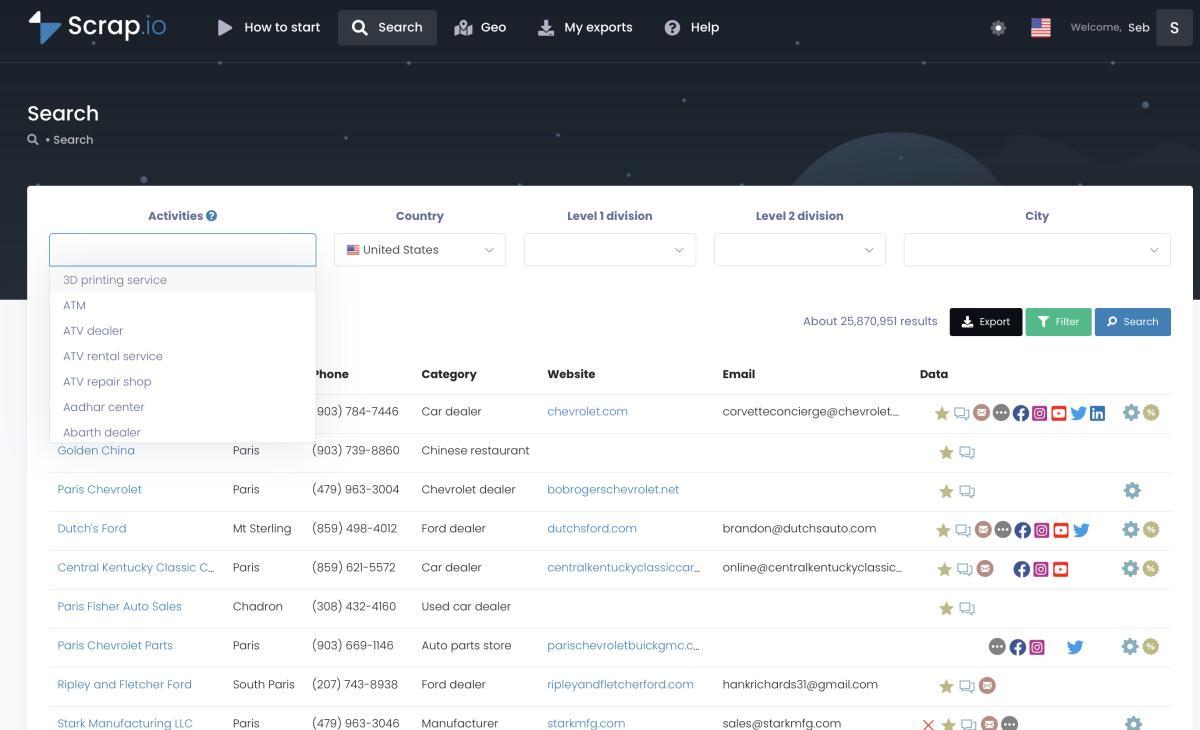
Platforms like Scrap.io let you access 222,217+ hair salon contacts with a free trial — 100 free leads to test before you commit a cent to a campaign.
Hair Salon Market Data: The $60B Opportunity
The numbers speak for themselves, so I'll go fast.
US hair salon market size in 2026: $60.0 billion (IBISWorld). Number of businesses: 1,077,381 — up 1.66% versus 2025. (If you ever land on a "how many hair salons in the US" search, that's your answer.) The industry grew at a 5.5% CAGR from 2020 to 2025, and the Bureau of Labor Statistics projects 5% employment growth for hairstylists, barbers, and cosmetologists through 2034.
Not shrinking. Not stagnant.
Now the part most guides skip. On Scrap.io, 222,217 hair salons are indexed for the US right now. But raw count isn't the interesting number. Of those, only about 137,504 (~62%) have a website, and just 72,946 (~33%) expose a verified email. Roughly one in three. That gap is where money leaks — or gets saved, depending on how you extract.
| US hair salon data (Scrap.io, 2026) | Count | Share |
|---|---|---|
| Total hair salons indexed | 222,217 | 100% |
| With a website | 137,504 | ~62% |
| With a verified email | 72,946 | ~33% |
Here's why that matters. If you pay per contact and blindly pull all 222,217, you're burning budget on ~149,000 listings that have no email to write to. Scrap.io filters before extraction, so you only spend credits on the ~72,946 that actually have one. (Croyez-moi — this single toggle is the difference between a $50 campaign and a $500 one.)
Geography matters too if you run targeted campaigns. California has roughly 22,000 salons. Texas sits around 19,500. Florida lands near 14,200. Those three states alone carry a wild share of the total. Regional supplier? Agency working set territories? Start there.
And for the data nerds: SIC Code 7231 (Beauty Shops), NAICS 812112 (Beauty Salons). You'll want those if you're cross-referencing government databases or buying from providers that classify by industry codes. Bref — bookmark them.
What's Inside a Good Hair Salon Email List?
I've seen $200 lists that hand you a CSV full of "info@" addresses and dead phone numbers. I've also seen $50 lists loaded with owner names, direct emails, Google ratings, website URLs, social profiles, review counts, and hours. Price and quality barely correlate. Not even close.
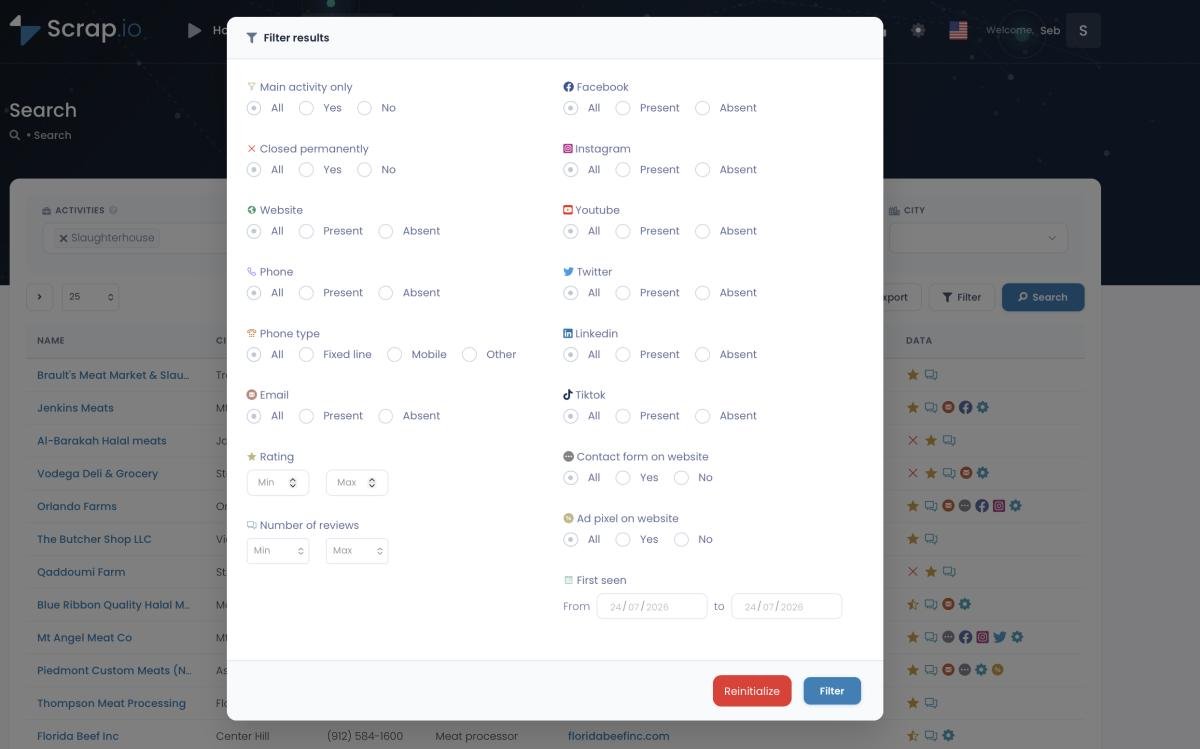
A solid hair salon email list should give you verified owner or manager emails (not generic catch-alls), business phone numbers, physical addresses, website URLs, and ideally social links. The best platforms — Scrap.io included — also pull Google Maps data like star rating and review count. That's gold for segmentation. A 4.9-star salon in Beverly Hills and a 3.1-star shop in a strip mall outside Memphis need completely different emails.
Video: How to use filters to build a targeted hair salon email list from Google Maps.
You can also segment by salon type (independent vs. chain, full-service vs. specialty), by whether they have a website (the ones without are often easier to approach), and by location down to the zip code. Some providers sell a cosmetologist email list too, which casts a wider net across all licensed beauty pros — not just salons as establishments. Handy if you're pushing products or continuing education that applies to stylists, estheticians, and nail techs alike. Building a hair and beauty salon email list that spans both? Same filters, wider net.
If you're chasing an individual hairdresser email list for recruiting or product sampling, or eyeing barber shop email databases for the men's grooming angle, the segmentation logic is similar — but the messaging changes completely.
Hair Salon Directory vs. Email List — Know the Difference
People confuse these constantly. It costs them money.
A hair salon directory is a listing — Yelp, Yellow Pages, Google Maps results. You browse salons, read reviews, find addresses. Great for someone booking a haircut. Terrible for B2B outreach, because you can't export it, there are no owner emails, and you'd have to research every contact by hand. I've watched agencies put interns on exactly this. It takes forever and the output is always half-finished.
An email list is a different animal. It hands you actionable contact data — names, emails, phones — ready to drop into your CRM or sequencer. A hair salon database is the broadest option: it fuses directory-style info (addresses, services, ratings) with the outreach data (owner email, direct phone). Scrap.io works as a full salon database, so you get the business intelligence and the contact details in one export.
Why spell it out? Because I've watched people pay $150 for what they thought was a professional hair salon email list and receive a scraped directory — names and addresses, zero emails. Always check what's included before your card leaves your wallet.
Who Actually Buys Hair Salon Email Lists? (Real B2B Examples)
Real companies. Real campaigns. Real numbers. No hypotheticals.
Phorest manages 9,000+ salon clients with 155,000 professionals on its platform. One of its showcased salons — salon[718] in NYC — pulled $300K in revenue from SMS marketing alone. A vertical SaaS company like that survives on a constant stream of fresh salon owner contacts to feed the sales pipeline. That's not theory. It's the engine.
SalonCentric (L'Oréal USA's B2B marketplace) launched with 350+ third-party vendors all fighting to reach salon owners directly for product distribution. A platform like that only works if you can get in front of decision-makers at scale — which means email lists, refreshed on a cycle.
GlossGenius — $70.6M raised — has been running aggressive outbound to salon owners for its booking and payments SaaS. Same story with Booksy ($119.7M), Fresha ($219M), Boulevard ($108M), and Vagaro ($163M). A whole ecosystem of venture-backed companies elbowing for the same owner's attention.
On the agency side, Coalition Technologies partnered with Beauty Plus Salon and drove a 27% increase in email revenue in year one. Their Black Friday / Cyber Monday campaign? A 54.1% open rate. That's not a normal number — it's what happens when you pair a clean salon email marketing list with real segmentation.
BOFU Agency ran a totally different play: Facebook Ads into a questionnaire, capturing 5,000 email addresses for a hair salon client. That same client hit position #1 on Google organic. The list was the foundation everything else got built on.
Want to run a campaign like these? Start with 100 free hair salon leads on Scrap.io — real-time data from Google Maps, verified at export, across 195 countries and 4,000+ categories.
Where to Get Hair Salon Email Lists in 2026
Three options. I'll be blunt about the tradeoffs, because most articles won't. And whether you're googling a "free hair salon email list," the "best hair salon email list," or where to "buy hair salon email list" data outright, it all funnels into these three buckets. The only real variable is how fresh the data is.
Option 1: Static database providers. ExactData, BookYourData, Megaleads — that crowd. Pre-built CSV files at $0.03–0.07 per contact. You download, load, and hope the data didn't rot since their last refresh. Monthly if you're lucky. Quarterly if you're not. Oh, and your competitor probably bought the same file last Tuesday.
Does anyone actually regret this? Constantly. On the Adobe marketing community, one person described their boss buying a list of about 30,000 emails, blasting a campaign, and getting slapped with a Mailchimp warning for spam complaints almost immediately (Adobe Community forum). And when someone on Quora asked flat out whether buying email marketing lists is worth it, the pile-on was unanimous: stale data, spam traps, wrecked sender reputation (Quora). The people who've tried it don't recommend it. That should tell you something.
Option 2: Build it yourself. Google Maps. LinkedIn. Trade shows. Chamber of commerce sites. Free in dollars, brutal in hours. A friend of mine hand-built a 2,000-contact salon list over three months. He could've pulled 10x that from Scrap.io in about twenty minutes. (He admits it now. Didn't at the time.) Trying to build a serious hair salon mailing list by hand is, honestly, a form of self-punishment.
Option 3: Real-time scraping platforms. This is where Scrap.io lives. Fresh data pulled from public sources — Google Maps listings, business websites, social profiles — verified the moment you export, not six months ago. 222,217+ hair salons. 20+ filters. Roughly $0.005 per lead.
| Feature | Static Providers | DIY | Scrap.io |
|---|---|---|---|
| Data freshness | Monthly/quarterly | Manual | Real-time |
| Hair salon contacts | 10–50K | Varies | 222,217+ |
| Email verification | Varies | No | Built-in |
| Filtering (rating, website, etc.) | Basic | None | 20+ filters |
| Price per lead | $0.03–0.07 | Free (time cost) | ~$0.005 |
| CAN-SPAM compliance | Varies | Your responsibility | Public data only |
If you ever need to buy email lists for any B2B vertical — salons or otherwise — the static-vs-real-time split is the single biggest factor. Stale data doesn't just waste money. It actively torches your domain reputation, and clawing that back takes weeks. Want the full method? Here's how to build a cold email list from scratch without buying a stale file.
Video: Scrap.io — How to Start? Building your first hair salon email list in a couple of clicks.
How to Use Your Hair Salon Email List for Marketing
Got the list. Now what?
Don't do what most people do — dump 10,000 contacts into Mailchimp and fire the same email at everyone. That's how you earn a 4% open rate and a bruised ego.
Segment first (always)
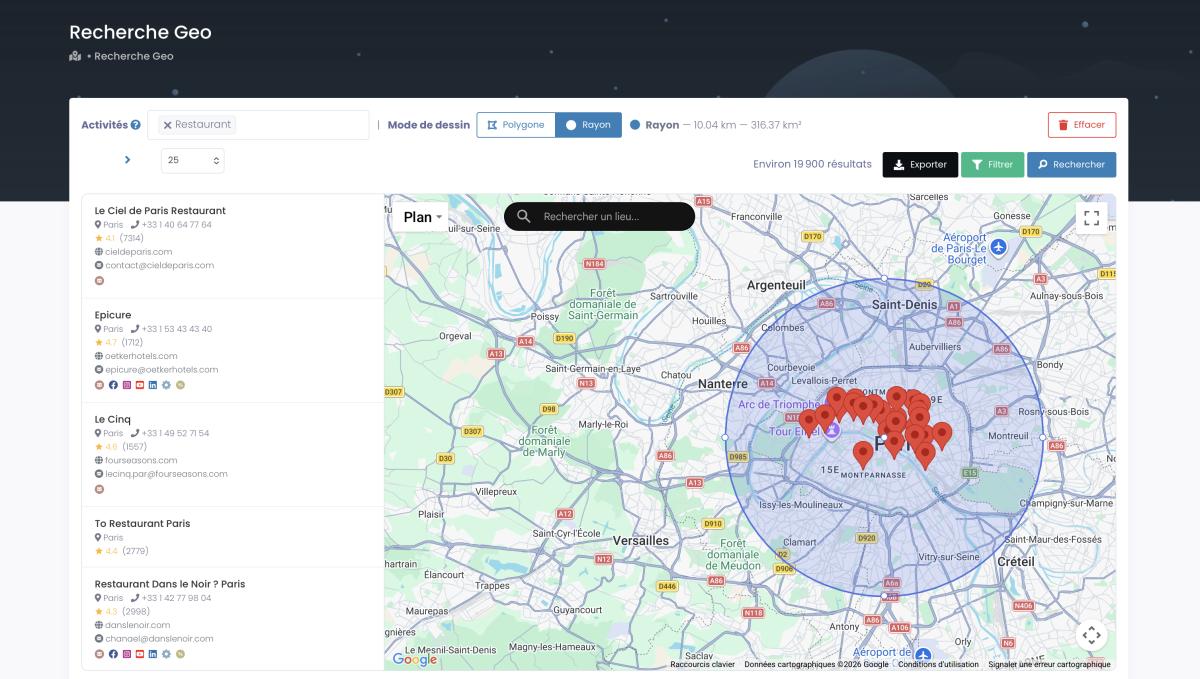
Split your hair salon email list by state, by Google rating, by whether they even have a website. A salon with 847 reviews and a slick Instagram is a completely different prospect than a three-chair shop with no online presence. The first gets pitched daily — you need a sharper hook. The second might not know email outreach is a channel people use. Your approach to each should reflect that gap.
Personalize like a human, not a mail merge
Personalization isn't "Hi {first_name}." It's referencing their city, their rating, the fact that they offer color but have no booking tool on their site. Thirty seconds of homework per prospect. Reply rate jumps. And no, you don't need a fancy salon email marketing template — you need one specific detail that proves you looked.
Multi-channel helps. Email first, then a follow-up on Instagram if they're active, then a call if you've got a direct line. The owners who convert fastest usually get touched 2–3 times across channels in the same week. Just don't be weird about it.
Hair salon email marketing returns $36 for every $1 spent, on average (DMA / Litmus). Great number. But that average bakes in the people who actually segment, write decent copy, and don't burn their lists. Blast everyone with the same generic pitch and you won't sniff that return.
Try Scrap.io free — 7-day trial + 100 verified hair salon leads. Filter to the ~72,946 salons with a real email before you spend a single credit. First export takes about 30 seconds.
Already in the beauty vertical? Worth a look: nail salon email lists and spa email lists. Different audiences, same core outreach principles. And before your first send, sanity-check your data with this email validator guide — fresh data still deserves a verification pass.
Staying Legal: CAN-SPAM & Compliance
Nobody wants to talk compliance. But getting it wrong can cost $51,744 per email under CAN-SPAM, so let's spend 60 seconds here.
Three non-negotiables for every commercial email: a working unsubscribe link, an honest sender identity (no spoofed domains), and a physical mailing address in the footer. That's CAN-SPAM in a nutshell.
Where your data comes from matters just as much. Scrap.io only collects publicly available information — the stuff salon owners post themselves on Google Business profiles, websites, and social accounts. You're not buying a list scraped from some private database or lifted from a trade show badge scanner. Clean source. Traceable to origin. GDPR and CCPA compliant.
Targeting salons outside the US? GDPR is a different beast. Consent rules are stricter, and you'll want legal advice for your specific case. For US-focused B2B, CAN-SPAM gives you more room than most people assume.
One practical tip that'll save you real pain: send test batches of 200–500 emails first. Watch the bounce rate. Over 5%? Stop. Something's off with the data or your setup. Clean your list regularly, too — even fresh data decays as salons close, owners sell, and addresses change.
For the full breakdown, here's a detailed guide on cold emailing compliance covering the edge cases, plus a broader cold emailing strategy to wrap around your list once it's clean.
FAQ — Hair Salon Email Lists
How much does a hair salon email list cost?
Wild range. Static providers charge $0.03–0.07 per contact, so a 10,000-contact list runs $300–$700. Real-time platforms like Scrap.io come in around $0.005 per lead with 222,217+ US salons indexed. That's a 6–14x price gap, and the cheaper option also happens to be fresher. Unusual for this market.
Is it legal to buy a hair salon email list?
For B2B, yes — as long as the data comes from publicly available business information and you follow CAN-SPAM. Every email needs an unsubscribe link, honest subject lines, and your physical address in the footer. Nothing complicated. Just don't skip the basics. A salon email list sourced from public Google Maps data sits on solid legal ground.
How many hair salons are there in the US?
IBISWorld puts it at 1,077,381 as of 2026. California, Texas, and Florida hold the highest concentrations. The count keeps climbing — up 1.66% from 2025.
How many hair salons have a valid email address?
Of the 222,217 US hair salons indexed by Scrap.io in 2026, about 72,946 (~1 in 3) publish a verified email — and roughly 137,504 (~62%) have a website. Filtering to the email-present ones before extraction means you never pay for the ~149,000 listings you couldn't write to anyway.
What's the difference between a hair salon email list and a salon database?
An email list is narrower — mainly contact emails for outreach. A hair salon database packs in more: addresses, phones, Google ratings, review counts, social profiles, website info. Think of the email list as one layer inside a bigger database. A good beauty salon email database works the same way, just across the wider beauty category.
Can I filter hair salon contacts by location or rating?
On Scrap.io, yes — state, city, Google rating, website presence, social links, review count, and 20+ other criteria. Most static providers give you state-level filtering and that's about it. This is also how you turn a raw dump into qualified hair salon leads instead of noise.
Try Scrap.io free for 7 days — 100 verified leads included. Pick your category and zone, filter to the salons with a real email, export to CSV. Your first hair salon list is done in about 20 minutes. No stale file. No card-flush on dead contacts.
Written by The Scrap.io Team. Scrap.io data re-pulled on 2026-08-03 via MCP (search, type hair-salon, US). Looking for a hub across every vertical? See our email list by industry guide.
Generate a list of hair salon with Scrap.io