

Video: How to Find the Best Email to Contact?
49,169 heating contractors in the US. That's what we pulled from Google Maps in August 2026 using Scrap.io. Of those, 22,783 have a verified email address (46.3%) and 35,300 have a website (71.8%). That's your addressable market for cold outreach, right there, in one number.
But here's the thing. Most people searching for a heating contractor email list end up buying stale CSVs from brokers who haven't updated their data since 2023. Then they wonder why half their emails bounce and nobody replies.
This article is specifically about heating contractors: furnace installers, boiler specialists, radiant heating companies. Not general HVAC. We have a separate guide for that: HVAC contractor email list. The distinction matters because if you sell boiler parts, you don't want to waste outreach on companies that only do air conditioning.

Anyway. Below you'll find real numbers, real case studies, three ways to build your list, and the compliance stuff you can't skip. No fluff.
Table of Contents
- What Is a Heating Contractor Email List?
- The $159.4 Billion Heating Market
- Why Traditional Marketing Fails with Heating Contractors
- Build vs Buy vs Scrape
- Scrap.io vs Traditional Providers
- Real B2B Success Stories (With Sources)
- Email Marketing Best Practices
- Legal Compliance
- Measuring ROI
- FAQ
- Generate Your Heating Contractor List Now
What Is a Heating Contractor Email List?
A heating contractor email list is a database of businesses that install, repair, or maintain heating systems: furnaces, boilers, radiant floor heating, heat pumps focused on the heating side. Each record typically includes a business name, contact email, phone number, physical address, and website URL. Better lists also include Google review ratings, social profiles, and classified emails (meaning: actual people's names, not just info@ addresses).
This is not the same thing as a general HVAC contractor email list. HVAC covers heating and cooling. A heating contractor database narrows the focus to companies whose primary business is keeping buildings warm. Think furnace contractor contact lists, boiler service companies, radiant heating installers. If you sell heating-specific products (burner components, hydronic systems, smart thermostats for boilers) this is your audience.
Why does the distinction matter? Because a residential heating contractor email list gives you precision. You're not blasting 120,000 HVAC businesses and hoping the heating-focused ones notice. You're targeting the 49,169 that actually match what you sell. That's the difference between spray-and-pray and a campaign that converts.
A quality heating contractor mailing list also includes data points that help you segment: state, city, zip code, number of reviews (a proxy for company size), rating (a proxy for reputation), and whether they have a website. All of that becomes filtering ammunition before you send a single email.
The $159.4 Billion Heating Market
The US heating and air conditioning contractor market hit $159.4 billion in 2026, according to IBISWorld. That's not a typo. And it's been growing at a 2.6% CAGR from 2021 to 2026, driven by new construction, equipment replacements, and energy-efficiency mandates.
That's huge.
There are over 120,000 HVAC businesses in the US (IBISWorld), but the heating-only segment (our 49,169 contractors from Scrap.io data) represents a focused slice of that pie. These are companies where furnace installs, boiler maintenance, and radiant heating projects are the core revenue drivers. Not companies that happen to also do heating alongside their AC business.
What does this mean for B2B sellers? It means the average heating contractor is spending money. On equipment, on software, on marketing, on fleet management. Jobber's industry trends report confirms that HVAC businesses are investing heavily in technology: scheduling tools, CRM systems, automated dispatching. The contractors who aren't adopting tech are losing to the ones who are.
And here's what most guides miss: heating contractors face extreme seasonality. Their busiest months are October through February. Which means the best time to pitch them B2B products is late summer, when they're planning, budgeting, and not buried under emergency furnace repair calls. Timing your outreach to a heating company email leads list with that seasonality in mind? That's the kind of edge that separates a 2% reply rate from a 12% one.
The market is massive, growing, and full of contractors who need what you sell. The question is how you reach them. Spoiler: most methods are broken.
Why Traditional Marketing Fails with Heating Contractors
Heating contractors don't sit at desks. They're crawling through basements, troubleshooting boiler pressure issues, and driving between jobs. They're not reading industry newsletters at 10 AM like a SaaS buyer might. Your LinkedIn ad? Never saw it. Your trade magazine spread? Recycled.
Cold calling is worse. Try reaching a furnace contractor by phone during heating season. You'll get voicemail, a dispatcher, or a very annoyed technician who just burned his hand on a heat exchanger. Not exactly the right moment for your pitch about fleet management software.
Direct mail still works for some, but at $0.50-$2.00 per piece, you're burning through budget fast with no way to A/B test subject lines, track opens, or iterate quickly. And good luck finding a current heating contractor contact list pdf that isn't riddled with outdated addresses.
Email is the one channel where you can reach heating contractors on their schedule. They check email early morning, late evening, weekends, whenever they're not on a job. It's asynchronous, trackable, and dirt cheap compared to every alternative. But only if you have the right data.
Build vs Buy vs Scrape
You've got three options for getting a heating contractor email list. Each has real trade-offs. Here's the honest breakdown, including what nobody tells you about option two.
Option 1: Build Your Own List Manually
Open Google Maps. Search "heating contractor" in every city you care about. Click each listing. Copy the email. Paste into a spreadsheet. Repeat 49,169 times.
I'll wait.
Look, manual list building works if you need 50 contacts in one metro area. For anything larger, it's borderline insane. At 2 minutes per contact, 1,000 records takes 33 hours of mind-numbing copy-paste work. And by the time you finish, the first entries are already going stale. If you're wondering how to find heating contractor email addresses at scale, this isn't it.
Option 2: Buy a Pre-Built List
Providers like DataCaptive sell packaged heating contractor databases. Prices range from $0.03 to $0.07 per contact. Sounds cheap. But here's what they don't mention: most pre-built lists are compiled once and resold hundreds of times. The data is months (sometimes years) old. Bounce rates north of 20% are common. And every competitor in your space already has the same list.
When people search for where to buy heating contractor mailing list online, they usually end up here. Some providers are better than others, sure. But the fundamental problem remains: static data decays fast in an industry where contractors open, close, and change email addresses constantly.
Option 3: Live Scraping with Scrap.io
This is the approach that changed the game. Instead of buying a stale CSV, you extract contacts directly from Google Maps in real time. The data is as fresh as Google's own listings. You filter before you export (by location, category, rating, number of reviews, whether they have a website or email) so you only pull what you actually need.
Video: How to Extract Every Business in 1 Click
Cost? Less than $0.005 per contact on most plans. That's 10x cheaper than buying a pre-built list, and the data is actually current. You can export a verified heating contractor contacts database filtered to specific states, minimum review counts, or only businesses with email addresses. Zero wasted credits on irrelevant records.
| Criteria | Build Your Own | Buy from Providers | Live Scraping (Scrap.io) |
|---|---|---|---|
| Cost per contact | ~$1.00 (labor) | $0.03–$0.07 | < $0.005 |
| Time to first campaign | Days to weeks | 24–48 hours | Under 10 minutes |
| Data freshness | Fresh at creation, then decays | Months to years old | Real-time from Google Maps |
| Filtering options | Whatever you manually check | Basic (location, SIC code) | Location, rating, reviews, website, email, category |
| Effort required | Extremely high | Low (just pay) | Low (search + export) |
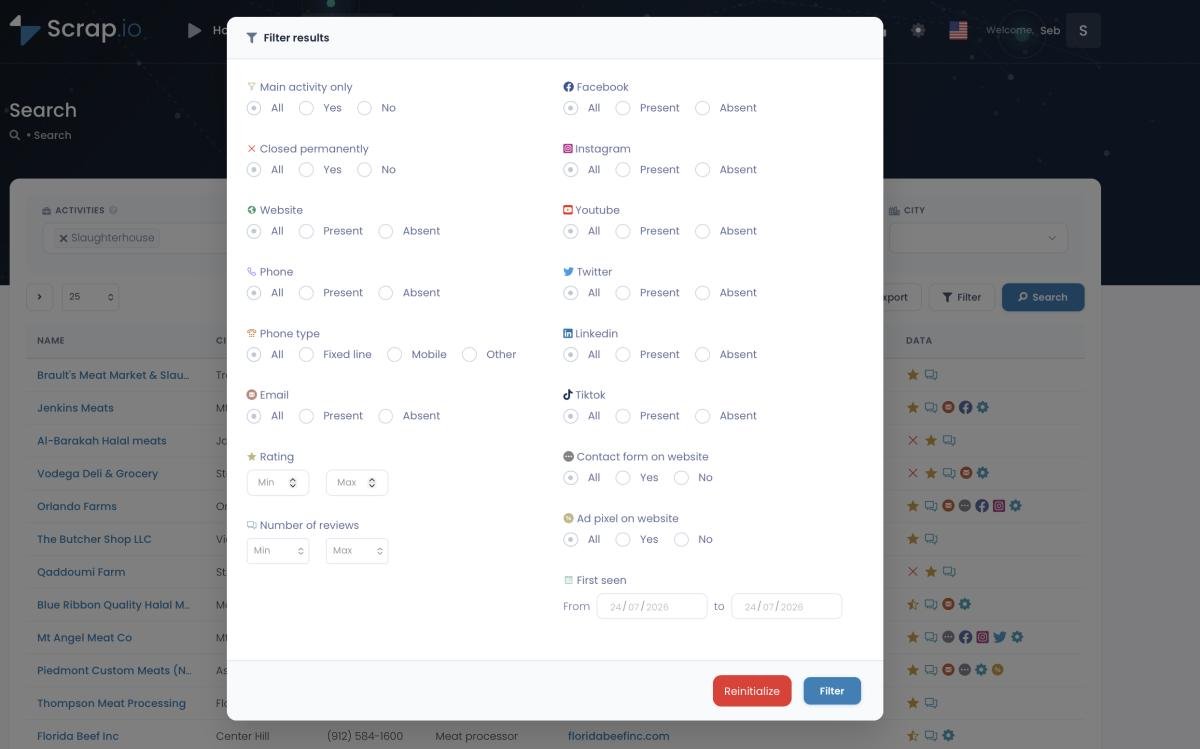
Want to see the data before you commit? Scrap.io offers a free trial with 100 leads included. Search "heating contractor" in any US state, apply filters (email available, 4+ stars, 10+ reviews), and preview the results before exporting. Filters apply before you spend a single credit, so you never pay for a record you can't use. No surprises.
Scrap.io vs Traditional Providers
OK so you've decided not to build your list manually (smart). The real question is: should you buy from a traditional provider or use a live scraping tool? Here's a direct comparison, and I'm not going to pretend to be neutral, but the numbers speak for themselves.
Traditional providers like DataCaptive and similar companies compile lists from public records, business registrations, and web crawls. They sell the same dataset to multiple buyers. The data is refreshed quarterly at best. And minimum orders typically start at 500–1,000 contacts, which means you're paying for records you don't need just to access the ones you do.
Scrap.io pulls directly from Google Maps and business websites in real time. You only pay for what you export. Filters are applied before extraction, so zero wasted credits. And because the data comes from Google's own index, you're getting the most current business information available anywhere online.
| Criteria | Scrap.io | Traditional Providers |
|---|---|---|
| Price per contact | < $0.005 | $0.03–$0.07 |
| Data freshness | Real-time | Quarterly updates at best |
| Filters | Location, rating, reviews, website, email, category, keywords | Location, SIC code, company size |
| Coverage | 225M+ businesses, 195 countries | Varies (often US-only) |
| Compliance | GDPR + CCPA compliant | Varies by provider |
| Minimum order | 1 contact | 500–1,000 contacts |
Point is, if you're looking for the best heating contractor email list providers, the answer depends on your needs. Traditional works for one-time campaigns where freshness doesn't matter. But for ongoing outreach, lead generation, or any situation where you need current data? Not even close.
Oh, and Scrap.io covers more than just heating. You can pull an electrician email list, a plumber email list, a roofing contractor email list, or an air conditioning contractor database using the same tool. One platform, 4,000+ business categories.
Try it yourself. Start your 7-day free trial, 100 leads included. Search "furnace repair" or "boiler installation" in your target market and export your first heating contractor list in minutes. Rated 4.8 on Capterra and 4.9 on G2, with 50,000+ professionals already on board.
Real B2B Success Stories (With Sources)
Theory is nice. Results are better. Here are real companies that used email and data-driven outreach to generate measurable revenue from contractors, with links to the original sources.
Jupiter-Tequesta AC: $60K+ from a Single Email Campaign
Jupiter-Tequesta, a Florida-based HVAC contractor, ran a "We Miss You" email campaign targeting past customers who hadn't booked service in over a year. The result? $4,000 in revenue the first week, scaling to over $60,000 as the campaign continued. The full case study is documented by ServiceTitan. Dead simple concept, massive return. And it started with a clean, segmented contact list.
ServiceTitan: $1M in Additional Revenue Through Follow-Up
ServiceTitan's own data shows that contractors using systematic email and follow-up processes generate up to $1 million in additional revenue that would otherwise be lost. Their platform also helped contractors achieve a 70% increase in review volume in 2024, reviews being a direct lead generation channel for residential heating contractors. The pattern is clear: contractors who use data well make dramatically more money.
Andava: B2B SaaS HVAC Marketing at Scale
Andava's HVAC B2B SaaS case study documents how a software platform targeting HVAC contractors achieved 40%+ engagement at a tradeshow by combining targeted email outreach with in-person events. The key? They didn't blast a generic list. They used segmented heating company email leads to identify and pre-warm specific contractor profiles before the event. That's the difference between a booth nobody visits and one that's packed.
PostcardMania: $285K from HVAC Marketing
PostcardMania has published 34 HVAC marketing case studies. One standout: a heating and cooling company that generated $285,000 in revenue from a multi-channel campaign that included targeted direct mail and email. Nope, email wasn't the only channel, but it was the backbone of their lead nurturing sequence.
Arch: AI-Powered Contractor Marketing
Arch, integrated with ServiceTitan, is using AI-powered marketing tools to help contractors automate their heating contractor lead generation email campaigns. The takeaway? The industry is moving fast toward automation. Contractors who aren't reachable by email are increasingly invisible to the tools and platforms that drive business their way.
Wild. Five different approaches, one common thread: the campaigns that worked all started with quality contact data. Garbage in, garbage out. On Quora threads about cold email best practices, marketers consistently report that terrible quality prospect lists are the #1 reason outreach campaigns fail. (Trust me on this one.)
Email Marketing Best Practices
Having a heating contractor email list is step one. Getting replies is step two. And step two is where most people fail spectacularly. Here's what actually works for bulk heating contractor emails for cold outreach. For the full playbook, our cold emailing strategy guide breaks down the 2026 benchmarks with real numbers.
Subject Lines That Don't Get Deleted
Heating contractors get pitched all the time. Your subject line needs to be specific and relevant, not clever. "Quick question about your furnace installs in [City]" beats "Exciting partnership opportunity!!!" every single time. Personalization isn't optional. It's the minimum.
Timing Is Everything
Remember the seasonality point? Don't pitch heating contractors in January. They're slammed. Late July through September is your window: they're planning for the upcoming season, have time to evaluate new tools, and are actually reading email. Tuesday through Thursday, early morning (6-7 AM) or late evening (8-9 PM), that's when contractors check their inbox.
Segmentation Over Volume
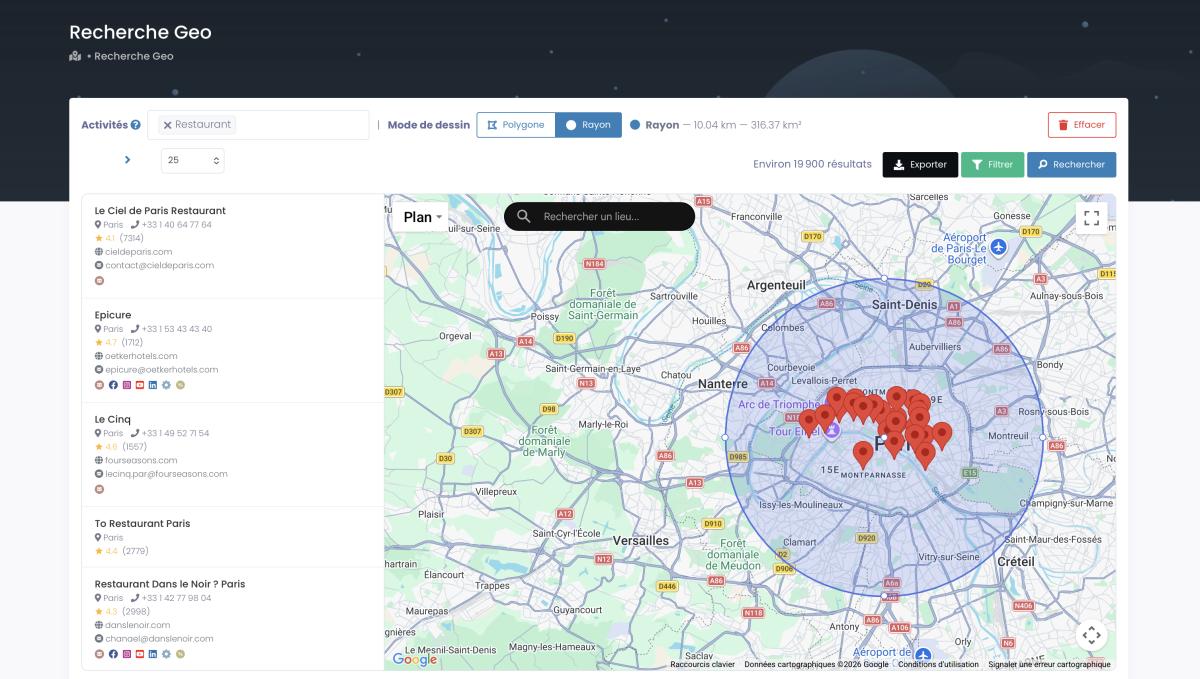
Don't blast all 22,783 heating contractors with email in one campaign. Segment by geography, company size (use review count as a proxy), specialization (furnace vs. boiler vs. radiant), and whether they're residential or commercial. A furnace installer in Minnesota has completely different pain points than a boiler specialist in New York. Scrap.io's GeoSearch lets you draw a radius or polygon around a single metro so you segment by territory before you export.
The Follow-Up Sequence
One email isn't a campaign. It's a coin flip. Research consistently shows that 3-5 follow-ups are where the real responses come from. Space them 3-5 business days apart. Each follow-up should add new value: a case study, a stat, a specific observation about their business, not just "bumping this to the top of your inbox."
And honestly? Keep it short. Heating contractors aren't reading 500-word emails. 75-125 words. State who you are, why it matters to them specifically, and one clear call to action. Done. For more on compliance with your outreach, check our cold email compliance guide.
Clean Your List Before Sending
Even with fresh data, always run your list through an email verification tool before hitting send. Bounces above 3% damage your sender reputation. With an HVAC heating email database 2026 from Scrap.io, you start with real-time data, but verification is still a best practice, especially if you're holding the list for more than a few weeks before your campaign.
Legal Compliance
Yes, it's legal to email heating contractors. No, you can't do whatever you want. Here's the short version.
CAN-SPAM (US): You must include your physical address, a clear unsubscribe mechanism, and accurate "From" headers. No deceptive subject lines. Honor opt-outs within 10 business days. Penalties: up to $51,744 per violation. Nope, that's not a scare tactic, it's the FTC's actual number.
GDPR (EU): If any of your heating contractor contacts are EU-based, you need a lawful basis for processing (legitimate interest typically applies for B2B outreach). You must provide a way to opt out and respond to data deletion requests. Scrap.io is GDPR and CCPA compliant.
CCPA (California): California contractors have the right to know what data you've collected and to request deletion. If you're emailing California heating contractors, you need a privacy policy that covers this.
The practical takeaway: use a proper email sending tool (not Gmail), include unsubscribe links, honor opt-outs immediately, and keep records of your compliance. A free heating contractor email list you found on some random website? Almost certainly non-compliant, and potentially a legal landmine. For the complete breakdown, see our contractor email list guide.
Measuring ROI
You sent the emails. Now what? Here are the metrics that actually matter for heating contractor outreach, and the benchmarks to compare against.
Open rate: Industry average for B2B cold email sits around 20-25%. With a well-segmented heating contractor email list and personalized subject lines, you should aim for 30%+. Below 15%? Your data is stale or your subject lines need work. (Or both.)
Reply rate: Good cold email campaigns to contractors pull 3-8% reply rates. The Jupiter-Tequesta case study showed what's possible when you combine quality data with the right message: they turned a simple re-engagement email into $60K+.
Bounce rate: Keep it under 3%. With real-time data from Scrap.io, you should be well under 2%. If you're bouncing above 5%, your list is trash. Full stop.
Cost per lead: With Scrap.io's Basic plan at $35-49/month for 10,000 credits, you're looking at under $0.005 per contact. Compare that to Google Ads for "heating contractor" keywords, which run $15-40 per click. Even if only 5% of your email recipients become leads, your cost per lead is still a fraction of paid advertising.
Revenue per campaign: The ServiceTitan data shows contractors generating $60K+ from single email campaigns. Even at a more conservative scale, a B2B vendor closing just one $5,000 deal from a 1,000-contact email campaign is looking at a 10,000%+ ROI. The math works.
Video: Scrap.io - How to Start?
FAQ
How much does a heating contractor email list cost?
Prices range from free (manual Google Maps research) to $0.03-$0.07 per contact from traditional providers. With Scrap.io, costs drop below $0.005 per contact. Plans start at $35/month for 10,000 export credits. A 7-day free trial with 100 leads included lets you test the data quality before committing.
How many heating contractors are there in the US?
There are 49,169 heating contractors listed on Google Maps in the US (Scrap.io, August 2026). Of those, 22,783 (46.3%) have an email address and 35,300 (71.8%) have a website. The broader HVAC industry includes over 120,000 businesses according to IBISWorld.
Is it legal to email heating contractors?
Yes, B2B cold email is legal in the US under CAN-SPAM, provided you include your physical address, an unsubscribe mechanism, and accurate headers. GDPR applies if you're emailing EU-based contractors. CCPA applies for California contacts. Always use a proper sending platform and honor opt-out requests immediately.
What open rates should I expect?
B2B cold email averages 20-25% open rates. Well-targeted heating contractor campaigns with personalized subject lines typically hit 30%+. Factors that matter most: data freshness, subject line relevance, sending time (Tuesday-Thursday mornings), and sender reputation.
How often should heating contractor data be updated?
Monthly is ideal. Quarterly is the absolute minimum. Business email addresses change, companies close, new contractors launch, static data decays at roughly 2-3% per month. Live scraping tools like Scrap.io eliminate this problem entirely because every export pulls current Google Maps data.
Generate Your Heating Contractor List Now
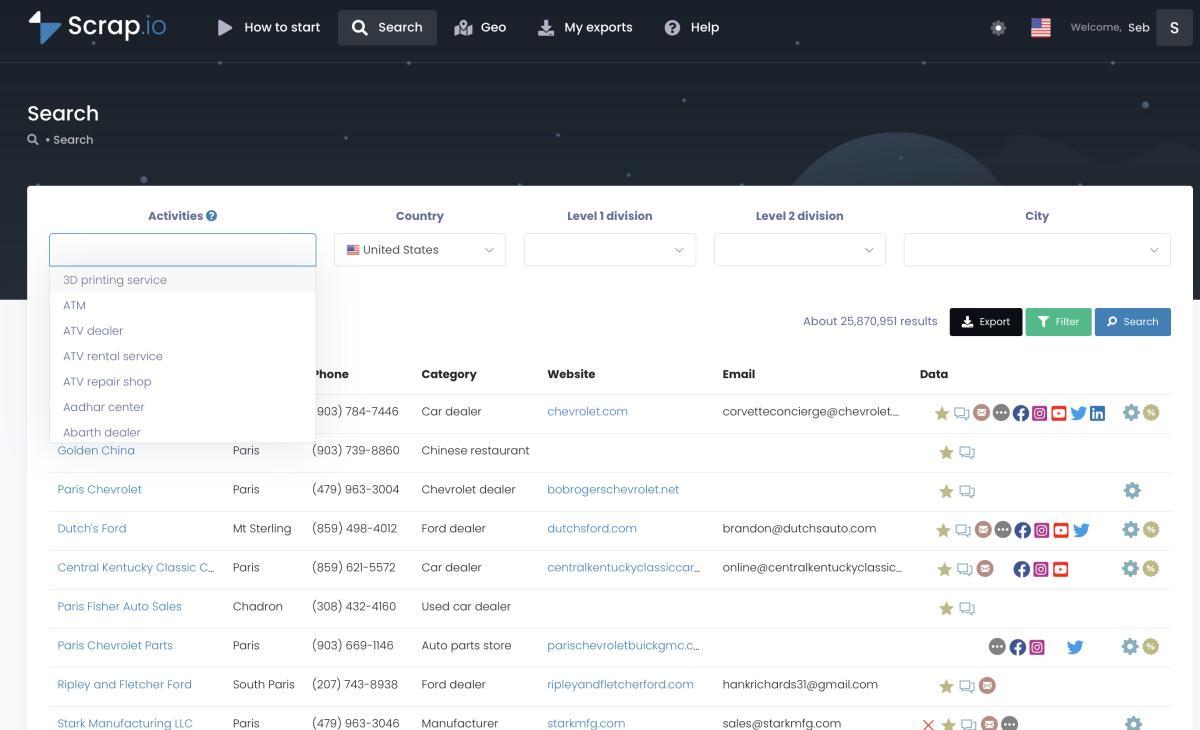
You've seen the numbers. 49,169 heating contractors. 22,783 verified emails. A $159.4 billion market growing at 2.6% annually. Real case studies showing $60K+ returns from single email campaigns.
Or you could keep searching for a heating contractor contact list pdf from 2023 and wonder why your bounce rate is 25%. Your call.
Scrap.io indexes 225 million+ businesses across 195 countries with 4,000+ categories. Over 50,000 professionals use it for lead generation. The data comes from Google Maps and business websites: real-time, not cached. You filter before you export, so every credit goes toward contacts you actually want. Need the whole country in one shot? The Company plan pulls a national list without touching a line of code.
Whether you need a residential heating contractor email list filtered to a single state or a national furnace contractor contact list for a massive outreach campaign, the data is there. Export to CSV or Excel. Plug into your CRM or email tool. Launch your campaign today. And if you want the mechanics of pulling contacts yourself, here's how to find emails on Google Maps.
Ready to start? Get your 7-day free trial, 100 leads included. Search "heating contractor," apply your filters, and export your first list in under 10 minutes. 49,169 contractors are waiting. The only question is whether your competitor reaches them first.
Generate a list of heating contractor with Scrap.io