

In 2026, the average cold call converts at 2.7%. The best teams clear 11%. Same phones, same market, same tired objections on the other end. The difference isn't some secret closing gene. It's energy, and it's the list.
Here's the part nobody in sales training wants to admit: cold calling is only miserable when you make it miserable. Bad data, no game, no reason to care past dial #40. That's the recipe for dread. Flip those three things and the phone stops feeling like a punishment. So this is the guide on how to make cold calling exciting, backed by 2026 numbers instead of hype. Nine tips. Let's go.
The 9 tips at a glance:
- Know why cold calling still works in 2026 (so you believe it)
- Make the mindset shift from "I have to" to "I get to"
- Build a call list worth getting excited about
- Nail your opening line in 7 seconds
- Turn objections into a game you win
- Gamify your cold calling: the fun engine
- Celebrate wins and track the right numbers
- Automate the boring parts
- Follow up like the deal depends on it (it does)
1. Why cold calling still works in 2026
Let's kill the zombie myth first. "Cold calling is dead." You've heard it. Probably from someone who quit after one bad afternoon.
The data disagrees, loudly. Around three attempts capture roughly 93% of the conversations you're ever going to have with a prospect, and it takes about 1.55 dials on average to reach someone (Cognism, State of Cold Calling 2026). Cold calling isn't dead. Lazy cold calling is. Big difference.
And the buyers are still picking up. 82% of B2B buyers have accepted a meeting that started with a cold call, and 57% of C-level executives actually prefer a phone call over an email for first contact (Cognism / RAIN Group). Read that again. They prefer it.
So why does everyone feel like it doesn't work? Because most reps are calling the wrong people with the wrong number and blaming the channel. The gap between the 2.7% crowd and the 11% crowd isn't talent. It's inputs.
| Team type (2026) | Cold call success rate | What drives it |
|---|---|---|
| Average team | 2.7% | Generic list, no targeting |
| Elite, data-driven team | 6 to 11%+ | Verified data, tight ICP, follow-up |
| Reach rate benchmark | ~1.55 dials to connect | Fresh, accurate phone data |
We break the full numbers down in our deep dive on the cold calling success rate in 2026, but the headline is simple: the phone still works. You just have to work it well.
2. The mindset shift: "I have to call" becomes "I get to call"
Quick gut check. When your calling block starts, what's the voice in your head saying?
If it's "ugh, here we go again," that tone travels straight down the line. Prospects hear it in the first two seconds. Deflated reps get deflated results. It's almost eerie how reliable that is.
The reframe that works isn't some toxic-positivity nonsense about loving rejection. It's more honest than that: you're not bothering people, you're sorting them. Most won't be a fit. Some will. The phone is a filter, and every "no" moves you closer to the "yes" that pays for your month. That single shift, from enduring calls to hunting for the right ones, is the whole ballgame. If the dread still has its claws in you, we wrote a full piece on how to enjoy cold calling that goes deeper on the psychology.
One rep I know keeps a sticky note on his monitor: "I get to call." Corny? Sure. But he books meetings on a Friday afternoon while everyone else is mentally at the bar. Corny and effective beat cool and broke.
The community backs this up, in its own blunt way. Dig through the r/sales thread on the best cold call advice and the same theme keeps surfacing: the reps who last are the ones who stopped taking rejection personally and started treating each dial as a coin they flip toward the right fit. Over on a widely-read Quora thread on effective cold calling methods, one recurring answer is basically that the "fun" comes from the randomness, you never know who's about to pick up or what conversation you're walking into. Terrifying or exciting, depending on your frame. Pick excitement.
3. Build a call list worth getting excited about
Here's the uncomfortable truth most sales blogs skip: your enthusiasm dies fastest when you're dialing garbage. 27.3% of an SDR's time gets torched on bad data, according to industry analysis of prospecting workflows. Disconnected lines. Wrong contacts. Businesses that shut down in 2023. That's not selling. That's phone lottery with rigged odds.
Think about the difference in your own head. Dial, dead air, dial, voicemail, dial, wrong number. Versus: dial, conversation, dial, conversation. One of those makes you want to throw your headset across the room. The other makes the hour fly by. The fuel for an exciting calling session is a list where the numbers actually ring.
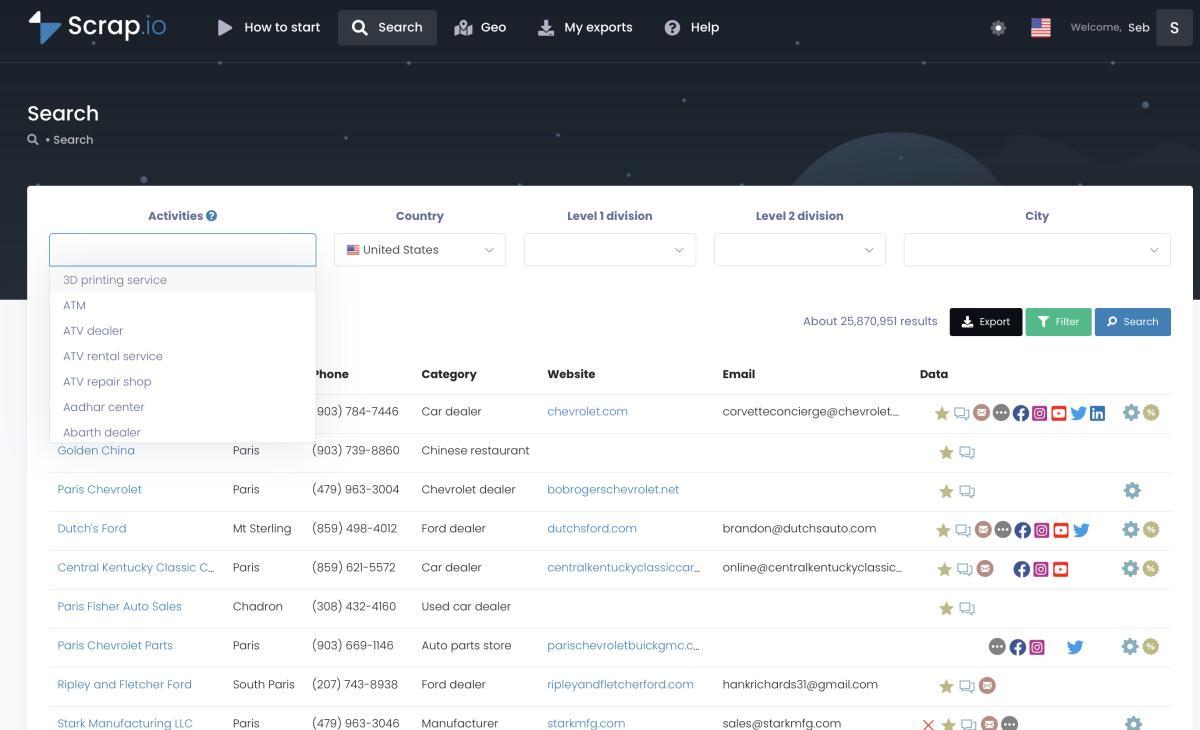
This is where a real prospecting file changes everything. Scrap.io pulls verified business phone numbers and emails straight from Google Maps, in real time, at the moment you export. Not a stale database that decayed eight months ago. It indexes 225+ million businesses across 195 countries and 4,000+ categories, so you can target the exact kind of business you want to talk to. Roofers in Ohio. Dentists in a single zip code. New restaurants that opened last quarter. Whatever your niche, the list is there.
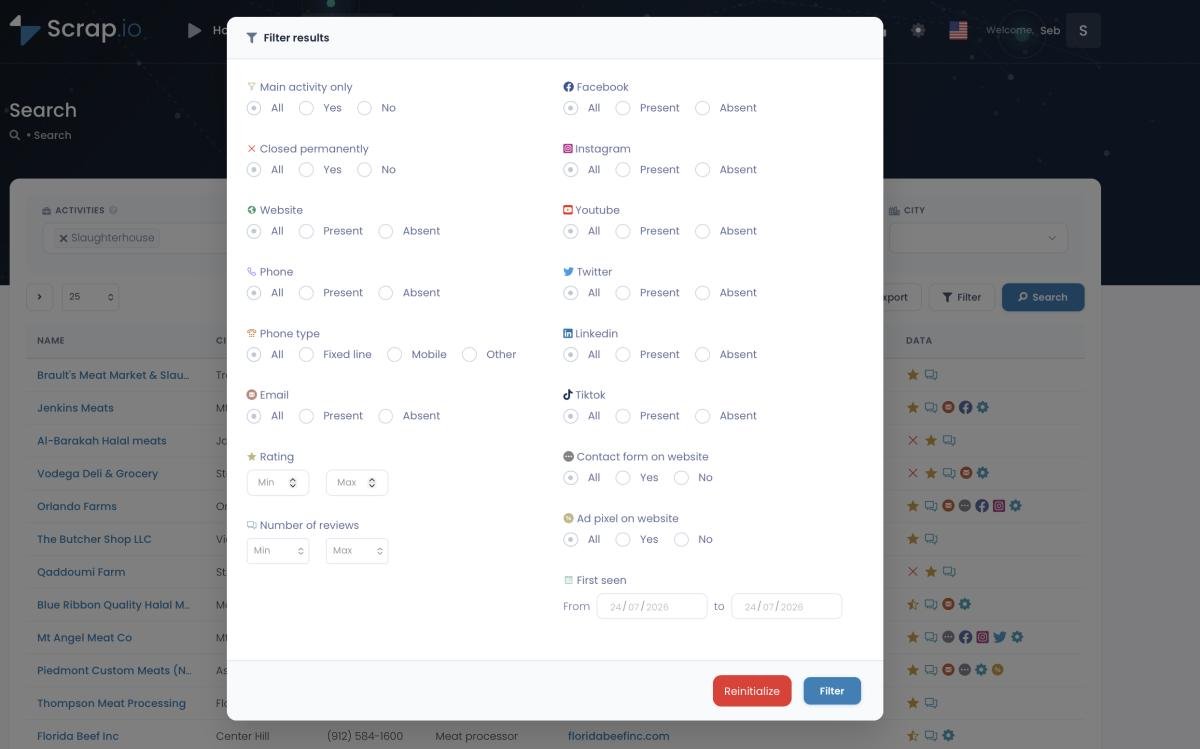
And the part that saves your credits (and your sanity): the filters run before extraction. Want only businesses with a phone number present? Filter it, and you never burn a credit on a fiche you can't call. Want fresh listings, a minimum review count, a specific category and zone? Stack the filters, then export. You pay for contacts worth dialing. Zero waste.
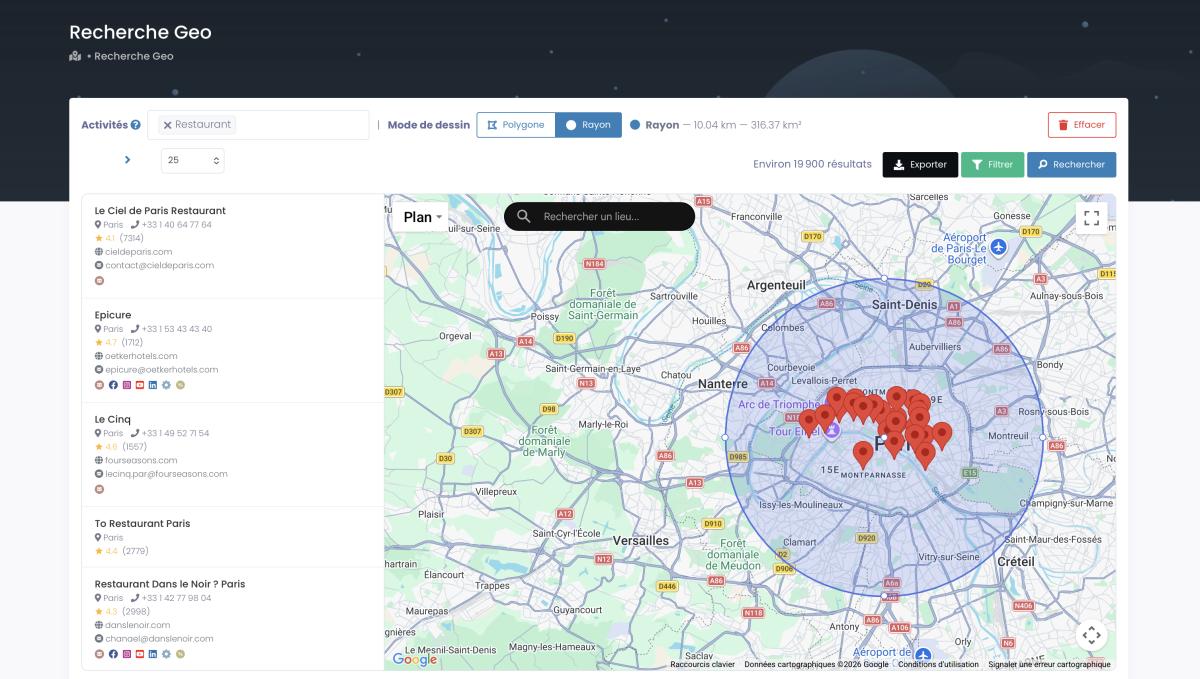
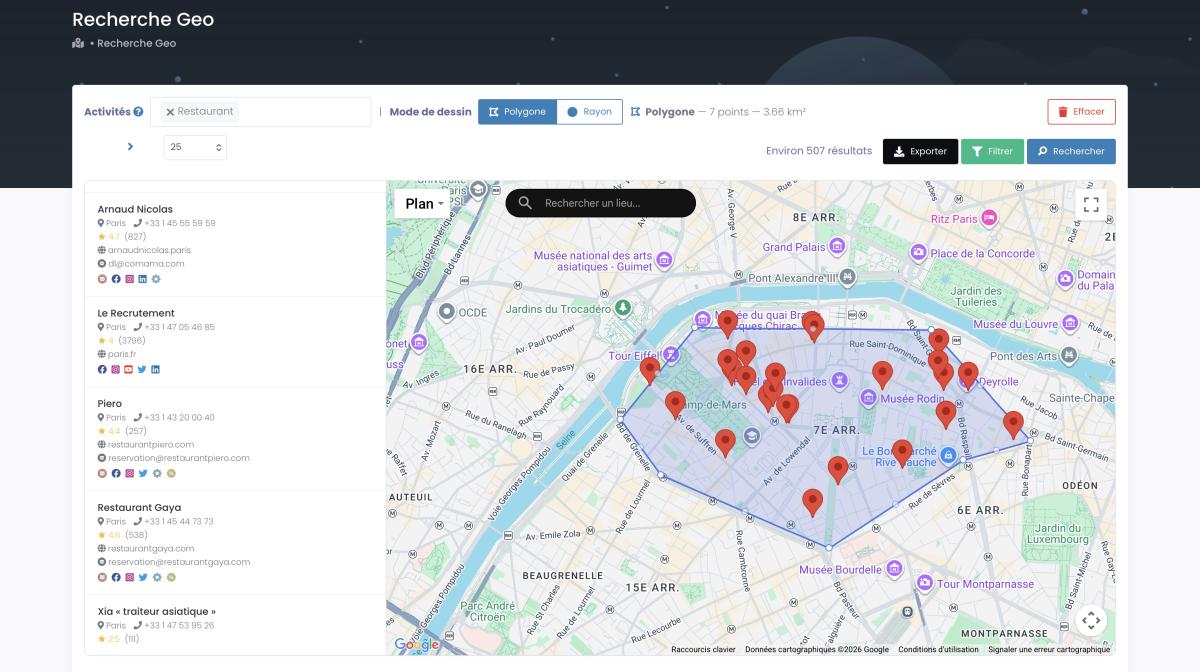
Need a whole catchment area instead of a tidy administrative boundary? GeoSearch lets you draw a radius around a point, or hand-draw a polygon over the exact neighborhood or territory you care about. No zip code required.
New to the tool? Here's the two-minute version of how it works before you build your first list.
Video: Scrap.io - How to Start?
Finding the right number matters as much as finding a number at all. A verified direct line beats a general reception desk every time. This walkthrough shows how to track down the numbers that actually connect.
Video: How to Find Someone's Phone Number by Name in 2026
Want the full system around this? Our guide to building a targeted call list and the tutorial on how to scrape phone numbers from Google Maps both walk through the mechanics step by step. One quick note for US and Canada callers: the mobile-versus-landline filter isn't available there, so lean on "phone present," fresh data, and tight category and zone targeting instead. Everywhere else, you can sort by line type too.
Build your first targeted call list in a couple of clicks. Verified numbers from 225M+ businesses across 195 countries, filtered before you spend a credit. Try Scrap.io free for 7 days, 100 leads included, and hear the difference a live list makes.
4. Nail your opening line in 7 seconds
Your prospect decides whether to keep listening in about seven seconds. Not thirty. Seven. That's less time than it took to read this sentence.
So the opener is everything. And the data on which ones work is refreshingly clear. Gong analyzed 90,380 cold calls and found that opening with "How have you been?" boosted success 6.6x (a 10.01% success rate versus a 1.5% baseline). Weird for a stranger to say? A little. That's exactly why it works. It's a pattern interrupt, and the brain doesn't auto-reject something it didn't expect (Gong Labs).
Two more from the same dataset. Stating the actual reason you're calling in the first sentence makes you 2.1x more likely to keep them talking. And the one everybody still uses, "Did I catch you at a bad time?", drops your odds by 40%. You're literally handing them the exit. Stop doing that.
| Opening line | Effect on success |
|---|---|
| "How have you been?" | 6.6x higher (10.01%) |
| Stating your reason for calling | 2.1x more likely to continue |
| "Did I catch you at a bad time?" | 40% less likely to book |
John Barrows, who has trained reps at Salesforce, LinkedIn, and Google for 25 years, hammers the same point: you're not selling your product on a cold call, you're selling the next step. Fifteen seconds, a specific reason, a question that earns you the next minute (JB Sales). Clean and simple.
Why does a great opener make cold calling exciting, not just effective? Because momentum is fun. When your first line lands and the prospect actually engages, you get a little hit of "oh, this is working." String a few of those together and the hour feels like a game instead of a grind. For the full playbook, steal from our breakdown of cold call opening lines and grab a proven cold call script to riff from. Don't read it word for word, though. Robots get hung up on.
5. Turn objections into a game you win
Here's a stat that should change how you feel about the word "no." Roughly half of all objections on cold calls are reflexive brush-offs, not real rejections. The prospect hasn't processed what you said. They're on autopilot, protecting their morning.
So stop treating "not interested" like a door slamming. Treat it like the first move in a game you actually know how to play. The rep who argues loses. The rep who pauses, asks one curious question, and keeps the conversation breathing wins. "Totally fair. Quick question, what are you doing right now to bring in local customers?" Watch how often that flips a dead call into a live one.
And here's the fun reframe: objections are points on the board. Every one you handle well is a tiny victory, a puzzle solved. Keep a tally of the ones you turned around today. Suddenly the pushback isn't draining, it's the scoreboard. When you've built that muscle, the whole activity gets weirdly satisfying. Our full objection-handling playbook gives you a repeatable framework so you're never caught flat-footed. Learn it once, use it forever.
The single most upvoted idea in the r/sales discussion on the best cold calling tip people have found? Slow down and get curious after a "no." Reps there describe pausing, asking one real question, and letting the silence do the work, instead of panic-pitching the second they hear resistance. Sound familiar? It's the same move the pros use, just discovered the hard way, one awkward call at a time.
6. Gamify your cold calling: the fun engine
This is the section that actually makes cold calling exciting instead of just tolerable. And the numbers behind it are genuinely wild.
Gamification, done right, produces up to +59% more activity, roughly +30% margin gains, and as much as 7x more conversations for sales teams (Spinify). On the human side, 90% of employees say they feel more motivated when their work is gamified, and 95% say they enjoy the gamified elements. It works because it hijacks the same dopamine loop that makes you check your phone ninety times a day. Except now you're booking meetings instead of doom-scrolling.
You don't need fancy software to start. A few ideas that cost nothing:
- The paperclip method. Two jars, a pile of paperclips, move one after every call. Physical progress you can see by 3 PM. Stupid simple. Stupidly effective.
- The rejection game. Set a goal to collect ten "no"s today. Try to get rejected. What happens is funny: while you're relaxed and chasing "no," you accidentally book meetings.
- Call bingo. Squares like "got past the gatekeeper," "prospect laughed," "someone named a competitor." Crossing them off turns random dials into a hunt.
- Streaks. Five calls in a row without checking your phone. Duolingo figured this out years ago: humans hate breaking a streak more than they enjoy starting one.
Want to scale it across a team? Platforms like Spinify and Ambition build leaderboards that sync straight to Salesforce, run contests, and push live scorecards to the wall. Ambition's own data points to results like 7x conversation rates and 90%+ of new SDRs hitting their onboarding quotas once the work is gamified. Turns out a scoreboard changes your emotional relationship with the phone.
But here's the honest caveat, because I'd rather tell you the truth: gamification on top of a bad list is lipstick on a corpse. A leaderboard full of disconnected numbers just makes everyone competitively miserable. The best fuel for a leaderboard is a list packed with live, reachable numbers. Get that right first, then add the game.
The best fuel for a leaderboard? A list full of live, reachable numbers. Scrap.io pulls verified phone numbers in real time from Google Maps, so every dial your team logs is one that can actually ring. Start free, 100 leads included.
7. Celebrate wins and track the right numbers
Most teams measure the wrong thing. Call volume isn't a KPI. It's an activity metric. There's a difference, and confusing the two is how you build a floor full of burned-out reps hammering dials to hit a number that means nothing.
Track the middle metrics instead. Connect rate. Conversation rate. Meeting rate. Those tell you whether your data, your timing, and your opener are actually working, or whether you're just busy. Busy isn't the same as productive. Ask anyone who's made 200 dials to nowhere.
And celebrate effort, not just outcomes. Outcomes are partly luck. Effort is 100% choice. "Great job trying that new opener" builds a team that sticks around. "Congrats on the meeting" alone builds a team that quietly resents the coin-flip. End every calling block with a 5-minute huddle: best conversation, funniest rejection, one thing you learned about the market. The team that laughs together dials together. Yeah, that was terrible. I'm keeping it.
8. Automate the boring parts
Nobody got into sales because they love hand-copying phone numbers off a website into a spreadsheet. The boring, repetitive prep is where enthusiasm goes to die. So automate it.
The upstream work, building and refreshing your call list, is exactly the kind of thing you should never do by hand again. Scrap.io sits at the front of your workflow: you pick a category and a zone, apply your filters, and export a clean CSV or Excel file straight into your dialer or CRM. A real client pulled 11,734 businesses in 45 minutes. Try doing that manually. I'll wait.
Because filters run before extraction, you can tell the tool "only businesses with a phone number present" and it won't waste a single credit on a dead entry. That one setting alone saves you from the number-one enthusiasm killer: reaching for a fiche and finding nothing there. Pair Scrap.io with your dialer for the calls, a CRM for the notes, and a Make.com or n8n workflow to glue it together, and the only thing left for you to do is the part humans are good at. Talking.
And this isn't fringe behavior anymore. Salesforce's research found that 83% of sales teams using AI report revenue growth, and reps save roughly two hours a day once the admin and dead-number busywork gets automated away (Salesforce, State of Sales). Two hours. That's the difference between clocking out drained and clocking out with a full pipeline.
Working a whole region or country? This walkthrough shows how to pull local leads at national scale, which is where the manual approach completely falls apart.
Video: How to Scrape Local Leads at the Country Level
Stop hunting numbers by hand. Let Scrap.io filter "phone present" before you spend a single credit, then export a call-ready list in minutes. Try it free for 7 days, 100 leads included.
9. Follow up like the deal depends on it
Because it does. Here's the stat that separates the reps who win from the ones who quit: 93% of the people who eventually convert are reached on the sixth contact, yet nearly half of reps give up after the first attempt (Cognism, 2026). Half. They walk away from deals that were sitting there, waiting for someone persistent enough to show up again.
Follow-up is where the excitement compounds. The first call plants a seed. The second one, the prospect half-remembers you. By the third, you're not a stranger anymore, you're the person who keeps bringing something useful. And "useful" is the key word. Every touch needs a reason to exist beyond "just circling back." A relevant article. A competitor insight. A quick note about their new location. Never, ever "just circling back."
Better yet, warm the lead up before you even dial again. A quick LinkedIn engagement, a value-first email, then the call, and now you're basically warming up your next call instead of starting from zero every time. Warm conversations convert several times higher than cold ones on the same list. Same product. Same rep. Just a smarter sequence.
Stay excited AND compliant: TCPA and DNC
Nobody reads this section until they get a cease-and-desist. Read it anyway. Nothing kills the mood faster than a legal letter.
In the US, the TCPA (Telephone Consumer Protection Act) restricts autodialed calls, prerecorded messages, and unsolicited texts. Fines run up to $1,500 per violation. Per call. Companies have settled for eight figures, so this isn't theoretical. Scrub your list against the National Do-Not-Call Registry before every campaign, not once, every time. B2B gets partial exemptions, but partial doesn't mean total.
Calling into the EU or UK? GDPR wants a lawful basis (legitimate interest can work for B2B), and you need to be upfront about where you got the number. Don't spoof your caller ID, either, that's its own separate problem. On the sourcing side, Scrap.io only pulls publicly available business data, is GDPR and CCPA compliant, and every record traces back to its source, so when someone asks "where did this come from," you can actually answer. The call-time compliance (DNC, TCPA) is on your team, but starting from clean, traceable data makes the whole thing far less stressful.
Funny thing: teams that take compliance seriously tend to see better conversion, not worse. Clean lists remove the junk that tanks your averages. Doing it right pays off twice.
Conclusion: your next exciting call starts with a better list
None of this is complicated. Believe in the channel, because the data says you should. Flip your mindset from chore to hunt. Nail the opener. Turn objections into points. Add a game. Track what matters, celebrate the effort, automate the boring prep, and follow up past the point where everyone else quits. Do that, and cold calling stops being the thing you dread and becomes the thing you're weirdly good at.
But every single one of those tips leans on the same foundation: a list of numbers that actually ring. You can have the best opener on the floor and the slickest leaderboard in the building, and none of it matters if a third of your dials hit dead air. Fix the list, and everything else gets easier and, honestly, more fun.
Your next exciting call starts with a better list. Scrap.io extracts verified phone numbers and emails from 225M+ businesses across 195 countries, in real time, filtered before you spend a credit. Try Scrap.io free, 7 days, 100 leads included.
FAQ
How do I make cold calling fun (or at least not hate it)?
Three levers move it fastest. Start with a list you trust, so you're reaching real humans instead of dead lines. Add a game layer: points, streaks, a leaderboard, even a jar of paperclips. Then reframe the job as helping the right people rather than bothering everyone. Teams that gamify their sales process see up to +59% more activity (Spinify), and the enjoyment follows the momentum.
What's the success rate of cold calling in 2026?
The average is around 2.7%, based on Cognism's analysis of 200K+ calls. Elite, data-driven teams hit 6 to 11%+. The gap is almost entirely about list quality and targeting, not talent. Better inputs, better output.
Does cold calling still work in 2026?
Yes. Roughly three attempts capture about 93% of the conversations you'll have with a prospect, and 82% of B2B buyers have accepted a meeting that began with a cold call. The channel isn't dead. Unprepared, bad-data cold calling is.
What is the best cold call opening line?
Gong's study of 90,380 calls crowned "How have you been?" the winner at 6.6x the baseline success rate. Stating your actual reason for calling adds 2.1x. And avoid "Did I catch you at a bad time?", which cuts your odds by 40%.
How many cold calls a day is realistic?
Precision beats volume. A tight, phone-verified list of 30 to 50 well-researched dials will outperform 200 random ones almost every time. When your data is clean and it takes roughly 1.55 dials to reach someone, you don't need to crank the volume, you need to aim it.
By L'Équipe Scrap.io. Cold calling gets more exciting the second every dial counts, and that starts with a list built on real, verified data.
Generate a list of restaurant with Scrap.io