

Last month, a guy selling ServiceTitan integrations told me he'd blown $3,200 on an HVAC contractor email list from a "premium" data provider. Bounce rate? Thirty-one percent. Nearly a third of the list was dead. Retired contractors, closed shops, emails that haven't worked since 2022. He wasn't happy. (Understatement.)
Here's the thing nobody in B2B data wants to admit: the US HVAC market is worth $159.4 billion in 2026, with 120,461 active businesses according to IBISWorld. That's enormous. And 425,200 employed technicians per the Bureau of Labor Statistics. But most of these companies don't have a LinkedIn page. They're not publishing thought pieces. They're crawling through ductwork at 6 AM, and the only way you're reaching them is email — or maybe a phone call if they pick up between jobs.
So finding a reliable hvac contractor email list matters. A lot. This guide covers where the good data actually lives, what real companies have done with it, and how not to waste your money like my ServiceTitan friend did.
An HVAC contractor email list is a database of verified email addresses, phone numbers, and business details for heating, ventilation, and air conditioning companies across the US. B2B marketers, SaaS companies, equipment suppliers, and agencies use these lists to reach HVAC professionals through targeted outreach — cold email, direct mail, phone campaigns, or a mix of all three.
Video: Scrap.io - How to Start? A two-minute look at pulling a fresh contractor list from the map.
Table of Contents
- Why HVAC Contractors Are One of the Hottest B2B Targets in 2026
- Where to Buy HVAC Leads and Email Lists in 2026
- How to Get HVAC Leads That Actually Convert
- Real B2B Companies That Target HVAC Contractors (And Their Results)
- How to Use an HVAC Email List for Maximum ROI
- Is It Legal to Buy HVAC Email Lists? Compliance Guide
- FAQ — HVAC Contractor Email Lists
Why HVAC Contractors Are One of the Hottest B2B Targets in 2026
I'll skip the preamble. Numbers first.
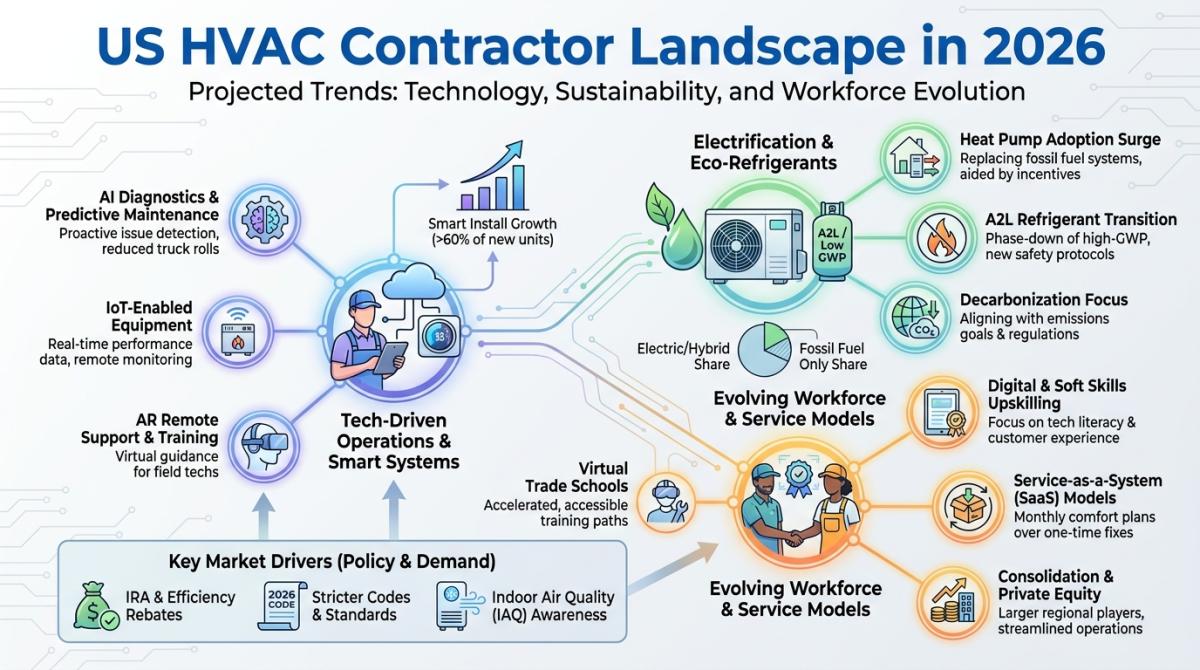
The HVAC contractor industry in the US hit $159.4 billion this year (IBISWorld, 2026). There are 120,461 businesses operating, employing around 425,200 technicians (BLS, 2024). Employment is projected to grow 8% through 2034 — compare that to the national average of 3%. Oh, and 72% of HVAC firms say they can't find enough qualified workers (ACCA survey, 2024). That staffing crunch alone creates opportunities for anyone selling recruiting tools, training platforms, or workforce management software.
Geographically? The South owns 38% of the HVAC services market (Mordor Intelligence, 2025). Texas, Florida, Georgia — that's where the density is. Makes sense when you think about it. Nobody in Tucson treats air conditioning as optional.
Who's actually trying to sell to these contractors? The list is long. SaaS companies — ServiceTitan, Housecall Pro, BuildOps — all competing for the same field management dollar. Marketing agencies pitching local SEO packages. Equipment manufacturers needing distribution channels. Financing companies offering equipment loans. Staffing firms scrambling to fill those empty technician roles.
Every single one of them needs the same thing: a way to reach HVAC professionals directly. And since most heating and cooling contractors aren't hanging around on LinkedIn writing posts about "leadership in trades"... that means you need a list of HVAC companies with working email addresses. Actual, verified, deliverable addresses. Not a CSV file from 2023.
Where to Buy HVAC Leads and Email Lists in 2026
You've got three roads here. Each one has a catch.
Static database providers. InfoGlobalData, DataCaptive, and similar companies sell pre-built HVAC contractor databases. You pay $0.10–$0.50 per contact, get a CSV, and cross your fingers. These lists update quarterly — maybe. Some contacts are months old by the time you hit "send." Bounce rates between 20% and 30% are standard. Worse: your competitors probably bought the exact same file last Tuesday. That's not a competitive advantage. That's a coin flip with someone else's coins.
Manual research. Building your own contractor email list from scratch. Google Maps, Yelp reviews, trade association directories, one company at a time. I've watched teams spend four or five months doing this. By the time they finished their spreadsheet, half the contacts had already moved, retired, or changed their business email. At $20/hour, and maybe 15 verified contacts per hour on a good day, you're spending over a dollar per lead just in labor. The tools, the verification service, the spreadsheet chaos — all extra. If you insist on going manual, at least read how to find emails on Google Maps first so you're not doing it the slowest possible way.
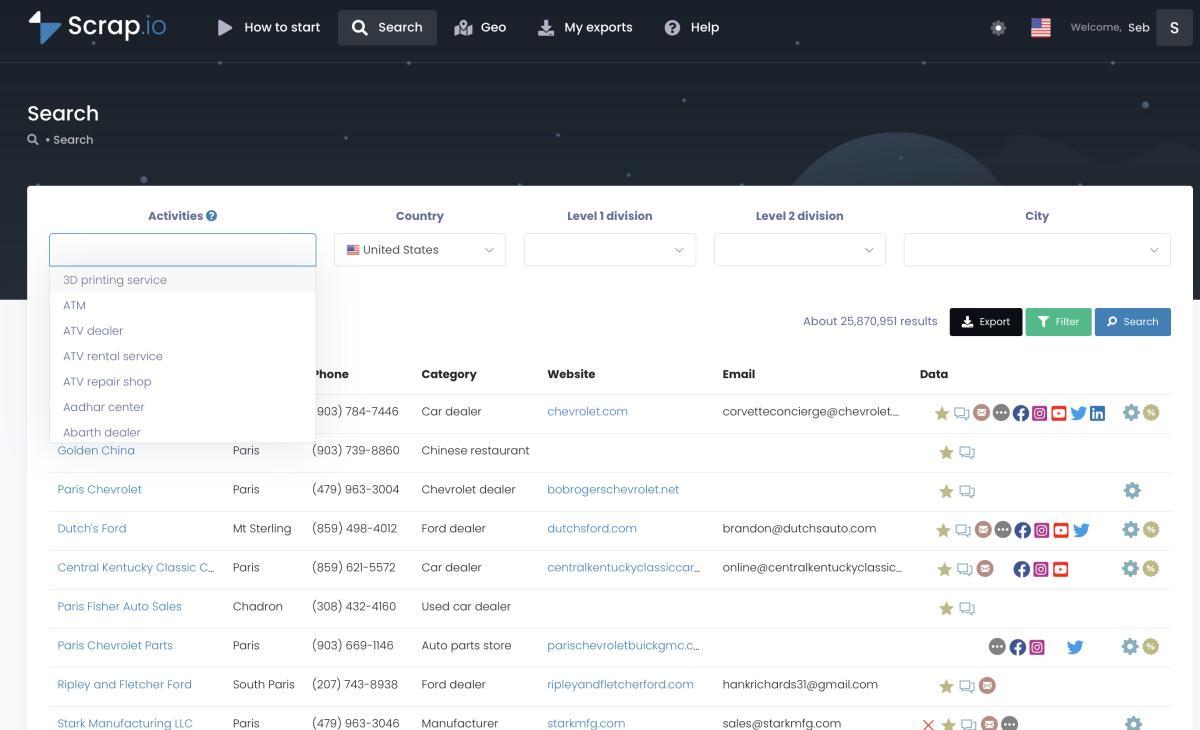
Real-time scraping. This is where things shifted. Platforms like Scrap.io pull HVAC contractor contact data straight from Google Maps and public business listings. Not last quarter's data. Today's. You search, you filter, you export. The contacts exist because somebody verified them five minutes ago, not five months ago.
Video: How to Scrape Local Leads at the Country Level — pulling an entire state or country of contractors in one export.
Here's how the three approaches actually compare:
| Feature | Static Databases | Manual Research | Scrap.io |
|---|---|---|---|
| Data freshness | Quarterly updates | Manual (slow) | Real-time |
| HVAC contacts available | Varies | Whatever you find | 73,277+ |
| Cost per 10K leads | $1,000–$5,000 | $10,000+ (labor) | ~$50 |
| Bounce rate | 20–30% | 5–15% | <5% |
| Filters (70+ data points) | Basic | None | Advanced |
| CAN-SPAM compliance | Unclear sourcing | You control it | Public business data |
| Competitor overlap | High | Low | Low |
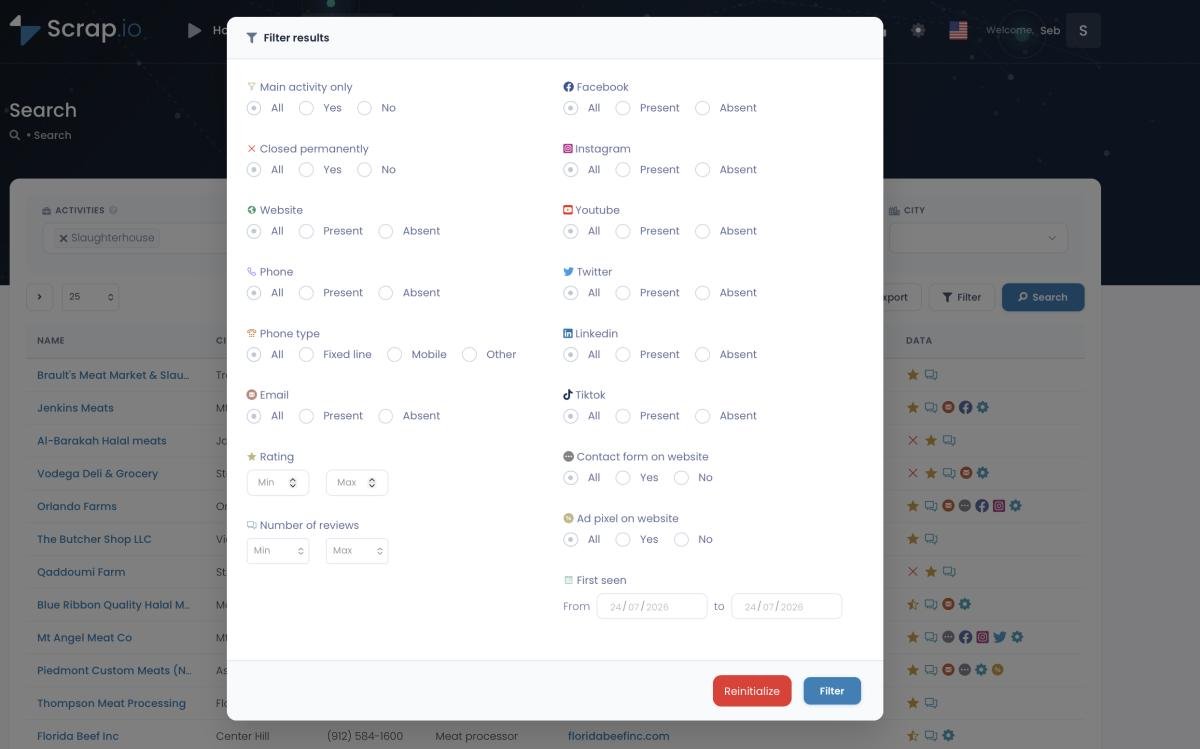
Scrap.io indexes 73,277 HVAC contractors right now — 35,575 with a verified email, 55,376 with a website, plus phone numbers, Google ratings, social profiles, and 70+ other data points. Filter by state, city, review score, company size. Two clicks and you're exporting. Want just a residential hvac contractor email list, or only hvac company owners email addresses in a single metro? Filter for it before you spend a credit. Same for a state-level cut — a hvac contractor email list california pull is a zone selection, not a separate product you buy.
Try it here — 100 free leads to test. Scrap.io filters to email-present contacts before a single credit is spent, so of those 73,277 HVAC contractors you only pay for the 35,575 that actually have an address you can write to. Fresh data, pulled from Google Maps the moment you export. Start your free trial →
How to Get HVAC Leads That Actually Convert
A buddy of mine runs outbound for a 12-person roofing supplier in Nashville. Last year, he switched from a traditional database to real-time scraped HVAC data. Kept his email templates identical. Same subject lines, same offer, same CTA. His reply rate jumped from 2.1% to 8.7%. The only variable that changed was the list quality.
That tells you everything. The quality of your hvac contractor email list matters more than whatever clever copy you spent three hours writing. A beautiful email means nothing when a quarter of your sends bounce and another quarter land in inboxes that haven't been checked since the Obama administration.
Video: Two entrepreneurs, same HVAC contact list, completely different results. Watch what made the difference.
Beyond buying email lists, here are the other ways people source HVAC contacts — and my honest take on each:
Google Maps scraping — fastest route for local targeting, hands down. Pull businesses with emails, phone numbers, reviews, service categories. Scrap.io automates the whole process so you're not copy-pasting from Maps for six hours straight. If you're building from zero, our guide on how to build a cold email list walks through the exact filter-then-export flow.
LinkedIn — works for finding HVAC company owners, especially at commercial outfits with 20+ employees. But the small residential guys? Forget it. Most of them don't have profiles, and the ones who do haven't logged in since they created the account.
Trade shows — AHR Expo, ACCA conferences, regional meetups. Phenomenal for building trust and shaking hands. Terrible for scale. You'll collect 40 or 50 business cards over three days. A scraping tool gives you 50,000 contacts over coffee.
Referral programs — slow, but the leads are gold. If you already serve HVAC clients, ask for introductions. Contractors trust other contractors infinitely more than they trust your email subject line.
Lead gen agencies — pricey. Usually $50–$200 per qualified lead. Makes sense if your average deal is $20K+. Doesn't pencil out if you're selling a $29/month scheduling app.
Targeting Commercial HVAC Leads
Residential and commercial are two completely different games. Commercial HVAC leads mean bigger contracts — we're talking $50K to $500K+ for a single project. But the sales cycle is brutal. More stakeholders, more sign-offs, more "let me run this by my partner" emails that go nowhere for weeks.
Right now, the biggest demand drivers for commercial HVAC services are data centers (AI infrastructure buildout is insane), healthcare facilities with strict climate control requirements, and schools upgrading aging systems under new energy efficiency mandates. If you're going after commercial hvac leads specifically, filter your list for companies with 10+ employees, focus on metro areas with active commercial development, and cross-reference with the construction company email list to identify projects in progress.
Real B2B Companies That Target HVAC Contractors (And Their Results)
Enough theory. Here's what companies actually pulled off.
Andava Digital ran a combined email and LinkedIn outbound campaign for a B2B SaaS company selling to HVAC contractors. They landed a $500K client and generated 50+ qualified leads from one campaign (source: andava.com). One campaign. That kind of return makes the whole "should we invest in outbound?" conversation pretty short.
Blue Corona reported a 93% booking rate on leads generated through email for HVAC clients (source: bluecorona.com). I had to read that number twice. Ninety-three percent. It's almost unbelievable — but it shows what happens when your list is clean, your segmentation is tight, and your offer actually solves a problem the contractor has right now.
Arch used AI-powered marketing for HVAC contractor acquisition and documented roughly 11x ROI on $12K of campaign spend (source: getarch.com). That's $132K in attributable revenue from one experiment.
ServiceTitan published a case study where a single HVAC contractor generated $4,000 in revenue from one email blast — in one week (source: servicetitan.com). Not over a quarter. One week.
Abstrakt Marketing took an HVAC client from 59 keyword rankings to 550+ through their B2B lead gen methodology (source: abstraktmg.com). That's not a one-time win, that's compounding organic traffic month after month.
Meanwhile, on Reddit, HVAC contractors are openly complaining that Angi leads are "too expensive for the quality." Direct quote. And it's not just Angi. Over on r/hvac, the recurring gripe about shared-lead marketplaces is that the same lead gets resold to "up to 8" contractors at once — a practice the FTC formally went after HomeAdvisor over, resulting in a 2023 enforcement action. Which is precisely why scraping verified contacts and running your own campaigns tends to crush third-party lead marketplaces. You own the list. You own the messaging. And your cost per lead drops to almost nothing.
Start with 100 free HVAC leads. Every company above started with one thing: clean data. Scrap.io pulls 73,277 US HVAC contractors live from Google Maps — under 5% bounce, no shared marketplace, no reselling your lead to eight competitors. Grab your 100 free leads →
How to Use an HVAC Email List for Maximum ROI
You've got the contacts. Great. Now here's where most people waste them.
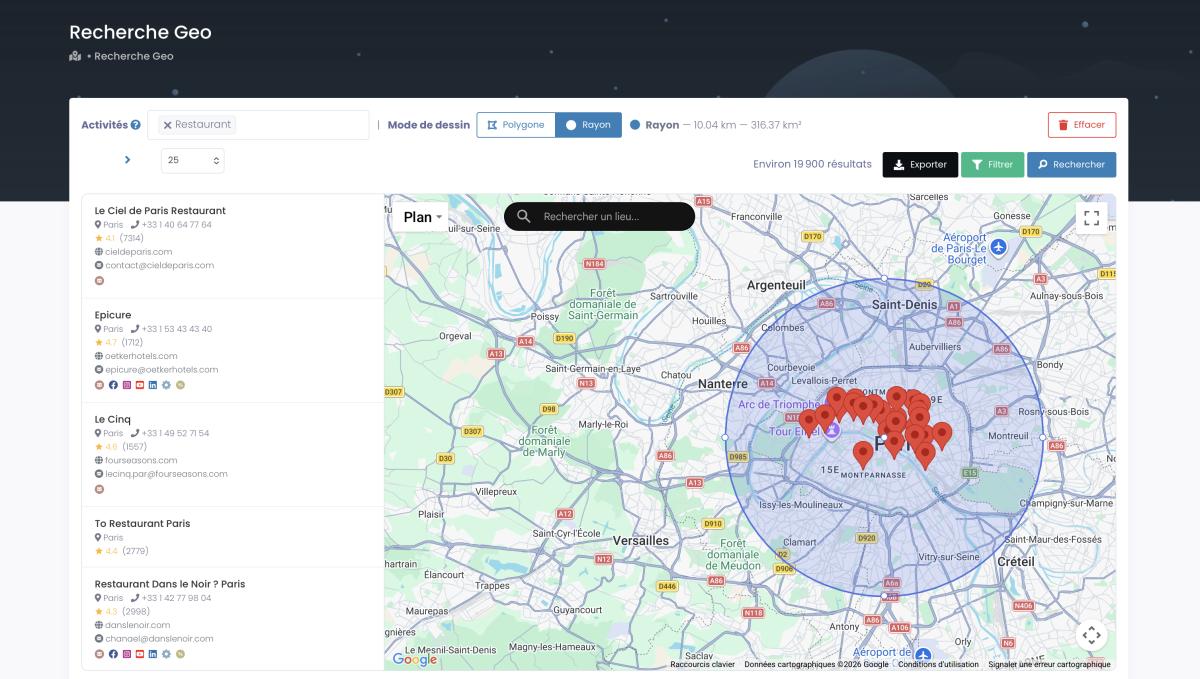
Segment by geography first. An air conditioning contractor in Phoenix doesn't want your heating equipment pitch. A furnace specialist in Minneapolis doesn't care about your AC maintenance offer in January. Obvious? Sure. But I still see mass-blast campaigns ignoring this every single week. Use Scrap.io's GeoSearch radius to pull contractors in a specific zone, then write copy that references their actual market.
Google reviews are your secret weapon. Contractors with 4.8+ stars and 200 reviews? Established, busy, probably needing operational tools at scale. Contractors sitting at 3.4 stars with a dozen reviews? They need marketing help. Maybe reputation management. Maybe a CRM that sends review requests automatically. The data tells you what to sell before you write a single word of copy.
Combine email with phone. Email marketing returns $40 for every $1 spent (DMA, 2024). That's the industry number. But the teams crushing it with their HVAC contractors email list aren't just emailing — they're calling within 24 hours of a tracked open. One agency told me they saw a 340% jump in response rates using that combo. The email warms them up; the call closes them. This is also why hvac technician contacts with a classified phone number (mobile vs. fixed) beat a bare email field every time.
Get specific or get deleted. "Dear HVAC professional" goes straight to trash. Instead: "Hey — noticed you're one of the top-rated AC contractors in Tampa with a 4.9-star average. Quick question about how you handle scheduling during peak season..." That's an email someone reads. Because it doesn't feel like a blast sent to 10,000 people. Even though, well, it kind of is. (The trick is making each one feel like it wasn't.) Before any send, run the file through an email validator — even fresh data deserves one verification pass.
Also worth exploring: if you're targeting adjacent trades alongside HVAC, check these out — heating contractor email list, air conditioning contractor email lists, roofing contractor email lists, plumber email list, and electrician email lists. Cross-industry outreach to related trades — building one broad b2b hvac email list plus its neighbors — often converts better than hammering one vertical harder.
Is It Legal to Buy HVAC Email Lists? Compliance Guide
Yes. With a few "don't be an idiot" caveats.
The CAN-SPAM Act is the big one for US-based email. Four rules, none of them complicated: include your physical mailing address in every email, don't use deceptive subject lines, provide a working unsubscribe link, and honor opt-outs within 10 business days. That's the whole law. Follow those four requirements and you're compliant. Full text over at the FTC, if you like reading legislation.
International campaigns? GDPR kicks in. Stricter consent requirements, more control for recipients over their data. But here's what simplifies things: when you're working with publicly listed business information — stuff companies voluntarily put on Google Maps — the compliance picture is significantly cleaner than buying mystery data from a third-party aggregator who won't tell you where they got it.
California adds the CCPA for California-based contacts. A handful of other states have similar frameworks. The trend is toward more regulation, not less.
Practical advice? Verify emails before sending — every time. Include unsubscribe mechanisms. Don't fake your sender name. Keep a suppression list of opt-outs and actually check it. For the deep dive, we wrote a full guide on whether cold emailing is legal.
One reason Scrap.io users tend to have fewer compliance headaches: the data source is transparent. You're not wondering "where did this contact come from?" It came from the contractor's own Google Business profile. They published it. You accessed it. Clean chain.
FAQ — HVAC Contractor Email Lists
Where can I buy a list of HVAC contractors?
Three options: static database providers like InfoGlobalData ($0.10–$0.50 per contact, CSV download), real-time scraping tools like Scrap.io (73,277+ verified HVAC contacts, pulled live from Google Maps), or DIY manual research through business directories. For the best balance of freshness, accuracy, and price, real-time scraping wins. Static lists decay fast.
How much does an HVAC email list cost?
Traditional providers charge $0.10–$0.50 per contact. A 10,000-contact HVAC list from one of them runs $1,000 to $5,000. Scrap.io costs a fraction of that for real-time, unlimited data. The price difference is big, but the real gap is freshness — a static list starts going stale the day you download it.
Are HVAC email lists worth buying?
With fresh, verified data — yes. Email marketing averages $40 ROI per $1 spent (DMA, 2024). But that number collapses if your bounce rate is above 5–10%. Static lists with 20–30% bounces will trash your sender reputation and your deliverability. Real-time data from tools like Scrap.io keeps bounce rates under 5%, which is what makes the ROI math actually hold up.
How many HVAC contractors are there in the US?
120,461 HVAC businesses as of 2026 (IBISWorld). Scrap.io indexes 73,277+ of them with verified contact details — 35,575 with an email address, plus phone numbers, physical addresses, Google ratings, website URLs, and more.
Can I get a free HVAC contractor email list?
You'll find plenty of "free hvac contractor email list" downloads and hvac contractor email list PDF files floating around online. Be honest with yourself about what they are: old, unverified, packed with dead addresses. The closest legitimate free option is a trial — Scrap.io's 7-day free trial includes 100 verified HVAC leads you pull yourself, live from Google Maps, so the data is current the moment you export it. That beats any static PDF someone uploaded in 2023.
The Bottom Line
$159.4 billion market. Over 120,000 businesses. Growing faster than almost any other trade sector. And most of these contractors are reachable through email — if you have the right data.
The companies actually winning in HVAC outbound aren't recycling the same tired CSV everyone else bought. They're pulling fresh contacts from real-time sources, segmenting ruthlessly, and sending messages that reference something specific about the contractor's business. That's the whole game. Good data in, good results out. Garbage data in... well, you get the picture. My ServiceTitan buddy can tell you all about it.
Try Scrap.io free for 7 days — get 100 verified HVAC contractor leads instantly. 73,277 US contractors indexed, filtered to email-present before you spend a credit, under 5% bounce because the data is pulled from Google Maps the second you export. Build your HVAC list now →
Written by Sébastien, co-founder at Scrap.io. Updated August 2026.
Generate a list of hvac contractor with Scrap.io