

Meet Sarah. She runs demand gen at a Series B SaaS company, and she had built four gorgeous buyer personas. Names, headshots, favorite podcasts, the works. Then she launched a $40K campaign aimed at them and got... silence.
Nothing.
The problem wasn't her personas. It was that she never defined which companies those personas actually lived in. She wrote perfect messages and knocked on the wrong doors. And honestly? Almost everyone does some version of this. People obsess over the person and forget the company, or nail the company and forget the human who signs the check.
So let's clear it up. Your ideal customer profile and your buyer persona are not the same thing, they're not interchangeable, and using one without the other is a quiet, expensive way to burn budget. Here's the whole picture — the differences, real examples, and how to build both from actual data in 2026.
On this page
- ICP vs Buyer Persona: The Short Answer
- What Is an Ideal Customer Profile (ICP)?
- What Is a Buyer Persona?
- The Side-by-Side Comparison
- Why You Need Both (Not Either/Or)
- ICP or Buyer Persona: Which Comes First?
- How to Build Your ICP From Real Data
- How to Build a Buyer Persona From Real Data
- 4 Mistakes That Wreck Your Targeting
- FAQ
ICP vs Buyer Persona: The Short Answer
Short on time? Here's the difference between ICP and buyer persona in plain English. An ideal customer profile describes the type of company worth selling to — its industry, size, revenue, location, and tech stack. A buyer persona describes the specific person inside that company you need to convince — their role, goals, and pain points. Put bluntly: the ICP is the company, the persona is the human who signs.
| Ideal Customer Profile | Buyer Persona |
|---|---|
| The company you target (macro) | The person you talk to (micro) |
What Is an Ideal Customer Profile (ICP)?
What does a company that's actually worth your time look like? That's the entire question an ICP answers. It's a description of the businesses most likely to buy, stick around, and refer you — built on firmographics (the "demographics" of a company) rather than gut feeling.
A solid ICP usually includes:
- Industry — the sectors where your solution fits like a glove.
- Company size — headcount range where budget and pain both exist.
- Revenue — the band that can afford you without wincing.
- Location — the countries, regions, or catchment areas you can serve.
- Tech stack — the tools they already run (a signal of fit and integration).
- Buying triggers — events like a new opening, funding, or a hire that says "now."
That last one matters more than people think. A business that just opened has budget to spend and no vendor loyalty yet — a firmographic trigger you can literally filter for. Here's a quick look at how spotting freshly-created listings works in practice:
Video: Find Businesses That JUST Opened
📌 ICP example (B2B SaaS): "US-based marketing agencies, 10–50 employees, $1M–$10M revenue, already running paid ads (Meta/Google pixel detected), located in metro areas." Notice: no names, no job titles. Just the shape of the right company.
Want the full playbook on scoping firmographics, triggers, and negative criteria? We wrote a complete guide to defining your ICP that goes deeper than we can here. Bookmark it — you'll want it before your next campaign.
What Is a Buyer Persona?
Now flip the lens. Here's the counter-intuitive part: two companies can be identical on paper — same industry, same size, same revenue — and still need completely different messages. Why? Because the people inside them are different. That's what a buyer persona captures.
A buyer persona is a semi-fictional portrait of the individual you're actually selling to. Where the ICP leans on firmographics, the persona leans on psychographics and role:
- Job title & role — who they are and what they own.
- Goals & KPIs — what success looks like on their scorecard.
- Pain points — the daily friction keeping them up at night.
- Objections — the reasons they'll say "not now."
- Buying triggers — what pushes them from "interesting" to "let's talk."
- Channels — where they actually hang out and pay attention.
📌 Persona example — "Marketing Mary": Head of Marketing, 38, owns pipeline and MQLs. Goal: hit a lead target with a lean team. Pain: too many tools, not enough hours. Objection: "we already have a database." Reads case studies, ignores cold calls, lives on LinkedIn.
If you want ready-made customer persona examples to model, HubSpot's free Make My Persona tool is a decent starting frame. Just don't stop there — a persona built purely from a template is still fiction until you validate it against real buyers (more on that below).
ICP vs Buyer Persona: The Side-by-Side Comparison
Seeing them next to each other is where it finally clicks. The ICP works at the macro level (which companies), the persona at the micro level (which humans). One narrows your market; the other sharpens your message.
| Attribute | Ideal Customer Profile | Buyer Persona |
|---|---|---|
| Describes | A company | A person |
| Level | Macro (organization) | Micro (individual) |
| Built on | Firmographics | Psychographics & role |
| Key data | Industry, size, revenue, location, tech stack | Title, goals, pains, objections, channels |
| Answers | Who should we sell to? | How do we win them? |
| Used by | Sales, ABM, targeting | Marketing, content, messaging |
This is also where the firmographics vs psychographics distinction earns its keep. Firmographics tell you the box to knock on. Psychographics tell you what to say when someone opens the door. Get greedy and try to segment humans by revenue, or companies by "favorite podcast," and you'll end up with a mess. If you're mapping territories or verticals, our breakdown of market segmentation criteria pairs nicely with your ICP work.
Why You Need Both (Not Either/Or)
Here's a number that should end the debate: companies that align their ICP and their buyer personas report up to +208% more revenue from marketing (Right Left Agency / Factors, 2026). Not 8%. Two hundred and eight.
Why the gap is so brutal: the ICP makes sure you're spending on the right accounts, and the persona makes sure your message actually lands once you get there. Skip the ICP and your beautiful personas talk to companies that will never buy. Skip the persona and you reach the right company with a message that bounces off everyone in it. You need both, working together.
The proof stacks up across the board:
- A clearly defined ICP is linked to a +68% win rate in account-based programs (WebFX ABM statistics).
- 71% of companies that exceed revenue goals have documented personas (Cintell); over-achievers are 2.2x more likely to use them, and content aligned to a persona drives up to +124% more engagement.
- High-performing sales teams are 2.3x more likely to work from a structured ICP (Salesforce State of Sales).
- Tight targeting can push +56% email open rates, +73% conversions, and cut CAC by 50% (WebFX).
Real-world proof: Miro used shared customer profiles to align its go-to-market teams (their Bancolombia collaboration case is a good example of getting everyone pointed at the same accounts). When the whole org agrees on who the customer is, the persona work stops being decoration and starts closing deals. Doing account-based outreach? Our ABM with Google Maps data guide shows how the two layers plug into a real campaign.
ICP or Buyer Persona: Which Comes First?
Should you create an ICP or a buyer persona first? This one has a clear answer, and it's the ICP. Every time. Building personas before you've defined the company is how Sarah torched $40K in the intro. You can't know which human to talk to until you know which companies you're talking to.
The order that works:
- Define your ICP first. Nail the company-level filters — industry, size, location, triggers. This is your target list.
- Map the buyer persona second. Inside those companies, identify the decision-maker and the influencers. Now your persona lives somewhere real.
- Personalize the outreach. Right company + right person + right message = the only combination that converts.
The community agrees, and not always politely. On r/b2bmarketing, the recurring take is that your ICP is the firmographic container and the persona is who lives inside it — build the container first. Over on the HubSpot Community, marketers put it simply: the customer profile is your target market, the persona is the people within it. Same conclusion, different words. Company first, human second.
Once your ICP and persona are set, scoring who to contact first gets a lot easier — that's the whole point of good lead qualification.
How to Build Your ICP From Real Data
"I don't have the data." That's the objection I hear most, and it's wrong. You already have it — it's sitting in your customer list. The trick is turning that theory into an actual, exportable list of real companies you can contact. Here's the method:
- Look at your top 10% of clients. Best retention, biggest deals, fastest closes. These are your ICP made flesh.
- Find the common threads. Same industry? Same size band? Same region? Same tech? Those patterns are your firmographic criteria.
- Turn the criteria into a real, contactable list. This is where most guides stop — and where the actual work begins.
That third step is the one nobody explains, so let's fix it. Once you know your criteria (say, "restaurants with a website but no online booking, in Texas"), you need every matching business on the map — not a sample, not a stale database. That's exactly what Scrap.io does: it extracts business data live from Google Maps across 195 countries and 4,000+ categories, from a single city all the way up to an entire country in two clicks.
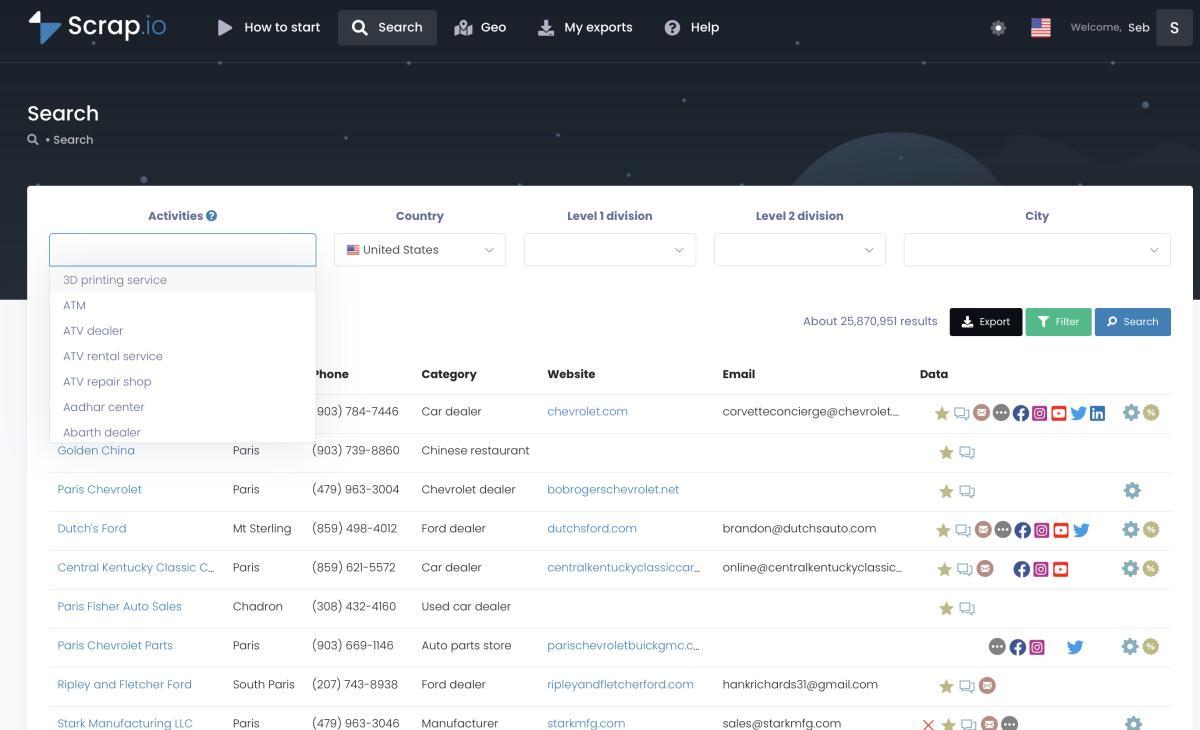
The part that saves real money: filters are applied before extraction, so you only spend credits on businesses that match your ICP. Only want companies with an email? A mobile number for SMS? No booking widget? Filter first, pay second. Zero wasted credits on junk you'd delete anyway.
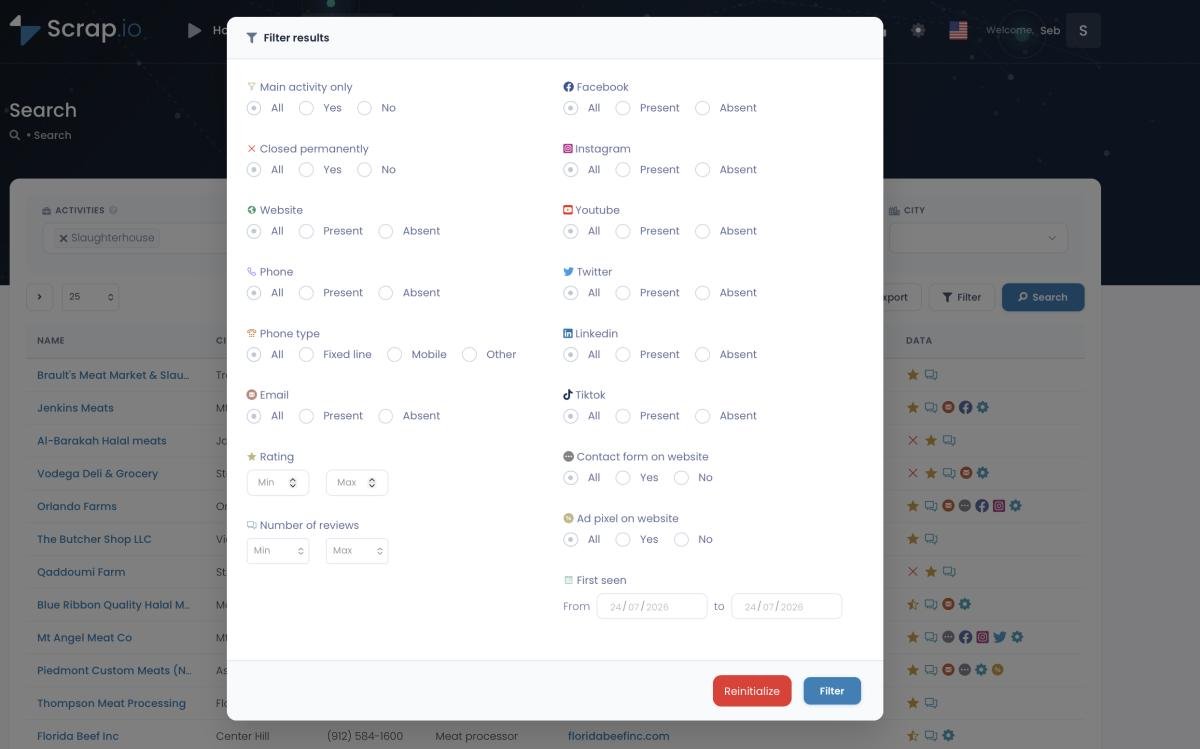
Here's the full walkthrough if you're the show-me-don't-tell-me type:
Video: Scrap.io - How to Start?
And if your ICP is geographic — a catchment area, a specific district, a delivery radius — you can draw the exact zone on the map instead of forcing it into administrative borders:
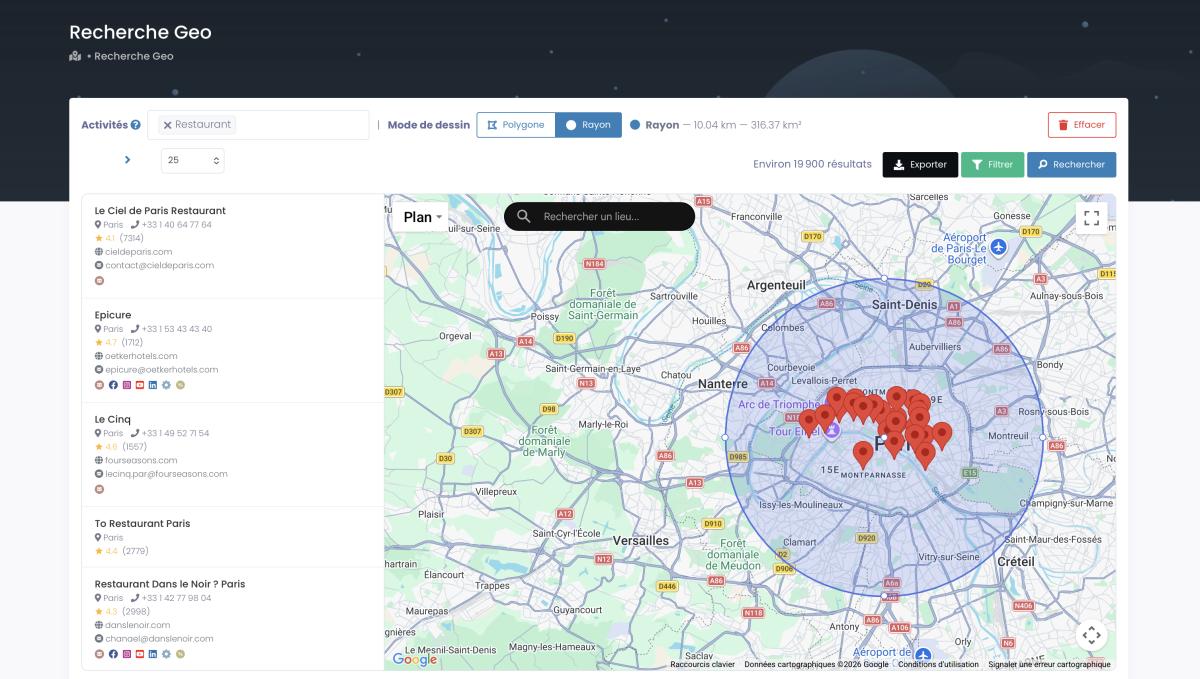
Watch how ICP criteria become Google Maps filters in practice:
Video: Finding Clients Through Google Maps Filters
Does it actually scale? One user pulled 11,734 businesses in 45 minutes — the kind of list you could never build by hand. (Try assembling that in a spreadsheet. I'll wait.) One agency client of ours tried to compile a regional prospecting file manually before switching over; weeks of copy-paste for something that took an afternoon with filters.
💡 Turn your ICP into a live prospect list. Set your firmographic filters, see the count for free, and export only the businesses that match — across a city, a region, or a whole country. Start with a free trial: 50 searches and 100 credits to test it on your own criteria. Try Scrap.io free →
Two resources to go further: grab our free ICP template (works as an ideal customer profile template for B2B teams too) and see the exact firmographic-to-Google-Maps workflow in build your ICP with Google Maps data. Need volume fast? Here's how to get local business leads at scale.
How to Build a Buyer Persona From Real Data
Most personas are fiction. Harsh, but true — and the data backs it up: only 44% of B2B marketers actually use personas (Tomba, 2026), and plenty of the ones that exist were invented in a conference room. Don't be that team. A persona built on real signal makes your website and content 2–5x more effective (HubSpot), so it's worth doing right.
Where the real signal comes from:
- Sales interviews. Your reps talk to buyers all day. Mine those calls for objections and language.
- Customer surveys. Ask closed-won accounts what nearly stopped them from buying.
- Social listening. Watch what your persona complains about on LinkedIn and in communities.
- Support & CRM notes. The recurring questions are the pain points.
Then write it down in a simple template: name, role, goals, top three pains, top three objections, preferred channels. That's it. Keep it one page, keep it real, and update it when the market moves. A persona is a living document, not a poster you laminate once and forget.
4 Mistakes That Wreck Your Targeting
Even good teams trip on these. Watch out for the big four:
- Building personas without an ICP. The Sarah special. Great message, wrong companies, no pipeline.
- Inventing data instead of sourcing it. "I feel like our buyer is..." is a hypothesis, not a persona. Validate or delete.
- Never updating your profiles. Markets shift, buyers change roles, triggers evolve. A 2023 ICP in 2026 is a museum piece.
- Drowning in useless detail. Nobody closed a deal because they knew the prospect's dog's name. Capture what changes the message; skip the rest.
One more thing, because someone always asks: "is scraping business data even legal?" For public business information, yes. Scrap.io only handles publicly available business data and is GDPR- and CCPA-compliant, with every field traceable to its source. Prospecting on public company data is legitimate — inventing personal data is the actual risk, and that's a mistake anyway.
FAQ
What is the difference between an ICP and a buyer persona?
An ideal customer profile describes the company worth selling to (industry, size, revenue, location). A buyer persona describes the person inside that company you need to convince (role, goals, pain points). The ICP is the "who to target"; the persona is the "how to win them."
Should I create an ICP or a buyer persona first?
The ICP, always. You have to know which companies are worth pursuing before you can figure out which individuals inside them to talk to. Define the ICP, then map personas within it.
Is a customer profile the same as a buyer persona?
No. They're related but distinct. A customer (or ideal customer) profile is company-level and firmographic; a persona is person-level and psychographic. Are buyer personas and customer profiles the same? No — they answer different questions and work together, not instead of each other.
What should an ideal customer profile include?
At minimum: industry, company size, revenue range, location, tech stack, and buying triggers. Strong ICPs also list negative criteria — the companies you should not pursue.
Should you use both an ICP and a buyer persona?
Yes. Teams that align both report up to +208% more revenue from marketing. The ICP gets you to the right companies; the persona gets your message to land once you're there.
The Bottom Line
ICP vs buyer persona isn't a competition — it's a sequence. Your ideal customer profile targets the right companies. Your buyer persona wins the right people inside them. Do them in that order, build both from real data instead of vibes, and keep them current. That's the whole game.
The hard part was always turning your ICP from a slide into a list of real businesses you can actually contact. That's the gap Scrap.io closes — 225+ million businesses across 195 countries, filtered to your exact criteria before you spend a single credit, trusted by 50,000+ professionals.
Ready to turn your ICP into real leads? Start your free Scrap.io trial — 50 searches and 100 credits included — and export a list of companies that match your ideal customer profile in minutes. Try Scrap.io free →
Generate a list of restaurant with Scrap.io