


I pulled the numbers this morning, not last year, this morning. 86,911 landscapers on Google Maps in the US. Of those, only 37,144 publish a public email. That is 43%. Which means if you bought a "complete" landscaper email list somewhere, more than half of it is guesswork, filler, or contacts that closed shop two seasons ago.
Here's the part that still bugs me. Most people selling to these pros are still paying $500 or more for spreadsheets scraped who-knows-when, shared with every competitor who had a credit card and thirty seconds to spare. Stale data. Recycled data. Data that bounces.
Landscapers don't sit at desks. They're hauling mulch at 6 AM, arguing with a supplier by 9, knee-deep in someone's French drain by lunch. Reaching them takes more than a generic file from a broker who "updates quarterly" (translation: whenever somebody remembers). So this guide covers how to actually build a landscaper email list that works in 2026: what data matters, where to get it, what it costs, and how to not get burned. Real numbers. Real examples. No hand-waving.
Video: Scrap.io - How to Start?
- What Exactly Is a Landscaper Email List?
- Why a Landscaper Contact Database Is a Different Animal
- Build vs Buy vs Live Scraping: What Actually Works
- Who's Actually Selling to Landscapers (Real Examples)
- How to Pick a Good List (Without Getting Burned)
- Email Marketing That Actually Works With Landscapers
- The Legal Stuff You Can't Ignore (2026)
- Making Your Investment Pay Off
- Frequently Asked Questions
- Bottom Line
What Exactly Is a Landscaper Email List?
Strip the jargon. A landscaper email list is a database of contact details for landscaping professionals: email addresses, phone numbers, business names, locations, the works. It is your pipeline's raw material. Nothing more romantic than that.
But not all landscapers are the same animal. The guy mowing lawns in suburban Ohio and the design-build firm creating $200K outdoor living spaces in Scottsdale? Completely different buyers. Different budgets, different pain points, different email habits. (The design-build guy probably has an assistant who checks his inbox for him.) A good landscape contractor database lets you tell them apart before you waste a single send.
Residential vs commercial landscape contractors email list
Segmenting your landscape contractors email list by type isn't optional if you want replies. Here's the breakdown that matters, laid out for the featured-snippet crowd and for anyone building a residential vs commercial landscaper list from scratch.
| Type | Who they are | Best time to reach them |
|---|---|---|
| Residential landscapers | Weekly mowing, seasonal cleanups, garden installs. High volume, tight margins. | Before sunrise or after dark |
| Commercial landscape contractors | Bigger crews, HOAs, office parks, municipal contracts. Actual purchasing processes. | Business hours (they have a procurement person, wild) |
| Landscape designers and architects | The creative brains. Specify materials, choose plants, draft plans. A landscape designer email list is gold for premium products. | Early adopters, surprisingly active on Instagram |
| Specialty services | Irrigation, hardscape, tree work. Each sub-niche has its own rhythm. | Depends on the trade |
That last row overlaps with adjacent trades. If tree work is your target, we broke it out separately in our tree service email list guide. And for the folks pouring driveways and walkways, the paving contractor email lists guide covers that vertical. Segment first. Pitch second. Every time.
Why a Landscaper Contact Database Is a Different Animal
Season is everything in this business. Miss the window and you're toast.
Landscapers run on a calendar that most B2B sellers ignore completely. January and February? Budget planning, equipment shopping, actual time to read email. March through August? Good luck getting a reply, they're drowning. September through November is the fall-cleanup lull, another solid window. Emailing a landscaper about efficiency tools in July is like selling sunscreen in December. Technically possible. Practically useless.
Then there's the churn. There are roughly 556,238 landscaping businesses in the US in 2026, up 1.8% on the year (IBISWorld). Sounds stable. It isn't. The number of businesses in the sector actually contracted at about 2.0% per year across 2021–2026 before this year's uptick, which tells you how much turnover churns through the space. Owners retire. Sole operators fold after a bad season. Somebody rebrands and changes their email without telling a soul. A landscape contractor database built twelve months ago is already leaking.
This is exactly why the lawn-care crowd overlaps but isn't identical. If your targeting leans toward mowing and maintenance rather than design and hardscape, read our lawn care service email lists guide instead, it's the sibling to this one. Lawn care and landscaping leads look similar on a spreadsheet and behave nothing alike in an inbox.
Build vs Buy vs Live Scraping: What Actually Works
Three options. They are not equal, and the "obvious" cheap one is usually the expensive one. Let me walk you through each so you can judge for yourself.
Building your own list
Total control. You research every contact, nobody else has your file. Sounds great. In practice it's brutal. Pay someone $15/hour to research landscaping company email addresses by hand and they'll find maybe 20 usable contacts an hour. That's $0.75 per contact in labor alone, before verification, before compliance, before you notice half the emails went stale while you were still building. One marketing manager I know spent two months on a list. By week eight her earliest entries were dead and her competitors had been selling for weeks. That is not a strategy. That's a hobby with a deadline. So when people ask how to build a landscaper email list, or how to get landscaper contacts without a broker, the honest answer is: doing it by hand only works if your time is worth nothing.
Buying from traditional providers
Brokers like FountMedia sell pre-built landscaper databases. Faster than DIY, sure. But you're getting data that's 3–6 months old on a good day, resold to every other buyer who clicked purchase this quarter. The math is ugly: $500–1,000 for 10,000 contacts, roughly 5–10 cents each, and after bounces you keep maybe 6,000–7,000 that actually work. And your competitors have the identical list. Want to buy a landscaper email list the old way? You can. I wouldn't.
Live scraping with Scrap.io
Here's where it gets interesting. Instead of buying yesterday's data, you scrape landscaper emails from Google Maps and business websites in real time. When a landscaper updates a listing or adds an email to their site, that change is available on your next export. Not next quarter. Not when an intern remembers to run the script. Now.
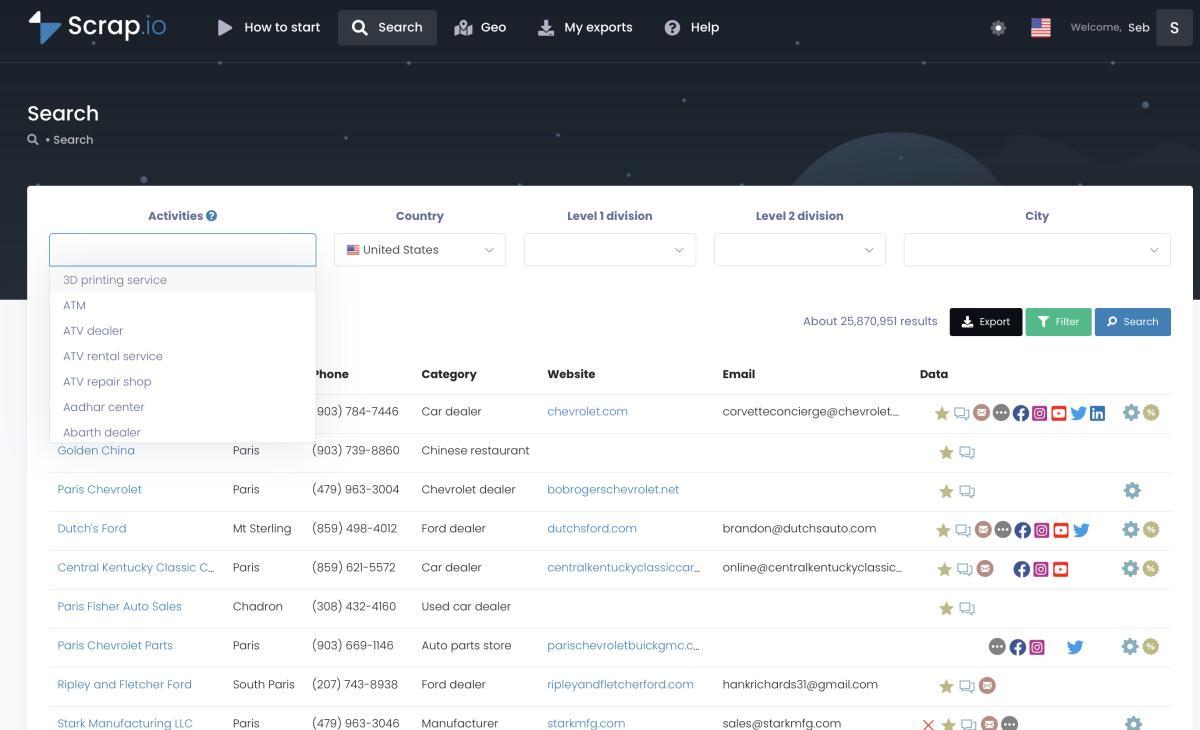
The numbers, re-pulled fresh this month: 86,911 landscapers indexed in the US, 37,144 with a public email (43%), 51,118 with a website (59%), and 84,964 with a phone number (98%). One platform, the whole addressable US market, re-pulled live the day you export it.
| Criteria | Build your own 🔴 | Buy a list 🟡 | Live scraping (Scrap.io) 🟢 |
|---|---|---|---|
| Freshness | Stale within days | 3–6 months old | Real-time at export |
| Cost per 10K contacts | $7,500+ in labor | $500–1,000 | ~$50 |
| Time to launch | Weeks to months | Instant | Under an hour |
| Exclusivity | 100% yours | Shared with competitors | Your filters, your list |
| Compliance | Your problem | Varies, often opaque | Public data, traceable |
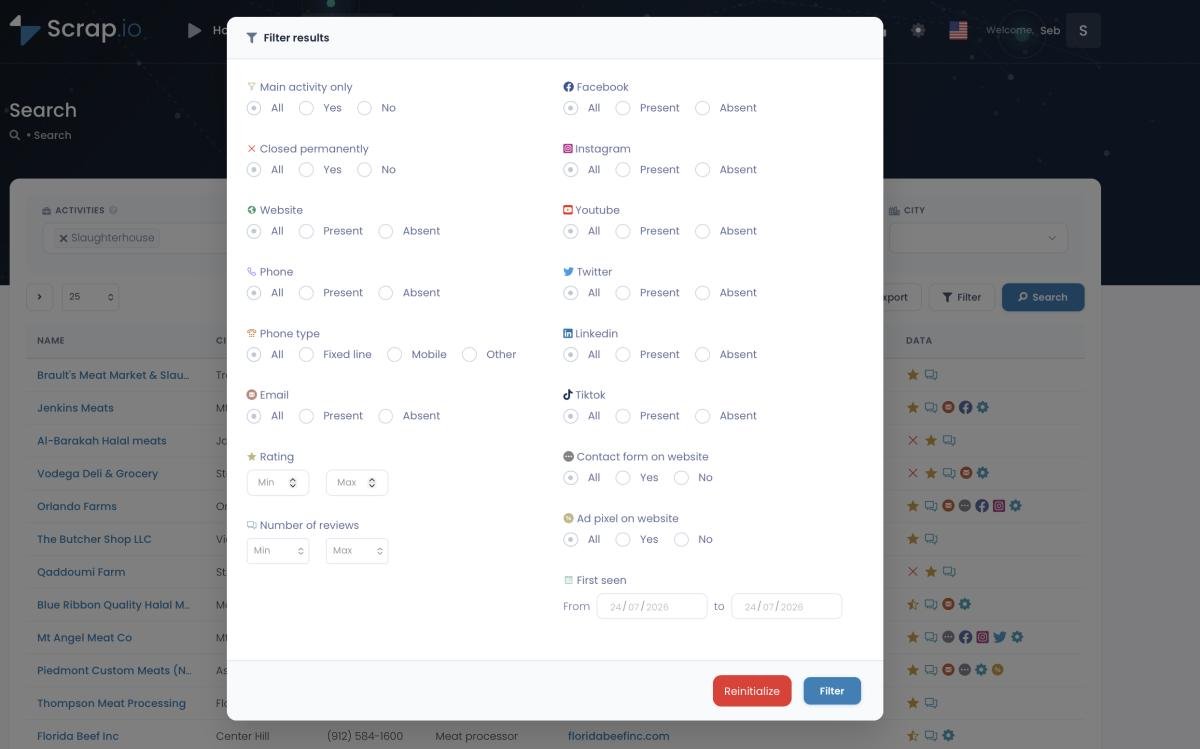
$50 for 10,000 fresh contacts versus $500–1,000 for older, shared data. Ten times cheaper, and current. The filtering is the clever bit: you toggle "email present" before you export, so you only ever spend a credit on one of those 37,144 landscapers who actually have an address on file. Zero waste. Counting the market first, though, costs nothing at all.
See how many landscapers Scrap.io finds in your state, counting is free. Real-time data from 225+ million businesses across 195 countries. Start your free trial, 100 leads included.
Scaling to a whole state, or the entire country, is where real-time extraction stops being a nice-to-have. One client pulled 11,734 businesses in 45 minutes. Here's the country-level workflow, start to finish.
Video: How to Scrape Local Leads at the Country Level
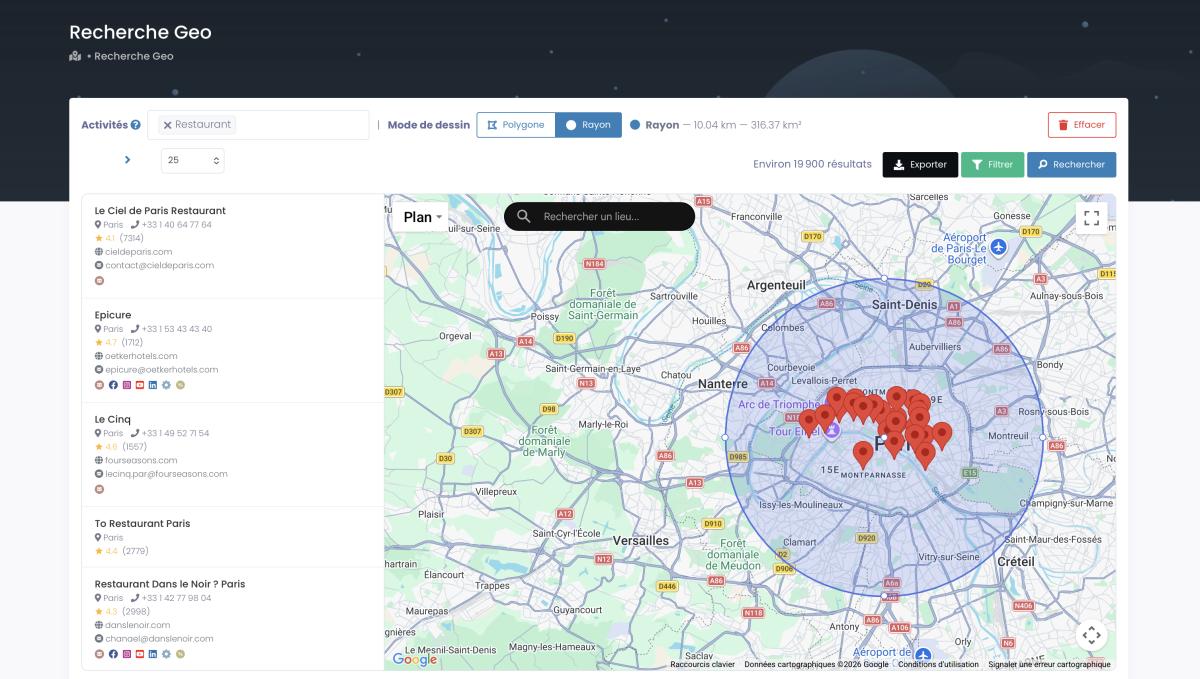
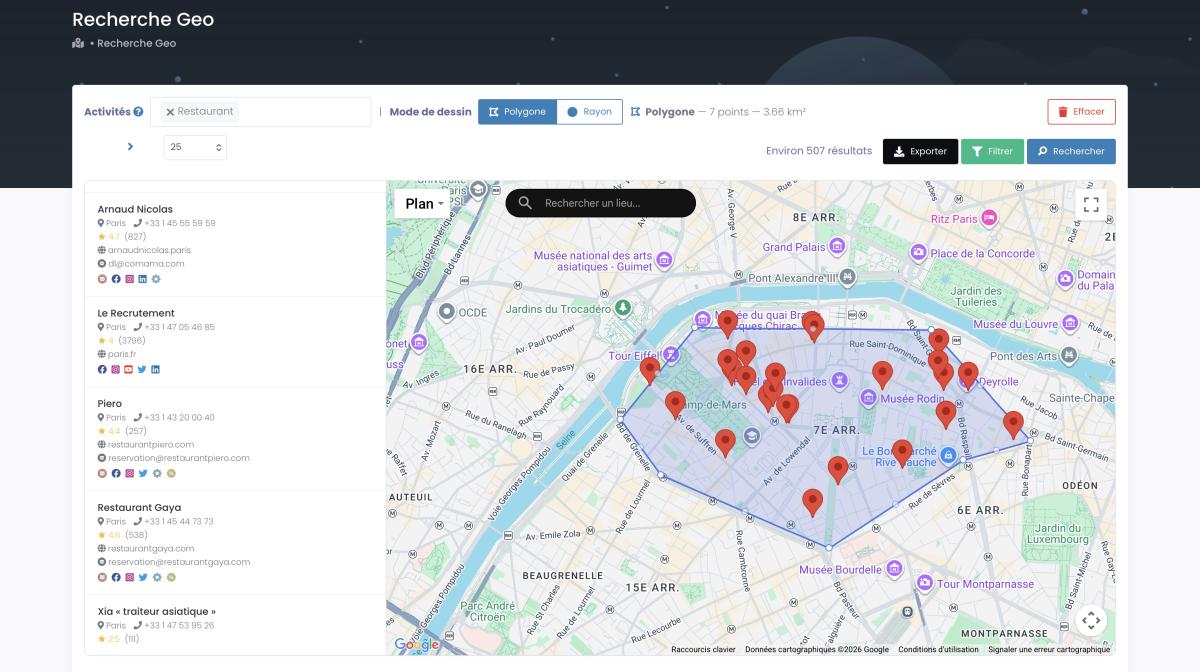
Want a landscaper contact list by state instead of the whole country? Same workflow, tighter geography. Draw a radius on the map, or pick the state, keep the "email present" filter on. Extract every landscaper in Texas, or just the ones in Dallas with an email and no website. Your call.
Who's Actually Selling to Landscapers (Real Examples)
Theory is cheap. Here are real companies whose entire growth depends on reaching landscapers, which tells you the audience is worth reaching in the first place.
Jobber builds field-service software for landscapers and lawn-care crews, starts around $29/month, and is part of the Xplor group. Service Autopilot is built specifically for route-based lawn-care and landscaping operations, running roughly $199–499/month. LMN is a landscape-native platform around $297/month that says it serves "3,000+ North American landscaping companies." And Aspire (now part of ServiceTitan) is the ERP the big commercial landscapers reach for once they clear $2M in revenue.
Notice the pattern? Every one of these companies needs a fresh, filtered landscaper email list to find its next customer. The same live data they'd love to have is one export away.
Marketing folks in the space say the quiet part out loud. Marty Grunder's team at Grow Group put it plainly: "An email list belongs to the company: when a landscaping business sends a seasonal offer, it reaches every subscriber directly, on their phone." The trades press agrees on structure, too. As Green Industry Pros frames it, "There are generally three types of lists: prospects, current clients, and strategic partners." Prospecting is the one you can't fake with referrals alone.
Which is the frustration you hear from operators themselves. One landscaper on r/marketing summed it up: "I just kind of depend on referrals and Google, but after a while they start to dry up..." Referrals dry up. A live data source doesn't.
The same live data these tools rely on is one export away. Filter for the 37,144 US landscapers with a public email before you commit a dollar. Try Scrap.io free, first 100 landscaper leads on us.
How to Pick a Good List (Without Getting Burned)
The number one complaint in landscaper marketing threads goes something like: "I paid $600 for a list and half the emails bounced." Sound familiar? Not all landscaper email lists are created equal. Some are goldmines. Others are digital landfills. Here's how to tell them apart before you spend.
Red flags that scream run away
"100% accuracy guaranteed." Nope. Even the best databases carry some dead weight, because landscapers retire, sell, and change emails constantly. Anyone promising perfection is lying, delusional, or both.
Suspiciously cheap (or "free"). 50,000 landscaper contacts for $29.99? Come on. Same goes for any "free landscaper email list" template or PDF you find floating around: it was compiled during a previous administration and hasn't been touched since. A professional landscaper email list is worth paying for, precisely because someone kept it alive.
No sample data. If a provider won't show you sample records, ask yourself what they're hiding. Good data companies are proud of their product.
Vague about sources and refresh dates. Ask "when was this last updated?" If they dance around it, walk.
Questions every provider should answer
Before you spend a dime, get straight answers to four things: where the data comes from, how often it updates (monthly minimum for landscaping, quarterly is already too slow), what the accuracy guarantee is, and whether you can see sample records first. That last one is non-negotiable. And whatever you buy or extract, run it through a verifier: even fresh data deserves a quick pass, so verify your email list before the first send. A verified landscaper email database beats a big one, always.
| Feature | Traditional providers | Scrap.io |
|---|---|---|
| Data freshness | 3–12 months old | Real-time at export |
| Price per 10K contacts | $500–1,000 | ~$50 |
| Filtering | Basic (location, size) | Advanced (reviews, social, website, email type), applied before extraction |
| Competitor overlap | High (shared lists) | None (your export, your filters) |
| Compliance | Varies | Public data only, GDPR/CCPA clean |
Email Marketing That Actually Works With Landscapers
Having a great landscapers email marketing list is step one. Making it convert is step two, and step two is where most people blow it. Landscapers can smell a generic sales email from three ZIP codes away. They're practical people with zero patience for fluff. If your email reads like a marketing textbook, it's trash before they finish the subject line.
Time it right
Landscapers aren't at a desk at 10 AM. They're on a job site, sweating through their third shirt. Best windows: 6–8 AM before they leave, or 6–8 PM catching up after work. Best days: Tuesday through Thursday. Mondays are chaos, Fridays are mentally checked out. But test it yourself. A campaign into Phoenix hits different than one into Portland, because climate and work schedules vary more than you'd guess.
Personalize with the data you already have
How do you personalize when you're emailing 500 landscapers? You use the columns. Every Scrap.io export carries the Google rating, review count, category, website, and social profiles. "Saw your 4.8 rating with 127 reviews in Dallas, impressive for a design-build shop" reads handwritten and takes thirty seconds to merge. Go further with the negative filters: target the landscapers who have a website but no advertising pixel installed, that's a business with some digital presence that isn't running paid ads yet, which is a perfect pitch for an agency. Or the ones with no website at all. That's your opener, right there.
Filter for landscapers with a public email before you spend a single credit. Only pay for contacts you can actually reach. Try it free, 100 leads included.
The Legal Stuff You Can't Ignore (2026)
Not the fun section. Skip it and a single sloppy blast can cost you up to $53,088 per email. Per email, not per campaign (FTC, inflation-adjusted). So let's get it done.
CAN-SPAM (US). Straightforward. Real business address, honest subject lines, an easy unsubscribe, and honor opt-outs within 10 business days. No prior consent needed for B2B, the US runs an opt-out model, which is friendly compared to most of the world.
GDPR (EU/UK) and CCPA (California). If your landscaping industry email list touches European contacts, GDPR applies, and B2B outreach is generally fine under "legitimate interest" as long as you document a real business reason. Generic business addresses (info@, contact@) are usually safe, personal ones need more care. CCPA gives Californians the right to know what you hold and to request deletion. Neither requires opt-in for B2B, both have teeth if you ignore them.
Why public data keeps this clean. When you extract contact info that landscapers themselves published on Google Maps, you're collecting publicly available business data. No shady broker in the chain, every record traceable to its source. If a regulator asks where you got an email, you have a clean answer. That said, public origin is not a get-out-of-jail card: CAN-SPAM still applies to how you send.
Making Your Investment Pay Off
Email alone is good. Email plus phone plus LinkedIn is better. A landscaper who ignored two emails might pick up on your third touch, or reply to a LinkedIn note. Every Scrap.io export includes phone numbers, social profiles, and website URLs, so you've got everything you need for omnichannel outreach from a single file. That's the whole point of pulling rich data instead of a bare email column.
And track what actually generates revenue, not vanity metrics. Reply rate, meeting-booked rate, deal-closed rate. A 15% open rate that produces eight qualified landscaper leads beats a 40% open rate that produces zero. Work backward from money, not forward from opens. Adjacent trades follow the same logic, so if you sell across verticals, our construction company email lists and roofing contractor email lists guides run the same playbook on different audiences.
Frequently Asked Questions
How much does a landscaper email list cost?
Brokers charge roughly 5–10 cents per contact, so $500–1,000 for 10,000. Scrap.io runs about $50 for 10,000 fresh contacts pulled live from Google Maps, and the free 7-day trial includes 100 leads so you can test the data before paying. Way less than it used to cost, if you know where to look.
How many landscapers can I reach in the US?
Around 86,911 landscapers are listed on Google Maps in the US (Scrap.io, 2026). Of those, 37,144 publish a public email and 84,964 list a phone number. Filter to the exact contact type you need before you export, so you never pay for a blank field.
Are landscaper email lists legal to use?
Yes, when the data is public business information and you follow CAN-SPAM: honest subject lines, a physical address, an easy opt-out (plus GDPR/CCPA if you reach those regions). Scrap.io only extracts data businesses posted publicly on Google Maps and their sites, which keeps compliance simple and traceable.
How fresh is the data?
Bought lists refresh quarterly at best, sometimes annually. Scrap.io pulls at the moment you export, so a landscaper who updated their listing yesterday shows up in today's file. No waiting for someone else's refresh cycle.
Can I target specific types of landscapers?
Yes. Filter by location down to city, state, or a custom radius, by presence of email, website, or phone, by Google rating and review count, and by category so you can split residential, commercial, and design work. A residential vs commercial landscaper list is a two-click job.
What if emails bounce?
A 5–10% bounce rate is normal for any list. Fresh scraped data keeps it on the low end because the contacts are current, but always run the file through a verifier before a big send. Cleaning first protects your sender reputation, which is worth more than any single campaign.
Bottom Line
The landscaping market is worth $188.8 billion and spans 556,238 businesses supporting over 1.4 million jobs (IBISWorld, NALP). The opportunity isn't going anywhere. But the window between "I found a great landscaper lead" and "someone else already emailed them" keeps shrinking. If your landscaper email list is older than last season's mulch, you're leaving money on the table.
86,911 landscapers. 37,144 with a public email. Real-time data, smart filters, roughly $50 for 10,000 contacts instead of $500 or more. That's the whole pitch, and it's built on numbers you can verify.
Try Scrap.io free for 7 days and get your first 100 landscaper leads on us. Fresh data from Google Maps, filtered by location, reviews, and email availability, with no contract. Start your free trial now.
Generate a list of landscaper with Scrap.io