

Last updated: July 2026 — by Mélodie
A SaaS founder I know — good guy, been running outbound for six years — dropped $900 on a "premium" marketing agency email list last quarter. Got 6,000 contacts. Sounds great on paper. Except roughly 2,100 of them bounced immediately. Another 1,400 went to people who'd already jumped ship to different agencies. Nine hundred bucks. Poof. Before the second coffee of the day.
That's not even a cautionary tale. That's a normal Tuesday in B2B lead gen.
But here's what makes it frustrating: the opportunity is massive. The US alone has 87,538 marketing agencies in Scrap.io's live database right now — 58,143 of them with marketing as their primary business. According to Mordor Intelligence, the US marketing agencies market hit $192.45 billion in 2026. Growing at 5.46% CAGR through 2031. There's serious money on the table. The only question? Whether your marketing agency contact list is good enough to get you a seat.
This guide covers three ways to build that list. Real costs. Real catches. And a comparison that should save you from repeating the $900 mistake above. It sits inside our broader email list by industry hub — the same buy-vs-build-vs-scrape logic applies whether you're chasing agencies, an insurance agency email list, or a real estate agency email list.
Video: Scrap.io — How to Start?
Table of Contents
- What Is a Marketing Agency Email List — And Who Actually Needs One?
- The US Marketing Agency Landscape: Market Data You Need to Know
- 3 Ways to Build Your Marketing Agency Email List (Compared)
- Real-World Examples: Who Targets Marketing Agencies (And How)
- How to Qualify a Marketing Agency Email List: 5 Criteria That Matter
- How to Run a High-Performing Campaign with Your Agency Contact List
- Legal Compliance: CAN-SPAM, GDPR and What You Must Know
- Frequently Asked Questions
- Generate Your Marketing Agency Email List with Scrap.io
What Is a Marketing Agency Email List — And Who Actually Needs One?
Quick definition. A marketing agency email list is a database of verified contacts at advertising, digital, and full-service marketing firms. Not just email addresses — names, job titles, phone numbers, agency size, specialty (SEO, PPC, creative, branding...), location, website, social profiles. Everything you'd need to write a cold email that doesn't read like it was generated by a robot.
Who actually buys these? Way more people than you'd guess.
SaaS companies pushing project management tools or CRM platforms to agency teams. Event organizers filling conference seats. Recruiters at specialized firms like 24 Seven and Creative Circle who need to know which agencies are hiring this month. Business management consultants selling operational audits. Freelance designers and copywriters hunting subcontract gigs. Even online reputation management specialists — because agencies are among the first businesses to outsource that kind of work for their own clients.
If you sell anything a marketing agency might conceivably buy — software, services, training, media, office furniture, I don't care — you need this data. Full stop.
The US Marketing Agency Landscape: Market Data You Need to Know
Numbers first. (Sourced numbers. Not the "many businesses" kind.)
The US marketing agencies market: $192.45 billion in 2026 per Mordor Intelligence. Globally, $473.57 billion — headed toward $591.63 billion by 2031. Digital marketing services represent 61.58% of global agency revenues now. North America accounts for 36.05% of the global share. That's a lot of agencies spending a lot of money on a lot of things.
IBISWorld pegs the digital ad agency count at 60,053 businesses in the US — a segment that grew at 12.6% CAGR from 2020 to 2025. Just the digital slice alone is worth $58.2 billion in 2026.
Now the number that actually changes how you prospect. Scrap.io's live marketing agency database indexes 87,538 agencies across the US right now (re-counted July 2026). Of those, 58,143 list marketing as their primary activity. 66,478 have a website. And 51,801 have an exploitable email attached to the listing. Read that last one twice. Roughly six in ten of these agencies are actually reachable by email — and with filtering before extraction, those are the only ones you pay a credit for.
And they're not spread evenly:
| Region | Why It Matters for Your Outreach |
|---|---|
| New York | Highest agency density in the US — but also the noisiest inboxes |
| California (LA + SF) | Digital-first shops dominate here. Tech-marketing capital of the country. |
| Texas (Austin + Dallas) | Fastest-growing market, way less saturated — your emails face less competition |
| Florida (Miami) | International hub, lots of bilingual EN/ES agencies, booming e-commerce niche |
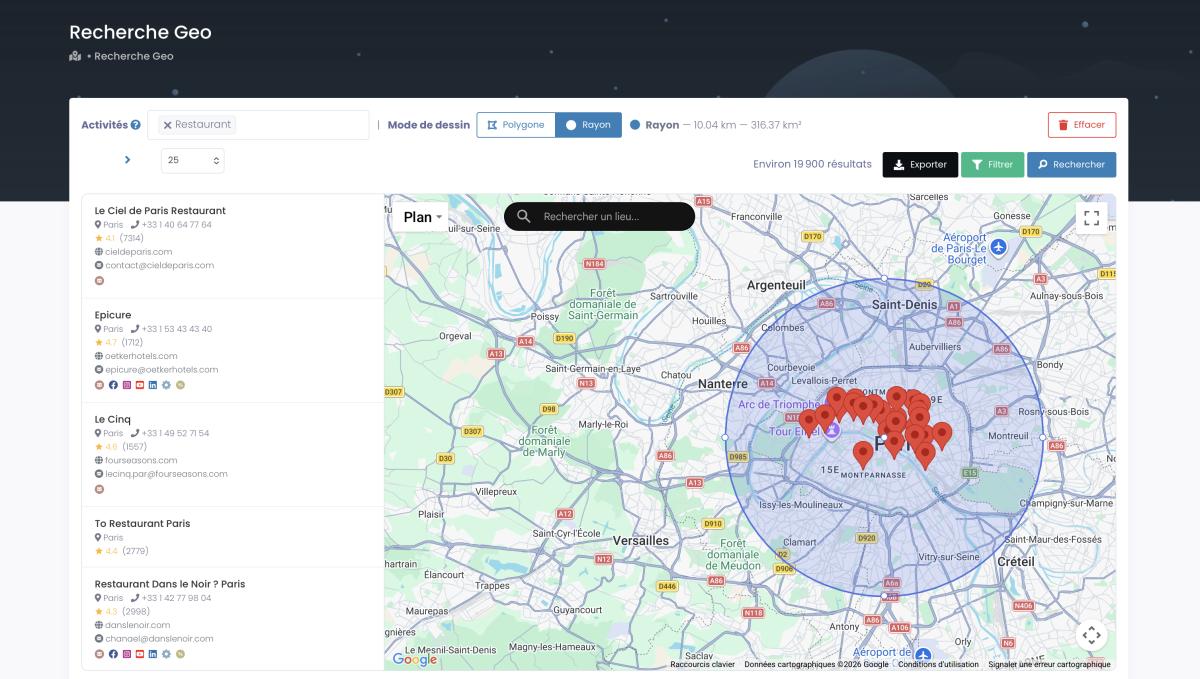
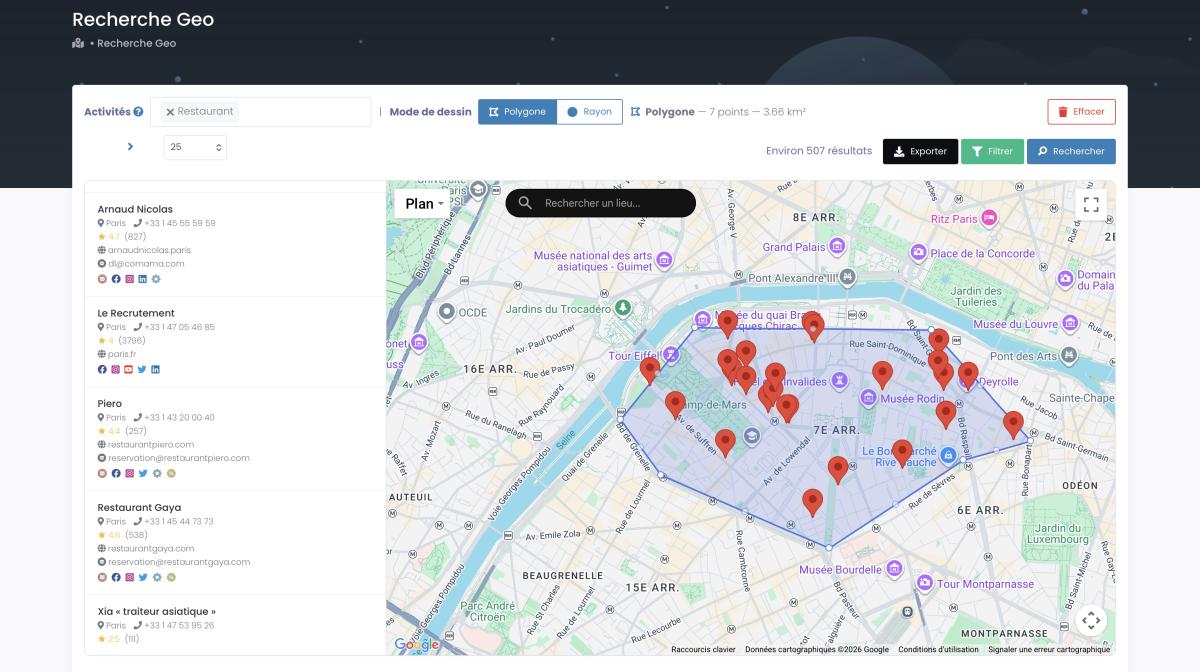
That geographic spread matters more than people realize. A 15-person agency in Austin doesn't get the same pile of cold emails that a Manhattan shop does every morning. Less noise means more attention. Scrap.io's GeoSearch — both radius and polygon modes — lets you draw custom zones to target these lower-competition pockets precisely.
3 Ways to Build Your Marketing Agency Email List (Compared)
Three roads. That's it. Whether you want to buy email lists, build one from scratch, or pull live data — every method has a price tag and a set of tradeoffs nobody warns you about upfront.
| Criteria | Buy Pre-Built | Build Manually | Scrap.io Live |
|---|---|---|---|
| Time to first contact | Instant | 4–12 weeks | < 5 minutes |
| Data freshness | 3–12 months old | Days old (at creation) | Real-time |
| Cost per 1,000 contacts | $100–$1,000 | $200–$400 (labor) | ~$5 |
| Accuracy | 60–80% | 85–90% (if done right) | 95%+ |
| Legal compliance | Varies | Manual check needed | Public data (CAN-SPAM/GDPR OK) |
| Customization | Low | High | High (filters) |
Option 1: Buy a Pre-Built Marketing Agency List
Fast. Convenient. Sometimes completely worthless.
You pay a broker — BookYourData, DataCaptive, whoever's running Google Ads this week — and a spreadsheet shows up within hours. Industry pricing hovers around $0.10–$1.00 per contact. That's the upside: speed.
The downside? You're purchasing a photograph of the market from whenever they last bothered to update. Could be last month. Could be Q2 of last year. Marketing people switch agencies like they're changing socks. And here's the part nobody mentions: you're sharing those exact same contacts with every other company that bought the same file. Your prospect got the same pitch from three competitors already. Yours is number four. Bref, good luck standing out.
Option 2: Build Your Own Agency Database Manually
Cheap-sounding. Expensive in practice.
Hire a VA at $20/hour. A solid researcher might verify 10 contacts per hour — find the agency, locate the right person, confirm the email's still active, paste it into a sheet. $2 per contact. Do the math on 5,000 leads: $10,000 in labor and 500 hours of someone's life. And here's the kicker — by the time you reach row 4,000, rows 1 through 2,000 are already going stale.
Then there's the compliance headache. Most people building marketing agency email lists manually have zero idea how to handle GDPR or cold email compliance properly. One slip-up and you're looking at fines that make the labor cost seem quaint.
Option 3: Live Scraping with Scrap.io (Recommended)
OK, this is where the math changes entirely.
Scrap.io pulls marketing agency leads in real-time from Google Maps and business websites. Agency updates their listing Tuesday morning? It's in your export by Wednesday. No middleman sitting on data for six months. No guessing whether the CMO you're emailing still works there. If you want the nuts and bolts, here's exactly how to find emails on Google Maps behind every listing.
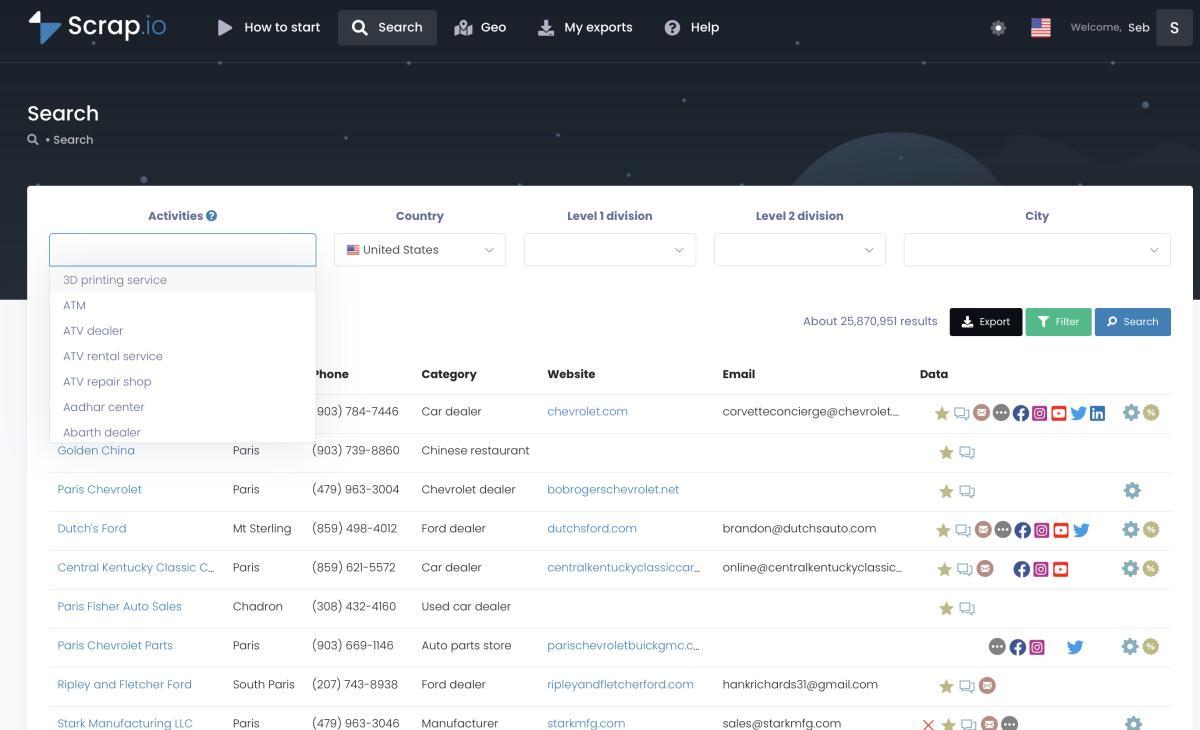
You get emails, phone numbers, addresses, websites, social profiles, Google ratings, employee count — and you can filter by all of it. Want marketing agencies in Texas with under 25 employees and a Google rating below 4.0? (Those agencies probably need help, by the way.) Two clicks. Export. Done.
Here's the number that matters. Of the 87,538 US marketing agencies indexed live, 51,801 have an email you can actually use — and Scrap.io only bills a credit on those. You don't pay to "discover" the 35,000 that have no email. Cost lands around $50 for 10,000 leads. Half a cent per contact. Compare that to $0.10–$1.00 from the brokers and... yeah. There's no comparison. Extracting a whole country in two clicks — or a hand-drawn polygon up to 1,000,000 km² — is the one thing static list vendors physically can't do.
Video: How to Scrape Local Leads at the Country Level
Try it on your own market. Scrap.io's free trial hands you 100 verified marketing agency leads — filter by any US city, state, or agency specialty and pull fresh data in minutes. Out of 87,538 US agencies, you pick which 100 you see first. Real-time. No static database. Start your free trial →
Real-World Examples: Who Targets Marketing Agencies (And How)
This is what every other "marketing agency email list" article skips. Actual use cases. Documented results. Not "many businesses have found success." Gross.
The agency owner who flipped to the other side. Picture a mid-size marketing agency, 51–200 employees, whose owner had been buying pre-built agency lists for years to grow his own client base — until he switched to live scraping for outbound. It's a pattern we see constantly among Scrap.io users: prospecting time collapses because the data's fresh and the people getting emailed actually still work where the list says they do. No secret template. Just current data instead of a spreadsheet compiled last spring. (Note: that's a composite of what agency owners in our audience report, not a single named case — I'd rather tell you that than dress it up.)
Monday.com and the SaaS Play. Monday.com, Notion, and a dozen other project management tools run dedicated sales programs aimed specifically at marketing agencies. The logic's obvious — land one 15-person agency and you've got 15+ seats paying monthly. Monday.com reported that over half its ARR came from "agencies and service firms" in its 2023–2024 annual filings. These companies aren't cold-emailing randomly. They're running segmented campaigns off massive, filtered marketing agency databases.
Creative Recruiters. Firms like 24 Seven and Creative Circle place talent at agencies for a living. LinkedIn Talent Solutions data shows recruiters targeting the creative/agency sector hit 15–20% InMail response rates when targeting is tight — miles above the LinkedIn norm. But that precision requires accurate, current advertising agency email lists (our sister page, if you're specifically after ad agencies) showing who's hiring, who's the right decision-maker, and whether the firm is growing or shrinking.
Conference Organizers Printing Money. Digiday, Adweek, MarTech — they all fill sponsorship slots and sell passes via cold email to agency contacts. An eerily similar pattern showed up in Scrap.io's USA business email database case studies: a conference company emailed 10,000 targeted industry contacts, pulled 2,500 registrations, and banked half a million in ticket sales. Data cost: $500. (I had to re-read those numbers twice myself.)
What the forums actually say
Don't take my word for it. The exact frustration that sends people looking for live data plays out in public. One user on r/coldemail asked it plainly: "Let's say I scrape a list of companies from Google Business Profiles. How can I get the emails of the business owners/decision makers from that list?" That's the whole game — extract from Maps, find the real contact, reach out. And the reason they're scraping instead of buying? Practitioners across r/coldemail routinely report 32–38% bounce rates on exported lists from the big aggregators, plus ZoomInfo pricing that starts around $15K/year — brutal math for anyone selling a sub-five-figure product. Quoi. That's the market gap in one paragraph.
How to Qualify a Marketing Agency Email List: 5 Criteria That Matter
Not every list provider deserves your credit card number. Some of them barely deserve your attention. Here's what separates a marketing agency database that actually converts from one that just torches your sender reputation.
1. Accuracy north of 90%. Below that, you're paying for bounces and spam complaints. Ask the provider directly: "What's your deliverability guarantee?" If they get vague or redirect you to a PDF nobody reads — walk. Fast.
2. Data freshness. Monthly updates minimum. Quarterly's already too slow in marketing. People in this industry switch agencies the way normal humans switch Netflix shows. Can the provider tell you the exact date of their last refresh? If not, assume the data's older than they're admitting.
3. Complete profiles, not just email addresses. Email alone is useless for personalization. You need names, titles, agency size, specialty, location. Without those, you can't write anything that sounds remotely human. And the people you're emailing — literal marketers — will smell a generic template from three paragraphs away.
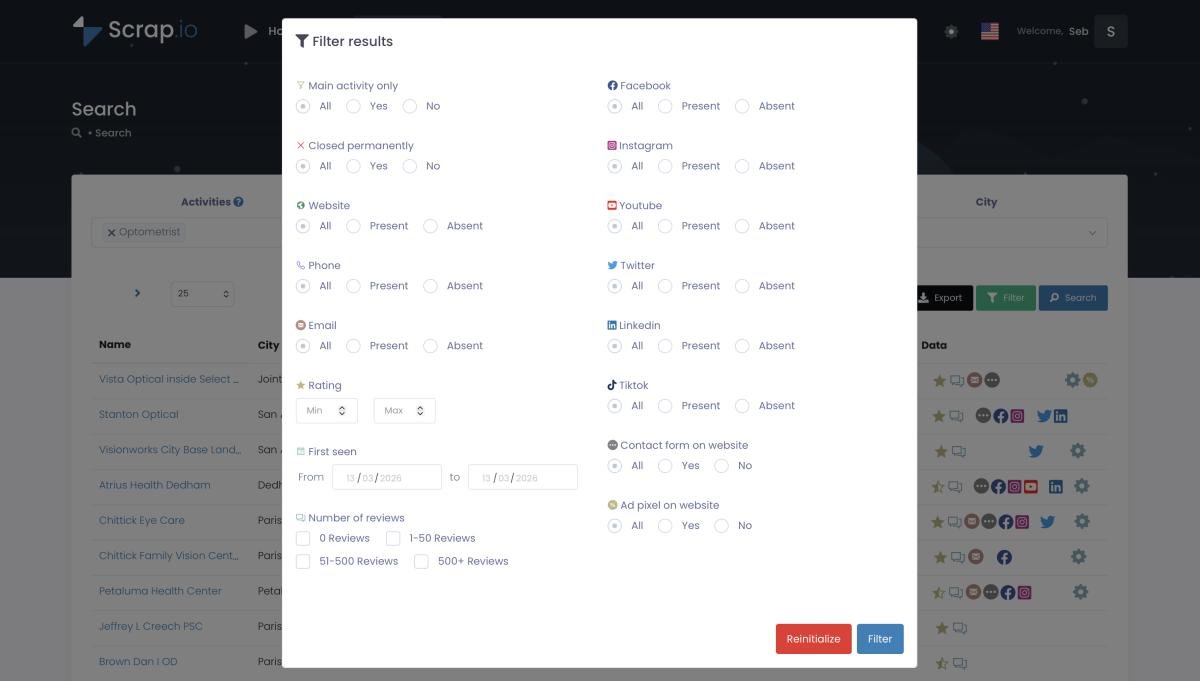
4. Actual filtering capability. Can you segment by city? Agency size? Specialty? Google rating? If the provider hands you a single bulk file of 50,000 undifferentiated contacts, you'll waste 80% reaching people who don't care about what you sell. This is exactly why filtering before extraction matters — it's the difference between paying for 51,801 reachable agencies and paying for all 87,538.
5. Clear compliance documentation. Where does the data come from? How was it collected? Verified B2B marketing agency leads sourced from publicly listed data — like Google Maps — are compliant by design. Aggregators who mumble about "proprietary sources" and can't give you a straight answer? That's not a data provider. That's a future lawsuit.
How to Run a High-Performing Campaign with Your Agency Contact List
10,000 marketing agency leads sitting in a spreadsheet don't make you money. What you do with them might. Or might not. Depends entirely on whether you're willing to put in the segmentation work upfront.
Segment by size — this isn't optional. A 3-person boutique in Portland and a 200-person shop in Chicago have approximately nothing in common. Split into tiers: solo/micro (1–5 employees), small (5–25), mid-size (25+). Different messaging for each. Different offers. Different subject lines. I've watched people skip this step and wonder why their 8,000-email campaign got four replies.
Personalize past the first name. These people are professional marketers. They've literally written the templates you're about to use on them. Mention the agency by name. Reference their specialty. If they've got a 3.2-star Google rating — maybe they need reputation help and you're the answer. If their site has no blog — content services pitch. The data's there. Use it or lose the reply. If you want the mechanical version of this at scale, our guide to AI cold email personalization walks through turning raw columns into custom openers.
Video: Why Your Google Maps Emails Don't Get Replies?
Sequences beat single sends. Always. One cold email is a coin flip. A 3–5 email sequence is a strategy. Mailchimp's benchmarks put generic cold email at 1–3% response. Personalized sequences aimed at marketing agencies climb to 5–8%. The difference is follow-up. (Scrap.io's cold email writing guide has the framework if you need it, and our cold email follow-up sequences breakdown has the exact day-by-day cadence.)
Watch your metrics like a hawk. Bounces above 3%? Stop. Clean the list. Opens under 15%? Your subject lines are the problem. Zero replies after 500 sends? The message doesn't resonate — rewrite before burning more contacts. Scrap.io's cold emailing strategy breakdown covers the deeper benchmarks.
Ready to send? Filter your first 100 leads by size, specialty, or city and launch your sequence. Scrap.io narrows 87,538 US agencies down to the 51,801 that actually have an email — so every credit you spend lands on a contact you can genuinely reach. Grab your 100 free leads →
Legal Compliance: CAN-SPAM, GDPR and What You Must Know Before Emailing Agencies
The section nobody wants to read. But ignore it and you'll spend way more time (and money) cleaning up the mess than you would've spent reading this paragraph.
CAN-SPAM (US): B2B cold email is legal without prior opt-in — that's what CAN-SPAM allows. The requirements: working unsubscribe link, opt-outs honored within 10 days, clear sender identification, physical mailing address included. Misleading subject lines? Violation. Penalties go up to $51,744 per offending email. One bad batch can get ugly quick.
GDPR (targeting EU agencies): Tighter rules. GDPR permits B2B outreach under legitimate interest, but you need to demonstrate relevance, provide easy opt-out, and practice data minimization. Collect only what you need. Delete the rest. Document everything.
Why live scraping from public data is cleaner than most alternatives: Scrap.io extracts information businesses themselves published — on Google Maps, on their own websites. Voluntarily public data. No privacy gray zones. No sketchy intermediary who "sourced it from partners." (Translation: bought it from someone who bought it from someone who scraped something shady in 2019.)
Standard disclaimer: I'm not your lawyer. If you're running enterprise-scale campaigns or touching regulated industries, get professional legal advice. This paragraph isn't a substitute for that.
Frequently Asked Questions
How much does a marketing agency email list cost?
Pre-built lists run $0.10–$1.00 per contact ($1,000–$10,000 for 10K leads). Scrap.io delivers the same volume for ~$50 — and because filters apply before extraction, you only spend credits on the 51,801 agencies that actually have an email. Always measure cost per deliverable lead, not per spreadsheet row.
What's the typical response rate for marketing agency outreach?
Generic cold email averages 1–3%. Personalized sequences targeting agencies with relevant offers typically hit 5–8%. List quality and message fit are the two biggest levers.
How often should I update my marketing agency contact list?
Monthly minimum. Quarterly if budget is tight. Live scraping (Scrap.io) eliminates the refresh cycle entirely — data's current every time you pull it.
Can I legally email marketing agencies without their permission?
Under CAN-SPAM, yes — B2B emails to public business contacts are permitted. You must include a clear unsubscribe option and identify yourself properly. For EU contacts, GDPR's legitimate interest basis applies. When uncertain, consult a lawyer.
What info should a complete agency profile include?
Contact name, job title, agency name, verified email, phone, physical address, website URL, specialty (digital, creative, full-service), and agency size. Social profiles are a bonus for multi-channel outreach.
How do I avoid spam filters when emailing marketing agencies?
Authenticate your domain (SPF, DKIM, DMARC). Warm up gradually — don't blast 5,000 emails from a fresh domain on day one. Avoid spam trigger words. Keep bounces under 3%. Include a real unsubscribe link in every message.
Should I segment my marketing agency email list by company size?
100%. A solo freelancer calling themselves an "agency" has zero overlap with a 150-person firm. Budgets, decision speed, pain points — all different. Segment or get ignored.
Is there a free marketing agency email list available?
You can scrape Google Maps manually. It's free. It takes weeks. Scrap.io's free trial gives you 100 verified leads to test the platform before committing. For serious volumes, expect to invest.
What's the best marketing agency email list provider?
Static providers like BookYourData or DataCaptive work for one-off blasts. For ongoing prospecting with fresh, filterable data at scale, live scraping platforms like Scrap.io win on both cost and quality.
How do I find digital marketing agency contacts specifically?
Filter by specialty. On Scrap.io, search "digital marketing agency" in your target area. Narrow further by size, services, or tech stack. A targeted digital marketing agency email list outperforms a generic agency dump every time.
Generate Your Marketing Agency Email List with Scrap.io
So where does that leave you? With 87,538 US marketing agencies indexed live, 51,801 of them reachable by email, and three honest ways to get at them. Buying is fast and stale. Building is cheap-sounding and slow. Scraping is the one that gives you fresh data at half a cent a contact — and doesn't charge you for the agencies you can't even email.
Try Scrap.io free for 7 days — get 100 verified marketing agency leads instantly. Filter by US city, state, or specialty. Fresh data pulled in real-time from Google Maps, updated at the moment you export. No stale databases, no contacts who left the agency in 2024. Start your free trial →
Generate a list of marketing agency with Scrap.io