

By The Scrap.io Team. Updated August 2026.
What's in this guide
- The Nail Salon Industry in 2026: Why These Contacts Are Gold
- What's Actually Inside a Nail Salon Email List?
- Three Ways to Get Nail Salon Contacts (Compared)
- How Many Nail Salons Can You Actually Reach? (Exclusive Data)
- What to Look for Before You Buy
- How to Use Your List (Without Getting Blacklisted)
- Legal Compliance: CAN-SPAM, GDPR
- FAQ
A client spent last Tuesday trying to contact nail salon owners in Houston. Manually. He clicked through Google Maps listings one by one, copied emails into a spreadsheet, and two hours later he had 23 usable addresses and a fresh hatred for the whole process.
Then he ran the same search through a scraping tool. 4,200 contacts in 12 minutes.
Twenty-three versus four thousand. Brutal.
The nail salon email list market is a mess right now. Half the providers sell databases so stale they still say "2024" in the title. Others mix nail salons with hair salons, spas, and one time a client found a dog groomer sitting in the export. (Seriously.) And the prices swing from "suspiciously cheap" to "are you kidding me."
So here's what actually works in 2026. How to get fresh, accurate nail salon contacts without overpaying and without ending up with a spreadsheet full of dead emails. No fluff, no vague advice.
The Nail Salon Industry in 2026: Why These Contacts Are Gold
Here's a number that should get your attention: 122,758 active nail salons in the US right now (Scrap.io real-time Google Maps data, August 2026). The sector generates $12.9 billion in annual revenue (Kentley Insights, 2025) and grows around 9.7% per year.
That's not a niche. That's an entire economy hiding in strip malls.
But here's the weird part. Almost every B2B vendor says the same thing: "We can't reach these people." And they're right. Nail salon owners are physically doing nails all day. They don't pick up cold calls. They skip LinkedIn because they're not sitting at a desk. The one channel that consistently lands? Email. Specifically, targeted email to verified addresses.
And the growth isn't slowing. Post-pandemic recovery pushed the industry into overdrive, and gel extensions alone became a multi-billion-dollar sub-category. Every new salon that opens needs suppliers, software, marketing help, payment systems. That's your total addressable market, if you can actually reach it.
Most B2B companies can't. Which is exactly why a good nail salon mailing list is worth its weight in gel polish.
What's Actually Inside a Nail Salon Email List?
You paid $500 for a "nail salon database." What did you actually get?
Good question. Most people never check until the bounce rate hits 40%.
Contact Fields Breakdown
A proper nail salon contacts database is more than a column of email addresses. You should be getting the business name, the owner or manager name, the email (ideally classified: is it a personal address or a generic info@?), the phone number with its type (mobile vs landline), the physical address, the website URL, the Google Maps rating, the review count, and the business category.
The email classification matters more than people think. An email to [email protected] needs a completely different approach than [email protected]. One goes to the owner. The other goes to whoever checks the inbox. Maybe nobody. Platforms like Scrap.io classify emails automatically (individual, contact, sales, marketing), so you know who you're writing to before you hit send.
Compare that to the usual "email database" where every address is just a string in a cell. No context. No classification. Good luck personalizing that, or building useful nail salon owner email addresses out of it.
Who's on These Lists
Not all nail salon contacts are created equal. The beauty industry has layers, and if you don't know who you're targeting, you'll burn your budget faster than a topcoat dries.
Solo salon owners. They run everything. Buy their own supplies. Decide fast. If your product saves them time or money, they listen. These are your bread and butter.
Chain managers. Think Regal Nails inside Walmart, or Dashing Diva locations. Bigger budgets, slower decisions, corporate approval chains. Different pitch entirely.
Nail techs going independent. A growing segment. Suite renters and booth renters setting up their own shops. They're researching everything right now, which makes them great prospects for software and starter equipment.
Related niches overlap here too. If you're building a broader beauty prospect list, check our guides on beauty salon email lists, hair salon contacts, hairdresser email lists, barber shop email databases, spa email lists, and waxing service contacts.
Three Ways to Get Nail Salon Contacts (Compared)
The cheapest option gives you the freshest data. I know. Sounds backwards. Stick with me.
Buy Pre-Built Lists (ExactData, BookYourData, ListGIANT)
The traditional route. Companies like ExactData and BookYourData sell ready-made nail salon lists at $0.04 to $0.08 per contact. Sounds reasonable, until you realize half those contacts were last verified sometime around the previous solar eclipse.
The upside? Speed. A CSV lands in your inbox within hours. The downside? Bounce rates of 25 to 40%. Your competitors probably bought the same list last month. And the "nail salon" category often smuggles in tanning salons, beauty schools, and the occasional pet spa. (I wish I were joking.)
Build Your Own
The masochism option. Google "nail salon" plus a city name. Click each result. Visit the website. Hunt for an email buried in the footer. Copy it. Repeat 5,000 times.
At maybe 15 contacts an hour (if you're quick), a list of 10,000 nail salons takes roughly 670 hours. That's more than a dollar per contact once you count labor. And by the time you finish your Texas list, the California contacts are already stale.
Don't do this to yourself.
Live Data Scraping With Scrap.io
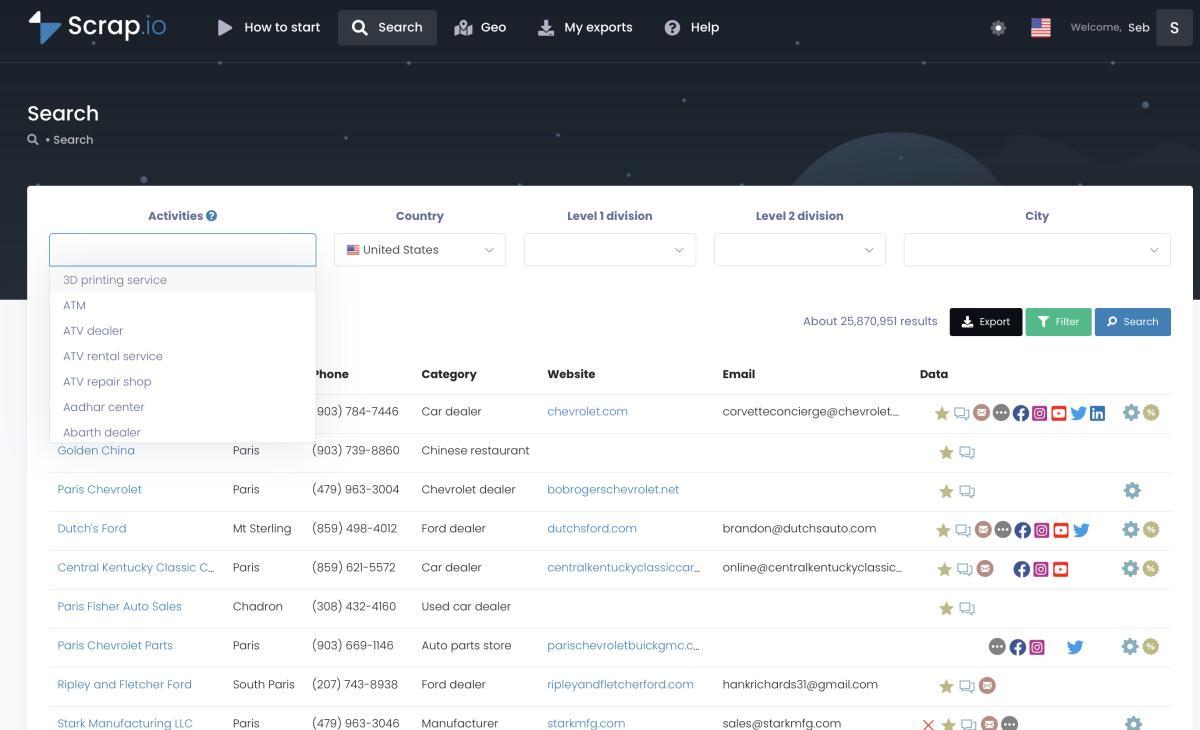
This is the one that changed the math. Live scraping platforms pull contact data straight from Google Maps and business websites, in real time. No cached databases. No six-month-old spreadsheets.
With Scrap.io, you search "nail salon" plus any location (a city, a state, or the entire US), apply filters before you spend a single credit, and export a clean CSV with emails, phones, addresses, ratings, and social profiles. Two clicks. Done. That's how you turn Google Maps into a live stream of nail salon leads instead of a static file.
The killer feature? You filter before extraction. Only want nail salons that actually have an email? Toggle the filter, and you only pay for contacts with emails. Want salons with a website but no Instagram? Done. Bad Google reviews? Easy. Scrap.io is the only platform that applies filters before credits are consumed. Zero waste.
Cost: about $0.005 per contact. So 10,000 nail salon leads for roughly $50. Compare that to $400 to $800 at traditional providers. The math isn't even close.
Video: Scrap.io - How to Start?
Head-to-Head Comparison
| Method | Cost per 10K contacts | Data freshness | Bounce rate | Setup time |
|---|---|---|---|---|
| Buy pre-built list | $400 to $800 | 3 to 6 months old | 25 to 40% | Minutes |
| Build your own | $10,000+ (labor) | Fresh at collection | 10 to 15% | Weeks/months |
| Live scraping (Scrap.io) | ~$50 | Real-time | 5 to 15% | Minutes |
Want to test live scraping on nail salons? Try Scrap.io free for 7 days, 100 leads included. Search any city, any state, and see the data quality before you commit a single dollar. Filter for salons that already have an email, so you never pay for a contact you can't use.
How Many Nail Salons Can You Actually Reach? (Exclusive Data)
We counted every single nail salon on Google Maps. Not estimated. Not "projected from industry reports." Actually counted.
Here's what we found.
Total US: 122,758 Active Salons
That's the real number as of August 2026. Google Maps lists 134,478 nail salon entries in total, but that raw figure includes permanently closed locations and duplicates. Strip those out and you get 122,758 active nail salons, verified on the map. That's your true addressable universe if you sell into this market. So when someone hands you a "how many nail salons in the US" stat pulled from a 2023 PDF, treat it with suspicion.
With Website: 71,312 (58.1%)
Just under three in five US nail salons have a website. The other 41.9%? They exist on Google Maps, maybe Instagram, and word of mouth. If you're an agency selling web design, that's roughly 51,446 businesses with no website at all. Enormous opportunity.
With Email: 35,989 (29.3%)
This one stings. Only about three in ten nail salons have a publicly listed email address. So if a broker sells you a "nail salon list" claiming 100,000 contacts with emails, they're lying. Or padding with dead data. The math doesn't work.
35,989 is the real ceiling for email-based outreach. Everything above that number is fiction. Any honest list of nail salons with email tops out right around there.
By State: Top 10 (Approximate)
| Rank | State | Nail Salons | With Email |
|---|---|---|---|
| 1 | California | ~16,900 | ~4,900 |
| 2 | Texas | ~11,900 | ~3,500 |
| 3 | Florida | ~9,400 | ~2,700 |
| 4 | New York | ~8,000 | ~2,300 |
| 5 | Georgia | ~4,700 | ~1,400 |
| 6 | Virginia | ~3,900 | ~1,100 |
| 7 | North Carolina | ~3,700 | ~1,100 |
| 8 | Illinois | ~3,500 | ~1,000 |
| 9 | New Jersey | ~3,350 | ~950 |
| 10 | Pennsylvania | ~3,250 | ~900 |
Those state figures are ballpark, and they'll drift as salons open and close. Want a nail salon contact list by state that's exact to the day? Pull it yourself.
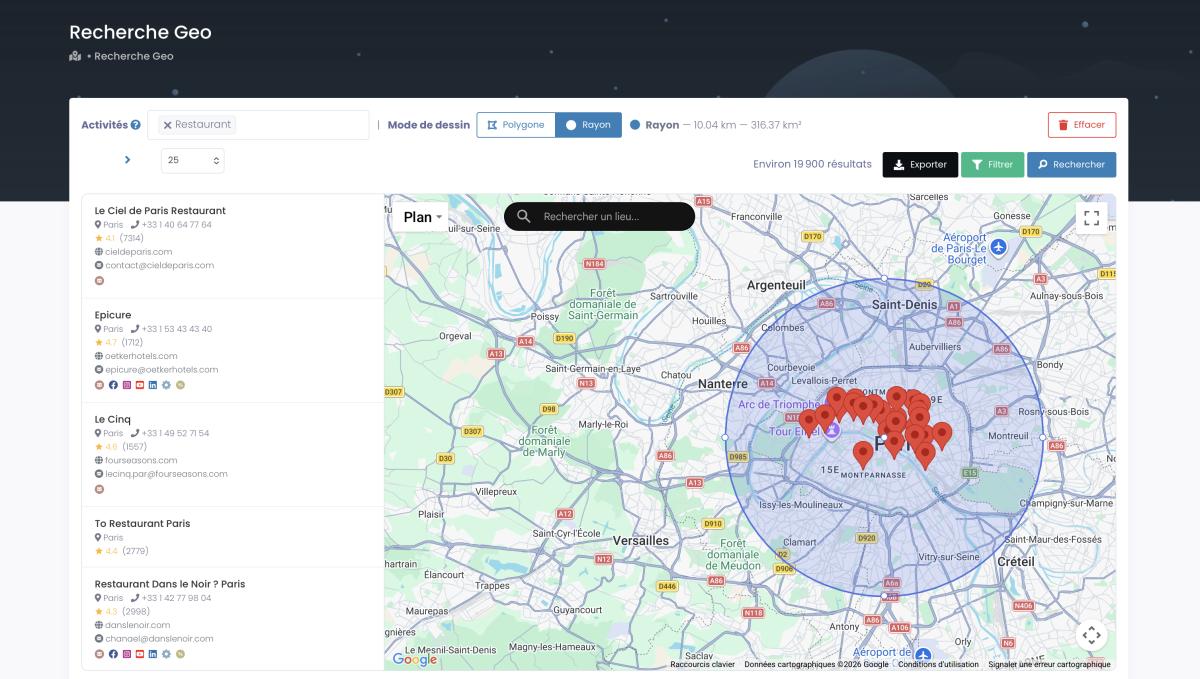
Want the exact count for your target state or city? Counts are always free on Scrap.io. No credits needed. Run the search yourself and see the real number, live, before you export a thing.
What to Look for Before You Buy
Half the nail salon email lists on the market are over six months old. Some are closer to two years. And the providers won't tell you that upfront. You find out when your first campaign bounces 35%.
Data Freshness
This is the single most important factor. Period. Nail salons change ownership, swap email providers, close down, and open new locations constantly. A list that was 90% accurate in January might be 70% accurate by June.
Ask any provider one question: "When was this data last verified?" If they dodge it or say "annually," walk away. The best approach is real-time extraction, where the data is pulled fresh at the moment you need it. That's what makes live scraping fundamentally different from a static database.
Should You Buy a Nail Salon Email List at All?
Fair question, and the honest answer is: it depends on where it comes from. Everyone hunts for the "best nail salon email list," as if one broker quietly solved the freshness problem. None did. When you buy nail salon email list data from a static broker, 80% accuracy is a realistic ceiling. For any bought email list, that's about as good as it gets. Anything above 90% for a list older than three months? They're inflating numbers. If you're going to buy nail salon leads at all, at least know that ceiling going in.
Scroll through r/Emailmarketing and the verdict on bought lists is close to unanimous. People report 25 to 40% bounce rates and torched sender domains after a single send. That's not a marginal risk. That's your whole outreach program, gone in one afternoon.
Real-time data from Google Maps consistently delivers 85 to 95% deliverability. Not because scraping is magic, but because the data is fresh. Freshness beats "verification" every time.
Filtering Options
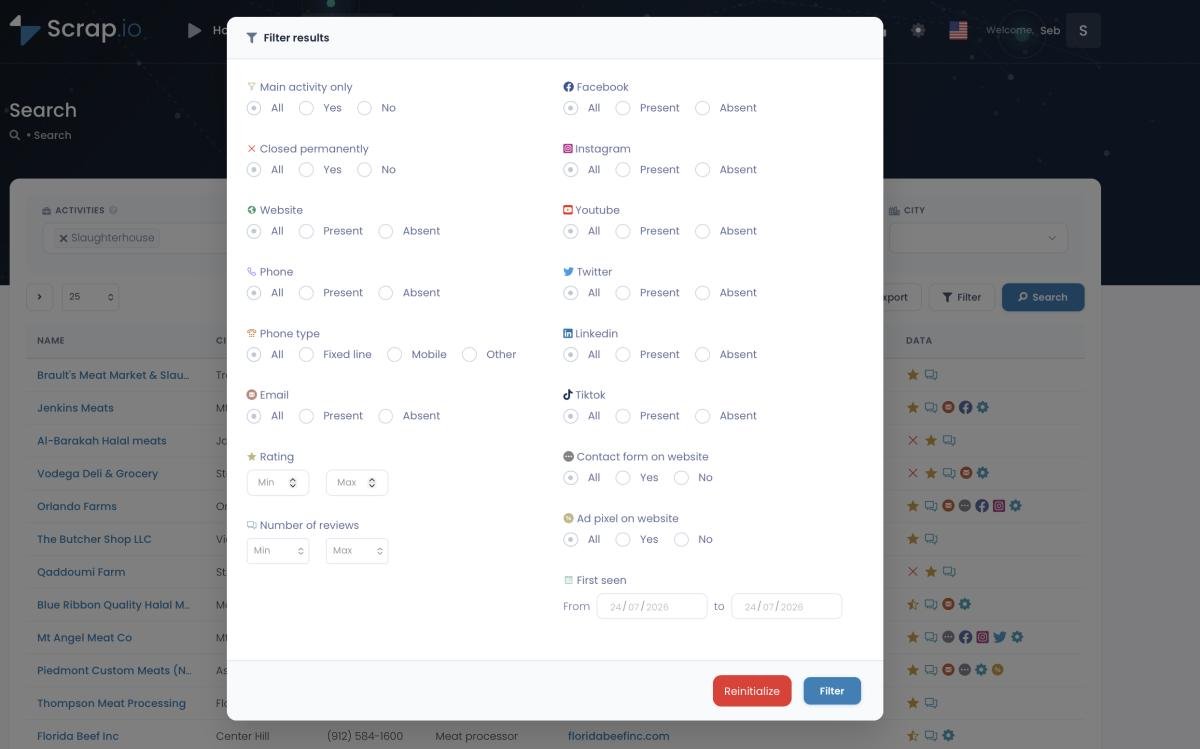
Can you filter by location? By whether they have a website? By rating? By whether an email actually exists on the profile?
Most traditional providers offer location filtering and, well, that's about it. Scrap.io lets you filter by 20+ criteria before extraction: social media presence, phone type, review count, price range, whether the Google listing is claimed. Try getting that from a $500 CSV. I'll wait.
Video: Finding Clients Through Google Maps Filters
Pricing Models
Traditional list brokers charge per contact: $0.04 to $0.08 each. That adds up fast, so 10,000 contacts runs $400 to $800. And you pay the same whether the email is fresh or three months dead.
Subscription scraping flips the model. Scrap.io starts at $35 a month for 10,000 credits, and one credit equals one business exported. Re-export the same business within 30 days? Free. Counts before export? Always free. You control the cost because you control the extraction.
How to Use Your List (Without Getting Blacklisted)
A SaaS founder sent the same email to 5,000 nail salon owners. Four replied. One was a cease-and-desist.
Don't be that person.
Segmentation Strategies
Every salon on your list is different. A high-end gel boutique in Beverly Hills has nothing in common with a budget walk-in shop in a rural strip mall. And yet most people blast the exact same email to both.
Segment by geography (local references work wonders), by size (solo operators vs multi-chair businesses), by services, and by digital presence. A salon with no website is a completely different prospect than one running Instagram ads. Tailor accordingly. Scrap.io's filters make this trivially easy, so you can build micro-segments and a tight nail salon prospecting list before you even export.
Personalization for Salon Owners
Nail salon owners are not "Dear Business Owner." They're people with names, specific businesses, and real problems. If your email doesn't reference something concrete about their salon, it goes straight to trash.
Mention their city. Reference their Google rating. If they have a website, acknowledge it. If they don't, that's your opener right there. Tools like Scrap.io give you enough data points per contact to personalize at scale, without spending hours researching each salon by hand.
And "Hi [First Name]" isn't personalization. That's a mail merge. Real personalization means you actually looked at who you're emailing. Even 30 seconds of context is the difference between "reply" and "spam." A recycled nail salon email list template with the name swapped in fools nobody. If your copy still falls flat, our guide on how to write a cold email breaks down how to email nail salon owners with a structure that actually gets answers.
Timing and Frequency
Nail salon owners work weird hours. Weekends are their busiest days. Evenings too. They check email early, before the first client (7 to 9 AM), and after closing (6 to 8 PM). Tuesday through Thursday tends to win.
Frequency? Twice a month, max, for cold outreach. More than that and you're training them to ignore you. Or worse, report you. Treat your nail salon marketing list like a relationship, not a megaphone. The best nail salon marketing emails deliver genuine value (industry trends, seasonal tips, real solutions), not another sales pitch in a trench coat.
Email Benchmarks
Know your numbers before you start. For the beauty industry, Klaviyo's 2026 benchmarks (drawn from 183,000+ brands) show a 30.5% average open rate for beauty and wellness, with a 1.24% average click-through rate.
Below 20% open rate? Your subject lines need work, or your list is bad. Below 0.5% CTR? Your content isn't landing. Hit those benchmarks with a real nail salon email list and you're in solid territory. Keep iterating.
Run your list through an email validator before every send. Even with fresh data, validation catches formatting issues and temporary bounces that would otherwise chip away at your sender reputation.
Video: Why Your Google Maps Emails Don't Get Replies?
Ready to reach nail salon owners? Get 100 free contacts and send your first campaign this week. Search nail salons in any US city, filter for the ones with a verified email, and export names, phones, and addresses in two clicks. 7-day free trial.
Legal Compliance: CAN-SPAM, GDPR
One non-compliant email can cost you $53,088. Per email. That's not a scare tactic. That's the FTC's current maximum CAN-SPAM penalty, the inflation-adjusted figure the agency set on January 17, 2025.
So yeah. Pay attention to this part.
CAN-SPAM basics. Every marketing email needs accurate sender info, a working unsubscribe link, your physical business address, and honest subject lines. Honor opt-outs within 10 business days. That's the floor, not the ceiling. Our full cold email compliance guide walks through every rule in plain English.
And the fines are real. In August 2024, the FTC hit security camera maker Verkada with a $2.95 million penalty (the largest CAN-SPAM fine on record) for sending marketing emails with broken opt-out links and misleading subject lines. Not phishing. Not fraud. Just a missing unsubscribe button. That mistake came with a 20-year compliance program attached.
GDPR. If any of your nail salon leads sit in Europe, GDPR applies. You need a lawful basis (legitimate interest usually works for B2B), clear opt-out options, and the ability to delete someone's data on request. Most US-focused nail salon campaigns never touch GDPR, but if you're extracting across 195 countries, know the rules. Our GDPR cold email B2B guide covers the legitimate-interest test in detail.
The public data advantage. When you extract contacts from Google Maps (data that businesses voluntarily published on their own listings and websites) you're on solid legal ground. It's public business information, not scraped personal data. Scrap.io only collects publicly available business data, is GDPR and CCPA compliant, and every data point traces back to its source. That's a fundamentally different posture than buying a mystery CSV from an anonymous broker.
And here's what people forget: compliance isn't only about dodging fines. It protects your sender reputation. One spam complaint from a nail salon owner doesn't just cost you that contact. It damages deliverability for your entire list. Clean data plus clear compliance equals emails that actually reach inboxes.
FAQ
How much does a nail salon email list cost?
Traditional providers charge $0.04 to $0.08 per contact, so $400 to $800 for 10,000 contacts. With Scrap.io, the same 10,000 contacts cost about $50, with real-time data pulled straight from Google Maps. The gap exists because live scraping cuts out the middleman and the stale-data problem. There's no genuinely useful "nail salon email list free" download, by the way. The free versions floating around forums are the 25 to 40% bounce factories.
How many nail salons are there in the US?
122,758 active nail salons as of August 2026, according to Scrap.io's real-time Google Maps count. Of those, 71,312 have a website (58.1%) and 35,989 have a publicly listed email (29.3%). Anyone claiming to sell you 100,000+ nail salon emails is padding the numbers.
How many US nail salons actually have an email address?
About 35,989, roughly 29% of the 122,758 active US nail salons on Google Maps as of 2026. That figure is your real ceiling for email outreach. Any "professional nail salon email list" promising more than that is counting closed listings, duplicates, or contacts that simply don't exist.
Is it legal to email nail salon owners from a list?
Yes, if you follow CAN-SPAM: include an unsubscribe link, use accurate sender info, put your physical address in every email, and honor opt-out requests. Using publicly available data (like Google Maps business listings) for B2B outreach is standard practice and legally sound. If you want the full breakdown before you launch a nail salon cold email campaign, read our compliance guide.
How often should a nail salon email list be updated?
Ideally, every time you use it. Static lists degrade 2 to 3% per month in the beauty industry. Monthly refresh is the minimum if you're buying traditional lists. Live scraping solves this entirely: the data is extracted fresh at the moment of your search, so there's nothing to "update."
What's a good open rate for nail salon marketing emails?
30.5% is the beauty industry average (Klaviyo, 2026), with click-through rates around 1.24%. Below 20% open rate means your list quality is poor or your subject lines need serious work. Fresh data plus personalized subject lines consistently beat generic blasts to stale lists.
Get Your Nail Salon Email List: The Smart Way
122,758 nail salons. $12.9 billion in revenue. Only 35,989 with publicly available emails. The opportunity is massive, but the window for reaching these businesses with good data is smaller than most vendors admit.
The vendors selling $500 spreadsheets with "verified" contacts from six months ago? They had their moment. It's over. Real-time extraction changed the economics, and the results, of nail salon outreach for good. It also killed the market for a stale nail salon database USA file you buy once and email forever.
The real examples back this up. Companies like GlossGenius ($48/mo nail salon SaaS), Vagaro (220K+ businesses on their platform), and Zoca (AI salon marketing) all grew by reaching salon owners through targeted outreach. Coalition Technologies' campaign for Beauty Salon Plus drove open rates above 50%, because they used fresh data and personalized messaging. ExactData still sells static lists, but the market moved on. And if nail salons are just one slice of your targeting, our email list by industry guide covers the rest.
7 days free. 100 contacts on us. Try Scrap.io now, search nail salons in any US city, filter by email availability, and export full contact details in two clicks. See why 50,000+ professionals switched to real-time data. Your first campaign could go out this week.
Generate a list of nail salon with Scrap.io