

Last year, a pharma sales rep I know spent three weeks trying to book a single meeting with a radiation oncologist at a mid-size cancer center in Houston. Three weeks. Fourteen voicemails. Two emails that bounced. And one very confused receptionist who thought he was calling about a patient referral.
He's not alone. 68% of oncologists are access-restricted for pharmaceutical reps. That's 2.5x more than other specialties. Memorial Sloan Kettering? They've flat-out banned sales reps. Ninety-five percent of their oncologists are considered off-limits.
And yet, there are 27,475 oncologists practicing in the US right now. Every one of them makes decisions about drug protocols, equipment purchases, and clinical trial enrollment. The question isn't whether they exist. It's how you actually reach them.
That's what this guide covers. Not theory. Not fluff. Real methods for building a targeted oncologist email list that actually gets you in front of cancer specialists.
Video: How Scrap.io extracts verified oncologist leads from Google Maps in real time.
Table of Contents
- Why Oncologist Email Lists Are Critical for Healthcare B2B in 2026
- Understanding the US Oncologist Landscape in 2026
- How to Get a Verified Oncologist Email List in 2026
- Top Use Cases for Oncologist Email Outreach
- Real-World B2B Examples: Who's Already Targeting Oncologists?
- Maximizing ROI: Segmentation, Content & Timing
- Scrap.io vs Traditional Oncologist Email List Providers
- GDPR & CAN-SPAM Compliance: Is It Legal?
- FAQ: Oncologist Email Lists
- Start Your Oncologist Outreach Today
Why Oncologist Email Lists Are Critical for Healthcare B2B in 2026
The Access Problem: 68% of Oncologists Are Unreachable by Phone
Here's a stat that should make any sales team nervous: only 5% of oncologists are detailed by reps 12+ times annually. A decade ago, that number was 20%. The door is closing, fast.
One community oncologist told researchers something that sums up the problem perfectly: "There's something new coming out every week, several times a week on a TKI or a monoclonal for an indication I've never heard the name of." These doctors are drowning in information. The last thing they want is another unscheduled interruption between patients.
So reps can't get in. Cold calls go to voicemail. But 71% of oncologists use digital channels to stay updated on treatments. They're reading. Just not answering phones.
The inbox became the front door.
The $90.7 Billion US Market Opportunity
The US oncology market hit $90.69 billion in 2026 and it's projected to reach $211.78 billion by 2034 at a CAGR of 11.75% (Towards Healthcare). Globally, we're talking $279.98 billion, headed to $748.17 billion by 2035.
And all that money flows through decisions made by oncologists. Drug protocols. Equipment acquisitions. Clinical trial enrollment. Software purchases. These 27,475 professionals are the gatekeepers to one of the fastest-growing markets in healthcare.
Oh, and 2,114,850 new cancer cases plus 626,140 deaths are projected in the US for 2026 (American Cancer Society). The demand for cancer treatment isn't slowing down. Neither is the demand for reaching the specialists who deliver it.
Understanding the US Oncologist Landscape in 2026
27,475+ Practicing Oncologists: Breakdown by Specialty
Not all oncologists are interchangeable. Trying to sell radiation therapy equipment to a medical oncologist is like pitching snowplows to a surf shop. Here's how the 27,475 break down:
- Hematology-oncology: 43% of all oncologists. Blood cancers. Your biggest segment by far.
- Medical oncologists: The chemotherapy and drug therapy specialists.
- Radiation oncologists: Focused on radiation treatment and planning.
- Surgical oncologists: Cancer surgery, from biopsies to complex resections.
- Pediatric oncologists: Childhood cancers. A smaller but highly specialized group.
Each group has different buying cycles, different decision-making processes, and different pain points. A one-size-fits-all oncologist mailing list? That's a recipe for ignored emails.
Geographic Hotspots: Where Oncologists Concentrate
Geography matters more than people think. The Northeast US has over 150 oncologists specializing in genitourinary cancers alone. The South has 129, the West 97, the Midwest 75.
But here's the kicker: seven states have zero oncologists specializing in genitourinary cancer. And 66% of rural counties lack a single hematologist or medical oncologist.
Top states by overall oncologist density: California, New York, Texas, Florida, Pennsylvania. If you're running a healthcare email list campaign, that's where the volume lives.
The Workforce Shortage: Why Timing Matters Now
21.1% of current oncologists are nearing retirement age (64+). The shortage is real and growing. The ones still practicing are busier, more access-restricted, and harder to reach through traditional channels.
Translation: the window for building relationships with these specialists is shrinking. Companies that connect now, while the data is still fresh and the competition hasn't caught up, have a meaningful advantage.
How to Get a Verified Oncologist Email List in 2026
Real-Time Data Extraction vs Static Databases
Most oncologist email database providers sell you a snapshot from months ago. Dr. Smith moved to a new practice in February? That update might show up in their next quarterly refresh. Maybe.
Real-time extraction flips this. Platforms like Scrap.io pull contact information directly from Google Maps and practice websites, live. When a new oncology clinic opens in Phoenix or a physician updates their email, it appears immediately. Not next quarter.
The difference between a static database and live extraction is like checking today's weather versus last month's forecast. Both could technically be right. Only one is useful.
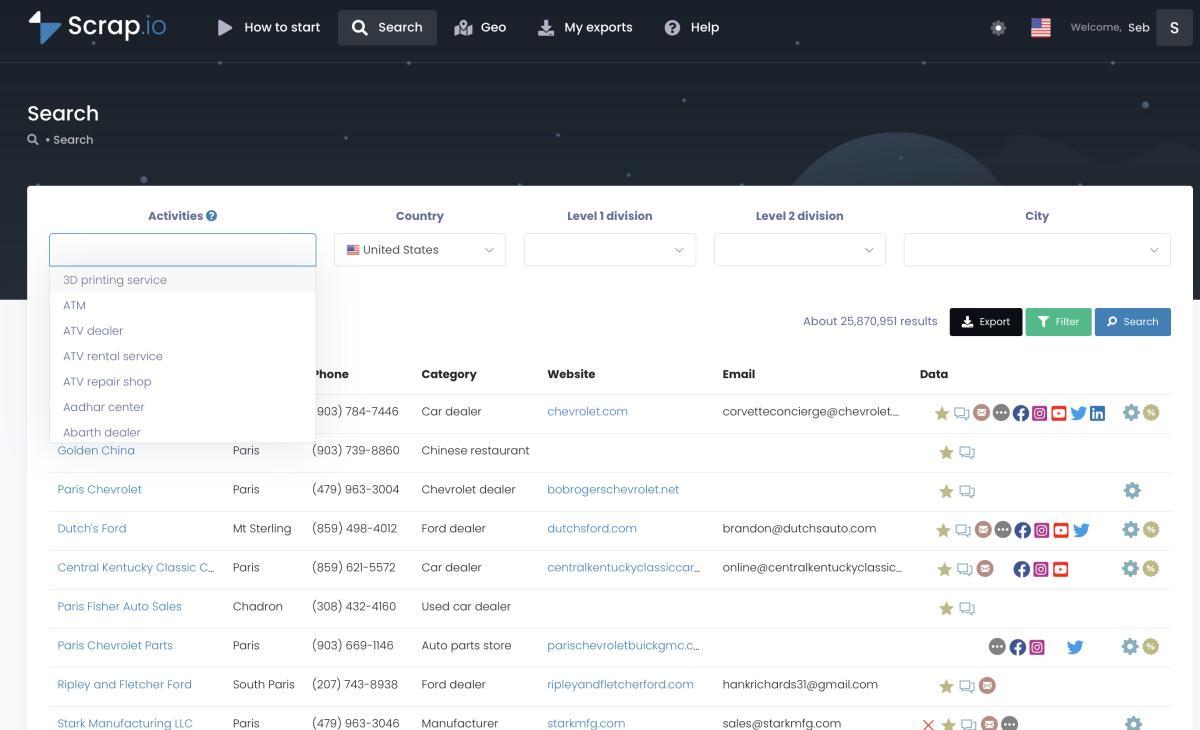
Advanced Filtering: Target by Subspecialty, Location, and Practice Type
This is where it gets practical. Instead of paying for 10,000 random oncologist contacts and praying 500 are relevant, you filter first:
- Subspecialty: Medical oncologist, radiation oncologist, surgical, hematology-oncology, pediatric
- Geography: State, city, zip code, or radius search
- Practice type: Academic medical center, community practice, cancer center
- Contact verification: Email present, website active, social media profiles
- Google Maps data: Ratings, reviews, hours, phone numbers
You build the exact list you need. Nothing more, nothing less.
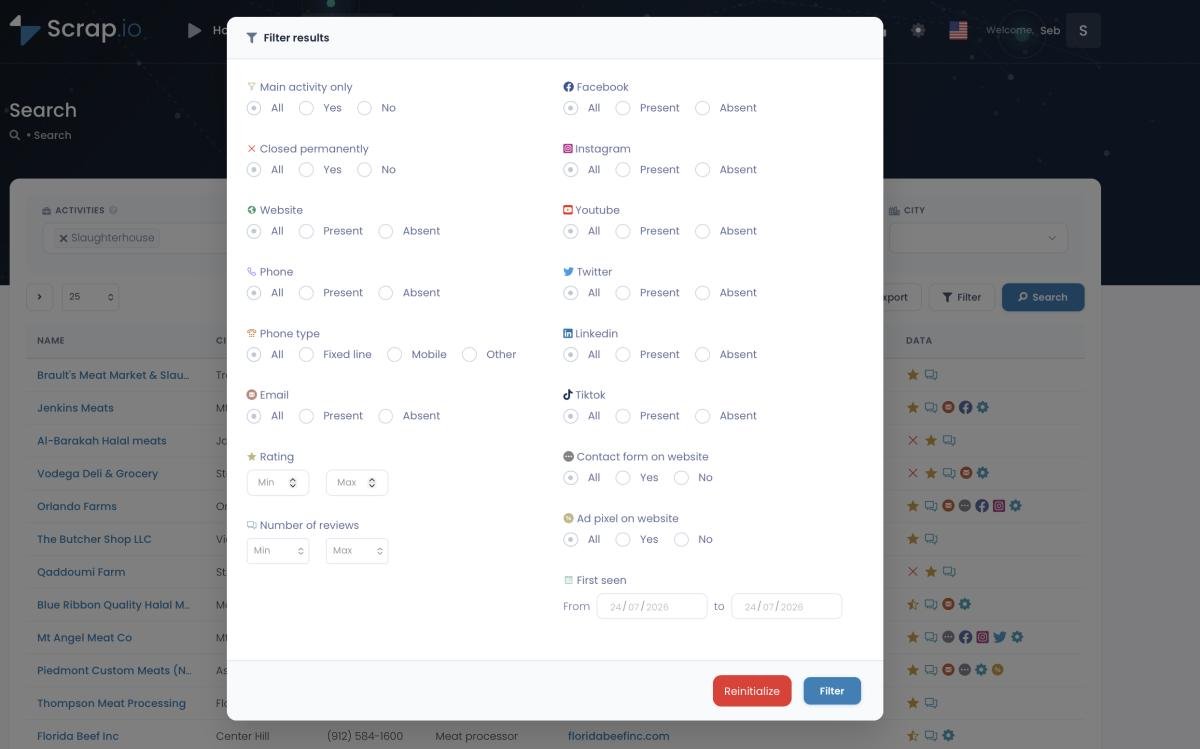
Watching the whole thing done end to end helps. This walkthrough covers account setup and your first export in a few minutes.
Video: Scrap.io - How to Get Started?
Platforms like Scrap.io let you filter oncologist contacts by subspecialty and location before you spend a single credit, so you only pay for records that already have an email attached. Right now, 9,713 US oncologist listings carry a public email out of 48,707 tracked in real time. Start free with a 7-day trial, 100 oncologist leads included. Try Scrap.io free.
Top Use Cases for Oncologist Email Outreach
Pharmaceutical Companies: Drug Launches & Clinical Trials
The pharma pipeline is packed with oncology drugs. 34% of the global pharmaceutical pipeline focuses on oncology. Every new FDA approval needs targeted outreach to the right subspecialists.
Smart pharma companies use cancer specialist email lists to announce FDA approvals, distribute dosing guides, invite KOLs to advisory boards, and recruit investigators for Phase II/III trials. When you can segment by subspecialty, say, targeting only hematology-oncology specialists for a new blood cancer therapy, the response rates speak for themselves.
Medical Device Manufacturers: Equipment & Technology Sales
Radiation therapy equipment runs $2-5 million per unit. You don't close that deal with a cold call. Medical device companies use a targeted physician email list to share ROI calculators, case studies from similar practice sizes, and technology upgrade announcements. The goal: build the relationship before the purchase cycle starts.
Healthcare IT & SaaS: Oncology Software Solutions
The medical oncology software market hit $2.88 billion in 2025 and is projected to reach $5.06 billion by 2032 (Fortune Business Insights). Companies like Altai Oncology (chemotherapy management), Onc.AI (predictive AI for metastatic lung cancer), and GenomOncology (genomic data platforms) all need to reach oncologists to sell their products.
54% of oncologists do their product research online. If your SaaS isn't showing up in their inbox with relevant content, someone else's is.
Clinical Research Organizations: Investigator Recruitment
With a third of the pharma pipeline in oncology, CROs need qualified investigators. An oncologist prospecting email list helps them recruit principal investigators, identify sites with specific patient populations, and build backup investigator networks. Speed matters here. Trials have timelines, and empty sites burn money.
Real-World B2B Examples: Who's Already Targeting Oncologists?
Takeda Oncology × ZS: AI-Powered Oncologist Outreach
Takeda Oncology partnered with ZS Associates to build an AI application that uses real-world data to optimize interactions with oncologists. The system generates contextually relevant messages for each HCP, matching the right content to the right specialist at the right time. Result? Measurably higher engagement from oncologists who were previously unreachable through traditional channels.
Viseven: 80% ROI Boost on Pharma Email Campaigns
Viseven optimized email production for a major pharmaceutical company using automated templates and personalized content per HCP and per market. The result: +80% ROI improvement, faster delivery timelines, and significantly better engagement. The takeaway? Personalization isn't optional. It's the difference between oncologists reading your email and archiving it.
ZoomRx: Email Engagement Data Across 53 Oncologists
ZoomRx analyzed 3,007 sponsored emails received by 53 oncologists between Q1 2022 and Q1 2023. They found a strong correlation (R=0.63) between email volume sent and time oncologists spent engaging with brand content. The top 20 pharma companies by revenue sent 75% of all sponsored emails, using 157 unique third-party senders. And 59% of those emails came directly from manufacturers.
The data is clear: email works for reaching oncologists. The companies already doing it at scale are winning.
SaaS Players Selling to Oncologists (Altai, Onc.AI, GenomOncology)
Altai Oncology builds chemotherapy management and dosing software. Onc.AI develops predictive AI models for metastatic cancer. GenomOncology processes genomic data. All three need direct access to oncologists for product adoption, feedback, and sales. An accurate, filtered oncologist email list isn't a nice-to-have for these companies. It's pipeline.
Want to run a targeted campaign like Takeda? Start with 100 free oncologist leads on Scrap.io, pulled live from Google Maps and filtered to email-present contacts before you spend a credit. 7-day free trial, no data broker, no stale file. Get started here.
Maximizing ROI: Segmentation, Content & Timing
Segmentation by Subspecialty and Practice Type
Segmentation is where oncology email marketing separates from spray-and-pray. Break down your list:
| Subspecialty | Focus Areas | What They Buy |
|---|---|---|
| Medical Oncologists | Drug therapies, clinical trials, supportive care | Pharma, clinical trial recruitment, patient management software |
| Radiation Oncologists | Radiation treatment, dosimetry, planning | Equipment ($2-5M), treatment planning software, dosimetry tools |
| Surgical Oncologists | Cancer surgery, robotic systems, pathology | Surgical devices, robotic systems, pathology solutions |
| Hematology-Oncology | Blood cancers, stem cell therapy | Blood cancer drugs, stem cell resources, lab equipment |
| Pediatric Oncologists | Childhood cancers | Pediatric protocols, specialized dosing software |
A doctor email list segmented this precisely outperforms a generic blast every single time. The same logic carries across specialties. Building an internist email list? Same playbook, different slug.
Content That Resonates: What Oncologists Actually Read
Oncologists are scientists. They want data, clinical evidence, and practical relevance. Not marketing fluff.
What works: infographics explaining treatment pathways, video demonstrations of equipment, PDF dosing guides, and case studies with clear outcomes data.
What tanks: generic sales pitches, lengthy white papers without visuals, pressure tactics, and anything without clinical relevance. (If your email subject line includes the word "revolutionary," just delete the draft.)
Optimal Send Times and Frequency
Tuesday through Thursday. Mid-morning, around 10-11 AM, when admin tasks happen. Monthly frequency at most. These specialists are bombarded daily. And always lead with value. Education before sales. Every time. Deliverability is half the battle too, so lock down your email authentication before the first send or your perfectly timed campaign never arrives.
"A well-executed oncologist email campaign delivers 10:1 to 50:1 ROI when measured against the lifetime value of new prescriber relationships." (SparkDBI / Industry consensus, 2026)
Scrap.io vs Traditional Oncologist Email List Providers
Real-Time Data vs Quarterly Snapshots
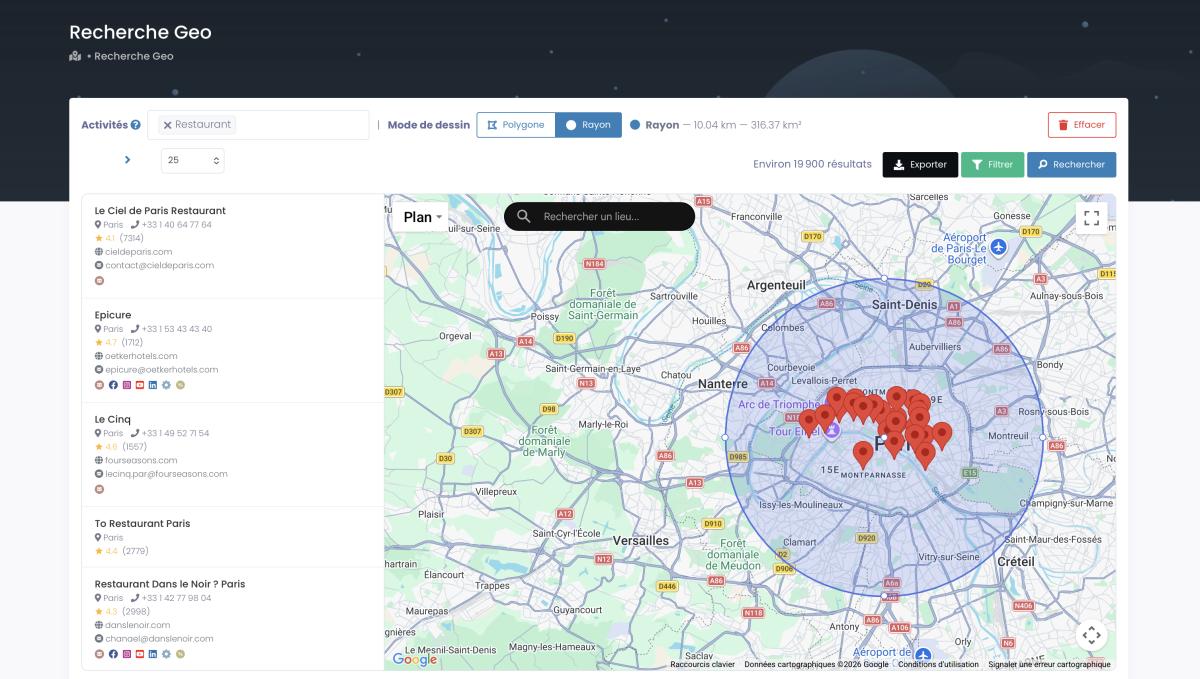
Traditional providers compile data, package it, and sell it. By the time you use it, some of it's already wrong. Staff turnover, practice mergers, location changes: the market is a moving target. Scrap.io references 48,707 oncologist listings in the US on Google Maps in real time, and 9,713 of them already carry a public email, with 39,505 showing a live website. You filter before extraction, so you only pay for contacts you can actually use.
Scrap.io extracts data live from Google Maps and practice websites. When a hospital hires a new hematology-oncology fellow, it shows up immediately. No waiting for the next quarterly dump.
The country-level view makes this concrete. Here's how a single export can cover an entire national market in a couple of clicks.
Video: How to Scrape Local Leads at the Country Level with Scrap.io.
Cost Comparison: Pay Only for Qualified Contacts
Traditional providers charge $0.50 to $2.00 per contact. For 27,000+ oncologists, that's $13,500 to $54,000. And you're paying before you even know if the emails are current.
With Scrap.io, you filter before extraction. Check for email presence, verify website status, target specific subspecialties and geographies. You pay for qualified contacts. Not dead emails and wrong numbers.
| Feature | Traditional Providers | Scrap.io |
|---|---|---|
| Data freshness | Quarterly refresh (at best) | Real-time extraction |
| Filtering | Basic (specialty, state) | Advanced (subspecialty, rating, social media, radius) |
| Cost per contact | $0.50 to $2.00 | Pay only for filtered, qualified leads |
| Email verification | After purchase | Before extraction |
| Compliance transparency | Often unclear sourcing | Public data only (Google Maps, websites) |
If you're comparing providers for a cardiologist email list, dermatologist email list, neurologist email list, or a urologist email list alongside oncologists, the same logic applies. Fresh data beats stale data. Always.
GDPR & CAN-SPAM Compliance: Is It Legal?
Public Data Sources and Legitimacy
Short answer: yes, building an oncologist email list from publicly available data is legal.
When oncologists list their practice email on Google Maps or their practice website, they've made it public. Extracting that information is fundamentally different from buying mystery databases where you have zero visibility into how contacts were collected.
It's the difference between writing down a phone number from a business card someone handed you at a conference versus rifling through their filing cabinet. One's standard business practice. The other gets you escorted out.
Best Practices for Compliant Outreach
Even with legally sourced data, you need to follow the rules:
- CAN-SPAM: Include a clear unsubscribe option in every email. Honor opt-outs within 10 business days. Use accurate sender information. Don't use deceptive subject lines.
- GDPR (if targeting EU-based oncologists): Ensure legitimate interest basis for B2B outreach. Provide clear data processing information. Respond to data subject access requests. Our GDPR cold email B2B guide breaks down the legitimate-interest test in plain language.
- General best practice: Always identify yourself and your company. State why you're reaching out. Make it easy to opt out. And respect the opt-out, permanently.
For a full jurisdiction-by-jurisdiction breakdown, our cold email compliance guide covers CAN-SPAM, GDPR, and CASL with real enforcement cases. And if you're starting from zero, here's how to build a cold email list from public data the right way. The same compliance framework applies to a family practice physician email list or any healthcare specialty list.
Every Scrap.io contact traces back to a public Google Maps listing, which makes documenting your compliance basis far easier. Filter 48,707 US oncologist listings by subspecialty, email presence and location, then export a CSV in minutes. 7-day free trial, 100 verified oncologist leads included. Start free.
FAQ: Oncologist Email Lists
How many oncologists are in the US in 2026?
Over 27,475 oncologists practice in the US in 2026, spanning medical, radiation, surgical, hematology, and pediatric oncology. About 43% specialize in hematology-oncology, the largest single subspecialty. Scrap.io separately tracks 48,707 oncologist listings on Google Maps, including multi-provider practices and institutional entries.
Is it legal to buy an oncologist email list?
Yes, provided the data comes from publicly available sources like Google Maps, professional websites, and public directories. Scrap.io only extracts publicly accessible information. That said, always ensure your outreach follows CAN-SPAM opt-out requirements and GDPR consent best practices.
How much does an oncologist mailing list cost?
Traditional providers charge $0.50 to $2.00 per contact, so a full list of 27,000+ oncologists runs $13,500 to $54,000. Scrap.io offers a 7-day free trial with 100 leads included, and plans let you pay only for filtered, qualified contacts, not the entire database.
How often is oncologist contact data updated?
Most traditional providers refresh quarterly (at best). Scrap.io extracts data in real-time from Google Maps and practice websites. When an oncologist changes practices or updates their contact information, it appears immediately.
What information is included in an oncologist email list?
A comprehensive oncologist contact database includes: name, email address, phone number, practice address, oncology subspecialty, hospital affiliation, website URL, Google rating, and social media presence. Scrap.io lets you filter by all these parameters before extraction, so you only export what's relevant.
Start Your Oncologist Outreach Today
The oncology market is $90.7 billion and growing at nearly 12% annually. But the 27,475 oncologists controlling those dollars are harder to reach every year: 68% access-restricted, shortage looming, phone-based outreach dying.
Email works. The data proves it, from ZoomRx's engagement studies to Viseven's 80% ROI improvement to Takeda's AI-powered targeting. The companies already investing in verified oncologist email lists are the ones building relationships before their competitors even get past the receptionist.
Try Scrap.io free and get 100 verified oncologist leads instantly. Real-time data from 48,707 US listings, filtered to email-present contacts before you spend a credit. 7-day free trial, no stale broker file. See why pharmaceutical companies and medical device manufacturers trust live data over quarterly snapshots. Start your free trial.
Generate a list of oncologist with Scrap.io