

- What Is Product Development Research (And Why Most Companies Get It Wrong)
- The 5 Stages of Product Development Research
- Why Local Business Data Is the Secret Weapon for Market Validation
- How to Use Google Maps Data for Product Development Research
- 5 Real-World Examples of Data-Driven Product Validation
- Market Research for Product Development, Tools and Methods Compared
- Product Development Research Compliance & Data Ethics in 2026
- FAQ, Product Development Research
What Is Product Development Research (And Why Most Companies Get It Wrong)
Here's a number that gets thrown around a lot: 95% of new products fail. It's the often-cited MIT figure (MIT Professional Programs), and yes, people argue about whether the real number is 80% or 95% depending on how you define "fail." Pick your favorite. The point stands. Most products die young. And no, it's not because founders are stupid or the ideas are terrible.
It's because teams skip the boring part.
Product development research is, at its core, the process of gathering real data before you build something nobody asked for. We're talking about understanding customer needs, sizing markets, testing concepts, and validating demand. The stuff that doesn't fit in a pitch deck but decides whether your product survives year one.
So what is product development research, exactly? It's the systematic collection and analysis of market signals from ideation all the way to post-launch. That includes competitor analysis, customer interviews, prototype testing, and, increasingly in 2026, mining publicly available business data to understand what's actually happening on the ground.
And here's where most companies blow it. They treat product market research like a checkbox. Run a survey with 50 people. Read a Gartner report. Call it "validated." Then they're shocked when launch day feels like screaming into a void.
The Product Design & Development market hit $14.27 billion in 2026 and is projected to reach $18.61B by 2031 at 5.45% CAGR (Source: Mordor Intelligence, 2026). That's a lot of money being spent on research. The question is whether that product development market research money is being spent well.
Spoiler: mostly not.
The 5 Stages of Product Development Research
What if you could de-risk each stage before spending a dollar? That's the whole point of having a structured product development research process. And yet, most teams just... wing it.
Here are the product development research process steps that actually work:
Stage 1: Market Needs Assessment. Before you write a single line of code, you need to know one thing: does anyone actually want this? This is where you analyze market gaps, competitor offerings, and customer pain points. Not with guesswork, with data. Google Maps as a data source gives you real business density, categories, and geographic distribution that no survey can match.
Stage 2: Concept Testing. You have an idea. Cool. Now pressure-test it. Show mockups. Describe the value proposition. Watch people's faces. (That last part is optional but illuminating.) Companies using MVPs at this stage are 62% more likely to succeed, and 85% of PMs say prototyping is essential (Source: Tenet, 2026).
Stage 3: Prototype Testing. Build the ugly version. Ship it to 20 people. Collect feedback. Iterate. Products with 3+ prototype iterations are 50% less likely to fail (Source: DesignRush, 2026). Three rounds. That's it. Not perfect, just less wrong each time.
Stage 4: Pre-Launch Validation. This is where local business data for market validation becomes ridiculously useful. How many potential customers exist in your target geography? What's their average review count? Are they already using a competitor's solution? You can answer all of that without leaving your desk.
Stage 5: Post-Launch Evaluation. Products 6 months late to market lose 33% of profit over 5 years (Source: B2B International / McKinsey). So yeah, speed matters. But speed without a feedback loop is just fast failure. Track adoption, churn, NPS, and adjust.
Anyway. The stages aren't complicated. Following them consistently? That's the hard part. (Ask anyone who's shipped a product. They'll tell you stage 1 took a week and stage 4 never happened.)
Why Local Business Data Is the Secret Weapon for Market Validation
The best market research data is hiding in plain sight, on Google Maps.
Think about it. Every local business listing contains a goldmine of publicly available information: business category, address, phone number, reviews, ratings, opening hours, website URL. Multiply that by hundreds of millions of businesses, and you've got a market validation research dataset that would cost six figures to compile manually.
81% of U.S. consumers use Google Maps to find information about local businesses, compared to just 54% for Yelp (Source: On The Map Marketing, 2026). The data is there. It's fresh. It's real. And almost nobody in the product development research space is using it systematically.
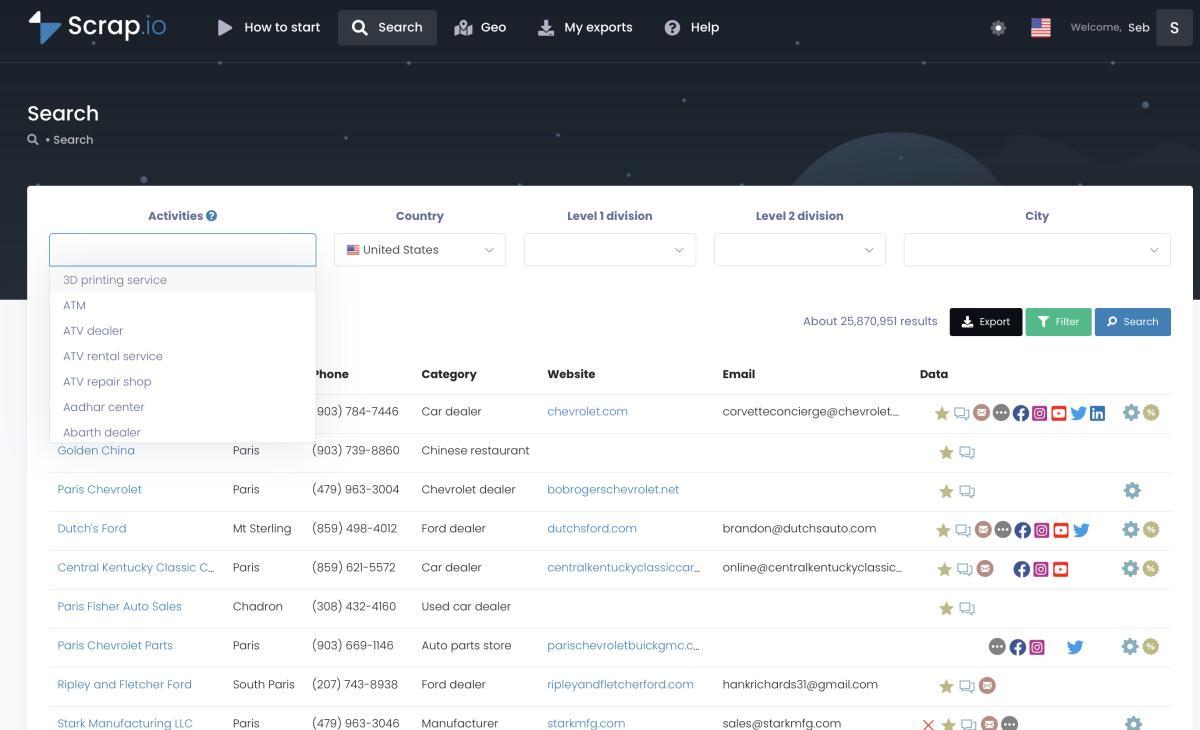
Here's what pulling an entire country's worth of businesses actually looks like:
Video: How to Scrape Local Leads at the Country Level
Let's get concrete, because this is where it clicks. Say you're building a SaaS tool for dentists. Using our own live index, here's the real picture for the U.S. right now: there are 345,908 dental practices on Google Maps (Source: Scrap.io, September 2026). Of those, 156,997, roughly 45%, have no website at all. And 113,102, about 33%, expose a findable email. Read those numbers again. Nearly half your market has zero web presence beyond a map pin. That's not a hypothesis. That's a pain point with a headcount.
Compare that to the old-school route: hire a research firm, run focus groups, wait 8 weeks, spend $40k, and walk away with a persona named "Budget-Conscious Brenda." The data-driven route gives you the actual number, the actual gap, and the actual contactable slice, in an afternoon. And it doesn't cost you a cent to count them, because counting is always free.
Using Google Maps data for product research isn't some hack. It's how to validate a product idea with real data, actual businesses, actual locations, actual signals, instead of hypothetical personas your marketing team invented during a whiteboard session. If you're validating a brand-new venture rather than a feature, our deep-dive on sizing a startup market with live business counts takes the same idea further.
(I've seen those personas. "Budget-Conscious Brenda" isn't a real person, folks. 345,908 dentists, on the other hand, absolutely are.)
How to Use Google Maps Data for Product Development Research
When Sarah launched her B2B SaaS for dentists, she didn't run a single survey. She didn't guess her market size either. In two clicks, Scrap.io handed her the real number: 345,908 dental practices in the U.S., nearly half of them without a website. Filtered by geography and review count, she had a validated TAM in 45 minutes. That's not a flex. That's just how market research before developing a product works in 2026.
Here's the concrete process. No fluff.
Step 1: Define your target segment. Industry vertical + geography + any qualifying criteria. Example: "Yoga studios in Texas with fewer than 10 Google reviews." Be specific. Vague targeting equals vague results. If you want to formalize this, here's how to define your ideal customer profile using geographic data.
Step 2: Extract the data. Use a tool like Scrap.io to scrape Google Maps at scale. You'll get business names, categories, addresses, phone numbers, websites, review counts, and ratings. All structured. All exportable. And because filters run before extraction, you only spend credits on contacts that match your profile.
Video: Scrap.io - How to Start?
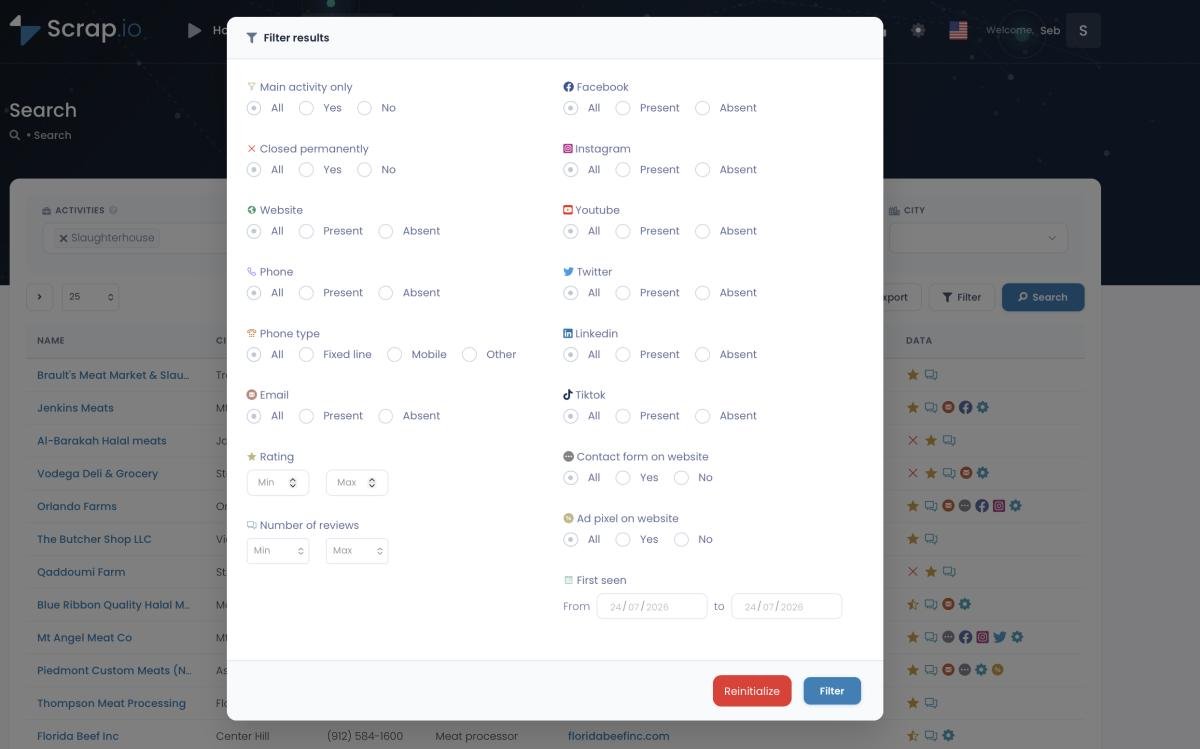
Step 3: Analyze for market signals. This is where it gets interesting. Low average ratings in a category? That's a pain point waiting to be solved. High business density with no dominant player? Open opportunity. Tons of "permanently closed" listings? Maybe not the market to enter right now.
Step 4: Validate demand with outreach. Now you've got real contact data. Reach out to 100 businesses in your target segment. Not with a pitch, with a question. "What's the biggest challenge you face with [X]?" The response rate will tell you more than any survey ever could. If you need the mechanics, here's how to get local business leads with real contact info, how to write a cold email that gets replies, and a guide to AI-powered cold email personalization once you scale.
Step 5: Build your business data validation before product launch. Cross-reference your Google Maps data with review sentiment, website presence, and competitor density. Remember those 156,997 dentists with no website? If your product solves visibility and 45% of the market has no site to speak of, congratulations, you've just validated a product concept using business data that cost you exactly $0 to acquire.
And 47% of researchers worldwide already use AI regularly in their market research activities (Source: Backlinko, 2026). You're not early to this trend. You're right on time.
5 Real-World Examples of Data-Driven Product Validation
The most successful product launches in 2026 started with a spreadsheet, not a prototype. Bold claim? Here are the receipts.
Video: How Pizzerias "Spy" on Competitors Using Google Maps
Example 1: Restaurant Survival Prediction, Poland Nationwide Study. A research team used Google Maps data to predict which restaurants would survive, across the entire country. Not surveys. Not interviews. Time-sensitive Google Maps interactions. They successfully predicted firm exit patterns using nothing but publicly available map data. If that's not product development research examples in action, I don't know what is.
Example 2: Seattle Coffee Shop, Reviews as a Compass. A small coffee shop in Seattle was stagnating. The owner analyzed their Google Maps reviews systematically, identified patterns in negative feedback, and pivoted their offering. Result? Significant jump in review volume and foot traffic. No consultants. No $50k research budget. Just reading what customers were already saying, publicly.
Example 3: HubSpot's "State of Sales" Report. HubSpot published a data-driven report that attracted 120,000+ unique visitors in two months. Conversion rate to demo requests: 22%. SQLs increased 47% quarter-over-quarter. The takeaway? Data-driven content isn't just for SEO, it validates product positioning too.
Example 4: Competitive Intelligence via Google Maps. Outscraper documented a full methodology for extracting competitive intelligence from Google Maps reviews. Sentiment analysis, category mapping, geographic gaps, all from data that's sitting there, free, waiting for someone with a brain to use it. If you want the structured playbook, we wrote a whole guide on competitive intelligence with Google Maps. (Spoiler: most companies never bother.)
Example 5: Reddit as a Validation Channel. Before building, plenty of founders validate product ideas on Reddit first. And the advice from actual founders is blunt. On the r/startups thread on idea validation, one user put it perfectly: "Go out and ask potential customers about their pains/needs/wants. Keep asking and keep learning until you're getting the same responses over and over." That's the whole game in two sentences. The community feedback loop is brutal, and that's exactly why it works. If Redditors rip your idea apart, you just saved yourself a year of building something nobody wanted.
(Honestly, Reddit might be the cheapest focus group on the planet. It's also the most unforgiving. Choose your battles.)
Market Research for Product Development, Tools and Methods Compared
You've read 10 articles about MVPs and surveys. None of them mention the data source that actually matters. So let's fix that. And if you want the wider landscape of market research tools for local businesses, we ranked them separately.
| Method | Cost | Speed | Data Quality | Sample Size |
|---|---|---|---|---|
| Traditional surveys | $5,000 to $50,000 | 4 to 8 weeks | Self-reported (biased) | 100 to 1,000 |
| Focus groups | $10,000 to $80,000 | 6 to 12 weeks | Qualitative (small N) | 20 to 50 |
| Industry reports (Gartner, etc.) | $2,000 to $30,000 | Instant (but outdated) | Aggregated (generic) | Varies |
| Reddit / community mining | $0 | Hours | Unstructured but raw | Unlimited |
| Google Maps data (Scrap.io) | $0 (free trial) | Minutes | Real, structured, current | 225M+ indexed |
See the pattern? Try doing that kind of product development research with a focus group. I'll wait. Traditional methods are slow, expensive, and based on what people say they do. Google Maps data shows you what's actually there. Real businesses. Real locations. Real reviews from real customers.
But wait, this isn't about replacing qualitative research entirely. Surveys and interviews still have their place. The point is that most teams start with the slow, expensive stuff when they should start with the fast, free stuff. Validate the macro picture first. Then go deep.
Companies with top design scores achieved 32% faster revenue growth according to the McKinsey Design Index. But design without research is just decoration. And research without data is just opinions with a PowerPoint.
For building targeted email databases for outreach, or even niche-specific lists like a pharmacy email database or healthcare lead generation lists, the underlying principle is the same: real data beats assumptions. Every time.
Product Development Research Compliance & Data Ethics in 2026
GDPR didn't kill data-driven research. It just made the lazy approaches obsolete.
Let's be direct. Extracting publicly available business information from Google Maps is legal in most jurisdictions. We're talking about data that businesses chose to make public: their name, address, phone number, website, and reviews. Nobody's scraping personal diaries here.
That said, and I can't believe I have to say this, compliance still matters. Especially in 2026, when data privacy regulations keep evolving. A few ground rules for research on product development that won't land you in trouble:
First, only collect what you need. Grabbing 500,000 records "just in case" is lazy and potentially problematic. Be targeted. Second, don't store personal data beyond its research purpose. Third, use tools that handle compliance for you. Scrap.io, for instance, focuses on publicly available business data, stays GDPR and CCPA compliant, and keeps every data point traceable to its source.
Oh, and also, if you're doing new product development market research in the EU, check local implementation of GDPR. It varies more than people think. France and Germany interpret certain provisions differently, and what flies in one jurisdiction might raise eyebrows in another.
The B2B database building guide covers these compliance considerations in more detail. Worth a read if you're scaling your data collection beyond a few hundred records.
FAQ, Product Development Research
Q: What is product development research?
Product development research is the systematic process of gathering and analyzing data, from ideation through post-launch, to create products that meet real market needs. It includes everything from competitor analysis to prototype testing to post-launch feedback loops. The goal: build things people actually want. (Revolutionary concept, I know.)
Q: How do you use local business data for market validation?
Extract business listings from Google Maps using tools like Scrap.io, then analyze categories, review patterns, geographic density, and competitor presence. Real example: the U.S. has 345,908 dental practices on Google Maps, 45% with no website. That single count tells you market size, a pain point, and a reachable segment, all before you build anything. This is how to research a market for a new product idea without spending months on it.
Q: What are the 5 stages of product development research?
Market needs assessment, concept testing, prototype testing, pre-launch validation, and post-launch evaluation. Each stage should use progressively more specific data. Start broad (market sizing) and narrow down (user testing). More detail in the warm outreach validation guide.
Q: What are the 7 stages of product development?
The classic 7-stage model runs: idea generation, idea screening, concept development and testing, business analysis, product development, test marketing, and commercialization. It's the longer cousin of the 5-stage research framework above. The extra steps mostly split out the business-case and go-to-market work. Same principle throughout: validate with real data at every gate, not just at the start.
Q: How much does product development research cost?
Traditional route: $20,000 to $150,000+. That's research firms, focus groups, and a lot of waiting. Data-driven with Scrap.io: starting at $0 with the free trial (7 days + 100 leads). If you're wondering how to do market research for a new product without burning through cash, that gap should tell you everything about how the industry is shifting.
Q: Is scraping Google Maps data legal for market research?
Yes. Extracting publicly available business information from Google Maps is legal in most jurisdictions. You're accessing data that businesses have voluntarily published. Scrap.io ensures GDPR and CCPA compliance in its data handling, so you can validate a product idea with local market data without legal headaches.
Your Product Development Research Starts Now
Look, market research for new product development doesn't have to be a 6-month, $100k ordeal. The data exists. The tools exist. The only thing missing is someone willing to skip the theater of traditional research and go straight to what works.
Honestly? Every product development research method in this guide leads to the same place: real-world business data beats hypothetical market models. And Google Maps is the largest, most underutilized source of that data on the planet, 225 million businesses in 195 countries, refreshed at the moment of every extraction. Wild that more people don't see it. If your product happens to be a prospecting tool itself, our take on product-market fit for local prospecting tools goes deeper on measuring what "validated" actually means.
Enough reading. Go validate something.
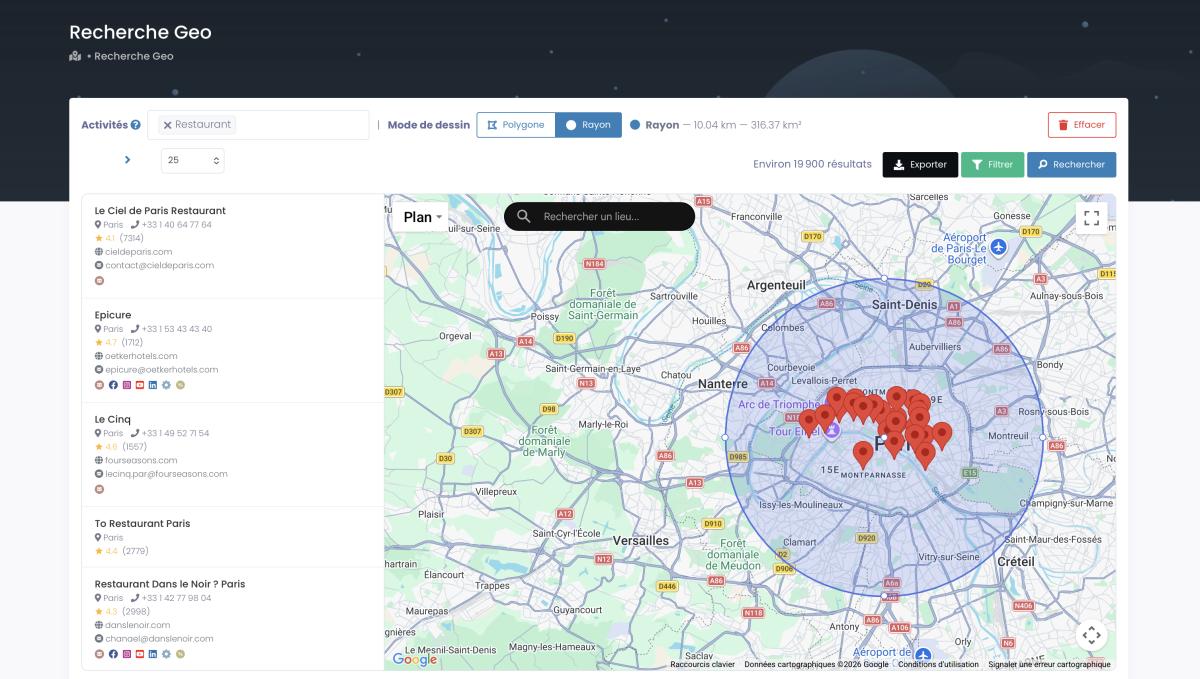
Generate a list of restaurant with Scrap.io