

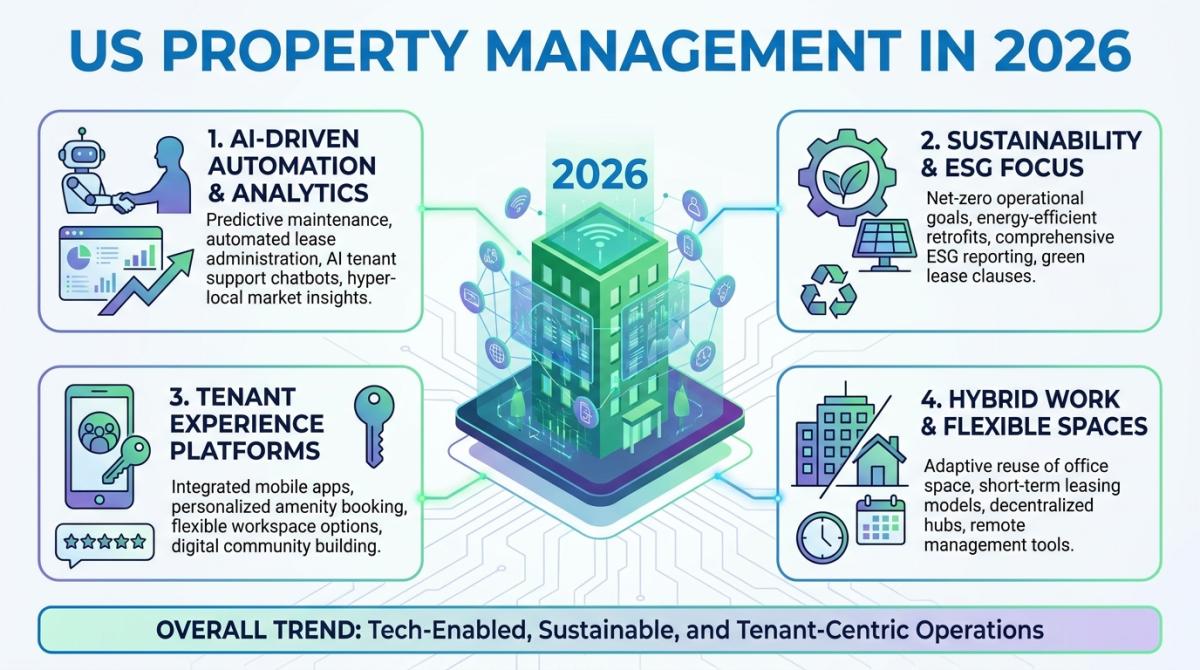
A $136.9 billion industry. That's what the US property management market is worth in 2026, according to IBISWorld — spread across roughly 335,000 businesses managing everything from an 8-unit walkup in Memphis to a downtown Chicago office tower.
Here's the number nobody selling you a list wants to say out loud: only 81,058 of those companies actually have a public map presence you can contact. And of those, fewer than 45,000 expose a working email. So when a broker promises you "80,000 verified property manager emails," do the math. Roughly half of them are blanks.
That gap — between what gets advertised and what's real — is the whole reason this guide exists. If you sell maintenance contracts, PropTech, insurance, cleaning, or anything property managers buy on repeat, a good property management email list is a goldmine. A bad one torches your domain reputation before lunch.
I've watched companies drop $800 on a "premium" list and pull 40%+ bounce rates. Contacts who retired. Firms that merged two years ago. A phone number that forwarded to a Domino's. (Yes, really.) The old way of buying property management leads is broken, and the people selling those lists know it.
So this covers the whole thing: the real market data, segmentation, sourcing methods, how vendors actually get referred, outreach tactics, and the compliance rules that keep you out of trouble. No filler.
Watch: why your outreach emails to property managers aren't getting replies (and how to fix it)
Video: Why your outreach emails to property managers aren't getting replies
- What Is a Property Management Email List?
- Why Property Managers Are High-Value B2B Targets in 2026
- US Property Management Market in Numbers (2026)
- Types of Property Management Email Lists
- 3 Ways to Get Property Management Contacts
- How Vendors Actually Get on Property Management Vendor Lists
- Who's Actually Using Property Management Email Lists
- How to Evaluate Email List Quality
- Live Data Scraping: How It Changes the Game
- Email Outreach Best Practices for Property Managers
- Legal Compliance: CAN-SPAM, GDPR & State Laws
- Maximizing ROI from Your Property Management Email List
- FAQ
What Is a Property Management Email List?
A property management email list is a database of contact details — emails, phone numbers, names, job titles, company info — for the people who run residential, commercial, or industrial properties. Built well, it's segmented so you can reach the right manager for what you sell. Built badly, it's a spreadsheet of bounces.
That's the short version. But the difference between a useful property management company database and a glorified junk file is entirely in the segments.
| Type of Property Manager | Typical Portfolio | Avg. Annual Service Budget | Decision Speed |
|---|---|---|---|
| Residential (apartments, condos, rentals) | 50–500 units | $50K–$300K | Fast — often same week |
| Commercial (offices, retail, mixed-use) | 5–50 buildings | $200K–$2M | Moderate — 2–6 weeks |
| Industrial (warehouses, logistics, manufacturing) | 3–20 facilities | $500K–$5M | Slow — formal RFP process |
| Specialty (senior living, student, vacation) | Varies wildly | $100K–$1M | Depends on chain vs independent |
Residential managers deal with tenant complaints and busted garbage disposals. Commercial managers negotiate five-year HVAC contracts worth six figures. Industrial managers need compliance certifications you've never heard of. Different people, different budgets, different buying cycles. A property manager email list that lumps them together is useless for targeted outreach.
Why Property Managers Are High-Value B2B Targets in 2026
A 6-person pest control company in Tampa signed three property management contracts in one quarter last year. Recurring monthly revenue from those three deals? More than their entire residential client base pulled in over the same stretch.
That's not a fluke. Property managers are the kind of B2B target where a single relationship can cover your whole year of lead-gen spend.
They control real budgets — and they spend fast
The Bureau of Labor Statistics counts about 311,180 property, real estate, and community association managers employed across the US as of May 2025, with a median wage of $69,990 and the top 10% clearing $139,680 (BLS Occupational Employment and Wage Statistics). These aren't gatekeepers. They're decision-makers with signing authority.
A manager overseeing 200 units doesn't need a committee to hire a plumber, switch insurers, or buy software. They see a problem Tuesday, sign Thursday. Try getting that turnaround out of a Fortune 500 procurement team. I'll wait.
One contact multiplies into many deals
Property managers talk to each other. Constantly. Through NARPM, IREM, local landlord groups, Facebook forums, even the diner where half the managers in a small market eat breakfast on Wednesdays. (That's a real thing.)
Land one property management lead, do good work, and referrals follow. Plenty of managers run multiple properties or work for firms managing 500+ units. One relationship unlocks contracts across dozens of buildings.
The problems they solve are expensive
Boiler failure in February hitting 80 tenants? That's a $15,000 emergency. Pest infestation across a commercial complex? Tens of thousands. Data breach exposing tenant records? Don't even ask about the legal bill.
Vendors who prevent those disasters — or fix them fast — earn a spot on speed dial. And property managers have long memories for the people who showed up when it mattered.
US Property Management Market in Numbers (2026)
Forget the ancient $21.3 billion figure floating around old blog posts. The real number is far bigger — and the contactable slice is far smaller.
| Metric | Value | Source |
|---|---|---|
| US property management market size | $136.9 billion | IBISWorld, 2025 |
| Number of businesses | ~335,000 | IBISWorld, 2025 |
| Business count growth (CAGR 2020–2025) | 3.4% | IBISWorld, 2025 |
| Professionals employed | 311,180 | BLS OEWS, May 2025 |
| Median annual pay | $69,990 | BLS OEWS, May 2025 |
| Top earner pay (90th percentile) | $139,680 | BLS OEWS, May 2025 |
| PM firms using dedicated software | ~68% (North America) | Buildium / RentPost, 2026 |
| AI adoption (one-year jump) | 20% → 58% | Buildium 2026 Industry Trends |
| Property management companies on Scrap.io | 81,058 | Scrap.io platform data, August 2026 |
The IBISWorld industry report pins the market at $136.9 billion, growing at a 3.4% CAGR in business count since 2020, with the Southeast the fastest-growing region — Texas, Florida, Georgia, and the Carolinas soaking up migration-driven rental demand. If you're deciding where to point a property management company email list first, start there.
Tech adoption is the other big shift. Software is now standard, and AI use nearly tripled in a single year. That's a wide-open door for PropTech sellers — and a reason property managers are actively shopping for vendors right now.
Where Are the Property Management Companies? (The Contactable Number)
Here's the part brokers skip. IBISWorld's 335,000 counts every structure, including solo owner-operators with no storefront. When you filter down to companies with an actual public map listing — the ones you can find and contact — the number drops hard. This is the honest list of property management companies you can really reach:
| Metric | Value | Share |
|---|---|---|
| Property management companies in the US | 81,058 | 100% |
| …with a website on their listing | 60,158 | 74.2% |
| …with at least one extractable public email | 44,935 | 55.4% |
Read that again. Out of 81,058 companies, only 44,935 expose a usable email. So any file promising you 80,000 verified property manager emails is selling you roughly 36,000 blanks. Nobody in the SERP will tell you that, because it wrecks their pitch.
What about the top 20 property management companies?
The giants — Greystar, Lincoln Property Company, Cushman & Wakefield, CBRE, Prologis, American Homes 4 Rent — each manage hundreds of thousands of units. Great logos. Terrible cold-email targets. The real opportunity is the tens of thousands of small-to-mid firms with no enterprise procurement wall, the ones who actually open your email and reply.
Scrap.io lists 81,058 of these companies — sortable by state, reviews, and digital presence. Not a frozen file: each record is pulled live at the moment you export. See the data →
Types of Property Management Email Lists
Not all property management email lists work the same way. Segmentation matters more than raw size — a sharp 400-contact list beats a blurry 40,000-contact one every time.
By Location
You run a plumbing company in Denver. A national list of 50,000 property managers is worthless to you. You need the 400 managers within a 30-mile radius who might call when a pipe bursts at 2 AM.
That's where geographic filtering gets critical. Platforms like Scrap.io let you draw custom search zones — either a radius around an address or a polygon around specific neighborhoods.
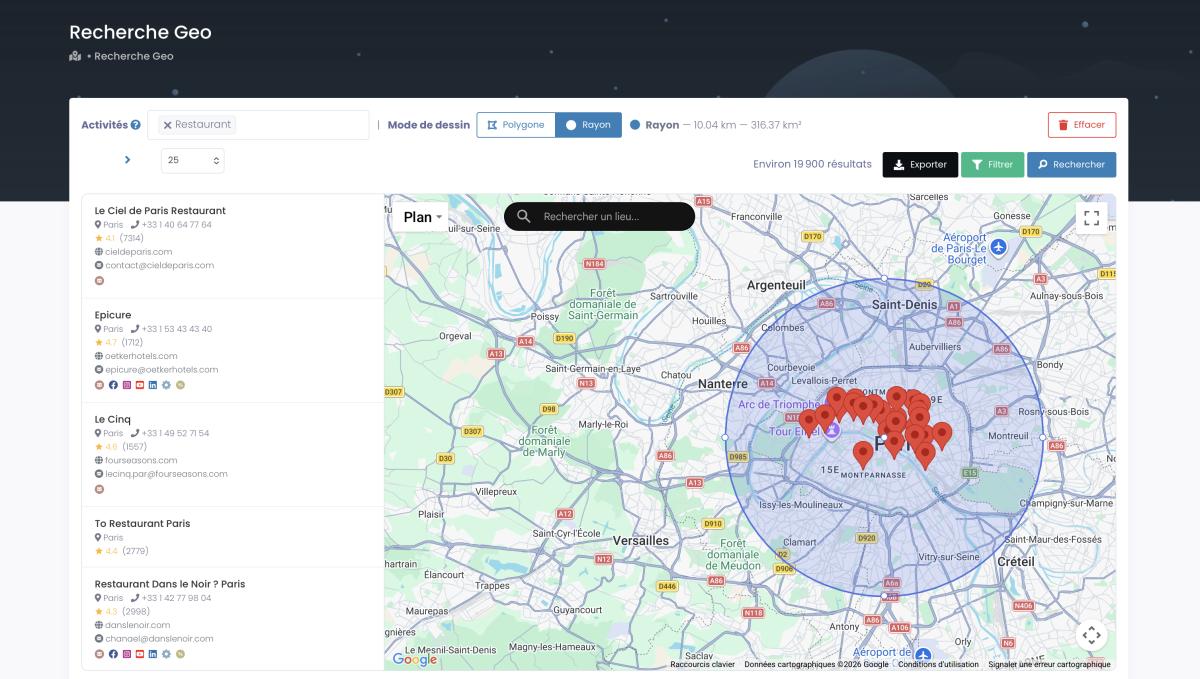
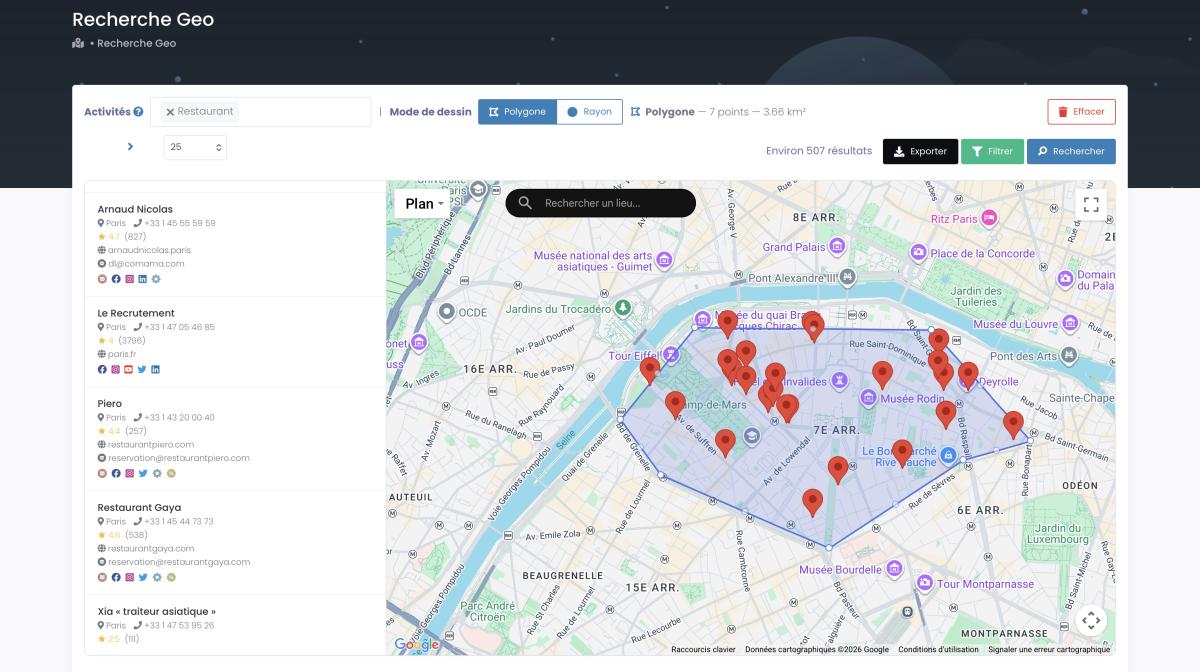
State-level lists make sense too, because property management regulations vary wildly by state. A residential property management email list for California needs different compliance messaging than one for Texas.
By Property Type
A residential property management email list captures apartment managers, condo associations, and single-family rental operators. Bread-and-butter contacts for service vendors — high tenant turnover means constant demand for maintenance, cleaning, landscaping, unit turns. Decision cycles are fast because the problems are urgent. A toilet doesn't wait for a budget committee.
Commercial contacts — offices, retail, mixed-use — play differently. Bigger budgets, more stakeholders. You pitch a manager, who needs the asset manager, who needs ownership. Plan for 2–6 week cycles, minimum.
Industrial contacts are their own beast. Warehouses, plants, logistics hubs. They want specialized vendors — fire suppression, industrial HVAC, compliance auditing, heavy-duty janitorial. Bigger contracts, harder to win without credentials.
And don't sleep on the niches: senior living, student housing near universities, vacation rental management. A student-housing manager near a Big Ten school has nothing in common with a luxury condo board in Miami Beach.
By Company Size
This matters more than people realize. A firm managing 2,000 units across three states has procurement processes, preferred vendor lists, and an AP department that takes 60 days to cut a check. An independent with 40 rentals? They Venmo you that afternoon.
Mid-size firms — 100 to 500 units — are the sweet spot for most vendors. Big enough to have real budgets and recurring needs. Small enough that the owner still reads their own inbox.
Filter your property management mailing list accordingly. Don't waste enterprise proposals on solo operators. And don't send "small business special" pricing to a firm managing $50M in real estate.
3 Ways to Get Property Management Contacts
Three paths. Each with trade-offs that most comparison articles gloss over.
- DIY manual research — cheapest in theory, brutal in practice.
- Buy a static list — fast, but it starts rotting the day you get it.
- Live scraping — current data, filtered before you pay, pulled the same day.
| Method | Cost per Contact | Data Accuracy | Freshness | Time to First Campaign | Best For |
|---|---|---|---|---|---|
| DIY (manual research) | $1.00–$2.50 | High (you verified it) | Depends on effort | 3–6 months | Tiny, hyper-targeted lists |
| Buy static list | $0.05–$0.15 | 60–80% (degrades fast) | Months to years old | 1–3 days | Quick-start campaigns |
| Live scraping (Scrap.io) | ~$0.005 | 85–95% (real-time data) | Current (pulled live) | Same day | Ongoing prospecting at scale |
DIY: cheap in theory, brutal in practice
Check county assessor sites. Cross-reference property tax records. Trawl LinkedIn. Search NARPM directories. Vendors on Reddit's r/PropertyManagement swap this tip constantly — "Check county assessor and property tax sites — most managed properties list the management company's mailing address" comes up again and again in threads like "How to find property managers' office addresses as a vendor?". They're not wrong. The data's public.
But the math kills you. At $25/hour and 15–20 contacts an hour, you're paying over a dollar per contact before you even confirm the email works. Building 5,000 this way takes months of full-time grind. And what do you get? A spreadsheet that starts going stale the second you close the tab.
Where it does make sense: hyper-targeted niches. If you sell commercial fire suppression and need the 30 managers in Phoenix running buildings over 100,000 sq ft, manual digging might beat a generic list stuffed with residential managers who'll never need you.
Buy a static list: fast but fragile
Buy from a traditional broker and you'll pay $0.05–$0.15 per contact. Spreadsheet in hours. Sounds great — until you start sending and find 20–30% have changed jobs, merged, or bounce outright.
Static lists decay roughly 2–3% a month. Buy in January, and by June you've lost 10–15% accuracy. For a list of property management companies across the USA, where firms merge and change hands constantly, that decay hits even harder.
Then there's exclusivity — or the lack of it. That $500 list? Fifty other companies bought the same one this month. Some brokers resell the identical file to hundreds of buyers. Your "targeted outreach" lands in inboxes already buried under identical pitches. Your edge is gone the moment you click purchase.
Live scraping: the math that changed everything
Scrap.io pulls property management data directly from Google Maps and public business listings. In real time. Updated yesterday? Available today. Not six months from now.
10,000 contacts for $49 on the Basic plan ($35/month billed annually). That's about $0.005 per contact — roughly 1/20th the cost of a static list and a fraction of DIY. The complete Google Maps scraping guide covers the technical side. And because you can filter to email-present listings before extracting, you only burn credits on records you can actually use.
Video: How to scrape local leads at the country level — all 50 states in one pull
How Vendors Actually Get on Property Management Vendor Lists
You've got the email list. Now what actually makes a property manager add you to their approved vendor roster?
Short answer: most mid-size and large firms run vendors through a credentialing platform — RealPage Vendor Marketplace, NetVendor, or Compliance Depot are the three you'll hit most. You'll typically need a W-9, general liability insurance (often $1M minimum), workers' comp, and sometimes a background check. That's the gate. The email just gets you to it.
This is the exact question vendors keep asking, and nobody in the search results answers it well. Over on r/PropertyManagement, service providers post the same thing on repeat — "How to get in contact with property managers?" — and entrepreneurs ask the same in r/Entrepreneur: "How to contact property managers at apartments?". The frustration is real. The door feels locked.
It isn't. Here's the sequence that works:
- Email first, contract later. Use your segmented property management email list to open the conversation — one relevant, specific message about a problem you solve.
- Land one job with a small firm. Independents managing 40–200 units skip the credentialing circus entirely. A targeted email and one good job is the whole application.
- Then apply to the platforms. Once you've got references and a paper trail, get onto RealPage / NetVendor / Compliance Depot to reach the big portfolios. That's when the $1M insurance and W-9 become worth the paperwork.
Start small. That's where a fresh property management vendors list pays off fastest — because the small firms are the ones who actually read the email and don't need you to jump through a credentialing hoop first. Big portfolios are the reward, not the entry point.
Who's Actually Using Property Management Email Lists
Theory's nice. Who's actually doing this?
HVAC companies targeting property managers
A single apartment complex with 200+ units needs regular HVAC maintenance, seasonal tune-ups, and emergency repairs. One maintenance contract is worth more annual revenue than dozens of one-off homeowner calls.
HVAC contractors using targeted property management email lists segment by building size, location, and Google review count (a decent proxy for portfolio activity). The firms with 50+ reviews tend to manage bigger portfolios and spend more on maintenance vendors.
PropTech startups selling to PM firms
PropTech is where the AI numbers really bite. AppFolio's 2026 benchmark found that firms broadly adopting AI expect 31% portfolio growth this year, versus just 12% for those that haven't (AppFolio 2026 Property Management Benchmark Report). Translation for anyone selling software: managers who buy tech are growing nearly three times faster, and they know it. That's a buyer actively looking. A fresh property manager database filtered by digital presence puts them right in front of you.
It's a crowded space, mind you. Vendors like IT Now Technologies sell pre-built property managers email lists, and they rank well for it. The difference with a live-scraped list isn't the count — it's that you control the filters and the freshness instead of inheriting someone else's stale export.
Insurance brokers targeting portfolios
Property management firms buy commercial insurance, liability coverage, tenant insurance programs. A broker using a property management contact list filtered by portfolio size can pitch the right coverage tier instead of blasting generic quotes. A firm with 30 commercial buildings needs different coverage than one running 200 residential units. Obvious — yet most brokers still send both the same email.
Cleaning and maintenance companies
Cleaning services and construction firms live or die on property management relationships. A cleaner who lands a 15-property residential manager just locked in recurring monthly revenue that no amount of Yelp ads could match.
Marketing agencies specializing in real estate
Agencies pitching real estate clients need accurate contact data and the ability to target firms with an outdated website or no social presence — exactly the shops that need marketing help. (Scrap.io's filters flag companies with a website but no Facebook, or no website at all.) It's the same playbook the real estate agent email list and security system installer email list guides run for adjacent niches.
Want to run a campaign like these? Start with 100 free property management leads — filter by location, reviews, and digital presence, and compare them side by side against whatever list you're using now. Get your free leads →
How to Evaluate Email List Quality
Not all property management email lists are equal. Some are goldmines. Most are landfills. Here's how to tell before you spend a cent.
| Criteria | Acceptable | Red Flag |
|---|---|---|
| Bounce rate | Below 5% | Above 10% |
| Data accuracy guarantee | 90%+ | No guarantee stated |
| Data freshness | Updated within 90 days | "Updated annually" or vague |
| Sample data available | Yes, before purchase | "Buy first, verify later" |
| Source documentation | Clear and transparent | "Proprietary," no details |
| Contact completeness | Email + phone + company + title | Email-only records |
Ask for a sample before buying anything. Run 50 contacts through a verifier like ZeroBounce or NeverBounce. More than 5 come back bad? Walk away. Life's too short. It's worth knowing how to verify your email list properly before every send, not just at purchase.
Also check how they verify. "We verify regularly" means nothing. "We run SMTP verification monthly and cross-reference USPS business records quarterly" means something.
Live Data Scraping: How It Changes the Game
Old model: pay a broker $500 for a spreadsheet. Hope it isn't stale. Pray half the emails don't bounce.
New model: pull fresh property manager email database records straight from public sources, filtered exactly how you need them, for a fraction of the cost. And filter before you spend a credit, so you never pay for a dead listing.
How Scrap.io works for property management
Search "property management" on Scrap.io and you get 81,058 results across the US. Each listing carries the company name, address, phone, email (when public), website, Google rating, review count, and social profiles. Two clicks, no code, whole country.
Video: Scrap.io — how to start
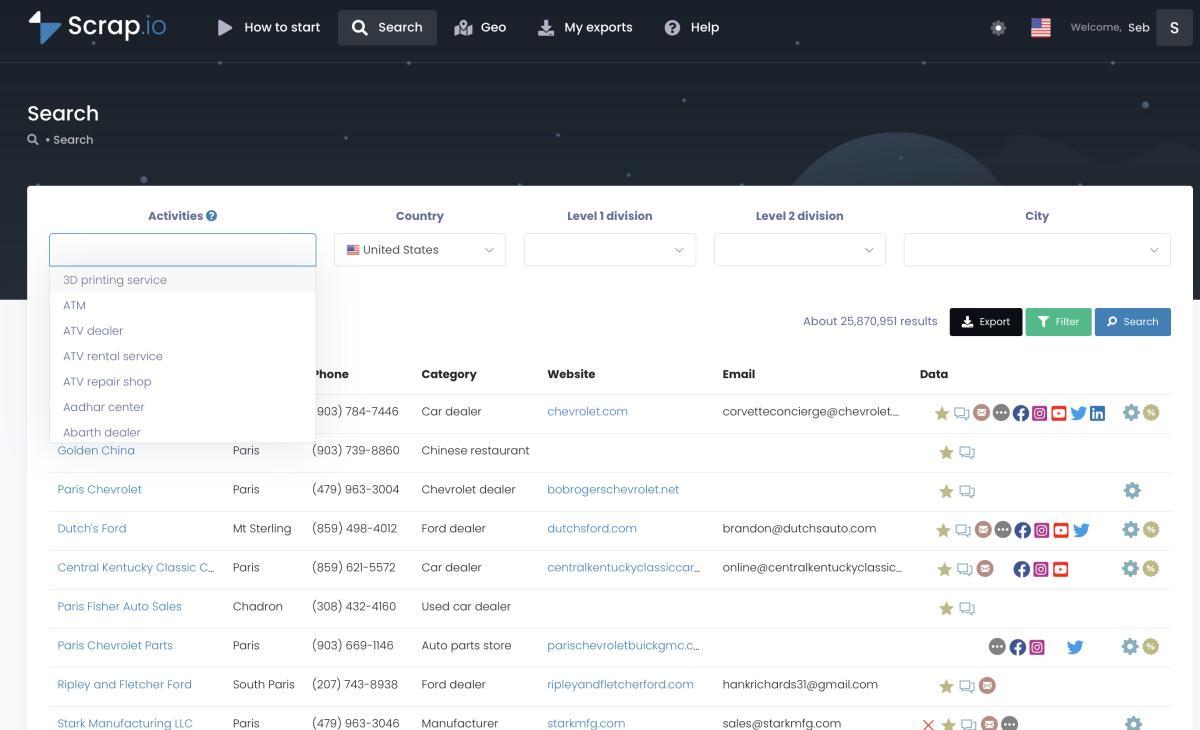
Then filter. This is the part that saves your budget.
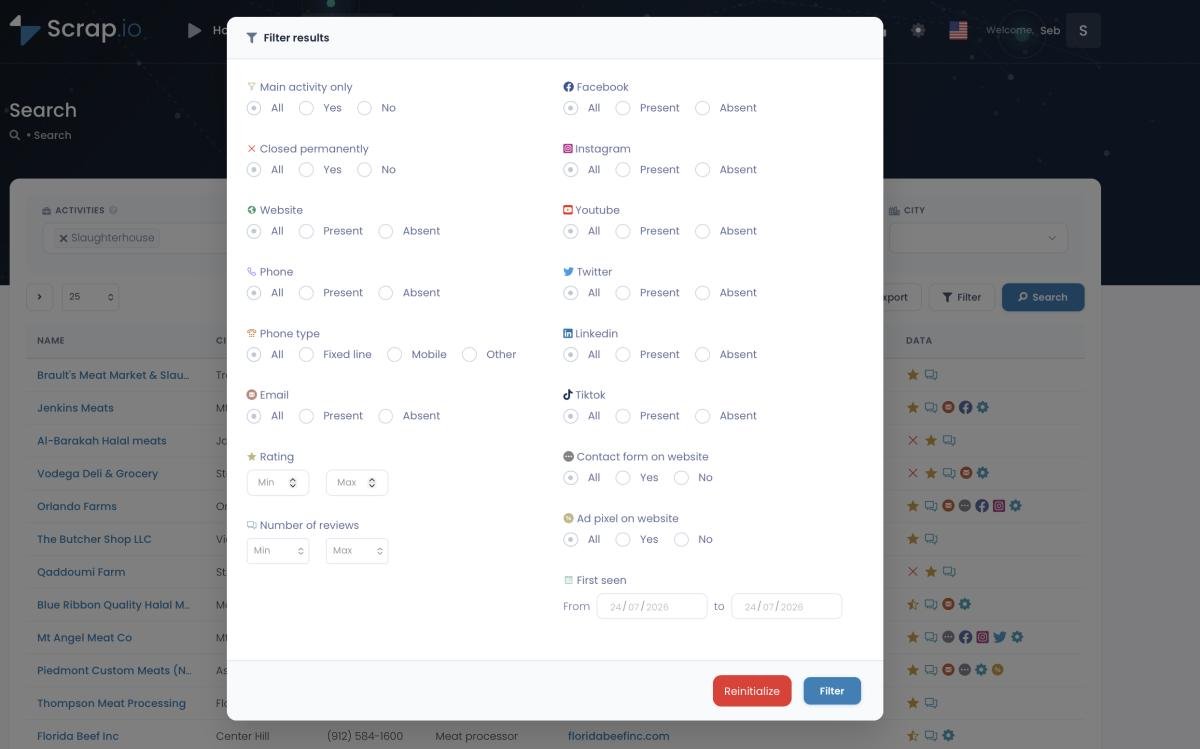
Want property managers with fewer than 10 Google reviews in Florida? Done. Firms with a website but no Facebook page? Filtered. A 4.5+ rating in metro Atlanta? Three clicks. And because filters apply before extraction, you only spend credits on the 44,935 companies that actually have an email — not the full 81,058.
Pricing that makes legacy brokers nervous
| Source | Cost per Contact | Data Freshness | Custom Filters |
|---|---|---|---|
| Traditional data broker | $0.05–$0.15 | Months to years old | Limited |
| Premium list provider | $0.10–$0.50 | Quarterly updates | Some |
| Scrap.io (live scraping) | ~$0.005 | Real-time | 50+ filters |
At $0.005 a contact, you could scrape every property management company in a state for less than lunch. And the data reflects what's on Google Maps right now — not what was accurate last fiscal quarter. Static lists degrade 2–3% a month; there's nothing here to degrade.
Only 44,935 of those 81,058 companies actually expose an email. Filter for exactly those before you spend a single credit — zero waste on dead-end listings. Try it →
Email Outreach Best Practices for Property Managers
Property managers get slammed with vendor emails. Most get trashed unread. Standing out takes more than a "professional" template and a generic subject line.
Subject lines that survive the inbox purge
Managers scan subject lines for two things: relevance and specificity. Generic gets deleted.
These work: "3 HVAC emergencies we prevented for Austin PM firms last month" / "$1,200/yr less on pest control — Raleigh multifamily case" / "New Florida HB 1417 deadline — what your properties need."
These don't: "Great opportunity for your business" / "Quick question" / "Partnering with property managers." All scream mass email. Delete.
Personalization beyond [FIRST_NAME]
Reference their actual market. Name their city. Acknowledge the property types they manage — which you know, because your list is segmented properly. If they've got a 3.2 Google rating, don't rub their nose in it; angle toward reputation services instead.
Smart personalization doesn't mean writing 5,000 unique emails. It means building 8–10 template variants matched to specific segments from your property management email list. Want the deeper mechanics? The how to build a cold email list guide breaks down segmentation, and the how to write a cold email guide covers the copy itself.
When to hit send
B2B real estate email benchmarks land open rates around 21–25%. Best days: Tuesday through Thursday. Early morning (6–8 AM) catches managers before the day explodes. Late afternoon (4–6 PM) catches them at wrap-up.
Avoid Monday mornings — they're buried in weekend emergency fallout. Friday afternoons? Mentally, they've already left.
Content that gets forwarded
Property managers are information-hungry. Send content that genuinely helps and you earn something no pitch can buy: trust. Local market reports for their metro, regulatory change summaries, seasonal maintenance checklists, comparison guides for tools they're already shopping.
What flops: generic "thought leadership" about digital transformation, 2,000-word whitepapers gated behind a form, anything that reads like it was written for a marketing conference instead of someone who cleared three work orders before 9 AM. Become the vendor they trust before you ever pitch, and they're far likelier to reply when you finally do.
Legal Compliance: CAN-SPAM, GDPR & State Laws
This part isn't optional. Botch it and the fines are real, not theoretical.
| Regulation | Scope | Key Requirements | Maximum Penalty |
|---|---|---|---|
| CAN-SPAM Act | All US commercial email | Honest subject lines, physical address, working unsubscribe, opt-outs within 10 days | $51,744 per email (FTC) |
| GDPR | EU/EEA contacts | Explicit consent, right to access/delete, processing records | €20M or 4% of annual revenue |
| CCPA/CPRA | California residents | Right to know, delete, opt out of data sale | $7,500 per intentional violation |
| TCPA | Phone/SMS in US | Prior express consent for autodialed/prerecorded calls, Do Not Call compliance | $500–$1,500 per call/text |
CAN-SPAM is the floor, not the ceiling. Every marketing email needs your real business address, a clear unsubscribe, and honest headers. The FTC doesn't mess around — penalties are per email, which compounds catastrophically on a 10,000-contact blast.
For phone outreach using numbers from your property management contact list, TCPA applies. Scrub against the Do Not Call registry before every campaign. Every single time.
One thing worth stating plainly: live scraping of publicly available business data (like Google Maps listings) is legally compliant — you're collecting info businesses voluntarily published, which is fundamentally different from buying consumer data scraped from private sources. If you want the full legal breakdown, here's whether scraping Google Maps is legal, court rulings and all. And the cold email compliance guide covers what you legally can and can't say.
Maximizing ROI from Your Property Management Email List
Buying or scraping a list is step one. Turning it into revenue is the whole game.
The ROI math (napkin version)
10,000 property management contacts × 22% open rate = 2,200 opens. 2,200 × 3% click-through = 66 clicks. 66 × 5% conversion to demo/call = 3.3 qualified leads. Average deal value for property management services: $5,000–$50,000/year.
Even at the low end, three deals from a $49 scraping run is a 300x return. The numbers get absurd when your average contract value is higher or you're selling recurring services. That's the case for treating property management leads as a channel, not a one-off buy.
Multi-channel amplification
Don't stop at email. Email + LinkedIn: connect after your first message; familiarity breeds replies. Email + phone: call the prospects who opened twice but didn't click — that interest is warm. Email + direct mail: for high-value targets running 500+ units, a physical mailer after two email touches actually stands out.
Lead scoring that actually works
Not every manager on your list deserves the same effort. Score by portfolio size (bigger = higher budget), engagement (opens, clicks), digital presence (active website and social = likelier to adopt new vendors), and geographic fit. Prioritize the top 20%. Let automation nurture the rest until they signal intent.
Track what matters, ignore what doesn't
Vanity metrics kill email programs. Open rates feel good but don't pay invoices. Track delivery rate (should be 95%+ — below that, your list quality is the problem), reply rate (does the messaging land?), demo/call booking rate (your true conversion metric), and lifetime value per source. Contacts from live scraping almost always generate higher deal values than static-list contacts, because fresher data means reaching people who are actively managing properties — not people who left the industry 18 months ago.
FAQ
How much does a property management email list cost?
Depends entirely on the source. Traditional brokers charge $0.05–$0.15 per contact. Premium niche providers go up to $0.50. Scrap.io's live scraping works out to roughly $0.005 — 10,000 records for $49 on the Basic plan. The catch with cheap static lists (under $0.02/contact) is accuracy. You get what you pay for, unless you're pulling fresh data.
Are property management email lists legal to use?
Yes — provided you follow CAN-SPAM for commercial email: honest subject lines, a real business address, a working unsubscribe, and opt-outs processed within 10 days. For international contacts, GDPR may apply. The data itself — business contact info companies have publicly posted — is legal to collect and use for B2B outreach.
Can I get a free property management email list?
Sort of. You can manually research contacts from NARPM directories, state licensing boards, county assessor records, and LinkedIn. Free in dollars, brutal in hours — building even 500 usable contacts takes weeks. Scrap.io includes 100 leads with its free trial, which is the fastest way to test real data without a big upfront commitment.
How do I get on a property management company's vendor list?
Most mid-size and large firms run vendors through a credentialing platform — RealPage Vendor Marketplace, NetVendor, or Compliance Depot are the three you'll hit most often. You'll need a W-9, general liability insurance (usually $1M minimum), workers' comp, and sometimes a background check. Smaller firms skip all of that: a targeted email and one good job is enough. Start with the small ones — that's where a fresh property management email list pays off fastest.
How do vendors actually reach property managers?
This comes up constantly on Reddit's r/PropertyManagement. The vendors who win combine targeted email (using segmented lists) with LinkedIn outreach and local networking through NARPM or IREM events. Cold email works — but only when the list is segmented and the message is specific to the recipient's market, property type, and pain points. Generic blasts get ignored.
How often should I update my email list?
Minimum every 90 days. Ideal: use live scraping that gives you current data every pull. The industry sees constant turnover — firms merge, managers switch, businesses close. A list that was 90% accurate in January could be 75% by July. Bounce rates above 5% are your signal to refresh.
What's a good open rate for property management emails?
B2B real estate benchmarks sit around 21–25% for well-targeted campaigns. Below 15% usually means poor list quality or weak subject lines. Above 30% means your segmentation and messaging are dialed in. Track by segment — one property type or geography often wildly outperforms the rest.
How do I verify a property management company is legitimate?
Cross-reference against state licensing databases, check their Google Maps listing for reviews and photos, confirm the website is live, and look for NARPM/IREM membership. Scrap.io's filters help — companies with active Google profiles, multiple reviews, and working websites are almost certainly real operations.
Should I use the same list for email and phone outreach?
You can, but the rules differ. Email falls under CAN-SPAM. Phone falls under TCPA, which requires scrubbing the Do Not Call registry and prior express consent for autodialed calls. Many property management email lists include phone numbers, but get compliant before you dial. TCPA penalties ($500–$1,500 per call) add up faster than people expect.
Try Scrap.io free for 7 days — 100 verified property management contacts, no commitment. Pull the 44,935 companies that actually have an email, filtered by state, reviews, and digital presence, and see what real-time data does to your reply rate. Start your free trial →
Generate a list of property management company with Scrap.io