

A SaaS founder in Austin spent $2,200 on what his vendor swore was a "premium" realtor email database. Eight thousand contacts. Half of them bounced. The other half? Agents who'd jumped brokerages months before the file ever hit his inbox. Twenty-two hundred dollars. Gone.
Not unusual, sadly.
Real estate agents change firms the way most people change coffee orders. Constantly. Barely a heads-up. So when you buy a static real estate agent email list that was compiled six months ago, you're not buying leads. You're buying a history book.
This guide walks through three ways to get realtor contacts (with real pricing, none of that "contact us for a quote" nonsense), what a quality database actually looks like in 2026, who's making money off these lists right now, and the legal stuff you genuinely cannot afford to skim. Let's go.
Video: Scrap.io - How to Start?
Table of Contents
- What Is a Real Estate Agent Email List?
- Real Estate Agent Market Overview 2026
- 3 Ways to Get a Real Estate Agent Email List
- How to Choose a Quality Realtor Email Database
- 5 B2B Use Cases: Who's Actually Targeting Real Estate Agents
- Real Estate Agents by State: Geographic Data for Targeted Outreach
- How to Use Your Real Estate Agent Email List Effectively
- Live Scraping vs Static Databases: A 2026 Cost Comparison
- Legal Compliance: CAN-SPAM, GDPR & State Regulations
- Frequently Asked Questions
- Bottom Line
What Is a Real Estate Agent Email List?
Simple version: a real estate agent email list is a file, usually CSV or Excel, packed with contact info for licensed property professionals. Names, emails, phone numbers, brokerage names, license numbers. Sometimes mailing addresses and social links too. The good ones also carry specialization data (residential? commercial? luxury?) plus performance signals like Google review scores or transaction volume.
Here's a distinction that matters. Google Maps listings are not the same thing as license counts. The US has roughly 2.13 million active real estate licensees on the books. But the pool you can actually reach with a business email is much smaller and much more concrete: on Google Maps, where agents maintain their own listings, Scrap.io indexes 432,237 US real estate agent profiles, and 212,491 of them publish a verified email (Scrap.io, September 2026). That second number is your real addressable market. Not 2.13 million. Not close.
Quick vocabulary check while we're here. "Realtor" means a member of the National Association of Realtors specifically. "Real estate agent" covers everyone holding a license, member or not. Most realtor email databases blend both groups together and don't bother telling you which is which.
You can slice these lists a dozen ways. By geography, down to the zip code. By specialization. By experience. By brokerage size. That segmentation is the whole difference between a useful database and an overpriced phone book.
Real Estate Agent Market Overview 2026
NAR membership is shrinking. There are about 1.49 million Realtors in the US as of the 2025-26 count (RubyHome, sourced from NAR), down from a pandemic-era peak near 1.6 million. Fewer agents renewing. Commission structures getting renegotiated after the settlement. And the ones who stick around? They're spending on tech like it's oxygen.
How much? The real estate software market sits at roughly $14.3 billion in 2026, projected to hit $32 billion by 2033 at a 12.2% CAGR (Grand View Research). That's not gradual growth. That's an industry sprinting toward software at full tilt. Which means thousands of vendors are all elbowing for the same inboxes.
The median agent earns about $52,000 a year (Bureau of Labor Statistics). The top 10% clear well past $150K. Money isn't spread evenly, and that's exactly why targeting matters so much. Blasting 10,000 random agents is a waste of everyone's time. Emailing 500 high-performers in a growing metro like Phoenix or Tampa? Whole different conversation.
Who's Selling to Real Estate Agents? (The B2B Opportunity)
More companies than you'd guess. The obvious ones first: CRM platforms. Salesforce rolled out "Agentforce" for AI-powered lead qualification aimed at real estate. Then Lofty, Follow Up Boss, BoomTown, all scrapping for agent subscriptions. They burn through real estate agency email lists to keep their SDR teams fed.
But it goes way past CRM. Marketing agencies pitching SEO and web design. Mortgage lenders hunting referral partners. Photography and staging outfits. Insurance brokers. Coaches selling $5K-$10K programs. Moving companies, believe it or not. Everyone wants a slice.
Agents reportedly spend $3,500+ a year on business tools and services. Multiply that across two-million-plus licensees and you're looking at a roughly $7.5 billion B2B market just sitting there. That number is why so many vendors are tripping over each other to land in agents' inboxes. It's also why a sharp commercial real estate database or a niche agent list can be worth serious money if you target it right.
Tools like Scrap.io put 212,000+ US real estate agents with verified emails (out of 432,000+ Google Maps listings) one search away, filtered by state, specialization, or Google review score before you spend a credit. Try it free for 7 days, 100 leads included.
3 Ways to Get a Real Estate Agent Email List
Three paths. Each one trades something away, and the vendors pushing each method conveniently forget to mention the downside. So I will.
| Criteria | Buy Pre-Built List | Build Your Own | Live Scraping (Scrap.io) |
|---|---|---|---|
| Cost per 10K contacts | $500 to $3,000 | Free (but 200+ hours of labor) | ~$50 |
| Data Freshness | Monthly updates (if lucky) | As fresh as your last session | Real-time |
| Customization | Limited filters | Full control | 17+ filters |
| Compliance Risk | Medium (unclear sourcing) | Low | Low (public data only) |
| Time to Launch | Hours | Weeks or months | Minutes |
Option 1: Buy Pre-Built Lists
Fastest route. Companies like BookYourData, Leads Deposit, and DMDatabases sell ready-made realtor email lists. You pay, you download, you're emailing that same afternoon. If you just want to buy a real estate agent email list and move fast, this is it.
The catch is always freshness. You're buying a snapshot from whenever they last refreshed. Last month, maybe. Last quarter, more likely. And you're sharing those exact contacts with every other company that bought the same file. An agent who moved from Keller Williams to RE/MAX three weeks ago? Still filed under her old brokerage in your shiny new database. Your email bounces. Her replacement gets confused. Nobody wins.
Option 2: Build Your Own Database
Want a free real estate agent email list? Build one. NAR's directory is public. State licensing boards publish agent info. Zillow has an agent finder. All free. This is the honest answer to "how to get a list of real estate agents" without paying a vendor.
Now the reality check. At roughly 2 minutes per contact (find the agent, locate the email, verify it, paste it into a spreadsheet), 5,000 leads eats about 166 hours. A full month of someone's full-time job before a single email goes out. For a tiny hyper-targeted list of local realtors, say 200 agents in one city? Sure, do it by hand. For anything bigger, your time costs more than the list would. Way more.
Option 3: Live Data Scraping (Scrap.io)
Different animal entirely. Instead of buying a frozen file, live scraping pulls real estate agent contact lists straight from Google Maps and company websites in real time. An agent updates her listing Tuesday morning, you get the new data Tuesday afternoon. That's the pitch.
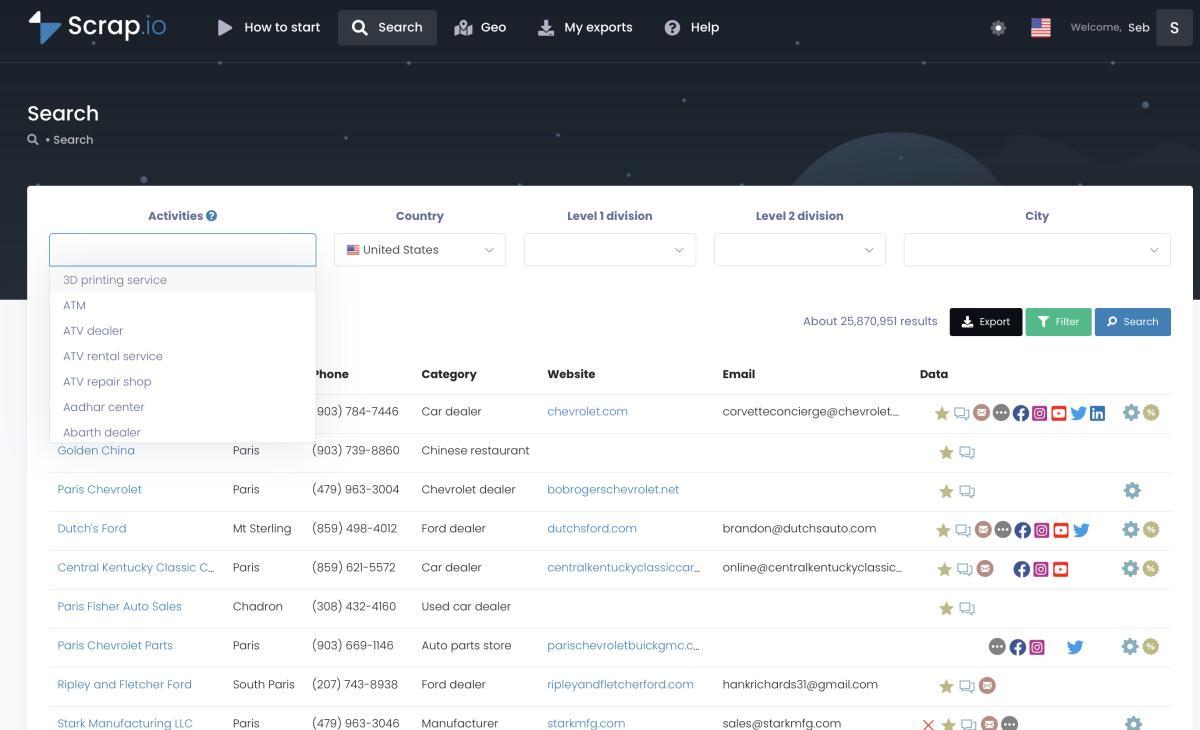
Scrap.io does this across 195 countries and 4,000+ business categories. About $50 per 10,000 contacts. Email verification is built in. And the filters go well beyond geography: target agents by Google review score, whether they run a website, which social platforms they're on (or ignoring), what ad pixels their site fires. Two clicks and you've got a list. Try building a real estate agent lead list at that speed by hand. I'll wait.
How to Choose a Quality Realtor Email Database
Five things to check. That's the whole list.
Accuracy. Ask for a test batch before you commit money. Run 100 emails through a validator. More than 10 bounce? Walk. A quality real estate email list should clear 90%+ deliverability on the first send.
Freshness. "How often do you update?" is the only question that really matters with a list vendor. Monthly is the floor. Real estate turnover is brutal, agents hop brokerages constantly, and quarterly updates just can't keep up.
Segmentation. Can you filter by state, city, zip, specialization, brokerage? That's the minimum. Better providers layer on review data, license status, social presence. Scrap.io runs 17+ filters, which is unusual, since most traditional providers top out around five.
Compliance transparency. Where does the data come from? If they dodge the question, leave. Public sources (Google Maps profiles, business websites, licensing boards) are solid ground. Scraped personal LinkedIn accounts? Murky, and not worth the headache.
No pricing games. If you need a sales call just to learn what 10,000 contacts cost, that vendor is hiding something. Or overcharging and hoping you won't compare. Either way.
| Provider | Price / 10K | Data Freshness | Email Verification | Unique Filters |
|---|---|---|---|---|
| BookYourData | $500 to $2,000 | Monthly | Yes | Basic (job title, location) |
| Leads Deposit | $300 to $1,500 | Quarterly | Partial | State, specialization |
| Scrap.io | ~$50 | Real-time | Yes (built-in) | 17+ (reviews, social, tech) |
5 B2B Use Cases: Who's Actually Targeting Real Estate Agents
Enough theory. Here's who's genuinely turning real estate agent leads into revenue, with numbers where I could verify them.
1. PropTech / CRM companies. Salesforce launched Agentforce, AI-powered lead qualification built for real estate. Ascendix research projects AI-enhanced CRMs will be used by 89% of top-producing agents by 2026, with companies deploying them reporting up to 67% higher conversion rates. These outfits chew through massive agent lists. One case from Scrap.io's own real estate consultant email list guide: a CRM company stopped targeting "all agents" and narrowed to consultants earning $90K+. Result? 40-60% higher conversions. Precision crushed volume. Every time.
2. Marketing agencies. Huge segment, chronically underestimated. Thousands of agencies sell SEO, paid ads, web design, and social management to realtors. The clever ones don't grab a realtor mailing list and blast it. They filter for agents with terrible Google reviews (who need reputation help yesterday) or agents with no website (who need one built). That's selling to a pain point instead of a job title. The close rate isn't close.
3. Mortgage and financial services. The mortgage world and the real estate world are basically conjoined twins. Loan officers chase agent relationships. Title companies want referral pipelines. Insurance brokers need a route to new homebuyers, and agents are the gate. Cross-referencing agent data with lender and developer contacts opens partnership angles most competitors never think to try.
4. Photography and staging providers. Purely local, this one. A staging company in Tampa doesn't need 200K national contacts. It needs 500 listing agents within 30 miles. On r/realtors, one user mentioned paying $150 for 8,000 agent emails in Tampa and making "several solid connections" from the buy. For a local service business, even three strong agent relationships can mean five figures in recurring annual revenue.
5. Training and coaching. Ylopo documented 30-35% open rates on sequences aimed at agents, versus the 10-15% most people limp along with. The difference? 12-email hyper-localized drips referencing specific market data for each agent's area. Coaches selling $5K-$10K packages know the math works out beautifully. One closed coaching deal pays for a year of list-building. Done.
Ready to build your own targeted realtor list instead of renting someone else's stale file? Start with 100 free real estate agent leads on Scrap.io, free for 7 days. Filter 212,000+ email-verified US agents by state, specialization, or Google review score, then export a clean CSV in two clicks.
Real Estate Agents by State: Geographic Data for Targeted Outreach
Where are all these agents? Bunched into three states, mostly.
| State | # of Realtors | % of US Total |
|---|---|---|
| Florida | 216,180 | 14.5% |
| California | 196,172 | 13.2% |
| Texas | 143,895 | 9.7% |
| New York | 59,228 | 4.0% |
| Arizona | 51,200 | 3.4% |
Source: NAR / RubyHome, 2025-26
Florida alone: nearly 15% of every US Realtor. One state out of fifty, and it holds more licensed agents than the bottom 20 states combined. If you're assembling a Florida real estate agent email list, you're fishing the deepest pond in the country.
California and Texas round out the top three. Together those three states hold over 37% of all agents nationwide. Most B2B companies start there, and honestly that makes sense, the density is hard to argue with.
But here's something I've watched play out again and again: smaller markets sometimes convert better. A Texas real estate agent email list narrowed to San Antonio or Fort Worth can outperform one aimed at saturated Dallas, because agents in mid-sized cities get far fewer cold emails per week. Less competition in the inbox means more attention for yours. Scrap.io lets you filter agents at the zip-code level, and it works inside a hand-drawn radius or polygon too, so you can test these geographic bets without betting big money.
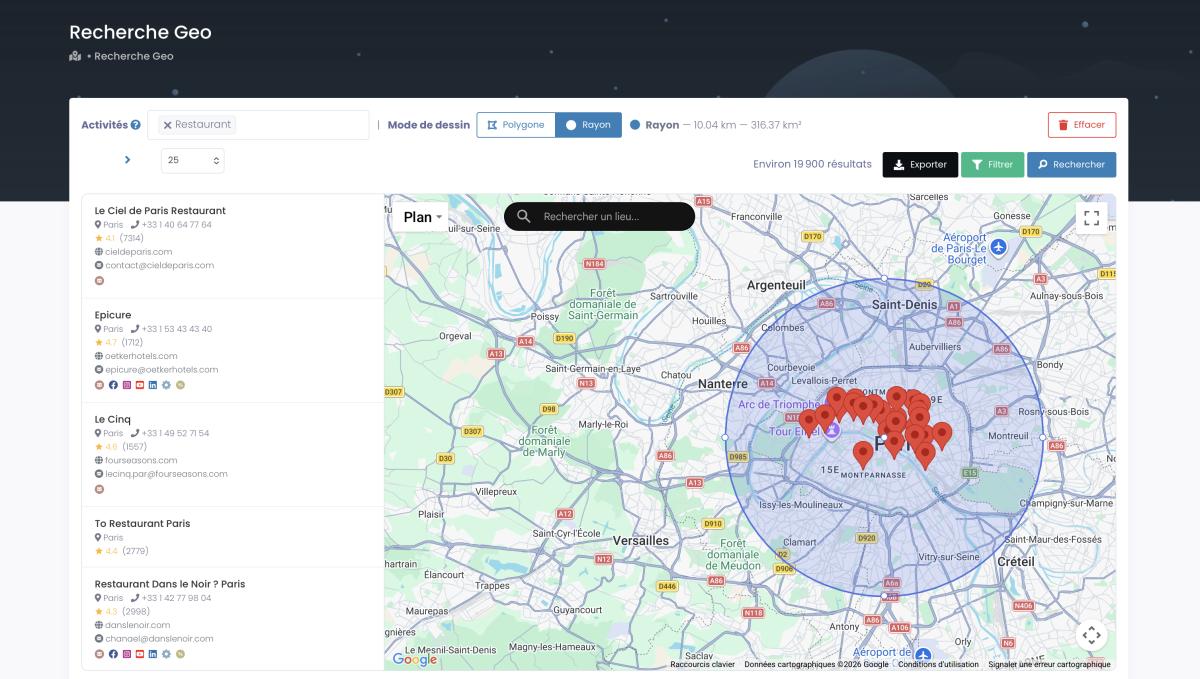
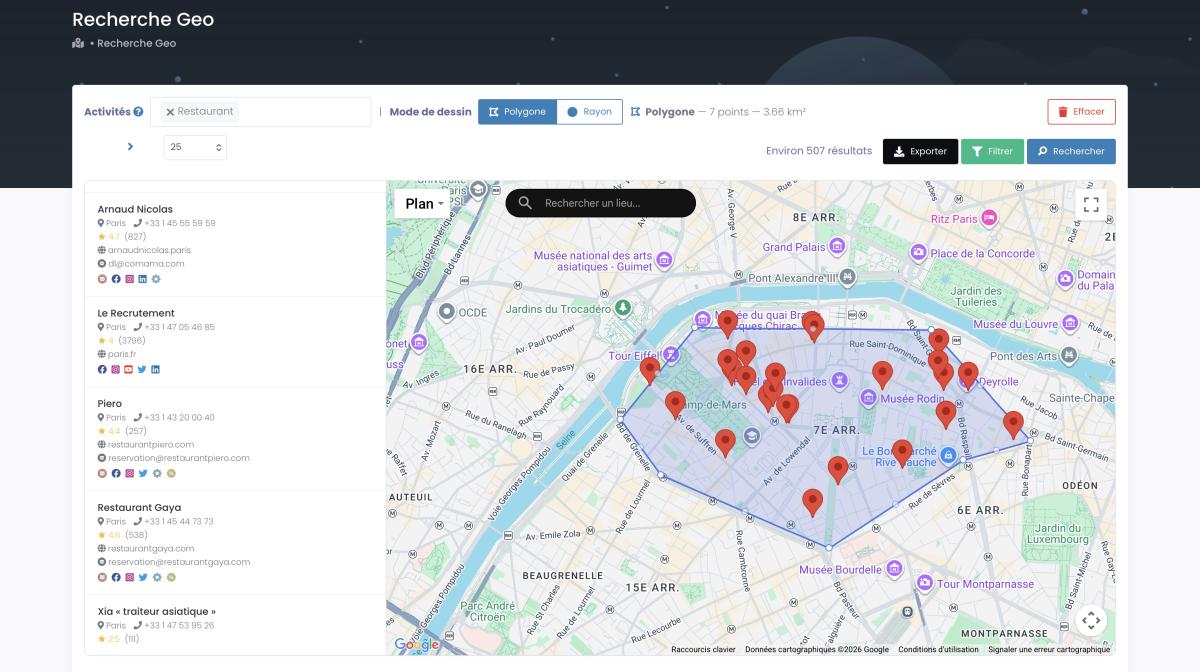
One more thing worth knowing. The real estate agent directory USA landscape is completely fragmented. No single directory covers every agent. That's exactly why scraping from Google Maps, where agents actively maintain their own business listings, produces more complete and current results than leaning on any one traditional source. The list of real estate agents by state you can pull from Google Maps data tends to be fresher than what even NAR's own tools serve up, because NAR data lags membership changes by weeks. Sometimes months. Here's the whole country-level extraction in action:
Video: How to Scrape Local Leads at the Country Level
How to Use Your Real Estate Agent Email List Effectively
Having the list is maybe 20% of the job. The other 80% is what you do next.
Personalize or don't bother sending. "Dear Real Estate Professional" gets deleted on sight. Every time. You need something specific: their market, their brokerage, their listing volume, anything that proves you looked them up. A property management company I spoke with saw open rates jump 22% just by putting the prospect's Google review count in the subject line. Tiny detail. Massive impact. It signals "someone actually researched me" instead of "you're email #47,000 from another SaaS vendor."
Single-channel outreach is dead. Email first. LinkedIn second. Direct mail for your top 50 prospects. Phone for the people who open three times but won't reply. Investors Associated, a real estate investing firm founded in 1970, documented meaningful growth after ditching email-only for an omnichannel approach (source: Impact My Biz). No surprise there. Most people need 5-7 touchpoints before they act. Want the mechanics? Scrap.io's guide on how to write a cold email breaks down the sequencing.
Also, test your send times. Agents work strange hours, between showings, late evenings, weekend open houses. The standard "Tuesday 10am" playbook every SaaS blog recommends might completely miss agents who don't open email until 8pm after their last appointment.
And clean your data. Not optional. Emails decay at roughly 20-25% per year, so a list from January is already about 10% dead by July. If you're sourcing fresh contacts from scratch, the how to build a cold email list guide covers hygiene cadence in detail.
Live Scraping vs Static Databases: A 2026 Cost Comparison
Let me just do the math, because the numbers argue louder than I can.
A traditional real estate agent email list from a major vendor runs $500 to $3,000 for 10,000 contacts. Updated monthly if you're lucky, quarterly if you're not. Industry estimates put data decay around 22.5% per year, so after six months maybe 10-12% of your contacts already bounce.
Live scraping through Scrap.io: about $50 for those same 10,000 contacts. Pulled the moment you request them. Email-verified during extraction. Bounce rate stays under 5%.
Video: Stop Paying $20,000/Year for ZoomInfo - This Does More for $49/Month
Annual cost for a company that needs fresh data every month? Traditional: $6,000 to $36,000. Live scraping: around $600. That gap is real. I know it reads like marketing, but check the pricing pages yourself, it's just a fundamentally different cost structure.
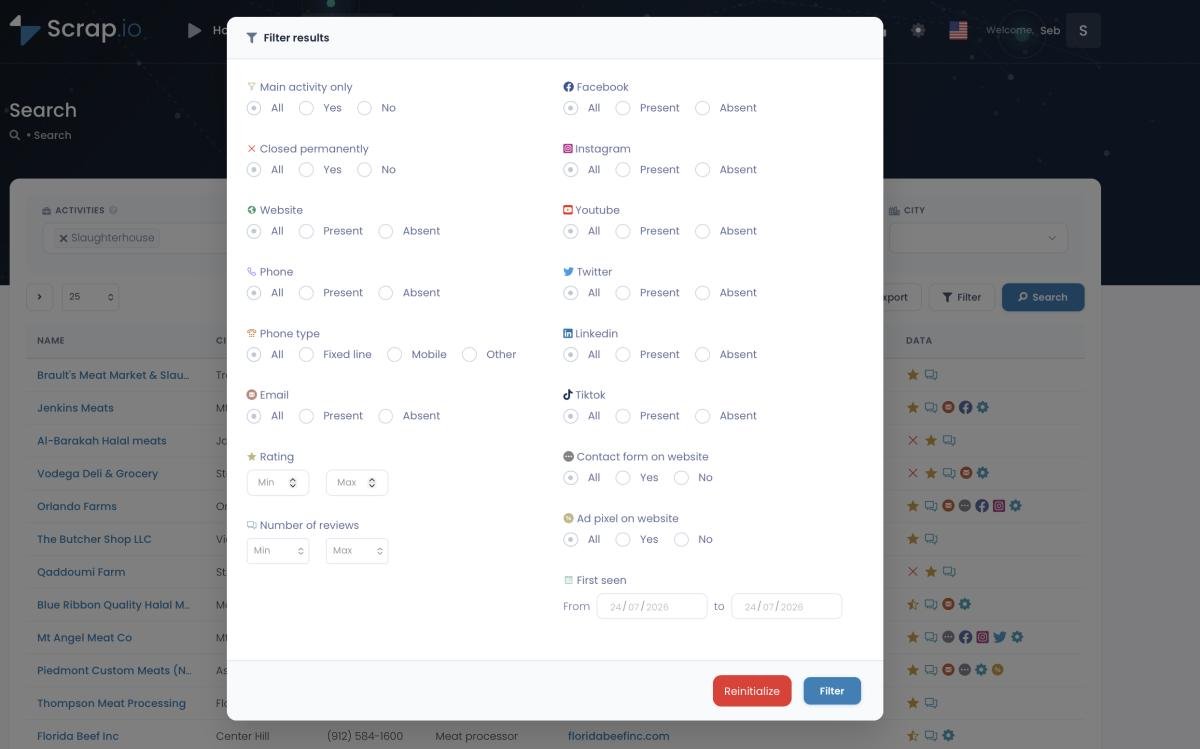
Price aside, the filtering lives on another planet. Traditional providers hand you maybe five filters: state, city, specialization, brokerage, license. Scrap.io offers 17+, including Google review scores, website technology, social media presence, and ad pixels. Filters apply before credits are consumed, so you never pay for a contact you can't use. Ever tried to find agents in a specific zip who run Facebook ads but have no Instagram? Thirty seconds with the right tool. With a CSV from a traditional vendor? Good luck.
Legal Compliance: CAN-SPAM, GDPR & State Regulations
Nobody reads this section on purpose. Read it anyway. The fines are not small.
CAN-SPAM (US): Sending unsolicited commercial email is legal. What's not legal: forgetting the unsubscribe link, lying about who you are in the sender field, using misleading subject lines, or leaving off your physical mailing address. Penalties run up to $53,088 per individual email (the FTC's guide is the definitive source). That adds up horrifyingly fast.
GDPR: Only matters if you're emailing agents in the EU or processing EU-citizen data. B2B outreach can lean on "legitimate interest" as a legal basis, but you still need clear opt-outs and data minimization. Scrap.io's cold emailing compliance guide covers the specifics.
TCPA: Relevant the moment your real estate agent contact list includes phone numbers and you plan to call or text. Auto-dialers need prior consent. So do pre-recorded messages. Plenty of companies have learned this one the expensive way.
State-level rules: California's CCPA and Virginia's CDPA both give contacts rights over their data. If you're building a California real estate agent email list, your data handling needs to be airtight. Not theoretical. Enforcement is real.
Good news, though. Data from public sources is generally solid legal ground. If an agent published their email on their Google Maps business profile or their company website, they've made that info public. That's the public-data doctrine at work, and it's exactly what keeps tools that collect from these sources (like Scrap.io) operating within the legal framework rather than around it.
Frequently Asked Questions
How many real estate agents are there in the US?
Roughly 2.13 million active licensees in 2026. About 1.49 million are NAR members (RubyHome / NAR), a number that's been sliding from its pandemic-era peak. On Google Maps, where agents keep their own listings, Scrap.io indexes 432,237 US agent profiles, and 212,491 of them publish a verified email. That last figure is your true addressable market for cold outreach.
How do I get a list of real estate agents?
Three routes. Buy one from a vendor like BookYourData or Leads Deposit ($500 to $3,000 per 10K contacts). Build one by hand from public directories (NAR, state boards, Zillow), which is free but agonizingly slow. Or scrape one in real time through Scrap.io for about $50 per 10K. Companies doing serious outreach tend to pick the third, because the data is fresh and the cost doesn't sting.
Is it legal to buy a real estate agent email list?
Yes. Buying and owning the data is perfectly legal. How you use it is where the law comes in: follow CAN-SPAM (unsubscribe link, honest sender info, real subject lines) and you're covered. Just make sure whoever sold you the list sourced it from public data, not from shady third-party resellers who can't explain their methods.
What's the best real estate agent email list provider?
Depends what you need. Static one-time purchase? BookYourData and Leads Deposit are decent. Real-time data with deep filtering at a fraction of the cost? That's Scrap.io territory. Ultra-niche targeting, say luxury agents in Beverly Hills with 50+ Google reviews, might call for combining sources or using live scraping with very tight filters.
How much does a quality realtor email database cost?
Anywhere from $0.05 to $0.30 per contact with traditional vendors. Scrap.io runs about $0.005 per contact, so $50 for 10K verified leads. The gap really is that large. The traditional pricing model just hasn't adapted to what real-time extraction makes possible.
What's the difference between a realtor email list and a real estate agent database?
"Realtor" means NAR member specifically. "Real estate agent" means anyone holding a license, member or not. A solid realtor email database has both. In practice most providers don't distinguish, so you'll get a mix regardless of what they label the product.
How often should I update my real estate agent email database?
Quarterly at the absolute minimum. Email addresses go bad at roughly 20-25% annually, so a list from January is about 10% dead by summer. Use live scraping and the question disappears, since every extraction is fresh.
What information is typically included?
Baseline: name, email, phone, mailing address, brokerage. Better lists add license number, specialization, social profiles, website URL. Scrap.io also pulls website technology data, ad-pixel detection, contact-form presence, and Google review scores. More data points mean sharper segmentation.
Can I target real estate agents in specific cities or states?
Yes, and you should. Geographic targeting is what separates useful campaigns from spam. Most providers offer state and city filters. Scrap.io goes to zip-code and neighborhood level, so you can build a real estate agent contact list USA-wide or narrow it to a single suburb where your business operates.
Can I get a free list of real estate agents' email addresses?
Sort of. NAR directory, state licensing boards, Zillow's agent finder, all publicly accessible, all free. You'll just be copy-pasting for days. And if somebody offers you a free list of real estate agents email addresses PDF, be skeptical. Static PDFs go stale fast. Really fast. Live data beats frozen files every time.
What open rates should I expect from realtor email campaigns?
Industry benchmarks land around 18-25% open rate, 3-7% click-through on well-targeted campaigns. Ylopo's clients pushed 30-35% opens using hyper-personalized drips referencing each agent's local market. The single biggest factor? List quality. Fresh emails land in inboxes. Stale emails bounce. Everything flows from there.
What's a real estate agent email list PDF? Should I get one?
It's a snapshot of agent data frozen at one moment, exported as a static document. My advice: don't bother. A real estate agent email list sample in PDF form starts dying the instant it's generated. If you want contacts that actually work on the day you email them, get data that was pulled that same week.
Bottom Line
Two-million-plus agents. Around $7.5 billion in annual B2B spending aimed at them. And most companies doing outreach are working with contact data that was already going stale the day they paid for it.
You don't need the biggest real estate agent email list on the market. You need the freshest one, narrowed to agents who actually need what you sell. A thousand well-targeted contacts will outperform fifty thousand random ones. Every single time.
So stop overpaying for data that bounces. Stop hand-building spreadsheets for weeks on end. The tools exist. Use them.
Try Scrap.io free for 7 days, your first 100 real estate agent leads are on us. Real-time data on 212,000+ US agents with verified emails (from 432,000+ Google Maps listings), 17+ filters, email verification built in, and filtering applied before you spend a single credit. Start building your list now.
Generate a list of real estate agent with Scrap.io