

By François - Scrap.io. Last updated: September 2026
Short answer: No, cold calling is not dead in 2026. The industry average success rate is 2.7% (up from 2.3% in 2025), and top teams hit 11.3%, four times the average. What died is high-volume, no-research spray and pray. What works now: verified data, tight ICP targeting, and multi-channel sequences.
Cognism's SDR team picked up the phone 200,000+ times last year. Their success rate? 11.3%. Over four times the industry average. Not exactly the numbers of a dead channel.
And yet, every year, the same LinkedIn posts pop up. "Cold calling is dead." "Nobody answers their phone anymore." "It's 2026, just send an email." You've seen them. Maybe you've even believed them.
Here's the thing. That debate has been running since 2010. Cold calling keeps refusing to die. But it HAS changed. A lot. And the gap between teams who get it and teams who don't? It's never been wider.
So let's settle this. Not with opinions. With data.
(And if you prefer watching over reading, here's the short version.)
Video: A Short Guide to Cold Calling
Table of contents:
The Case Against Cold Calling (Why People Say It's Dead)
Before we get into why cold calling still works, let's be honest about the problems. Because the critics aren't wrong about everything.
87% of People Don't Answer Unknown Numbers
That stat from Hiya and the FTC hits hard. Nearly 9 out of 10 Americans ignore calls from numbers they don't recognize. Scam calls ruined it for everyone. Your sales rep is competing with "We've been trying to reach you about your car's extended warranty," and losing.
Email and Social Selling Are Scaling Faster
Cold emailing as a strategy lets one person reach 500 prospects in a morning. LinkedIn lets you engage warm leads at scale without ever picking up a phone. Cold calling? You're talking to one person at a time. The math feels brutal.
Buyers Want to Self-Serve Before Talking to Sales
According to HubSpot research, 96% of B2B prospects do their own research before they'll even consider talking to a rep. They want case studies, pricing pages, comparison tools. They do NOT want some stranger reading a script at them while they're trying to eat lunch.
The "Spray and Pray" Era Is Over
200 dials a day from a purchased list with no targeting, no research, no personalization. That version of cold calling? Yeah, it's dead. Nobody argues otherwise. (Not even the people who still do it, somehow.)
Here's a quick snapshot of both sides of this debate:
| Arguments FOR "Cold Calling Is Dead" | Arguments AGAINST "Cold Calling Is Dead" |
|---|---|
| 87% of people don't answer unknown calls | 82% of B2B buyers still accept cold call meetings (RAIN Group) |
| Email and social scale faster | Cold calls generate higher revenue per touch than email |
| Buyers self-serve before talking to sales | 57% of C-level execs prefer phone over other channels |
| Spray-and-pray calling doesn't work anymore | Top performers hit 11.3% success rates, 4x the average |
| Scam calls destroyed phone trust | AI and verified data are restoring call effectiveness |
7 Data-Backed Reasons Cold Calling Is NOT Dead in 2026
#1: Success Rates Are Actually Climbing (2.3% → 2.7%)
After dropping from 4.82% in 2024 to 2.3% in 2025, cold calling success rate benchmarks are finally heading back up. The industry average hit 2.7% in 2026, according to Cognism's State of Cold Calling Report.
Doesn't sound like much? Run the math. A team making 1,000 calls a week at 2.7% books 27 meetings. At 2.3%, that's 23. Four extra meetings per week. Over a year, that's 200+ additional pipeline opportunities. From the same effort.
The trend line matters more than the number.
#2: 82% of B2B Buyers Still Accept Cold Call Meetings
RAIN Group's prospecting benchmark research found that 82% of buyers say they accept meetings at least sometimes when a salesperson reaches out. Eighty-two percent.
That's not a dying channel. That's an open door most sales teams walk right past because they read some LinkedIn post telling them phones don't work.
Oh, and 57% of C-level and VP buyers specifically prefer phone calls over other outreach channels. The higher up the org chart you go, the more they want you to call. Think about that next time someone tells you "just send an email."
#3: Cold Calls Reach Prospects in 1.55 Dials (Not 18)
Remember the old stat about needing 18 calls to reach a prospect? Cognism's 2026 data crushed that number. Most prospects who are going to answer do so on the first or second attempt. The average? 1.55 calls to connect.
By the third attempt, 93% of conversations have already happened. More calls after that? Wasted energy. The game isn't about persistence anymore. It's about timing and targeting.
#4: Top Performers Hit 11.3%, That's 4x the Average
The gap between average and excellent has never been this wide. While most teams hover around 2.7%, Cognism's internal SDR team posted an 11.3% cold call success rate in 2026. (Up from 6.7% the previous year.)
What separates them? Better data. Tighter ICP targeting. Personalized messaging. And openers that don't sound like they were written by a robot in 2014. If you want to nail your cold call opener or learn how to introduce yourself on a cold call without triggering instant hang-ups, that's where the real leverage sits.
#5: AI Is Making Cold Calling Smarter, Not Obsolete
AI isn't replacing cold callers. It's turning average reps into good ones.
Outreach's 2025 data showed AI-assisted personalization boosted meeting conversion rates by 36%. Not because the AI made the call, but because it told the rep when to call, what to say, and which accounts showed buying intent signals last week.
Conversation intelligence tools from Gong.io analyze thousands of calls and surface what top performers do differently. Spoiler: they ask 11-14 questions, they talk less than 55% of the call, and they mention the prospect's specific pain in the first 30 seconds.
#6: Cold Calling Outperforms Email on Revenue Per Touch
Here's a stat nobody talks about. Cold email gets an 8.5% reply rate on a good day. But only 0.2% of those replies actually close into deals. That's roughly 1 deal per 464 emails sent.
Cold calling? Lower volume, way higher quality. Each conversation is a real-time, two-way exchange where you handle objections, read tone, and adapt on the spot. You can't do that in a Mailchimp sequence.
The smartest teams combine both: contact form outreach, email, LinkedIn, AND phone. But if you had to pick one channel for revenue per touch? The phone still wins.
#7: It's the Only Real-Time Feedback Channel Left
Email gives you open rates 24 hours later. LinkedIn gives you a "seen" notification. Cold calling gives you real feedback, right now, in the moment.
"We just signed with a competitor last week." "Actually, we're evaluating solutions right now, send me something." "Our budget got cut, try again in Q3."
You get intelligence that no other channel provides. You learn your market, your messaging, and your positioning in real time. For sales teams that actually listen (and most don't), every call is a free focus group.
What IS Dead: Old-School Cold Calling
So if cold calling isn't dead, what is?
The 2019 playbook. That's what died.
Script-reading without doing five minutes of research. Blasting through 200 dials a day on lists you bought from some sketchy data vendor six months ago. Ignoring timing, targeting, and data quality because "it's a numbers game, bro."
That approach doesn't work anymore. It probably never worked that well, honestly, but there was a time when fewer people were doing it, so even bad outreach got results by sheer volume.
Those days are gone.
| Old-School Cold Calling (Dead) | 2026 Cold Calling (Alive) | |
|---|---|---|
| Data | Purchased lists, outdated info | Verified contacts, real-time data |
| Targeting | Anyone with a pulse | ICP-matched, intent signals |
| Approach | Read a script, hope for the best | Research-backed, personalized |
| Volume | 200+ dials/day, low quality | 40-60 targeted calls, high quality |
| Success rate | ~1-2% | 5-11%+ for top teams |
| Tools | Phone + spreadsheet | AI-assisted dialing, conversation intelligence |
For the detailed benchmarks behind these numbers, check our full breakdown of cold calling success rate benchmarks.
What's ALIVE: The 2026 Cold Calling Playbook
Data-Driven Targeting (Verified Contacts, Intent Signals)
The #1 difference between dead cold calling and cold calling that works? Data quality. Period. Full stop.
Cognism's own data proves it: SDRs using verified contact data achieved a 13.3% answered rate on cold calls. That's nearly identical to AEs calling warm leads (14.4%). Read that again. Cold calls, with verified data, perform almost like warm calls.
Bad data costs US businesses over $611 billion annually. Your reps waste 27.3% of their time chasing wrong numbers and dead contacts. Fix the data, and you fix half your cold calling problems overnight.
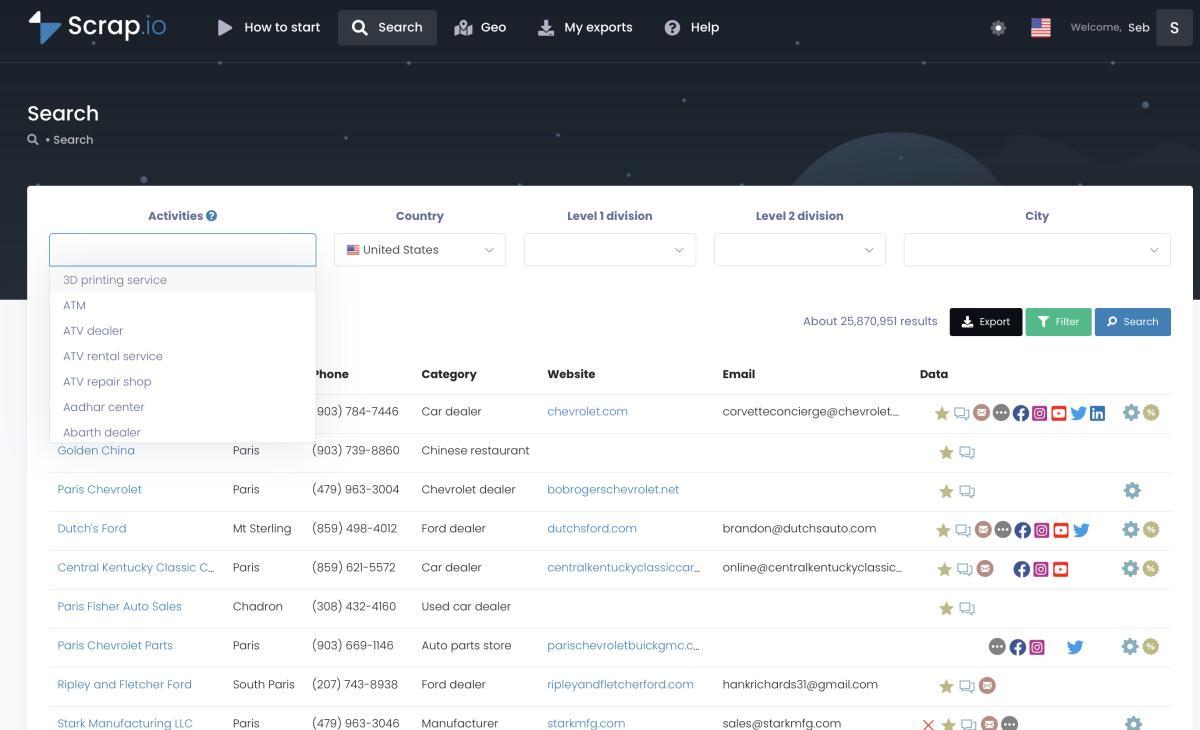
And here's the part most people get backwards. Finding phone numbers was never the hard bit. Scrap.io alone indexes 26.1M US businesses on Google Maps, 21.5M of them (roughly 82%) with a public phone number. The problem was never finding numbers. It was finding the RIGHT ones, verified and current, matched to a clear ideal customer profile instead of a list you bought in 2023. (Source: Scrap.io Google Maps data, September 2026.)
That's the whole workflow: pick a category and a zone, and pull verified business numbers straight from the map.
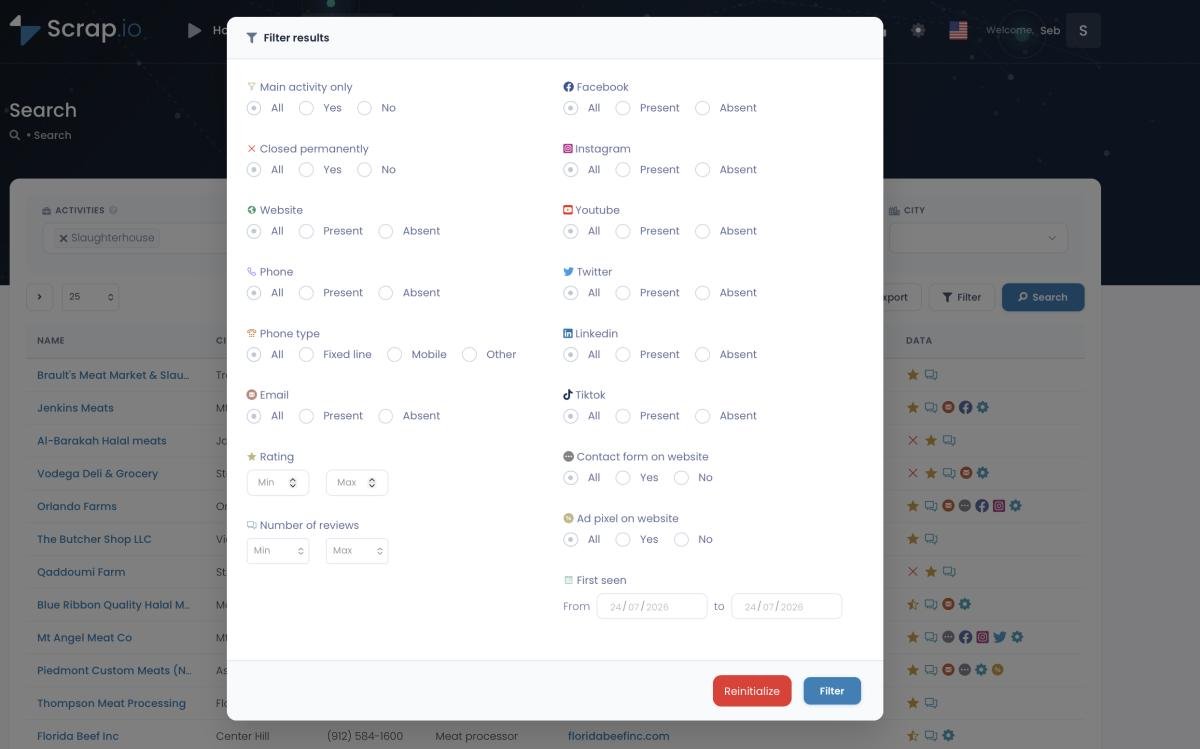
Then you filter before you extract. Only want records that actually have a phone number? Apply the filter first, so you never burn a credit on a fiche you can't dial.
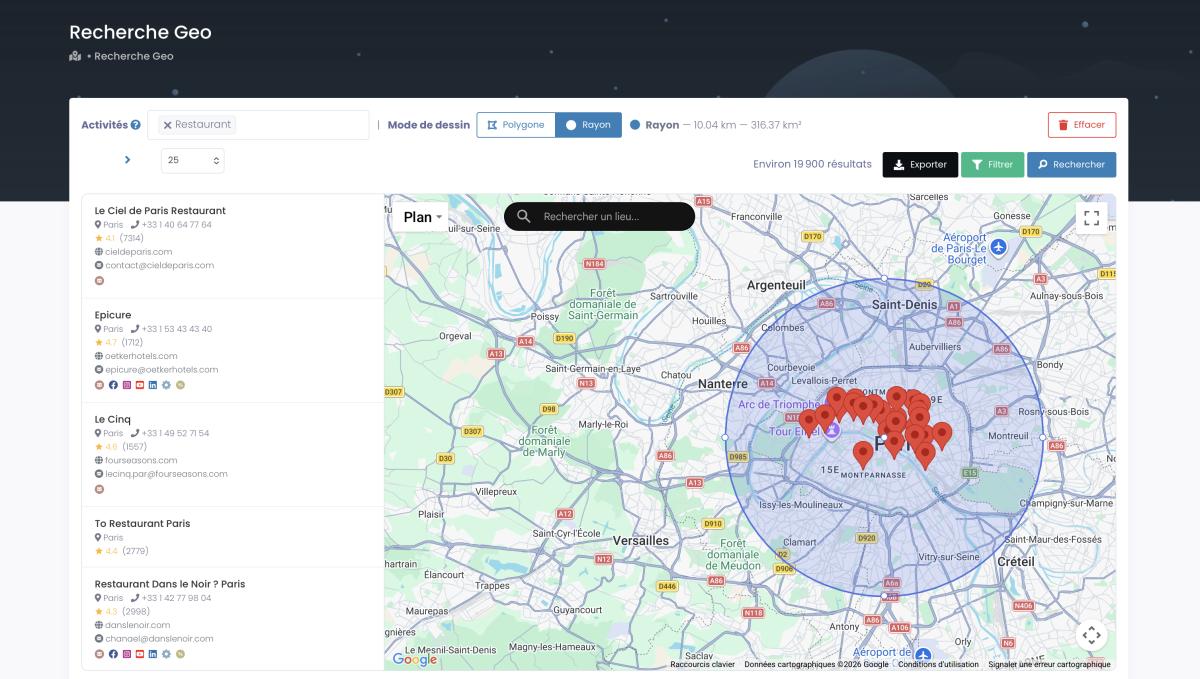
And when your territory is a neighborhood or a catchment area rather than a whole city, GeoSearch lets you draw a radius on the map and grab only what's inside it.
Here's a two-minute walkthrough of the whole thing, search to export:
Video: Scrap.io - How to Start?
The #1 factor that separates dead cold calling from effective cold calling? Data quality. Scrap.io gives you verified phone numbers and emails pulled in real time from Google Maps across 195 countries, filtered before you spend a single credit. Try it free for 7 days, 100 leads included.
Multi-Channel Integration (Call + Email + LinkedIn)
Nobody closes deals on a single channel anymore. The best teams run sequences: email first, then call, then LinkedIn touch. Or call first, then send a follow-up email referencing the conversation. If you want the full playbook, here's how the pros build omnichannel outreach that actually converts.
Having cold calling scripts that actually work is only part of the equation. You need those scripts to connect with what you sent by email, what you posted on LinkedIn, and what the prospect saw on your website. These phone-based prospecting techniques only pay off when every channel tells the same story.
Reps using cold calls alongside email and LinkedIn see 28% higher conversion rates than single-channel outreach. Multi-channel isn't optional. It's table stakes.
AI-Assisted Personalization
AI tools now analyze your prospect's company news, tech stack, hiring patterns, and recent social posts, then generate a call brief in seconds. The rep doesn't need to spend 15 minutes researching every single prospect. They spend 30 seconds reviewing the AI summary, and they're ready.
The result isn't replacing human connection. It's making human connection possible at scale. Wire that into the best CRM for sales teams and every call brief, every follow-up, every note lives in one place instead of six browser tabs.
Compliance-First Approach
GDPR, TCPA, DNC lists. Cold calling has more guardrails than ever. But that's not a bad thing. Teams that treat compliance as a feature (not a burden) build more trust with prospects. You're showing respect by calling legally, at appropriate times, with legitimate business reasons.
And honestly? Compliance forces better behavior. You can't mass-dial 500 random numbers at 7 AM anymore. You have to be intentional. That intentionality is what separates the 2.7% teams from the 11% teams.
Want to avoid the mistakes that kill most cold calling campaigns before they start? This quick video breaks down the biggest ones:
Video: Mistakes to Avoid when Cold Calling
Does Cold Calling Work? What Real Teams Are Saying
Numbers are great. But what about people actually making calls every day?
Cognism's SDR team went from 6.7% to 11.3% success rate in one year. Their secret wasn't some magical script. It was calling the right accounts, at the right time, with verified mobile numbers. As Chris Ritson (a long-time SDR leader quoted in Cognism's report) put it, quality data paired with strategic targeting changes everything.
Snowflake, one of the fastest-growing SaaS companies in history, has publicly doubled down on cold calling as a core pipeline channel. Snowflake sales leaders regularly talk about how the phone remains their highest-converting outreach method. For a company valued at $50B+, that's not nostalgia. That's strategy.
Reddit's r/sales is full of reps sharing real numbers. "My average is 7-11% and I'm not doing anything special, just calling the right people." "Cold calling isn't dead, it depends on your ICP and how much research you actually do before you dial." (These are actual posts, not cherry-picked testimonials.) And it's not just Reddit: over on LinkedIn, agency founders keep posting the same thing, cold calling was supposed to be dead by now, and it's still their single biggest source of booked meetings.
Chili Piper's survey asked sales professionals directly: "Is cold calling dead?" 49% said no. And among top-performing reps (the ones actually hitting quota), that number was even higher. The pattern is always the same: people who think cold calling is dead tend to be the ones who were never good at it.
One B2B SaaS team we came across (mid-market, 30-person sales org) generated $2.3M in pipeline in Q1 2026 from cold calling alone. They weren't doing anything exotic. Verified contact data. AI-generated call briefs. Tight ICP targeting. And reps who actually enjoy cold calling because they're not wasting 40% of their time on wrong numbers and gatekeepers. (Yes, enjoying cold calling is possible. Weird, but possible.)
Cold calling isn't dead. It just got pickier about who does it well. Start with better data: try Scrap.io free for 7 days, 100 leads included. Real-time Google Maps data, filtered before you spend a credit.
FAQ
Is cold calling illegal?
No. Cold calling is legal in most countries, including the US and the EU. But there are rules. In the US, the TCPA and the Do Not Call Registry set boundaries. In Europe, GDPR requires legitimate interest. In practice, B2B cold calling is broadly allowed as long as you follow local regulations, respect opt-out requests, and don't call at ridiculous hours. (For email outreach, the rules are slightly different, check our guide on outreach compliance for the full breakdown.)
Is cold calling still effective in 2026?
Yes, but with a giant asterisk. Average cold calling still converts at around 2.7%. That's low. But top-performing teams consistently hit 6-11%+ by using verified data, tight targeting, and personalized approaches. The channel works. Bad execution doesn't.
What percentage of cold calls are successful?
The average cold call success rate is about 2.7% in 2026, but top teams hit 6-11%+ using verified data and tight targeting. Connect rates are far higher: reps using verified numbers connect around 13%. See our full cold calling success rate breakdown for the benchmarks behind those figures.
What is the 80/20 rule in cold calling?
The 80/20 rule in cold calling means roughly 80% of your results come from about 20% of your activity: the right accounts, the right timing, the right opener. It's quality over volume. 40-60 targeted, well-researched calls beat 200 blind dials, every single time.
What is the future of cold calling?
AI-assisted, data-driven, multi-channel. The future isn't more calls. It's smarter calls. Expect AI to handle pre-call research, real-time coaching during calls, and post-call analysis. Expect phone outreach to integrate tighter with email, LinkedIn, and contact form outreach. The phone isn't going away. How we use it is changing fast.
Does cold calling work for B2B?
B2B is actually where cold calling works best. 57% of C-level buyers prefer phone contact. 82% accept meetings from cold outreach. The higher the deal value, the more a personal conversation matters. You're not going to close a $50K contract with a drip email sequence. Someone has to pick up the phone. (Same goes for real estate and other relationship-heavy niches, where a live voice still beats a cold inbox.)
What are the 3 C's of cold calling?
Different sources define these differently, but the version that actually matters in 2026: Confidence (prospects smell hesitation in two seconds), Context (know why you're calling THIS person at THIS company right NOW), and Curiosity (ask questions, don't pitch). Some people swap in "Connection" or "Clarity." Honestly, the label doesn't matter. The behavior does.
Cold calling vs social selling: which is better?
Neither. Both. It depends.
Social selling scales wider but converts slower. Cold calling reaches fewer people but creates instant conversations. The data says reps who combine both outperform single-channel teams by 28%. So stop picking sides and do both.
If you had to choose one for immediate pipeline? Phone. If you had to choose one for long-term brand building? Social. If you're smart? You're running multi-channel sequences that include cold calls, cold emails, LinkedIn touches, and maybe even contact form outreach.
The Verdict: Cold Calling Isn't Dead, Lazy Cold Calling Is
So, is cold calling dead in 2026? No. The average sits at 2.7%, top teams hit 11.3%, and it still takes just 1.55 dials to reach the right person. What's dead is the spray-and-pray version: bought lists, zero research, 200 blind dials a day. Kill that, keep the phone.
The one lever that moves everything? Data quality. Fix that first, and the 2.7% average stops being your ceiling.
Stop wasting 27% of your reps' time on dead numbers. Build a verified, ICP-matched call list from Google Maps in minutes, filtered before you spend a credit. Try Scrap.io free for 7 days, 100 leads on the house.
Generate a list of restaurant with Scrap.io