

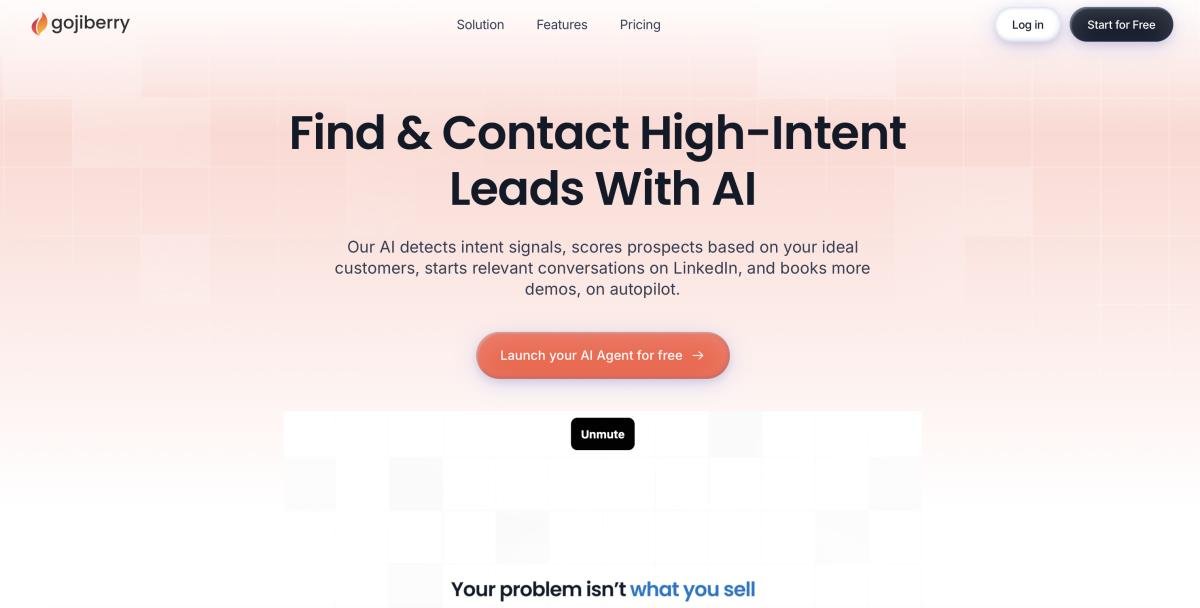
$4.53 billion. That's how big the sales intelligence market is in 2026, growing at 10.5% per year (Grand View Research). And 62% of B2B marketers swear that intent data makes their leads way better. Cool. Except most of these people are only using one channel to get those leads. LinkedIn. Just... LinkedIn.
I know this guy. Let's call him Dave. He runs a B2B software company selling scheduling tools to medical clinics. He signed up for Gojiberry AI last year. Loved the idea. Intent signals! AI agents! Warm leads on autopilot! Except... dermatologists in Tampa don't exactly spend their Tuesday evenings liking competitor posts on LinkedIn. Dave got maybe three usable leads in a month. His plumber has a more active LinkedIn profile than his target customers.
That's the problem nobody talks about. Gojiberry AI is brilliant, but only for a very specific type of prospect. What about the other 80%+ of businesses that aren't hanging out on LinkedIn? Restaurants, contractors, clinics, salons, retail shops? They exist on Google Maps, not LinkedIn. And that gap? That's exactly what we're going to cover here. Seven gojiberry ai alternatives, organized by what they're actually good at, so you can pick the right one (or two, or three) for your situation.
📋 What's in This Guide
- What Is Gojiberry AI (And Why People Are Looking for Alternatives)?
- The Sales Intelligence Market in 2026: Why Alternatives Matter
- 7 Best Gojiberry AI Alternatives in 2026 (Compared)
- When to Use Gojiberry AI vs. an Alternative
- Real-World Examples of Intent-Based Lead Generation
- Compliance Checklist: Using Lead Gen Tools Legally in 2026
- FAQ: Gojiberry AI Alternatives
- Final Verdict: Which Alternative Should You Choose?
Before we get into the list. If you've never seen how the Google Maps side of this works, here's the 3-minute version. Watch this first, then the rest of the article makes a lot more sense.
Video: Scrap.io - How to Start?
What Is Gojiberry AI (And Why People Are Looking for Alternatives)?
Quick clarification before we dive in, because I've seen people get confused by this. There's Gojiberry.app. That's a Shopify survey tool. Completely different company. We're talking about Gojiberry.ai, the AI sales agent that monitors LinkedIn buying signals. If you clicked on this article looking for Shopify survey alternatives, wrong Gojiberry. Sorry.
The Intent-Based Approach: How Gojiberry Works
So here's the concept. Gojiberry AI watches what people do on LinkedIn: liking competitor posts, changing job titles, engaging with specific content, getting funding. These are buying signals. The platform tracks 15+ of these intent signals, then uses AI agents to send personalized LinkedIn DMs on your behalf. Automatically.
Think about it. Someone at a SaaS company just liked three posts from your biggest competitor. They're probably evaluating solutions. Gojiberry spots that, drafts a personalized message, and slides into their DMs before you've even finished your coffee. Intent based lead generation, basically. You're not cold-prospecting. You're reaching people who already showed interest in what you sell. (If you'd rather pull LinkedIn data yourself instead of renting an agent to do it, a dedicated LinkedIn scraping tool is a whole different route.)
Clever? Absolutely. But it only works when your targets actually DO things on LinkedIn. More on that in a second.
Gojiberry AI Pricing in 2026
Pro plan: $99/month per seat. You get 15+ intent signals tracked, one LinkedIn account connected, unlimited campaigns. The Elite plan? Custom pricing, meaning you gotta talk to sales. That's pretty much it for gojiberry pricing per seat. Not cheap, not crazy expensive. Somewhere in the middle.
Key Limitations Users Report
Okay so this is where gojiberry AI reviews get interesting. On Product Hunt, people love it. One user said they couldn't find another tool focused specifically on high intent leads. And honestly, that's a valid point. The intent-based approach IS different from what most tools do.
But then you read the G2 reviews. And the tone shifts.
One reviewer straight up said: if your target audience is not active on LinkedIn, it won't perform well. Another flagged that it depends heavily on social and public signals. Which... yeah. If your prospects aren't generating signals, there's nothing for the AI to detect. It's like installing a motion sensor in an empty room.
Salesforge did a whole deep-dive review and pointed out some stuff that matters for growing teams: you're capped at 2 senders on the Pro plan. There's no email outreach, it's LinkedIn DMs only. And the entire system lives and dies by LinkedIn activity. There's also been some noise on gojiberry ai reddit about their promotional tactics being a bit... aggressive. Not ideal.
All that to say: Gojiberry nails one specific use case. LinkedIn-active B2B prospects. But if your gojiberry ai pros and cons analysis reveals that your targets aren't LinkedIn people? You need something else entirely.
The Sales Intelligence Market in 2026: Why Alternatives Matter
Numbers time. I love numbers. The global sales intelligence market is on track to reach $9.02 billion by 2034, growing at a CAGR of 10.54% according to Precedence Research. The US piece of that? Went from $1.07 billion in 2024 and it's heading toward $2.93 billion by 2034. North America alone represents roughly $1.85 billion, about 38% of the global market.
But here's what really blew my mind. 74% of US companies are now using AI for lead scoring. Seventy-four percent. That's not "some innovative startups are experimenting with it." That's practically everybody. The ai lead generation tool category isn't emerging anymore. It's established. (If you want to go deep on that, we broke the whole thing down in our AI lead scoring guide.) And yet most of these teams still lean entirely on LinkedIn, even though the latest LinkedIn statistics show roughly 70% of small businesses aren't even on the platform.
Gojiberry AI is a perfect example of how fast things move in this space. The company went from zero to $33K per month in 4 months. Then hit $1M ARR in 9 months. Pierre-Eliott Lallemant and Romàn Czerny (the founders, who previously built and sold a WhatsApp marketing tool called CoCo AI) literally used Gojiberry to sell Gojiberry. You gotta respect that.
But with growth like this, putting all your eggs in one basket is just asking for trouble. LinkedIn goes down for a day? Your entire pipeline stops. Algorithm changes? Your DM open rates tank overnight. The smart play (and I keep seeing this with the B2B teams that actually crush it) is stacking multiple lead sources. LinkedIn intent data, Google Maps geographic data, a proper outreach tool. That's the combo that works.
By the way, Scrap.io lets you extract local business contacts in real time from Google Maps: 225 million+ establishments, 195 countries, 4,000+ categories, all pulled fresh at each export instead of sitting in a stale database. Free 7-day trial, 100 free leads to test. Worth checking if your targets aren't the LinkedIn type.
7 Best Gojiberry AI Alternatives in 2026 (Compared)
Quick heads-up before the list. The LinkedIn-intent lane got crowded in 2026 (sbl.so, Embers, CommunityTracker, SalesRobot all pile into it). But none of them find the 80% of small businesses that live on Google Maps, not LinkedIn. That's the blind spot this list actually cares about. I've split these into three buckets: intent-based LinkedIn tools (same lane as Gojiberry), massive data platforms (the "we have everyone" approach), and geographic/local lead gen (the gap Gojiberry misses). Seven tools total. Here's the short version before we get into each one:
- Scrap.io: best for local & geographic lead generation (Google Maps)
- Apollo.io: best all-in-one sales platform
- Factors.ai: best for full-funnel GTM analytics
- Salesforge: best for multi-channel outbound at scale
- Revscale: best AI SDR for autonomous outreach
- ZoomInfo: best for enterprise data coverage
- Lusha: best for quick contact enrichment
Now the detail. Let's go.
1. Scrap.io: Best for Local & Geographic Lead Generation
I'm putting this first because it's the gojiberry ai alternative for local businesses that fills the biggest gap. Gojiberry watches LinkedIn. Scrap.io scrapes Google Maps. Completely different data source, completely different audience.
We're talking 225 million+ establishments indexed. 195 countries. Over 4,000 Google Maps categories. And the data is live, not pulled from some database that was "updated" six months ago and is already half-wrong. You search, Scrap.io extracts in real time. Emails, phone numbers, Facebook, Instagram, YouTube, Twitter/X, LinkedIn profiles, website technologies, Google reviews, photos, opening hours. The works.
But the thing I keep coming back to is the filtering. You can filter BEFORE you export. Only want businesses that have an email address present? Check. Google rating between 3.0 and 4.0? Check. No Facebook page? Check. You're not paying for garbage contacts you'll never use. One user extracted 11,734 businesses in 45 minutes. I don't know about you, but that math works for me.
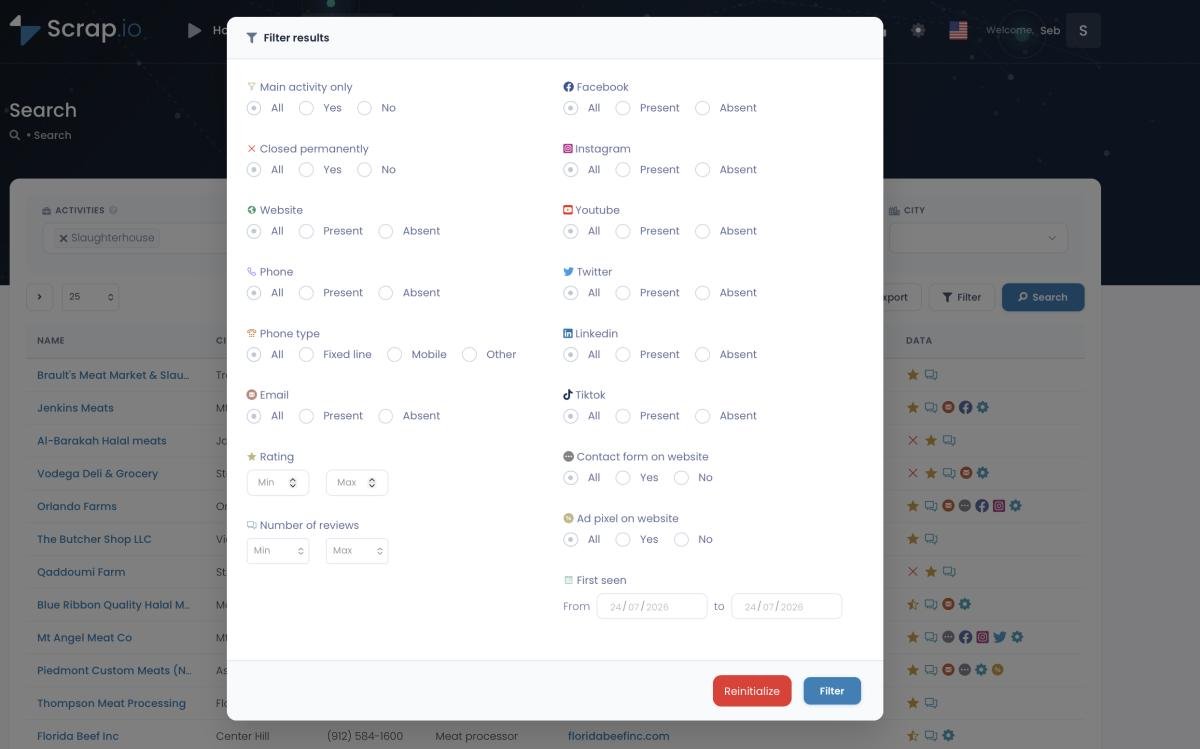
Pricing starts at €49/month for 10,000 export credits. They've also got an API, a Make.com integration (free workflow templates included), and if you need to pair it with outreach software, their cold email tools guide covers the best options. If local is your whole game, our guide to local business lead generation walks through every channel that feeds a Google Maps pipeline. For anyone wondering about gojiberry vs scrap io for lead generation, it's really about whether your prospects live on LinkedIn or Google Maps. Different tool, different job.
2. Apollo.io: Best All-in-One Sales Platform
Apollo is the everything-in-one-box option. 275M+ contacts, email sequences, phone dialer, LinkedIn outreach, meeting scheduler. Seriously, they crammed a lot in there. If you're evaluating gojiberry ai vs apollo io, the difference is pretty simple: Gojiberry goes deep on LinkedIn intent. Apollo goes wide on, well, everything. (We tested it against nine other tools in our Apollo.io alternatives breakdown, if you want the full picture.)
The free tier is shockingly good, which matters if you're on the best ai prospecting tools for small teams shortlist. Paid plans start at $49/user/month. Downsides? Data freshness is hit-or-miss (some contacts are months old), and the intent signals aren't nearly as targeted as what Gojiberry does on LinkedIn.
Not sure which lane fits you, LinkedIn-style intent or wide-database prospecting? This 6-minute breakdown lays out exactly which tool wins for which type of prospecting.
Video: Scrap.io vs Apollo, Which Tool for Which Type of Prospecting
3. Factors.ai: Best for Full-Funnel GTM Analytics
Factors goes the opposite direction from Gojiberry. Instead of LinkedIn-only, they pull intent signals from everywhere: your website visitors, ad clicks, CRM activity, AND LinkedIn. Full-funnel stuff. Their own comparison page against Gojiberry makes the point pretty clearly: Factors = multi-channel GTM analytics. Gojiberry = one channel.
The catch? About $4K for setup plus $300/month for their GTM engineering services. That's a real budget commitment. If you're a startup with three people, probably not for you. But for mid-market teams running a proper intent based prospecting tool comparison and need more than LinkedIn? Factors deserves a look.
4. Salesforge: Best for Multi-Channel Outbound at Scale
Salesforge comes at it from the execution side. Gojiberry finds the signals. Salesforge lets you DO something about them across email AND LinkedIn, with AI personalization that actually sounds human. (Most of the time. Sometimes AI personalization still reads like a robot who took a creative writing class. But it's getting better.)
Their own review of Gojiberry flagged the big gaps: 2 sender cap, no email, LinkedIn-only. Salesforge solves those specifically. If you need an ai sales agent for b2b outbound that handles 5,000+ emails a day alongside LinkedIn campaigns, this is the one.
5. Revscale: Best AI SDR for Autonomous Outreach
Revscale is the "I don't want to think about this" option. Full ai sdr tool. Their AI agents handle prospect identification, outreach, follow-ups, the whole thing. Autonomous. You basically set parameters and let it run.
Sounds amazing on paper. In practice, you give up some control over messaging nuance, which can be a problem if your product needs a very specific pitch. And you're still mostly pulling from LinkedIn and email databases. But if you want warm lead generation software 2026 that runs without you babysitting it? Revscale is interesting.
6. ZoomInfo: Best for Enterprise Data Coverage
ZoomInfo. The big one. Biggest database, strongest intent data, most firmographic filters. If you're enterprise and have the budget, ZoomInfo is hard to argue with. But "the budget" means $15K+ per year minimum. This isn't a tool you casually sign up for on a Thursday afternoon. Enterprise sales orgs with dedicated ops teams? Sure. Everyone else? Probably overkill. (If that number made you wince, we listed ten cheaper routes in our ZoomInfo alternatives guide.)
Speaking of that price tag, this is the video that keeps getting sent around in sales Slack channels. Same job, fraction of the cost.
Video: Stop Paying $20,000/Year for ZoomInfo, This Does More for $49/Month
7. Lusha: Best for Quick Contact Enrichment
Lusha does one thing well: you find a person, you need their email or phone number, Lusha gets it for you. Fast. Browser extension, quick lookups, decent accuracy. But it's an enrichment tool, not a prospecting engine. You wouldn't replace Gojiberry OR Scrap.io with Lusha. You'd use it alongside them. Complementary piece, not the main course.
Now that being said, let me put everything in a table so you can actually compare these side by side. Because seven tools is a lot to keep track of.
| Tool | Primary Focus | Data Source | Starting Price | Best For |
|---|---|---|---|---|
| Gojiberry AI | LinkedIn intent signals | $99/seat/mo | LinkedIn-active B2B targets | |
| Scrap.io | Local & geographic leads | Google Maps (live) | €49/mo | Local businesses, SMBs |
| Apollo.io | All-in-one sales platform | Multi-source database | $49/user/mo | Full-stack B2B teams |
| Factors.ai | Full-funnel GTM analytics | Website + Ads + CRM + LinkedIn | ~$300/mo + setup | Mid-market GTM teams |
| Salesforge | Multi-channel outbound | Email + LinkedIn | Custom | High-volume outbound teams |
| Revscale | Autonomous AI SDR | Multi-source | Custom | Hands-off prospecting |
| ZoomInfo | Enterprise data coverage | Proprietary database | ~$15K/yr | Enterprise sales orgs |
| Lusha | Contact enrichment | LinkedIn + web | Free tier available | Quick lookups, enrichment |
When to Use Gojiberry AI vs. an Alternative (Decision Framework)
I get asked this a lot: "which one is the best?" And the answer is annoying because it's always "depends on your target." But it does. So let me make it stupid simple.
Your prospects are SaaS founders, marketing VPs, sales directors, people who live on LinkedIn? Gojiberry. The linkedin intent signal tool approach genuinely works when the audience is there. Use it.
Your prospects are restaurant owners, dentists, plumbers, contractors, salon owners, retail shops, the classic local businesses? Scrap.io. These people aren't on LinkedIn. Period. They're on Google Maps. That's where you find leads without linkedin. Scrap.io covers 195 countries vs Gojiberry's LinkedIn bubble.
Need a massive database with built-in outreach? Apollo (mid-market budget) or ZoomInfo (enterprise budget).
Want full-funnel intent data beyond LinkedIn? Factors.ai. But bring your checkbook.
Main problem is execution, not discovery? Salesforge or Revscale. Both are ai sdr tools built for volume.
But honestly (and this is based on what I see the best teams actually doing in 2026), the answer isn't picking one. It's picking two or three. Stack them. That stacking move is really just account-based prospecting done properly: fewer targets, more depth, several angles hitting the same account. ABM campaigns that use multiple data sources generate 208% more revenue than single-channel approaches, a pattern we dig into in our account-based marketing with Google Maps data guide. Intent-based lead routing alone shows a 4x improvement in lead-to-opportunity conversion. You don't leave that on the table by being lazy about your tool stack.
Real-World Examples of Intent-Based Lead Generation
Gojiberry AI's Own Growth Story ($0 to $1M ARR)
I mentioned this earlier, but it deserves its own section because the numbers are kind of insane.
Pierre-Eliott Lallemant and Romàn Czerny built CoCo AI (WhatsApp marketing) and sold it to a US fund. Then they started Gojiberry AI. Bootstrapped. No VC money. And went from literally zero revenue to $33K/month in 4 months. Then kept pushing to $1M ARR in 9 months.
The playbook? They used Gojiberry to sell Gojiberry. Twelve channels running in parallel. 5,000 cold emails a day. 800 LinkedIn DMs per week. CAC of $127. Payback in 1.3 months. Growth at 50% month over month. Churn under 5%. Response rate of 34% when the industry average is like 8 to 10%. That's not a typo. Thirty-four percent.
But here's the part that matters for our discussion. Look at who they were selling to. Other B2B SaaS companies. Sales teams. Growth marketers. People who post on LinkedIn before breakfast. The intent signals were everywhere because their audience literally generates signals all day long. When the shoe fits, it fits.
The question is: does the shoe fit YOUR audience?
How B2B Teams Use Google Maps Data for Local Prospecting
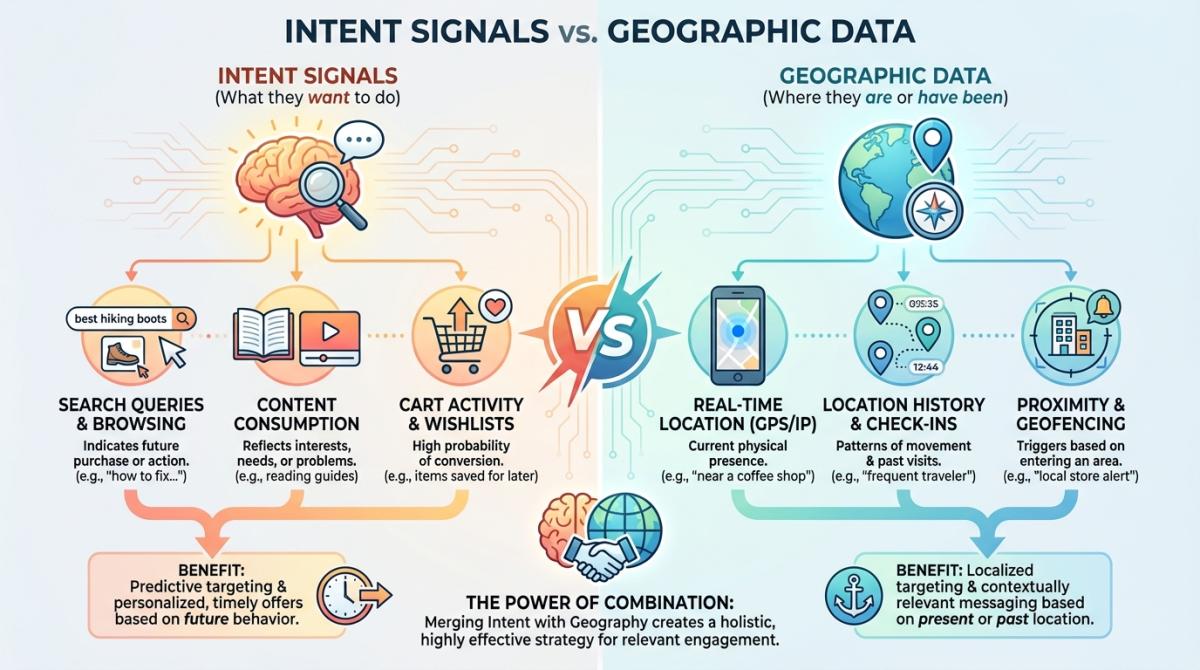
For Dave, our fictional clinic-software guy from the intro, it didn't fit at all. His prospects don't generate LinkedIn intent signals. They generate Google Maps reviews.
And that's the fundamental Google Maps vs LinkedIn for B2B lead generation comparison. Different data sources for different audiences. Scrap.io indexes 225M+ establishments: the businesses that have zero LinkedIn activity but keep their Google Maps listing updated because that's how patients, customers, and clients find them.
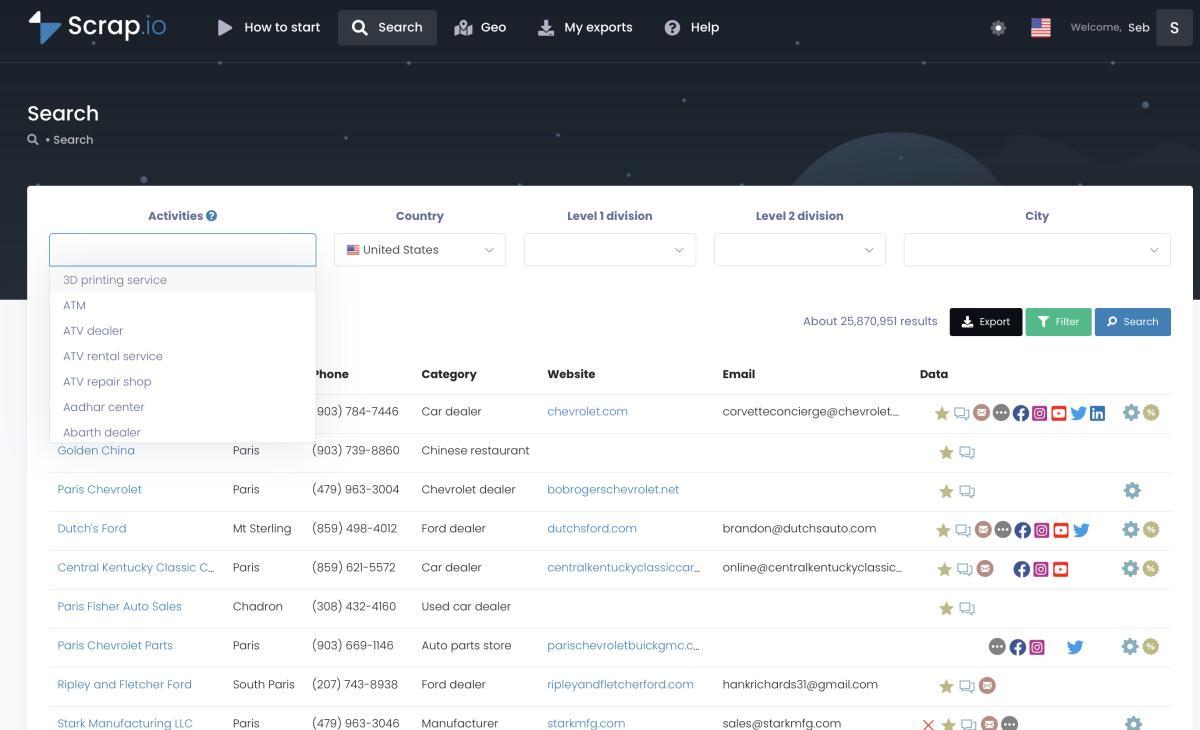
Can we take a moment to put ourselves in the shoes of a marketing agency trying to reach restaurants in Chicago that don't have a website? Not a hypothetical, by the way. Pull it live from Scrap.io right now and you'll find 2,888 restaurants in Chicago with no website at all (September 2026). Almost 3,000 businesses, invisible on LinkedIn, sitting right there on the map. Or a SaaS company looking for contractors with crappy Google reviews who probably need better tools? These are incredibly specific use cases. LinkedIn intent tools can't touch them. But Scrap.io? Filter by rating, review count, presence or absence of social media, website status. Done. Two clicks.
The economics are pretty wild too. 10,000 leads for about $50. Half a cent per contact. With real-time data. Traditional list providers charge 10 to 50 cents for contacts that might be months old. Quick math: that's 20x to 100x cheaper. Not 20% cheaper. Twenty TIMES cheaper. The Hormozi-style local lead generation approach becomes ridiculously effective when you pair it with this kind of data. And once you've got that list, ranking it with a proper lead scoring model for local leads tells you which of those 2,888 restaurants to call first.
Want to reach the businesses Gojiberry can't find? Grab your first 100 free local leads on Scrap.io, extracted live from Google Maps. Emails, phones, and social profiles included, filtered before you spend a single credit. 7-day free trial.
Compliance Checklist: Using Lead Gen Tools Legally in 2026
The boring-but-could-save-your-butt section. Whether you're running Gojiberry, Scrap.io, Apollo, or any other alternatives to gojiberry for email outreach, the rules apply. Don't skip this.
CAN-SPAM Essentials
Emailing people in the US? CAN-SPAM is your Bible. Honest subject lines. Clear sender identification. Your real physical address in every email (yes, your real one, a PO Box works). Working unsubscribe link. Honor opt-outs within 10 business days. Don't fake your headers. Don't make your subject line say one thing when the email says another. You'd think this is obvious. It's not. People screw this up constantly.
GDPR for B2B Outreach
Emailing European companies? GDPR. For B2B, most people use "legitimate interest" as the legal basis. Basically, you have a real business reason to contact them using their publicly available professional info. What matters here is WHERE your data comes from. Tools that only collect stuff businesses made public on purpose (like Scrap.io pulling data from Google Maps listings that companies themselves created and maintain) are on solid ground. Scraping private data from sketchy sources? Not so much. (We wrote a full GDPR cold email B2B guide if you want the country-by-country breakdown.)
The HiQ vs LinkedIn case established that publicly available data is fair game. But don't use that as an excuse to be reckless. Include opt-outs. Be upfront about who you are. Don't be that person.
FAQ: Gojiberry AI Alternatives
Is Gojiberry AI a legitimate and reliable tool?
Yes. Gojiberry AI is a legitimate sales intelligence platform (public G2 and Product Hunt reviews, real funding and revenue). It reliably detects LinkedIn buying signals and automates DMs. Its main limitation isn't legitimacy but scope: it only works when your prospects are active on LinkedIn. For local businesses, a Google Maps tool like Scrap.io is more reliable.
What is Gojiberry AI and how does it work?
Gojiberry AI is a sales intelligence platform using AI agents to spot buying signals on LinkedIn: competitor engagement, job changes, funding rounds, content interaction. It sends personalized LinkedIn DMs automatically. Pro plan is $99/month per seat, tracking 15+ intent signals.
What are the best alternatives to Gojiberry AI in 2026?
Depends what you need. Scrap.io for local businesses via Google Maps. Apollo.io if you want an all-in-one platform. Factors.ai for full-funnel intent analytics. Salesforge for multi-channel outbound. Revscale for autonomous AI prospecting. ZoomInfo for enterprise-grade data. Lusha for fast contact enrichment. The gojiberry ai competitor list is long. The right pick depends on your audience.
Does Gojiberry AI work for local businesses?
Short answer: no. Gojiberry needs your targets to be active on LinkedIn. Local businesses, restaurants, contractors, clinics, retail, aren't. For those, Scrap.io's Google Maps extraction works way better. 225M+ businesses across 195 countries, all with real contact data.
How much does Gojiberry AI cost?
$99/month per seat on the Pro plan. Gets you 15+ intent signals, one LinkedIn connection, unlimited campaigns. Elite plan is custom-priced. No free tier.
Is it legal to use AI lead generation tools like Gojiberry or Scrap.io?
Yes, with conditions. Both use publicly available data. For outreach, follow CAN-SPAM (US) and GDPR (Europe). Scrap.io is explicitly GDPR compliant. They only grab info that businesses voluntarily put on Google Maps and their own websites. Nothing sketchy, nothing private.
Final Verdict: Which Alternative Should You Choose?
Look, I'm not going to pretend there's a magic answer. There isn't. If your prospects scroll LinkedIn while eating lunch, Gojiberry is genuinely great. 34% response rates from their own case study. That's real.
But if your prospects are local businesses who wouldn't know how to find the LinkedIn login page (and that's most businesses, let's not kid ourselves), then Gojiberry is an expensive way to get zero results. Scrap.io's Google Maps extraction is purpose-built for exactly that gap. 225 million establishments. 195 countries. Data that's fresh right now, not from last quarter. And you filter before you pay, so you're not blowing credits on leads missing an email or stuck at 2.1 stars.
The real power move? Run both. Or some version of both. LinkedIn intent for warm B2B outreach to tech-savvy buyers. Google Maps data for local prospecting. A proper outreach tool to stitch it together. That's what the teams generating the most pipeline in 2026 are doing. Not picking one tool. Building a stack.
Anyway. Stop reading guides. Go test something. These leads aren't going to close themselves, and every day you wait is a day your competitors aren't waiting.
Try Scrap.io free for 7 days. 100 verified business contacts with emails, phone numbers, and social profiles, pulled live from 225M+ Google Maps listings across 195 countries. See what fresh local data actually looks like. Start here.
Generate a list of restaurant with Scrap.io