

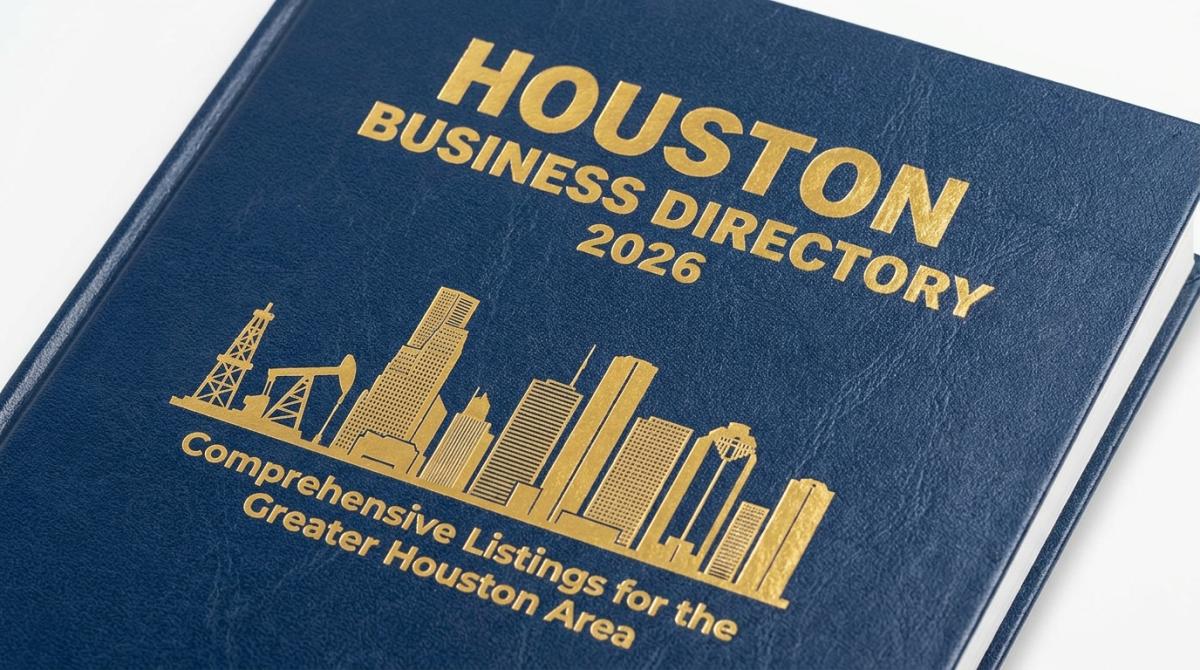
A buddy of mine runs a small web agency. Last spring, he hired a VA at $25/hour to compile a Houston business list by industry. Took three weeks. Twenty-one days of copying names, phone numbers, and emails from scattered directories into a spreadsheet. The result? About a third of the phone numbers were dead. Another quarter of the emails bounced straight back. That's roughly $2,600 in labor for a file that was already rotting before he opened it.
According to Scrap.io's live database, which indexes public Google Maps data in real time, Houston currently has 270,753 listed business establishments across all industries — a figure that updates daily as businesses open, close, or update their profiles. And nobody's handing you that data on a silver platter. It's scattered across fifty-something sources, half of which haven't been refreshed since last tax season.
So yeah. If you're doing B2B in Houston, you need a real houston business directory. Not a digital phone book from 2024.
Table of Contents
- Why Houston's Business Landscape Demands a Comprehensive Directory
- Complete Houston Business Directory by Industry
- Fortune 500 Companies Headquartered in Houston
- How to Access Houston's Complete Business Database
- Houston Business Growth Trends 2026
- Using Houston Business Data Compliantly
- FAQ: Houston Business Directory
Why Houston's Business Landscape Demands a Comprehensive Directory
The Numbers: Houston's Economic Powerhouse Status
Houston exported $177.3 billion worth of goods in 2025 — first place in the entire United States, and it's the ninth year running (source: Greater Houston Partnership, 2026). Not Texas. The whole country. That's more than Los Angeles, Chicago, and Dallas exported combined. Greater Houston's metro population sits around 7.5 million people (per the US Census Bureau, Houston-The Woodlands-Sugar Land MSA), one of the fastest-growing metros in America.
Here's a number that caught my attention. Greater Houston is now the #1 manufacturing metro in the United States, with $126.9 billion in manufacturing output in 2024 — third consecutive year on top, ahead of both Los Angeles and Chicago (source: Greater Houston Partnership). Refineries, chemicals, fabricated metal, food processing. It all adds up. And it keeps drawing suppliers into the region.
Texas has 2.8 million small businesses total, representing 99.8% of all businesses in the state (source: SBA.gov, 2024). A massive share of those sit right here in the Houston metro. The Texas business directory shows the spread, but Houston dominates in the core industries that drive over half the city's economic output.
How does that Texas-wide view narrow down to a single city — or a single county, or a single neighborhood? That's exactly the country → state → county → city logic this walkthrough breaks down:
Video: How to Scrape Local Leads at the Country Level
Greater Houston pulled in roughly $758.3 billion in GDP in 2024 — the first time the metro cleared three-quarters of a trillion dollars in real terms (source: Greater Houston Partnership). That's 10.6% real growth from 2022 to 2024, making it the second fastest-growing major economy in the country, just behind Seattle (10.7%) and miles above the 5.8% national average. That GDP figure puts Houston ahead of entire countries.
And the region isn't slowing down on jobs either. Greater Houston is projected to add 30,900 new jobs in 2026, pushing the metro to a record 3.5 million jobs by year-end (source: Greater Houston Partnership, 2026 employment forecast). Health care and social assistance alone accounts for nearly half of that growth — about 14,000 positions.
What does all this mean for someone trying to build a houston companies database? Simple: there's an enormous, constantly shifting pool of businesses here. Static lists can't keep up. They weren't designed to.
From Fortune 500 to Main Street: The Full Spectrum
Here's what makes Houston different from, say, a tech hub like Austin or a finance center like Charlotte. Houston has everything.
On one end: massive Fortune 500 headquarters like Sysco and Phillips 66, moving billions. On the other: thousands of family-owned restaurants, local contractors, two-person consulting shops. All in one metro. All potential B2B targets depending on what you sell.
Apollo.io, the sales intelligence platform, has documented this pattern extensively. Their research on location-based prospecting shows that outbound campaigns targeting specific geographic areas generate 3× more replies than untargeted national blasts (source: Apollo.io Blog, "How Sales Teams Use Location-Based Prospecting," 2023). Houston energy is one of their highlighted segments. Makes sense — when you know the neighborhood, the pitch lands differently.
But old-school houston business list sources can't keep up with this diversity. They're either too narrow (one industry, a few hundred rows) or too broad with terrible data quality. And "premium" is doing a lot of lying in this market. Practitioners say it out loud constantly — spend five minutes in a sales community like r/smallbusiness and you'll find the same complaint on repeat: bought a list, half of it bounced, the "verified" label meant nothing. The data was dead before the campaign started.
Complete Houston Business Directory by Industry
Before diving into each sector, here's the snapshot. Four numbers that frame the whole houston companies list — pulled fresh from Scrap.io on August 4, 2026:
Houston Business Data at a Glance — 2026
270,753 — businesses in Houston | 43% — have no website | 35% — have a reachable email | 30,449 — new listings in 12 months
Houston at a glance: 270,753 businesses tracked in real time — 116,621 of them with no website at all. (Scrap.io, August 2026)
These five industries (plus logistics, which everybody forgets) form the backbone of Houston's economy:
| Industry | Est. Establishments on Scrap.io | % of Houston Total | Top B2B Use Case |
|---|---|---|---|
| Energy & Oil/Gas | 8,000+ | ~3% | Equipment suppliers, SaaS for field ops |
| Professional & Business Services | 40,000+ | ~15% | Marketing, software, office supplies |
| Healthcare & Medical | 25,000+ | ~9% | Medical equipment, patient management software |
| Manufacturing & Chemical | 12,000+ | ~4% | Raw materials, maintenance, automation |
| Technology & Aerospace | 8,000+ | ~3% | Cloud services, cybersecurity, recruiting |
| Logistics & Distribution | 10,000+ | ~4% | Fleet management, warehouse tech, freight |
The table splits Houston by sector. But here's the thing most people miss — you don't have to go sector by sector. You can pull every business in the city in one shot, no category selected at all. That's the "no category" extraction, and it's the single fastest way to get all 270,753 listings on one map:
Video: How to Extract Every Business in 1 Click (No Category)
Energy & Oil Companies (8,000+ establishments)
Houston is the energy capital. Period. When oil prices sneeze, the whole city catches a cold. But the houston energy sector company directory is way bigger than just drillers and roughnecks.
You've got 400+ chemical manufacturing establishments clustered around the Houston Ship Channel — the busiest petrochemical complex in the United States. Refineries. Pipeline companies. Equipment manufacturers. Oilfield services outfits. Companies like Halliburton, Baker Hughes, SLB (formerly Schlumberger), LyondellBasell, and Targa Resources are all based here. These aren't mom-and-pop shops. Many employ thousands and carry massive procurement budgets.
The Energy Corridor along Interstate 10 West has one of the highest concentrations of energy offices anywhere on the planet. If you're selling services, software, or equipment to energy companies, this is the zip code that matters.
And here's what a lot of people miss: the energy transition is creating a whole second layer. Solar companies. Wind developers. Carbon capture startups. Hydrogen fuel ventures. Many legacy energy firms are pivoting hard into renewables — which means new suppliers, new tech needs, new opportunities for anyone who can extract business data from Google Maps before these players show up in traditional directories.
Professional & Business Services
Texas overall has 354,447 professional and business services companies (note: that's the statewide figure from BLS data — Houston represents a significant chunk). Accounting firms. Law offices. Consulting practices. Marketing agencies. IT shops. Engineering firms. The works.
What's tricky about this sector is the churn. Professional services firms tend to be small — two to ten people. They move offices constantly. They rebrand. They pivot what they specialize in. A directory that was accurate six months ago is probably 20-30% wrong today, which tracks with Experian's research showing B2B databases degrade at 22-30% per year (source: Experian Data Quality Report 2023, "The Cost of Dirty Data").
But if you're targeting professional services firms in Houston, the opportunity is real. These businesses actively buy marketing help, business software, office supplies, training programs, and financial services. And they make purchasing decisions fast — way faster than enterprises buried in procurement red tape.
Healthcare & Medical Institutions
Texas Medical Center is something else entirely. Largest medical complex on Earth. 60+ member institutions (source: tmc.edu), employing 100,000+ people. Hospitals, research centers, medical schools, specialty clinics — the place literally has its own zip code.
But the houston medical center companies list goes far beyond TMC. Private practices. Dental offices. Diagnostic centers. Home health agencies. Medical equipment distributors. Biotech startups are increasingly choosing Houston over Boston and San Francisco, drawn by lower costs and proximity to the world's largest medical complex.
Healthcare contacts have urgent, specific needs. A dental practice shopping for patient management software isn't going to deliberate for six months. They want it now. Medical equipment suppliers need reliable vendors yesterday. That urgency makes healthcare one of the highest-converting B2B segments — if your contact data is fresh.
Manufacturing & Chemical Plants
Houston's connection to the Ship Channel makes manufacturing massive here — remember, this is the #1 manufacturing metro in the country. Those 235+ companies making plastic and rubber products (source: US Census Bureau) are just the start. Metal fabrication. Industrial equipment. Food processing. Concrete. You name it.
The houston manufacturing companies list is golden for B2B sellers because manufacturers have ongoing needs. Raw materials. Industrial supplies. Maintenance contracts. Equipment upgrades. Logistics. These aren't one-time buyers — they're repeat customers with predictable purchasing cycles.
And right now, a lot of Houston manufacturers are investing heavily in automation. Upgrading legacy operations with robotics, AI-powered quality control, new ERP systems. That's a window for tech companies, consultants, and service providers who never thought of manufacturing as their market. It is now.
Technology & Aerospace Companies
Houston isn't just oil and gas anymore. Far from it.
You've got NASA's Johnson Space Center, obviously. But also a whole ecosystem of aerospace contractors. Lockheed Martin employs over 1,000 people in Houston on space systems. And then there's Axiom Space — a Houston-based startup that has raised $350M+, employs 450+ people, and is valued at over $1 billion (sources: Crunchbase; Houston Business Journal, 2024). Axiom represents exactly the kind of new-economy company that B2B suppliers are scrambling to find in directories.
Beyond aerospace, Houston's tech sector now includes 80,000+ tech workers and has been growing at roughly 12% per year (source: CompTIA Cyberstates 2024). Software firms. Digital agencies. Cybersecurity companies. The cost of living is dramatically lower than Silicon Valley or Austin, which draws startups and established tech firms looking to scale without hemorrhaging cash.
If you're in B2B tech sales, having access to a houston technology companies list 2026 that's actually current is enormous. Most of these firms aren't in traditional tech directories because they're too new or they don't fit neat categories — which, by the way, is exactly why Google Maps and its 4,000+ business categories beat any curated list. New firms show up the moment they open a profile.
Logistics & Distribution
Everybody talks about energy and healthcare when they talk about Houston. Almost nobody mentions logistics. That's a mistake.
The Houston/Galveston customs district stayed the #1 US gateway by tonnage in 2025, handling 426.5 million metric tons (source: Greater Houston Partnership, 2026). The metro's location — sitting at the intersection of major interstate highways, railroads, and shipping lanes — makes it a natural distribution hub. E-commerce growth has only accelerated this: more fulfillment centers, more transportation companies, more warehouses.
Scrap.io indexes over 10,000 logistics-related establishments in the Houston metro alone. Fleet management software companies, freight brokers, 3PL providers, warehouse automation vendors — they all need to find these businesses. And logistics companies move fast. They open new facilities, close routes, change dispatch contacts quarterly. A stale directory is almost useless here.
Fortune 500 Companies Headquartered in Houston
Complete List of Houston's Fortune 500 HQs
Houston has 27 Fortune 500 company headquarters in 2026 — second in the nation, behind only New York (62), tied with Chicago and ahead of Dallas (24) (source: Greater Houston Partnership / Fortune 500). And it's about to become 28: with Expand Energy setting up in Spring, TX, Houston takes sole possession of the #2 spot. Nine of these HQs are downtown. The rest are scattered across the metro, from the Energy Corridor to The Woodlands.
Here are the major names:
| Company | Industry |
|---|---|
| Phillips 66 | Energy |
| Sysco | Food Distribution |
| ConocoPhillips | Oil & Gas |
| Enterprise Products Partners | Pipelines/Midstream |
| Plains GP Holdings | Energy Infrastructure |
| Halliburton | Oilfield Services |
| Waste Management | Environmental Services |
| Occidental Petroleum | Energy |
| Group 1 Automotive | Automotive Retail |
| Quanta Services | Infrastructure |
| Hewlett Packard Enterprise | Technology |
| NRG Energy | Utilities |
| Targa Resources | Midstream |
| Baker Hughes | Energy Technology |
| LyondellBasell | Chemicals |
| CenterPoint Energy | Utilities |
Plus several more. The full list spans energy, healthcare, tech, retail, and services. These aren't just employers — they're massive customers and anchors for entire supply chain ecosystems.
Recent Relocations: The Chevron & Exxon Effect
The past few years have been big for Houston corporate relocations. Chevron consolidated operations here. ExxonMobil brought facilities together in the metro area. Hewlett Packard Enterprise officially moved its HQ from San Jose to Spring, TX in 2022. NRG Energy is here. These moves didn't just add company logos to the skyline — they brought thousands of employees who need housing, services, restaurants, retail.
When a Fortune 500 relocates, smaller suppliers and service companies follow. It's a cascade. One major corporate announcement can trigger dozens of smaller business openings and expansions. Houston's Chamber of Commerce data confirms this pattern repeatedly.
If you're watching the houston business directory actively — not checking it once a year, but monitoring it — you can spot these ripple effects and get in front of new companies before competitors even know they exist.
How to Access Houston's Complete Business Database
Traditional Directory Limitations
Let me be blunt about old-school business directories. Most of them are digital phone books that get refreshed quarterly at best. Sometimes annually. They aggregate data from various sources, slap a price tag on it, and ship it.
The problems are obvious once you've been burned. Businesses change numbers. People switch jobs. Companies relocate or close. Websites get redesigned and emails change. Experian's research found that the average B2B database loses 22-30% of its accuracy every single year (Experian Data Quality Report 2023). Their estimate? "Dirty data" costs US businesses a combined $3.1 trillion annually in lost productivity.
And traditional sources can't give you the filters you actually need. Want houston businesses without websites? Good luck. Looking for companies with poor Google reviews that might need reputation management? Not happening. Trying to find places that have email but no social media presence? Forget it with a static CSV from 2024. This is also where Google Maps itself trips people up — search "restaurants in Houston" and Maps caps you at about 120 results out of tens of thousands. That's not a data problem, it's a display cap, and getting around it in a metro this dense is its own skill (here's the full method for scraping densely populated areas).
Modern Data Extraction Solutions
This is where things changed. Modern Google Maps scraping approaches pull data directly from public sources in real time. When a business updates its Google Maps listing or changes its website, that info is available immediately.
And here's the proof that matters. Experian measures what rots. Here's what grows: 30,449 Houston businesses appeared on the map in the past 12 months — since August 2025 — which is 11% of the entire local business base renewed in a single year, roughly 2,500 new listings every month (source: Scrap.io, August 2026). More than one Houston business in nine didn't exist a year ago. Your CSV from January never saw them. A directory refreshed quarterly misses about 7,500 of them every three months, mechanically.
Platforms like Scrap.io access 270,753 Houston business establishments and let you filter on criteria that actually matter for B2B work:
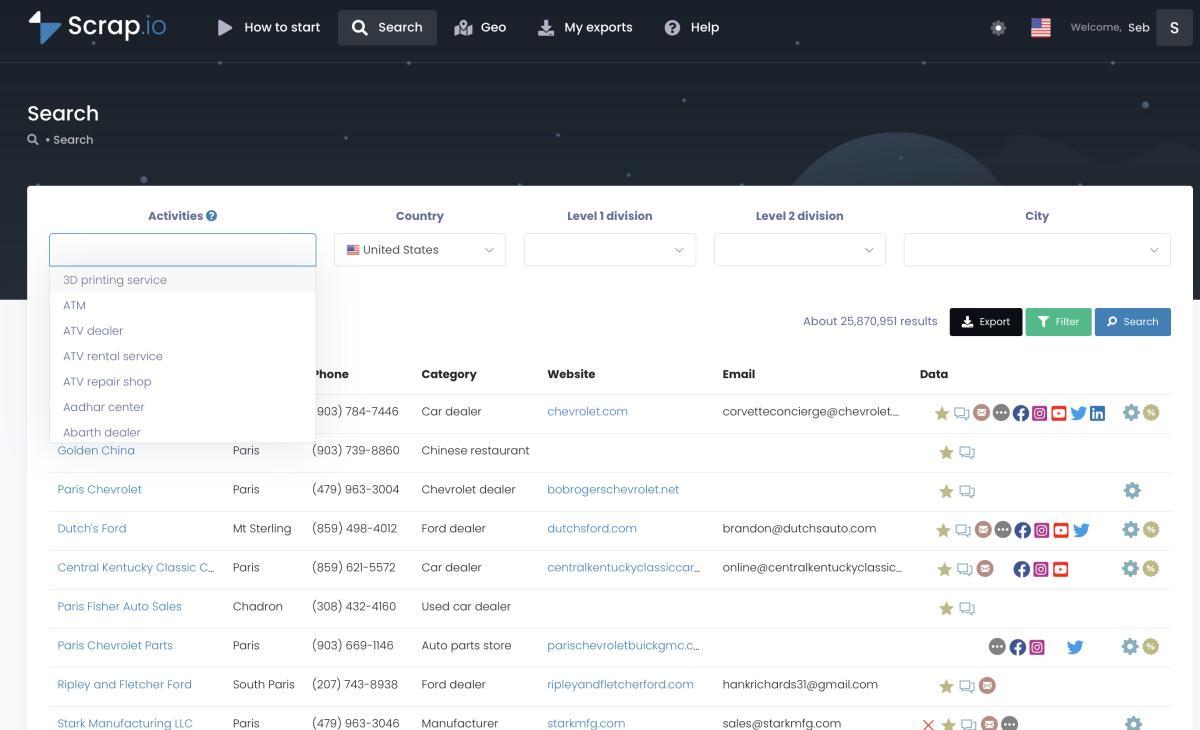
Scrap.io search: filter 270,753 Houston companies by category, location, and digital presence
Here's a quick comparison of how the main options stack up:
| Feature | Scrap.io | ZoomInfo | Dun & Bradstreet | Yellow Pages/Yelp |
|---|---|---|---|---|
| Data Freshness | Real-time (Google Maps) | Monthly updates | Quarterly | Quarterly-Annual |
| Houston Records | 270,753 | ~150K est. | ~120K est. | ~80K |
| Price per Contact | ~$0.005 | $0.50-2.00+ | $0.30-1.00+ | Free (limited data) |
| Filter by Website Presence | ✓ | ✗ | ✗ | ✗ |
| Filter by Google Reviews | ✓ | ✗ | ✗ | Partial |
| Free Trial | ✓ (100 leads) | Demo only | Demo only | N/A |
Paying ZoomInfo money and still getting stale data? You're not alone — it's one of the loudest complaints in sales circles, and there's a whole rundown of ZoomInfo alternatives if that's your situation. The core difference is simple: you're not buying a list that starts decaying the second you download it. You're pulling fresh data when you need it. Market shifts? Adjust your filters and pull again.
New here and want to see the whole thing end to end before you touch a filter? Start with the two-minute walkthrough:
Video: Scrap.io — How to Start
If you're looking to build a targeted Houston business list by industry, Scrap.io lets you access its 270,753 Houston listings with a 7-day free trial — including 100 free leads to test your targeting before you commit.
Building Your Houston B2B Prospect List
Let's get practical. Here's how to build a houston b2b contact database that actually converts.
Step one: Figure out who you want. What industry? What size? Do they need a website or not? Should they have good or bad reviews? Be specific. "Houston businesses" is not a target. "HVAC companies in the Energy Corridor with fewer than 50 Google reviews and no website" — that's a target.
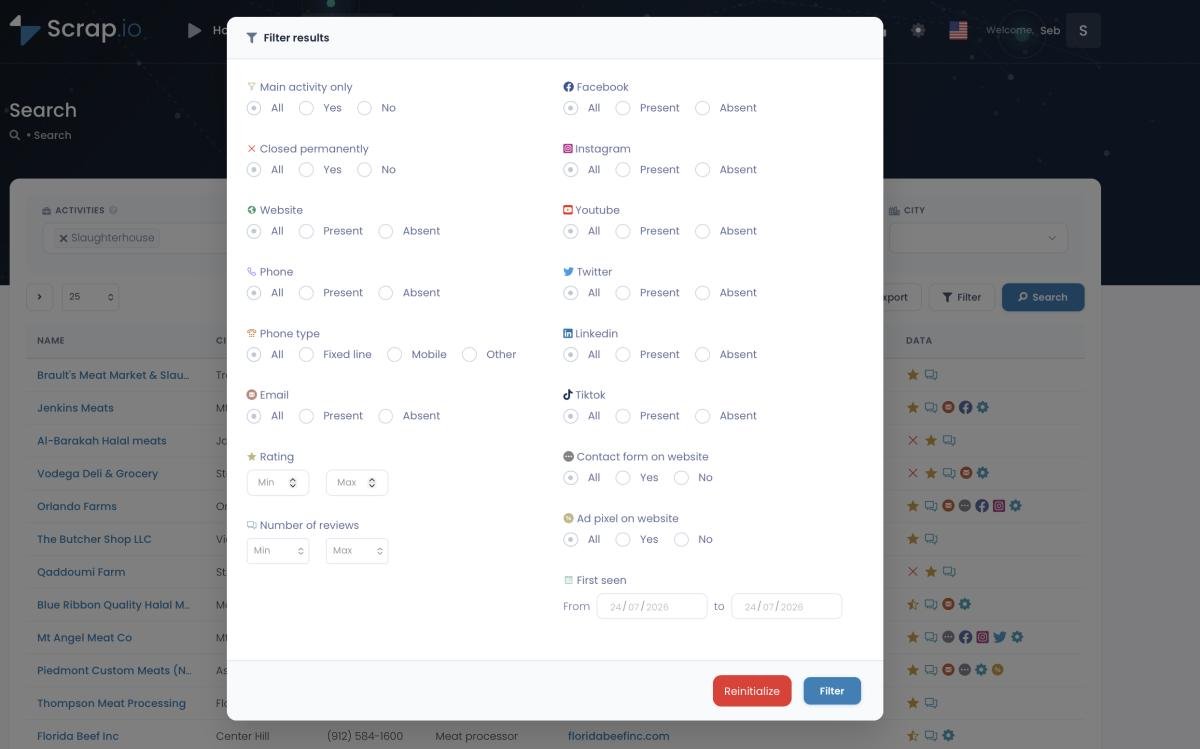
Scrap.io filters: target by website presence, Google rating, industry, and 40+ other criteria
Step two: Set where you want to look. All of Greater Houston? Just downtown? The Medical Center? Energy Corridor? You can go broad or draw a custom zone on the map.
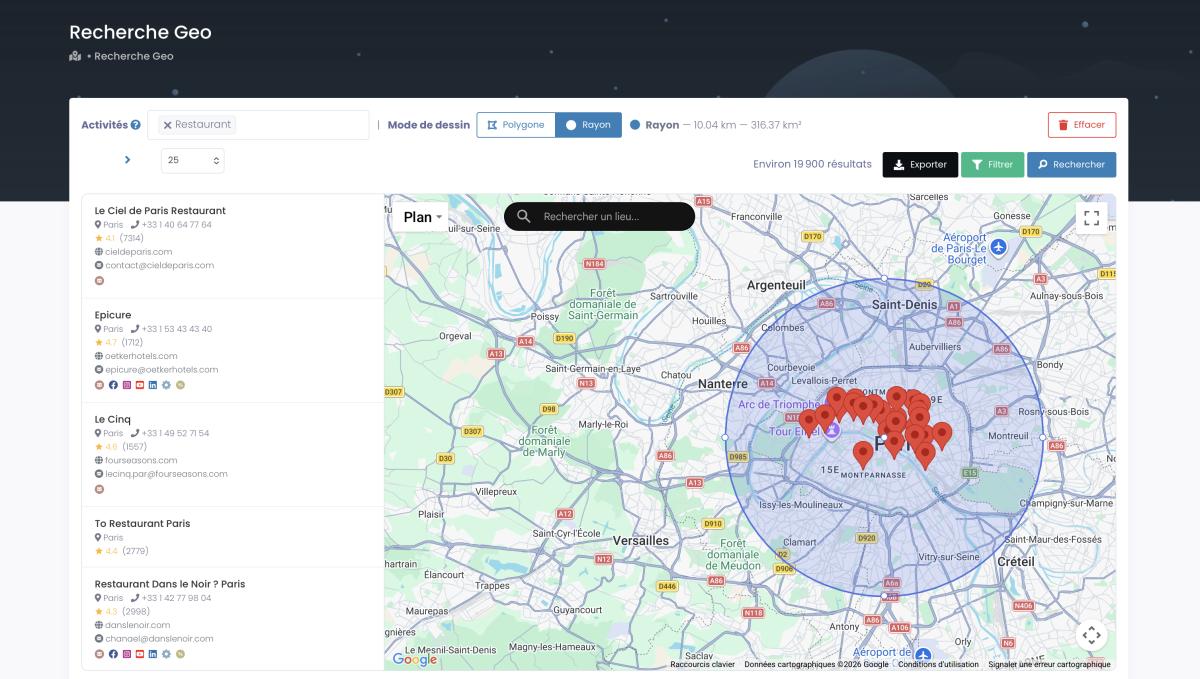
Radius search: define a catchment area around any point in Houston (Energy Corridor, Medical Center, etc.)
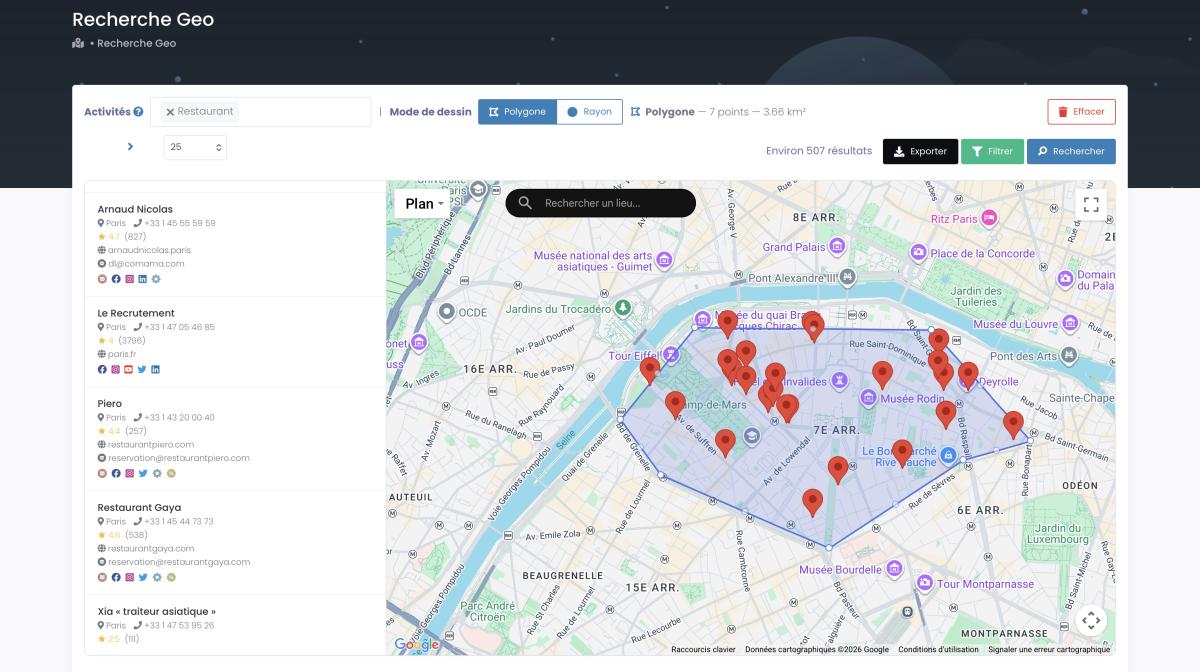
Polygon search: draw any custom zone on the map to extract businesses in The Woodlands, Sugar Land, or any Houston district
Step three: Pull the data. Set your filters, click, done. The system grabs current info from Google Maps and crawls company websites for emails and social profiles. This is the "no category, whole zone" trick — the exact method to extract every business in a city, which is how you get all 270,753 Houston listings rather than one sector at a time.
Step four: Get it enriched. Modern platforms like Scrap.io find email addresses and social links automatically during extraction. No separate enrichment step needed.
Step five: Export and use it. CSV or Excel, straight into your CRM or email tool. Pair it with proven B2B prospecting strategies and the way you get local business leads with contact info, and you've got a system that produces leads in minutes, not weeks.
Here's a real-world example of what this looks like in practice. Back in 2022, Lemlist documented a case study where a web agency in Fort Lauderdale used a filtered list of businesses without websites — extracted from Google Maps — and sent 12,000 targeted cold emails. Conversion rate: 0.5%. That's 60 new clients and $180,000 in contracts from a single campaign (source: Lemlist Blog, "Cold Email Campaign Case Study: $180K in New Clients," 2022). Same approach works for Houston. Same tools. Bigger market.
Which brings us to the segment nobody else on this SERP will even tell you exists. Web agencies and MSPs keep asking the same thing in threads like this one: how do you find the local businesses that have no website — the ones who literally need what you sell? In Houston, the answer is a number. 116,621 of the 270,753 businesses — 43% — have no website at all (Scrap.io, August 2026). That's not a niche. That's the largest untapped web-design pipeline in the state, sitting on a map.
Want to run a similar outreach campaign targeting the 116,621 Houston businesses with no website? Start with 100 free leads on Scrap.io — filter by industry, review score, or digital presence in 2 clicks.
Houston Business Growth Trends 2026
Remember that $126.9 billion in manufacturing output? That momentum isn't isolated. Houston keeps landing near the top of the national tables for corporate expansions and relocations, and the growth is broad-based, not one lucky sector (source: Greater Houston Partnership).
What's driving it? Several things stacking on top of each other. Texas has no state income tax — great for businesses and the employees they want to recruit. Cost of living compared to coastal cities is dramatically lower. Houston's infrastructure — the port, two major airports, a highway system that actually moves freight — makes it ideal for logistics-heavy operations. For the macro view, the Dallas Fed's Houston economic analysis tracks it quarter by quarter.
Healthcare and Life Sciences keep expanding. Texas Medical Center isn't slowing down. Biotech startups are planting flags here. Medical device companies are setting up Houston offices to be close to the world's largest medical complex. New businesses in houston 2026 are disproportionately concentrated in health tech — no surprise, given health care alone is projected to drive about 14,000 of the region's new jobs this year.
Technology is the surprise story. Houston's tech scene has gone from afterthought to legitimate ecosystem. Lower costs than Silicon Valley. Strong university pipeline with Rice and University of Houston. More venture capital showing up each quarter. The 80,000+ tech workers here represent a 12% annual growth rate (CompTIA Cyberstates 2024).
Advanced Manufacturing is upgrading fast. Robotics. AI quality control. Advanced materials. Houston manufacturers are reinvesting at rates that would surprise people who still think of this as a rust belt sector.
Clean Energy — and this is the big shift — is merging with Houston's traditional energy expertise. Solugen (green chemicals), Axiom Space, carbon capture ventures. The city is positioning itself as the energy capital of tomorrow, not just today. That transition creates opportunities for companies with new tech, consulting services, construction capacity, and specialized equipment.
The key business districts to watch:
- Downtown Houston: Still the corporate anchor. Dense with Fortune 500 HQs and professional services firms.
- Energy Corridor (I-10 West): Traditional oil & gas hub, now diversifying into renewables and clean tech.
- Texas Medical Center: Expanding beyond traditional healthcare into biotech, medtech, and health tech startups.
- The Woodlands: Major corporate operations — ExxonMobil, Chevron Phillips Chemical, and dozens more. Commercial real estate occupancy at 92% (source: Colliers International Houston Market Report, 2025).
- Sugar Land: Southwest of Houston. Massive commercial development. Tech companies, healthcare facilities, and professional services growing fast.
For anyone building a houston business directory by industry, understanding these geographic clusters matters. B2B targeting works better when you know not just what your targets do, but where they're concentrated.
Using Houston Business Data Compliantly
Nobody talks about this until they get in trouble. So let's talk about it now.
CAN-SPAM (US Federal Law): If you're sending commercial emails to Houston businesses, you need to follow CAN-SPAM. The requirements aren't complicated: clear identification of who you are, honest subject lines, a physical mailing address in your email, and an easy unsubscribe mechanism that you actually honor within 10 business days. Penalties can reach $51,744 per violation — so this isn't optional.
GDPR (if you deal with European contacts): Even though GDPR is a European regulation, a surprising number of Houston companies do business with EU firms or have EU employees. If you're emailing anyone covered by GDPR, you need legitimate interest, data minimization, and clear opt-out options. Stick to professional/organizational email addresses (info@, sales@) and you're generally on safer ground than using personal emails.
Texas Data Privacy and Security Act (2024): Texas passed its own privacy law effective July 2024. It gives Texas residents rights over their personal data, including the right to know what data is collected, to delete it, and to opt out of its sale. For B2B data sourced from publicly available sources like Google Maps, the impact is limited — but it's worth knowing the law exists.
For a deep dive on staying compliant with cold outreach, check out Scrap.io's cold email compliance guide. The short version: publicly listed business data from Google Maps is fair game for commercial use, as long as you follow anti-spam rules and respect opt-outs. Don't be the person who sends 10,000 emails with no unsubscribe link.
FAQ: Houston Business Directory
How many businesses are in Houston, Texas?
Houston has 270,753 business establishments indexed on Scrap.io's live database as of August 2026. This figure is pulled from Google Maps data and updates daily as businesses open, close, or modify their listings. Texas as a whole has 2.8 million small businesses (SBA, 2024), with Houston representing one of the largest concentrations.
What industries dominate Houston's economy?
Six industries drive the bulk of Houston's business activity: Energy & Petrochemicals (400+ chemical manufacturing establishments alone), Professional & Business Services (the largest category by establishment count), Healthcare (anchored by the 60+ institution Texas Medical Center), Manufacturing (the nation's #1 manufacturing metro), Technology & Aerospace (80,000+ tech workers, growing 12%/year), and Logistics & Distribution (fueled by the nation's busiest petrochemical port).
Which Fortune 500 companies are headquartered in Houston?
Houston has 27 Fortune 500 headquarters (soon 28) — second in the US behind only New York. Major names include Phillips 66, Sysco, ConocoPhillips, Halliburton, Waste Management, Hewlett Packard Enterprise, and Occidental Petroleum, among others. The full list spans energy, technology, food distribution, environmental services, and infrastructure.
How do I find a complete list of Houston businesses by industry?
Platforms like Scrap.io let you search the full 270,753 Houston listings by any of 4,000+ Google Maps categories — energy, healthcare, manufacturing, restaurants, professional services, whatever. You can filter by location (down to the neighborhood), digital presence, review scores, and more. It's real-time data, not a static download.
What is the Houston business directory and how does it work?
A Houston business directory is a database of commercial establishments in the Houston area, including contact info, industry classification, location data, and business details. Modern directories like Scrap.io pull this data from Google Maps in real time, so the information reflects what businesses have listed publicly — updated as they make changes.
How current is the data in Houston business databases?
Depends entirely on the source. Traditional directories update quarterly or annually — meaning up to 30% of contacts could be stale at any given time. Real-time platforms that pull from Google Maps (like Scrap.io) reflect changes as soon as businesses update their own listings. Huge difference when your email deliverability depends on data freshness.
How much does a Houston business contact list cost?
Traditional providers charge $0.10 to $0.50+ per contact for data that might be months old. Scrap.io runs about $0.005 per contact for real-time data. So 10,000 Houston business contacts costs roughly $50 with live data vs. $1,000+ from legacy providers. The math isn't close.
Can I filter Houston businesses by criteria like website or reviews?
Yes — but only with modern extraction tools. Scrap.io lets you filter by: businesses with or without websites, specific Google review score ranges, social media presence (or absence), location precision down to neighborhood, industry category, and contact completeness. Traditional directories don't support this level of filtering.
What's the best way to use a Houston business directory for B2B sales?
Start specific. Define your ideal customer — not "Houston businesses," but "HVAC companies in Katy with 3-4 star Google ratings and no website." Then pull a targeted list matching those criteria. Web agencies might target the 116,621 Houston businesses without websites. SaaS companies could zero in on specific industries. Pair your list with smart B2B outreach strategies for best results.
Are Houston business directories legal to use for marketing?
Yes, when the data comes from publicly available sources. Businesses that list themselves on Google Maps and public websites make that information available for commercial use. You do need to follow CAN-SPAM requirements for email marketing: clear sender identification, honest subject lines, physical address, and a working unsubscribe mechanism.
What industries are growing fastest in Houston in 2026?
Healthcare and life sciences (Texas Medical Center expansion + biotech startups), technology (12% annual tech job growth), clean energy (carbon capture, hydrogen, solar), advanced manufacturing (automation upgrades), and logistics (port expansion + e-commerce fulfillment). The energy transition is creating an entirely new layer of Houston businesses on top of the traditional oil & gas base.
How do I find Houston energy companies contact information?
Scrap.io indexes thousands of energy-related establishments in the Houston metro. You can search by specific energy subcategories — oil field services, solar installers, pipeline companies, petrochemical manufacturers — and filter by location (Energy Corridor, Ship Channel area, etc.) to build a targeted houston energy companies list with current contact data.
What is the Texas Medical Center and how many companies does it include?
Texas Medical Center (TMC) is the largest medical complex in the world, located in Houston. It includes 60+ member institutions and employs 100,000+ people. Members include hospitals, research centers, medical schools, and increasingly, biotech and health-tech startups.
How do I stay CAN-SPAM compliant when emailing Houston businesses?
Four requirements: identify yourself clearly as the sender, use honest subject lines (no deception), include a valid physical mailing address, and provide a visible unsubscribe link that you honor within 10 business days. Penalties reach $51,744 per violation. For a full breakdown, see Scrap.io's compliance guide.
What's the difference between Scrap.io and traditional Houston business directories?
Traditional directories aggregate data from various sources, update infrequently (quarterly at best), and charge $0.10-0.50+ per contact. Scrap.io pulls data directly from Google Maps in real time, offers 40+ advanced filters (website presence, reviews, social media), covers 270,753 Houston establishments, and costs roughly $0.005 per contact. It also includes email extraction from business websites — no separate enrichment step needed. If you're comparing tools, here's a full list of ZoomInfo alternatives.
How many new businesses opened in Houston in the past year?
30,449 new business listings appeared on the Houston map between August 2025 and August 2026 — about 11% of the city's entire business base, or roughly 2,500 per month. That's the churn a quarterly-updated directory structurally cannot capture (source: Scrap.io, August 2026).
Is there a free Houston business directory?
Sort of — and here's the honest answer. The Houston-area chambers of commerce (West, Northwest, East End, plus the US Chamber) publish free member directories, but they only list their own dues-paying members — a few hundred businesses each, not the wider market. For the full 270,753 establishments, Scrap.io isn't free forever, but the 7-day trial includes 100 free leads, which is enough to build a real list for one campaign before you decide.
What does the Houston chamber of commerce directory cover?
Houston has several chamber directories, and each covers a slice:
- Houston West Chamber of Commerce: members in the west/Energy Corridor area.
- Houston Northwest Chamber of Commerce: members in the northwest suburbs.
- East End Chamber of Commerce: members east of downtown.
- US Chamber of Commerce: a directory of chambers, not individual businesses.
What they all share: they only list members who paid to join. That's their limit. They don't cover the 116,621 Houston businesses with no website, the newly opened listings, or anyone who never joined a chamber — which is most of the list of businesses in houston.
Access Houston's 270,753 Businesses Right Now
Houston is America's #2 corporate hub. 27 Fortune 500 headquarters — soon 28. Over $758 billion in annual GDP. And 270,753 businesses that are reachable today — if you've got the right data.
Old directories can't keep up. By the time you download a traditional list, a quarter of it is already wrong. You know this. You've probably lived it.
Houston's 270,753 businesses are accessible right now. Try Scrap.io free for 7 days — get 100 verified Houston contacts and see the data quality for yourself.
Filter by industry. Filter by location. Filter by digital presence, Google rating, social media, contact completeness. Pull fresh data whenever you need it.
Also worth exploring: the NYC business directory, California business directory, Florida business directory, or the full USA business email database for nationwide coverage.
Generate a list of restaurant with Scrap.io