

Table of Contents
- What Does Lead Generation Actually Cost in 2026?
- Cost Per Lead by Industry: 2026 Benchmarks
- Lead Generation Cost by Channel: Where Your Budget Goes
- Web Scraping vs Traditional Lead Generation: The ROI Showdown
- How to Calculate and Optimize Your Cost Per Lead
- Google Maps Scraping: The $0.01 Lead Generation Method
- Legal & Compliance: What You Need to Know
- FAQ: Lead Generation Cost
What Does Lead Generation Actually Cost in 2026?
$198.44.
That's what the average company pays for a single lead in 2026, according to First Page Sage. One lead. Not a customer, just someone who raised their hand and said "maybe."
Lead generation cost in 2026 averages about $198 per lead across all industries, but the real number swings from $91 (eCommerce) to $982 (higher education) by vertical, and from $70+ (Google Ads) down to $0.01 (Google Maps scraping) by channel. The channel you pick matters more than the industry you're in.
And honestly? That $198 is generous. It's a blended average across every industry and channel. If you're in legal services or higher education, you're looking at $600 to $982 per lead. Per. Lead. Let that sink in for a second.
But here's where things get weird. Some companies, and I'm talking real, profitable B2B companies, are generating leads for $0.01 each. Not a typo. One cent. The difference? They're not buying ads. They're not attending trade shows. They're scraping publicly available business data from the web.
The lead generation cost gap between traditional methods and web scraping for lead generation is so absurd in 2026 that ignoring it is basically lighting money on fire. And yet most B2B teams still dump 80% of their budget into Google Ads and LinkedIn InMails. (Old habits die hard.)
So how much does lead generation cost, really? It depends entirely on whether you're still running the 2019 playbook or you've figured out the data game. This article breaks down every number, every channel, every method, with actual data, not vibes.
Buckle up. Some of these numbers are going to hurt.
Cost Per Lead by Industry: 2026 Benchmarks
The cheapest leads aren't always the best ones. Everyone knows that. But do you know how wildly different cost per lead by industry actually is?
Here are the 2026 benchmarks, straight from First Page Sage's latest report. These blend both organic and paid channels.
| Industry | Average CPL (2026) | CPL Range |
|---|---|---|
| eCommerce | $91 | $45–$150 |
| B2B SaaS | $237 | $150–$400 |
| Real Estate | $185 | $80–$320 |
| Financial Services | $653 | $300–$900 |
| Legal Services | $784 | $400–$982 |
| Healthcare | $361 | $150–$600 |
| Higher Education | $982 | $500–$982 |
| IT / Managed Services | $370 | $200–$550 |
| Marketing Agencies | $172 | $80–$280 |
| Construction / Industrial | $227 | $100–$400 |
Source: First Page Sage, 2026 benchmarks (blended average $198.44).
Look at that spread. $91 to $982. That's a 10x difference depending on your vertical.
Here's a lever most teams sleep on, though: the paid-versus-organic split. First Page Sage's 2026 data pegs organic CPL at roughly 40–60% below the equivalent paid CPL in the same industry. Same lead, half the price, just because it came from content or SEO instead of an ad auction. That gap alone should reshape your budget.
And the kicker? These numbers assume you're running a reasonably optimized funnel. If your landing pages are trash (spoiler: most are), your actual average cost per lead B2B 2026 is probably 30–50% higher than what's listed above.
The industries with the highest CPL share one trait: long sales cycles with high-value contracts. Legal, finance, higher ed, these are all spaces where a single deal can be worth $50K+. So paying $700 per lead might still make sense. Might.
But if you're a B2B SaaS company spending $237 per lead and your ACV is $1,200? That math doesn't work. And you know it. It's the exact tension people keep arguing over on Quora threads like "What is the appropriate amount to pay for B2B leads?", where the answers scatter from "a few bucks" to "hundreds," depending entirely on deal size and source.
Tired of bleeding money on leads? Scrap.io extracts verified business emails from Google Maps across 225M+ listings in 195 countries, at pennies per lead. Filter by country, city, rating, or "has email" before you spend a credit. Start your free 7-day trial: 100 leads included.
Lead Generation Cost by Channel: Where Your Budget Goes
Are you spending $811 per lead at trade shows when you could get the same quality for $31 online? Try doing that math at 3 AM after a conference happy hour. I'll wait.
Here's the lead generation cost comparison by channel, because where you spend matters way more than how much.
| Channel | Average CPL | Lead Quality | Scalability |
|---|---|---|---|
| Google Ads (Search) | $70–$200+ | High intent | Medium |
| LinkedIn Ads | $60–$120 | High (B2B) | Medium |
| Facebook/Meta Ads | $25–$65 | Low-Medium | High |
| SEO / Content Marketing | $31–$60 | High | Very High |
| Trade Shows / Events | $500–$811 | Variable | Low |
| Cold Email (purchased lists) | $50–$150 | Low (40–60% invalid) | Medium |
| Web Scraping (Google Maps) | $0.01–$0.10 | High (verified) | Very High |
| Referral Programs | $15–$50 | Very High | Low |
Sources: First Page Sage, LanderLab (2026 CPL benchmarks), CausalFunnel.
A few things jump out here.
Google Ads keeps creeping up. LanderLab's 2026 data puts the average Google Ads CPL at $70.11, up roughly 5% year over year. So that $67 lead last year? It's $70 now. Next year it'll be $74. This is the treadmill nobody talks about. The cost per lead Google Ads vs organic gap widens every single quarter, which is exactly why that 40–60% organic discount from the last section is worth chasing.
Meanwhile, the cheapest lead generation methods, SEO, referrals, and web scraping, are the ones most companies chronically underinvest in. Weird, right? (Not really. Paid ads give instant gratification. Data scraping requires you to actually think about your ICP first.)
LinkedIn deserves a note too. At $60–$120 per lead it's premium, but the leads are genuinely qualified, which is why B2B teams keep funding it. If that's your channel, we went deep on the real numbers in our LinkedIn Ads guide for B2B, including how to feed it a cleaner audience.
And then there's the elephant: purchased lead lists. Companies still buy them. And the data is atrocious, with a 40–60% invalid rate on purchased lists in 2026. That means more than half the "leads" you paid for don't even have working email addresses. Brutal.
Web scraping vs buying lead lists isn't even a comparison anymore. It's a completely different category.
Web Scraping vs Traditional Lead Generation: The ROI Showdown
Picture a common scenario (we've watched dozens of teams live it). A SaaS startup spends $12,000/month on LinkedIn ads and gets about 50 leads from it. Decent leads, sure, but that's $240 per lead. Their ACV is $2,400, their close rate hovers around 8%. So for every $12K spent, they close 4 deals worth $9,600.
Negative ROI. Every. Single. Month.
Now flip the model. Same team pulls 5,000 verified emails from Google Maps in their target verticals and runs a cold campaign with proper cold email software. Total cost: about $150, tool subscription plus email infrastructure. Even at a modest reply and close rate, the CPL collapses from $240 to a rounding error. That's the shape of the shift, and it's not a fantasy.
Because the documented case studies say the same thing. Browse AI found a 73% average CPL reduction for companies switching to scraping-based pipelines. And Prospeo published a case study showing 2,005% more leads per quarter, plus an 89% CPL decrease, when B2B teams replaced purchased lists with scraped data. Two thousand percent. I had to read that number three times.
Video: Stop Paying $20,000/Year for ZoomInfo: This Does More for $49/Month
Here's the head-to-head that actually matters:
| Metric | Traditional (Paid Ads + Lists) | Web Scraping (Google Maps) |
|---|---|---|
| Cost per lead | $70–$982 | $0.01–$0.10 |
| Lead volume / month | 50–500 (budget-limited) | 5,000–50,000+ |
| Data freshness | Stale (lists recycled) | Real-time extraction |
| Email validity rate | 40–60% (purchased lists) | 90%+ (verified at source) |
| Setup time | Weeks (campaigns, creatives) | Minutes |
| Ongoing spend | Increases every year | Flat subscription |
Don't just take the vendor case studies, either. Practitioners hash this out constantly in public. The r/LeadGeneration thread on what to charge for quality leads and the r/Upwork comparison of cost per lead across methods keep circling the same conclusion: scraped and self-sourced data crushes bought lists on price, and the people paying $100+ per lead are usually the ones who never questioned the channel. Read the threads. It's cheaper than a consultant.
And Outscraper's ROI study showed the same pattern: companies using Google Maps data for prospecting reported 4–7x higher ROI than those leaning on intent-based ad platforms.
Bottom line: if your lead generation cost is still dominated by paid channels, you're subsidizing Google's revenue. Not yours.
See why teams cut CPL by 73%. Scrap.io gives you 225M+ businesses with verified emails, phone numbers, and reviews, filtered before you spend a credit and updated in real time at every export. Try Scrap.io free for 7 days: 100 leads included.
How to Calculate and Optimize Your Cost Per Lead
Most companies track CPL wrong. Not kidding.
They divide their ad spend by the number of form submissions and call it a day. But that ignores tool costs, team time, content production, CRM fees, all the stuff that quietly eats your budget while everyone stares at the Google Ads dashboard.
Here's how to calculate cost per lead properly. Keep this cost per lead formula somewhere your finance team can see it:
CPL = (Total Marketing Spend + Tool Costs + Team Time) ÷ Total Qualified Leads
That's the whole cost per lead definition, honestly. Some folks dress it up as a "cost per lead calculator," but it's really just this one line in a spreadsheet. And don't confuse it with CPA: cost per lead vs cost per acquisition trips up half the marketing teams I meet. CPL counts the raised hand. CPA counts the signed customer. Both matter, but in digital marketing they're not interchangeable, and mixing them up is how budgets go sideways.
Notice I said qualified leads. Not raw form fills. Not bot submissions. Not the guy who downloaded your eBook because it was free and never opened your follow-up email. Qualified leads. (If you're fuzzy on where that line sits, our guide to qualified leads with Google Maps draws it clearly.)
OK so how to reduce cost per lead once you know the real number? Three things actually move the needle:
- Kill the channels that underperform. Track CPL per channel, not as a blended average. Most teams discover that one channel is quietly subsidizing two others that are basically dead weight.
- Fix your data before fixing your ads. If 40% of your leads have invalid emails (a classic cold email mistake), no amount of ad optimization will help. Start with clean, verified data. And once those leads land, the tool you pour them into matters, so pick the right CRM for your sales team before your pipeline turns into an expensive graveyard.
- Add a scraping layer. Even if you keep running ads, supplement with scraped leads. It's not either/or. The b2b lead generation pricing models that win in 2026 are hybrid: paid for brand awareness, scraped data for volume. This also feeds a cleaner sales prospecting motion, because your reps stop wasting hours hunting for numbers that still work.
Not sure which tool fits which job? This breakdown of when to reach for a scraper versus a database sales tool is worth six minutes:
Video: Scrap.io vs Apollo: Which Tool for Which Type of Prospecting?
The formula is dead simple. What's hard is being honest about what each channel actually costs when you include everything.
Google Maps Scraping: The $0.01 Lead Generation Method
The most underrated lead source in B2B has hundreds of millions of businesses listed. It's free to browse. It has phone numbers, emails, websites, reviews, hours, addresses, basically everything you need to qualify a prospect. And almost nobody is systematically mining it.
Insane.
Google Maps scraping for lead generation cost is so low it feels like cheating. With a tool like Scrap.io, you search by keyword + location, apply filters (rating, number of reviews, has email, has website), and export thousands of verified business contacts in minutes.
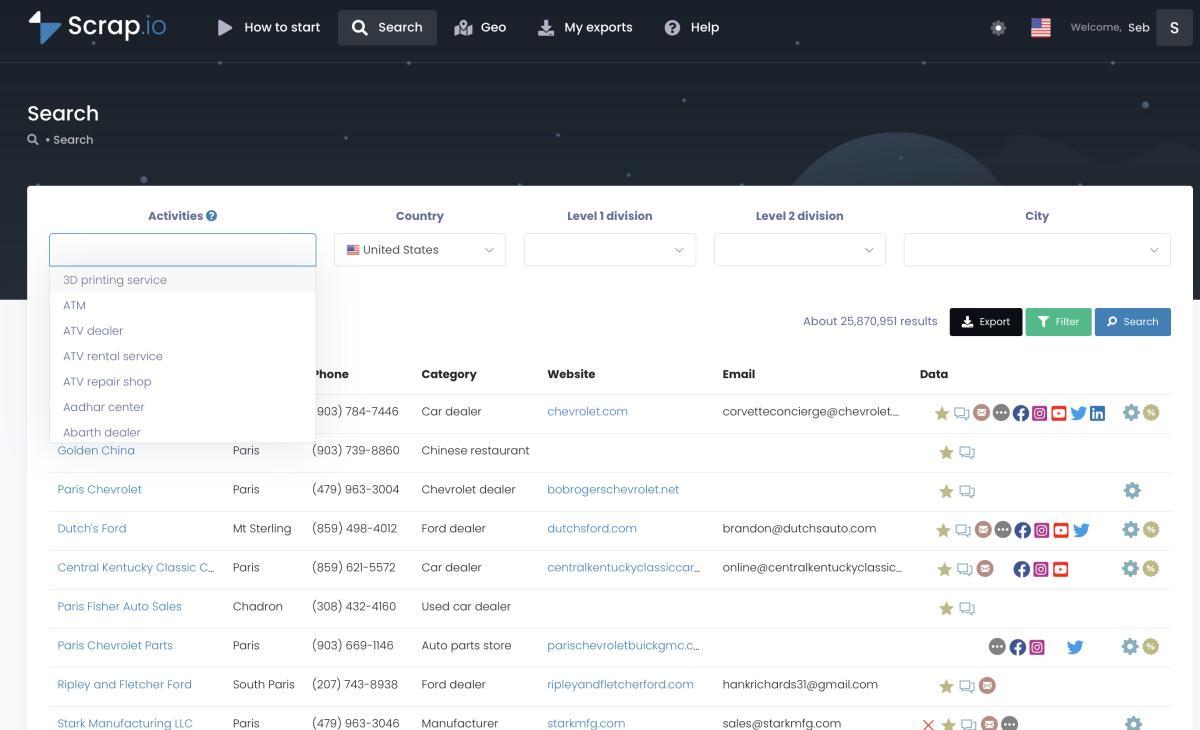
Let's put real numbers on it, because "cheap" is easy to say. Scrap.io's live database currently mirrors 225,676,406 establishments across 195 countries and 4,000+ categories, updated in real time at the moment of extraction. Search "plumber" in the United States and you'll see 76,406 businesses. Narrow it to Dallas as a city and you get 226 verified plumbers, 86 of them with a usable email, in seconds. Not "2,000 leads" like some inflated marketing promise. Real, verifiable, filtered-down numbers you can act on.
Now the cost math. On the Basic plan at $49/month you get 10,000 export credits, one credit per business. Those 86 Dallas plumbers with an email? They cost you well under a cent apiece. Compare that to $70–$200 for the same lead on Google Ads. It's not close.
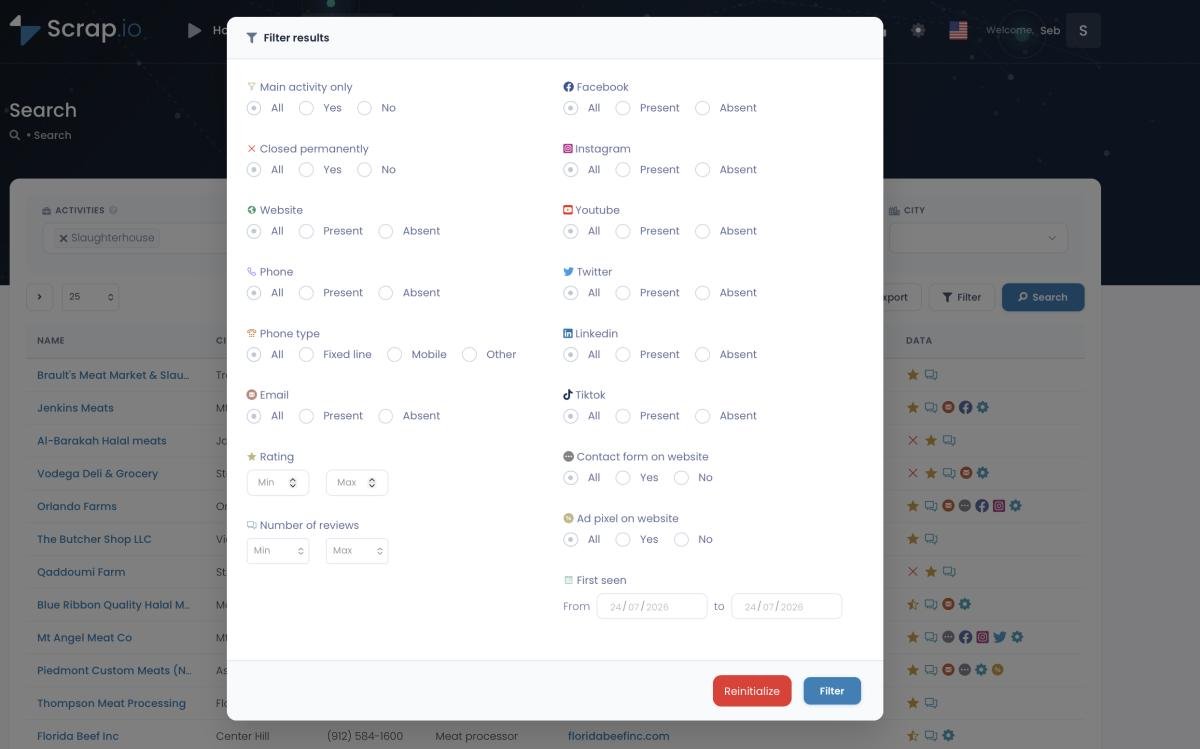
That's the part that quietly changes the economics: filters run before a single credit is spent. Only want the 86 plumbers with an email, not all 226? Toggle it. You never pay for a contact you can't use. Most tools make you extract everything and bin the junk afterward, after you've already paid for it. Backwards.
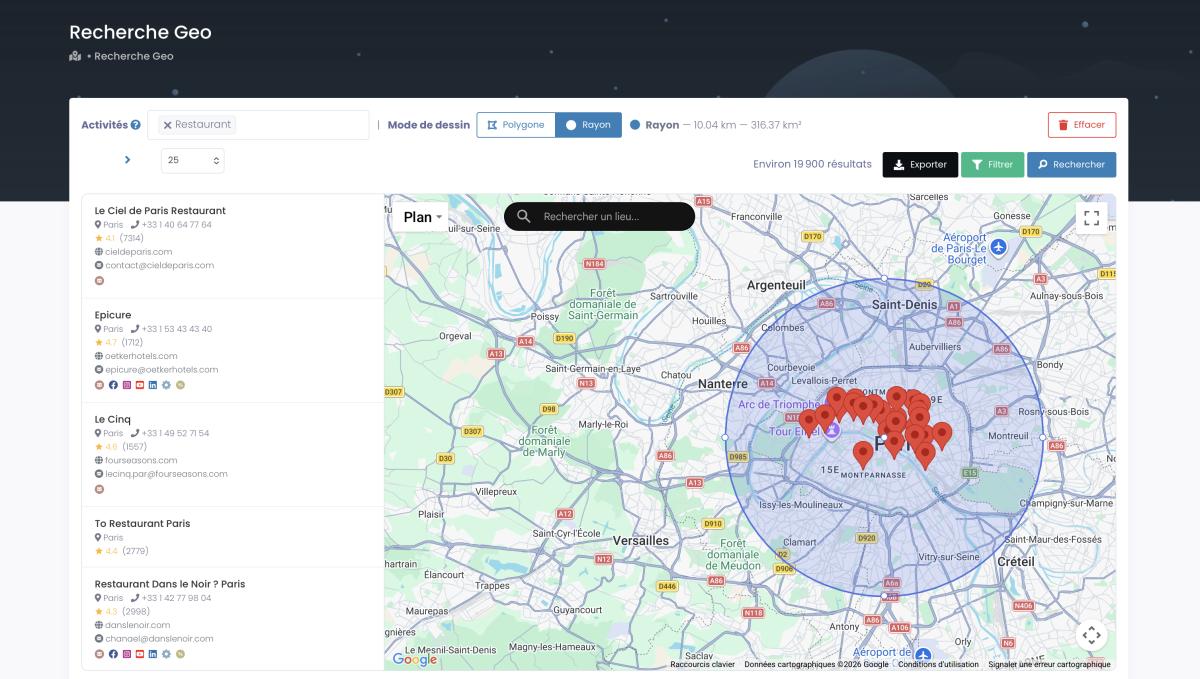
Need a shape that isn't a whole city? GeoSearch draws a radius around a point, so you can grab one neighborhood or a delivery zone instead of a clumsy administrative border.
And the data quality piece is where it gets interesting. Because Google Maps data is live, it's updated by business owners themselves. Compare that to a purchased list where the "leads" might have changed jobs two years ago. (We've all been there. You email "John the Marketing Director" and John left the company in 2023.) If you sell to businesses with a physical footprint, our full guide to local business leads covers the whole workflow.
Video: Scrap.io: How to Start?
Pair that extracted data with a solid warm outreach strategy and you've got a pipeline that costs almost nothing to fill. The cheapest lead generation methods don't have to mean low quality. They just mean you stopped paying Google's markup.
Type category + city, filter by "has email," export in minutes. That's the whole method. Scrap.io runs on a flat subscription, not per-lead credits that expire, across 225M+ businesses in 195 countries. Start free: 7-day trial, 100 leads included.
Legal & Compliance: What You Need to Know
OK, the question everyone asks. "Is web scraping for lead generation legal?"
Short answer: yes, for publicly available business data. But (and there's always a but) you need to do it right.
Scraping public business information from Google Maps, company names, phone numbers, publicly listed emails, addresses, reviews, is legal in the US and EU under current precedent. The hiQ Labs v. LinkedIn ruling confirmed that scraping publicly accessible data does not violate the CFAA.
What you can't do: scrape behind login walls, harvest personal (non-business) data without consent under GDPR, or ignore a website's clearly communicated terms of service in ways that constitute trespass to chattels.
For B2B cold email specifically: CAN-SPAM in the US allows unsolicited commercial emails to business addresses as long as you include a working opt-out mechanism and identify yourself honestly. GDPR in Europe requires a legitimate interest basis for B2B outreach, which prospecting qualifies for, with some guardrails.
Scrap.io only extracts publicly listed business data. No personal social media profiles. No private info. Just what businesses have chosen to make public on Google Maps, and it's GDPR and CCPA compliant, with every data point traceable to its source. That's the cleanest legal ground there is for lead generation, whether you're targeting the US, Europe, or starting cold email outreach globally.
Still, don't be a jerk about it. Follow outreach best practices, personalize your emails, and always give people a way to opt out. The legal framework protects you. Being annoying does not.
FAQ: Lead Generation Cost
How much does lead generation cost on average?
The average lead generation cost across all industries is about $198 per lead in 2026 (blended average $198.44), according to First Page Sage. But this varies wildly, from $91 in eCommerce to $982 in higher education. The channel you use matters just as much: Google Ads averages around $70 (LanderLab, 2026), while web scraping from Google Maps runs $0.01–$0.10 per lead.
How much should you pay for lead generation?
A healthy cost per lead is 5–10% of your customer lifetime value. For most B2B teams with $5K+ ACV, under $100 is solid and under $50 is excellent. Google Maps scraping brings CPL down to $0.01–$0.10, well below any paid channel in 2026, so it's the natural floor to benchmark your other channels against.
What is a good cost per lead?
Depends on your industry and deal size. A "good" CPL should be no more than 5–10% of your average customer lifetime value. For most B2B companies with $5K+ ACV, anything under $100 is solid. Under $50 is excellent. Under $1? That's what scraping gives you, and yes, those leads convert when you combine them with proper outreach (Martal Group has documented similar findings for outsourced B2B lead gen).
How can web scraping reduce lead generation costs?
Web scraping eliminates the middleman. Instead of paying Google or LinkedIn for access to businesses that are already publicly listed, you extract the data directly. Prospeo's data shows an 89% decrease in CPL and a 2,005% increase in lead volume when replacing purchased lists with scraped data. The savings come from three places: no ad spend, no list broker fees, and dramatically higher data accuracy (90%+ valid emails vs 40–60% with purchased lists).
Is web scraping for lead generation legal?
Yes, scraping publicly available business data is legal in the US (per the hiQ v. LinkedIn ruling) and generally permissible in Europe under GDPR's legitimate interest basis for B2B prospecting. The key is to only extract data that businesses have made publicly available: names, phone numbers, listed emails, addresses. Tools like Scrap.io focus exclusively on Google Maps public data, which is the safest category for compliant lead generation.
What's the cheapest lead generation method?
Web scraping from Google Maps is the cheapest scalable method at $0.01–$0.10 per lead. Referral programs can be cheaper per lead but don't scale. Organic content marketing costs $31–$60 per lead but requires months of investment before paying off. If you need volume now at the lowest cost, Google Maps scraping is the answer, and Browse AI documented a 73% average CPL reduction for companies making the switch.
Stop subsidizing Google's revenue. Scrap.io gives you 225M+ business leads from Google Maps, with verified emails, phone numbers, and company data, filtered before you pay a credit and refreshed in real time. No recycled lists. Start your free 7-day trial: 100 leads included.
Generate a list of restaurant with Scrap.io