

We posted a Google spreadsheet with 10,000 business contacts in three Facebook groups. Not a fancy landing page. Not a webinar funnel. A spreadsheet.
800 comments. 400 prospects. Thirty days. Zero ad spend.
I'll walk you through exactly how we did it later in this article. But first — you're probably here because you need lead magnet examples that don't look like they were copied from a 2019 HubSpot blog post. Fair enough.
What follows is 47 lead magnet ideas sorted into three categories, with actual conversion data from real companies, a breakdown of what's working right now, and the full case study of our Facebook groups experiment. I tested a lot of this stuff personally. Some of it worked great. Some of it was a total waste of time. I'll tell you which is which.
Watch: the complete video walkthrough of our lead magnet strategy and the case study that generated 400+ prospects.
Video: How to Create Effective Lead Magnets for Cold Email Campaigns
Table of Contents
- What Is a Lead Magnet? (And Why It Still Matters in 2026)
- 47 Best Lead Magnet Examples by Category
- Lead Magnet Conversion Rates: What the Data Says
- Real Case Study: How We Generated 400 Prospects With One Lead Magnet
- How to Create a Lead Magnet That Converts in 2026
- Best Tools to Create Lead Magnets in 2026
- Lead Magnet Ideas by Industry
- Lead Magnet Compliance: GDPR, CAN-SPAM & Best Practices
- FAQ
What Is a Lead Magnet? (And Why It Still Matters in 2026)
A lead magnet is a free, immediately useful resource you offer in exchange for someone's contact details — usually an email address. Think a PDF checklist, a spreadsheet, a free tool, a quiz, or a mini-course. The point is simple: give something valuable enough that a stranger happily trades their email to get it.
That's the lead magnet meaning in one paragraph — and if you typed "what is lead magnet in digital marketing" into Google, that's your answer too. Not complicated.
What IS complicated is making one people actually want. Because the bar has moved. Massively. Five years ago you could gate a 30-page ebook behind a form and watch emails roll in. Try that now and you'll collect tumbleweeds. People got burned too many times downloading "comprehensive guides" that turned out to be thinly disguised sales pitches with a cover page. The trust is gone. And honestly? I don't blame them. I've downloaded dozens of those things and regretted it every single time.
But the tactic itself? Thriving. The lead generation industry is projected to hit $295 billion by 2027. And according to GetResponse's 2025 study, 79.1% of marketers still use lead magnets tied to opt-in forms. That same study found guides — the good ones — pull a 67.2% conversion rate on long-form written content.
So people still trade their emails for free stuff. They're just pickier about which free stuff they trade for.
And here's the number that makes all of this worth caring about: email marketing returns roughly $44 for every $1 invested (DMA/Cision, 2024). If your lead magnet feeds into even a halfway decent email sequence, the economics are kind of absurd. Companies using lead generation strategies built around strong lead magnets are pulling way ahead of those who just blast cold outreach without any value upfront.
47 Best Lead Magnet Examples by Category
I've organized these into three buckets. Media magnets are content you create once and distribute forever. Tech magnets double as product demos — someone uses your free tool, loves it, upgrades. Service magnets deliver the most value per person but scale terribly.
| Category | Scalability | Best For | Example |
|---|---|---|---|
| Media-Based | High | Content marketers, agencies | Ebook, checklist, webinar |
| Technology-Based | High | SaaS, tools, data companies | Free trial, calculator, database |
| Service-Based | Low | Consultants, freelancers | Free audit, consultation, coaching |
The 8 Lead Magnets That Convert Best in 2026
Short on time? If you only build one thing this quarter, pick from this shortlist. These are the best lead magnets pulling the strongest opt-in rates right now, based on the data further down this page:
- Short-form video under 60 seconds
- Quizzes and scorecards
- Checklists and cheat sheets
- Free tools and calculators
- Data spreadsheets and curated databases
- Free trials (for SaaS)
- Templates and swipe files
- Original research and industry reports
Media-Based Lead Magnets (1–17)
Content you produce once, distribute infinitely. Some of these are played out. Others still convert like crazy if you execute well.
1. Industry-Specific Ebooks — Look, ebooks have a reputation problem. Most are bloated, generic, and end up in a "Downloads" folder nobody ever opens again. But hyper-specific ones still work. The last ebook I actually read? "ChatGPT Case Study: Creating YouTube Thumbnails with Midjourney." Twelve pages, one tool, one problem. Done. GetResponse says 27.7% of marketers still lean on ebooks as their go-to lead magnet — just make sure yours doesn't read like a Wikipedia article. And if you want a lead magnet examples pdf that people finish, keep it under 15 pages.
2. Checklists — A "47-point SEO audit checklist" or a "cold email campaign launch checklist" works because there's zero interpretation needed. Open. Follow. Done. Checklist lead magnet examples also happen to convert somewhere between 24% and 42% (more on that in the data section below). Hard to beat that for something you can create in an afternoon.
3. Templates & Swipe Files — People love ready-to-paste stuff. Email sequence templates, social media post frameworks, freelancer contract templates. Funnelytics built a real lead gen engine from a library of marketing funnel swipe files — not fancy, just immediately useful. Lead magnet templates kill the blank-page problem, and that's enough to get an email address.
4. Original Research & Industry Reports — If you can generate first-party data, this is gold. "State of Cold Email 2026" type stuff. Original research earns backlinks, gets cited, and positions you as an authority. The catch is it actually takes effort to produce. Most companies skip this because it's hard. Which is exactly why it works so well when you do it.
5. Infographics & Visual Guides — Decision trees, process diagrams, comparison charts. Excellent for LinkedIn and Pinterest sharing. Visual learners eat this up.
6. Webinars — Here's my honest take. Webinars convert phenomenally for warm audiences — GetResponse puts the number at 70.2% for long-form video content. But asking a stranger to block 45 minutes for someone they've never heard of? Tough sell. That same GetResponse study found 73% of marketers get better results with short-form video. So if you're doing cold traffic, consider a 10-minute tutorial instead.
7. Video Tutorials — "10-Minute Google Maps Lead Generation Tutorial" beats a 60-minute webinar for cold prospects every time. Short. Punchy. Result in hand by the time they're done watching.
8. Podcast Series — A 3-episode "starter pack" on a specific topic. Make each episode standalone though. Nobody's committing to a multi-part series from a brand they just discovered. That's asking too much too early.
9. Resource Lists — "101 Tools Every B2B Marketer Needs" or curated SaaS roundups. The best resource lists do one thing: they save people from doing the Googling themselves. That's literally the whole promise. And it's enough.
10. Case Study Collections — Bundle 5-10 real transformation stories into a PDF. Real companies, real numbers. In B2B communities, the question "what lead magnets have actually worked for you?" comes up constantly — and case study bundles get mentioned again and again. People trust proof more than promises.
11-12. Industry Surveys & Proprietary Frameworks — Salary benchmarks, sentiment surveys, original methodologies. Our WIIFM framework (explained later) falls into this category. These become reference material people bookmark and share.
13. Scripts & Copy Libraries — Cold email scripts, sales call frameworks, outreach templates. Absurdly popular. The blank-page problem is universal, and scripts make it disappear.
14-15. Worksheets & Behind-the-Scenes Content — "90-Day Lead Gen Planner" or "How We Built a 6-Figure Business From Scratch." People love structure they didn't have to build, and they trust companies willing to show their work.
16-17. Curated News & Certifications — Weekly roundups build habit. Mini-certification programs (HubSpot basically built a growth strategy around this) build credibility AND capture emails. Smart play if you have the content depth to support it.
Technology-Based Lead Magnets (18–32)
These are my favorite. Why? Because the lead magnet IS the product demo. Someone tries your free tool, gets value from it, and upgrading is the obvious next move. No convincing needed.
18. Free Trial — On Scrap.io, we offer a free trial with 100 leads. We include it in cold email campaigns all the time. It works because the prospect touches the actual product. Not a PDF about the product. The product.
19. ROI Calculators — "Calculate Your Lead Generation ROI" type tools. Sticky as hell — people bookmark these and come back. Quizzes and calculators convert at 20-40% according to Amra & Elma's 2026 research.
20. Assessment & Audit Tools — HubSpot's Website Grader is probably the most famous lead magnet in B2B SaaS history. Type in your URL, get a score, hand over your email to see the full report. They've generated millions of leads from this single tool. The genius is that it creates a personalized problem — your score is 62/100 — and then positions HubSpot as the fix.
21-22. Planning & Audit Tools — Content calendar generators, competitor analysis tools. Neil Patel did something similar with Ubersuggest — free SEO audit, personalized results, email capture. That strategy helps drive 8M+ monthly visitors to his site. Not bad for a free tool.
23. Chrome Extensions — Like our Maps Connect extension. Free, delivers ongoing value, and keeps your brand in front of someone every day they open their browser. Seriously underused lead magnet format.
24-25. Mobile Apps & Bookmarklets — Simple utility tools. Less common but incredibly sticky if you nail the use case.
26-28. Databases & Research Data — This is what we used at Scrap.io (full case study below). A spreadsheet of 10,000 business contacts. It also works as industry-specific contact lists — if you want to build a cold email list that's fresh instead of bought, this is the format. Check our guide on finding email addresses from Google Maps for ideas.
Video: How to Scrape Local Leads at the Country Level?
29. Template Libraries — Canva turned free design templates into a growth machine. 100 million users and counting. The template IS the demo. You use a free template, realize the tool is great, and upgrade. Textbook product-led growth.
30-32. Resource Directories, Comparison Charts & Tracking Sheets — SaaS comparison spreadsheets, campaign trackers, curated tool directories. Anything that turns messy information into something organized and usable.
Service-Based Lead Magnets (33–47)
Most valuable per prospect. Worst scalability. I have opinions about these.
I tried "free 30-minute consultations" for a while. Hated it. Not because the conversations were bad — some were great, and a few turned into paying clients within the same call — but because about 30% of people who booked just... didn't show up. You block the time, you prep notes on their business, you sit there waiting, and nothing. Three out of ten. Consistently. After about six weeks of this, I scrapped the entire approach and went back to tech-based magnets. Best decision I made that quarter.
Media and tech magnets don't have this problem because they scale infinitely. You create them once. But if service magnets are your thing, here's how to make them less painful:
33. Recorded Audit Videos — Record a quick 5-minute Loom for each prospect instead of doing live calls. Still personal. Way more scalable. And the prospect can watch it on their own time.
34. Group Sessions — Weekly Q&A calls, monthly masterminds. One-to-many instead of one-to-one. Big difference in time investment.
35. Email Courses — 5-7 day drip sequences. Automated, educational, and they nurture toward a purchase without requiring your personal time. HubSpot's free CRM onboarding is basically this in disguise.
36. Community Access — Private Slack spaces, Discord channels, Facebook groups. Drift built massive brand loyalty through community before their product was even mature. And ScoreApp uses a private community as a retention layer alongside their quiz lead magnets — doubles as both acquisition and engagement.
37-40. One-time setup services, strategy recordings, implementation guides, quick win sessions. All variations on "give someone a taste of working with you."
41-47. Done-for-you samples, co-creation opportunities, early access programs, expert networks, custom research, training, mentorship. These are the premium end. High perceived value, very low scalability. Best reserved for high-ticket funnels where one client is worth $5K+.
Lead Magnet Conversion Rates: What the Data Says
Not all lead magnets are created equal. And in 2026 the gap between the interactive stuff and the tired PDF has become a canyon.
Start with the honest benchmark nobody likes to quote: across 41,000 landing pages and 57 million conversions, the median opt-in rate for all industries sits at just 6.6% (Unbounce). That's the middle of the pack. Anything above it, you're winning. Below it, you've got work to do.
Now the format-by-format picture in 2026:
| Lead Magnet Type | Conversion Rate (2026) | Best For |
|---|---|---|
| Short-form video (<60s) | ~61.4% view-to-opt-in (mobile) | Cold social traffic |
| Quizzes & assessments | 35–40% | Coaching, SaaS, e-commerce |
| Checklists / cheat sheets | 24–42% | B2B content marketing |
| Free trials | ~25% | SaaS, tools |
| Landing pages (all-industry median) | 6.6% | Benchmark line |
| Ebooks / whitepapers | 4–8% | B2B thought leadership |
Sources: Unbounce, 2024; shno.co, 2026; Amra & Elma, 2026.
Read that table again. Short-form video pulls 61.4% view-to-opt-in on mobile against 22.8% for long-form video over ten minutes — a 60-second clip beats your 40-minute webinar for cold prospects, hands down. Quizzes hit 35-40% versus around 11% for classic gated content. Meanwhile the humble ebook has quietly collapsed to 4-8% on a landing page. The interactive stuff won. It's not close.
The B2B vs B2C split still matters. B2B buyers are skeptical by default. According to MarketingProfs (2025), 81% of them prefer interactive content — tools, quizzes, assessments — over static PDFs. A personalized result feels more valuable than a generic download. If you sell to businesses, stop making ebooks. Build tools instead.
One more layer people ignore: where your traffic comes from changes everything. Same lead magnet, wildly different opt-in depending on the channel:
| Traffic Source | Conversion Rate |
|---|---|
| 19.3% | |
| Paid search | 11.3% |
| Organic | 6.4% |
| Paid social | 3.1% |
Source: Martal, 2026.
Email crushes everything at 19.3%. Which is a little ironic, given the whole point of a lead magnet is to build that email list in the first place. Feed the list, and the list feeds you back. That's the flywheel.
Oh, and speed matters more than most people realize. A lead is far more likely to enter your pipeline if you respond within 5 minutes. So your follow-up sequences need to be ready BEFORE you launch the lead magnet. Not after.
Building a B2B lead magnet and need quality data to power it? Scrap.io indexes 225,676,406 businesses across 195 countries and 4,000+ categories — and you filter before you export, so you only pay for contacts that actually fit. Start with 100 free leads from Google Maps. Free trial, 7 days.
Real Case Study: How We Generated 400 Prospects With One Lead Magnet
Alright. The case study I promised.
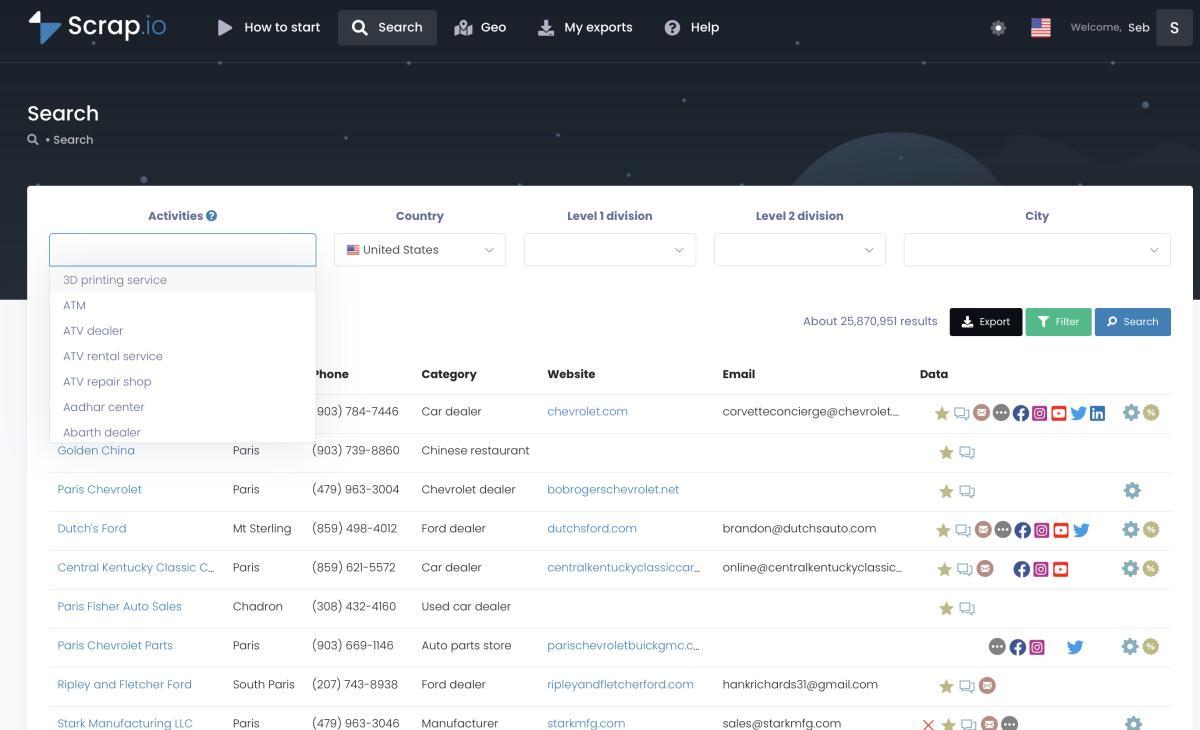
At Scrap.io we help businesses extract prospecting files from Google Maps. So we built what we know: a Google spreadsheet with 10,000 rows of real business data. Company names, email addresses, phone numbers, Google ratings, physical addresses — the works.
Video: Scrap.io — How to Start?
To put the scale in perspective: at the time of writing, Scrap.io indexes 25,775,010 businesses in the United States alone, and 8,844,197 of them have a retrievable email on their website — that's 34.3%. Our lead magnet was 10,000 rows. Roughly 0.04% of the pool. We barely dipped a toe in.
We didn't just dump raw data into a sheet. We filtered by industry, verified the emails, organized columns so someone could open it, sort by city or star rating, and start cold emailing within five minutes. The kind of list that'd take a person weeks to assemble manually. Or a few hundred bucks from an old-school data broker (and half those emails would bounce anyway). We even added a "last verified" date column so people could see the data was fresh. Small touch, big trust signal.
Why did it work? I can break it down to three things.
One — instant usefulness. No learning curve. Download, filter, outreach. Value in under five minutes. Two — high perceived value. Buying 10,000 verified contacts elsewhere? $500+. We gave it away as a completely free lead magnet. Three — and this is the clever bit — the spreadsheet was the product demo. Every row of data was proof of what Scrap.io could do. If you liked the free sample of 10K leads, the natural next step was signing up to build your own custom files.
The results:
- 800+ comments across multiple Facebook groups
- 400+ unique prospects collected
- 15% converted to paid plans
- $12,000 in revenue — first 30 days
- Acquisition cost: $0
Want to see what the actual lead magnet looked like? Here's the demo Google Sheet — the same kind of file we handed out. Meta, I know: an article about building a data lead magnet, giving away a data lead magnet. Go ahead and steal the format.
The Facebook Groups Strategy (Step by Step)
Before sinking months into email automation funnels, we tested demand in the cheapest way possible. Facebook groups.
The CTA was stupidly simple: "Leave a comment to get the link."
Somebody comments. I add them as a friend. Send the spreadsheet link via Messenger. Then reply to their comment publicly saying "link sent." That last part is key — other group members see people actually receiving the resource, which triggers more comments. And Facebook's algorithm pushes posts with fresh comments back to the top of the feed. Snowball effect.
| Metric | Result |
|---|---|
| Total comments | 800+ |
| Unique prospects | 400+ |
| Conversion to paid | 15% |
| Revenue (30 days) | $12,000 |
| Cost per acquisition | $0 |
Group selection mattered a lot. We focused on B2B marketing and lead gen communities with 10K+ active members — and avoided the overly promotional ones where every other post is a pitch. Nobody engages in those.
Timing too. Tuesday and Wednesday mornings outperformed weekends consistently. And we responded to every comment within 2 hours — partly because speed builds trust, partly because fast replies keep the engagement signal hot for Facebook's algorithm.
What would I do differently next time? Test LinkedIn. Facebook groups skew toward small business owners and solopreneurs. LinkedIn could reach agency decision-makers and enterprise buyers. Same playbook, different crowd. I'd also create two versions of the spreadsheet — one filtered for US businesses, one for European markets — so the lead magnet felt even more targeted. Specificity always wins.
Once we'd validated demand, we connected the lead magnet to cold email tools and built automated nurture sequences to keep the conversation going.
Want to try this yourself? Start with a free Scrap.io account — 100 verified business leads to build your own data-based lead magnet, exactly like we did. Here's the demo spreadsheet to copy the structure. Free trial, 7 days.
How to Create a Lead Magnet That Converts in 2026
I'm not going to give you a 10-step framework. Five things matter. Here they are, in order:
- Find a painful problem — not a mild annoyance, something that genuinely frustrates people.
- Match the format to the problem — simple issue, checklist; data gap, spreadsheet or calculator; complex topic, mini-course.
- Make it worth paying for — if you wouldn't spend $50-$200 on it, nobody's trading an email for it.
- Deliver value in under 5 minutes — no setup, no friction, instant win.
- Build shareability in — subtle branding, easy forwarding, a "send this to a colleague" nudge.
Everything else is noise. Let me expand on the ones people get wrong.
Find a painful problem. For us it was obvious: B2B marketers needed quality lead lists but couldn't afford ZoomInfo, or they'd bought databases before and half the emails bounced. Real pain. If you can't articulate your audience's frustration in one sentence, you haven't identified the problem yet.
Make it worth paying for. Too many people throw together a half-baked PDF in 20 minutes and wonder why downloads are flat. The gated content era of thin resources is dead. Make something genuinely good or don't bother.
Deliver value in under 5 minutes. Humans are lazy — I include myself in this — and attention spans in 2026 are brutally short. The spreadsheet we gave away? People were filtering it and pulling contacts within 90 seconds of opening the file. That's the speed you're aiming for.
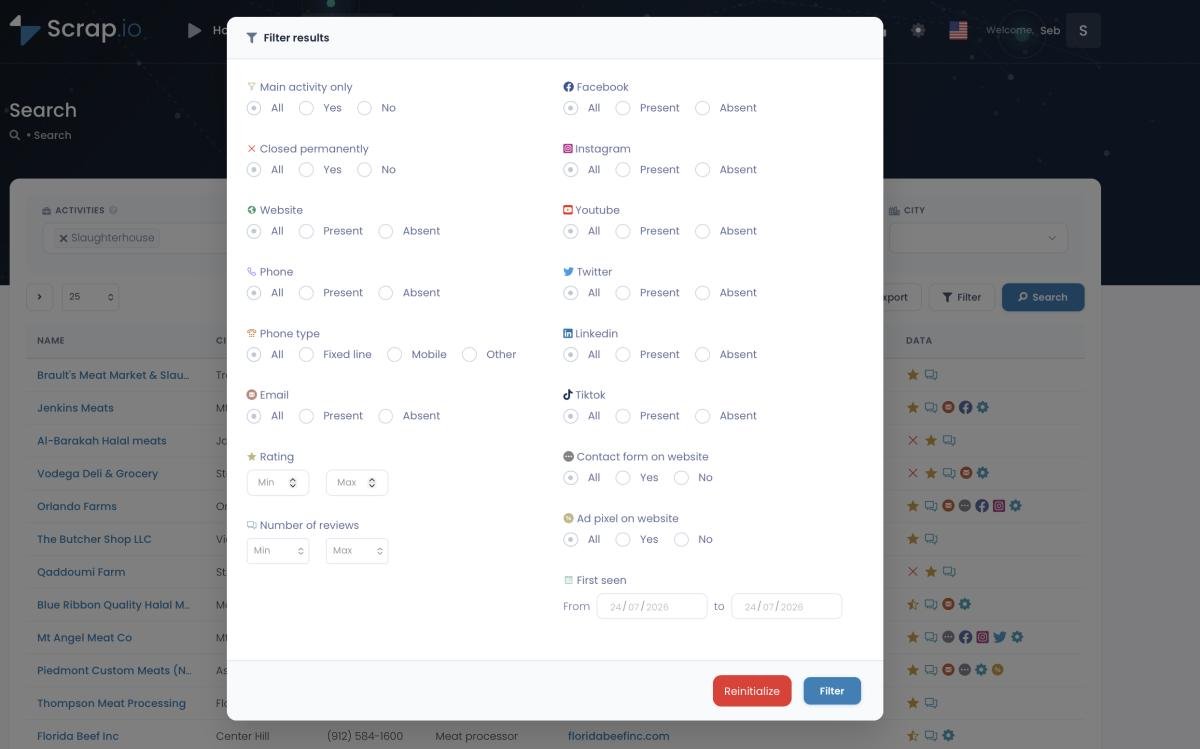
Now here's the part that quietly decides whether a data lead magnet is even worth building: the cost of assembling it. If you're a web agency or a sales team producing a spreadsheet lead magnet, you don't want to burn budget scraping thousands of useless rows. At Scrap.io the filters — email present, website present, minimum rating, mobile number — are applied before a single credit is spent. You count for free, you filter, and you only pay for the rows that actually match. So a data lead magnet costs you exactly the number of usable contacts, not a byte more. Competitors can't copy that, because most tools make you export everything and sort the garbage afterward.
One stat worth knowing: 81% of B2B buyers prefer interactive content over static downloads (MarketingProfs, 2025). Quizzes, calculators, and AI-powered personalization tools are consistently beating plain PDFs. And when you write cold emails to distribute your magnet, lead with what the prospect gets — not what you sell.
Last thing, and it's the one nobody says loudly enough. Your lead magnet doesn't make the sale. The sequence after it does. Roughly 79% of leads never convert — not because the magnet was bad, but because nobody built the follow-up that comes after the download. The magnet captures the email; the nurture makes the money. Companies that actually invest in lead nurturing generate 50% more sales-ready leads at 33% lower cost (Forrester). So before you obsess over the perfect freebie, make sure your cold email follow-up is wired and ready.
The WIIFM Framework
"What's In It For Me?" — the five letters your prospect is thinking before they hand over an email address. If your lead magnet can't answer every row in this table, it's not ready.
| Letter | Question | Example |
|---|---|---|
| W | What problem does this solve? | "I need B2B leads but ZoomInfo costs $15K/year" |
| I | How do I benefit immediately? | "10,000 contacts ready to use today" |
| I | What's the instant gratification? | "Open spreadsheet → filter → start outreach" |
| F | What's the future value? | "If this sample's good, the tool saves hours weekly" |
| M | Why me, why now? | "Free for 7 days, 100 leads included" |
Best Tools to Create Lead Magnets in 2026
The right lead magnet tools save you a designer, a developer, and a week of your life. Here's what we actually use — and a few we've tested and respect. Prices are the publicly listed starting tiers at the time of writing; check each vendor's page before you commit, because SaaS pricing moves. And don't over-invest in lead magnet design — a clean layout that loads fast beats a gorgeous one nobody reads.
| Tool | Best For | Starting Price | Ideal Lead Magnet |
|---|---|---|---|
| Canva Pro | Visual content | ~$15/mo | Ebooks, checklists, one-pagers |
| Figma | Complex design | Free tier | Template libraries, design assets |
| ScoreApp | Quiz lead magnets | Free tier / paid from ~$32/mo | Quizzes (35-40% conv. rates) |
| Beacon | Lead magnet creator | Free tier / paid from ~$25/mo | Ebooks, resource guides |
| Designrr | PDF generation | from ~$29/mo | Reports, whitepapers |
| Google Sheets | Data magnets | Free | Spreadsheets, trackers |
| Loom | Video tutorials | Free tier | Walkthroughs, recorded audits |
| Typeform | Interactive assessments | from ~$25/mo | Quizzes, surveys |
| Scrap.io | B2B contact data | Free trial / from $35/mo | Lead lists, industry datasets |
| ConvertKit | Email automation | Free tier | Drip sequences, email courses |
A Note on Lead Magnet Templates
Quick word on ScoreApp — it's built specifically for quiz funnels, and if you haven't tested quiz-based lead magnets yet, you're probably leaving conversions on the table. 35-40% opt-in rates are common with well-built quizzes. That's several times what most ebooks pull.
If you'd rather not design from scratch, Beacon and Canva both ship ready-made lead magnet templates — checklists, one-pagers, mini-ebooks — you fill in and export. Solid if your current lead magnets look like they were made in Microsoft Word circa 2014. (No shame. We've all shipped something ugly at some point.) For a data magnet, honestly, a clean Google Sheet is the only template you need.
Lead Magnet Ideas by Industry
What works for a SaaS company won't work for a real estate agent. Different audiences, different trust levels, different expectations. Here are the lead magnet ideas I'd recommend by vertical — practical lead magnet examples for business owners who don't have time to test ten formats. (One note before the table: whatever vertical you're in, the lead magnet page examples that win keep the form to a single field, and the best lead magnet funnel examples send an instant delivery email, not a "we'll be in touch.")
| Industry | Recommended Lead Magnet | Example |
|---|---|---|
| Real Estate | Local market report | "2026 Nashville Housing: Price Trends by Zip Code" |
| Coaching | Assessment / scorecard | "Business Readiness Scorecard: Ready to Scale?" |
| SaaS / Tech | Free trial or tool | Scrap.io: 100 free leads from Google Maps |
| E-commerce | Product quiz or discount | "Find Your Perfect Skincare Routine (Quiz)" |
| Agencies | Case study bundle or audit | "5 Campaigns That Hit 10x ROI — Full Breakdown" |
| Local Businesses | Competitor report | "How Your Business Stacks Up vs Local Competitors" |
| Healthcare | Wellness guide or checker | "7-Day Stress Reduction Worksheet" |
For coaches — the best lead magnet examples for coaches are quizzes and scorecards, which almost always outperform PDFs. Coaching is about transformation. A scorecard that says "you're at 4/10 on these five dimensions" creates urgency in a way a generic ebook never will. Pair it with lead magnet website examples that embed the quiz right on the homepage instead of hiding it behind a menu.
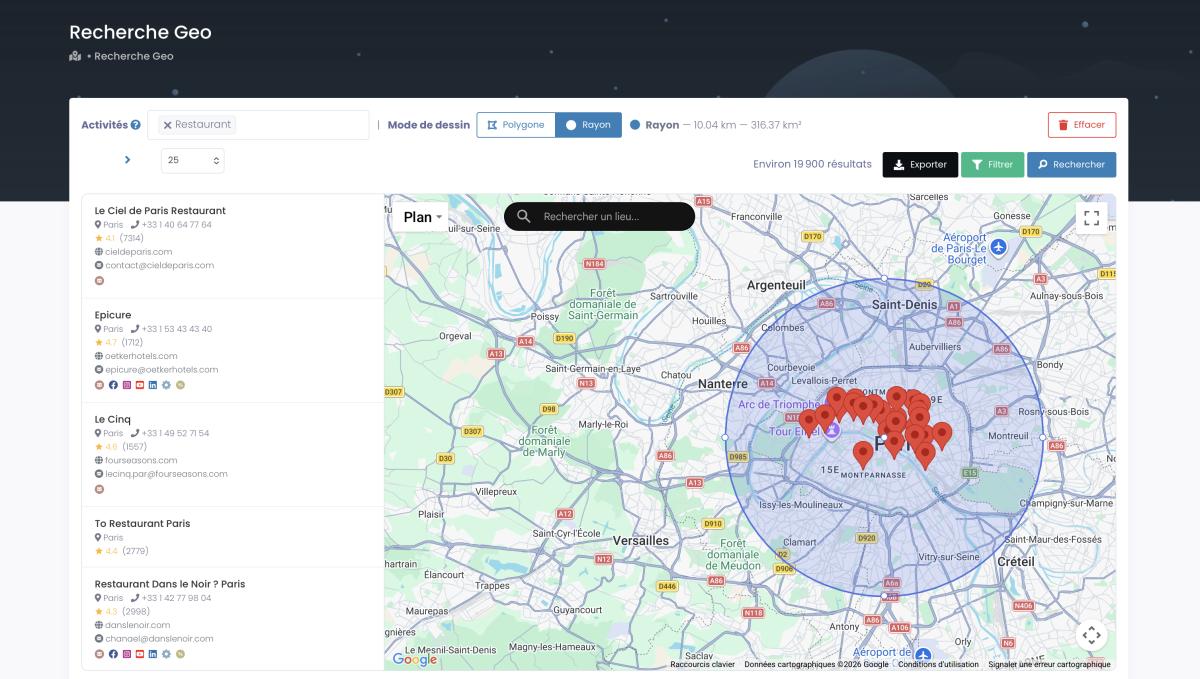
For real estate — go hyper-local. Nobody cares about national housing trends. They want their zip code, their street, their neighborhood. A Nashville agent offering "2026 Price Trends: Your Neighborhood vs. 5 Surrounding Zip Codes" will crush a national market overview every time. I've seen agents use this exact approach and generate 30+ seller leads a month from a single PDF that took them two hours to create. Scrap.io's GeoSearch can pull business data by radius — a circle around any point on the map — great for building localized lead magnets around a specific catchment area.
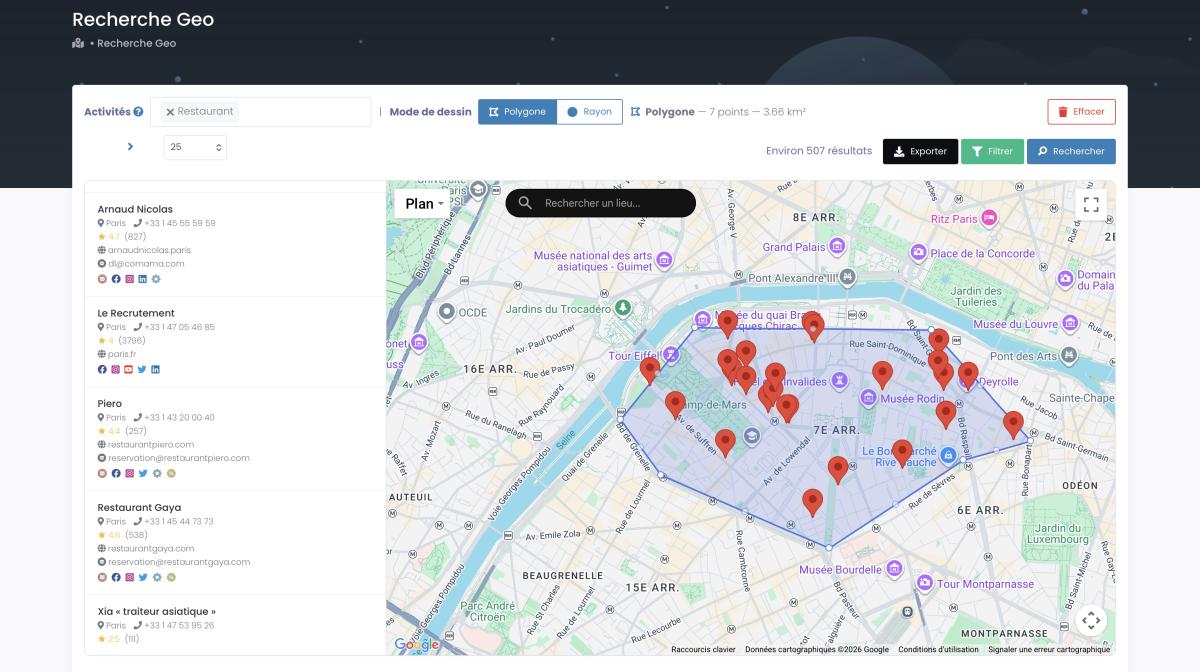
For local businesses — the same GeoSearch works in polygon mode too, so you can hand-draw the exact neighborhood or delivery zone you serve instead of settling for a whole city. Pair that with the fact that Scrap.io covers 4,000+ Google Maps categories, and you can build a "local competitor report" lead magnet for basically any trade — plumbers, dentists, gyms, you name it.
Lead Magnet Compliance: GDPR, CAN-SPAM & Best Practices
Not the most thrilling section. Read it anyway.
Collecting emails through lead magnets comes with legal strings attached. The rules depend on where your audience lives, not where your server sits.
CAN-SPAM (US): Every email needs a working unsubscribe link. Your "from" line and subject can't be misleading. You need a real physical address in the message. Violations? Up to $51,744 per email. Per email. The FTC spells it all out here.
GDPR (EU/UK): You need a lawful basis for processing data. For B2B outreach, "legitimate interest" usually works — but you still need an easy opt-out, and you should be able to explain why you contacted that particular person. Double opt-in is strongly recommended. Official GDPR text here. If you're doing outbound into Europe, our GDPR cold email compliance guide breaks down the country-by-country rules — because Germany is not France is not the UK.
Regardless of where your audience is: use double opt-in when you can. Make unsubscribing one click. Don't sell or share the emails you collect. Be upfront about what people are signing up for. And if you're pairing lead magnets with cold email, get your email authentication (SPF, DKIM, DMARC) set up properly. Deliverability problems will torpedo your campaign before a single prospect sees your lead magnet.
One thing people forget — downloading a free checklist isn't blanket consent to receive promotional emails until the heat death of the universe. Your follow-up should relate to the lead magnet they opted into. Blasting a product pitch two hours after someone grabbed a compliance guide? That's how you catch spam reports. And spam reports kill sender reputation. Fast. I've seen campaigns with 0.5% complaint rates get their entire sending domain blacklisted within a week. Not worth the risk.
Worth noting on the data side: because Scrap.io only pulls publicly available business data from Google Maps — and every record is traceable to its source — you start with a clean, documentable legal basis. That doesn't exempt you from honoring opt-outs, but it puts you on solid ground under both GDPR and CCPA.
FAQ
How do you make a good lead magnet?
Pick one specific, painful problem and solve it. Not three problems. One. Make sure someone can extract value in under five minutes — if it requires a 30-minute time commitment, most people won't bother. Use the WIIFM test: can a stranger immediately see what's in it for them? If not, simplify. A one-page checklist that saves three hours beats a 50-page ebook that collects dust in a Downloads folder.
What should a lead magnet look like?
Clean and professional, but don't obsess over design. Content beats aesthetics. A well-organized Google Doc with genuinely useful information will outperform a beautifully designed PDF full of fluff. That said — something that looks polished does signal credibility. Canva or Beacon can handle this without a designer. For landing pages, remember the all-industry median is 6.6% (Unbounce), so anything above that is a win.
What is a lead magnet in social media?
Same concept, different channel. Instead of gating content on a landing page, you offer it through posts. "Comment LEADS and I'll DM you the link." That's literally what we did in Facebook groups — see the case study above. Works on Instagram, LinkedIn, TikTok too. The comment-to-DM format is powerful because it drives visible engagement AND captures leads simultaneously.
What can attract a lead?
Anything that solves a real problem or saves meaningful time. The highest-converting formats tend to be interactive — quizzes, calculators, assessments (35-40%) — or data-driven: spreadsheets, curated databases, industry reports. Cheat sheets pull 24-42%. Generic ebooks? More like 4-8% on a landing page in 2026. The gap is massive, and it's only getting wider.
What's the difference between media, tech, and service-based lead magnets?
Media magnets (ebooks, checklists, videos) are cheap to produce and distribute infinitely. Tech magnets (free trials, calculators, tools) cost more to build but convert better because people experience your product firsthand. Service magnets (consultations, audits) pack the most value per person but don't scale — and you'll deal with a 30% no-show rate on live calls if my experience is anything to go by.
How do I know if my lead magnet is working?
Four numbers. Opt-in rate: 15-25% is solid for a landing page (and remember, 6.6% is the all-industry median). Follow-up email opens: 20%+ means your subject lines are working. Click-through on nurture emails: 5-10% is the target. And conversion to paid: 2-5% is normal for B2B. If your opt-in rate is under 10%, the problem is your offer or your page — not your traffic. And if the leads you're capturing never turn into anything, the issue might be upstream: you may be attracting the wrong people. Here's how to think about qualified leads so your magnet pulls buyers, not tire-kickers.
Are lead magnets still effective in 2026?
Yes. But the generic PDF era is over. What's working now is either hyper-specific (one narrow problem solved well), interactive (quizzes, tools, calculators), or data-driven (curated databases, original research with real numbers). Companies pairing lead magnets with smart cold email strategy are getting significantly better response rates than those who just pitch cold.
Do I need to gate my lead magnet behind an email form?
Depends on the context. For cold outreach — distributing via email or social — giving instant access without a gate builds trust faster. You can capture the email through follow-up touchpoints later. For organic website visitors who arrived through Google? Gating makes sense. They found you, they're already interested, and an email form is a reasonable trade.
Ready to build your own lead magnet? Try Scrap.io free for 7 days — 100 verified leads to get started, pulled in real time from 225M+ Google Maps businesses across 195 countries. Filter before you export, so you only pay for the contacts that fit.
Generate a list of restaurant with Scrap.io