

- What Is Sentiment Analysis? (And Why Star Ratings Aren't Enough)
- The Sentiment Analysis Market in 2026: Why It Matters Now
- Best Sentiment Analysis Tools in 2026: Complete Comparison
- The Missing Step: How to Extract Google Reviews at Scale
- Real-World Results: Companies Using Sentiment Analysis
- How to Build a Review Sentiment Analysis Pipeline
- Data Privacy & Legal Considerations
- FAQ
A restaurant with a 4.2-star average can hide 200+ complaints about slow service buried in its reviews. You'd never know just by looking at the star count. That's the whole problem.
I've spent years watching businesses obsess over their overall rating while completely ignoring what people actually say. Stars tell you almost nothing. A 4-star review that says "great food but the waiter was rude and we waited 45 minutes" is not the same as a 4-star review that says "solid experience, would come back." Same number. Wildly different signals.
And that's where sentiment analysis tools come in. Software that reads between the lines (and between the stars) to figure out what customers actually feel about your business. Not the number. The feeling.
But here's what most guides about AI-powered analysis tools won't tell you: having the best sentiment analysis software in the world is useless if you can't get the review data in the first place. And getting that data at scale? That's the hard part nobody talks about.
So let's fix that.
What Is Sentiment Analysis? (And Why Star Ratings Aren't Enough)
Sentiment analysis, also called opinion mining, is the process of using natural language processing (NLP) to automatically classify a piece of text as positive, negative, or neutral. Instead of counting stars, it reads the actual words in a review and returns a sentiment score, usually on a scale from -1 (furious) to +1 (ecstatic). Think of it as teaching a machine to read emotions.
Simple in theory. Messy in practice.
How Sentiment Analysis Works (NLP, AI)
Modern sentiment analysis AI uses transformer-based models (the same architecture behind ChatGPT) to understand context, sarcasm, and nuance. It's not just counting positive and negative words anymore. That approach died around 2019 and good riddance.
Today's tools can detect that "This place is sick!" is a compliment, not a health warning. They parse negation ("not bad at all" reads as positive), handle mixed sentiment within a single sentence, and even pick up on domain-specific jargon. (Mostly. They still get tripped up by British sarcasm, but honestly, so do most humans.)
The underlying pipeline looks like this: text input, tokenization, embedding, classification, output score. But you don't need to understand any of that to use these tools. Just know that the AI reads your reviews and spits out a sentiment score. Both IBM and AWS describe the exact same three-stage flow in their explainers, if you want the deep version (IBM, AWS).
Beyond Stars: Aspect-Based Sentiment Analysis (ABSA)
Here's where it gets interesting. Basic sentiment analysis tells you "this review is negative." Aspect-based sentiment analysis tells you why.
ABSA breaks down a review into individual aspects, food quality, wait time, staff attitude, ambiance, and scores each one separately. So that 4-star review? Here's the sentiment analysis example in practice: ABSA would flag food (+0.9), wait time (-0.7), service (-0.4). Now you know exactly where to focus.
Massive difference. One number versus an actual diagnosis. This is also the tech quietly powering brand sentiment analysis tools and even employee sentiment analysis tools inside HR platforms. Same engine, different text.
The Sentiment Analysis Market in 2026: Why It Matters Now
Roughly $5.2 to $5.6 billion. That's where the sentiment analytics market sits in 2026, depending on who's counting. The Business Research Company puts the sentiment analytics systems market at $5.61 billion for 2026, up from $4.27 billion in 2025 (TBRC). Research Nester lands a touch lower, around $5.2 billion, growing at a 13% CAGR toward $16 billion by 2035 (Research Nester).
Insane growth. But why now?
First, 68% of Fortune 500 companies now use some form of sentiment analytics (market.us). It's not experimental anymore. It's infrastructure. Second, review volume keeps climbing, which means manual analysis is completely dead for any business with more than a handful of locations. And AI sentiment analysis tools are the fastest-growing slice of the whole market, precisely because they finally handle nuance at scale. (Fewer reviews than your rivals? Fix the supply side too, here's how to get more Google reviews.)
And then there's the Google factor. Google hosts about 81% of all online reviews (Guaranteed Removals). That one platform contains more customer feedback data than everything else combined. Meanwhile, 88% of consumers read reviews before choosing a local business (Shapo.io), and positive reviews can drive up to 18% revenue uplift (Bridge/BrightLocal).
So the data is there. The impact is proven. The question is: are you actually using Google Maps reviews as a business intelligence asset, or just checking your star rating once a month?
Scrap.io lets you extract thousands of Google Reviews in minutes, from a real-time index of 225M+ businesses across 195 countries, so you can actually feed your sentiment analysis tools with real data. Free trial, 100 leads included.
Best Sentiment Analysis Tools in 2026: Complete Comparison
With 50+ tools on the market, picking the right one feels like a job in itself. I've spent way too long testing these, so here's what actually matters, organized by category, because a social listening tool and a customer feedback platform are solving fundamentally different problems.
Social Listening Tools (Social Media Sentiment Analysis)
Sprout Social is probably the most polished option among social media sentiment analysis tools. Clean dashboard, reliable classification, and it handles multiple languages without falling apart. Expensive though, starts around $249/month. Worth it if social is your main channel.
Brandwatch goes deeper. It's one of the most powerful brand sentiment analysis tools out there. If you need to track brand sentiment over time across millions of mentions, this is the enterprise play. Overkill for small teams. Perfect for agencies and large brands that actually have the budget.
Hootsuite includes basic sentiment in its social monitoring. Not the most sophisticated, but if you're already paying for Hootsuite, it's "free." (Air quotes because Hootsuite itself isn't cheap.)
Awario is the budget-friendly alternative. Less polished, less accurate on edge cases, but genuinely solid for the price. A good sentiment analysis tool for social media monitoring if you're bootstrapping.
Customer Feedback Platforms
Chattermill is where customer sentiment analysis gets serious. Built specifically for analyzing customer feedback across surveys, reviews, and support tickets. Their ABSA is excellent, probably the best in class among customer sentiment analysis tools.
SentiSum focuses on support ticket analysis. If your customer feedback lives in Zendesk or Intercom, this integrates natively. Real-time customer sentiment tracking without any manual tagging.
Dialpad does sentiment analysis on phone calls. Yeah. It transcribes calls in real-time and flags sentiment shifts as they happen. Wild technology, genuinely useful for sales teams.
Qualtrics is the enterprise survey giant that added AI-powered sentiment analysis for reviews. Expensive. Powerful. If you're already in the Qualtrics ecosystem, the sentiment layer is a no-brainer. If not, there are cheaper ways to get there.
General-Purpose NLP Tools (Free, Online, Open-Source)
Google Cloud NLP is the developer's choice. Raw API, pay-per-call, extremely accurate. But you need engineering resources to actually use it. Not a plug-and-play solution, it's a building block.
Amazon Comprehend is AWS's answer. Similar capability, similar learning curve. Pick whichever cloud provider you're already on.
MeaningCloud is the underdog. A free online sentiment analysis tool (with limits) that's surprisingly accurate. Great for testing the waters before committing to an enterprise license. And if you want open-source, Hugging Face and Python libraries like VADER are free sentiment analysis tools you can run yourself.
ChatGPT. Yes, people are using it for sentiment analysis. And honestly? For small batches, it works shockingly well. Paste 50 reviews, ask for sentiment breakdown by aspect, and you get a decent first pass. Doesn't scale, though. Try analyzing 10,000 reviews this way. I'll wait.
| Tool | Best For | Starting Price | Key Strength |
|---|---|---|---|
| Sprout Social | Social media teams | $249/mo | All-in-one social + sentiment |
| Chattermill | Customer feedback analysis | Custom pricing | Best-in-class ABSA |
| Brandwatch | Enterprise brand monitoring | Custom pricing | Massive data coverage |
| Google Cloud NLP | Developers / custom builds | Pay-per-call | Accuracy + flexibility |
| ChatGPT | Quick manual analysis | $20/mo (Plus) | Zero setup, decent accuracy |
| Hootsuite | Teams already using Hootsuite | $99/mo | Bundled with social management |
| Amazon Comprehend | AWS-native teams | Pay-per-call | Scales infinitely on AWS |
| MeaningCloud | Budget-conscious teams | Free tier available | Free sentiment analysis + multilingual |
Quick note on review monitoring and reputation management tools: some of these overlap with sentiment analysis software but focus more on alerts and response management than deep analysis. Worth looking into if your primary concern is staying on top of incoming reviews rather than mining historical data. Doing serious competitive work? Pair this with a proper Google Maps competitor analysis and the review text turns into a battle map.
The Missing Step: How to Extract Google Reviews at Scale
OK so here's the part that drives me crazy about every other "best sentiment analysis tools" article out there. They all compare features, pricing, integrations, and then just assume you already have the data. Nobody talks about how to actually get the reviews into these tools in the first place.
Newsflash: that's the hard part.
Video: How to Extract Every Business in 1 Click with Scrap.io
Why Extracting Reviews Is the Challenge
Google doesn't offer a "download all reviews" button. The Places API gives you a grand total of five reviews per business. Five. If you're trying to do sentiment analysis for business reviews across 500 competitors, that's 2,500 reviews max through official channels. Good luck doing anything meaningful with that.
Don't take my word for it. A user on the WebScraper forum put it bluntly: "I'm trying to scrape all the Google Maps reviews for my restaurant and the API just doesn't cut it" (WebScraper Forum). Welcome to the club.
And if you want to analyze customer reviews with AI, you need volume. Statistical significance doesn't care about your API limitations.
Method 1: Manual Copy-Paste (Doesn't Scale)
You could scroll through Google Maps, copy-paste each review into a spreadsheet, and then feed it to your analysis tool. I've seen people do this. I've done this. Once. Never again.
For 50 reviews? Sure, fine. For 5,000? That's self-inflicted pain.
Method 2: Google Maps API (Limited)
The Places API is the "official" route. Those five-review-per-business limits make it borderline useless for any serious customer feedback sentiment analysis software workflow. And the costs add up fast. You're looking at about $17 per 1,000 business lookups (Google Maps Platform pricing), and you still only get a fraction of the actual reviews. Extract the same data through a managed scraping platform and it runs closer to $0.25 per 1,000 reviews (Apify benchmarks). That's roughly a 97% cost gap, for more data, not less.
Video: Using the Google Maps API and Google Reviews
The DIY route isn't much friendlier. A user on r/dataanalysis wanted to scrape Google reviews with Python for free, and the thread's consensus was blunt: the homemade approach eats more time than it saves unless your volume is tiny (Reddit r/dataanalysis). If you're a developer who still wants to try, here's how to scrape Google reviews with Python the right way.
Method 3: Scrap.io (Automated Extraction)
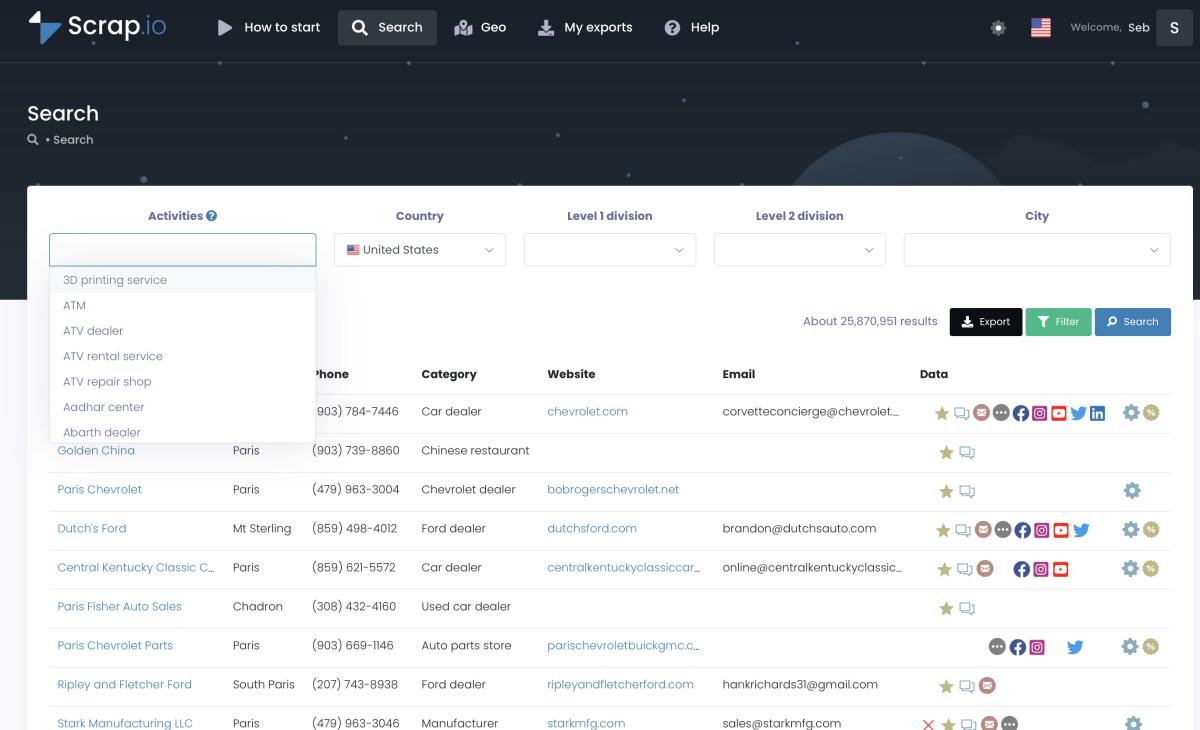
This is where Google Maps scraping comes in. Scrap.io lets you extract every business and its review data from any Google Maps listing. No API limits, no five-review cap, no manual copying.
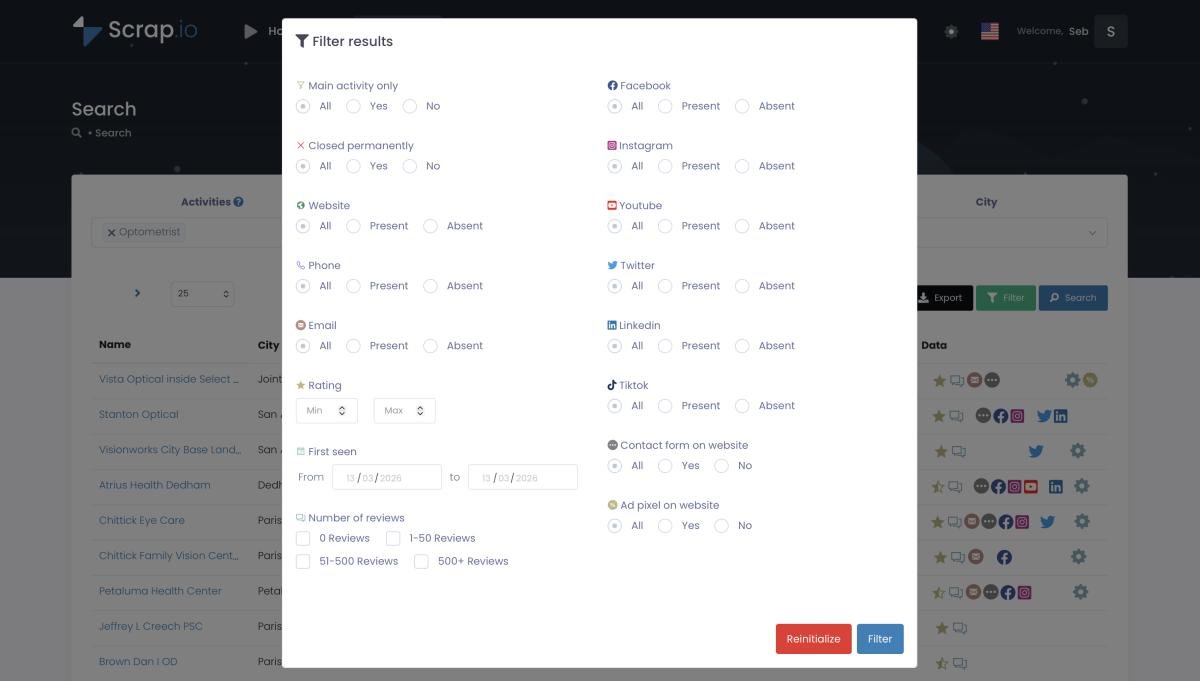
Search for a business category and location, apply filters (rating, review count, area), and export everything to CSV. Ratings, review counts, dates, contact data, the full dataset, ready to pipe into whatever sentiment analysis tool you picked from the list above. And because the filters apply before extraction, you only spend credits on businesses you'll actually use. Zero waste.
Real-World Results: Companies Using Sentiment Analysis
Enough theory. Let's talk money.
Here's what happens when companies actually commit to customer sentiment analysis instead of staring at their star rating like it owes them something.
WatchShop boosted conversions by 10%. The UK watch retailer used ContentSquare's sentiment analysis to identify that specific product description wording was killing conversions. Not pricing, not UX, the words. They rewrote product pages based on the sentiment data and saw an immediate lift. Ten percent. From text changes.
A major retail chain went from 78% to 83% CSAT. Quantzig documented this case: a multi-location retailer ran aspect-based sentiment analysis across all their review data, identified recurring complaints about checkout wait times, and implemented targeted fixes at underperforming locations. Five-point CSAT jump in under a year.
Atlanta Hawks saw +127% video views. A Sprout Social case study shows how the NBA team used social media sentiment analysis tools to understand what content resonated emotionally with fans, then doubled down on those formats. The engagement explosion followed.
TechSmith caught a UX problem nobody reported. Their customer feedback analysis surfaced a pattern of frustration around a specific feature that users weren't formally complaining about. They were just venting in reviews. No support tickets. No bug reports. Just sentiment data revealing a hidden pain point.
Travel Media Group transformed hotel reputation management. Using Repustate's aspect-based analysis, they helped hotels identify businesses with consistently negative sentiment in specific categories (cleanliness, front desk, parking) and prioritize fixes by revenue impact. Not guessing. Data-driven triage.
Want the no-code version of this? There's a full walkthrough that wires Google Maps reviews straight into a sentiment classifier using an n8n workflow (Scrapingdog x n8n tutorial). Same idea, different plumbing: extract the reviews, tag each one positive, negative, or neutral, then act on the pattern.
Start with the data. Scrap.io gives you 100 free business records to test your sentiment analysis workflow, filtered before you spend a single credit. Free trial, 100 leads included.
How to Build a Review Sentiment Analysis Pipeline
Still reading reviews one by one in 2026? Right. Here's how to analyze 10,000 reviews in 30 minutes, no PhD in machine learning required. This is review sentiment analysis, start to finish.
- Define your scope. Pick the market, category, and competitors you want to track. "All restaurants in Austin" or "top 50 SaaS competitors." Whatever matters to your business. Don't boil the ocean, start specific. A radius or polygon search (below) draws the exact trade area you care about.
- Extract the data with Scrap.io. Run your search on Google Maps scraping, filter by review count (aim for businesses with 50+ reviews for meaningful analysis), and export to CSV. This step takes about 3 minutes for hundreds of businesses.
- Choose your analysis tool. For small datasets (under 500 reviews), ChatGPT or MeaningCloud work fine as free sentiment analysis tools. For anything larger, go with Chattermill, Google Cloud NLP, or whatever customer feedback sentiment analysis software fits your budget and tech stack.
- Classify and categorize. Run the sentiment analysis. If your tool supports ABSA, enable it. You want aspect-level scores, not just overall positive or negative. Tag by location, time period, and competitor for richer comparisons.
- Visualize and act. Export results into a dashboard (Looker, Tableau, even Google Sheets with conditional formatting). The whole point is turning review analysis tools output into decisions: which locations need attention, which competitors are vulnerable, what customer complaints you're ignoring.
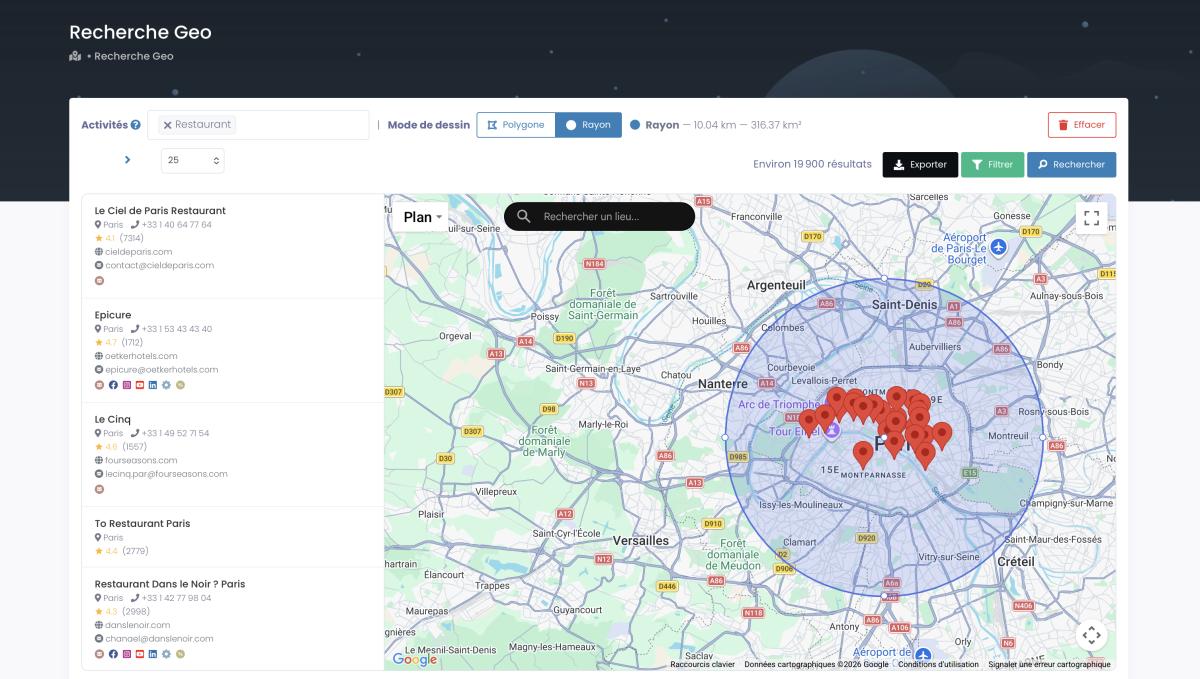
So the whole thing looks like this: reviews in, machine reads them, you get a dashboard showing exactly where the problems (and opportunities) are. The best tool for customer sentiment analysis is whatever tool you'll actually use consistently, not the one with the fanciest feature list.
Getting reviews out of Google is the step people underestimate, and it's a documented headache. A Reddit user in r/webscraping shared, "I recently developed a tool to scrape Google Reviews," and the thread turned into a masterclass on everything that breaks at scale (Reddit r/webscraping). That's the exact pain a pre-indexed platform removes.
Oh, and one more thing. Pipe this data into your CRM and you've got a lead intelligence machine. Businesses with declining sentiment scores? Perfect prospects for your solution. That's not just analysis. That's automated review analysis software working as a lead gen engine. Want your AI to drive the whole thing? The Scrap.io MCP for AI agents lets Claude or ChatGPT run the extraction in plain English.
Video: CRM War Machine with Google Maps Data
Extract an entire category and territory with Scrap.io, then feed any tool above. 225M+ businesses, 195 countries, real-time data. Free trial, 100 leads included.
Data Privacy & Legal Considerations
Is it legal to scrape and analyze Google Reviews? Short answer: it depends on how you do it.
Google's Terms of Service technically prohibit automated data collection. But (and this is a big but) multiple court rulings, HiQ vs. LinkedIn being the landmark case, have established that publicly available data doesn't carry the same protections as private data. Reviews posted on Google Maps are public. People wrote them knowing anyone could read them.
That said, there are lines. Don't collect personal data beyond what's publicly visible. If you're operating in the EU, GDPR applies to how you store and process reviewer information. In the US, CAN-SPAM and state-level privacy laws add their own wrinkles if you're using review data for outreach.
Best practices: anonymize individual reviewer data in your analysis, focus on aggregate sentiment trends rather than individual profiles, and use a tool like Scrap.io that handles the legal aspects of Google Maps scraping responsibly. Scrap.io works only with publicly available business data, keeps every record traceable to its source, and is GDPR and CCPA compliant. Don't be the company that makes headlines for the wrong reasons.
FAQ
What is sentiment analysis and how does it work?
Sentiment analysis uses natural language processing (NLP) and machine learning to automatically classify text as positive, negative, or neutral. Modern sentiment analysis AI goes beyond simple keyword matching. It understands context, sarcasm, and nuance using transformer-based models. You feed it text (reviews, tweets, support tickets), it returns a sentiment score and, with advanced tools, aspect-level breakdowns.
What are the three main types of sentiment analysis?
According to IBM and AWS, the three main types are:
- Fine-grained (graded): rates sentiment on a scale, like very positive to very negative, similar to a 5-star system.
- Aspect-based (ABSA): scores individual aspects of a product or service separately (food, service, price).
- Emotion detection: identifies specific emotions such as joy, frustration, or anger, rather than a simple polarity.
What are the best sentiment analysis tools for small business?
For small businesses, MeaningCloud offers a solid free tier, ChatGPT handles small batches surprisingly well, and Awario provides affordable social media sentiment tracking. If you need a dedicated customer sentiment analysis tool without enterprise pricing, SentiSum and Hootsuite's built-in sentiment features are worth testing. The key is matching tool complexity to your actual review volume. Don't pay for Brandwatch if you're analyzing 100 reviews a month.
Can ChatGPT do sentiment analysis?
Yes, and it's better at it than most people expect. You can paste reviews directly into ChatGPT and ask it to classify sentiment, identify themes, and even perform basic aspect-based analysis. The catch: it doesn't scale. You'll hit context window limits around 50 to 100 reviews per prompt, there's no API automation without coding, and results aren't perfectly consistent between runs. Great for quick manual analysis. Terrible for an ongoing, automated pipeline.
Is there a free API for sentiment analysis?
Yes. Google Cloud Natural Language has a free monthly tier, MeaningCloud offers a free plan with monthly request limits, and Hugging Face's Inference API lets you run open-source sentiment models at no cost for light usage. For fully free and unlimited local use, open-source Python libraries like VADER and TextBlob run entirely on your machine. The trade-off is always the same: free tiers cap your volume, so the moment you need to analyze reviews at real scale, you're back to sorting out data extraction first.
How do I analyze Google Reviews at scale?
Three steps: extract the reviews (use Scrap.io to bypass Google's 5-review API limit and export full datasets), choose a sentiment analysis tool (Google Cloud NLP for accuracy, Chattermill for ABSA, or ChatGPT for quick passes), and build a classification pipeline that tags sentiment by aspect, location, and time period. The extraction step is what trips up most people. Knowing how to analyze Google reviews at scale starts with actually getting the data out of Google Maps.
Is sentiment analysis accurate enough to trust for business decisions?
Modern tools hit 80 to 90% accuracy on straightforward text, which is roughly on par with human agreement rates (humans only agree on sentiment about 80% of the time anyway). Accuracy drops with sarcasm, slang, and mixed sentiment. The fix: use aspect-based analysis rather than binary positive/negative, work with larger datasets where individual errors wash out, and always sanity-check outliers manually. Don't trust any single review's classification blindly. Trust the aggregate patterns.
Time to Stop Guessing
Look. Every business has reviews. Thousands of them. And most of those businesses are doing absolutely nothing with that data beyond refreshing their Google Business Profile to see if the number went up or down.
Meanwhile, their competitors are running AI-powered sentiment analysis for reviews, spotting service failures before they become trends, and using the insights to actively steal market share.
The tools exist. The data exists. The only question is whether you're going to use them or keep checking your star rating like it's 2015.
My suggestion: start small. Grab a dataset of your own reviews and your top 3 competitors' reviews. Run them through a Google reviews sentiment analysis tool. See what patterns emerge. I guarantee you'll find at least one insight that was completely invisible from star ratings alone.
Try Scrap.io free for 7 days, 100 leads included. Extract Google Reviews at scale, export to CSV, and feed your sentiment analysis pipeline with real data in minutes.
Generate a list of restaurant with Scrap.io