

22.71% of your email list decays every year. That's roughly one in four addresses going dead while you're busy writing subject lines and A/B testing button colors.
I ran a campaign last quarter to a list I hadn't cleaned in eight months. Bounce rate? 6.3%. My sender reputation tanked so hard that Gmail throttled my next three sends. Three campaigns. Weeks of recovery. All because I got lazy with list hygiene.
Here's what most email marketing guides won't tell you: not all bounces are created equal. Some you can fix. Some are permanent. And confusing the two will cost you more than a bad open rate. It can get your domain blacklisted entirely.
This guide breaks down the soft bounce vs hard bounce difference, gives you the SMTP codes to watch for, and walks through exactly how to fix and prevent both. No fluff. Just the stuff that actually matters when your deliverability is on the line.
Video: How to Identify Spam Emails, a Guide to Avoid Sending Them in Your Prospecting Campaigns
- What Is an Email Bounce? (Quick Refresher)
- Hard Bounce vs Soft Bounce: Key Differences
- What Causes a Hard Bounce Email?
- What Causes a Soft Bounce Email?
- How to Fix Hard Bounces (Actionable Steps)
- How to Fix Soft Bounces
- Email Bounce Rate Benchmarks for 2026
- How to Prevent Bounces Before They Happen
- FAQ: People Also Ask
What Is an Email Bounce? (Quick Refresher)
An email bounce happens when your message gets kicked back by the recipient's mail server. You sent it. It didn't land. The server basically said "nope" and returned it to you with an error code attached.
Those error codes, the SMTP codes, are how servers communicate what went wrong. And they actually mean something specific once you learn to read them.
How SMTP Error Codes Work (4XX vs 5XX)
Two categories. That's it.
4XX codes = temporary problems. The server's saying "not right now, try again later." Think of it like knocking on someone's door and they're in the shower. Come back in an hour.
5XX codes = permanent failures. The door doesn't exist. The house was demolished. Nobody's ever answering. Stop knocking.
Here's the quick reference you'll actually want to bookmark:
| Type | Meaning | Common codes | What to do |
|---|---|---|---|
| 4XX (Soft) | Temporary failure | 421, 450, 451, 452 | Wait, let your ESP retry |
| 5XX (Hard) | Permanent failure | 550, 551, 552, 553 | Remove the address today |
So 550 means the mailbox doesn't exist. 552 means storage exceeded. 421 means the server's temporarily unavailable. 450 means the mailbox is busy or locked.
The difference between a 4XX and a 5XX is the difference between patience and a delete button. Knowing which is which saves you from panicking over fixable issues, or wasting time on addresses that are never coming back.
Hard Bounce vs Soft Bounce: Key Differences
Here's the comparison that matters when you're dealing with email hard bounce vs soft bounce situations:
| Hard Bounce | Soft Bounce | |
|---|---|---|
| Nature | Permanent failure | Temporary failure |
| Common causes | Invalid address, non-existent domain, permanent server block | Full mailbox, server down, message too large, auth failure |
| SMTP codes | 5XX (550, 551, 552, 553) | 4XX (421, 450, 452) |
| Action required | Remove immediately | Retry 3 to 5 times over 72h, then remove if persistent |
| Reputation impact | High, immediate damage | Low to medium, escalates if unresolved |
| ESP behavior | Auto-cleaned (most platforms) | Auto-retried, suspended after multiple failures |
One thing this table doesn't capture: urgency. A hard bounce needs action today. A soft bounce can wait 72 hours. But a soft bounce you ignore for three campaigns? That becomes a reputation problem too.
What Causes a Hard Bounce Email?
A hard bounce email means permanent delivery failure. No retries. No second chances. That address is dead.
Invalid or Misspelled Addresses
You'd be amazed how many contacts in a CRM have gmial.com or yhoo.com in them. One typo at data entry and every email you send to that address bounces forever. A 12-person roofing company in Nashville told me they had 400 contacts in their list. 38 of them were misspelled domains. That's nearly 10% of their entire database gone before they sent a single campaign.
Non-Existent Domains
Companies shut down. Websites expire. Someone registered a domain in 2021 for a startup that lasted six months, and now you're emailing ghosts. Happens constantly with purchased lists.
Permanent Server Blocks
The recipient's server looked at your domain or IP and decided you're permanently unwelcome. This happens when your sender reputation is already damaged, often from previous campaigns with high bounce rates. Ironic, right? Bounces cause bounces.
Outdated or Purchased Email Lists
The biggest culprit. Some list broker sells you 10,000 "verified" contacts compiled two years ago and half of them don't exist anymore. With a 22.71% annual list decay rate (HubSpot, 2026), a two-year-old list has lost nearly half its valid addresses. That's not a list. That's a reputation grenade. If you want the honest math on why brokered data burns money, here's the real cost of buying email lists laid out.
What Causes a Soft Bounce Email?
A soft bounce email is temporary. The address exists. The server is real. Something just went wrong right now.
Full Mailbox
Classic. Someone hasn't cleaned their inbox since 2022. Your message arrives and there's literally no room. (Ever tried sending a package to an apartment with a stuffed mailbox? Same energy.)
Server Temporarily Down
Happens more than you'd think. Especially with smaller companies running their own mail servers on hardware from the Obama administration. Server goes down for maintenance, your email arrives at the wrong moment. Bad luck, not bad data.
Email Too Large
Heavy HTML templates with uncompressed images, big attachments. Servers have size limits and they enforce them. Keep your emails under 100KB. If someone in marketing added six uncompressed banner images, well, that's the problem right there.
Authentication Failures (SPF, DKIM, DMARC)
Misconfigured authentication records on your end. The 2026 email authentication requirements from Gmail, Yahoo, and Microsoft are stricter than ever. Get this wrong and you're not just soft bouncing. You're getting blocked entirely. If your records are shaky, our SPF, DKIM & DMARC setup guide walks you through all five steps without the jargon. And the video below breaks down exactly what changed when Gmail and Yahoo tightened the rules.
Video: New 2024 Email Guidelines for Gmail & Yahoo
Greylisting and Temporary Blacklisting
Some servers deliberately reject first-time senders as a spam filter. Your ESP retries automatically and the second attempt goes through. Annoying but not a real problem, unless your sending infrastructure doesn't retry properly. Worth knowing how to identify spam emails in prospecting so you don't trip these filters in the first place.
How to Fix Hard Bounces (Actionable Steps)
Fixing hard bounces isn't complicated. But you need to be ruthless about it.
Remove Hard-Bounced Addresses Immediately
No second chances. No "maybe next time." That address is dead and every send to it tells Gmail and Yahoo you don't maintain your lists. Bad look. Terrible look, actually.
Validate Your List Before Every Campaign
This is the big one. Use an email validation tool to catch invalid addresses before they bounce. Way cheaper to validate upfront than to rebuild your sender reputation after it's been torched. Not sure where to start? Here's how to check if an email is valid using nine different methods. Companies using email validation consistently see 98%+ deliverability rates. That's not a marginal improvement.
Switch to Real-Time Verified Data Sources
Stop buying lists compiled months ago. Pre-verified, real-time data from sources like Google Maps business listings gives you emails that actually exist today. Not emails that existed when someone built a spreadsheet eight months ago. Here's the exclusive part: Scrap.io indexes 225,676,406 businesses across 195 countries and 4,000+ categories, and every record is re-extracted in real time at the moment you export, straight from the live Google Maps listing and the website behind it. Compare that to a broker database compiled eight months ago, already 22.71% decayed before it reaches your inbox. The difference in bounce rates? It's not even close.
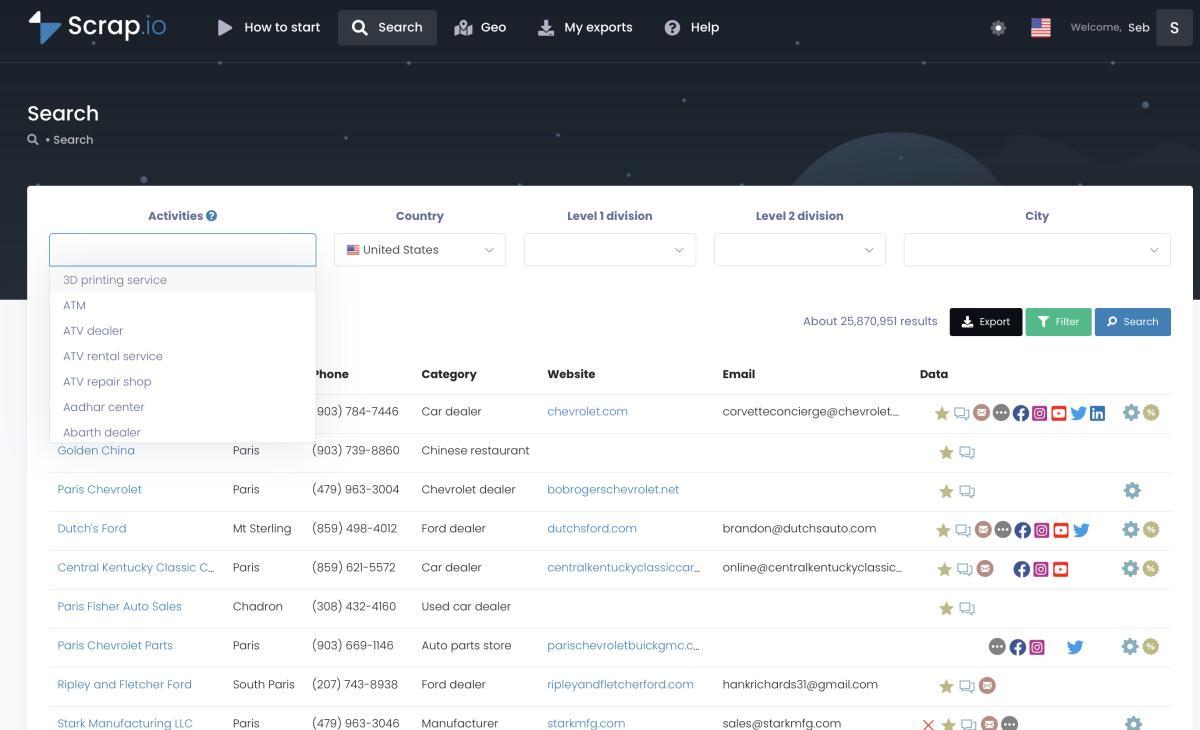
Tired of cleaning up bounces after the fact? Extract verified B2B emails in real time from Google Maps, 225M+ businesses across 195 countries, fresh the day you export them. Try Scrap.io free, 100 leads included.
How to Fix Soft Bounces
Different approach here. More patience. Less panic.
Let Your ESP Retry Automatically
Most email service providers retry soft-bounced messages 3 to 5 times over 72 hours. The server might be back up tomorrow. The mailbox might get cleaned. Give it time.
Reduce Email Size
Compress images. Minimize attachments. Keep your HTML clean. If your email weighs 15MB because of uncompressed banners, fix that before blaming the recipient's server.
Fix Your Authentication Records
Verify that your SPF, DKIM, and DMARC records are correctly configured. A misconfigured authentication setup is one of the most common, and most fixable, causes of soft bounces. Don't skip this. Our SPF, DKIM & DMARC setup guide covers the exact DNS records you need.
The 3-Email Rule
If the same address soft-bounces three or more times across different campaigns, treat it as a hard bounce and remove it. Most serious ESPs follow some version of this. Should you remove soft bounces from your email list? Not after the first occurrence. But after three? Absolutely. That's a permanent problem wearing a temporary disguise.
Email Bounce Rate Benchmarks for 2026
Numbers. Because "my bounce rate seems high" isn't useful without context.
What's a Good Bounce Rate?
Industry standard: under 2% total bounce rate. That's your target. Under 1% is where the well-run senders live. The average email bounce rate across all industries now sits around 2.33% according to Validity's 2026 benchmark, with cross-industry figures closer to 2.48%. Above that? You've got a problem. Well below? Something's working.
For hard bounces specifically, stay under 0.4%. Anything above signals serious list quality issues.
Here are the numbers broken down:
| Metric | Benchmark | Source |
|---|---|---|
| Average total bounce rate | 2.33% | Validity, 2026 |
| Average hard bounce rate | 0.4% | Benchmarks, 2026 |
| Average soft bounce rate | 0.7% | Benchmarks, 2026 |
| Inbox placement rate | 87.2% (+3.7% YoY) | Validity, 2026 |
| Annual list decay rate | 22.71% | HubSpot, 2026 |
| Email marketing ROI | $36 to $42 per $1 spent | Litmus/DMA, 2026 |
Hard Bounce Rate Thresholds
The 2026 sender requirements from Gmail, Yahoo, and Microsoft enforce stricter thresholds than ever. Exceed them and your emails don't just go to spam. They don't go anywhere. Period. One bad campaign with over 5% hard bounce rate can drop your sender reputation below sending thresholds. One campaign. That's all it takes, according to SendGrid.
Companies maintaining a bounce rate under 1.5% see 10 to 12% better inbox placement (Validity, 2026). That's the difference between your campaign landing in Primary and disappearing into the void.
The True Cost of High Bounce Rates
Let's talk money. Email marketing returns $36 to $42 for every $1 spent (Litmus/DMA, 2026), but only with good deliverability. When your bounce rate climbs above 5%, that ROI collapses.
Image Source, an e-commerce company, was running a 19% bounce rate. Nineteen percent. Their campaigns were essentially dead on arrival. After implementing ZeroBounce validation, they dropped to 0.85%. MediaShares had a similar story, 12% bounce rate to nearly zero after cleaning their list. And Rightmove, managing 6 million emails per day, achieved a 50% reduction in bounces with proper IP warming and migration.
Real stories. Real numbers. Not theoretical "best practices."
One HubSpot community member put it bluntly: "My first campaign had a bounce rate of 7.64%. I'm worried about account suspension, ISPs flag you above 5%." And a Reddit user on r/MailChimp posted: "Suddenly soft bounce rate is 25%, how to fix this?" These aren't edge cases. This is what happens when list hygiene gets neglected.
How to Prevent Bounces Before They Happen
This is the part most guides skip. Everyone explains the soft bounce vs hard bounce difference. Few talk about stopping bounces before they start.
Use Real-Time Data Sources
Single biggest lever you can pull. Instead of relying on static databases that start decaying the moment they're compiled, extract fresh contact info from live sources. Scrap.io pulls emails directly from live Google Maps listings and the websites associated with each business. When a company updates their info, you get current data, not a six-month-old snapshot.
Real-time extracted emails have significantly lower bounce rates than purchased lists. You're going from "hoping this address still works" to "this address was verified against a live source today." On a well-maintained list built this way, bounce rates sit around 1.2% in 2026 (Validity), comfortably under the 2% danger line.
Validate Emails at Point of Collection
Whether it's a signup form or a data extraction tool, run real-time API validation on every email before it enters your database. Catch the bad ones before they ever touch a campaign. Scrap.io does this at the source: you toggle the "email present" filter before extraction, so you only ever export listings that already have an address on file. Zero credits wasted on blanks, fewer invalid addresses, fewer hard bounces. And if you'd rather run a separate check, here's how to verify an email without sending one.
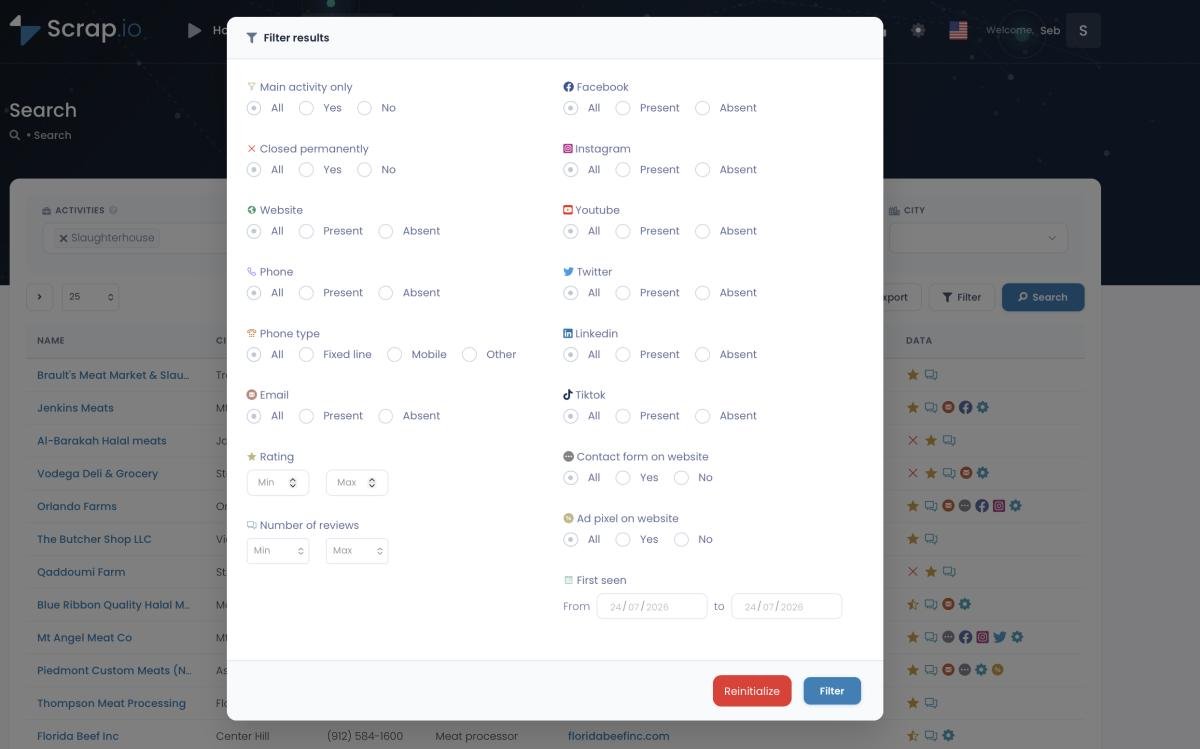
Filter to emails-present before you spend a single credit. Scrap.io only exports Google Maps contacts that already have an address on file, classified as individual, contact, sales, or marketing, so your list starts clean instead of getting scrubbed later. Grab 100 verified leads free.
Clean Your List Regularly (Monthly or Quarterly)
Remember that 22.71% annual decay rate? That means roughly 2% of your list goes stale every month. Quarterly cleaning at minimum. Monthly if you're a high-volume sender. Stay ahead of the decay.
Authenticate Your Domain (SPF, DKIM, DMARC)
All three. Configured correctly. The 2026 authentication requirements aren't optional anymore. Gmail and Yahoo are actively rejecting unauthenticated senders. The full SPF, DKIM & DMARC setup guide covers the DNS records step by step. If you need help getting started with outreach, check out how to start a cold email and how to write a cold email that actually gets delivered.
Warm Up New Sending Domains Gradually
Don't blast 50,000 emails from a fresh domain on day one. Start with your most engaged segments. Build reputation slowly. ISPs are watching and they have long memories. A gradual ramp with proper email warmup tools keeps a brand-new domain from looking like a spam operation on day one.
Try cold emailing tools built for deliverability. The right sending infrastructure handles warming, rotation, and throttling automatically. And for a broader view, a solid cold emailing strategy covers bounce management as part of the whole picture.
Bounce Management & Compliance (GDPR / CAN-SPAM)
Clean data keeps you deliverable. Compliance keeps you legal. Under GDPR, business email addresses are still personal data, so B2B outreach in the EU needs a documented legitimate-interest basis. CAN-SPAM (US) requires an accurate header, a physical mailing address, and a working one-click unsubscribe in every commercial email. The upside: sourcing from publicly available business data (like Google Maps listings) that's traceable to its source makes that legitimate-interest case far easier to document. It doesn't exempt you from honoring opt-outs at send time.
Pre-Send Bounce Prevention Checklist
- All email addresses validated within the last 30 days
- Hard bounces from previous campaigns removed
- Authentication records (SPF, DKIM, DMARC) verified
- Email size under 100KB (no heavy attachments)
- Sending domain properly warmed up
- Inactive subscribers segmented out
- Data source is current and verified (not a purchased list from months ago)
Skip any of these and you're rolling dice with your sender reputation. If you're still wondering how to prevent email bounces, this checklist is 80% of the battle. And how to reduce email bounce rate across campaigns? Start here. The remaining 20% is just maintaining these habits consistently.
FAQ: People Also Ask
What is a hard bounced email?
So what is a hard bounce in email, exactly? It's a permanent delivery failure. The email address doesn't exist, the domain is invalid, or the recipient's server has permanently blocked your sender. Remove these from your list immediately. There's no fixing them and continuing to send damages your reputation with every attempt.
Should I remove soft bounces from my email list?
Not right away. Soft bounces are temporary, so let your ESP retry, usually 3 to 5 attempts over 72 hours. But if the same address soft-bounces three or more times across different campaigns (the "3-email rule"), pull the trigger and remove it. Chronic soft-bouncers drag down your entire deliverability.
Can a soft bounce become a hard bounce?
Yes. If an email address keeps soft-bouncing, say, a full mailbox that never gets cleaned, most ESPs eventually reclassify it as a hard bounce. Hard bounce vs soft bounce in Mailchimp specifically: Mailchimp suspends an address after 7 consecutive soft bounces and marks repeated failures as "cleaned."
What is a good email bounce rate in 2026?
Under 2% total. For hard bounces, stay under 0.4%. The email bounce rate benchmark 2026 is tighter than previous years because Gmail and Yahoo's sender requirements now enforce stricter thresholds (Validity, 2026). Exceed them and you risk domain-level blocking. And if you're wondering about soft bounce vs hard bounce email Outlook specifically, Microsoft's enforcement is catching up fast, with roughly a 91% delivery rate compared to Gmail's 95% (Validity).
What SMTP code is a hard bounce?
Hard bounces return 5XX codes, permanent failures. The most common are 550 (mailbox doesn't exist), 551 (user not local), 552 (mailbox full or storage exceeded, when treated as permanent), and 553 (invalid mailbox name). Soft bounces, by contrast, return 4XX codes like 421 or 450. If you see a 5XX, remove the address. It's not coming back.
What is the difference between hard and soft bounces in Mailchimp?
Mailchimp auto-removes hard bounces. They get "cleaned" status and can't receive future campaigns. For soft bounces, Mailchimp retries delivery and suspends after 7 consecutive soft bounces across campaigns. Both types show in your campaign reports under the bounce breakdown. The hard bounce vs soft bounce Mailchimp handling is actually one of the better automated systems out there. Most ESPs require more manual intervention.
Stop Guessing. Start With Clean Data.
Every bounce is a wasted send, a hit to your reputation, and money down the drain. The difference between senders who struggle and senders who consistently hit 98%+ deliverability almost always comes down to one thing: data quality.
Old databases decay. Purchased lists are a gamble. But fresh, verified contact data extracted in real time from actual business listings? That's how you keep your bounce rate under 2% without constantly playing cleanup. New to Scrap.io? Here's the two-minute version of how it works.
Video: Scrap.io - How to Start?
Try Scrap.io free, get 100 verified B2B emails extracted in real time from Google Maps. 225M+ businesses, 195 countries, fresh the day you export them. Because the best way to fix bounces is to never have them.
Generate a list of restaurant with Scrap.io