

A medical device sales rep I talked to last year spent $4,200 on a "premium" family practice physician email list. Out of 5,000 contacts, 1,200 emails bounced right back. That's a 24% bounce rate, and $1,000+ thrown in the trash before a single physician even saw the pitch.
Right now, 248,915 family practice physician listings sit on Google Maps across the US. Yet most B2B marketers can't reach even 1% of them with accurate contact data. The problem isn't supply. It's that the traditional physician email list industry sells you yesterday's data at tomorrow's prices.
This guide breaks down exactly how to build a targeted physician contact database that actually works, with real numbers, real examples, and an honest look at what each method costs.
Video: Scrap.io - How to Start?
Table of Contents
- Why Family Practice Physicians Are a $271 Billion Marketing Opportunity
- The Problem with Traditional Physician Email Lists
- How to Build a Verified Family Practice Physician Email List
- Who Needs Family Practice Physician Contact Data?
- Real B2B Campaigns Targeting Physicians: What Works
- Compliance Guide: CAN-SPAM, HIPAA & GDPR for Physician Outreach
- FAQ: Family Practice Physician Email Lists
- Start Building Your Physician Email List Today

Why Family Practice Physicians Are a $271 Billion Marketing Opportunity
Market Size and Growth Projections (2026-2030)
The US primary care market hit $271 billion in 2023 (Grand View Research). By 2030, it's projected to reach $339.6 billion, a 3.36% CAGR that's been remarkably steady even through the post-pandemic chaos.
Family medicine isn't some niche. It's the backbone of American healthcare, representing 42.7% of the entire primary care market. And here's the kicker: 88% of physicians report that doctor shortages are directly impacting their practice (Medscape, 2024). More workload means more spending on tools, software, staffing, and services. For B2B sellers, that translates to budget.
Now the numbers that matter for your list. The AMA counts 219,257 physicians whose primary specialty is family medicine. Scrap.io's real-time extraction pulls 248,915 family practice listings from Google Maps right now, and of those, 166,572 have a website (roughly 67%) and 50,339 expose a usable email (about 20%). The gap between the AMA figure and the map count comes from practices listed under related categories. Either way, it's a massive addressable market. And only that last number, the 50,339 with an email, is what you actually need.
The average family physician earns $277,000 per year (Medscape, 2025). These aren't cash-strapped buyers. When you pitch the right solution, whether that's EHR software, scheduling tools, or medical devices, they have the budget to say yes.
Geographic Hotspots for Family Medicine in the US
Not all markets are equal.
Washington DC leads the pack with 255 primary care physicians per 100,000 residents. (Makes sense. Lobbyists need doctors too.)
The biggest raw numbers sit in California, Texas, New York, and Florida. But density matters more than volume for targeted outreach. A healthcare email list filtered by metro area will outperform a national blast every single time.
The Problem with Traditional Physician Email Lists
Static Data = Wasted Budget (Bounce Rates, Outdated Info)
Here's what traditional data vendors won't tell you upfront: physicians move. They change practices, retire, switch to telehealth, merge clinics. The AMA itself only updates its masterfile periodically. By the time a vendor packages that data, adds their markup, and ships you a CSV, a chunk of those emails are already dead.
I've seen bounce rates north of 20% on "verified" lists from well-known providers. That's not just wasted money. It actively hurts your sender reputation. Send enough emails to dead addresses and Gmail starts routing your messages to spam. Even the good ones.
And the data vendors? They'll happily sell you the same stale contacts again next quarter with a "refreshed" label slapped on it. Nice.
Price Comparison: Static Lists vs Real-Time Extraction
| Feature | Traditional Vendors | Real-Time Extraction (Scrap.io) |
|---|---|---|
| Cost per contact | $0.20 to $0.50 | ~$0.005 |
| 10,000 contacts | $2,000 to $5,000 | ~$50 |
| Data freshness | Updated quarterly/annually | Real-time at each query |
| Bounce rate (typical) | 15-25% | Under 5% |
| Geographic filters | Limited or extra cost | Included (radius, city, state) |
| Specialty filtering | Basic categories | Granular Google Maps categories |
The math is brutal for legacy providers.
You're paying 40x to 100x more per contact for data that's objectively worse. And that's before factoring in the hidden costs: damaged sender reputation, wasted campaign time, sales team frustration from chasing dead leads.
How to Build a Verified Family Practice Physician Email List
Method 1: Traditional Data Vendors ($0.20-$0.50/contact)
Companies like Definitive Healthcare, MedicoReach, and LakeB2B sell pre-packaged doctor email lists, essentially a traditional doctor mailing list in digital form. You pick a specialty, pay your $2,000-$5,000, and get a CSV file. Some vendors also bundle physician assistants email list data alongside the MDs, which sounds like a deal until you realize the assistant contacts are even more outdated.
Pros: it's simple. You pay, you download, you upload to your CRM. Done.
Cons: the data starts aging the moment it's compiled. You have zero control over freshness, and the "10,000 contacts" number on the invoice doesn't account for the 1,500-2,500 that'll bounce. Some vendors offer a one-time replacement for bounced records. Most don't.
Method 2: Real-Time Google Maps Extraction ($0.005/contact)
This is where the game has shifted.
Public business listings on Google Maps contain practice names, addresses, phone numbers, websites, and from those websites, email addresses. Tools that scrape this data in real time give you contacts that actually exist right now, not six months ago.
The cost difference is staggering. Instead of $2,000 for a static list, you're looking at roughly $50 for the same 10,000 contacts, extracted live, filtered by location, specialty, and other criteria. And because Scrap.io applies filters before it spends a single credit, you only pay for the 50,339 family physicians who actually expose an email. You never burn budget on the 248,915 as a block.
If you're looking for a broader view beyond family medicine, check out our complete physician email lists guide for all specialties. Targeting a related specialty? Our internist email list guide covers adult primary care, and there's one for pediatrician email list data too.
Want to see how this scales to an entire country, not just a city? This walkthrough shows the national-level extraction that Method 2 is built for.
Video: How to Scrape Local Leads at the Country Level
Step-by-Step: Filtering Family Physicians with Scrap.io
Getting a targeted list of family doctor contacts from Scrap.io takes about three minutes. Seriously.
- Search "Family practice physician" in the category filter. Scrap.io pulls directly from Google Maps business categories, so you get exactly the right specialty.
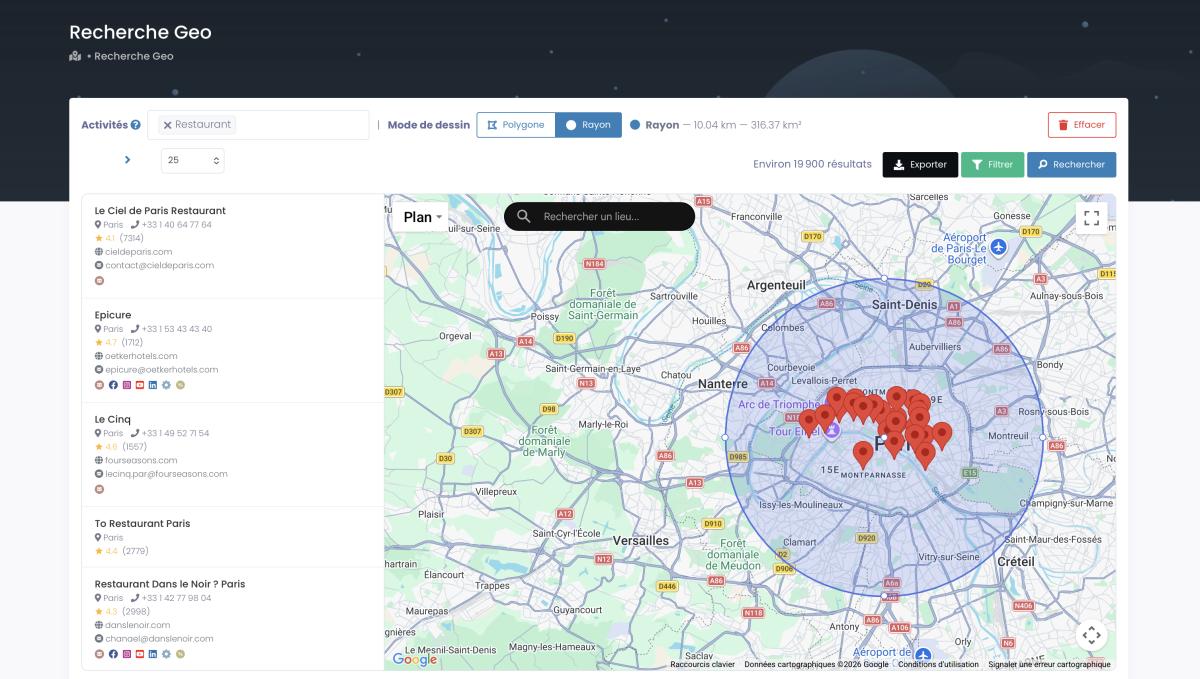
- Set your geographic target. Filter by state, city, or draw a radius around a specific metro area.
- Apply additional filters. Practice size, rating, website presence (practices without websites rarely have extractable emails), and email present so you only keep usable records.
- Export your list. Download as CSV with names, emails, phone numbers, addresses, and practice details.
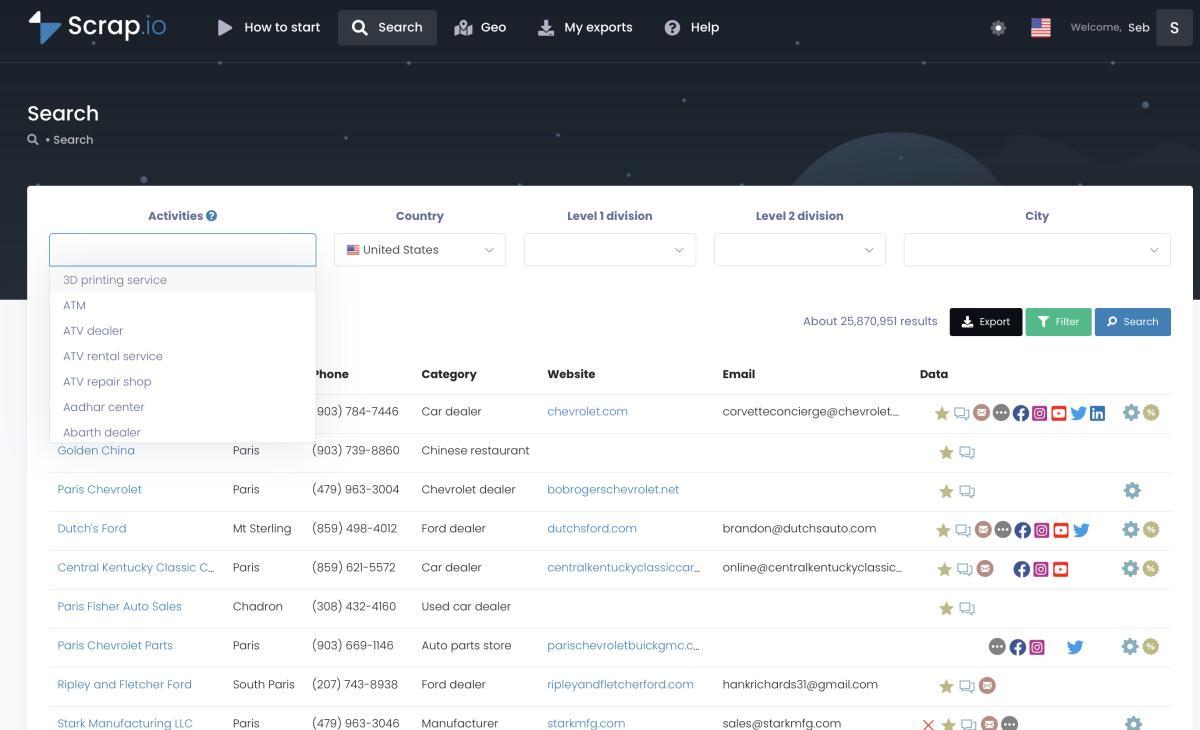
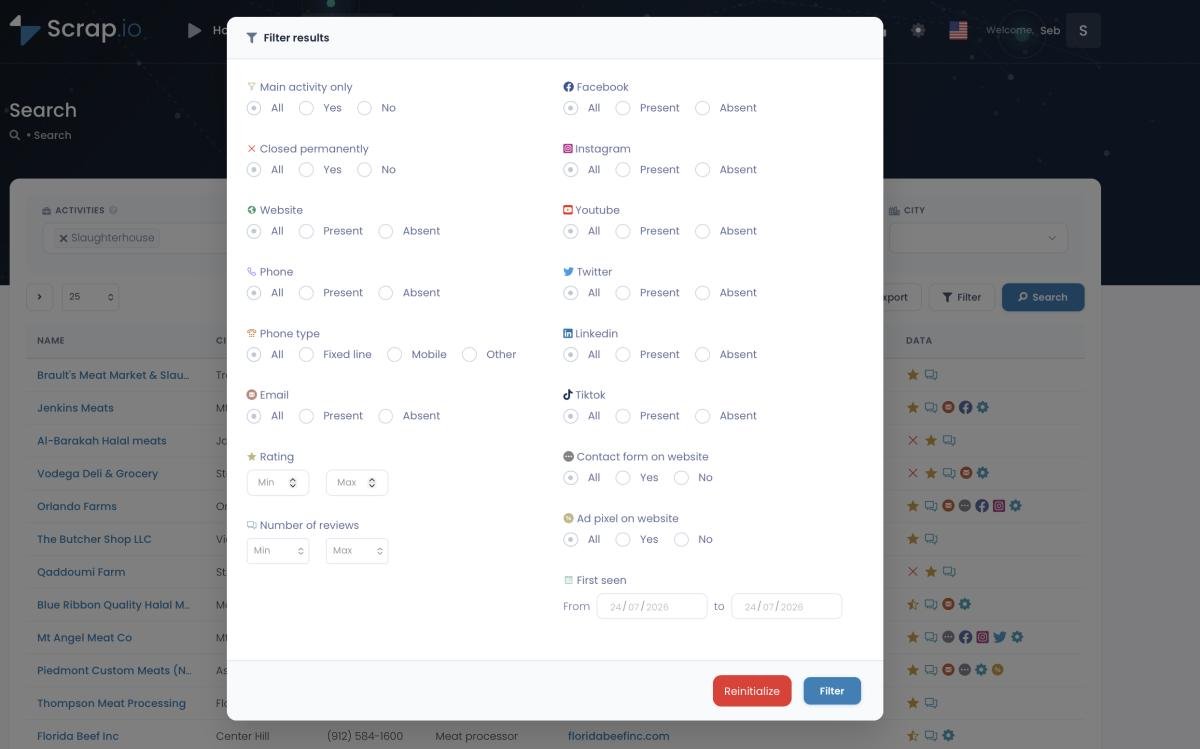
Try building that email file by hand instead. Copy a name, hunt the website, dig for an address, repeat 10,000 times. I'll wait. This is the part where automation stops being a nice-to-have and starts being the whole point.
Video: Finding Clients Through Google Maps Filters
The radius search is particularly useful for healthcare. A medical device rep covering the Dallas-Fort Worth metro doesn't need contacts in Anchorage. Geographic precision means better targeting, which means better response rates.
Platforms like Scrap.io let you access real-time physician contact data filtered by specialty, so you only extract the 50,339 family physicians who actually have a usable email. Start with a free trial and 100 free leads to test your first campaign. Try Scrap.io free: 100 verified leads →
Who Needs Family Practice Physician Contact Data?
EHR & Medical Software Companies
Tebra (the merger of PatientPop and Kareo) actively targets family practice physicians with their EHR, scheduling, and billing platform. Pricing runs $99-$399 per provider, and they acquire customers primarily through email outreach and digital marketing. If you're selling similar solutions, you're competing for the same inboxes.
athenahealth runs the same playbook at enterprise scale. Their revenue cycle management platform targets primary care practices, the exact ~249K family physicians we're talking about. They need accurate contact data constantly refreshed because practices churn, merge, and relocate.
Check out hospital email lists if you're targeting larger healthcare organizations alongside individual practices.
Medical Device & Equipment Sales
From blood pressure monitors to point-of-care diagnostics, family practices buy equipment. The sales cycle is shorter than hospital procurement (thank God), but you still need the right contact at the right practice.
A targeted family medicine specialist mailing list filtered by practice size and location beats a generic medical clinic email list when you're selling specialty-specific equipment.
Telehealth Platforms
Post-2020, telehealth isn't optional anymore. Family physicians are the highest adopters of virtual care among all specialties, which makes them prime targets for telehealth platform vendors. The pitch practically writes itself. These doctors already want what you're selling.
Healthcare Staffing & Recruitment
88% of physicians say shortages affect their practice (Medscape, 2024). Staffing agencies and locum tenens firms need current contact data for family practices that are actively hiring. Same goes for nurse email lists, nurse practitioner email list data, and chiropractor contact databases. The healthcare staffing shortage cuts across specialties.
Real B2B Campaigns Targeting Physicians: What Works
Email Performance Benchmarks in Healthcare
Healthcare B2B emails crush cross-industry averages. We're talking 34.6% to 44.6% open rates (Mailchimp/MailerLite, 2025) versus a 21% average across all industries. Click-through rates range from 1.75% to 4.64%.
Why so high? Physicians actually read their email. As 9clouds puts it: "Health and wellness emails have a 37.77% open rate and a 0.88% click rate." That's the baseline. Targeted, personalized outreach to a specific specialty list performs even better.
But here's an insight from Definitive Healthcare that most marketers miss: "Physicians open emails sent to their opted-in personal accounts at higher rates than those emails received at business accounts." So when you're building your primary care physician email list, a mix of practice emails and personal professional emails gives you better coverage.
Case Studies and Real-World Examples
Cardinal Digital Marketing ran campaigns for a group of 65 family medicine practices and documented a 38% increase in lead volume through targeted digital outreach. Sixty-five practices. Thirty-eight percent more leads. That's not theory. That's a documented result from an agency specializing in healthcare marketing.
Wolters Kluwer published research through their Lippincott HCP Access division showing that targeted email campaigns outperform conference sponsorships for physician recruitment and engagement. Conferences cost $20,000+ per event. A well-targeted email campaign to 10,000 verified family physicians costs a fraction of that.
And according to Martal Group, B2B healthcare purchases involve an average of 9 decision-makers and take 12 months to complete. That's why having complete contact data, not just one email per practice but multiple contacts, matters so much for physician email marketing lists.
Want to reach family physicians like Tebra and athenahealth do? Pull fresh, real-time data instead of last year's CSV, and start with 100 free verified physician leads on Scrap.io. Reach family physicians like Tebra & athenahealth do →
Compliance Guide: CAN-SPAM, HIPAA & GDPR for Physician Outreach
What You Can (and Can't) Do with Physician Emails
Let's clear up the biggest misconception first: physician business email addresses are NOT Protected Health Information (PHI) under HIPAA. HIPAA protects patient data. A doctor's practice email listed on their Google Business Profile or website is public business contact information. Period.
That said, you still need to follow the rules:
CAN-SPAM (US): Include a clear opt-out mechanism, accurate sender information, your physical mailing address, and don't use deceptive subject lines. Non-compliance can cost $50,120 per email. Yes, per email.
GDPR (EU/UK): If any of your physician contacts are in Europe, you need legitimate interest or consent. Business-to-business communications generally fall under legitimate interest, but you must still provide opt-out options and respond to data deletion requests.
CCPA (California): Physicians in California have the right to know what data you've collected and request deletion. Similar to GDPR but US-specific.
Best Practices for Healthcare B2B Email Compliance
Scrap.io extracts publicly available business data, information that physicians themselves published on Google Maps and their practice websites. This is fundamentally different from buying scraped personal data from questionable sources.
But even with clean data, follow these rules: always include an unsubscribe link, honor opt-outs within 10 business days, keep your sending reputation clean by removing bounced emails immediately, and segment your lists so you're sending relevant content. A dentist email list campaign and a family physician campaign should never use the same messaging.
FAQ: Family Practice Physician Email Lists
How much does a family practice physician email list cost?
Traditional vendors charge $0.20-$0.50 per contact, that's $2,000 to $5,000 for 10,000 contacts. Real-time extraction tools like Scrap.io cost approximately $0.005 per contact ($50 for 10,000), representing over 90% savings. The price gap exists because legacy vendors maintain static databases with manual updates, while real-time tools pull directly from public sources with minimal overhead.
How do I find a family practice physician's email?
Extract it live from Google Maps. Filter by the "Family practice physician" category, add your state or city, toggle "has email", and export a verified CSV in minutes. Tools like Scrap.io pull 50,339 US family physicians with a usable email in real time, so you skip the static list entirely and reach doctors at addresses that actually work today.
How many family practice physicians are in the United States?
Scrap.io's real-time Google Maps extraction lists 248,915 family practice physicians across the US in 2026, with 166,572 showing a website and 50,339 exposing a usable email. The AMA separately counts 219,257 physicians whose primary specialty is family medicine. The numbers fluctuate as physicians retire, relocate, or change specialties, which is exactly why static email lists become outdated so quickly.
Is it legal to buy or build a physician email list?
Yes, as long as you collect publicly available business contact information and comply with CAN-SPAM, CCPA, and GDPR regulations. Physician business emails are not considered Protected Health Information under HIPAA. The key is sticking to business contact data published on practice websites, Google Business Profiles, and professional directories. Buying patient-related data would be a completely different story.
What is the average email open rate for healthcare B2B campaigns?
Healthcare B2B emails achieve open rates between 34.6% and 44.6% (Mailchimp/MailerLite, 2025), significantly higher than the cross-industry average of 21%. Click-through rates range from 1.75% to 4.64%. These numbers make healthcare one of the best-performing verticals for email marketing. Family physicians in particular tend to check email consistently between patients.
What's the best time to email family practice physicians?
Tuesday through Thursday, between 10 AM-12 PM or 2-4 PM, consistently yields the best engagement. Avoid Monday mornings (physicians are catching up on the weekend backlog) and Friday afternoons (they're mentally checked out). Also consider time zones. A blast at 10 AM Eastern hits California physicians at 7 AM, before most practices open.
Start Building Your Physician Email List Today
248,915 family practice listings. 50,339 with a real email. A $271 billion market. Open rates north of 34%. And yet most B2B companies are still paying $2,000+ for static lists with 20%+ bounce rates.
The data exists. The tools exist. The gap between companies that reach these physicians and companies that waste budget on dead emails comes down to one thing: data freshness.
Try Scrap.io free and get 100 verified physician leads instantly. Filter before you pay, extract live from Google Maps, and reach doctors at addresses that actually work. Start your free 7-day trial + 100 leads →
Generate a list of family practice physician with Scrap.io