

Video: How to Make Money with Google Maps — 10 Proven Methods That Actually Work
- Can You Really Make Money with Google Maps in 2026?
- Method 1 — Google Business Profile Optimization Services
- Method 2 — Missed Call Text Back Automation
- Method 3 — Local SEO Services for Google Maps
- Method 4 — Google Maps Review Management
- Method 5 — Sell Website Services to Local Businesses
- Method 6 — Google Street View Virtual Tours
- Method 7 — AI Receptionist and Employee Services
- Method 8 — Rank and Rent
- Method 9 — Google Maps Marketing Consulting
- Method 10 — Creative Strategies: Affiliate Marketing & Supplier Discovery
- How to Find Clients Using Google Maps Data
- Is It Legal and Ethical?
- Frequently Asked Questions
200 million businesses. That's what's sitting on Google Maps right now. And according to SOCi's Consumer Behavior Index, 80% of Americans search for local businesses at least once a week. Crazy amount of commercial intent for a free platform.
But I need to clear something up right away because I keep seeing this misconception — Google Maps won't pay you a salary. It's not a gig app. There's no "earn per click" model. (Although — funny enough — Method 6 does involve getting paid to photograph things. So maybe I'm partially wrong.)
You'll see the myth everywhere. On Reddit's r/beermoney, someone literally asked how to "generate income from Google Maps" as a level-6 Local Guide — expecting the platform itself to cut a check for their photos and reviews. (Spoiler: it won't. Local Guides earns you badges, early feature access, and the occasional Google One perk. Not rent money.) The misunderstanding is so common it's worth killing off in the first paragraph. Google Maps doesn't pay you. Businesses on Google Maps pay you. Big difference.
What Maps actually gives you is access to the biggest local business database ever built. Real-time data. Accessible from your couch. And here's the stat that makes this interesting: 46% of Google searches have local intent. Nearly half of everything people type into Google is some version of "I need [thing] near me."
Now combine that with the fact that most of those 200 million businesses have terrible Google profiles. Broken hours. Four blurry photos. No reviews. No website. These companies are hemorrhaging customers and they don't have a clue.
That gap between "business exists on Google Maps" and "business actually looks good on Google Maps" — that's the money. Whether you're freelancing nights and weekends or scaling an agency, there are google maps money making methods generating real cash. We're talking $100 to $500 a day, depending on what you sell and how well you sell it.
I've broken this into 10 methods. Some take zero technical skill. Others require you to know your way around SEO. I'll be straight about which ones are easy and which ones aren't.
Oh, and one more thing — 76% of people who do a "near me" search visit a store within 24 hours (Google/BrightLocal). That's not window shopping. That's "I'm going there today." The businesses showing up in those results get the money. Everyone else gets nothing.
I've tested most of these methods myself or watched people close to me build businesses around them. What follows isn't a hypothetical listicle. It's a breakdown of what's working right now, with real pricing, real pitfalls, and honest assessments of how much effort each one requires. Some are weekend-project easy. Others take months of skill building. I'll tell you which is which.
Can You Really Make Money with Google Maps in 2026?
Yeah. But not the way TikTok tells you.
Can you earn money through Google Maps? Yes — indirectly. Google Maps doesn't pay users directly. The money comes from selling services to the millions of businesses listed on Maps that have weak, incomplete, or invisible online presences. Profile optimization, local SEO, reviews, websites, AI tools. Realistic range: $100 to $500+ per day, depending on the method and your effort.
Nobody's getting rich by "just using Google Maps." The money comes from selling services to businesses listed on Maps — because most of those businesses are doing a lousy job with their online presence.
Google Maps has over a billion monthly users now. And with Google's AI Overviews (the Gemini-powered answers you see at the top of search results), data from Google Business Profiles feeds directly into AI answers. So in 2026, a badly optimized Maps profile doesn't just hurt you on Maps. It makes you invisible to AI search too. Double whammy.
What can you realistically earn from google maps business opportunities? Depends entirely on method and effort. A solo freelancer doing basic profile optimization can pull $100-$200/day with enough clients. An agency running recurring SEO contracts? $500+ daily is achievable. Not guaranteed — achievable. Big difference.
How to Make Money with Google Maps ($100–$200 Per Day)
Want the fastest path to your first $100-$200 day? Stack the low-friction methods with visible deliverables. In order:
- Google Business Profile optimization (Method 1) — $200–$500 per client, 2-3 hours of work. One client basically covers the day.
- Sell a website to a business that has none (Method 5) — $500–$2,000 per build. The "no website" filter hands you the prospect list.
- Shoot a Street View virtual tour (Method 6) — $300–$1,200 per project. One shoot, one invoice.
Pick one. Land one client. That's your $100-$200 day. Then repeat until it's boring.
Quick reality check though. The "$500/day with Google Maps" claims floating around YouTube usually come from people at the top of their game — established agencies with sales systems, referral networks, and years of client relationships. Day one looks nothing like that. Day one looks like cold emails, rejections, and learning curves. But the trajectory is real. I've seen people go from zero to $3K/month within 90 days on Method 1 alone, just because they picked a niche and stuck with it.
Here's a snapshot of all 10 methods:
| Method | Effort | Revenue | Skills |
|---|---|---|---|
| GBP Optimization | Low | $200–$500/client | Basic marketing |
| Missed Call Text Back | Medium | $300–$500/mo/client | Automation |
| Local SEO | High | $500–$2,000/mo/client | SEO expertise |
| Review Management | Low-Med | $100–$300/mo/client | Communication |
| Sell Websites | Medium | $500–$2,000/site | Web design |
| Virtual Tours | Medium | $300–$1,200/project | Photography |
| AI Receptionist | Med-High | $200–$500/mo/client | AI/automation |
| Rank and Rent | High | $500–$2,000/mo/listing | Advanced SEO |
| Consulting | High | $1,000–$5,000/client | Full marketing |
| Affiliate & Suppliers | Low-Med | Varies | Research |
Start with one. Get good at it. Stack another later. That's the formula.
Method 1 — Google Business Profile Optimization Services
I was looking at a dental practice in Tucson last week. Four photos on their profile. Four. Their competitor across the street had 87 photos, weekly posts, Q&A answered, the whole nine yards. Guess who shows up first when someone types "dentist near me."
And this isn't rare. BrightLocal's 2026 data says 56% of retailers still haven't optimized their Google Business Profile. Over half. We're not talking mom-and-pop shops exclusively — retailers of all sizes are leaving money sitting there.
So what does google business profile optimization actually mean? It's not rocket surgery.
Write descriptions that include real keywords and describe what the business does. (Not "we're passionate about delivering excellence." Nobody has ever Googled that sentence.) Upload decent photos — the building, the inside, the team, the products. Pick categories correctly from the 4,000+ on Google Maps. And this matters more than most people realize: selecting "Restaurant" vs "Romanian Restaurant" vs "Fine Dining Restaurant" changes who finds you. Fill out every field. Hours, attributes, services, payment methods, accessibility. Post updates weekly. Answer the Q&A section.
Most owners claimed their listing in 2019, typed in an address and phone number, and never came back. That's your pitch right there.
Revenue? $200–$500 for the initial setup and audit. Then $150–$500/month for ongoing maintenance. About 2-3 hours of work per client once you've got a system. Scrap.io published a complete guide to Google My Business optimization that covers the technical details pretty thoroughly.
Why this is even more critical in 2026 than before: Google's AI Overviews pull directly from GBP data. A bad profile doesn't just tank your Maps ranking — it wipes you from AI-generated answers too. Optimized businesses show up in both. Everyone else disappears twice.
Need to find businesses with weak profiles? Scrap.io lets you filter 225M+ businesses across 195 countries by "no website," "low reviews," or specific categories — with all filters applied before extraction, so you only pull the prospects worth contacting. Free trial, 100 leads included.
Method 2 — Missed Call Text Back Automation
This one caught fire in 2025 and it's only gotten bigger since. Here's the ugly number: businesses pick up just 38% of incoming calls (411 Locals, 2025). That means 62% of people who call a local business hear ringing, then nothing. Or voicemail — which most people under 40 will never, ever leave.
Ambs Call Center estimates the cost: roughly $126,000 per year in lost revenue. Per business. Not from bad marketing. Not from a bad product. From not answering the phone.
Your pitch is absurdly simple. You configure a system that fires off a text within 30 seconds of any missed call. Something like: "Hey, sorry we couldn't pick up — how can we help?" Customer texts back. Lead rescued. Done.
HighLevel, Twilio, a bunch of no-code platforms make this work. You don't code anything. Scrap.io put together a Make.com automation tutorial that walks through the plumbing. And if you want to sharpen the phone pitch itself, these sales prospecting techniques for phone & outreach are worth a read.
$300–$500 per month per client. Recurring. And since 60% of consumers still prefer to call after finding a business online (Nextiva/BrightLocal, 2025), phone calls aren't going away. Neither is this business model.
The ROI math for your pitch meeting: one missed call costs the business maybe $50 in lost revenue. Your system catches 10 missed calls per month. You just saved them $500. You charge $300. They're making money off you. Easiest close you'll ever make.
Where to prospect: plumbers, HVAC, dentists, lawyers, auto repair. High call volume, low tech sophistication. Look for businesses with no online booking and no chat widget — they live and die by the phone.
Method 3 — Local SEO Services for Google Maps
If Method 1 is the appetizer, this is the steak. Big, expensive steak.
The global SEO services market: $83.98 billion in 2026, per Mordor Intelligence. Huge chunk of that = local. WiserReview's 2026 survey found 48% of local businesses say SEO is their top lead generation channel. Not paid ads. Not social. SEO.
What makes local SEO google maps ranking different from regular website SEO? Few things.
Biggest one — and I can't overstate this — the primary business category is the number-one ranking factor on Google Maps. Not backlinks. Not domain authority. The category you pick. I pulled up Romanian restaurants in a mid-size US city last month. Eight listings. Every single one could've boosted their visibility by switching their primary category from "Romanian Restaurant" to plain "Restaurant." Nobody types "Romanian restaurant near me." They type "restaurant near me." Keep Romanian as a secondary. Broad primary = bigger audience. That's a 5-minute change you can charge $300 for.
Also matters: reviews (volume, velocity, keywords inside reviews — more on that in Method 4) and NAP consistency (name, address, phone number matching everywhere — Maps, Yelp, directories, all of it).
Revenue: $500 to $2,000/month per client. Unlike GBP optimization, SEO is never "done." Algorithms change. Competitors move. Content decays. Clients stay for years. That's the beauty of it — and also why the market is so massive.
Two guides worth your time: how local SEO and data scraping feed into each other, and the tactical Google Maps ranking guide that goes method by method.
Fair warning though: SEO results take 3-6 months. You need clients who understand that. The ones who expect page-one rankings in week two? They'll fire you regardless of what you do. Let them walk. Save yourself the headache.
One approach that works well for selling this service: show prospects their current ranking vs. their top competitor's. Pull the data, screenshot it, put it in a simple one-page report. "You're #14 for 'plumber in Austin.' The guy at #1 has 180 reviews, a complete profile, and citations on 23 directories. You have 12 reviews, a half-finished profile, and you're listed on 4 directories. Here's what fixing that looks like." Concrete. Specific. Hard to argue with. Most businesses have no idea where they rank — showing them the gap is often enough to close the deal.
Method 4 — Google Maps Review Management
BrightLocal's 2026 Local Consumer Review Survey dropped a stat that should terrify any business owner: 68% of consumers won't use a business rated below 4 stars. Not 3 stars. Four.
Three things actually move the needle with Google Maps review management:
Average rating. Yes, obviously. But weirdly, a 4.7 outperforms a perfect 5.0. Nobody trusts a flawless score. People know something's off when every single review is five stars.
Volume. A café with 15 reviews at 4.8 stars loses to one with 350 reviews at 4.5. Consistently. Volume = credibility.
Keywords inside reviews. When someone writes "best deep tissue massage in Denver," Google eats that up. Those phrases feed the ranking algorithm. Smart review management nudges customers to mention specifics naturally.
What do you actually sell? You monitor every review. You respond to all of them — positive and negative. (89% of consumers read those responses, by the way.) You flag fakes. You run campaigns to generate new reviews. $100–$300/month per client. Not the highest ticket, but it bundles perfectly with Method 1 or 3. Stack GBP optimization plus review management and you're at $500-$800/month.
Prospecting trick: filter by rating on Scrap.io. Set it to 1-2.5 stars. Instant list of businesses that know they have a reputation problem. The detailed approach is laid out in this guide on finding companies with negative reviews for lead gen.
Two more reads that'll sharpen your pitch: how to leverage reviews as social proof (showing prospects how competitors weaponize their ratings is a killer close), and the 10 proven tips to get more Google reviews. Walk into a meeting citing those and you sound like you've been doing this for years.
Method 5 — Sell Website Services to Local Businesses
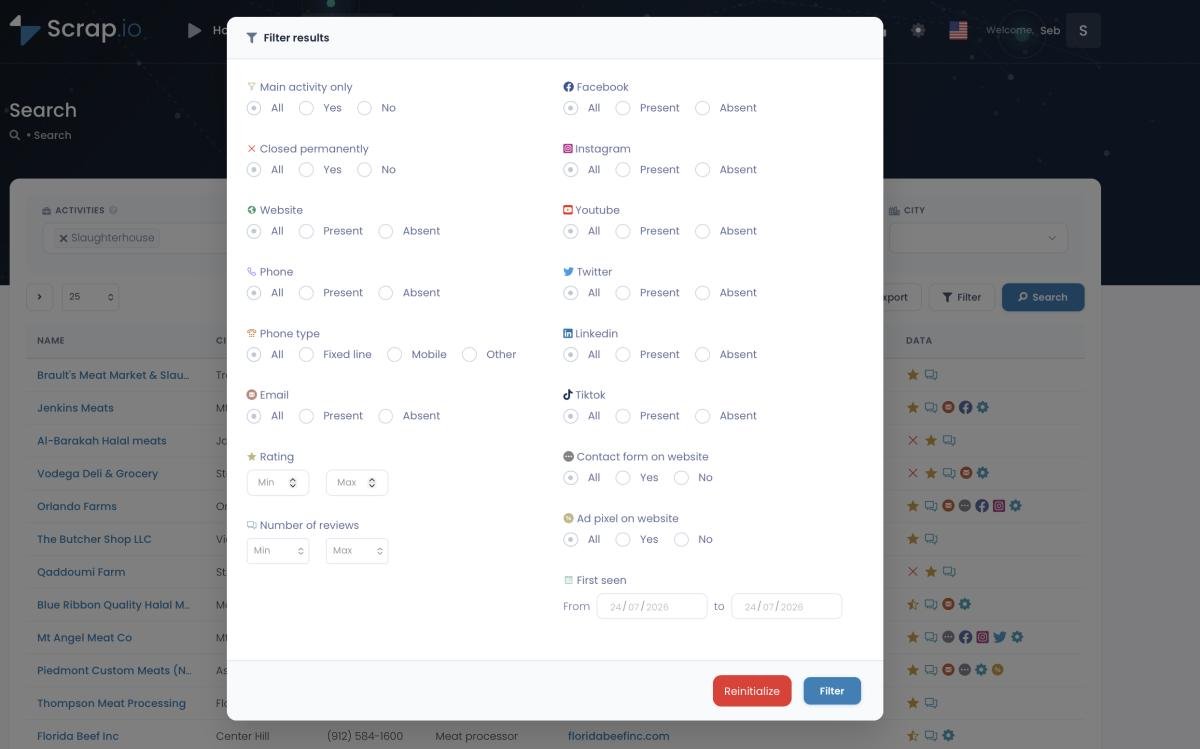
Yussef C., managing director at a marketing agency, left this on Capterra about Scrap.io: he uses the "no website" filter to find businesses without websites on Google Maps, then sells them one. His whole business model. Three clicks to a prospect list.
The market: roughly 1 in 5 businesses on Google Maps has no website at all. Twenty percent. In 2026. Someone taps the "Website" button on their Maps listing and gets... nothing. Dead end. Meanwhile their competitor two blocks away has a nice site, a booking form, and gets the customer.
And here's the part most people don't realize: that "20%" is just the average. Zoom into a single niche and it often doubles. Exclusive Scrap.io data (September 2026): across the US, Scrap.io indexes 345,649 dentists on Google Maps, and 156,774 of them (≈45%) have NO website linked on their listing. Forty-five percent. In one of the most competitive, cash-rich local niches there is. That's not a market gap. That's a canyon. And it's your pre-qualified prospect list, sitting there, waiting.
Over on Quora, the question comes up constantly — how can regular people make money with Google Maps even without a website of their own? Same answer every time: you don't need your own website. You need to find the businesses that don't have one, and build it for them.
"Your listing shows up on Google Maps, but there's no website link. Every time someone looks you up and can't find a site, they go to your competitor who has one." Three sentences. That's the pitch.
$500–$2,000 for a basic build (WordPress, Squarespace, Webflow — use whatever you're fastest with). Then $50–$100/month for hosting and maintenance. Build 30 sites over time and that's $1,500-$3,000/month in recurring income you barely have to think about.
Finding them: Scrap.io's "no website" filter. Category + city + toggle. Thousands of prospects. Grab contact info through the email extraction guide for Google Maps and start outreach.
Target restaurants, salons, contractors, therapists — anywhere a website directly drives bookings.
But here's the real move. Don't just sell the site. Package it with GBP optimization and review management. Instead of a $1,000 one-time project, you're selling $1,000 upfront plus $300/month. Site gets them in the door. Retainer keeps them.
That 45%-no-website number for dentists? You can pull the equivalent for your niche in about two minutes. Try Scrap.io free for 7 days — filter any category + city by "no website," get the count for free, then export your first 100 leads. Real-time data, not a stale list from last year.
Method 6 — Google Street View Virtual Tours
You know that thing where you're browsing a restaurant on Maps and you can "walk inside" before actually going? That 360-degree tour? Someone shot that. And they got paid for it.
$300 to $1,200 per project. Restaurants, hotels, retail shops, wedding venues — anywhere the atmosphere matters. A venue that lets couples virtually walk through the space before visiting books more appointments. Not even close. It's that simple.
Entry point: Google Street View app + 360 camera ($300-$400). Pro level: Matterport, CloudPano. Higher price points, higher-end results.
Competition? Barely exists. Most cities have a small handful of Google Trusted Photographers. Become one and you practically own your area.
I've seen photographers who started by shooting 3-4 free tours to build a portfolio, then used those as proof of quality when pitching paying clients. The before/after is dramatic — business with four static photos vs. business with an immersive walkthrough. It sells itself. Real estate agents use a similar playbook. Event venues especially love these because couples planning weddings want to "visit" 15 venues from their laptop before driving to the top 3.
The money move: shoot the tour, deliver it, then pitch GBP optimization + monthly content updates. An $800 shoot turns into $800 + $300/month. Tour is the foot in the door.
Method 7 — AI Receptionist and Employee Services
Two years ago this didn't exist. Now? Everywhere.
You configure an AI assistant — ChatGPT-powered but tailored to a specific business — that answers phone calls, handles common questions, books appointments, captures leads. Not replacing staff. Catching everything staff misses. After-hours calls. Lunch rush overflow. "What are your hours?" on repeat.
A Medium article by "Cosmos Kay" about this went viral in January 2026. 5.2 million views on the video. Makes sense when you look at the economics: 4-6 hours of setup work, then charge $200–$500/month per client. Your cost per additional client is basically zero. It's software. Adding client #20 costs you the same as client #1.
This is the premium version of Method 2. Missed call text back sends an automated text. An AI receptionist actually has the conversation. Answers the question. Books the appointment. Captures the lead info.
Best niches: medical practices, law offices, home services, auto repair shops. These businesses spend $2,000-$4,000/month on human receptionists. Your $300-$500/month solution is a fraction of that.
Cosmos Kay ran the numbers: 3% conversion on 500 Google Maps prospects = $1,500/month. At 7% conversion? $3,500/month. Solo freelancer money. If you want to automate client acquisition on top of service delivery, Scrap.io's marketing automation guide lays out the whole pipeline.
Tools: Bland.ai, Synthflow, or DIY with Twilio + OpenAI API. No CS degree needed.
Method 8 — Rank and Rent
Not for beginners. Skip this if you're new. But the passive income google maps potential is legit.
Rank and Rent: create a Google Business Profile for a service category in a city. Optimize it. Rank it. Then rent that listing — and all the leads it generates — to a local business for a monthly fee.
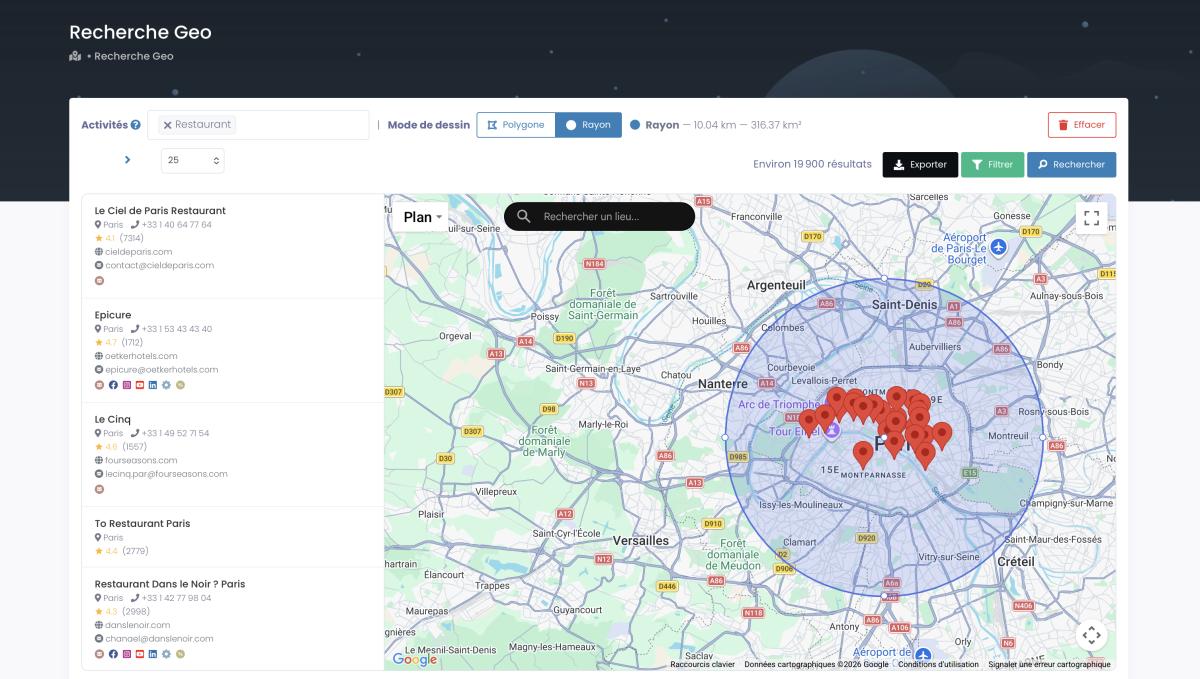
Example: you build a "Plumber in Portland" profile. Get it into the local 3-pack. A plumber in Portland starts receiving 15-20 calls a month from your listing. You charge them $500-$2,000/month. They're happy — warm, local leads. You're happy — once it ranks, it's mostly passive. Rinse and repeat across niches and cities.
$500–$2,000/month per listing. Five of these running simultaneously = a real business.
The catch: Google doesn't like listings that aren't tied to real businesses. If you set up a fake address, you risk removal. You need to partner with a legitimate business or use a virtual office address carefully. Some people run these for years. Others get flagged in months. Eyes open.
Adam Erhart — marketing strategist, 1.5M+ YouTube views on Google Maps topics — says $10K-$50K/month is the ceiling for a scaled portfolio. The floor is much, much lower. But even one ranked listing paying $1,000/month is solid.
Prerequisite: real local SEO skills (Method 3). Can't rank a regular website? Don't attempt this yet. Also handy — Scrap.io's "date first detected" filter surfaces recently opened businesses, and scraping closed businesses from Google Maps lets you find markets where a competitor just disappeared, leaving a gap you can fill.
Method 9 — Google Maps Marketing Consulting
For the experienced people. You're not touching profiles yourself — you're running strategy. Maps Ads, keyword planning, competitor analysis, geo-targeting. Google Maps consulting services at this level go for $1,000–$5,000 per client.
The Google Maps advertising costs and strategy guide on Scrap.io walks through ad types, realistic spend ranges, and ROI comparisons. If you're going this direction, read it.
Best angle I've seen work: target businesses running Google Ads but completely ignoring Maps. They're spending on clicks while the free organic Maps traffic just sits there. Easiest conversation in the world.
Scrap.io detects ad pixels on websites — Facebook, Google, LinkedIn pixels. Filter for businesses with active pixels and you've got pre-qualified prospects who already understand the value of marketing spend. Way better than cold-approaching someone who's never invested a cent.
For the strategic layer — location-based marketing, competitor mapping, customer intelligence — this deep dive on Google Maps geomarketing strategies is solid reading.
Method 10 — Creative Strategies: Affiliate Marketing and Supplier Discovery
These aren't standalone businesses. They're side plays that stack on top of your main method.
Google Maps affiliate marketing. Search for businesses with affiliate programs using Maps data. Health food stores with supplement commissions. Auto parts shops partnering with tool brands. Fitness studios running referral programs. Maps has 4,000+ categories and most affiliate marketers only scratch 10 of them. The niche stuff is where the unsaturated programs hide.
Dropshipping supplier discovery. Type "wholesaler" or "manufacturer" into Maps for any product category. You'll find suppliers invisible on Alibaba and every major directory. Local manufacturers nobody's ever DM'd. Negotiate a deal, build a Shopify store, sell without holding inventory.
Custom maps and guides. Curate Google Maps lists — restaurants, hikes, hidden gems. Monetize via sponsorships, affiliate links, or sell them as travel products. Niche, but travel content creators have built real income streams this way. (And no — this still isn't Google paying you. It's sponsors and affiliates. Same rule as everywhere else in this article.)
None of these hit $500/day on their own. Layered on top of Methods 1-9? Nice bonus revenue.
How to Find Clients Using Google Maps Data
OK. You've picked a method. Maybe two. Now you need humans who'll pay you. This is local business lead generation — and Google Maps is the single best source for it. The whole skill is learning to generate Google Maps leads at scale, not one business at a time.
Step 1: Pick a niche. Not "all businesses." Something specific. Dentists. HVAC companies. Restaurants in Austin. Dog groomers in Miami. Specificity makes your pitch ten times sharper because you're speaking their exact language. If you want a framework for narrowing this down, the guide to defining your ideal customer profile is a useful starting point — and the tactical version, defining your ICP with Google Maps geographic data, shows how to layer location on top. Want the outreach playbook the pros use? Here's how to prospect local businesses like Alex Hormozi. And to time your outreach right, lean on signal-based selling on Google Maps: contact the businesses showing buying signals right now, not the whole list at once.
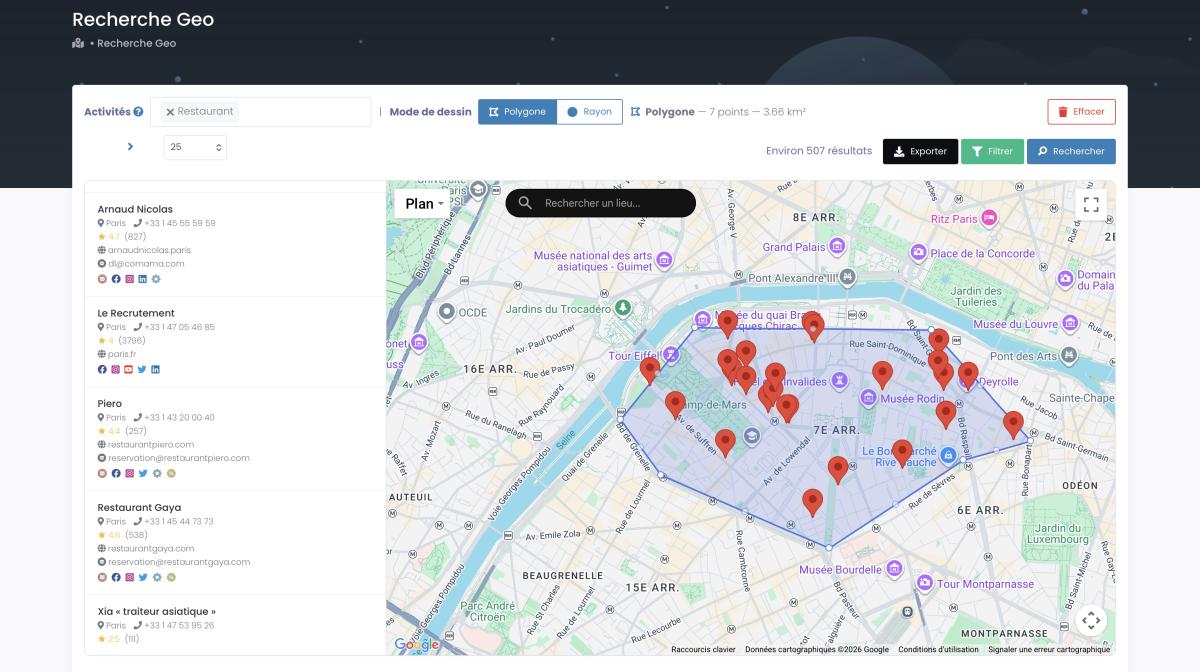
Step 2: Filter. Going through Maps manually, business by business? Insanity. Google caps you at 120 results per search anyway. You'll burn an afternoon and have 20 usable leads to show for it.
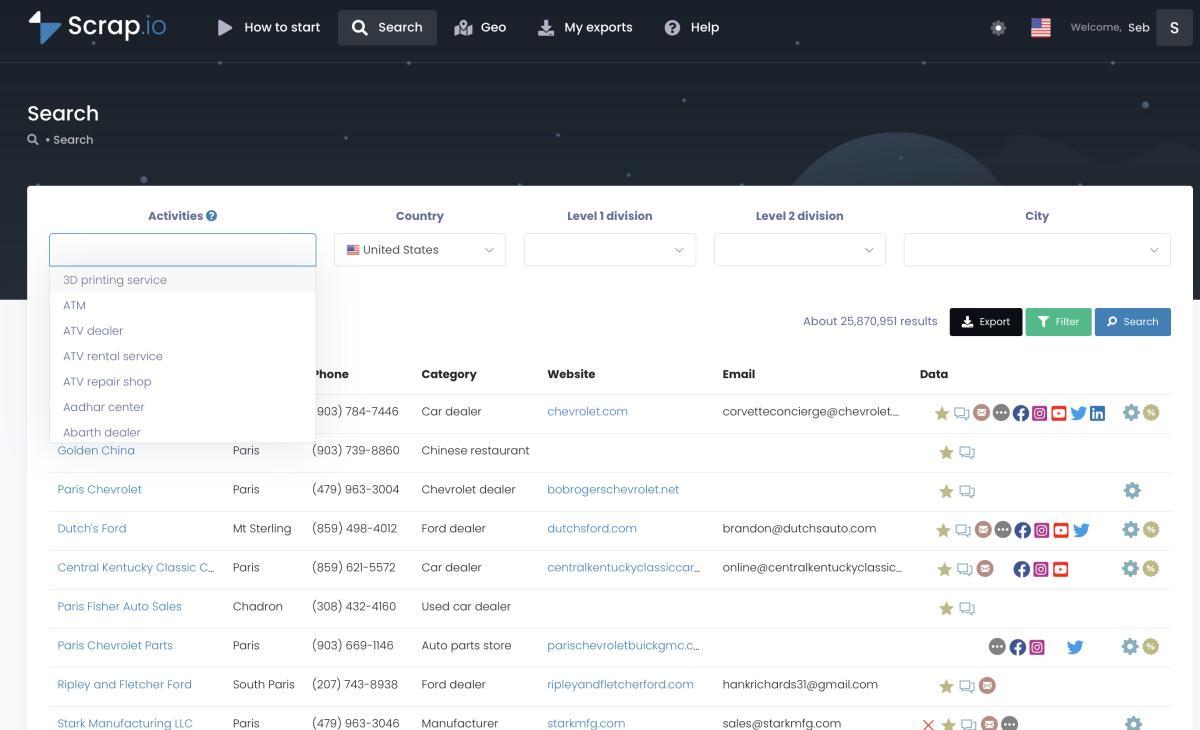
Scrap.io was built for exactly this step. Pick a category, pick a location, apply filters: no website, low reviews, missing email, bad rating, no social presence — whatever signal says "this business needs help." In under an hour you can pull thousands of qualified prospects.
Video: Finding Clients Through Google Maps Filters
Step 3: Export. Download as CSV or Excel. Import into your CRM or email tool. You've got names, addresses, phone numbers, emails, review scores, social profiles. Everything you need for personalized outreach.
Step 4: Reach out. Cold email (follow CAN-SPAM rules). Cold calling still works. Contact forms are underrated — Scrap.io flags which businesses have contact forms, and those messages genuinely get read. In fact, contact form outreach hits nearly 100% read rates because the message lands in an inbox the owner actually checks. For a full prospecting system, the 7-step sales pipeline for Google Maps leads lays it out step by step. And when a prospect pushes back (they will), here's how to handle the objections you'll hear without folding.
Real example: Austin M., CX Director at a marketing agency, wrote on Capterra that he pulled 11,734 targeted companies in under 45 minutes using Scrap.io. He'd been about to pay a VA $0.30/lead for the same work. That's $3,500 in manual costs replaced by a coffee break.
Want that kind of speed? Try Scrap.io free for 7 days — 100 leads included, 225M+ businesses across 195 countries, every filter unlocked on every plan. Test it on whichever method you picked. New to the tool? The quick-start video below walks you through your first export.
Video: Scrap.io — How to Start?
For CRM integration, see the CRM automation guide with Google Maps data. And if you're comparing lead gen platforms, the Google Maps vs LinkedIn for B2B lead generation comparison breaks down when each one makes sense.
One more thing on outreach — personalization is non-negotiable. Don't send 500 identical emails. Mention the business by name. Reference something specific about their listing. "I noticed your Google Maps profile has 3 photos and no description — your competitor on Elm Street has 95 photos and shows up in every local search." Takes 30 extra seconds per email. Triples your response rate. The businesses that respond fastest are the ones where you show them, specifically, what they're losing. Want to scale that without losing the personal touch? Here's how to personalize cold emails with AI. And once they reply, you still have to nurture those leads into clients with a real follow-up sequence.
Is It Legal and Ethical?
Straight answers only.
Scraping public data from Google Maps: legal. The US Ninth Circuit Court ruled in LinkedIn v. HiQ Labs that publicly available data can be scraped. European courts reached similar conclusions for public data under GDPR. Scrap.io operates from the UK, is GDPR and CCPA compliant, and only accesses information businesses have voluntarily published. Full analysis: guide on Google Maps scraping legality.
Cold outreach: legal, with rules. CAN-SPAM, GDPR, CASL all permit commercial messages as long as you identify yourself, include a physical address, and offer opt-out. Don't lie. Don't hide. Pretty simple.
Listing manipulation, fake reviews, keyword-stuffed business names: against Google's Terms. Google actively removes this stuff and penalizes offenders. Don't.
The line is clear. Helping businesses get found by customers who are already searching? That's value creation. Gaming the system or deceiving people? That's not. Stay on the right side.
Frequently Asked Questions
Can you really make money with Google Maps?
Yes — but Google Maps doesn't cut you a check. The money comes from selling services to the millions of businesses listed on Maps that need help with their online presence. Profile optimization, SEO, reviews, websites, AI tools. $100 to $500+ per day is realistic depending on method and effort.
How much do people get paid to do Google Maps?
All over the map. (Pun intended.) GBP optimization: $200–$500/client. Local SEO: $500–$2,000/month. Review management: $100–$300/month. Virtual tours: $300–$1,200/project. AI receptionists: $200–$500/month per client. Top earners stack multiple methods to build recurring revenue — see the snapshot table above for the full breakdown.
Can you get paid for Google Maps photos?
Not directly from Google. Local Guides who upload photos earn points and perks, not cash. The real money is in Google Street View virtual tours (Method 6): businesses pay $300–$1,200 to have a professional 360° walkthrough shot and published on their listing. So yes — you get paid for Maps photography, but the client is the business, not Google.
Can I get paid for doing reviews on Google Maps?
No — writing reviews for money violates Google's policies and can get listings penalized. Don't. What you can sell is review management (Method 4): monitoring reviews, responding to them, flagging fakes, and running legitimate campaigns that ask real customers for honest feedback. Businesses pay $100–$300/month for that because a rating below 4 stars scares off 68% of consumers.
Do I need technical experience to start?
For GBP optimization, review management, or website sales — nope. Basic marketing sense and a willingness to learn. Local SEO, AI receptionists, and Rank-and-Rent require more specialized knowledge, but nothing that demands a CS degree. Most tools are no-code.
What's the difference between GBP optimization and local SEO?
GBP optimization = the Google Business Profile specifically. Descriptions, photos, categories, posts. Local SEO = all of that plus citations, backlinks, on-page website SEO, review strategy, competitor analysis. GBP optimization is one slice. Local SEO is the whole pie.
How do I find businesses that need Google Maps services?
Data extraction tools with smart filters. Scrap.io covers 225M+ businesses in 195 countries — filter by no website, low reviews, poor ratings, incomplete profiles. Pick a niche, pick a city, export, outreach.
Is Google Maps scraping legal?
Yes for publicly available business data. LinkedIn v. HiQ confirmed scraping public info is permissible. Scrap.io is GDPR and CCPA compliant. Only extracts data that businesses published themselves. Use it for legitimate business purposes — lead generation, market research, prospecting.
How long does it take to start earning?
GBP optimization and website sales: first client within 1-2 weeks of steady outreach. Local SEO takes 3-6 months to show ranking results for clients, so contracts need to reflect that timeline. Fastest money comes from methods with immediate, visible deliverables.
How does Google Maps itself make money?
Google Maps doesn't charge the people using it. Its revenue comes from ads (promoted pins and local search ads), Google Maps Platform API fees paid by developers, and paid business features. None of that touches your wallet. You earn by selling services to the businesses listed on Maps, not from Google.
Can you work for Google Maps directly?
No. Google hires salaried employees and runs volunteer programs like Local Guides (perks and badges, not cash) and Trusted Photographers. There's no "Google Maps job" that pays you per task. The real income is freelance: optimizing profiles, local SEO, reviews, websites, and virtual tours for the businesses already on the map.
Start Making Money with Google Maps Today
Ten methods. Some you can start this weekend with zero tech skills. Others take months of learning first. The thread connecting all of them: millions of local businesses desperately need help, and most will pay once you show them the gap between where they are and where they could be.
If you're starting from scratch? Method 1 (GBP optimization) or Method 5 (selling websites). Low barrier. Fast results. Easy to demonstrate value. Once you've got cash flow and a few satisfied clients, layer on local SEO, review management, or AI services for recurring monthly income.
These aren't theoretical google maps monetization strategies. Freelancers are pulling $3K-$5K/month. Agencies are building past $50K. The SEO services market alone is $83.98 billion in 2026, per Mordor Intelligence. Capturing even a laughably tiny fraction of that changes your financial reality.
And the barrier to entry is still surprisingly low. You don't need an MBA. You don't need investors. You need a laptop, a prospecting tool, and the willingness to cold-email 50 businesses a day for a few weeks until something bites. The businesses are there. The problems are obvious. The only variable is whether you decide to solve them or keep reading about it.
Pick one method. Test it for 30 days. Once leads start moving, track the right prospecting KPIs so you know what's working and what to cut. Adjust based on what happens. Stop reading articles and start doing the thing.
Ready? Try Scrap.io free for 7 days — 100 leads to test any of these 10 methods. Pick a niche, filter, export, reach out. That's it. 50,000+ professionals already prospect this way across 225M+ businesses and 195 countries.
Generate a list of restaurant with Scrap.io