

📋 What's in This Guide
- What Are Inbound and Outbound Leads?
- Inbound vs Outbound Leads: Key Differences That Matter in 2026
- Inbound Lead Generation Strategies That Work in 2026
- Outbound Lead Generation Strategies for B2B
- Why the Best B2B Teams Combine Both (The Hybrid "Allbound" Approach)
- Real-World Examples: How Companies Use Both Strategies
- Compliance: Staying Legal with Inbound and Outbound Leads
- FAQ: Inbound Leads vs Outbound Leads
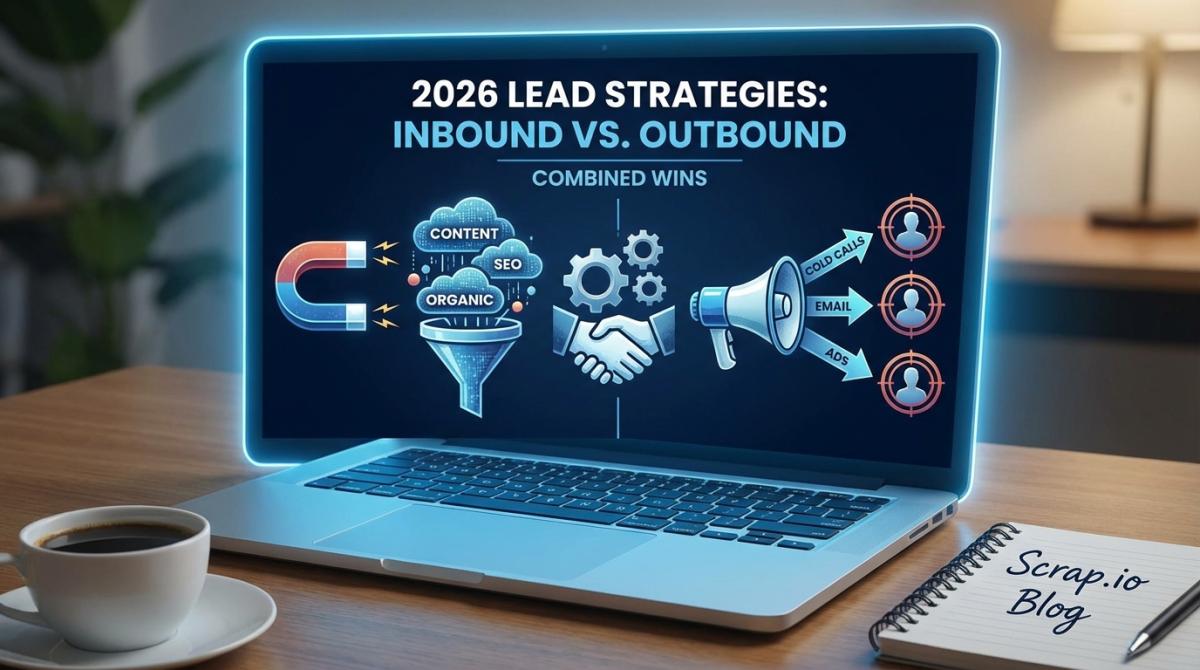
Okay so listen. There's this stat from DemandGen that kind of broke my brain when I first saw it. Companies combining inbound and outbound lead generation? They see 2× more revenue growth than companies picking just one (DemandGen / Landbase, 2026). Double. Two times the growth. And yet, I'm not making this up, roughly 80% of B2B marketers still act like it's some kind of death match. Team Inbound versus Team Outbound. Pick your fighter.
It's 2026. That's an expensive mistake to make.
I have this friend. We'll call her Dana. Dana spent a year and a half building this incredible content engine. Blog posts ranking page one left and right. Lead magnets converting like crazy. Really beautiful work. Then her CEO walks in one morning and goes "cool but I need pipeline this quarter. Not next year. Now." And Dana's sitting there thinking... my blog post from three months ago isn't going to close a deal by Friday.
Meanwhile some competitor's sales guy is pulling contacts off Google Maps and booking meetings the same week.
So which is better, inbound or outbound leads? Wrong question. Totally wrong question. (And if you're stuck on the broader inbound vs outbound marketing version of this fight, same answer applies.) Let me explain why.
What Are Inbound and Outbound Leads?
What Is an Inbound Lead?
Dead simple. An inbound lead is someone who found you. They Googled something. Found your article. Downloaded your ebook. Filled out your form. Raised their hand basically. That's the inbound leads meaning in a nutshell. They showed up at your door already curious.
It's like owning a restaurant. Inbound leads are people who walked in because they smelled the food. Already hungry. Already interested. That's also the warm leads meaning in plain English: someone who's already leaning in before you say a word (and if you want the full breakdown of warm leads vs cold leads, there's a whole guide for that).
What Is an Outbound Lead?
Flip it around. You go find them. Cold email. Cold call. LinkedIn DM. You picked someone who looks like a good fit and you reached out. They didn't ask for it. Probably don't know you exist yet. That's the outbound leads meaning, and what are outbound leads in sales, really? Prospects your team sourced instead of waiting on. A cold email pulled from a Google Maps listing counts. What is an example of an outbound lead? That's it, right there.
Same restaurant thing? Outbound is handing menus to strangers on the sidewalk. Most people walk right past you. Some stop. And occasionally? One of them becomes a regular who tells all their friends.
Quick Comparison
| Criteria | Inbound Leads | Outbound Leads |
|---|---|---|
| Initiation | Prospect comes to you | You reach out to prospect |
| Intent | Higher (they searched for a solution) | Lower (they didn't ask) |
| Cost per lead | Lower long-term | Higher per contact |
| Speed to results | Slow (6-12 months to build) | Fast (days to weeks) |
| Control | Less (depends on algorithms) | More (you choose who to target) |
| Sales cycle | Often shorter (pre-qualified) | Often longer (needs nurturing) |
Inbound vs Outbound Leads: Key Differences That Matter in 2026
Everyone and their mother has opinions about inbound vs outbound marketing. Hot takes everywhere. So let me just skip the opinions and give you numbers. Numbers don't care about feelings.
Video: Scrap.io - How to Start? (2-minute onboarding)
Cost Per Lead
HubSpot's data says inbound leads cost 62% less per lead than outbound. Sixty-two percent. That's massive. And it makes sense when you think about it. You write a blog post once. It ranks. It brings in leads while you sleep. Outbound? Every new lead costs new effort. New email. New follow-up.
Want the actual 2026 dollar ranges? Inbound runs roughly $20-400 per lead, outbound $50-700 per lead (Martal Group, 2026). Wide spreads, sure. Depends heavily on your channel and how clean your data is.
But hold on. People always forget this part. That 62% savings kicks in after you've invested months into content. On day one? Inbound is way more expensive. You're paying writers. Designers. SEO tools. And getting nothing back for a while. It's an investment that pays off later.
When you compare Google Maps vs LinkedIn for B2B leads, the inbound vs outbound lead generation cost gap shifts depending on which tools you're actually using. And if you want the full menu, our roundup of lead generation software breaks down where each tool lands on that curve.
Conversion Rates
This is the one that gets people fired up. Inbound leads close at 14.6%. Outbound leads? 1.7% (Marketing Sherpa via Prospeo, 2026). I'll let that sit for a second.
Sounds obvious though right? Someone who typed "best CRM for small business" into Google and found your review is way more ready to buy than some random person who got a cold email during lunch.
Saw this on r/sales that nailed it: "Statistically in SaaS, inbounds close at a 12:1 rate over outbounds. Inbound = something compelled them to come to YOU." Hard to argue with that.
Deal Size
Okay but before you burn your outbound playbook. Plot twist. Outbound campaigns generate 50% larger deal sizes on average (ITSMA / Landbase, 2026). That's not a small number. Fifty percent bigger deals.
And here's a data point that cuts the other way. Punch! B2B, citing Forbes' State of Inbound Report, says outbound leads actually convert to sales at a 34% higher rate than inbound. No contradiction with that 14.6% close rate, by the way. Closing a hand-raiser and turning a sourced prospect into a signed deal are two different scoreboards, and on the money one, outbound punches above its weight.
The reason? With outbound YOU pick the targets. Enterprise accounts. Specific verticals. Exact companies matching your dream customer profile. Inbound gives you whoever stumbles in. Outbound lets you handpick.
The Speed Thing
And here's where the inbound vs outbound sales argument gets really practical. You need revenue this quarter? Like actually need it? Outbound. End of story. Build a list today. Send emails tomorrow. Book meetings by Thursday.
Inbound compounds beautifully but man does it take a while to get going. Six months. Sometimes twelve. Your CEO doesn't want to hear about "compounding returns" when the board meeting is next week.
Ivan Silakov summed the whole thing up on LinkedIn back in July 2026, and honestly I keep coming back to it: "The inbound vs outbound question in 2026 is really: how long can you wait for pipeline?" (via LinkedIn). That's it. That's the actual question.
| Metric | Inbound | Outbound | Winner | Source |
|---|---|---|---|---|
| Cost per lead | 62% less | Higher | 🟢 Inbound | HubSpot / Martal 2026 |
| Close rate | 14.6% | 1.7% | 🟢 Inbound | Prospeo 2026 |
| Deal size | Standard | 50% larger | 🟠 Outbound | ITSMA / Landbase 2026 |
| Time to first lead | 6-12 months | Days | 🟠 Outbound | N/A |
| Long-term ROI | Compounds | Linear | 🟢 Inbound | N/A |
Table: Inbound vs outbound cost and conversion, winner by metric (2026 data).
Which converts better, inbound or outbound leads? Inbound. It's not even close on close rate: 14.6% versus 1.7% (Prospeo, 2026). But "converts better" isn't the same as "makes more money." Outbound lands bigger deals and lands them faster, so the smart read is: inbound wins on efficiency, outbound wins on speed and deal size. You want both.
Inbound Lead Generation Strategies That Work in 2026
There are dozens of types of lead generation, but inbound boils down to three that actually move the needle. Here's what works right now.
SEO & Content Marketing
Still the big one for inbound lead generation. Write stuff people actually search for. Answer their real questions. Do it well enough and Google sends you free traffic forever. HubSpot says inbound generates 54% more leads than paid marketing alone.
But I'll be straight with you. The game in 2026 is harder. AI overviews eating clicks. More competition. You can't throw together some mediocre 800-word blog post and expect anything to happen. Content needs to be legitimately useful. Specific. The kind of thing someone bookmarks.
Lead Magnets & Gated Content
Ebooks. Templates. Calculators. Checklists. Whatever's valuable enough that someone trades their email for it. Key word being valuable. Nobody's handing over their real email for some generic "Ultimate Guide to Marketing" written by a committee. Nope.
Social Media & Google Business Profile
Underrated one here. Your Google Business Profile is basically an inbound machine that most people ignore. Someone searches for a local service. Finds you on Maps. Sees reviews. Photos. Contact info. They come to you already halfway sold. We'll circle back to this because Google Maps plays a surprisingly big role in outbound too. It's kind of the whole point of local business lead generation done right.
Outbound Lead Generation Strategies for B2B
Cold Email Outreach
Quick sidebar: is email marketing inbound or outbound? Depends. Newsletter to your subscribers? That's inbound. Emailing some stranger who never heard of you? Outbound.
Cold email reply rates average around 5-6% in 2026, with the top campaigns pushing 15-25% (Martal / Prospeo, 2026). Not huge numbers on the surface. But here's what kills most outbound campaigns: 80% of sales need 5+ follow-ups and yet 48% of reps never even make a second contact (Invesp, 2026). Almost half give up after one try. That's insane.
Oh and speed matters. Like really matters. Responding to an inbound lead within five minutes makes you 9× more likely to convert them. Nine times. If you wait an hour? Basically over.
Good cold email outreach strategies come down to one thing. Specificity. Generic templates get nuked. Personalized stuff based on real data gets replies. Simple as that. Staring at a blank draft? Steal the framework in our guide on how to write a cold email that actually gets opened.
Cold Calling
Nobody's favorite activity. I get it. But the B2B cold call success rate sits around 5% with top performers hitting 10-15%. Not glamorous. Consistent though. And when you combine it with email... things start compounding.
Google Maps Data for Hyper-Targeted Outbound
Now this. This is where outbound lead generation gets really interesting.
Video: How to Scrape Local Leads at the Country Level (Scrap.io)
Think about what Google Maps actually has. Every local business listed with contact info. Reviews. Website. Hours. Social profiles. All public. Just sitting there. What if you could pull all that data out, filter it exactly how you want, and use it for outbound prospecting?
That's basically what Scrap.io does: 225 million+ businesses indexed across 195 countries, extracted in real time. You want all plumbers in Houston with bad reviews and no website? Done. Two clicks. Every dentist in Chicago with an email but no Instagram presence? Same thing. You can find email addresses from Google Maps for pretty much any type of business, and if you just want the email extraction angle, there's a free Google Maps email extraction route too. Want the full method? Here's how a proper Google Maps email extractor pulls contacts at scale.
Here's the part that actually saves you money. You filter before you export, so credits only get spent on contacts that match what you need. No email on the listing? Filtered out before you pay a cent.
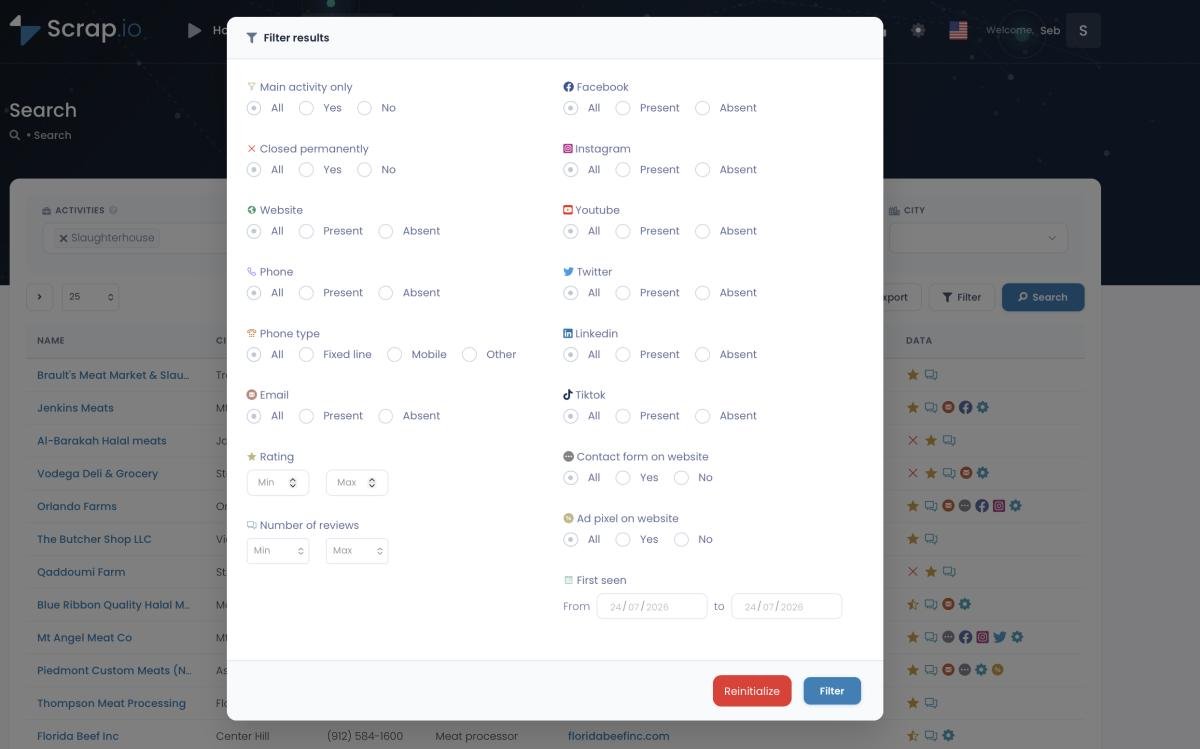
Pick your category, pick your zone (a single city or an entire country), and the platform tells you how many businesses match before you spend anything. Counting is free. Then you export a clean CSV with names, phones (classified mobile vs. landline), up to five categorized emails per business, and social profiles.
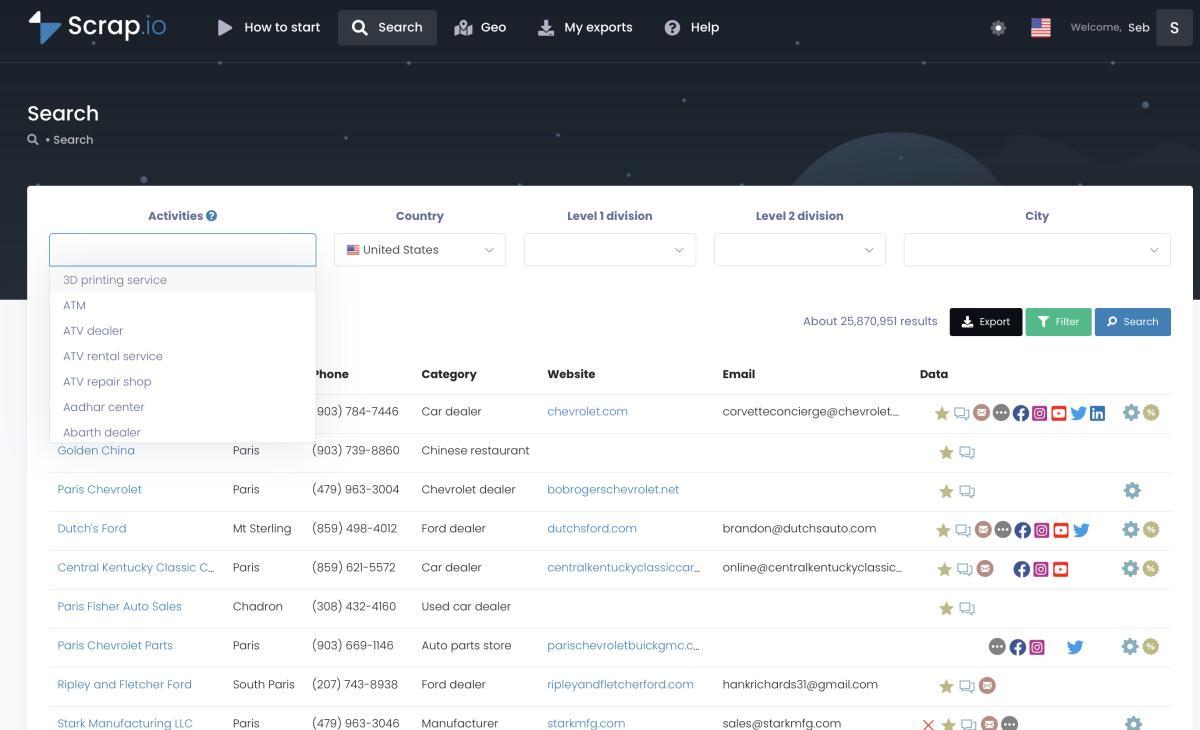
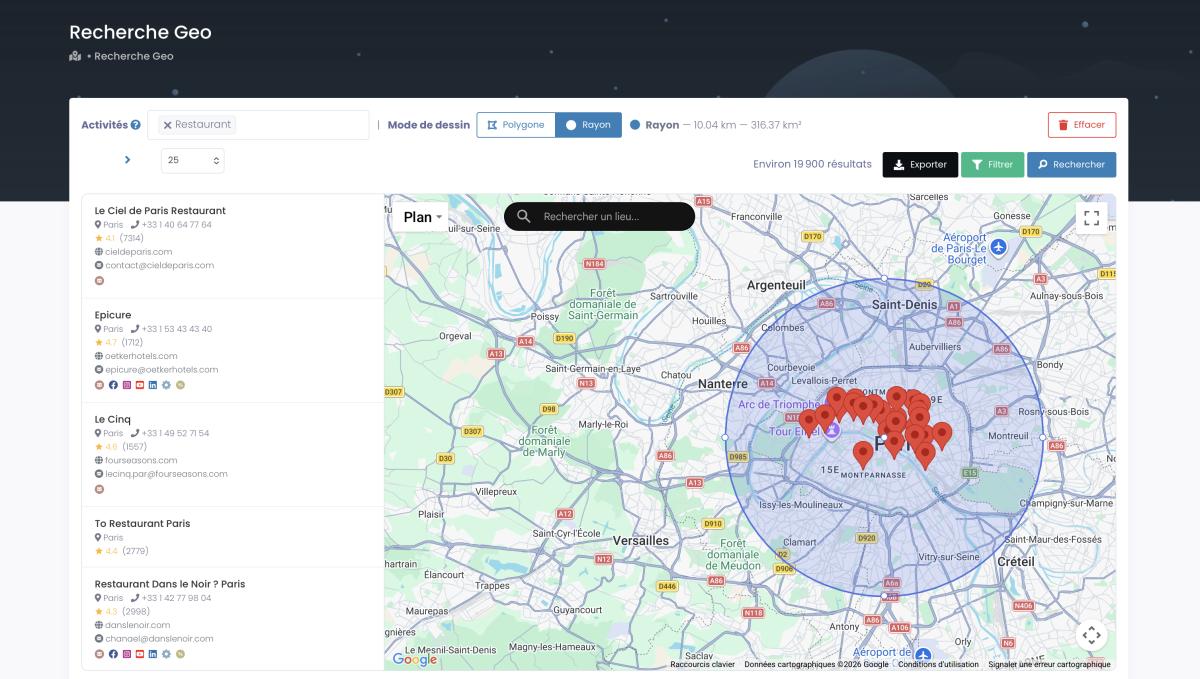
Some people are using this to prospect local businesses like Alex Hormozi teaches. Hyper-local. Hyper-specific. Way more targeted than anything a traditional list broker can offer. And if a whole city is too broad, GeoSearch lets you draw a radius around a single point, or hand-draw a polygon around one neighborhood.
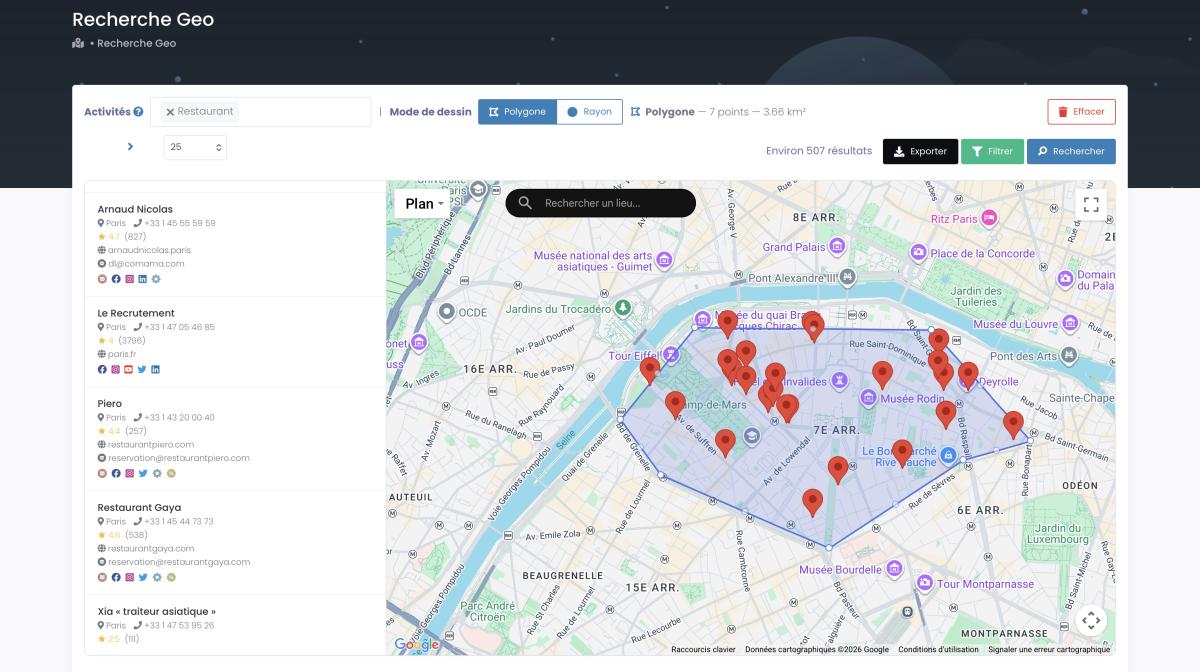
Filter before you export. Scrap.io pulls verified local business contacts (emails, phone numbers, social profiles) from 225M+ Google Maps listings across 195 countries. Only pay for contacts that match your filters. Start a free 7-day trial: 100 leads included.
Multi-Channel Outreach
Don't just do email. Combine email + LinkedIn + phone. Multi-channel campaigns hit 31% lower cost per lead compared to single-channel outbound (Martal, 2026). Thirty-one percent cheaper. That adds up fast.
And here's a number that surprised me. LinkedIn messages get roughly a 10.3% response rate, more than double the average cold email (Martal / Prospeo, 2026). So if your prospect is ignoring your inbox, they might still reply to a DM. Different platform, different mood.
Reason's pretty obvious. People live on different platforms. Your prospect might ignore emails but respond to every LinkedIn message. Or maybe they actually pick up their phone. Wild concept in 2026 but some people still do that.
Worth checking if cold emailing as a B2B strategy alone makes sense for your market. Usually it works better as part of a bigger mix. This is really just omnichannel outreach in miniature: meet people where they actually reply, not where you wish they would.
Why the Best B2B Teams Combine Both (The Hybrid "Allbound" Approach)
Here's the thing nobody in the top search results for inbound vs outbound marketing seems to talk about. The best teams? They don't pick sides. They run both.
Eddie Reynolds put it about as bluntly as anyone on LinkedIn in June 2026: "You can't really do outbound without inbound and you can't really do inbound without outbound." (via LinkedIn). Read that twice. The two things aren't rivals. They're each other's fuel.
Companies mixing inbound + outbound see 2× revenue growth versus single-channel folks (DemandGen / Landbase, 2026). And those multi-channel campaigns we mentioned? 31% lower CPL. The numbers just... work.
The framework is not complicated:
Inbound is the long game. Every blog post. Every video. Every guide. It compounds. Six months from now your content brings leads while you're asleep. Cost per lead drops month after month.
Outbound is the right-now game. Need ten meetings by next Friday? Outbound. Breaking into a new vertical? Outbound. Going after specific enterprise accounts? Outbound.
Google Maps sits right in the middle. Your Google Business Profile pulls inbound leads through local search. That exact same Google Maps data feeds your outbound campaigns with fresh verified contacts. It literally bridges both worlds. You can build a sales pipeline for Google Maps leads that works for both inbound nurturing and outbound prospecting. The inbound side is really just lead nurturing doing its slow, patient work while outbound keeps the top of the funnel full.
Best B2B lead generation hybrid strategy in 2026? Use inbound for compounding ROI. Outbound for immediate pipeline. Let them feed each other. Plenty of B2B SaaS client acquisition strategies already run this exact playbook.
Real-World Examples: How Companies Use Both Strategies
Theory is fine. But I want to show you people actually doing this stuff. Real companies. Real numbers.
Video: How to Scrape Local Leads with Claude & Vibe Prospecting (Scrap.io)
House Pro Digital (Ian): Outbound Cold Email → $60K Deal
Ian runs House Pro Digital. Marketing agency for home services companies. His whole approach is pure outbound. Scrape Google Maps. Pull emails from state databases. Send cold outreach. No blog. No SEO. Just outbound.
The result? $60K deal. From cold email alone (source: The Workbench). One campaign. Sixty thousand dollars. Started with Google Maps data.
Honestly one of the best outbound lead generation examples for B2B I've come across.
Clay.com: Google Maps + AI Enrichment → 83% Open Rate
Clay put together a full walkthrough. Scrape Google Maps contacts. Enrich with AI. Send hyper-personalized cold emails. One campaign they documented, Jacob Tuwiner from Sendoso, hit an 83% open rate (source: clay.com/blog).
Eighty-three percent. I know marketers who celebrate 25%. This is a completely different universe. Secret? Not "Hey {first_name}" stuff. Actual specific details about each business. Their reviews. Their situation. Real personalization based on real data, the same vibe-prospecting workflow in the video above.
InboundREM: Google Business Profile → $100K+ Leads in 10 Weeks
Now for the inbound crowd. InboundREM documented a real estate agent who went all in on optimizing their Google Business Profile. No cold outreach. Pure inbound local strategy.
$100K+ in leads within 10 weeks. Average Google Maps ranking jumped from 21+ to 1.7 (source: inboundREM case study). Doesn't get much cleaner than that for an inbound case study.
Captain Data + Hunter.io: Maps Extraction → 71% US Delivery Rate
Captain Data documented combining Google Maps extraction with Hunter.io for email verification. Solid outbound pipeline stuff. Numbers: 50%+ email coverage from Maps data, 71% delivery rate in the US, 75% in Europe (source: captaindata.com).
Those deliverability numbers are legit. Way better than some random database that hasn't been touched in a year.
Build the same pipeline. Every example above started with fresh Google Maps data: the exact thing Scrap.io extracts in real time across 4,000+ business categories. Start with 100 free leads (7-day trial) and pull your first list in minutes.
Compliance: Staying Legal with Inbound and Outbound Leads
Not gonna pretend this part is exciting. But skip it and you might tank your campaigns. Or worse.
CAN-SPAM Act (US)
Basics for outbound email: honest subject lines. Say who you are. Working unsubscribe link. Your actual physical address. Process opt-outs fast. Don't be weird about it.
Some people swear cold email is illegal. It's not. CAN-SPAM allows commercial email to business addresses. Follow the rules and you're fine. Not complicated.
GDPR (Europe)
Reaching out to European contacts? Different ballgame. Stricter rules. Need a legitimate basis for processing data. Where you got the data matters a lot here. We went deep on this in our GDPR cold email B2B guide, and the short version is: legitimate interest works for B2B, but you have to document it.
Why Real-Time Public Data Beats Purchased Lists
Old purchased lists are a compliance nightmare honestly. Where'd the data come from? Half the contacts might be dead emails. Someone asks "how did you get my info?" and you better have an actual answer.
Extracting from public sources (like Google Maps listings) is fundamentally different. Businesses published that info themselves. It's public. Traceable. Scrap.io is GDPR and CCPA compliant, and every data point traces back to its source. Way less risky than buying some random list from a broker who can't explain where anything came from.
That's a big reason why learning how to generate outbound leads from Google Maps has gotten so popular. Clean data. Fresh data. Fully traceable sources.
FAQ: Inbound Leads vs Outbound Leads
What is the main difference between inbound and outbound leads?
Inbound leads found you on their own, through your content, website, or a search engine. Outbound leads are people you went after through cold email, calls, or LinkedIn outreach. The core difference: inbound leads usually have higher intent because they were already looking for a solution when they found you. You started the conversation with outbound; they started it with inbound.
What is an example of an outbound lead?
A few common ones:
- Cold emailing a business owner after finding their contact info on Google Maps.
- Cold calling someone from a targeted list.
- Sending a LinkedIn message to a VP you've never met.
- Using Google Maps data extraction through tools like Scrap.io to build targeted prospect lists, then reaching out directly.
Which converts better, inbound or outbound leads?
Inbound, on close rate: 14.6% versus 1.7% for outbound (Prospeo, 2026). People who come to you are already interested. But outbound generates 50% larger deals, delivers pipeline in days rather than months, and, per Punch! B2B citing Forbes, actually converts sourced prospects to sales at a 34% higher rate. So inbound wins on efficiency; outbound wins on speed and deal size. The best B2B teams run both.
Does cold calling still work in 2026?
Yes, but the bar has moved. Average B2B cold calls convert at roughly 5%, while top reps hit 10-15% by researching the account first and pairing calls with email and LinkedIn. As a lone tactic it's rough. As one channel inside a coordinated outbound sequence, it still books meetings, especially against fresh, well-targeted lists.
How much do inbound leads cost compared to outbound?
Inbound costs about 62% less per lead, but only after months of content and SEO investment. In 2026 dollar terms, inbound runs roughly $20-400/lead and outbound $50-700/lead (Martal). Live Google Maps scraping drops outbound costs hard, though: you're looking at thousands of contacts for the price of one traditional per-contact list.
Which strategy is better for startups vs established companies?
Startups usually need outbound first. You need pipeline now, not in twelve months. Established companies should lean into inbound for long-term efficiency while keeping outbound for targeted campaigns. Smartest move? Start outbound for quick revenue, build inbound in parallel, and watch your cost per lead drop as content compounds.
Can Google Maps data be used for outbound lead generation?
For sure. Google Maps has public business info (emails, phones, social profiles, reviews, websites) for 225M+ businesses. Tools like Scrap.io let you find email addresses from Google Maps and build specific lists filtered by location, category, review score, and digital presence. All from data businesses published themselves. One of the most effective, compliant ways to generate outbound leads right now.
All That to Say...
The whole inbound leads vs outbound leads argument misses the point. Completely. Data's clear: companies doing both see 2× revenue growth. Inbound builds the machine that compounds over time. Outbound fills pipeline when you need it yesterday. Google Maps data bridges the gap between the two.
Starting fresh? Go outbound first. Get some revenue in the door. Use that cash to fund your inbound engine. Over time the balance shifts. Inbound handles more load while outbound zeroes in on your biggest targets.
Companies winning in 2026 aren't debating which is better. They're running both. And it's working really well for them.
Try Scrap.io free for 7 days: get 100 verified B2B leads from any industry, any city, any country. Real-time Google Maps data, filtered before export, across 195 countries. Start your free trial now.
Generate a list of restaurant with Scrap.io