

📋 What's in This Guide
- Why Most Businesses Get Inbound vs Outbound Marketing Wrong
- What Is Inbound Marketing? (Definition + 2026 Data)
- What Is Outbound Marketing? (Definition + 2026 Data)
- Inbound vs Outbound Marketing: Side-by-Side Comparison
- Is Email Marketing Inbound or Outbound?
- The Hybrid Approach: Why the Best Companies Do Both
- How to Choose the Right Strategy for Your Business
- Is Cold Outreach Legal in 2026? (GDPR & CCPA)
- FAQ, Inbound vs Outbound Marketing
Okay so here's a stat that bugs me. Companies using a hybrid inbound-outbound approach grow revenue 27% faster. And yet 68% of marketers still pick one side. Like choosing between your left leg and your right leg. Sure you can hop around on one. But why?
I talk to small business owners pretty much every week. Same conversation. Every. Single. Time. "Should I do content marketing or cold outreach?" "Is SEO better than ads?" "My buddy's accountant's cousin says cold email is dead."
Look. The whole inbound vs outbound marketing debate? Wrong question. Completely wrong. The actual question is when do you use which one. And how do you mix them together without losing your mind or your budget.
We'll get there. First let me break down what each one actually means. With real 2026 numbers. Not recycled stuff from three years ago that half the internet keeps copy-pasting.
Why Most Businesses Get Inbound vs Outbound Marketing Wrong
Take Mike. Mike runs a plumbing company in Austin. Good guy. Terrible marketing instincts.
He spent eight months writing blog posts about leaky faucets. Water heater maintenance. How to unclog a drain without calling a plumber. (Which is kind of working against yourself but whatever.) Good content honestly. But zero leads in the first four months. Nothing. Crickets.
So he panicked. Ditched the blog entirely. Went all-in on cold email. Got some quick wins. Felt like a genius for about six weeks. Then he burned through his list and was back to square one. Staring at his phone wondering where it all went wrong.
Mike's mistake? He treated it as either/or. Most businesses do this.
Companies combining inbound and outbound see 27% faster revenue growth than those using just one. Cross-channel inbound drives 9.5% revenue growth year-over-year compared to 3.4% for single-channel. And the 2026 update to that number is even blunter: teams that run both instead of outbound-only report roughly 25% higher marketing ROI (Landbase, 2026). Doing both isn't a nice-to-have. It's the whole edge.
So why does everyone keep picking sides? Because it's simpler. And honestly because most marketing blogs, even from companies that really should know better, frame it as a fight. Inbound vs outbound. Content vs cold email. Pull vs push. Like a boxing match where you have to bet on a winner.
The best companies? They don't pick. They do both. Strategically.
Quick note before we go deeper, because people mix these up constantly. This guide is about marketing methodology, the channels and the mix. If what you actually care about is the difference between an inbound vs outbound lead at the conversion level (close rates, deal size, lead type), that's a different piece. Read both. They stack.
What Is Inbound Marketing? (Definition + 2026 Data)
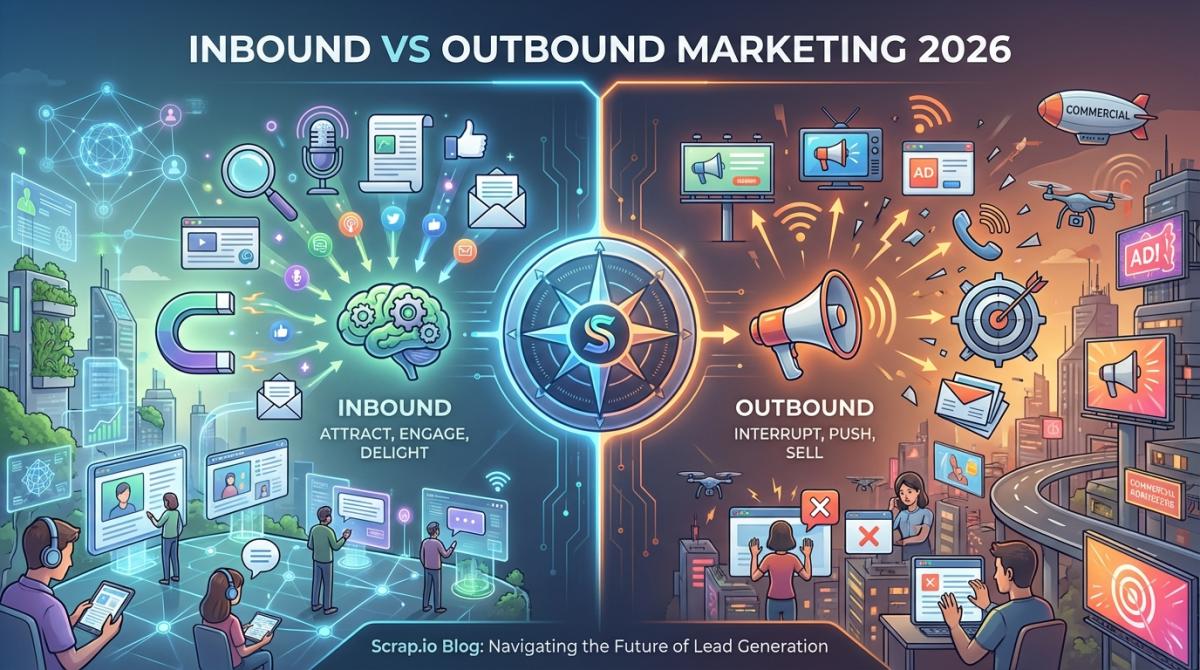
Inbound marketing means creating valuable content and experiences that pull potential customers toward your business. You build assets, blog posts, videos, SEO pages, social content, that attract prospects when they're already looking for solutions. Nobody gets interrupted. Nobody gets a random call at lunch. People find you because you made something useful.
That's the short version anyway.
Main tactics? SEO. Content marketing. Social media. Email nurturing for people who already subscribed. Webinars. Lead magnets. All that to say, you're building a magnet instead of throwing darts at strangers.
The 2026 numbers are honestly pretty wild. Inbound leads cost roughly 63% less than outbound, per HubSpot's marketing data. Not a small gap at all. SEO-generated leads still close at 14.6% versus 1.7% for outbound, a gap that held into 2026 lead-gen benchmarks, so inbound closes roughly 10x better once someone actually lands. And 75% of inbound-focused teams report their strategy is working.
But. And this is a big but.
It takes forever. Like genuinely forever. We're talking 12–18 months before you see real organic traffic. That's a long time to wait when you have bills to pay. After about 5 months though, inbound becomes roughly 80% cheaper per lead. And it compounds. Like a snowball that keeps getting bigger.
The annoying part? You're kind of at the mercy of Google. They change their algorithm and your traffic tanks 30% overnight. Happened to a ton of businesses in 2025. You don't control it the way you control outbound.
Inbound Marketing Examples That Work
Twenty20, a stock photo marketplace, pivoted from B2C to B2B with pure content marketing. Blogs. Guides. Comparison articles. Industry stuff. Result? 312% increase in organic traffic. Over 100% growth in subscriber leads. (That's from a HubSpot case study you can look up.)
Local businesses do this too by the way. A dentist ranking first for "emergency dentist [city]"? That's inbound. A landscaper whose YouTube videos drive consultation requests? Inbound. A realtor with neighborhood market reports that generate email signups? Also inbound. If you want the full playbook, our guide to local business lead generation breaks the whole thing down.
Common thread? You made something people actually want. You didn't shout at them. Big difference.
What Is Outbound Marketing? (Definition + 2026 Data)
Outbound marketing means you go to the customer first. You find your target audience, get their contact info, and start the conversation. They didn't come to you, you showed up. Cold email, cold calling, paid ads, direct mail, trade shows, TV spots, radio. All outbound.
It's interruption marketing basically. You're tapping someone on the shoulder during their day and going "hey got a minute?" Some people really hate it. But man does it work when you do it right.
Now the landscape has shifted quite a bit recently. Cold email open rates sit between 15–27.7% in 2026. That's down from 36% back in 2023. Big drop. Gmail, Yahoo, Microsoft all tightened deliverability rules. And reply rates? Let's kill the fantasy numbers. The average cold email reply rate is 3.43% according to Instantly's 2026 Benchmark Report (billions of emails analyzed). A good campaign lands in the 5–10% range. Elite senders clear 10.7%+. So when someone tells you cold email is dead, what they mean is their cold email is dead. Different thing entirely. A tighter cold emailing strategy is usually the fix.
Cold calling though? Not dead. Not even close. Takes about 3 attempts to connect with someone on average. But once you get them on the phone the conversation rate is solid. And get this, 82% of buyers say they'll accept meetings with sellers who reach out first. That's from RAIN Group. So much for "nobody answers cold calls anymore." (The actual numbers behind this live in our breakdown of cold calling success rates.)
Outbound gives you a predictable pipeline in 3–6 months. Way faster than waiting 18 months for blog posts to rank. But the cost is linear. No compounding. You pay per email sent. Per ad click. Per call. Stop spending and the leads stop too.
Oh and one more thing. B2B sales cycles keep stretching, averaging around 75 days now per Gartner. Means you need more follow-up touches than even two years ago. Patience isn't optional anymore.
Here's the plot twist nobody mentions though. Outbound still lands the bigger fish. For companies under 500 employees, outbound remains the top source of pipeline in 2026, and those deals run roughly 3x larger than inbound-sourced ones (Landbase, 2026). So yeah, lower close rate. Much bigger checks.
Outbound Marketing Examples in Action
Cleveland Brothers, a Caterpillar equipment dealer, used targeted email outreach to construction companies in their region. Not mass blasts. Specific lists. Industry-relevant messages. Stuff that actually made sense for the person reading it. Result? 300% increase in marketing-attributed ROI. Significant pipeline growth from cold outreach alone. (Source: SmartBug Media case study.)
That's a local B2B company selling heavy equipment. Not some VC-backed startup in San Francisco. Regular business. Regular results.
Paid ads are classic outbound too. Google Ads, Facebook retargeting, LinkedIn sponsored posts. SDR-driven prospecting, where sales reps work through targeted lists using cold email outreach strategies and cold calling scripts that work, is still how most B2B companies actually make money. And if you want the copy side of it, here's how to write a cold email that gets replies.
Someone on r/sales put it perfectly: "For local businesses, cold email still works incredibly well if you have the right list. The problem is always data quality."
That last part. Remember it. It matters later.
Inbound vs Outbound Marketing: Side-by-Side Comparison
Alright let's just put them next to each other. Because seeing the difference between inbound and outbound marketing with examples and hard numbers is way clearer than me rambling for another five paragraphs.
| Criteria | Inbound Marketing | Outbound Marketing |
|---|---|---|
| Approach | Pull (attract customers to you) | Push (reach out to customers) |
| Cost per lead | ~63% lower long-term | Higher but predictable |
| Time to ROI | 12–18 months | 3–6 months |
| Lead quality | Higher (14.6% close rate) | Lower (1.7% close rate) |
| Deal size | Standard | Up to ~3x larger (SMB, 2026) |
| Scalability | Compounds over time | Linear cost scaling |
| Control | Less (depends on algorithms) | More (choose who to target) |
| Best for | Brand building, organic growth | New markets, quick pipeline |
| Examples | Blog, SEO, social media, webinars | Cold email, ads, cold calling, direct mail |
See the pattern? Inbound is the long game. Outbound is the quick game. Neither is "better." They're just different tools.
Someone on r/AskMarketing summed it up better than I could: "Inbound typically cheaper but takes longer and is tougher. Outbound easier to track and directly tie to results."
Yep. That's basically it.
Is Email Marketing Inbound or Outbound?
This question comes up all the time. And honestly most articles either dodge it completely or give some super vague non-answer that helps nobody.
So. Is email marketing inbound or outbound?
Both. Depends on the situation.
Email is inbound when you're sending newsletters to people who opted in. Drip campaigns to subscribers who grabbed your lead magnet. Nurture sequences to folks who filled out a form. They asked to hear from you. That's the key.
Email is outbound when you're cold emailing prospects you've never talked to. Reaching out to business owners who didn't sign up for anything. That first message to someone who has zero clue who you are. You went to them. Outbound.
Simple framework. Did they ask to hear from you? Inbound. Are you reaching out first? Outbound. Done.
And is cold email inbound or outbound? It's outbound. Always. No debate. But here's the thing, cold email done really well can almost feel like inbound to the person receiving it. When the message is relevant and the timing is right and you clearly did your homework? That's the art of it. This video gets into why so many Google Maps cold emails flop, and it's almost always the same reason:
Video: Why Your Google Maps Emails Don't Get Replies?
Either way though. Inbound or outbound. The quality of your list is what makes or breaks the whole thing. Outdated contacts. Wrong emails. People who quit that job six months ago. That kills everything. Avoiding common cold email mistakes starts with having actual current data, and keeping those messages out of the junk folder is a whole discipline of its own (here's how to avoid sending spam emails in prospecting).
This is exactly where the list-building tool earns its keep. Filter for businesses that actually have an email present, and you never burn budget on a listing you can't contact:
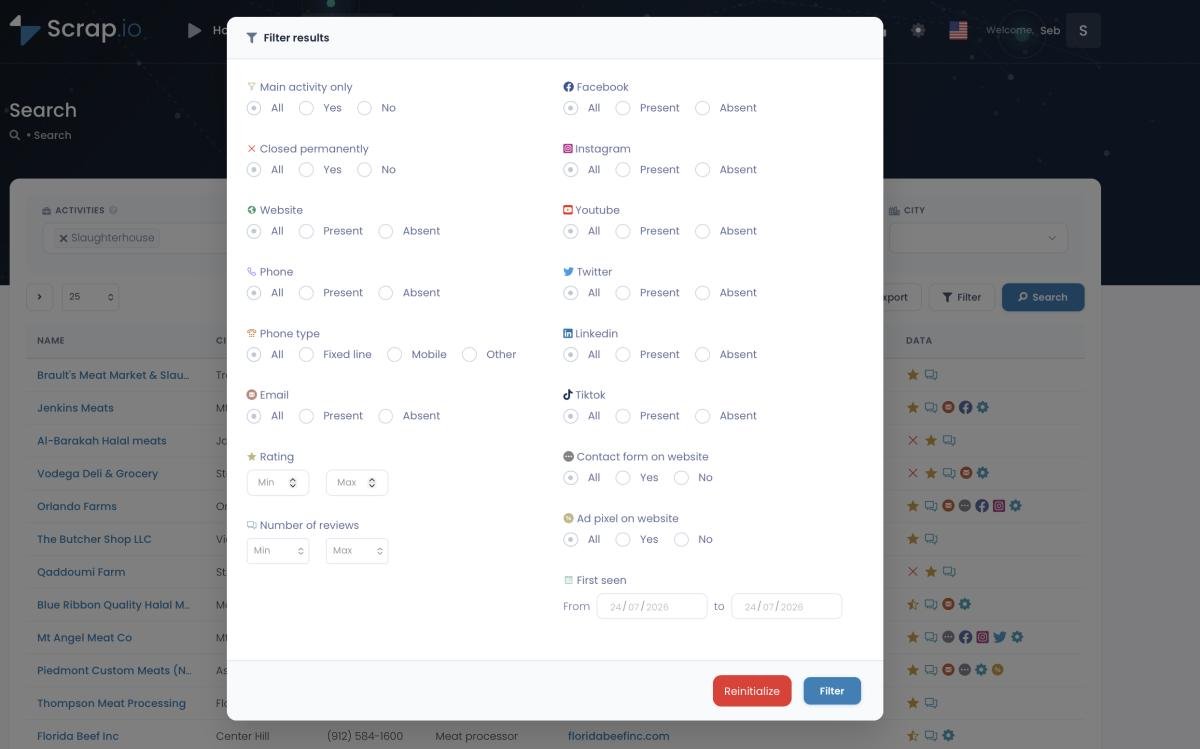
Building an outbound list or enriching your inbound contacts? Same tool either way. Platforms like Scrap.io let you extract verified local business data from Google Maps in real time, emails, phone numbers, reviews, all of it, with filters applied before a single credit is spent so you only pay for usable contacts. You can start with a free 7-day trial and 100 leads to test.
The Hybrid Approach: Why the Best Companies Do Both
Remember that hybrid number? Hybrid approach = 27% faster revenue growth. Cross-channel inbound delivers 9.5% revenue growth year-over-year versus 3.4% single-channel, and running both beats outbound-only by about 25% on ROI (Landbase, 2026). Numbers are numbers. They don't lie.
But "do both" by itself isn't a strategy. That's like saying "eat healthy and exercise." Thanks. Super helpful. What does it look like in practice?
Here's what actually works. Broken down by phase so you can steal it.
Phase 1, Months 0-3: Outbound-Heavy (70/30)
You need cash now. Start with cold email. Paid ads. Direct outreach. Generate quick pipeline while planting inbound seeds. 70% of your time goes to outbound. 30% goes to getting the basics up, website, some initial content, social profiles. Nothing fancy yet.
Phase 2, Months 3-6: The Transition (50/50)
Your early blog posts start getting indexed. Maybe a couple rank on page two. Not great but it's something. Email nurturing kicks in for Phase 1 leads who didn't buy yet. Split it evenly. Outbound keeps the lights on. Inbound starts warming up.
Phase 3, Months 6-12: Inbound Takes Over (30/70)
This is where it gets fun. Organic traffic compounds. Content generates leads while you're asleep. (Or on vacation. Or at your kid's soccer game. Whatever.) Outbound gets more surgical, you're not mass-emailing anymore. You're targeting specific high-value accounts. 30% outbound, 70% inbound.
Cognism, a B2B data provider, does exactly this. Demand gen content on one side. SDR cold outreach on the other. Result? 60% of meetings from outbound, 40% from inbound. Two signed deals included a £40K package and a £120K/year package. Not bad for a company that doesn't pick sides. (Source: Cognism case studies.)
SAP does it at the enterprise level. Thought leadership content plus ABM campaigns. Pipeline quality went up. Cost per qualified lead went down. Standard hybrid playbook at scale. (Source: HubSpot/Forbes case studies.)
Now here's what the budget scenarios actually look like. Because I know that's what you really want to know.
$1K/month: 80% outbound. Cold email using Google Maps leads. Maybe some basic Google Ads. 20% inbound, one blog post a week and a properly filled-out Google Business Profile. That's it. Don't overthink it.
$5K/month: 50/50 split. Real SEO investment alongside targeted outbound. You can start building content assets that'll pay off in six months. Keep the direct outreach going.
$10K/month: 40% outbound, 60% inbound. Full content strategy. Retargeting. Outbound goes after only the big fish accounts. Everything else comes through organic.
A Reddit user in r/marketing said it well: "The best approach is combining both. Use outbound to get immediate traction, then let inbound take over as your content matures."
And over on r/SaaS, a recurring take among founders is that they quietly trust outbound more than inbound, at least early on, because it's the channel they can actually control when the runway is short. Makes sense. You can't will a blog post to rank by Friday. You can send fifty emails.
Pretty much nails it.
How Local Businesses Can Combine Both Strategies
Here's something I find wild. 46% of all Google searches have local intent. That's from Google/BrightLocal. Almost half. If you're a local business that's a ridiculous opportunity sitting right there.
Outbound side: pull contacts from Google Maps. Local business data, emails, phones, review info. Run cold email campaigns to businesses that complement yours. A wedding photographer emailing event planners. An IT company reaching out to dental offices. A marketing agency targeting restaurants with terrible Google reviews who clearly need help. This is the exact "prospect local businesses like Hormozi" move, and there's a whole video on it:
Video: Prospecting Local Businesses Like @AlexHormozi
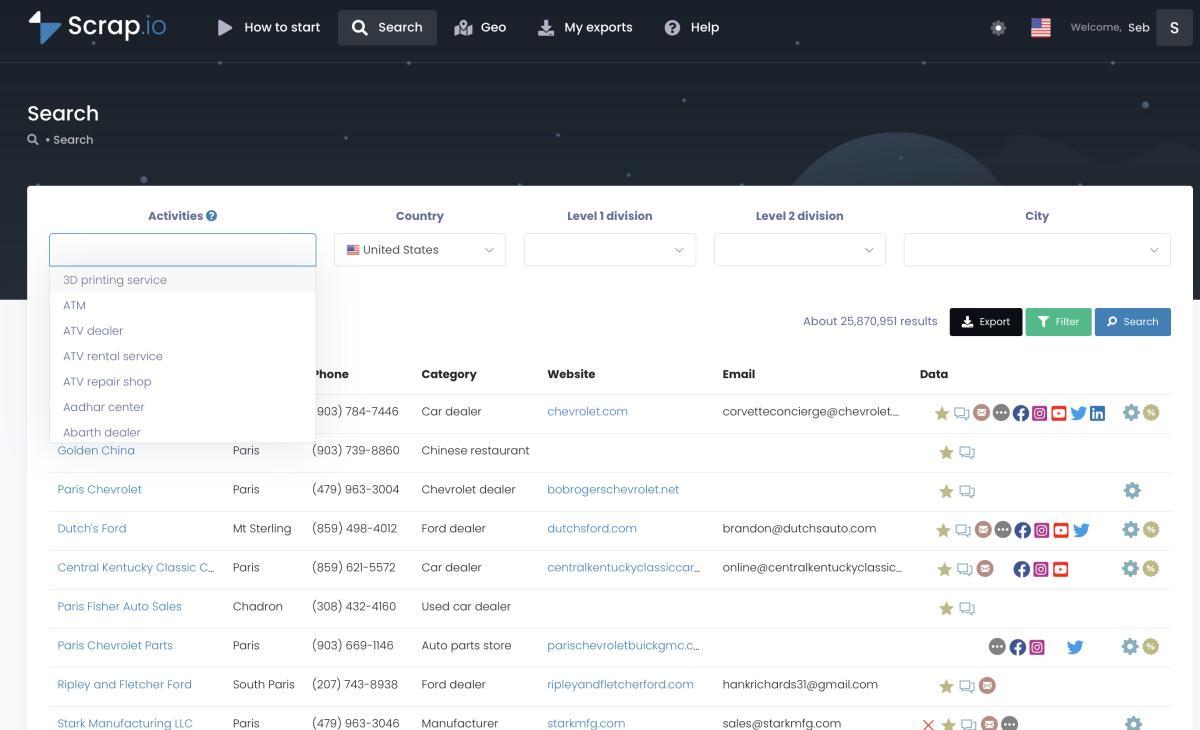
Pulling that list takes about two clicks. Pick a category, pick a zone, filter for what you need, done:
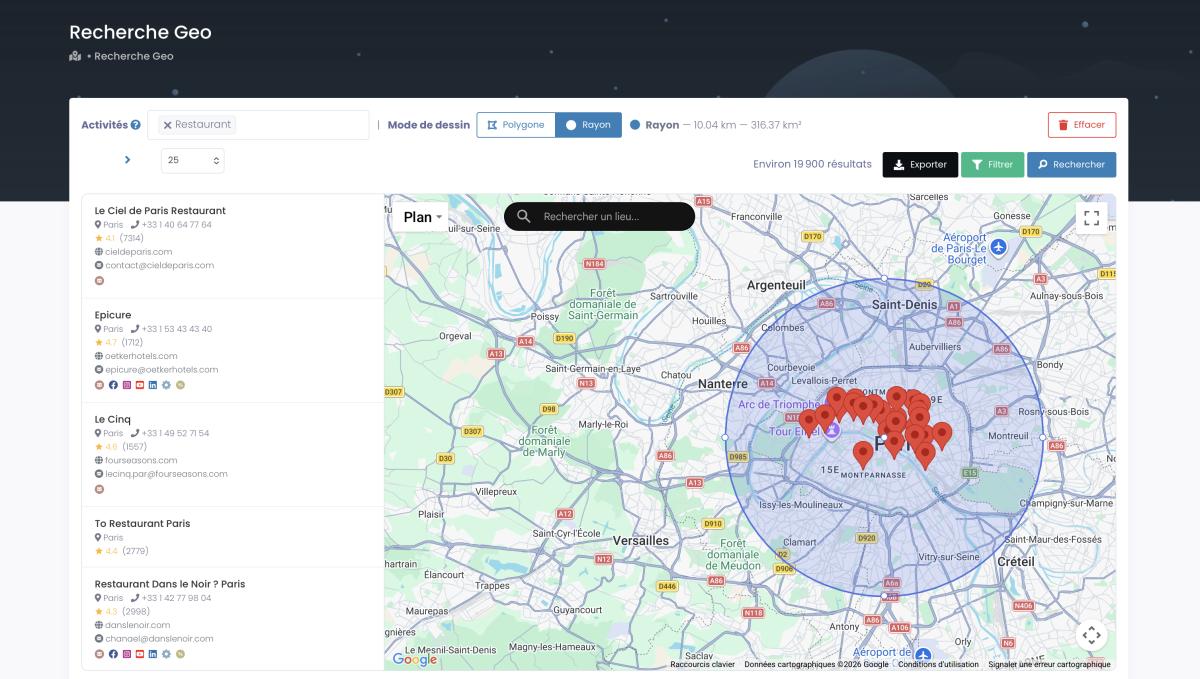
And if a whole city is too broad, GeoSearch lets you draw a radius around a single point, or hand-draw a polygon around one neighborhood, so your outbound list matches your actual service area (your zone de chalandise) instead of a random 120-result slice.
Inbound side: optimize your Google Business Profile. Build local SEO for "[service] near me" searches. Collect reviews like your life depends on it. Write content answering questions people in your area are actually Googling.
Remember Mike? The plumber from earlier? Here's what he should've done from the start. Outbound: use a lead generation platform to grab local real estate agencies and property managers from Google Maps. (For the pure extraction angle, our guide to Google Maps leads covers it end to end.) Cold email them about emergency plumbing partnerships. Inbound: at the same time optimize for "emergency plumber Austin" and "water heater repair Austin." One blog post a week. Nothing crazy.
Six months in? Outbound pays the bills. Inbound runs in the background generating calls at 2 AM from people with burst pipes. That's the inbound vs outbound marketing strategy for small business that actually holds up in the real world.
Want to build a targeted outbound list of local businesses? Scrap.io extracts real-time data from Google Maps, emails, phone numbers, reviews, the works, across 225M+ listings in 195 countries. You can prospect local businesses at scale and start with 100 free leads.
How to Choose the Right Strategy for Your Business
Decision time. I'll keep this simple because honestly people overthink this stuff.
Start with outbound if:
- You need leads in the next 3 months. Like actually need them. Bills to pay.
- You're launching something new and nobody knows you exist yet.
- You know exactly who your buyer is and where to find them.
- Your thing sells better through personal conversations and relationships.
- You're under 500 employees and chasing bigger deals, remember, outbound deals run about 3x larger for SMBs.
Start with inbound if:
- You've got 12+ months before you need serious lead volume.
- Budget's tight but you've got time to write and create.
- Your customers Google for solutions before they buy anything.
- Trust matters a lot in your industry. Like a lot a lot.
Go heavy outbound for:
- B2B with big deal sizes and long sales cycles.
- Local businesses selling to other local businesses.
- Any time you know exactly who should buy your stuff.
Go heavy inbound for:
- Established businesses chasing organic growth.
- Products people actively search for online.
- Markets where being seen as an authority actually moves the needle.
In every single case, plan the transition to a hybrid mix eventually. Even on a tight budget, an inbound and outbound marketing combined strategy beats either one alone. Every time.
One more thing worth mentioning. Inbound vs outbound sales is its own thing too. Inbound sales teams handle warm leads that content already pre-qualified, so their job is mostly closing. Outbound sales teams go hunting, they source the prospect, open the relationship cold, and nurture it from zero. Most growing companies build both functions even if one starts first, because the skill sets barely overlap.
And when you're deciding where to put your money, understanding stuff like Google Maps vs Facebook for lead generation helps a lot. Different channels work for different situations. No one-size-fits-all answer here.
Is Cold Outreach Legal in 2026? (GDPR & CCPA)
Quick reality check, because someone always asks. Is cold email legal in 2026? Yes. Outbound email and calls to businesses are legal when you use publicly available business data and follow the rules. In the EU, GDPR allows B2B outreach under "legitimate interest," meaning your message has to be genuinely relevant to the recipient's business role, and you need a clear opt-out. In California, CCPA carves out publicly available business information almost entirely. The US CAN-SPAM baseline: honest sender info, a real address, a working unsubscribe.
The safe move is starting with data you can actually trace. Scrap.io only extracts publicly available business data, is GDPR and CCPA compliant, and keeps every data point traceable to its source. That's the difference between confident prospecting and hoping nobody asks where you got their number.
FAQ, Inbound vs Outbound Marketing
Which is more cost-effective, inbound or outbound marketing?
Inbound generates leads at roughly 63% lower cost over time. But outbound gets you ROI faster, usually within 3–6 months. So the inbound marketing cost vs outbound marketing cost comparison really depends on your timeline. Short on time? Outbound's cheaper right now. Playing the long game? Inbound wins eventually. Best bet is a phased hybrid strategy that gets you quick wins while building stuff that compounds.
Is inbound or outbound better in 2026?
Neither, and that's the honest answer. Hybrid wins: teams doing both grow revenue 27% faster and see about 25% higher ROI than outbound-only. Pick outbound when you need cash and pipeline now, or you're selling locally to other businesses (deals run bigger). Pick inbound for long-term, compounding lead flow. Most winning teams run outbound first for revenue, then layer inbound on top.
Can a small business do both inbound and outbound marketing?
Yeah. A hundred percent. Start with targeted outbound, cold email to a curated list of local prospects. While that runs, build inbound basics. A blog. Some SEO. Social presence. Even $1K/month works for a basic hybrid setup. Just don't try doing everything at once. Pick one outbound channel. One inbound channel. Get those working first. Then expand.
Is cold email considered inbound or outbound?
Outbound. Full stop. You're reaching out to people who never asked to hear from you. No gray area. Email marketing flips to inbound when people voluntarily subscribe to your list. For local businesses in 2026, starting with cold email outbound to fill the pipeline while building opt-in lists through inbound is probably the smartest play.
What's a good cold email reply rate in 2026?
The average sits around 3.43% per Instantly's 2026 benchmark. A good campaign lands between 5% and 10%. Elite senders clear 10.7%+. If you're below 3%, it's almost never your copy, it's your list. Fresh, verified, well-targeted data is what separates the top 10% from everyone else.
How long does inbound marketing take to show results?
Usually 12–18 months for meaningful organic traffic and consistent leads through SEO and content. Some inbound tactics work faster though, a good lead magnet promoted on social media can pull leads within weeks. The inbound outbound marketing ROI comparison is really a time horizon question. Short-term outbound wins. Long-term inbound wins on cost per lead. That's just how the math works.
What tools do I need for outbound marketing in 2026?
Three things. A lead generation platform for prospect data. An email outreach tool for sequences and follow-ups. A CRM to keep track of everything. For local businesses specifically, Google Maps data extraction gives you the most targeted B2B leads because you can filter by location, business type, reviews, digital presence, all of it. Push vs pull marketing strategy comparison aside, neither approach works without decent data behind it.
Stop Debating. Start Doing.
The inbound vs outbound marketing argument has been going on forever. And it's mostly a waste of everyone's time. Data says hybrid wins. 27% faster revenue growth. That's not something you just ignore because you like blogging more than cold calling. Or vice versa.
Here's the move if you're starting fresh. Go outbound first. Get revenue flowing. Build a list of your ideal customers. Start conversations. Then funnel those early profits into inbound, content, SEO, social, and watch the compounding thing kick in over time.
Email marketing ROI is still $36–42 for every $1 spent. Whether that's inbound newsletters or outbound cold email, the channel flat out works. You just need the right contacts and a message that doesn't suck. New to the tool? Here's the 2-minute version of how it works:
Video: Scrap.io - How to Start?
Ready to build your outbound pipeline with real-time business data? Try Scrap.io free for 7 days, extract verified local business leads from Google Maps across 225M+ listings in 195 countries, with smart filters for reviews, social media presence, website data, and more, applied before you spend a credit. Your first 100 leads are free. Start your free trial.
Now close this tab and go email somebody. These leads aren't gonna convert themselves.