

- Why Local Businesses Need Market Research in 2026
- Types of Market Research (And Which Ones Matter for Local Businesses)
- The Best Market Research Tools for Local Businesses in 2026
- Google Maps: The Most Underrated Market Research Tool
- How to Use Market Research Data for B2B Prospecting
- Real-World Examples: Businesses Using Market Research to Grow
- Compliance: Staying Legal with Business Data
- FAQ: Market Research Tools
A 12-person roofing company in Nashville tripled its callback rate last year. Not by running more ads. Not by hiring a sales team. They just stopped guessing who to call.
That's the boring truth about market research for local businesses. It works, but most people skip it because it sounds like something Fortune 500 companies do in boardrooms with whiteboards and sticky notes. It's not. In 2026, the best market research tools cost less than your monthly coffee budget. Some are free.
And yet, most small business owners still run their entire prospecting strategy on gut feeling and a prayer. Wild.
Why Local Businesses Need Market Research in 2026
The $42 ROI Nobody's Talking About
Here's a number that should make you uncomfortable if you're not doing email outreach: $42 return for every $1 spent (Constant Contact, 2026). Forty-two dollars. That's not a typo.
But that ROI only happens when you're emailing the right people. Send 5,000 cold emails to random businesses? You'll get spam complaints and zero revenue. Send 500 emails to businesses that actually match your ideal customer profile, and that's where the magic is.
Market research tools are what bridge that gap. They turn "I think restaurants in Austin might need our service" into "here are 3,200 restaurants in Austin with 4+ star ratings, open for more than 2 years, with verified email addresses."
Massive difference.
What Changed in 2026
Two things shifted the game. First, 45% of consumers now use AI tools for local business recommendations (BrightLocal LCRS 2026). Your customers are finding your competitors through ChatGPT and Gemini, whether you like it or not.
Second, the SaaS explosion is real. The global SaaS market is projected to hit $1,482 billion by 2034, growing at 18.7% per year (Fortune Business Insights). Small businesses now juggle dozens of SaaS applications each. The tools exist. The question is: are you picking the right ones for market analysis?
Types of Market Research (And Which Ones Matter for Local Businesses)
Surveys, focus groups, data analysis… which one actually moves the needle for a 10-person plumbing company? Spoiler: probably not the $15K focus group.
Primary vs. Secondary Research
Primary research means you're collecting data yourself: customer surveys, interviews, feedback forms. It's gold, but it's slow and expensive.
Secondary research means using data someone else already collected. Census data, industry reports, Google Maps business listings, competitor reviews. Faster. Cheaper. And for most local businesses, more than enough to make smart decisions. This is also where local business data for market validation comes in, since a real snapshot of who's operating in your area beats any hypothetical persona.
Quantitative vs. Qualitative: What Local Businesses Actually Need
Quantitative gives you numbers: how many competitors in your area, average ratings, price ranges. Qualitative gives you context: why customers complain about wait times at your competitor, what language they use in reviews.
You need both. But if I had to pick one for a small business doing market research for the first time? Go quantitative. Numbers first. Feelings later. The best market research tools and techniques for local businesses almost always start with hard data, then layer in qualitative insights once you know what questions to ask.
The Best Market Research Tools for Local Businesses in 2026
The best market research tool for local businesses isn't a $10K enterprise platform. It's probably something you've walked past a hundred times without realizing what it can do. (More on that in the next section.)
But first, the landscape. Here's what's out there, organized by what you actually need.
Free Tools
Google Trends tells you if demand for your service is going up or down. Census Bureau data gives you demographics by zip code. AnswerThePublic shows you what people are literally Googling about your industry. Statista has industry stats if you need to build a business case. All free (or freemium), all useful for initial market sizing.
But they won't tell you who to call. They won't answer the question every small business owner eventually asks: where to get local business email addresses? For that, you need actual email database tools. Different category entirely.
Survey & Feedback Tools
SurveyMonkey and Typeform are the go-to for customer feedback. Qualtrics if you want to get fancy (and have the budget). Great for existing businesses wanting to understand their current customers. Less useful if you're trying to find new ones.
Competitive Analysis Tools
Semrush for SEO and keyword data. BrightLocal for local SEO specifically: rankings, citations, review monitoring. SimilarWeb for traffic estimates. BuzzSumo for content performance. These tools tell you what your competitors are doing online.
On Reddit, the consensus in r/DigitalMarketing threads is pretty clear: BrightLocal for local SEO research, Browse AI for automated data collection, and ChatGPT for initial market sizing. Not bad advice, honestly.
Business Data & Lead Generation Tools
This is where things get interesting for market research tools for small business owners who need actual leads, not just charts.
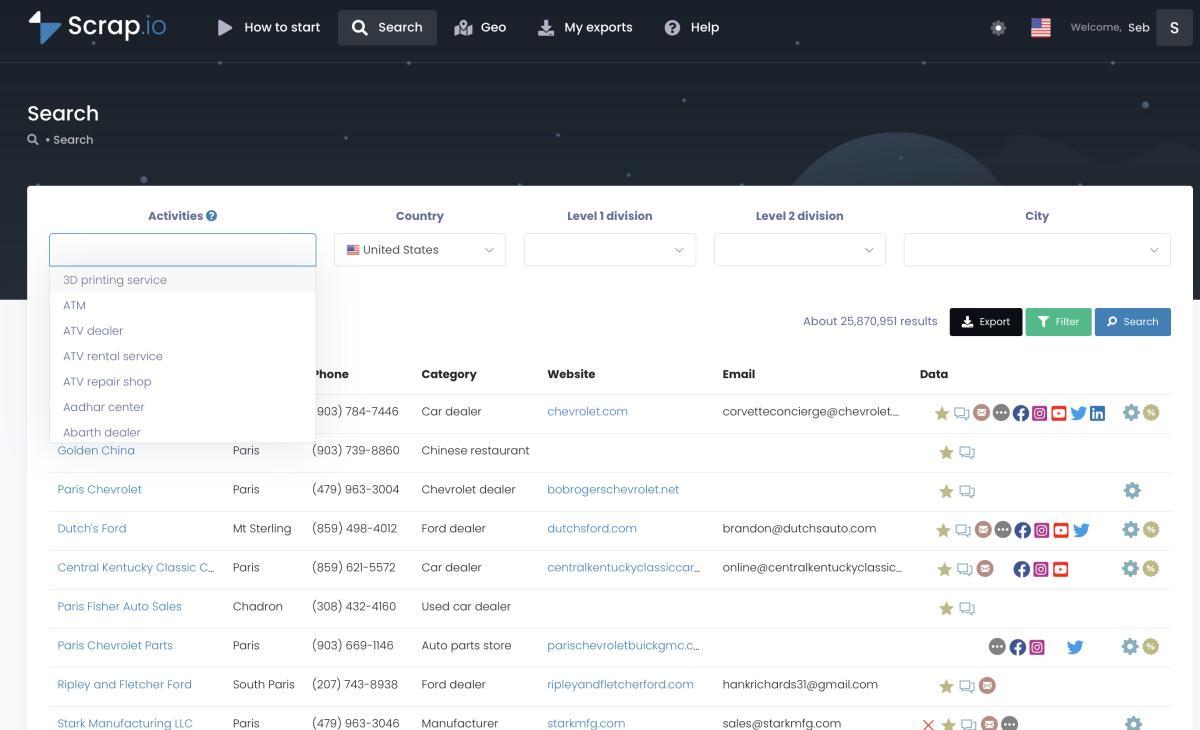
Scrap.io pulls verified business data from Google Maps: names, addresses, phones, emails, ratings, reviews. Outscraper does something similar. The Google Maps API works too, but you'll need a developer on staff (or some serious patience with Python).
The difference? Scrap.io gives you a no-code interface with 26M+ verified US business contacts. Here's the exclusive part nobody else publishes: of those 26M+ US businesses indexed on Google Maps, roughly 8.9 million show a usable public email address, filterable before you extract (Scrap.io, September 2026). No API keys, no scripts, no headaches. Outscraper is decent but more technical. For a B2B lead generation platforms comparison, we've got a full breakdown.
AI-Powered Market Research Tools
ChatGPT and Gemini are solid for secondary research and brainstorming: competitor analysis, market sizing questions, summarizing industry reports. Browse AI automates web data collection. Quantilope handles complex survey analysis.
But here's my take: AI is great at analyzing data. It's terrible at collecting fresh, real-time business data. You still need a primary data source. AI is the analyst, not the field researcher.
| Tool | Best For | Pricing | Local Focus | Data Volume |
|---|---|---|---|---|
| Google Trends | Trend spotting | Free | 🟡 Medium | N/A |
| Statista | Industry stats | From $199/mo | 🔴 Low | High |
| SurveyMonkey | Customer feedback | Free–$99/mo | 🟡 Medium | Medium |
| BrightLocal | Local SEO analysis | From $39/mo | 🟢 High | Medium |
| Scrap.io | Local business data + leads | Free trial (7 days) | 🟢 High | 26M+ contacts |
| Semrush | SEO & competition | From $139/mo | 🟡 Medium | High |
| ChatGPT | AI research assistant | Free–$20/mo | 🔴 Low | N/A |
Google Maps: The Most Underrated Market Research Tool
Still Googling competitors one by one and copy-pasting data into a spreadsheet? Yeah, I've been there. It's about as fun as hand-washing dishes for a restaurant.
Google Maps is sitting on a goldmine of structured business data. Millions of local businesses with ratings, reviews, phone numbers, addresses, categories, opening hours, and most market research software completely ignores it.
What Data Can You Extract from Google Maps?
Everything you'd need to build a prospect list or run competitive analysis: business names, addresses, phone numbers, emails (when listed), star ratings, review counts, opening hours, business categories, and even photos. For a full walkthrough, check our Google Maps scraping guide.
Think about it. If you're a marketing agency looking for restaurants in Houston that have fewer than 50 reviews (translation: probably not investing in marketing), you can find those businesses in minutes. Not days. Minutes.
Manual vs. Automated Data Extraction
Manually? You're looking at hours of work to collect 50 businesses. Copy the name, switch tabs, paste, go back, scroll, repeat. Soul-crushing.
Automated? Scrap.io pulls 11,000+ businesses in about 45 minutes. Same data, zero carpal tunnel. Not even close.
And before someone in the r/procurement subreddit chimes in with "I just use Google alerts and look at news," sure, that works for monitoring. But if you need how to find local business data for market research at scale? You need extraction, not alerts. Totally different problem. The trick is to filter Google Maps business data before you export, so you only pull the listings that fit your criteria.
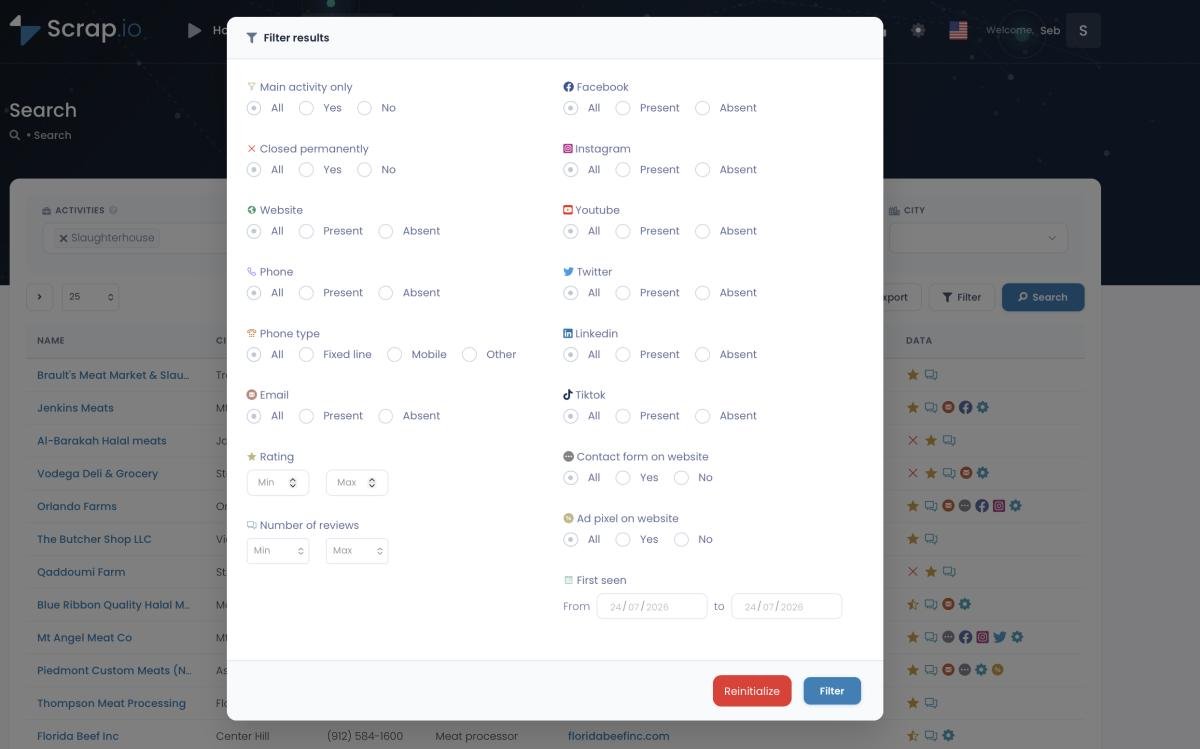
How Scrap.io Turns Google Maps Into a Market Research Powerhouse
The GeoSearch feature alone is worth a look. Draw a radius on a map, pick a business category, and boom: every matching business in that zone, with contact details, ratings, and review data. No code, no API, no technical skills required.
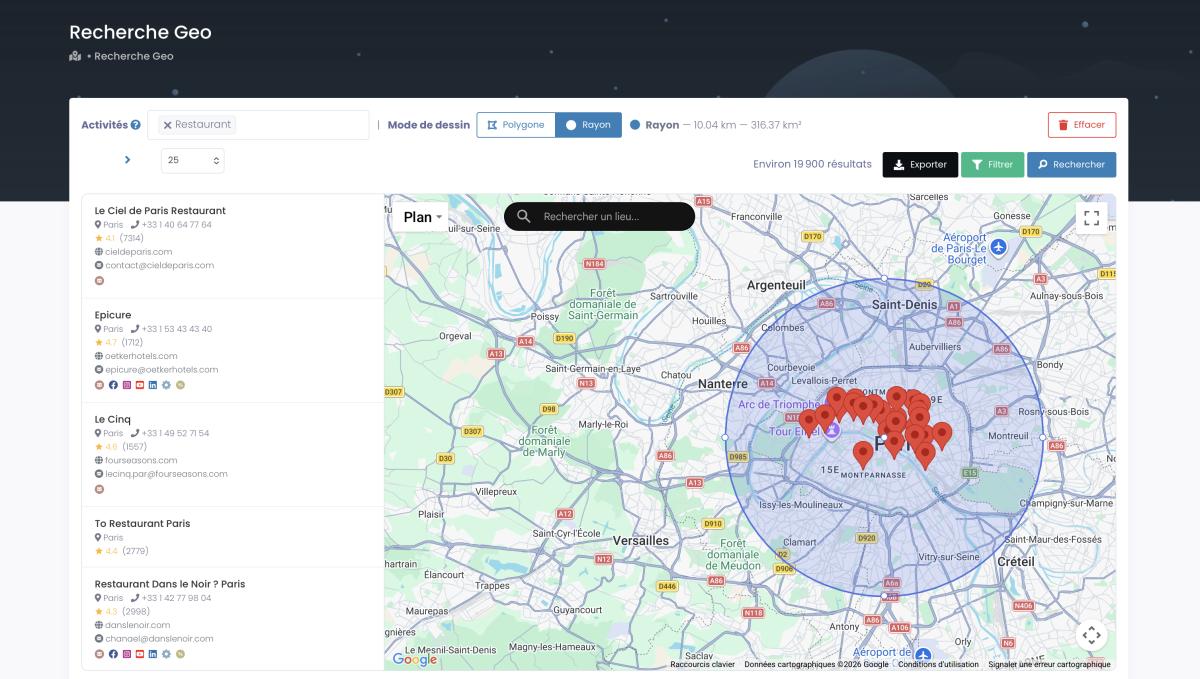
New to the platform? This quick walkthrough shows the whole flow from search to export:
Video: Scrap.io - How to Start
One r/Entrepreneur thread (60+ comments) summed it up well: "I use a combination of Google Trends for demand validation, Semrush for competition analysis, and then scrape Google Maps for actual business data when I need local leads." That's basically the stack. Free tools for research, local business data extraction tools for action.
Video: How to Turn Your CRM Into a War Machine Using Google Maps Data
How to Use Market Research Data for B2B Prospecting
A marketing agency in Austin extracted 3,200 restaurant contacts from Google Maps. Their cold email campaign hit a 42% open rate and 5.8% reply rate, nearly 3x the industry average. That's not luck. That's targeting.
Building a Targeted Prospect List
Step-by-step, here's how to do market research for a local business and turn it into actual revenue:
- Define your ICP. Location + industry + business size. Be specific. "Restaurants" is too broad. "Mexican restaurants in Dallas with 100+ Google reviews and no website" is a prospect list. (Not sure what an ideal customer profile even is? Start there. Then learn how to define your ideal customer profile using Google Maps data.)
- Extract the data. Use Scrap.io, Google Maps API, or Outscraper. Pick your weapon based on your tech skills.
- Enrich with emails & phone numbers. Some tools include this. Others need a separate enrichment step.
- Segment by rating, reviews, location. High-rated businesses with few reviews are often underserved by marketing agencies. Gold.
- Launch personalized outreach. And for the love of all things holy, personalize your emails. More on cold email outreach strategies that actually work.
The same country-wide logic scales, by the way. If you want the full playbook on how to get local business leads at city, state, or national level, we broke it down separately. Here's the country-level version in action:
Video: How to Scrape Local Leads at the Country Level
Cold Email Performance Benchmarks in 2026
Here's where data-driven market research pays off. According to Sopro.io's 2026 data:
- Average cold email open rate: 42%
- Average reply rate: 5.1%
- Personalized cold emails deliver 32% higher response rates
- 81% of decision-makers engage when outreach is tailored to their business context
Those numbers only work if you're emailing the right people. Random lists from shady data brokers? Forget it. Targeted lists from real market research? That's the $42-per-dollar ROI we talked about.
Real-World Examples: Businesses Using Market Research to Grow
73% of B2B decision-makers say case studies influence their purchasing process. Yet only 34% of companies actually create them. So here, let us do the work for you.
📌 Outscraper built their entire business model on Google Maps data extraction for business intelligence. Their Google Maps scraper is a competitor to Scrap.io, honestly, but the fact that they're growing validates the entire market across marketing, real estate, e-commerce, and local services. (We just think our UX is better. Biased? Sure. But try both and see.)
📌 Sopro.io documented cold outreach performance across thousands of B2B campaigns. Their data shows 89% of sales teams see positive ROI when they combine market research with personalization. Not exactly a surprise, but having the benchmarks matters when you're pitching your boss on buying market analysis tools.
📌 BrightLocal agencies using their local market research tools reported significant time savings on citation management and increased position 1 rankings. Check their case studies page for specifics.
📌 Email segmentation, done right. Big retail brands have publicly credited AI-driven email segmentation for double-digit lifts in email-driven revenue. The lesson generalizes: the better your data going in, the better your results coming out. And a small business can replicate the approach at a fraction of the cost with the right market research tools.
📌 Behavioral data beats guesswork. The pattern repeats across subscription and DTC brands that segment campaigns by customer behavior: higher open rates, better retention. Good data in, good results out. Market research tools for startups aren't just for startups anymore.
Compliance: Staying Legal with Business Data
Is it legal to scrape Google Maps? Short answer: yes, with caveats. And if you're not asking this question, you should be.
CAN-SPAM Act Essentials
If you're emailing US businesses: include a physical address, provide an unsubscribe link, don't use deceptive subject lines. That's the simplified version. The SBA's market research guide has more on compliance for small businesses.
GDPR Considerations for International Campaigns
Targeting European businesses? GDPR applies. You need a legitimate interest basis for B2B outreach, and you must handle data responsibly. Most B2B email to professional addresses is fine under legitimate interest, but keep records of your reasoning. And always offer an easy opt-out.
Google's Terms of Service: What You Need to Know
Google's TOS restricts automated scraping of their services. That said, public business data displayed on Google Maps is… public. The legal landscape is nuanced. Courts have generally upheld that publicly available business information can be collected. For a deeper dive on the legal considerations for Google Maps scraping, we've written a full analysis.
So: use a compliant tool, respect opt-out requests, and don't be creepy with the data. Simple enough.
Oh, and one more thing. If you're wondering how to research local competitors without running into legal trouble, the answer is the same: stick to publicly available data and use it responsibly. Done.
FAQ: Market Research Tools
What are the best free market research tools for small businesses?
The strongest free stack: Google Trends for demand validation, Census Bureau for demographics, AnswerThePublic for keyword research, Google Analytics for website data, and Scrap.io's free trial (100 leads included) for real business contact data. Together they cover roughly 80% of what a small business needs for market analysis tools without spending a dime.
Can I use Google Maps for market research?
Absolutely. Google Maps holds data on millions of local businesses: ratings, reviews, contact info, location data, categories. The catch is that extracting it manually takes forever. Tools like Scrap.io automate the process and export structured data in minutes instead of days, so Google Maps becomes a live market research database.
How do you find local business data for market research?
The fastest route is a no-code Google Maps extraction, in four steps:
- Define your ICP: category, location, and qualifying criteria.
- Extract the matching businesses from Google Maps.
- Filter before export (email present, rating, reviews) so you only pay for usable contacts.
- Export to CSV or Excel, ready for your CRM or outreach tool.
What is the best market research tool for local businesses?
It depends on your goal. For local business data and lead generation, Scrap.io offers the most comprehensive dataset with 26M+ US contacts (about 8.9M with a public email). For customer surveys, SurveyMonkey is the standard. For local SEO competitive analysis, BrightLocal is purpose-built. Most businesses end up combining 2-3 tools.
How much does market research cost for a small business?
From $0 to $500/month for most SMBs. Free tools cover the basics (Google Trends, Census data, AnswerThePublic). Specialized market research software like BrightLocal starts at $39/month. Scrap.io offers a free 7-day trial with 100 leads included, enough to test whether automated market research tools work before you commit.
Can AI tools replace traditional market research?
Not yet. AI tools like ChatGPT and Gemini are excellent for secondary research: summarizing reports, brainstorming competitor angles, analyzing survey data. But they can't replace primary data collection, because they don't have real-time local business data. The smart approach combines AI analysis with real data from Google Maps extractors. Great assistants, terrible replacements.
Generate a list of restaurant with Scrap.io