

Searches for what is prospecting jumped 60% in the last year (DataForSEO, 2026). Sixty percent. That's not a niche curiosity — that's a whole generation of founders, SDRs, and agency owners suddenly asking the same question at 11pm with a coffee going cold next to them.
And here's the messy part nobody warns you about: type "prospecting" into Google and you'll get gold miners, a Roblox game, and a Myers-Briggs personality trait before anyone bothers to explain the sales version. So let's fix that. This guide is about the business meaning of prospecting — finding and reaching the people who might actually buy from you. Not panning for nuggets in a creek. (Although, funny enough, the metaphor holds up better than you'd think.)
Table of Contents
What Is Prospecting? (The Definition)
Prospecting is the process of identifying potential customers and reaching out to them to start a sales conversation. It's the first step of the sales cycle — the part where you go find the right people instead of waiting for them to find you. In a sales context, that's the prospecting meaning that matters: proactive, targeted outreach to people who fit your buyer profile.
Quick disambiguation, because the word is a mess. In geology, prospecting means searching for minerals or gold. In MBTI, "Prospecting" is the opposite of "Judging." There's even a Roblox game called Prospecting. None of that is what we're covering. Here, the prospecting definition is strictly commercial: searching for buyers, not silver.
That's the prospecting in business version — and it's the one growing 60% a year for a reason. Buyers got harder to reach. Inboxes got louder. The teams that still hit quota are the ones who prospect on purpose, not by accident.
What Is Sales Prospecting?
Sales prospecting isn't cold calling. Cold calling is just one tool in the box. People conflate the two constantly, and it drives me a little nuts.
Sales prospecting is the activity of identifying and contacting potential customers to generate new revenue. A rep prospects by finding qualified leads, engaging them one-to-one, and turning them into real opportunities. That's the what is prospecting in sales answer in a single sentence — and notice the phrase "one-to-one." That's the whole game.
Unlike marketing, which shouts at a crowd, prospecting whispers to individuals. You're not broadcasting. You're picking specific companies, learning something real about them, and starting a conversation that's actually relevant to their day. Cognism (a B2B sales intelligence platform) frames it the same way — prospecting is short-term, outbound, and aimed at one thing: starting the right conversation with the right person.
Does it still work in an age of AI and self-serve buying? Yeah. Weirdly, more than ever. Because when everyone's automating, a genuinely relevant human touch stands out like a flare.
Prospecting vs Lead Generation
Think they're the same thing? That mix-up quietly costs teams pipeline every single quarter. They overlap, sure — but they're different jobs done by different people at different points in the funnel.
Lead generation is a marketing motion. It's inbound, one-to-many, built to attract interest at scale — content, ads, SEO, webinars. It fills the top of the funnel with people who raised a hand. Prospecting is a sales motion. It's outbound, one-to-one, and it goes out to find qualified buyers whether or not they've ever heard of you. Here's the split:
| Dimension | Lead Generation | Prospecting |
|---|---|---|
| Owned by | Marketing | Sales |
| Direction | Inbound | Outbound |
| Scale | One-to-many | One-to-one |
| Funnel stage | Top of funnel | Middle / bottom |
| Goal | Attract interest | Start qualified conversations |
So what is prospecting in marketing, then? Trick question — it mostly isn't. When marketers say "prospecting," they usually mean the cold-audience side of paid ads (targeting people who've never engaged). Useful to know, but it's a cousin, not a twin. If you want the full breakdown of the attract-at-scale side, our lead generation hub goes deep. The short version: you need both. Marketing warms the room; sales walks up and shakes the hand.
Leads vs Prospects
Every prospect is a lead. Not every lead is a prospect. Get that backwards and your pipeline math falls apart.
A lead is anyone who's shown a flicker of interest — downloaded a PDF, joined your list, whatever. A prospect is a lead who's been qualified: they fit your ideal customer, they have a real need, and they can actually buy. One is a business card in a fishbowl. The other is a person you have a reason to call.
| Lead | Prospect | |
|---|---|---|
| Funnel position | Top | Qualified / mid-funnel |
| Qualification | Unqualified | Fits ICP + has need + budget |
| Communication | Generic / nurturing | One-to-one, personalized |
Why does this even matter? Because chasing unqualified leads is how reps burn four hours a day and book nothing. Qualify first. Then prospect.
Types & Methods of Prospecting
Two families. A dozen methods underneath. At the top level, prospecting splits into inbound (engaging people who already showed interest) and outbound (reaching out cold). Everything else is a flavor of one or the other. Here are the methods of prospecting in sales that reps actually use:
- Cold calling — dialing someone who's never heard of you. Old? Yes. Dead? No. More on that below.
- Cold emailing — a targeted, personalized message to a fit-but-unaware prospect.
- Social selling — building familiarity on LinkedIn before you ever pitch.
- Warm calling — calling someone who's already engaged (a form download, a pricing-page visit).
- Referrals — asking happy customers to open a door for you.
- Networking — events, trade shows, the old-fashioned handshake.
- Account-based prospecting (ABM) — hyper-targeting a short list of dream accounts.
- Content-based prospecting — leading with a case study or insight instead of a pitch.
That covers the main types of prospecting in sales. Which ones should you pick? Depends entirely on who you sell to. Enterprise SaaS? LinkedIn and ABM. Local businesses? Phone and email win, because half your targets aren't on LinkedIn at all. If you want the tactical deep-dive on the phone side specifically, our guide to sales prospecting techniques breaks it down channel by channel. And for the two heaviest hitters, we've got dedicated playbooks on cold emailing strategy and cold calling scripts.
Honestly, though? The "which method" debate matters less than most people think. A mediocre method with great data beats a great method with garbage data every time.
Video: Scrap.io vs Apollo — Which Tool for Which Type of Prospecting
The Prospecting Process (6 Steps)
Mike had 2,000 leads and zero replies. Two thousand. He was convinced his email copy was cursed. It wasn't. The problem was step one — he'd never defined who he was actually talking to. His "list" was just names.
Here's the sales prospecting process steps, in order, the way it should go:
- Define your ICP. Who is the perfect-fit company? Nail this and everything downstream gets easier. Skip it and you're Mike. (Start with our guide to the ideal customer profile (ICP).)
- Build your list. Pull the actual companies and contacts that match. This is the step everyone rushes — and the one that decides everything.
- Research. Spend two minutes per prospect. A recent review, a new location, a hiring signal. Anything real.
- Choose your channels. Phone, email, LinkedIn — match the channel to where your buyer actually pays attention.
- Reach out. Personalized. Relevant. Short. Lead with their problem, not your product.
- Qualify. Figure out fast whether they're a real prospect or a polite dead end. Disqualifying is a skill, not a failure.
Notice that steps 1 and 2 — before you send a single message — do most of the heavy lifting. Which raises an annoying question that almost no guide answers.
Where Prospects Actually Come From
Every prospecting guide on Earth says "build a list of your ICP." Cool. Great. But where does the list come from? Nobody says. It's the sales equivalent of a recipe that starts with "acquire one perfectly roasted chicken."
So let's actually answer it. Prospect lists come from four main places:
- Referrals and your network. Highest quality, lowest volume. You'll run out fast.
- LinkedIn. Brilliant for corporate B2B. Nearly useless for the local plumber, the dental clinic, the family-run restaurant — most of them aren't on it in any usable way.
- Paid B2B databases. ZoomInfo, Cognism, Apollo. Powerful, corporate-focused, and pricey. Cognism, for the record, reports its own customers see a 20–40% pipeline increase — that's what good data does. But these tools skew enterprise.
- Google Maps. This is the one everyone forgets. The local economy — every shop, clinic, contractor, and agency with a storefront — lives on Maps, not LinkedIn.
That last one is the unfair advantage. There are 225 million+ business listings across 195 countries on the major map platforms (Scrap.io, 2026), and most of them link to a website with a contact email sitting right there. The catch? Maps doesn't show you the email directly, and clicking through listings one at a time is soul-crushing. As one seller put it bluntly on r/coldemail: "Let's say I scrape a list of companies from Google Business Profiles. How can I get the emails of the business owners/decision makers from that list?" That's the exact wall people hit.
That's the gap Scrap.io fills. It pulls business listings straight from Google Maps — with the emails, phone numbers, and social profiles attached — and lets you filter before you extract, so you only pay for contacts you can actually use. A real example: one agency extracted 11,734 businesses in 45 minutes. Try doing that by hand. I'll wait.
Video: Scrap.io — How to Start
You pick a category and a location, apply your filters (has an email, has a mobile number, minimum rating — whatever matters), and preview the count before spending anything.
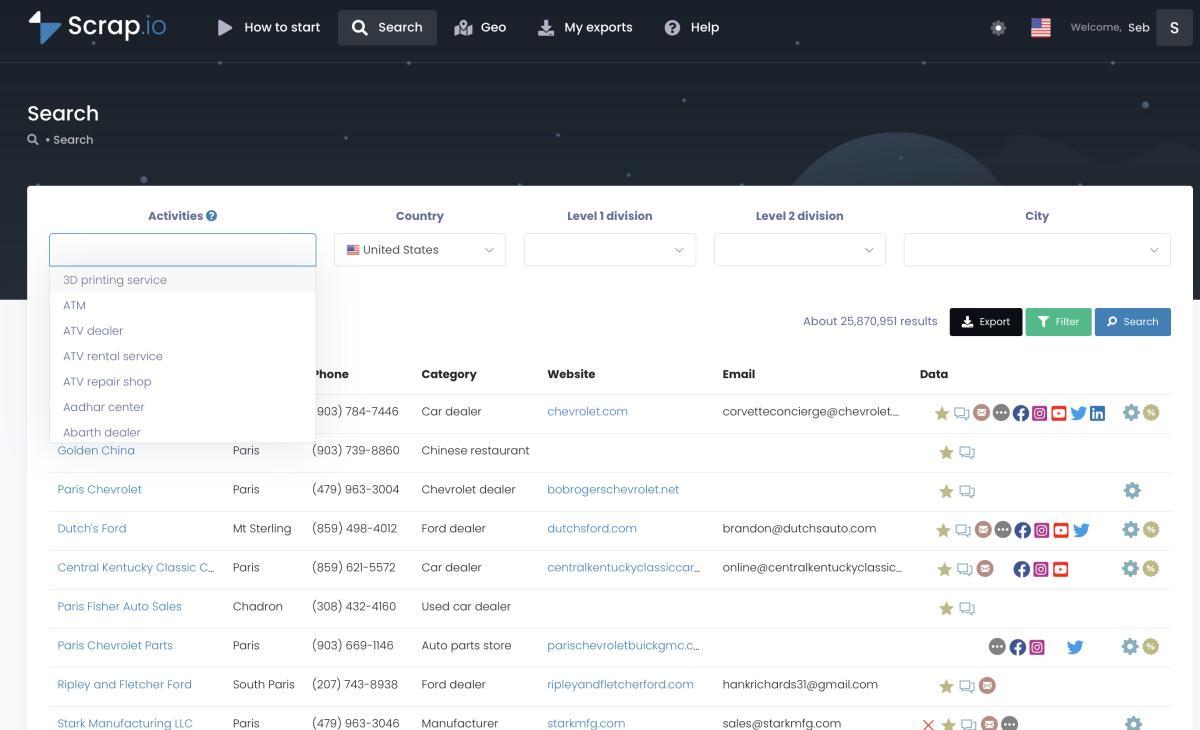
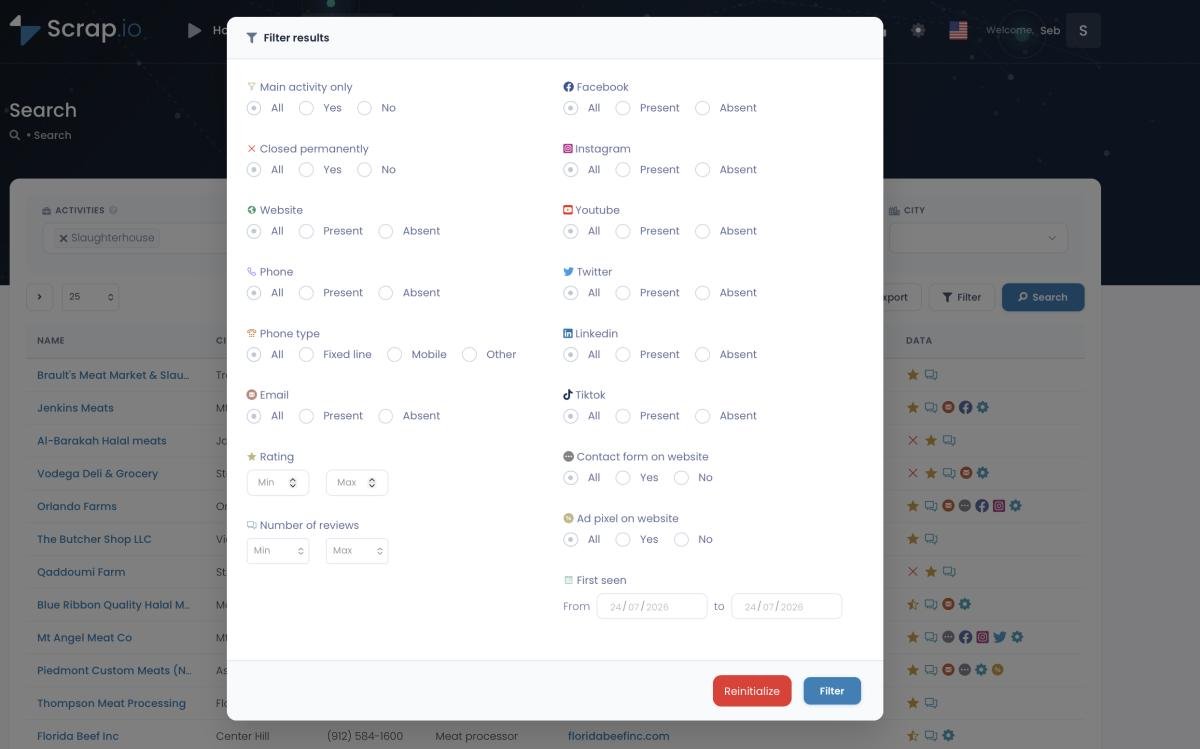
See where your prospect list actually comes from. Scrap.io pulls local businesses straight from Google Maps — emails attached, 225M+ listings across 195 countries, filtered before you spend a credit. Start free — 7 days, 100 leads on us.
And it scales past the single-city stuff. Need every matching business in an entire country? That's two clicks, not two weeks.
Video: How to Scrape Local Leads at the Country Level
If your prospects are local businesses, this is the piece that's been missing from every other guide. For the step-by-step on the email side specifically, we wrote a whole thing on how to find emails on Google Maps.
Prospecting in 2026: What Changed
Buyers research alone now. They ignore anything generic. And they expect you to be relevant before they'll even reply. The spray-and-pray era is over — not because it's unethical, but because it flat-out stopped working.
The data backs the shift toward multi-channel and relevance. Multi-channel prospecting generates 37% more conversions than phone-only outreach (Martal Group). Omnichannel sequences — email plus LinkedIn plus phone — boost results by a wild 287% versus email-only campaigns (Sopro). And persistence still pays: 93% of conversions happen after 6 or more follow-ups (Cognism, 2026), even though most reps quit after two.
What's genuinely new in 2026 is signal-based and AI-assisted prospecting — using buying triggers (funding, hiring, new locations) to time your outreach, and using AI to research at a scale that used to be impossible. "Vibe prospecting," some call it. Chat with an AI agent, describe your ideal customer in plain English, and let it build the list. It sounds like a gimmick until you watch it save you a full afternoon.
Prospect smarter, not louder. Scrap.io gives you real-time, filtered business data — verified emails and phone numbers from 4,000+ categories — so your multi-channel outreach lands on the right people. Try Scrap.io free for 7 days — 50 searches + 100 export credits.
Prospecting Tools
Do you need a tool to prospect? No. To prospect at scale without losing your mind? Absolutely. There are three buckets worth knowing, and they solve different problems:
| Category | Example | Best for |
|---|---|---|
| CRM | Pipedrive Prospector | Tracking & managing the pipeline (400M+ profiles) |
| Corporate sales intelligence | Cognism / Apollo | Enterprise & corporate B2B data |
| Local business data | Scrap.io | Google Maps leads, local & SMB targets |
The right sales prospecting software depends on who you're chasing. Pipedrive keeps your deals organized. Cognism and Apollo are strong if your buyers are corporate and sit neatly on LinkedIn. But if you sell to the local economy — the businesses with a physical address and a Google listing — you need Maps data, and that's where Scrap.io lives. It's used by 50,000+ professionals, rated 4.8 on Capterra and 4.9 on G2, and it's GDPR- and CCPA-compliant since it only touches publicly available business data.
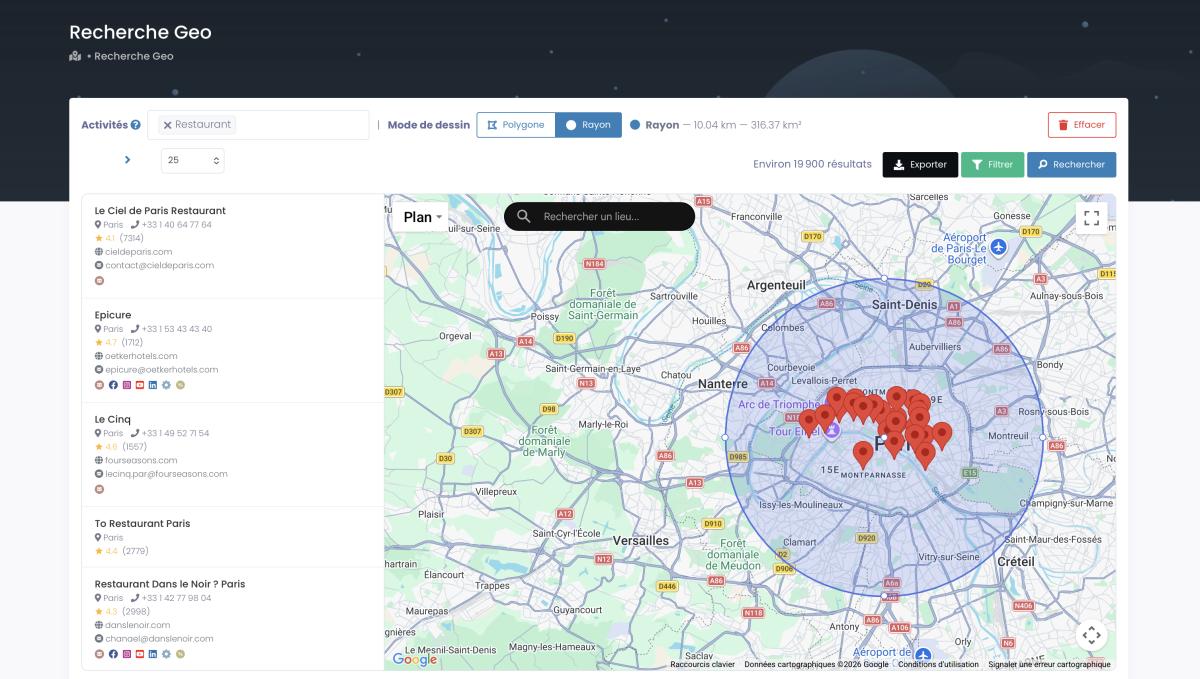
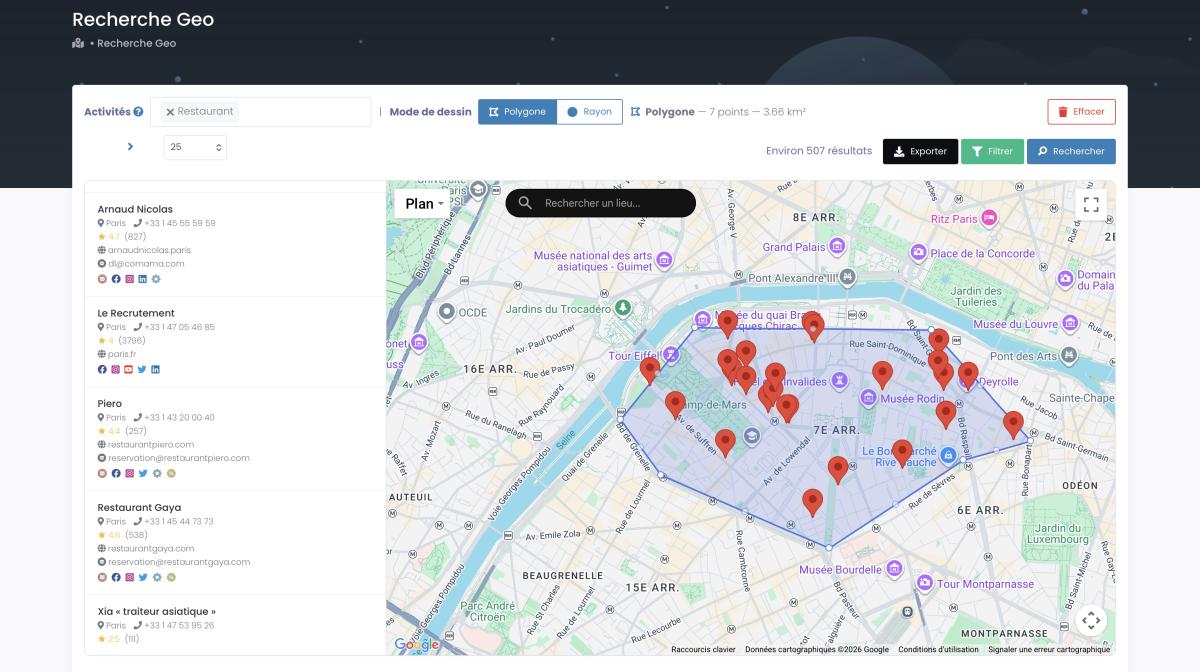
One more thing worth showing: for territory work, Scrap.io does radius and polygon search, so you can draw the exact catchment area you care about instead of settling for "the whole city."
So, Is Prospecting Worth It?
Prospecting starts with a list of the right people. Everything else — the scripts, the sequences, the follow-ups — is downstream of that. Get the list wrong and no amount of clever copy saves you. Get it right and mediocre outreach still books meetings.
The teams winning in 2026 aren't the loudest. They're the most relevant. They qualify before they pitch, they go multi-channel, and they pull their lists from sources their competitors ignore — like the local economy sitting quietly on Google Maps. Once the conversation starts, of course, the work shifts to lead nurturing — but none of that happens without a good list first.
Prospecting starts with a list of the right people. Start yours. Try Scrap.io free — 7 days, 100 leads on us. Verified emails and phone numbers from 225M+ businesses across 195 countries, filtered before you pay.
FAQ
What does it mean when someone is prospecting?
It means they're identifying and contacting potential customers — prospects — who match their ideal customer profile, to start a conversation and move them into the sales pipeline. It's the first step of the sales process: finding the right people and reaching out, rather than waiting for inbound interest.
What are the 5 P's of prospecting?
Purpose, Preparation, Personalization, Persistence, and Patience. Purpose means knowing why you're reaching out. Preparation means researching the prospect first. Personalization means tailoring the message. Persistence means following up (remember, 93% of conversions come after 6+ touches). Patience means playing the long game.
What's the difference between prospecting and lead generation?
Lead generation is a marketing activity: inbound, one-to-many, top of funnel — it attracts interest at scale. Prospecting is a sales activity: outbound, one-to-one, mid-funnel — it goes out and starts conversations with qualified, fit prospects. Marketing warms the room; sales walks up and introduces itself.
What is an example of prospecting?
An SDR builds a list of 300 local dental clinics that match their ICP, finds each one's email, sends a personalized cold email about a specific pain point, then follows up by phone a few days later. That's prospecting: targeted, one-to-one outreach to a qualified list.
Is prospecting still worth it in 2026?
Yes — but relevance beats volume now. 82% of buyers accept a meeting from a proactive, relevant seller (RAIN Group), and multi-channel outreach converts far better than single-channel blasts. The teams that win prospect on purpose, personalize, and pull their lists from fresh, well-targeted data. This is a sensitive-sounding stat, but it's simply where the market is: proactive still works, lazy doesn't.
Generate a list of restaurant with Scrap.io