

- Why Google Maps Prospects Need Different Nurturing Strategies
- The Complete B2B Lead Nurturing Framework
- 7 Proven Tactics to Nurture Google Maps Leads in 2026
- Tools and Technology for Scaling Nurturing
- Legal Compliance & Data Privacy
- Common Mistakes That Kill Conversion
- Measuring Success: KPIs 2026
- FAQ
I pulled 12,000 prospects from Google Maps last Tuesday. Took about 40 minutes. By Friday, I had exactly zero sales from that list.
Not because the leads were bad. They weren't. The data was fresh, the emails verified, the phone numbers current. The problem was what happened after the export. Which was: nothing smart.
Quick definition first, because people overcomplicate it. B2B lead nurturing is the process of building a relationship with a prospect through relevant, well-timed touches until they're ready to buy. That's the whole lead nurturing definition. No 40-page framework required. What changes everything is who you're nurturing.
Here's the reality of b2b lead nurturing in 2026. According to Forrester research compiled by SalesGenie, companies that actually nurture their leads produce 50% more sales-ready prospects at 33% lower cost. And nurtured leads make 47% larger purchases than non-nurtured ones (Annuitas Group). Those aren't small numbers. That's the difference between a business that scales and one that stays stuck exporting CSVs forever.
But Google Maps prospects are a completely different animal from your typical B2B leads. These aren't marketing directors who downloaded your whitepaper. These are plumbers, dentists, restaurant owners, and accountants who listed their business on Google and went back to work. Treating them like enterprise leads is a fast track to wasted effort. And money.
So how do you actually convert google maps prospects into customers? That's what this playbook covers. Real frameworks, real case studies, real numbers. No fluff.
Why Google Maps Prospects Need Different Nurturing Strategies
79% of leads never convert into sales. That stat gets thrown around a lot, but it hits different when you're staring at a spreadsheet of 10,000 local businesses wondering where to start.
The issue isn't volume. With Scrap.io indexing 225 million+ businesses across 195 countries, getting leads is embarrassingly easy. The issue is what happens next. And for 65% of B2B companies, what happens next is... nothing. No nurturing process at all.
The Local Business Mindset vs. Enterprise Buyers
Enterprise buyers sit in meetings. They evaluate vendors over months. They have procurement departments and budgets planned a year out.
Local business owners? Different planet.
They're checking email between customers. A dentist in Phoenix doesn't care about your "enterprise-grade solution with seamless integration." She wants more patients. Tomorrow. That's it.
According to Amra and Elma's 2026 B2B report, personalized nurturing emails now achieve 41.9% open rates and 6.7% CTR, but only when the content actually matters to the recipient. Generic corporate speak? Instant delete.
And here's what makes Google Maps data uniquely powerful for nurturing: you already know their location, their reviews, their website quality, whether they run ads, what social media they use. That's not a cold list. That's a goldmine of personalization signals. (Most people completely ignore these. Their loss.)
Shorter Decision Cycles, Higher Trust
Local businesses decide in weeks, not quarters. Sounds great, right?
Sort of. The speed cuts both ways. They've been burned before. Every small business owner has that story about the marketing company that took their money and vanished. Trust isn't optional. It's the whole game.
The B2B average conversion rate hit 7.1% in 2026, up from 5% the previous year (Amra and Elma). And First Page Sage's Q1 2026 data confirms the median MQL-to-SQL rate sits at 13%, with top performers pushing 28%. But companies using AI-powered nurturing sequences? 14.3% conversion vs. 2.1% for static campaigns. That's not an incremental improvement. That's a 7x gap.
Bottom line: if you want to nurture b2b leads from google maps, you need to move fast, prove value immediately, and sound like a human being. Not a CRM template.
The Complete B2B Lead Nurturing Framework
10,000 contacts in a CSV. The next 90 days determine whether that file becomes revenue or digital landfill. Here's the lead nurturing strategy that actually works for Google Maps prospects.
The entire job, boiled down, is to turn cold leads into warm leads, then warm into paying. But before you send anything, qualify Google Maps leads first so you're not pouring effort into businesses that were never going to buy. Then run the four stages.
Stage 1: Data Enrichment
Raw Google Maps data gives you a name, address, phone, maybe a website. That's a start. Not enough.
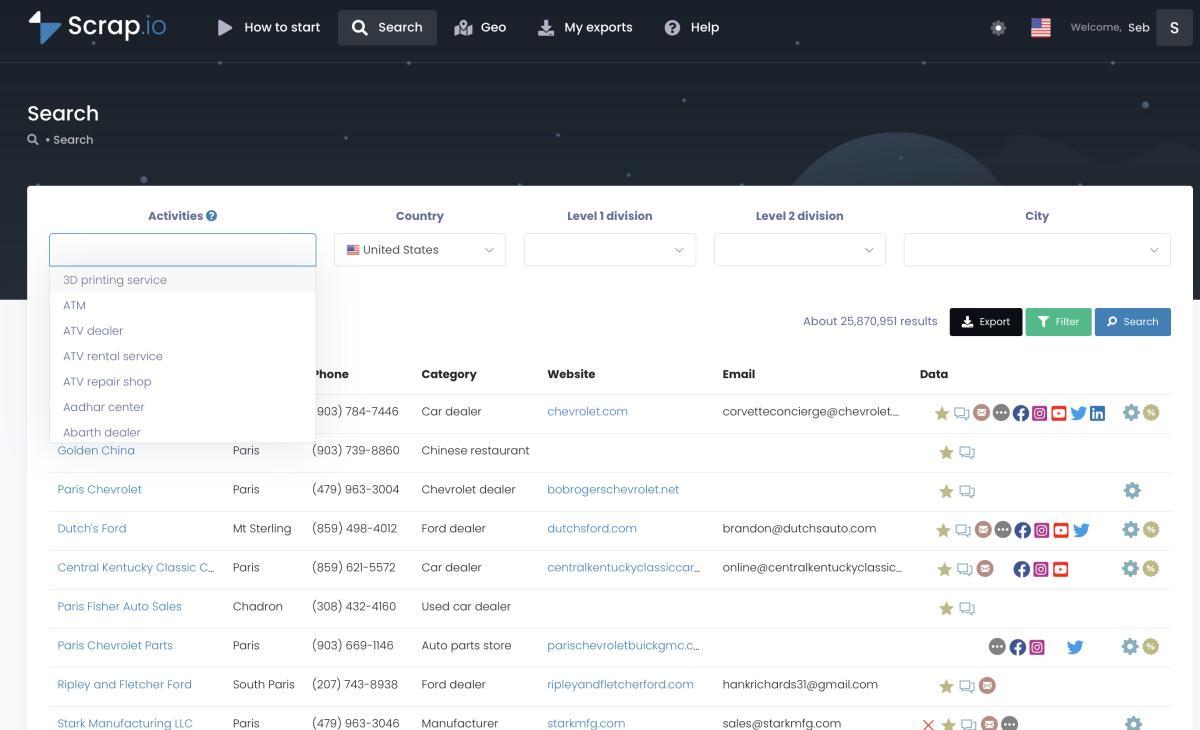
Before you send a single email, enrich every record. Scrap.io's automatic email classification sorts contacts into Individual, Contact, Sales, Marketing, and Admin categories, so you know if you're writing to the owner or a generic info@ black hole. Huge difference.
The platform also pulls social profiles, website tech stack, ad pixels, and review breakdowns. Need the actual person behind the business? Here's the complete guide to finding emails on Google Maps.
Stage 2: Email Sequences
This is where 90% of people screw up. They go straight for the sale. "Buy our thing!" on day one. Terrible move.
Here's what a lead nurturing email sequence for local businesses should actually look like:
| Day | Email Type | Example (b2b lead nurturing email examples) |
|---|---|---|
| 1 | Local Market Insight | "73% of salons near you don't do online booking yet" |
| 3 | Quick Tip | "One Google Business trick that gets 40% more calls" |
| 7 | Case Study | "How a salon in Houston doubled bookings in 90 days" |
| 10 | Free Resource | "The Facebook ad template that got 47 new clients" |
| 14 | Soft Pitch | "If those tips helped, here's how we do it at scale..." |
Every email helps first. No exceptions. Innopharma Education ran this kind of value-first sequence through Klaviyo and hit 67% open rates and 27% click-through, that's 4x the industry average (Upward Engine). Not magic. Just relevance.
The real trick is persistence. Most deals close on the fourth or fifth touch, not the first, so your follow-up email sequences matter more than the opener ever will. Need more ideas? These 47 proven lead magnet examples work perfectly for cold outreach sequences.
Video: Why Your Emails Don't Get Replies
Stage 3: Multi-Channel Follow-Up
Email alone is limping. There, I said it.
Multi-channel nurturing generates 63% more sales-ready leads than single-channel approaches (Amra and Elma, 2026). And for Google Maps prospects, going multi-channel is actually easier because these people are reachable everywhere:
- Phone calls: yes, really. Local businesses answer. Here's the complete guide to phone-based prospecting
- Contact forms: nearly 100% read rates because the message lands in their actual inbox
- Text/SMS: Scrap.io classifies phone numbers by type (mobile vs. fixed), so you know who can receive texts
- Social media: comment on their posts, share their content. Costs nothing.
Email Monday. Social comment Tuesday. Call Thursday. They can't ignore you, but you're not annoying either. That's the difference between multi-channel lead nurturing local businesses and spam. If you want the full system for how to nurture across multiple channels without becoming a pest, we broke it down step by step.
Stage 4: Conversion
Time to close. But forget the enterprise playbook. No 47-slide deck. No procurement process. No six-month pilot.
For Google Maps prospects, the close is simple: free trial, small test project, quick local demo, or a starter package. Make it stupid easy to say yes. These people don't have purchasing departments. They have a credit card and can decide right now.
Real example time. Cornerstone OnDemand ran a full nurturing sequence and generated 189 closed deals from 2,837 MQLs, a 25% conversion rate with 274% ROI (Upward Engine). And a B2B logistics company working with Callbox closed a single $6 million deal that started as a nurtured cold lead. Six. Million. Dollars. From one nurture sequence.
That's why b2b lead nurturing best practices 2026 aren't optional anymore. They're the whole game.
7 Proven Tactics to Nurture Google Maps Leads in 2026
Let me tell you about StrataTech Education Group. They used targeted nurturing to generate 150 enrollments at $146 each, 81.75% cheaper than their best-performing channel (Upward Engine). Not theory. Receipts.
Here are the seven b2b lead nurturing strategies that actually move the needle.
Personalized Local Market Insights
Tell a restaurant owner that 67% of competitors within 3 miles don't accept online orders. That hits different than some random industry stat.
Google Maps data gives you everything: competitor density, review scores, website presence, social media activity. Use it. The free counting feature in Scrap.io lets you pull market data without spending a single credit, "There are 340 restaurants in your area, only 89 have a website." Conversation starter, not sales pitch.
Industry-Specific Content
Content for plumbers sent to a plumber gets read. Content for "small businesses" gets deleted. Period.
If you're nurturing beauty salons: Week 1 covers booking optimization. Week 2 shares an Instagram growth hack from a salon in their city. Week 3 tackles retail product upselling. Each email speaks their language, not yours.
Social Proof
Forget Microsoft case studies. Local businesses trust other local businesses. That's just reality.
ActiveCampaign proved this at scale. Their customer-focused nurturing approach delivered 320% more efficiency and 67% more SQLs (Upward Engine). The secret? Lead nurturing examples from businesses that looked exactly like their prospects. Same industry, same size, same problems.
Don't say "We helped Microsoft save 34%." Say "We helped Tony's Pizza in Brooklyn double delivery orders." The closer the match, the higher the conversion.
Time-Sensitive Offers
Local businesses think in weeks, not quarters. "Limited trial this month" works. "Q4 planning session" doesn't.
Seasonal urgency is gold. "The holiday rush starts in 6 weeks, here's how to be ready" beats any evergreen pitch. And combining it with geographic data? Even better: "Your neighborhood's foot traffic peaks in October. Let's make sure you're ready."
Geographic Clustering
This one's a cheat code. When you've got 50+ prospects in one area, organize a local event. Not a webinar. A real lunch.
"Join 12 other Austin restaurant owners for lunch and learn how to get 40% more delivery sales." When they see competitors going, FOMO kicks in. Works every single time.
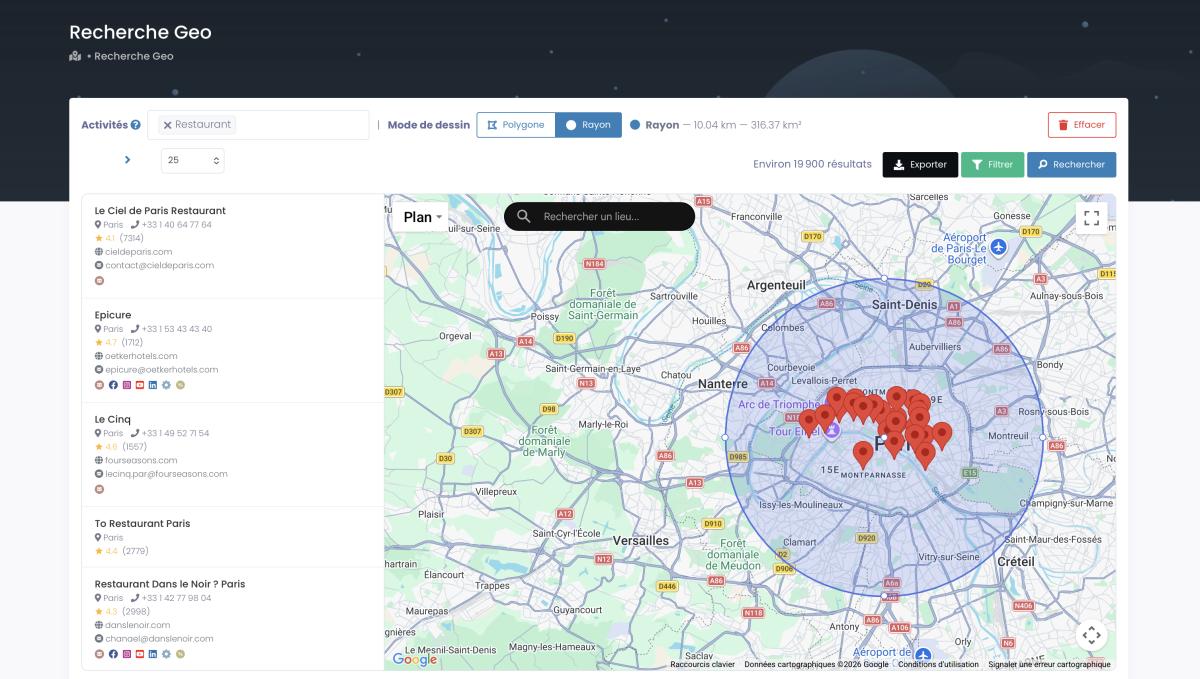
Scrap.io's GeoSearch lets you draw a radius or polygon on the map to find every business in a specific zone, perfect for clustering your multi-channel lead nurturing local businesses campaigns by neighborhood.
Review-Based Engagement
You scraped them from Google Maps. You literally have their review data. Use it.
Under 4 stars? They need reputation help. Lead with that pain point. Between 4 and 4.5? Show them how to push past 4.5. Above 4.5 stars? They're crushing it, pitch something that helps them scale what's already working.
Scrap.io lets you filter by rating range BEFORE you export. Separate nurturing tracks for each segment, zero wasted credits.
Referral Program
Local business owners know each other. The plumber knows the electrician who knows the real estate agent who knows the mortgage broker. One happy client can open ten doors.
Build referral into your nurturing from day one. After a positive interaction: "Know anyone else dealing with the same challenge?" Simple question. Deadly effective.
Tools and Technology for Scaling Nurturing
You can't manually nurture 10,000 leads. Here's what actually works for lead nurturing automation for local business.
Scrap.io as Lead Source
Everything starts with data quality. Garbage in, garbage out. And most lead databases are very much garbage.
Scrap.io extracts data in real time from Google Maps and business websites. Not a static database from 2023. Fresh data, every single export. 225 million+ businesses, 195 countries, 4,000+ categories.
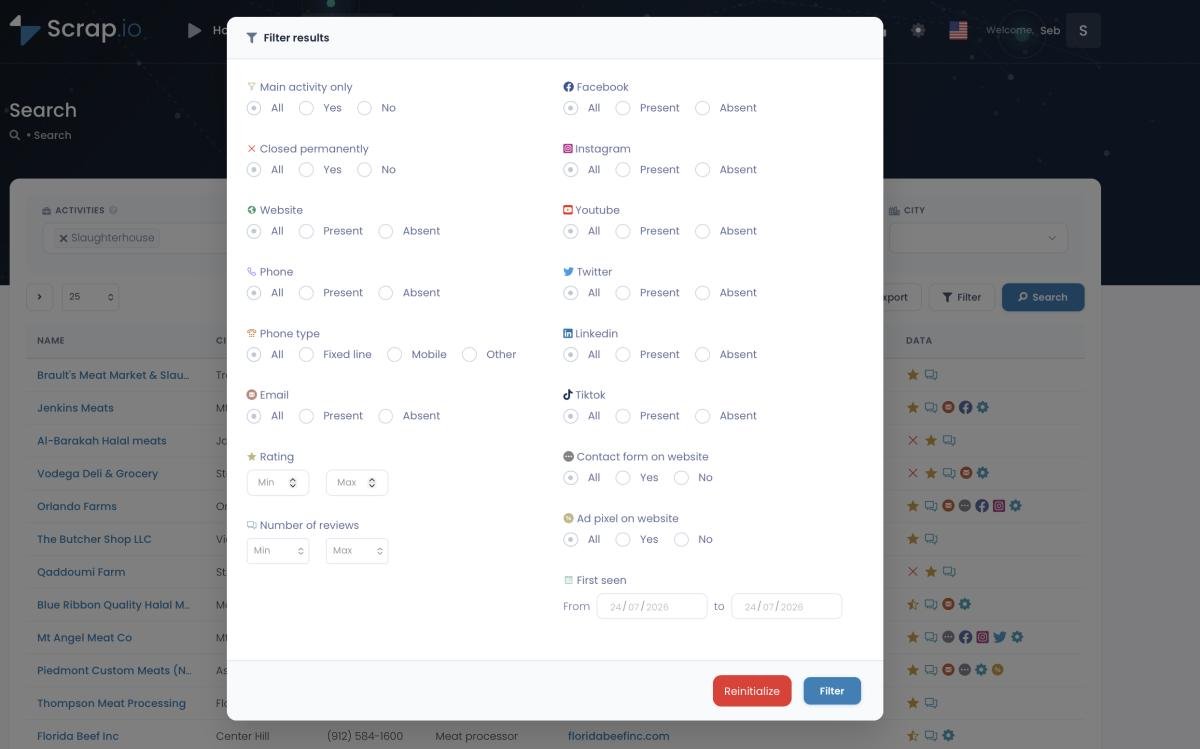
The killer feature for nurturing? Filtering before extraction. Only want businesses with verified emails? Toggle it. Only mobile numbers for SMS campaigns? Done. No website? One click. You only pay for contacts you'll actually use. Plans range from $35 to $499/month depending on volume (10,000 to 100,000 credits).
New to the tool? This two-minute walkthrough shows exactly how to pull your first list before you build a single sequence:
Video: Scrap.io - How to Start?
According to Martal Group, companies that align their nurturing cadence with lead scoring see 2-3x higher close rates from local data sources. On Reddit, one user in r/SaaS shared how they "built MapsLead: Extract B2B Leads from Google Maps and let AI rank Leads" because manual qualification was killing their time. Another in r/Entrepreneur asked about "a tool that gets google maps leads (in thousands)", and the thread consensus was clear: filtering at the source beats filtering after the fact.
CRM Integration
Your CRM needs to handle location data properly. Standard B2B CRMs treat every lead the same. Wrong approach for Google Maps leads. You need fields for review scores, business categories, phone type, and geographic clustering.
The CRM automation guide for Google Maps data walks through the full Pipedrive + Make.com + Scrap.io setup. The best crm for google maps lead nurturing is whichever one your team will actually use, as long as it has an API.
Video: Full CRM automation walkthrough with Scrap.io, Make.com and Pipedrive
Marketing Automation
Regular marketing automation doesn't cut it for local B2B. You need workflows that segment by location AND business type AND engagement level simultaneously.
The Make.com tutorial for automated lead generation shows how to build this without code. Two hours of setup. Then it runs itself. Scrap.io's REST API (300 requests/minute) plugs natively into Make.com, Zapier, or n8n.
Going from google maps scraping to sales pipeline shouldn't take weeks. With the right automation, it takes an afternoon.
Lead Scoring
Don't nurture blind. Score your local leads first, then spend your best hours on the ones most likely to buy. Lead scoring adoption hit 54% among B2B companies in 2026, and AI-powered scoring delivers a 41% improvement in lead quality (Amra and Elma). For lead scoring for local business prospects, here's what to weight:
| Signal | Weight | Why |
|---|---|---|
| Email opened 3+ times | +15 | Active interest |
| Clicked CTA link | +25 | Considering action |
| Google rating < 4.0 | +10 | Likely needs help |
| No website / bad website | +20 | Clear gap to fill |
| Individual email (not generic) | +15 | Decision-maker access |
| Replied to any touchpoint | +30 | Sales-ready |
Score above 60? Hand them to sales yesterday. Below 30? Keep nurturing. Between 30 and 60? That's your sweet spot for the next email in the sequence.
Legal Compliance & Data Privacy
Can't skip this one. (I know you want to. Everyone does.)
GDPR, CCPA and B2B Rules
Good news: B2B prospecting with publicly available business data is legal in most jurisdictions. GDPR's "legitimate interest" basis (Article 6) covers relevant B2B outreach as long as you identify yourself and offer easy opt-out. CAN-SPAM in the US doesn't require opt-in for B2B, just honest identification, a physical address, and working unsubscribe links. CCPA explicitly carves out publicly available business information.
Non-negotiable rules: always include an opt-out mechanism, never pretend to be someone you're not, honor unsubscribe requests within 10 days, and keep records of everything.
Why Scrap.io Data Is Compliant
Scrap.io only collects publicly available business data: information that businesses themselves published on Google Maps and their own websites. Every data point is traceable to its source. No personal email scraping. No shady databases. GDPR and CCPA compliant. Payments are secured via Stripe (PCI-DSS standard), and the platform runs a bug bounty program.
Bref, if you're using Google Maps data for B2B prospecting and following basic compliance rules, you're on solid legal ground.
Common Mistakes That Kill Conversion
I've watched dozens of teams burn through perfectly good Google Maps leads. Same mistakes, over and over.
Generic corporate messaging. "Our solution leverages synergies for operational efficiency." Delete. Instantly. Say "Get 20 more customers this month" instead. Local businesses smell corporate BS from a mile away. The 7 cold email mistakes guide has more cringe-worthy examples than I care to remember.
Ignoring location context. You pulled them from Google Maps because they're local. So why does your nurturing ignore that completely? Mention local competitors. Reference neighborhood trends. Use their city name. Scrap.io gives you GPS coordinates and neighborhood data. Use it.
Terrible timing. 9 AM Monday emails to a restaurant owner? They're dealing with the breakfast rush and a cook who called in sick. Tuesday through Thursday, 10 AM–2 PM. That's your window. And cap it at 2-3 touches per week. More than that and you're just noise.
No email validation. All that nurturing is worthless if 15% of your emails bounce. Run every list through validation before sending. This email validator guide for 95%+ deliverability explains why, even fresh data needs a check.
One channel, one shot, giving up. You sent one email and quit? Try that at a restaurant. Walk in, ask for a table, they say "30 minutes." You leave and never come back. That's what you're doing with one-touch outreach. Eighty percent of sales require at least 5 touchpoints. That's not opinion. That's math.
On Reddit, the frustration is real. A thread in r/sales asking "What do u use for lead generation?" turned into a 50-comment debate. The consensus? Data quality and follow-up persistence matter equally. One without the other is just wasted motion.
Measuring Success: KPIs 2026
Can't improve what you don't measure. But the metrics for google maps lead conversion are different from standard B2B.
| Metric | 2026 Benchmark | Source |
|---|---|---|
| Personalized email open rate | 41.9% | Amra and Elma |
| Email CTR (nurtured) | 6.7% | Amra and Elma |
| B2B conversion rate | 7.1% avg / 14.3% AI-powered | Amra and Elma |
| Multi-channel lift | +63% sales-ready leads | Amra and Elma |
| Nurtured lead purchase size | 47% larger | Annuitas/SalesGenie |
| Nurturing cost reduction | 33% lower CAC | Forrester/SalesGenie |
And here's the google maps lead generation roi calculator version, quick math:
| Source | Cost/Lead | Nurturing Cost | ROI at 5% Conversion |
|---|---|---|---|
| Traditional list providers | $50–$200 | $5–$10/lead | Negative to break-even |
| LinkedIn Sales Navigator | $15–$50 | $5–$10/lead | 50–200% |
| Scrap.io + Google Maps | $0.003–$0.01 | $5–$10/lead | 300%+ |
At $35–$499/month for 10,000–100,000 leads, the data cost is negligible. The real investment is in your nurturing system. And the Google Maps vs LinkedIn comparison breaks down the full economics if you want the detailed version.
The local business lead conversion rate benchmarks keep climbing because the tools keep getting better. But tools alone don't close deals. Your nurturing system does.
FAQ
What is B2B lead nurturing for Google Maps prospects?
It's the process of systematically engaging local businesses found through Google Maps with personalized, multi-channel outreach (email, phone, social, contact forms) to move them from "never heard of you" to "take my money." Unlike enterprise nurturing (6–18 months), b2b lead nurturing for Google Maps prospects runs 30–90 days because local businesses decide faster. The key difference: these prospects have public reviews, a physical location, and visible digital presence you can use for personalization that would be impossible with a generic B2B list.
How do you nurture B2B leads?
Four steps, in order:
- Enrich the data so every record has a real contact, not a generic inbox.
- Send a value-first email sequence that helps before it pitches.
- Follow up across multiple channels: phone, social, contact forms.
- Score and convert the leads that engage.
Do those four consistently and you'll beat 65% of B2B companies that run no nurturing at all.
How long should a Google Maps lead nurturing campaign last?
30 to 90 days. Simple services (marketing audit, web design) close in 30–45 days. Higher-ticket B2B solutions need 60–90 days. If you're past 90 days with zero movement, the lead is either dead or your messaging needs serious work. Your cold email nurture sequence for google maps leads should have 5–7 touchpoints spread across that window. How long b2b lead nurturing takes depends on what you're selling and how well you personalize.
What's the best channel for nurturing Google Maps leads?
Email is still the anchor: 41.9% open rates and 6.7% CTR when personalized (Amra and Elma, 2026). But single-channel is a trap. Multi-channel generates 63% more sales-ready leads. Combine email with phone, social media, and contact form outreach. The sales pipeline guide has the full multi-channel breakdown.
How do you measure Google Maps lead nurturing success?
Three layers: engagement (open rates, clicks, responses), pipeline (lead-to-opportunity rate, cycle time), and revenue (deal size, CAC, ROI). Nurtured leads make 47% larger purchases. At Scrap.io's pricing ($0.003–$0.01/lead), ROI exceeds 300% at just 5% conversion. Track everything from day one. Can't improve what you can't see.
Can you automate Google Maps lead nurturing?
Yes. And you should. Lead scoring with AI delivers 41% better lead quality. Marketing automation generates 63% more sales-ready prospects. The Make.com + Scrap.io integration handles extraction, enrichment, scoring, and CRM sync without code. Scrap.io's API (300 req/min) plugs into any automation platform. Two hours to set up. Then it runs itself while you focus on closing.
Generate a list of restaurant with Scrap.io