

Video: How to Find Someone's Phone Number by Name in 2026
📋 What's in This Guide
- What Is a Cell Phone or Landline Lookup?
- How to Check If a Phone Number Is a Cell Phone or Landline
- Why Phone Type Matters for Sales & Cold Calling in 2026
- How to Build a Clean, Typed Phone List for Cold Calling
- Compliance: TCPA, DNC Lists & Phone Type Classification
- FAQ: Cell Phone or Landline Lookup
Calling a cell phone instead of a landline boosts your pickup rate by 4 to 10x. That's not me making stuff up. That number comes straight from the Cognism 2025 State of Cold Calling Report. And when you think about it, it's pretty obvious why. People carry their mobile everywhere. Nobody carries a desk phone to lunch.
Here's the thing though. You've got a list of, say, 500 phone numbers sitting in a spreadsheet. Prospects from a trade show, leads you pulled from Google Maps, contacts your sales team collected over six months. Some of them are cell phones. Some are office landlines. Some might be fax machines for all you know. And you have absolutely no idea which is which.
So you start dialing. Half the calls slam into voicemail. A bunch hit gatekeepers who sound like they trained at a "how to get rid of salespeople" bootcamp. Three hours in, you've had maybe two real conversations. Sound familiar?
The solution? Run a cell phone or landline lookup on every number before you touch the phone. Classify them. Call the mobiles first. That's really it.
But here's where it gets annoying, especially if you're working the US market. In France or the UK, you can spot a mobile number from across the room. French numbers starting with 06 or 07? Always mobile. UK numbers starting with 07? Same deal. Dead easy.
America? Not so much. A 212 area code could be a Manhattan office landline that's been around since the 80s, or it could be somebody's brand new iPhone. Number portability blew up the whole prefix system in the US and Canada decades ago. So no, you really can't just eyeball it. A proper cell phone or landline lookup free tool is the only reliable way.
And the market keeps shifting. According to NumberBarn's 2026 report, 78% of American adults are wireless-only now, roughly 208 million people. But 55 million still use a landline. Over in the Northeast, about 33% of adults hang onto a fixed line. That means if you're prospecting in New York or Boston, you're going to run into landlines whether you like it or not.
The decline is real though: 40.9 million households ditched their landline in just five years. And the global picture is even more dramatic. The ITU/World Bank data for 2025 shows 111.5 mobile subscriptions per 100 inhabitants versus only 9.9 for landlines. The fixed line isn't dead. But it's getting there.
What Is a Cell Phone or Landline Lookup?
Pretty straightforward. You plug a phone number into a tool or an API, and it tells you what kind of line it is. Mobile, landline, VoIP, toll-free, you get the classification back in seconds. Some people call it a phone number type lookup, a line type lookup, or a phone line type checker. Same thing.
Phone Types Explained: Mobile, Landline, VoIP, Toll-Free
Quick rundown for anyone who needs it. Mobile (cell phone) is attached to a cellular network. It goes wherever the person goes. For prospecting, this is gold: you're reaching someone directly, no middleman. Landline is tied to a physical location. Offices, homes, that kind of thing. Call a business landline and you're dealing with a receptionist, an auto-attendant, or the abyss of voicemail. VoIP runs over the internet: Google Voice, Skype, RingCentral. Tricky because some act like mobiles and some don't. If you need to find someone's phone number first, knowing the type changes your whole approach. Toll-free is your 800/888/877 numbers. They show up in databases but they're irrelevant for outbound.
Why You Can't Tell by the Area Code (in the US)
"Can't I just look at the area code?" I hear this all the time. And the answer, at least for American and Canadian numbers, is flatly no. Local Number Portability has been a thing since the late 1990s. People port numbers between carriers constantly. A Chicago 312 could be sitting on AT&T Wireless or plugged into a copper jack in a downtown office. The digits tell you nothing about the line type.
Other countries play by different rules. France: 06/07 is always mobile, 01/02 is always landline. UK: 07 means mobile. But in the US market, guessing by prefix is basically flipping a coin. You need an actual phone number type lookup tool.
How to Check If a Phone Number Is a Cell Phone or Landline
Alright, let's get practical. I'll walk you through the methods from simplest to most powerful. Whether you need to check one number or ten thousand, there's something here for you.
Method 1: Free Online Lookup Tools
Got a handful of numbers to verify? These work fine and won't cost you a dime. A quick number checker online free run beats guessing every time.
PhoneValidator.com sits at the top of Google results for good reason. Paste a US number, click check, done. Mobile or landline, right there on screen. The limitation? US numbers only.
ClearoutPhone hands you 100 free checks and covers 248+ countries. They've specifically built this around improving campaign success rates by filtering out unreachable numbers before you waste time on them.
IPQS Phone Validator is surprisingly generous for a free tool. You get carrier info, line type, even a fraud risk score. Useful if you want to identify phone number type before calling and catch sketchy numbers in the process.
TextMagic Phone Validator: carrier plus number type, free, does the job.
The downside with all of these? Manual entry. One number at a time. Good for spot-checking a dozen contacts. Completely impractical for a list of 5,000.
Method 2: Google's libphonenumber (Free & Open-Source)
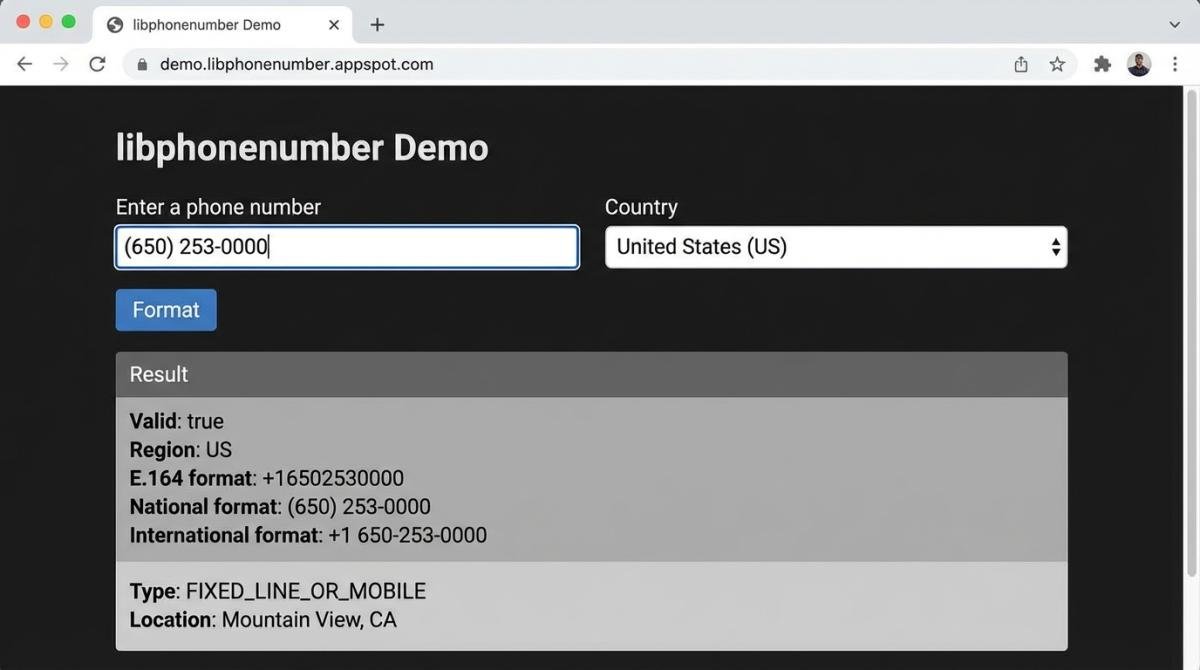
This is where it gets interesting. Google maintains an open-source library called libphonenumber with over 46,000 stars on GitHub. That's not some random side project. This is the library running inside Android, WhatsApp, and Twilio's own infrastructure.
Want to try it right now? Go to libphonenumber.appspot.com. Enter any phone number, pick the country, and it classifies it: Fixed-line, Mobile, Toll-free, VoIP, Premium Rate, Shared Cost, Pager, Voicemail. That's a real phone number validation tool (a free phone number validator, basically), and it's completely free.
The library ships in Java, C++, JavaScript, PHP, Python, and C# (community ports). If you've got a dev handy, or you're decent with code yourself, you can rig up a bulk phone number type lookup that chews through thousands of numbers in minutes. Zero cost.
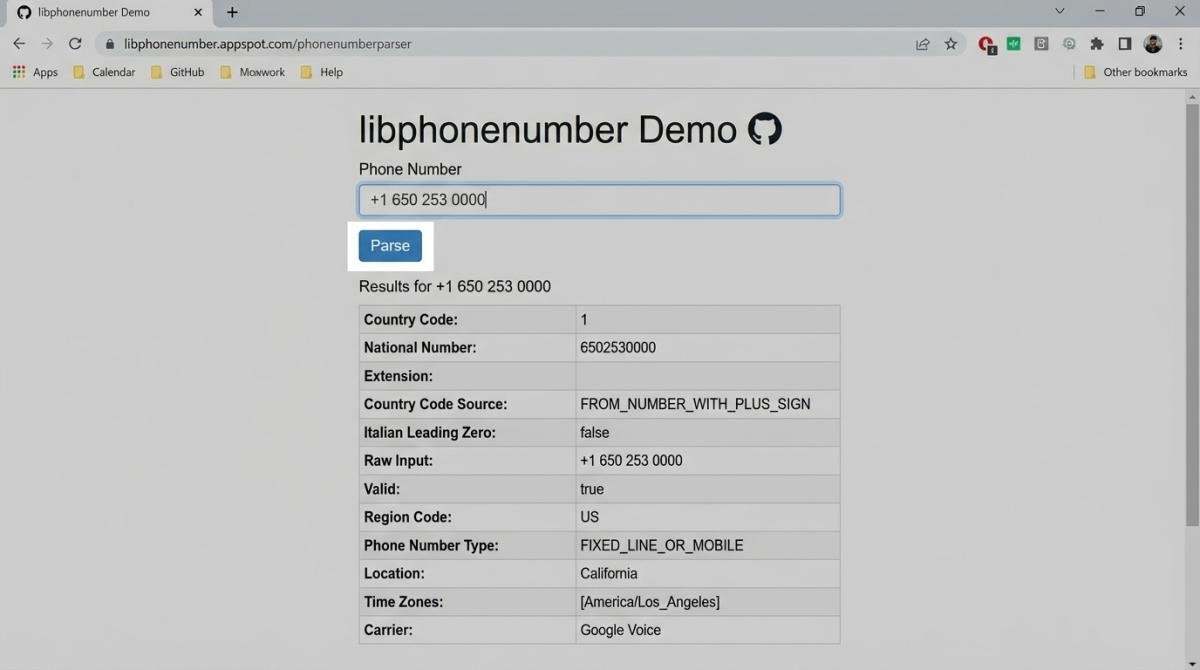
Fair warning though. On US numbers, libphonenumber often spits back "FIXED_LINE_OR_MOBILE." Why? Because number portability makes it literally impossible to classify from the prefix alone. So if you're wondering "is this a cell phone number or landline in USA?", the library alone won't always answer it. For a definitive US answer, you'll need a live carrier database lookup. Which brings us to the paid stuff.
Method 3: Paid API Services (Twilio, Searchbug, etc.)
When you're dealing with thousands of numbers and need real accuracy, APIs are where the money is. Literally.
Twilio Lookup API with Line Type Intelligence is the industry default. Half a cent per query ($0.005), and it nails the classification: mobile, landline, fixed VoIP, non-fixed VoIP, toll-free. Works internationally. Companies like Resy use it for identity checks, Choco uses it for restaurant order validation. Five bucks gets you 1,000 lookups. That's less than your morning coffee.
If you're also validating emails alongside phone numbers, you can pair this with an email validator for better deliverability and stack both into the same enrichment workflow. Or even just a quick check to see if an email is valid before hitting send.
Searchbug Phone Validator pulls LNP data (Local Number Portability) which gets you near 100% accuracy on whether a US number is actually a cell phone or landline. If certainty matters, this one delivers.
RealPhoneValidation built their Wireless ID product specifically for the marketing and sales crowd. Their whole pitch? Identify the line type first, save money and boost effectiveness second. Hard to argue with that.
Phone Carrier Lookup vs Phone Type Lookup: What's the Difference?
People mix these up constantly, so let me clear it up. A phone carrier lookup tells you who runs the number: Verizon, T-Mobile, AT&T, whatever. A phone type lookup tells you what it is: mobile, landline, VoIP.
But here's the overlap: if a carrier lookup returns "Verizon Wireless," you obviously know it's mobile. "Verizon Landline"? Fixed line. So carrier lookups often give you the phone type as a side benefit. Running a phone carrier lookup and a phone type lookup in one shot? That's the efficient play.
Free carrier lookups include IPQS Carrier Lookup and NumLookup. On the paid end, Twilio handles both carrier identification and type classification in a single API call. Efficient if you need both data points.
Why Phone Type Matters for Sales & Cold Calling in 2026
All that to say: knowing whether you're calling a cell or a landline has stopped being a nice-to-have. It's the difference between eight productive conversations per day and eight voicemails you'll never get returned.
If you're wondering whether the channel is even worth it, the short answer is yes. Cold calling is far from dead in 2026, and dialing mobiles is a big part of why. Classifying your numbers first is one of the core sales prospecting techniques for phone outreach that still reliably books meetings.
Mobile vs Landline: The Pickup Rate Gap
Let me throw the numbers at you. Cognism's 2025 cold calling research shows that reaching someone on their mobile gives you a 4 to 10x higher pickup rate versus a landline. One of their analysts was pretty blunt about it: skip the mobiles and you're staring at a sub-1% connection rate, fighting through gatekeepers who exist specifically to block you.
And according to multiple industry sources including ServiceBell, roughly 80% of cold calls land in voicemail. That's overwhelmingly office phones and landlines. Eighty percent. Think about that for a second: four out of five dials, gone.
The flip side? RAIN Group's Top Performance in Sales Prospecting benchmark research found that 57% of C-level and VP buyers actually prefer being contacted by phone, beating out directors at 51% and managers at 47%. Same study: 82% of buyers say they've accepted meetings from sellers who cold called them. The phone absolutely works in B2B. You just have to call the right kind of phone.
Cognism's own results prove the point: they report an 11.3% cold calling success rate against a 2.3% industry average. How? Verified mobile numbers. They pull more than 50% of their pipeline from cold calls. Their Diamond Data product is literally built on the idea that having confirmed mobile numbers is the single biggest lever in outbound sales.
| Channel | Pickup Rate | Best For |
|---|---|---|
| Mobile (cell phone) | 4-10x higher | Direct contact, SMS, WhatsApp |
| Landline (office) | Sub-1% (gatekeeper) | Follow-up calls, local presence |
| VoIP | Variable | Verify legitimacy first |
How Sales Teams Use Phone Classification [Real Examples]
This isn't some theoretical exercise. Companies are building entire businesses around this distinction.
Cognism's Diamond Data is a product that sells phone-verified mobile numbers for B2B prospecting. Their model is proof that mobile vs landline classification sits at the very center of modern outbound sales. Results: 3x the connection rates of other data providers, and more than half their pipeline comes from cold calls.
Twilio Lookup API gets used by thousands of SaaS companies to check phone type before sending SMS. Because here's what happens if you don't: you send a text to a landline, it fails silently, you pay anyway. Smart companies validate first, route second.
ClearoutPhone built a whole SaaS product around phone number classification for SDR teams. Their free tier (100 checks across 248+ countries) lets you test before you commit.
Over on Reddit's r/salesforce, there's a recurring thread about how to check if a phone number is mobile, landline, or not in service. The top recommendation? Twilio. Because as one commenter put it: "the data comes straight from the carriers. It's not a guess like the free prefix tools." That's the whole reason people trust it over eyeballing an area code.
How to Build a Clean, Typed Phone List for Cold Calling
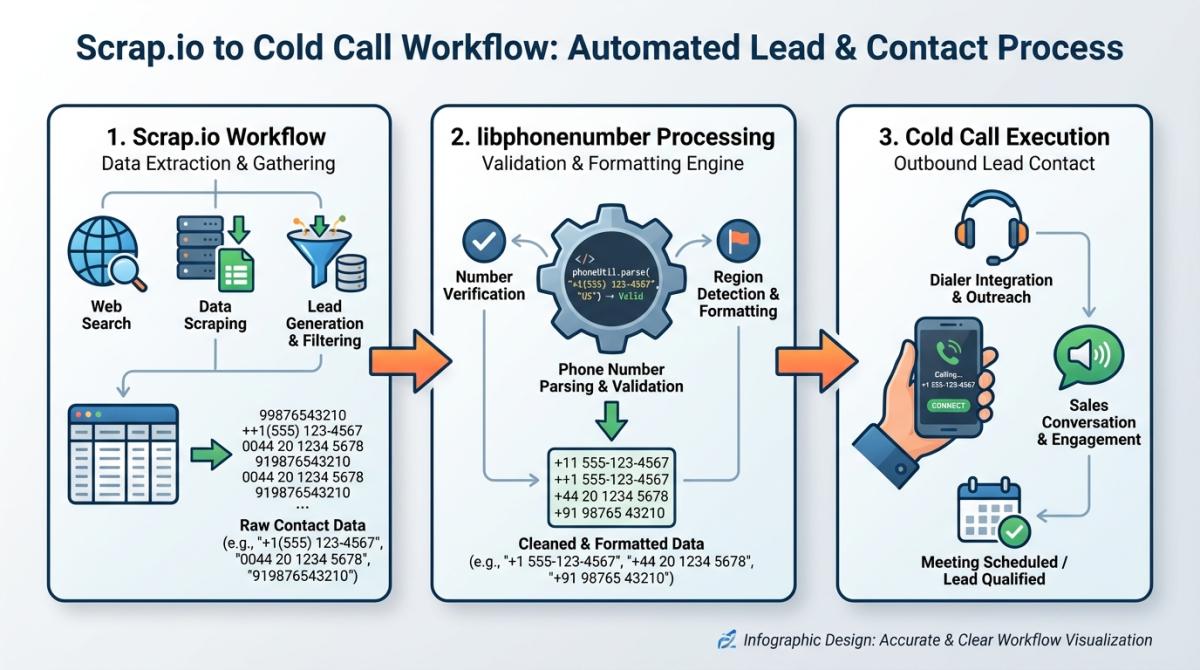
OK so you're sold. Mobiles connect, landlines mostly don't. But where do you actually get a classified phone list? Here's a workflow in three steps that I've seen work really well.
Step 1: Extract Phone Numbers (Scrap.io + Google Maps)
You need raw numbers before you can classify anything. Tools like Scrap.io let you scrape phone numbers from Google Maps across 195 countries and 4,000+ business categories. It grabs numbers from both the Maps listings and the associated business websites. A single export can pull thousands of contacts in a few minutes. It's one of the fastest ways to get local business leads with contact info already attached.
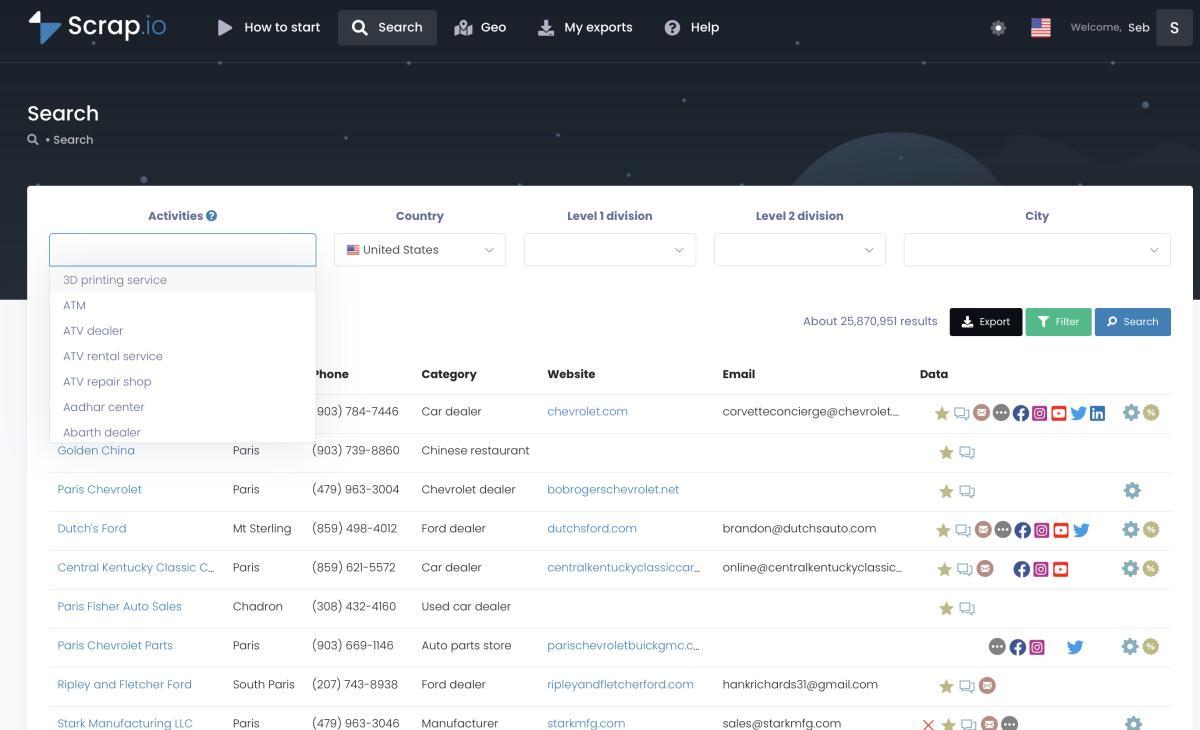
What makes this interesting for phone classification is the pre-filtering. You can narrow down to businesses with an email, businesses with poor Google reviews (hello, reputation management pitch), or businesses in a specific city, state, or entire country. And crucially, the phone filter runs before extraction, so you only spend credits on listings that actually have a number to classify. Two clicks. You end up with a solid USA business contact database that includes phone numbers ready for classification.
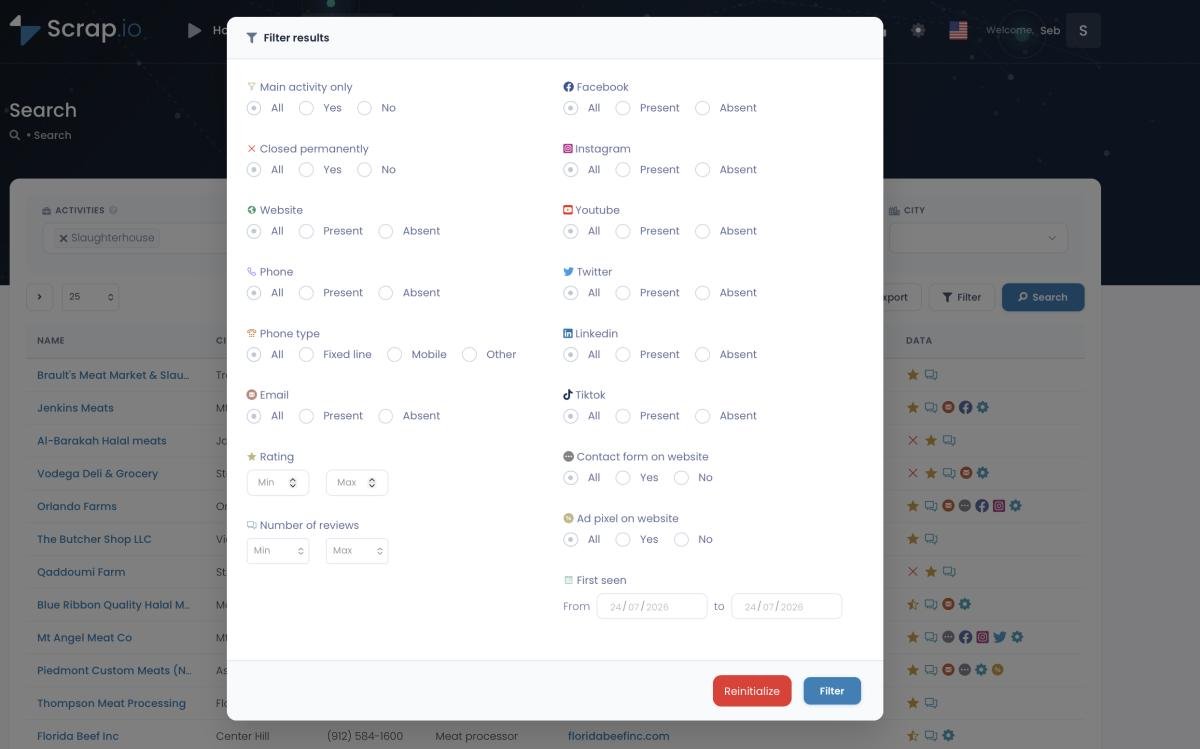
📌 As of September 2026 (Scrap.io): in the US alone, 593,899 restaurants listed on Google Maps have a usable phone number, and that's just ONE of the 4,000+ categories covered. (Source: Scrap.io real-time count, restaurant category + phone-present filter, US, September 2026. Counting is free and live, so you can check any category yourself before spending a credit.)
Quick but important caveat for US readers. Scrap.io's native mobile/landline filter is not available in the US and Canada. Blame number portability again. So the play here is clean: use Scrap.io to extract the numbers (Step 1), then hand them to libphonenumber or Twilio to classify them (Step 2). Outside the US and Canada, Scrap.io does type numbers natively as fixed/mobile/special, so you can skip Step 2 entirely.
Video: Scrape Phone Numbers on Google Maps
Video: Scrap.io - How to Start
💡 Scrap.io pulls phone numbers from any business on Google Maps: 195 countries, 4,000+ categories, and filtering that happens before you burn a single credit. Start with a free 7-day trial and 100 leads, and test the data quality yourself. Try Scrap.io free.
Step 2: Classify Numbers (libphonenumber or Twilio)
Take your exported list and run it through a classification tool. The free route: Google's libphonenumber, especially if someone on your team can bang out a quick script to batch-process everything. The paid route for US numbers where you need certainty: Twilio Lookup at $0.005 per number. Five bucks per thousand. You'll spend more on lunch.
Step 3: Route Your Outreach (Call, SMS, or Email)
Now you've got classified numbers. Route accordingly. Mobile numbers go straight into your cold calling queue: direct dial, SMS follow-up, WhatsApp outreach. That's where the conversations happen. Landline numbers get routed to email-first outreach or scheduled follow-up calls with local presence dialing. VoIP numbers: double-check legitimacy before investing time.
Once you've got the right numbers, you'll want the right words too. Here are some cold calling scripts that actually work once you're dialing numbers that actually pick up. For B2B specifically, these best cold calling scripts for B2B hand you copy-paste templates for every scenario.
💡 Want to build your own cold calling list with pre-classified phone numbers? Grab 100 free business contacts from Scrap.io, run them through libphonenumber or Twilio, and see the difference it makes. Get your free contacts.
Compliance: TCPA, DNC Lists & Phone Type Classification
Now for the part nobody loves reading but everybody needs to know. Especially if you'd rather not pay $1,500 per unauthorized call.
The TCPA (Telephone Consumer Protection Act) draws a hard line between mobile and landline. Autodialed calls and marketing texts to cell phones require prior express consent. Landline rules for B2B are generally less restrictive. This is exactly why a cell phone or landline lookup isn't just about pickup rates. It's about staying legal. Dial a mobile number without proper authorization and you're exposed to $1,500 in penalties per call. Multiply that across an unclassified list of 500 numbers and... yeah. Don't do that.
DNC (Do Not Call) Registry. Scrub every list against the National DNC before any campaign goes out. Mobile or landline, doesn't matter. Just do it.
If you're reaching EU prospects, GDPR treats phone numbers as personal data. But the phone number type (mobile vs landline) is technical metadata. Checking the classification of a number doesn't create a privacy issue. You're looking at infrastructure data, not personal behavior.
For the data sourcing side: Scrap.io only pulls publicly available business information from Google Maps and websites, which keeps things GDPR and CCPA compliant. Every record is traceable to its source. No gray-area scraping, no purchased personal data lists.
FAQ: Cell Phone or Landline Lookup
How can you tell if a number is a cell phone or landline?
Use a phone type lookup tool. PhoneValidator.com handles free lookups for US numbers. Google's libphonenumber (demo at libphonenumber.appspot.com) covers international numbers and is completely free, open-source. For bulk or high-accuracy needs, Twilio's Lookup API runs $0.005/query. And no, in the US, you can't determine phone type from the area code. Number portability killed that shortcut years ago.
Is this a cell phone number or landline in the USA?
In the US, you can't tell from the number itself. Local Number Portability means any area code can be mobile, landline or VoIP. Use a phone type lookup tool: libphonenumber (free) for a first pass, or Twilio Lookup ($0.005/number) for carrier-grade certainty.
Can you text a landline number?
Short answer: no. SMS gets delivered to mobile phones and certain VoIP numbers. Text a landline and it fails silently. The message vanishes and you eat the cost. That's precisely why you should check phone type before sending SMS campaigns. Validate first, text second.
Is there a free way to check if a number is a cell phone?
Several, actually. PhoneValidator.com for US numbers, Google's libphonenumber demo for any country worldwide, and ClearoutPhone with 100 free checks covering 248+ countries. If you need to process large volumes, libphonenumber is open-source. Build it into your own pipeline at zero cost.
Is there a 100% free phone number lookup?
Yes, and you don't need to pay for basic line-type checks. Three genuinely free options:
- libphonenumber: open-source and unlimited if you run it yourself.
- PhoneValidator.com: covers US numbers right in the browser.
- ClearoutPhone: 100 free international checks across 248+ countries.
For bulk, wire libphonenumber into your own pipeline and your per-number cost is exactly zero. The paid tools (Twilio, Searchbug) only earn their keep when you need carrier-grade US accuracy at scale.
What is the difference between cell phone, landline, and VoIP?
Cell/mobile connects through the cellular network and moves with the person. Landline connects to a fixed physical address, an office desk, a home kitchen wall. VoIP (Voice over Internet Protocol) routes through the internet: think Skype, Google Voice, RingCentral. VoIP can mimic either mobile or fixed behavior depending on the service provider and setup. So a phone validator that flags "cell or landline" may still tag a VoIP line separately.
Can you tell by the area code if it's a cell or landline?
In the US and Canada, no. Number portability means a 212 could be mobile, landline, or VoIP. The area code reveals nothing about line type. Other countries are more predictable (France: 06/07 = mobile, 01/02 = fixed; UK: 07 = mobile). But if you're working US prospects, you need an actual lookup tool. There's no eyeballing it.
Why does it matter if a number is mobile or landline for sales?
Because data consistently shows that cold calls to mobile phones connect 4 to 10x more often than calls to landlines. Classifying numbers before dialing means more actual conversations, less time burning through voicemail, and better TCPA compliance. Cognism built their entire business model on verified mobile data and hit an 11.3% success rate, roughly 5x the industry average of 2.3%.
Start Calling the Numbers That Actually Pick Up
Look, the data on this stuff is pretty clear. Mobile numbers connect. Landlines mostly don't, or they route you through someone whose job is to make sure you never reach the decision maker. And with 78% of Americans now wireless-only and landline adoption falling off a cliff, the gap between calling mobiles and calling fixed lines is only going to widen.
The good news is that checking whether a number is a cell phone or landline has gotten stupid simple. Free options like libphonenumber cover most situations. Twilio costs half a cent per number when you need precision. And tools like Scrap.io let you pull thousands of business phone numbers from Google Maps in minutes, giving you the raw material to classify and call.
The playbook is three steps: extract, classify, act. That's it. Stop dialing blind. Sort the mobiles from the landlines. Then put your time where it actually pays off.
Ready to build a phone list that actually connects? Try Scrap.io free for 7 days. Extract phone numbers from Google Maps across 195 countries and 4,000+ categories, filter before you spend a credit, then classify and start calling the numbers that pick up. Get your first 100 leads here.
Generate a list of restaurant with Scrap.io