

📋 What's in This Guide
- Why Your Opt-In Strategy Can Make or Break Your Email ROI
- What Is Email Opt-In? Understanding the Basics
- Single Opt-In vs Double Opt-In: How Each Process Works
- Opt-In Email Marketing: Why Your Choice Matters More in 2026
- Real-World Results: What the Data Says About Single vs Double Opt-In
- Double Opt-In Best Practices for Cold Email Compliance
- How to Set Up Double Opt-In (ESP Guide)
- Which Countries Require Double Opt-In?
- Decision Framework: Single or Double Opt-In for Your Business?
- FAQ: Double Opt-In vs Single Opt-In
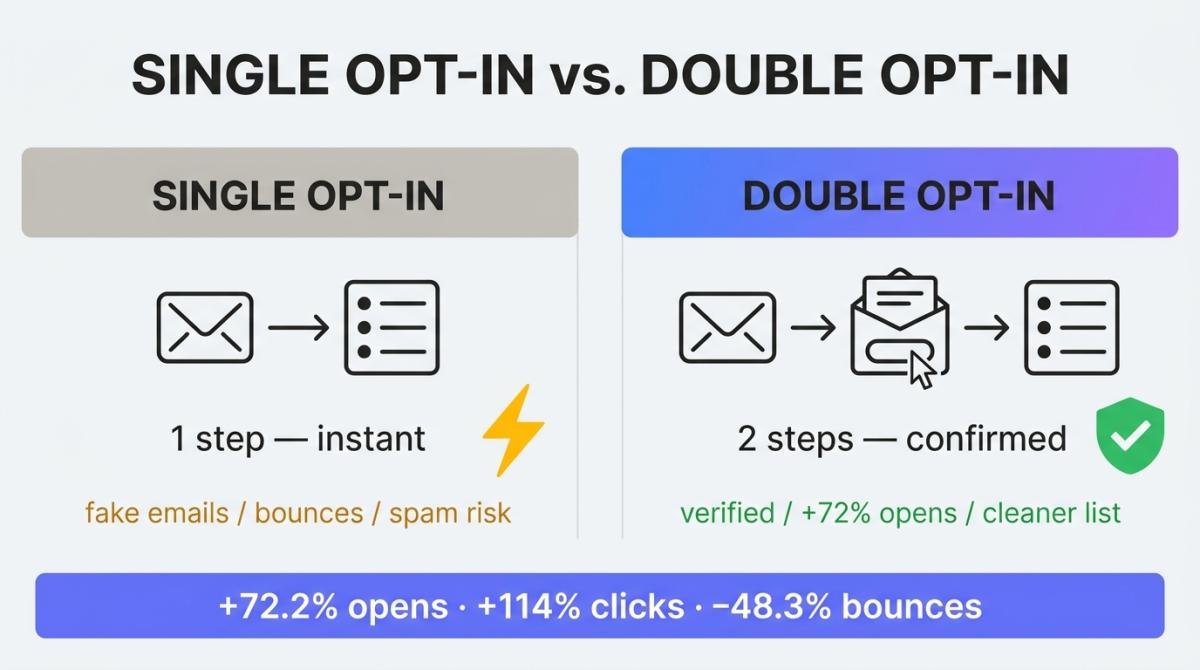
Okay so listen. Mailchimp ran a study on 30,000 users. They compared double opt-in vs single opt-in performance. And the numbers? Kind of wild. Double opt-in got +72.2% more unique opens. And +114% more clicks. That's not a small difference. That's more than double. (For the record, that Mailchimp study is an older historical reference, widely cited, not freshly re-run every year. Directionally still the cleanest data we've got.)
And yet. Over 90% of businesses still use single opt-in. Most of them can't figure out why their emails keep bouncing. Or why they're landing in spam. It's like watching someone water a plant with a bucket that has a hole in it. And then wondering why the plant dies.
Here's the thing. Email marketing is worth $13.72 billion in 2026. By 2031? It's supposed to hit $22.93 billion (Mordor Intelligence, 2026). That's a CAGR of 10.82%. Serious money. But only if your emails actually show up in people's inboxes. Which brings us to the one question that changes everything.
Should I use double opt-in or single opt-in?
This is the double opt-in vs single opt-in guide for 2026. Real data. Real case studies. No fluff. Let's get into it.
What Is Email Opt-In? Understanding the Basics
Super simple. Email opt-in is when someone says "yeah, you can email me." That's it. But how you collect that permission? And how you check it's real? That changes everything about your list quality. Your deliverability. Your whole email marketing ROI honestly.
In 2026, email consent isn't some nice-to-have. It's the base. CAN-SPAM in the US says you need clear identification and unsubscribe buttons. GDPR in Europe wants explicit consent. CASL in Canada adds more stuff on top. And Gmail, Yahoo, Microsoft. They're all getting stricter about who they let into the inbox.
So the question isn't whether you need opt-in. You do. The question is which type keeps your business safe while still growing your list.
Single Opt-In vs Double Opt-In: How Each Process Works
Let me explain the difference because people mix these up all the time.
What Is Single Opt-In?
One step. Someone types their email. Hits submit. Done. They're on your list right away. No confirmation email. No extra click. Nothing.
It's fast. Zero friction. And it's how most businesses do it because nobody wants to add extra steps between "interested person" and "new subscriber."
But here's the problem. That speed comes with baggage. Mistyped emails get through. Bots sign up. Someone's angry ex enters their address just to mess with them. (Happens more than you'd think.) All those junk addresses drag your whole list down.
Without email verification at the door, you're letting everyone in. Including addresses that'll bounce. Or trigger spam traps. Or just sit there dead, slowly killing your sender reputation.
What Is Double Opt-In?
Same start. Someone enters their email. But then they get a double opt-in email with a confirmation link. They click that link. Then they're on your list. That's it. Two steps instead of one.
That extra step proves the address is real. And that the actual person who owns it wants to hear from you. Some people call it confirmed opt-in. Same thing.
The good stuff? Way cleaner lists. Better engagement. Fewer spam complaints. And actual proof of consent if anyone ever comes asking.
The bad stuff? About 23% of signups never click the confirmation link (multiple ESP studies, 2024). They entered their email. Got the message. And just... didn't bother. Lost interest maybe. Missed it. Got distracted by their dog. Who knows.
That 23% drop hurts. No question about it. But the people who stay? They convert at a much higher rate.
What a Double Opt-In Email Looks Like
Wondering what one of these confirmation messages actually contains? Here's a plain double opt-in email example, stripped to the essentials:
Subject: One last step: confirm your subscription
Body: Thanks for signing up! Click the button below to confirm your email and you're in. Didn't request this? Just ignore it and nothing happens.
Button: Confirm my email
That's the whole thing. One clear subject line. One sentence of reassurance. One big obvious button. No fluff, no five-paragraph welcome novel. The faster and simpler the confirmation, the more people actually click it. Bury that button under a wall of text and your confirmation rate tanks.
Complete Comparison Table
| Criteria | Single Opt-In | Double Opt-In |
|---|---|---|
| Process | 1 step: instant | 2 steps: confirmation link |
| Growth Speed | ⚡ Fast, high volume | 🐢 Slower, ~20-30% drop |
| Subscriber Quality | Lower: fake/mistyped emails | Higher: verified, engaged |
| Deliverability | Risk of spam traps & bounces | High: fewer complaints |
| Spam Rate | Higher risk (>0.3% threshold) | Typically <0.1% |
| Legal Compliance | Minimal: CAN-SPAM OK | Strong: GDPR-preferred |
| List Maintenance | Requires regular cleaning | Self-cleaning by design |
| Best For | Lead magnets, low-stakes newsletters | B2B outreach, regulated markets |
Want a deeper breakdown from the ESP side? Mailchimp's own single opt-in vs double opt-in doc lays out the trade-offs, and Mailjet makes the deliverability case for doubling up.
Opt-In Email Marketing: Why Your Choice Matters More in 2026
Something changed in 2024. And if you haven't caught up? Your emails are probably already hurting.
Video: Why Your Google Maps Emails Don't Get Replies?
Gmail and Yahoo put out new rules. If you send 5,000+ emails a day, your spam complaint rate needs to stay below 0.3%. Sounds easy. Until one bad send pushes you past that number. And once you cross it? Your emails get throttled. Or blocked. Just like that.
Then Microsoft jumped in during 2025. Even stricter. Emails that don't meet email authentication requirements for bulk senders get flat-out rejected. Not filtered. Not sent to spam. Rejected.
And there's one more box to tick now that these rules have matured. Bulk senders have to include a one-click unsubscribe: the RFC 8058 standard Gmail, Yahoo, and Apple all enforce for anyone pushing 5,000+ emails a day (Microsoft strongly recommends it too). One header. One tap for the recipient to get out, no hunting for a tiny link buried in the footer. Skip it and your bulk mail runs into the same walls as the spam. Bit ironic, honestly: making it easier for people to leave is exactly what keeps you in the inbox.
All that to say, the quality of your opt-in email list decides whether your emails reach inboxes at all. That's not theory. That's just how it works now.
And when you do it right? The returns are crazy. Litmus (2025) says email marketing gives back $36 for every $1 spent. That's 3,600% ROI. But only if your messages actually land.
Here's something interesting from Mailjet's "Road to Inbox" report (2025). About 40% of senders use double opt-in. 47.6% don't. And 12.7% aren't even sure what they're using. Almost half going the risky way. And one in eight who don't even know. Which is somehow worse.
Testing your opt-in strategy? Start with data that isn't already dead. Scrap.io pulls verified B2B contacts straight from Google Maps in real time: 225M+ businesses across 195 countries, filtered to email-present listings before you spend a credit. Grab a free 7-day trial with 100 leads included and see what clean data actually looks like.
Real-World Results: What the Data Says About Single vs Double Opt-In
Numbers are nice. But what happens when real companies actually make the switch? Let's look at it.
Mailchimp's 30,000-User Study
This is the big one. Everyone references it and for good reason. Mailchimp compared stuff across 30,000+ users. Some using single opt-in. Some using double opt-in. (Quick honesty note: it's an older study, so treat it as a historical reference rather than a 2026 benchmark. Still the most-cited number in the whole debate.)
Double opt-in group? +72.2% unique opens. +114% clicks. -48.3% bounces. Compared to single opt-in. Those aren't small bumps. That's a completely different level of performance.
Pretty clear takeaway. Smaller lists with real subscribers beat bigger lists full of junk. Every time.
Oracle Marketing Cloud's 96% Confirmation Rate
People always say "but I'll lose too many signups with double opt-in." Fair worry. But Oracle Marketing Cloud showed that with a good flow (clear subject line, instant delivery, obvious CTA), they hit a 96% confirmation rate.
So that 23% average loss? Not set in stone. With decent UX on your confirmation email, you can get it way down. The people who don't confirm probably weren't gonna buy anything anyway.
The Motley Fool's Reverse Switch
Here's a fun one. The Motley Fool used double opt-in for 8 years. Then switched to single opt-in. Why? Volume mattered more for their business model. They wanted faster growth even if engagement dropped per person.
Controversial move. But it shows the real trade-off. If your whole thing depends on sheer volume (mass media, ad-supported stuff), single opt-in might actually make sense. For most B2B companies though? Quality wins.
Why Cirque du Soleil Lost 20% of Subscribers
When Cirque du Soleil turned on double opt-in for their newsletter, they lost 20% of subscribers during the confirmation step. Painful number. Any marketing team would feel that.
But the ones who stayed? Way more engaged. Higher opens. Higher clicks. More ticket purchases. The 80% who confirmed were worth more than the full 100% they had before.
EmailOpShop's Nonprofit Data
In the nonprofit world, EmailOpShop compared opt-in lists against purchased lists. The opt-in list had a 15x higher conversion rate. Fifteen times. That's the gap between permission-based email marketing and cold blasting people who never asked to hear from you.
Pardot/Salesforce's 6-Month Test
Pardot (now Salesforce) ran an A/B test for over 6 months. Double opt-in versus single opt-in for their enterprise clients. After all that testing? They went with double opt-in as the recommended approach for B2B email. When a company like Salesforce spends half a year testing something and picks a winner. Probably worth listening to.
And it's not just the big names. Go read the threads. On the r/Emailmarketing "Yay or Nay" discussion, one marketer put it about as bluntly as it gets: "Single opt-in feels great for the ego… double gives you cleaner data and people who actually care." That's the whole debate in one sentence. There's a whole other "should I enable double opt-in or stick with single" thread too, and the usual objection ("Why would I lose 20% of my signups on purpose?") gets answered by engagement data every single time.
Want to build a verified opt-in email list from scratch? Start with 100 free B2B leads on Scrap.io, pulled from Google Maps in real time, updated at the moment you export. Current data. Accurate addresses. Not some list from six months ago. Free 7-day trial, 100 leads included.
Double Opt-In Best Practices for Cold Email Compliance
Okay here's where we go somewhere the other guides don't. Most double opt-in articles? All about newsletters and marketing emails. Nobody talks about how this connects to cold email B2B compliance. But it matters. A lot.
Video: How to Identify Spam Emails: A Guide to Avoid Sending Them in Your Prospecting Campaigns
If you're doing any B2B outreach (cold emails, prospecting, lead gen), your email deliverability best practices need to account for how your lists got built in the first place.
Single opt-in lists used for cold outreach? Recipe for disaster. No verification. No proof anyone agreed to anything. High bounces. Spam complaints. You're basically begging Gmail to flag you.
Smarter way to do it? Hybrid model.
Use single opt-in for the fast stuff. Lead magnets. Content downloads. Webinar signups. Then run automated email verification to clean the list before you hit send. Speed without the garbage. Add a welcome sequence that filters out dead weight early. And when a contact does slip through and bounces, know the difference between a soft bounce vs hard bounce so you're not nuking addresses that were just temporarily unavailable.
One thing people skip: the domain you send from. Fire cold campaigns off a brand-new domain and you'll trip filters no matter how clean your list is. Run it through proper email warmup tools first so your sender reputation isn't starting from zero.
For cold email specifically? Starting with clean verified data is everything. Scrap.io pulls fresh business data straight from Google Maps. Emails. Phone numbers. Social profiles. All public. All current. That's a way different starting point than buying some list that's been sitting in a database collecting dust. If you're starting from zero, here's exactly how to build a cold email list the right way, and here's the full cold emailing compliance guide for the legal side.
Emailing prospects across the EU? Then the consent question gets sharper. Cold outreach leans on legitimate interest, not opt-in, but the two intersect fast. Read our breakdown of GDPR cold email B2B before you send a single message to a German or French address.
And don't skip the technical stuff. SPF, DKIM, DMARC. That's the backbone of deliverability in 2026. Without them, even a perfect opt-in strategy won't save you from the spam folder. Here's the full SPF, DKIM & DMARC setup walkthrough. You can also verify an email address without ever hitting send, run a quick check on whether an email is valid before it enters your list, and verify your email list for 95%+ deliverability with the right tools.
One more thing. If you're running cold campaigns, make sure you're not making these common cold email mistakes to avoid. Stuff like bad subject lines or blasting too many emails too fast can wreck your sender reputation. Doesn't matter how good your list is. Once it's clean, here's how to actually write a cold email that gets replies.
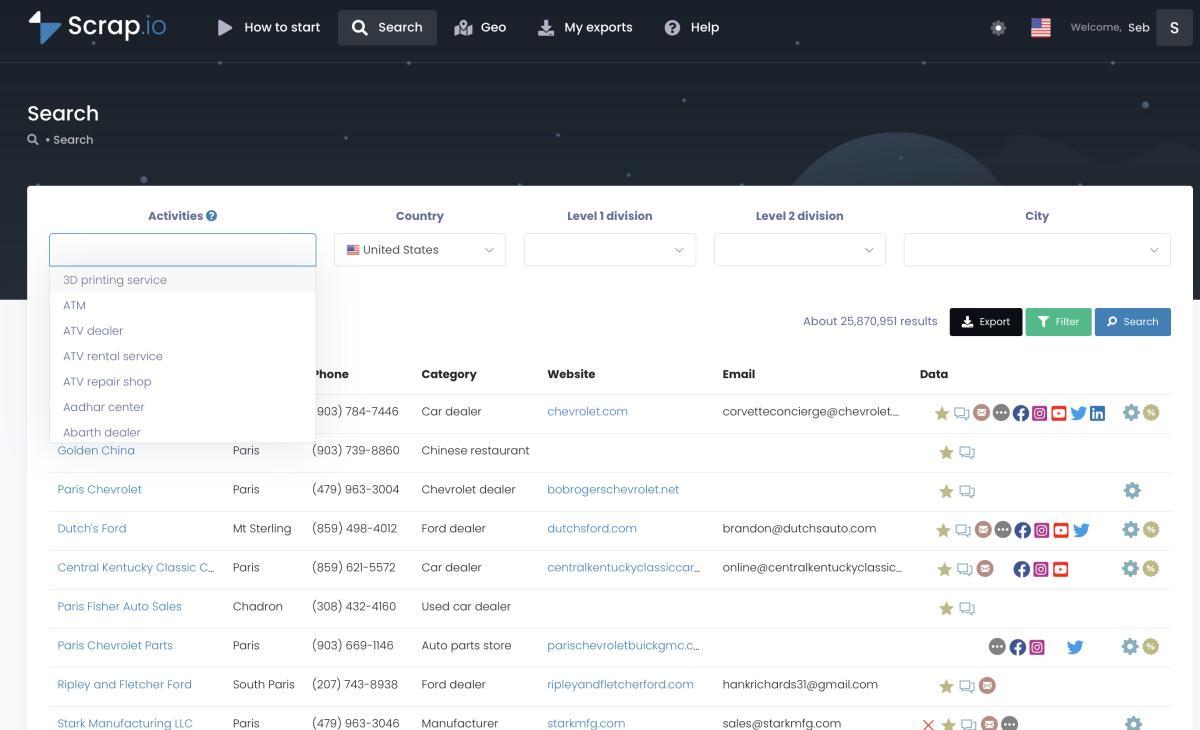
Ready to run a clean cold campaign? Scrap.io filters to email-present listings before you spend a single credit. One client pulled 11,734 verified businesses in 45 minutes. Fresh data beats a bought list every time. Start your free 7-day trial: 100 leads included →
How to Set Up Double Opt-In (ESP Guide)
Setting this up is embarrassingly easy. Like two-click easy in most platforms. Here's how.
Mailchimp Setup
Go to Audience → Settings → Opt-in method → Pick Double opt-in. Done. Mailchimp sends a confirmation email to every new subscriber automatically. You can customize the template in the same spot. (Mailchimp's own help docs confirm audiences default to single opt-in, so you have to flip this manually.)
The double opt-in Mailchimp setup takes like 30 seconds. The default confirmation email works okay, but you'll get better rates if you write a clear subject line and put an obvious button in there.
HubSpot Setup
Head to Settings → Marketing → Email → Subscription types. Turn on Double opt-in for whatever subscription types you want. HubSpot also lets you customize the confirmation page which is a nice touch.
ActiveCampaign Setup
Go to Settings → Advanced → Turn on Require email confirmation. Simple. ActiveCampaign lets you build custom confirmation emails with their drag-and-drop thing.
Klaviyo Setup
Go to Lists & Segments → Pick your list → Settings → Turn on Double opt-in. Klaviyo's confirmation emails are pretty customizable. You can A/B test different versions too.
Quick tips for all of them:
- Change the confirmation subject line. "Please confirm your subscription" is boring. Try "One last step: you're almost in."
- Make the confirm button big. Like really big.
- Send the confirmation immediately. Every minute you wait costs you confirmations.
- Test different versions. Small wording changes can make a real difference.
If you're also doing cold email alongside your opt-in stuff, check out the best cold email tools in 2026 to keep things properly separated.
Which Countries Require Double Opt-In?
Not everywhere has the same rules. In some places, double opt-in isn't just smart. It's the law.
Double opt-in is legally required in six countries: Austria, Germany, Greece, Luxembourg, Norway, and Switzerland. Email people in any of them without it and you're breaking the law. Simple as that. Here's the list on its own:
- Austria
- Germany
- Greece
- Luxembourg
- Norway
- Switzerland
Now here's where it gets confusing. GDPR (which covers the whole EU) doesn't technically require double opt-in. But it says you need to prove consent. And double opt-in gives you a clear record of that consent. So while it's not formally required, it's the easiest way to stay safe. Don't take my word for it. Iubenda's legal team says the same: no strict GDPR requirement, but it's best practice, especially in Germany and the EU generally.
CAN-SPAM in the US? Doesn't require it. You can use single opt-in as long as you have unsubscribe options and say who you are. But "legal" and "smart" are two different things.
CASL in Canada? Not required either. But recommended. Especially for cold outreach.
If you've got international people on your list (and most B2B companies do), double opt-in just makes life easier. One process. All markets. No headaches.
Want the full picture on opt-in email compliance for CAN-SPAM and GDPR? Here's a guide on avoiding spam in prospecting campaigns.
Decision Framework: Single or Double Opt-In for Your Business?
Alright. Enough data. When it comes to double opt-in vs single opt-in for your situation specifically. Here's how to think about it.
Use Single Opt-In when:
- You're running lead magnets or contests and speed matters
- You've got a low-stakes newsletter (entertainment, media type stuff)
- Your business model runs on volume more than engagement
- You've got email verification tools that run after signup
- You're only targeting US/UK and compliance is simple
Use Double Opt-In when:
- You're doing B2B email outreach or permission-based email marketing
- You're in a regulated industry (healthcare, finance, legal)
- Your audience is international. Especially European.
- You've got bounce rate problems or spam complaints
- You need proof of consent for cold email compliance
- Deliverability is directly tied to your revenue
Hybrid Approach (this is what most smart companies actually do):
- Single opt-in to capture leads fast (magnets, downloads)
- Automated email verification right after signup
- Welcome sequence that filters out people who don't engage
- Move the confirmed ones into your main list
- Use effective cold email outreach strategy principles for any prospecting
This gives you single opt-in speed with most of the double opt-in quality. More setup work. But the results are worth it.
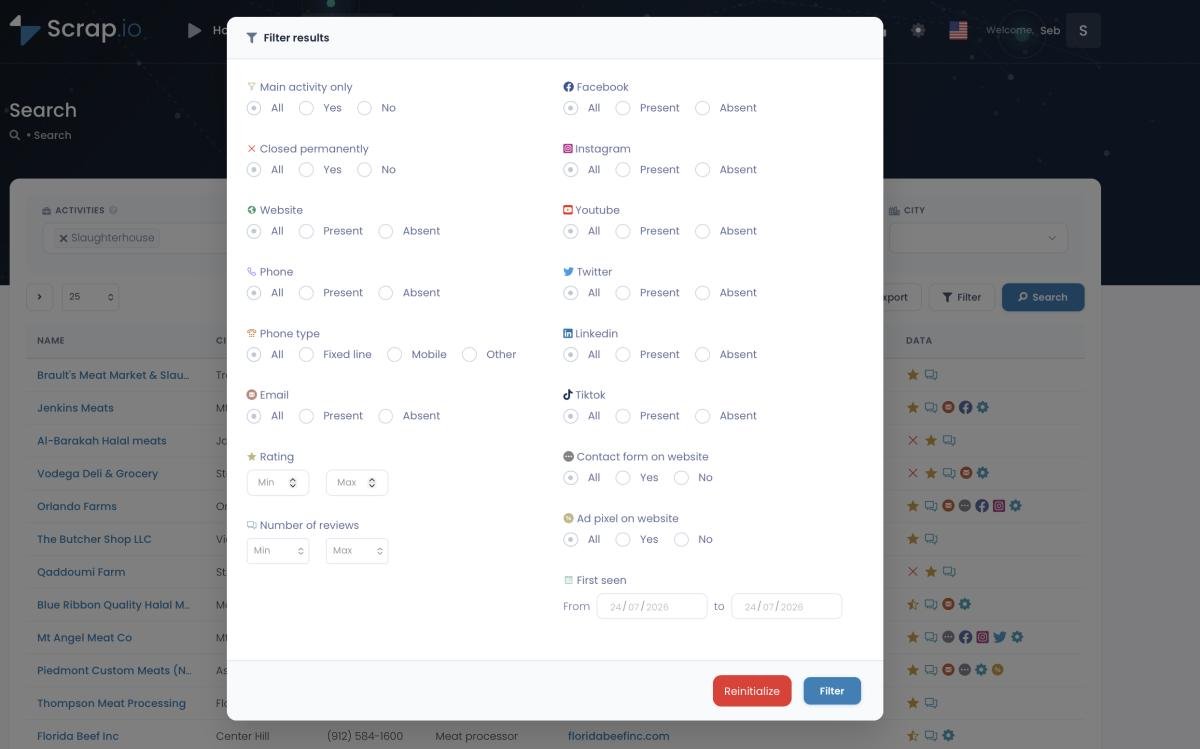
And if you're building B2B lists for outreach? Fresh verified data matters more than anything else. A verified B2B email database pulled in real time from Google Maps gives you contacts that actually exist. Way better starting point than any form.
FAQ: Double Opt-In vs Single Opt-In
These are the questions people ask most about double opt-in vs single opt-in. Short answers. No filler.
Is double opt-in required by GDPR?
No. GDPR doesn't technically require double opt-in. It requires you to prove consent but doesn't dictate how. That said, double opt-in gives you the strongest proof, because you hold a record showing the person confirmed their own address. Most compliance experts (and Iubenda) recommend it as the safest option in GDPR markets.
Do Gmail and Yahoo require double opt-in?
No. Gmail and Yahoo don't mandate double opt-in specifically. What they do require from bulk senders (5,000+ emails a day) is proper authentication (SPF, DKIM, DMARC), a spam complaint rate under 0.3%, and a one-click unsubscribe (RFC 8058). Double opt-in isn't on the checklist, but it's the easiest way to keep that complaint rate low, so it helps you clear the bar either way.
What is the difference between single and double opt-in?
Single opt-in adds people to your list the second they submit their email. One step. Double opt-in sends a confirmation email first. People only get added after they click the link. Two steps. The big difference is verification. Double opt-in proves the email owner actually wants your stuff.
Does double opt-in improve email deliverability?
Yeah. Big time. Mailchimp's study across 30,000 users (a historical reference, but still the go-to number) showed double opt-in lists had -48.3% bounces and +72.2% unique opens versus single opt-in. Fewer bounces and complaints means better sender reputation. Better reputation means more emails hitting the inbox.
Which countries require double opt-in?
Six countries require double opt-in by law: Austria, Germany, Greece, Luxembourg, Norway, and Switzerland. The rest of the EU under GDPR doesn't formally require it but strongly recommends it as the cleanest way to document consent.
Is single opt-in legal?
Yeah, in most places. In the US, CAN-SPAM says single opt-in is fine as long as you've got unsubscribe options and clear sender info. UK, France, most other countries. Same deal. Just stay away from the six countries listed above.
How do I set up double opt-in in Mailchimp?
Audience → Settings → Opt-in method → Pick Double opt-in. Takes about 30 seconds. You can tweak the confirmation email in the same settings. Every new subscriber gets a confirmation message before they're added.
Will double opt-in reduce my email list growth?
Yes. Expect about a 20-30% drop in new subscribers compared to single opt-in (GetResponse, 2024). But the people who confirm? They engage at roughly 2x the rate. Net ROI is usually positive. A smaller verified subscriber list beats a bigger unverified one.
What is confirmed opt-in vs double opt-in?
Same exact thing. Different name. Someone enters their email. Gets a confirmation message. Clicks a link. Then they're subscribed. Some platforms say "confirmed opt-in." Some say "double opt-in." Means the same thing. And if you want to see how marketers argue it out in the wild, this Quora thread on single vs double opt-in is a decent rabbit hole.
Final Thoughts
The double opt-in vs single opt-in question isn't much of a debate anymore. Not in 2026. Data's clear. Rules are getting tighter. Gmail, Yahoo, Microsoft. They're all making list quality matter more than it ever has.
A double opt-in list of 5,000 people who actually want to hear from you will beat a single opt-in list of 10,000 mixed-quality addresses. Every time. Math just works that way.
But here's what most guides skip: your opt-in strategy is only as good as the data going into it. Whether you're building a subscriber list or doing cold email, starting with accurate current contact info is what actually matters.
That's what Scrap.io does. Real-time B2B data pulled straight from Google Maps. 225 million establishments. 195 countries. Fresh emails, phone numbers, business details. Public sources. No old databases. No stale lists.
Ready to build a verified B2B email list? Try Scrap.io free for 7 days: 100 leads included, extracted from Google Maps in real time, filtered to email-present contacts before you spend a credit. Right now.
Video: Scrap.io - How to Start?
Okay. Stop reading. Go check your opt-in settings. Takes 30 seconds. Might be the best thing you do this week.
Generate a list of restaurant with Scrap.io