

The average cold email gets a 3.43% reply rate. Most lists never get anywhere near that. Half the addresses bounce, the domain gets flagged, and the campaign is dead before lunch. Sound familiar?
Here's the thing. A cold email list isn't hard to get. You can buy 50,000 contacts before your coffee cools. It's hard to build one that actually lands in an inbox. So this guide skips the recycled advice you've already read on five other tabs and shows you where fresh contacts really come from in 2026, how to verify them, how to stay legal across borders, and one source almost nobody else is talking about: Google Maps.
Let's get into it.
Video: How to Scrape Google Maps - Ultimate Guide
What's inside
- What is a cold email list?
- The anatomy of a list that converts
- Where to source contacts (7 methods)
- Build vs buy: the honest math
- How to build a cold email list from Google Maps
- Verify and clean (keep bounce under 2%)
- Segment before you send
- Compliance in 2026: CAN-SPAM, GDPR, CASL
- The best tools, in three layers
- FAQ
What is a cold email list?
A cold email list isn't a spreadsheet of addresses. That's a liability waiting to torch your sender reputation. A real cold email list is a curated set of business contacts who match a defined profile, each with a verified email, sourced from public or first-party data, and reached without prior opt-in.
That last part matters. Cold means no prior relationship, which is exactly why it's different from a newsletter or opt-in list. Email list building for cold outreach has its own rules, and they're not the same rules you'd use to grow a subscriber base.
Cold list vs opt-in list: not the same animal
An opt-in or newsletter list is people who raised their hand. They subscribed. A cold email list is people you've identified as a fit but who've never heard from you. Different consent basis, different rules, different expectations. Treat a cold list like a newsletter and you'll get reported. Treat a newsletter like a cold list and you'll annoy people who actually liked you. Don't mix them.
The anatomy of a list that converts
Why do two 1,000-contact lists perform five times differently? Same size. Same sending tool. Wildly different results. The gap is almost never the volume. It's what's in each row.
Start with the ICP, not the addresses. Define who you actually want to talk to (industry, company size, role, geography), then go find them. Building backwards from "I have 10,000 emails, who can I sell to?" is how campaigns die. The best way to build a cold email list begins with the row, not the row count.
A high-converting row needs five things, minimum:
- A verified email: the address actually exists and accepts mail.
- First name: for personalization that doesn't read like a mail merge gone wrong.
- Company: context for relevance.
- Role or title: so you're not pitching the dishwasher.
- A personalization hook: a recent trigger, a detail, a reason you're reaching out now.
Miss the hook and you're just another blast. Here's a number that should reframe how you think about size: lists sent to fewer than 50 recipients average a 5.8% reply rate, versus 2.1% for large blasts (Instantly 2026 Benchmark). Smaller and sharper beats bigger and dumber. Every time.
Where to source contacts (7 methods)
The best source in 2026 isn't a database everyone else is hammering. Stay with me on that, we'll get there. First, the honest rundown of where cold email leads actually come from, and what each one is good (and bad) at.
It's the question everyone asks eventually. Over in r/SaaS, someone put it bluntly: "Where to find an email list to cold email your users?" (r/SaaS). So if you've been googling how to find a cold email list, here's the honest answer: there's no single magic source. There's a fit between your ICP and the right method.
| Source | Best for | Fresh? | Catch |
|---|---|---|---|
| B2B databases (Apollo, ZoomInfo) | Tech & corporate roles | ⚠️ Shared & aging | Everyone emails the same people |
| Enrichment tools (Clay) | Filling gaps in existing data | ⚠️ Depends on source | Needs a seed list first |
| Email finders (Hunter) | Known company, find the person | ✅ On-demand | One domain at a time |
| White-collar B2B | ✅ Current | No emails; misses local SMBs | |
| Manual research | Tiny, high-value lists | ✅ Very | Brutally slow |
| Google Maps (Scrap.io) | Local & SMB B2B | ✅ Real-time | Not for enterprise-only ICPs |
| Lead magnets | Warm inbound | ✅ Opt-in | Not cold; slow to scale |
Notice the pattern. The big shared databases get hammered by every SDR on earth, and B2B data accuracy across providers sits at a sobering 68–93% depending on the segment (Nagra 2026). Translation: up to a third of what you pull can be wrong on arrival. If you'd rather outsource the whole hunt, our roundup of the best lead generation companies weighs the agencies and data platforms against doing it yourself.
The cold email database nobody's exhausting yet
Most "where to find a cold email list" advice loops the same four database names. But there's an entire layer of B2B that barely shows up in those tools: local businesses. Restaurants, clinics, contractors, studios, retailers. They're not on LinkedIn with a tidy company page. They're on a map. And the map is updated constantly.
That's the gap. Google Maps as a cold email source gives you fresh, real-time business records that the shared databases simply don't have, pulled at the moment you extract, not from a file that's been sitting in a warehouse since 2024. If your ICP is local or SMB B2B, this is where you build. For US targeting specifically, a USA business email database built this way can cover a single city or every state at once.
Build vs buy: the honest math
Buying a list feels like a shortcut. Usually it's a shortcut to the spam folder.
Here's why. Bought lists are static. The moment they're compiled, they start rotting. People change jobs, companies fold, addresses go dead. And you're not the only buyer. That same "exclusive" file got sold to a dozen other senders who already burned those inboxes. The contacts have seen the pitch. Sometimes they've already marked the sender as spam, which means the address itself is radioactive.
Over on Reddit, the consensus is blunt. As one operator in r/coldemail put it: "Do not send cold emails from your primary company domain... buy trycompany.com" (r/coldemail). People who do this for a living assume bought lists will hurt them. They plan around the damage instead of avoiding it.
Now, am I saying buying never makes sense? No. A pre-vetted, recently-verified list for a very narrow niche can occasionally work as a starting seed. But as a strategy? It's renting a problem. Buying email lists rarely works the way the seller promises, and the deliverability hit usually costs more than the file did. Same story if you go the postal route: buying a mailing list ships you a snapshot that's already decaying, and even the best mailing list companies can't sell you a file that stays true.
Build instead. Fresh beats cheap.
How to build a cold email list from Google Maps
Take Marco. He runs a small web-design studio and needed 2,000 restaurant owners with a real email: not info@, not a contact form, an actual address he could write to. Apollo gave him almost nothing local. LinkedIn gave him chefs posting plating photos, no emails. So he tried building the list from the map. Here's the exact flow. And yes, it's basically how to build a cold email list in 5 minutes once you know the steps.
If you want to watch it from a cold start before you try it yourself, here's the two-minute version:
Video: Scrap.io - How to Start?
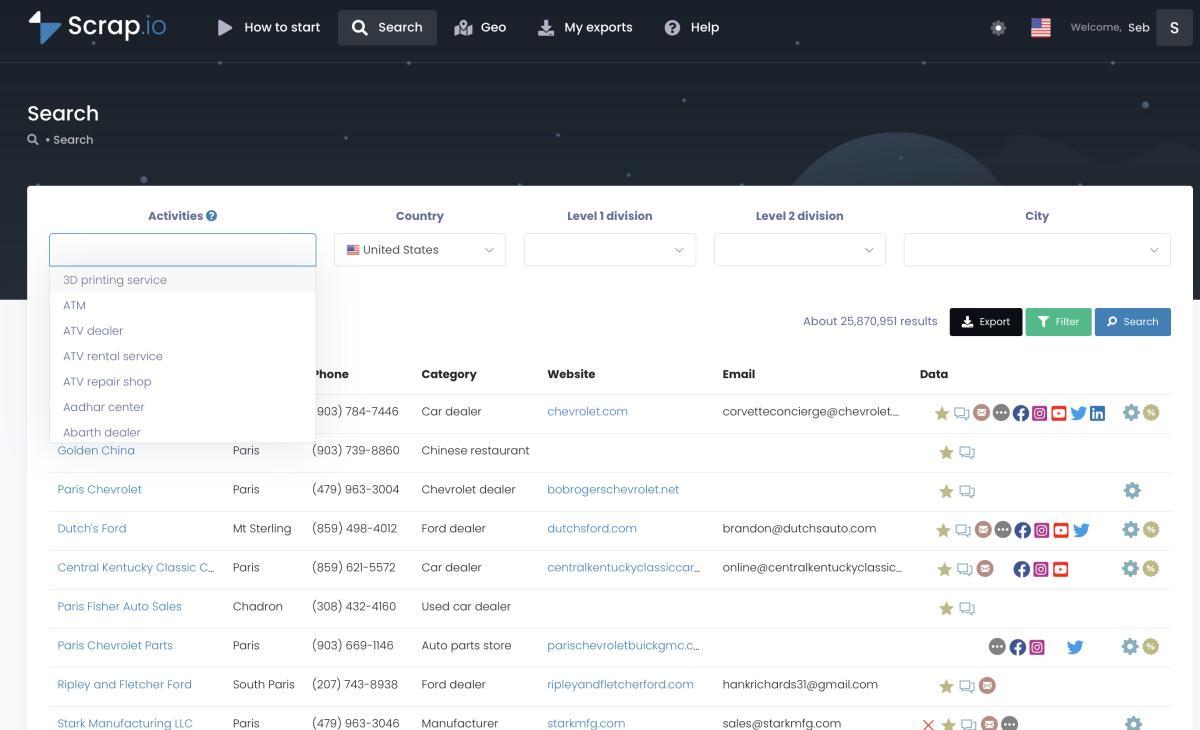
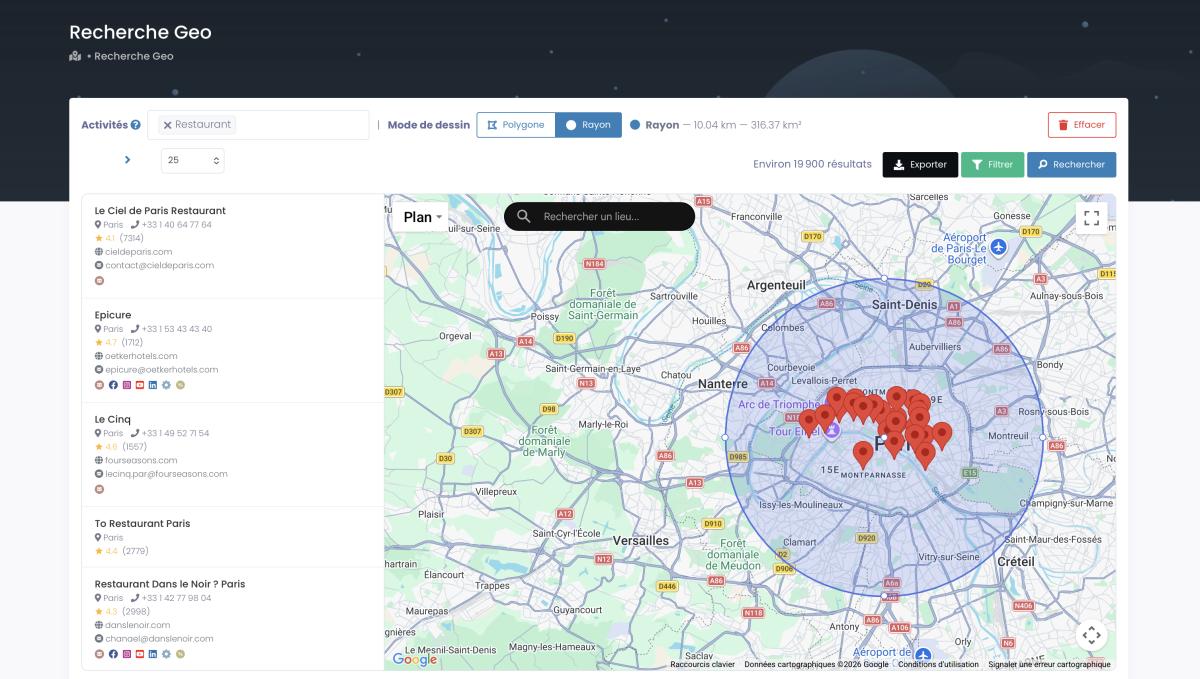
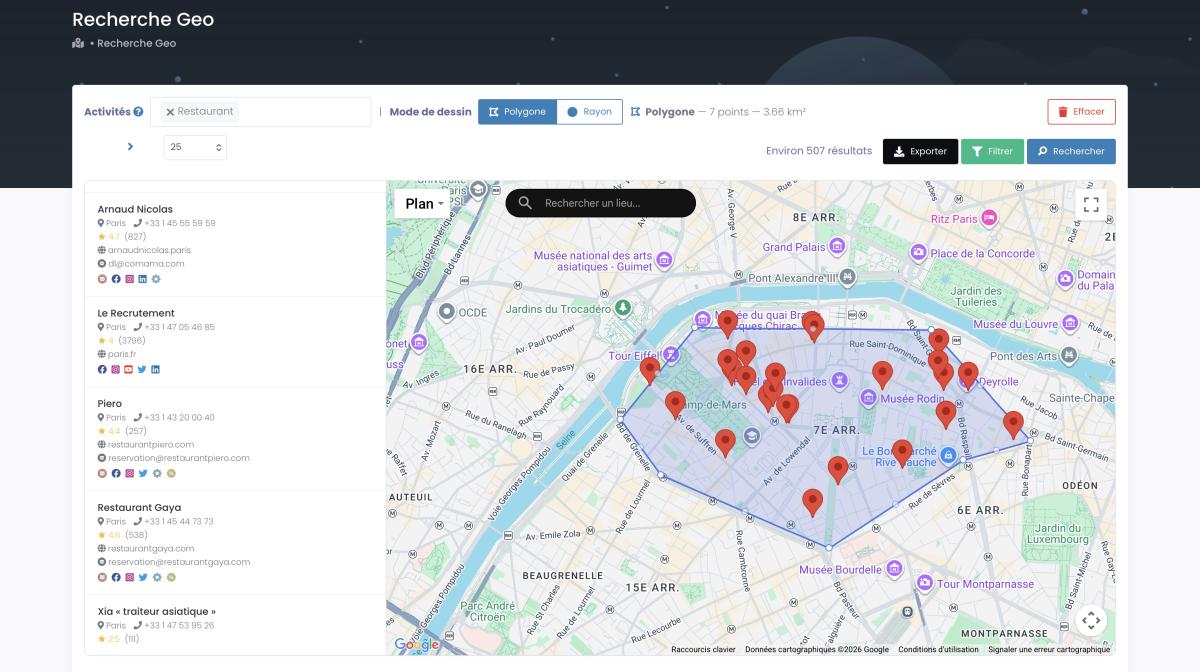
- Pick category + zone. Choose your business type (restaurants) and your area: a city, a county, a state, or the entire US. Scrap.io covers 225,676,406 businesses across 195 countries and 4,000+ categories, so the zone is yours to set.
- Filter to "email present" BEFORE extracting. This is the part that saves your budget. Toggle the email filter so only records with an actual email address are counted. No wasted credits on dead-end listings.
- Count for free. Hit the count button. It tells you exactly how many matching businesses exist (across a whole country if you want), and it costs zero credits.
- Export to CSV. One export. CSV or Excel, ready to load anywhere.
- Drop it into your sending tool. Done. Fresh list, in your sequencer, same afternoon.
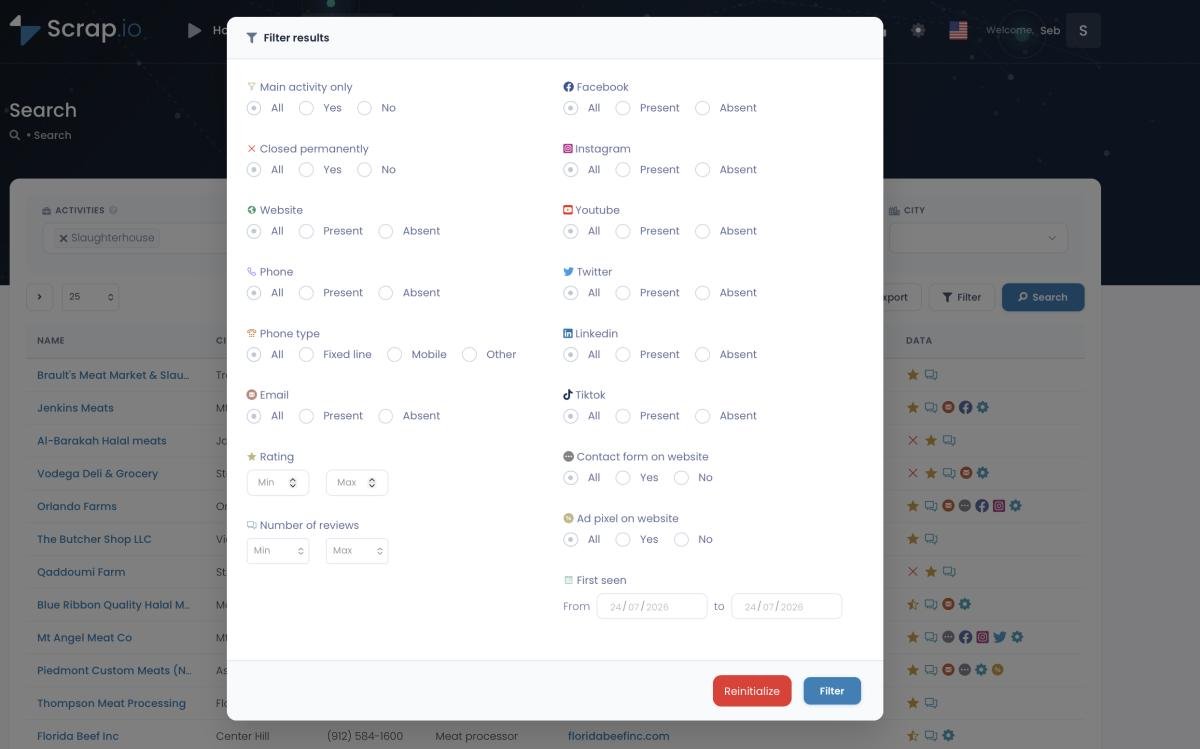
The whole thing is two clicks and no code. Marco pulled his 2,000 in one sitting. That's how to build a b2b email list that's actually fresh. And since the count step is free, it's also as close as it gets to how to build a cold email list for free before you commit a credit. If anyone asks you how to build a verified b2b email list without buying one, this is the answer.
Build your first list free. Try Scrap.io for 7 days (100 export credits included) and pull a fresh, filtered, email-present list from any category and zone you want. No list to buy, no stale file. Start your free trial →
Verify and clean (keep bounce under 2%)
A bounce rate above 2% sends your whole campaign to spam. Not the bad addresses. The whole thing. Mailbox providers read high bounce as "this sender doesn't know who they're emailing," and down you go.
So clean ruthlessly. Even a freshly built list deserves a verification pass before the first send, and any list older than 30 days needs a re-check. Data decays fast. Knowing how to verify your email list properly is non-negotiable. The cleanup checklist:
- Run a live mailbox check on every address.
- Drop or quarantine catch-all domains (they accept everything, then bounce later).
- Remove obvious role-based and risky addresses where they don't fit your goal.
- Re-verify anything older than 30 days. No exceptions.
- Keep bounce under 2%, ideally under 1%.
How to warm up a cold email list (and your domain)
Verification keeps bad addresses out. Warmup keeps you out of trouble. Before you send to a cold email list at any real volume, set up authentication (SPF, DKIM, and DMARC) and ramp slowly. Start at 5–10 emails a day per inbox and climb over a couple of weeks. Sending 2,000 cold emails on day one from a fresh domain is, frankly, domain suicide. Warm up. Then scale.
Stop paying for dead rows. Scrap.io filters to email-present contacts before you spend a single credit, and the data is verified at the moment of extraction, not pulled from a frozen file. One client extracted 11,734 verified businesses in 45 minutes. See it in action with a free trial →
Segment before you send
500 contacts split into 4 segments with 4 tailored messages beats 500 contacts and one blast. Every time. It's not close.
Knowing how to segment a cold email list is what turns a flat file into a campaign. Slice by ICP tier (your dream accounts get the hand-written treatment), by industry (a dentist and a law firm don't share pain points), by trigger (recently opened businesses behave differently), and by geography (timing, language, local references). The more specific the message, the more it reads like you actually meant to email them.
💡 The neat part: you can segment at export. Pull restaurants in one file, clinics in another, recently-detected listings in a third, straight out of the extraction, before anything hits your sequencer. If you want the message itself to land, pair good segments with knowing how to write a cold email that gets replies. And once email is humming, layering it into a coordinated omnichannel outreach sequence (email, LinkedIn, phone, SMS) is where the same list starts pulling double duty.
Compliance in 2026: CAN-SPAM, GDPR, CASL
Is cold email illegal? No. Not if you play by the rules. The catch is that the rules change at every border, and "I didn't know" isn't a defense anyone accepts.
| Region | Law | Basis | Must-do |
|---|---|---|---|
| 🇺🇸 United States | CAN-SPAM | Opt-out | Accurate headers, real address, clear unsubscribe |
| 🇪🇺 European Union | GDPR | Legitimate interest + opt-out | Relevance, easy opt-out, document your basis |
| 🇨🇦 Canada | CASL | Consent (stricter) | Implied/express consent, identification, opt-out |
💡 This is where the source of your data matters legally, not just operationally. Scrap.io pulls only publicly available business data, is GDPR and CCPA compliant, and every record is traceable to its source, which makes documenting your legitimate-interest basis a lot easier. It doesn't exempt you from honoring opt-outs at send time, but it puts you on solid ground. For the full breakdown, here's a deeper guide to cold email compliance, and if you're selling into Europe, our dedicated GDPR cold email guide for B2B walks through the legitimate-interest paperwork line by line.
Quick question worth sitting with: is buying an email list for cold email legal? Technically you can buy one in the US, but bought data is often poorly sourced, hard to document, and a GDPR headache. Built-from-public-data beats bought-from-a-broker on the legal front too.
The best tools, in three layers
Stop looking for the one tool that does everything. There isn't one, and the ones that claim to are usually mediocre at all three jobs. Think in layers: a source, a verifier, and a sender.
| Layer | Job | Tools |
|---|---|---|
| 1. Source | Build the list | Scrap.io (local/SMB), Apollo, Clay |
| 2. Verify | Kill the bounces | NeverBounce, ZeroBounce |
| 3. Send | Sequence & warm up | Instantly, Smartlead, Saleshandy |
Get one good tool per layer and you've got a stack. The Reddit crowd compiles these endlessly. The r/coldemail "all cold email tools list" thread is a decent rabbit hole if you want the full menu. For a curated take, see our roundup of the best cold email tools.
Video: Best 11+1 Cold Email Platforms for 2025
One more reason this matters now: the email outreach market is exploding, from $2.4 billion in 2023 to a projected $8.51 billion by 2031, a 14.9% CAGR (Verified Market Research). More tools, more senders, more noise. Which is exactly why a fresh, well-built list is your edge.
📌 The 30/30/50 rule. Where reply rates actually come from: 30% subject line (do they open?), 30% deliverability (did it even arrive?), 50% follow-ups (the persistence tax). Worth knowing that 58% of replies land on the first email and 42% come from follow-ups, with the sweet spot at 4–7 touches (Instantly 2026 Benchmark). Keep the email under 80 words with one clear CTA, and don't quit after one send.
Your cold email list building strategy needs a campaign wrapped around it, not just a spreadsheet. If you want the whole approach wired together, here's a solid cold email strategy to build around your list.
FAQ
How do you build a cold email list?
Define a tight ICP, source from a fresh provider (a B2B database, an email finder, or Google Maps for local B2B), filter to verified email-present records, run them through verification to keep bounce under 2%, then segment before you send. Build it fresh. Don't buy it pre-made.
Is cold email still effective in 2026?
Yes. The average cold email still earns a 3.43% reply rate, and top performers pass 10%. What's changed isn't the channel. It's the bar. Smaller, fresher, verified lists (a 5.8% reply rate under 50 recipients versus 2.1% for big blasts) outperform mass sends every time. The channel rewards precision now, not volume.
What is the 30/30/50 rule?
It's a quick way to remember where cold email replies actually come from: 30% is your subject line (whether they open), 30% is deliverability (whether it even lands in the inbox), and 50% is follow-ups (the persistence that most senders skip). The copy matters, but it's the smallest lever. Fix deliverability and keep following up, because 42% of replies come after the first email.
Is it legal to use a cold email list?
Yes. It's legal in the US under CAN-SPAM (accurate headers, a real address, a clear opt-out) and in the EU under GDPR (legitimate interest plus an easy opt-out). Canada's CASL is stricter and leans on consent. Use publicly available business data and honor every unsubscribe.
How much is a 1,000-email list worth?
People always ask how much is a 1000 email list worth, and the answer is: it depends on freshness and verification, not the count. A bought, generic 1,000-contact list runs $100–$500 and decays fast. A self-built, verified, targeted list is worth far more in actual replies, and costs little when you only pay for email-present records.
Should I buy a cold email list?
Generally, no. Pre-made lists decay and can get your domain blacklisted because they're shared and over-mailed. Building fresh and verified, or extracting in real time from Google Maps, consistently outperforms a purchased file.
How do I keep my list from bouncing?
Verify every address with a live mailbox check, avoid catch-all domains, remove role-based and risky addresses that don't fit, re-verify any list older than 30 days, and keep your bounce rate under 2%. That's the whole game for protecting deliverability. It's also the core of how to clean a cold email list.
The takeaway
Cold email still works. A 3.43% average reply rate, top performers past 10%. The channel isn't dead, lazy lists are. The senders winning in 2026 aren't the ones with the biggest files. They're the ones with the freshest, most targeted, properly verified ones. And increasingly, they're building those lists from the map, not from a broker.
So pick your ICP. Source fresh. Filter before you pay. Verify hard, warm up your domain, segment, and send like you mean it.
Stop renting stale lists. Start your free 7-day Scrap.io trial (100 leads on us) and build a list that's fresh today: any category, any zone from a city to a whole country, filtered to email-present contacts before you spend a credit. Build your list now →
Generate a list of restaurant with Scrap.io