

78% of people who search "near me" on their phone walk into a store within 24 hours. Let that sink in for a second. (BrightLocal/Google, 2026.) That's not "maybe they'll think about it." That's feet on your floor. Tomorrow.
And yet. Most businesses chasing local leads are still doing it like it's 2014, buying shared contact lists, running Facebook ads with zero targeting, or worse, just waiting for the phone to ring. Spoiler: the phone isn't ringing.
I spent the last six months talking to agency owners, freelancers, and sales reps who actually crack local business lead generation. Not the "guru" types selling courses. Real people pulling real revenue from local markets. What they all have in common? A system. Not a hack, not a trick: a repeatable, boring, beautiful system.
This is that system.
- What Is Local Business Lead Generation?
- The Local Lead Generation Landscape in 2026
- 7 Proven Local Business Lead Generation Strategies
- How to Build a Local Lead Generation System
- Cost Benchmarks: How Much Do Local Leads Cost?
- Real-World Case Studies
- Is Local Lead Generation Legal? (Compliance in 2026)
- Common Mistakes That Kill Local Lead Gen
- FAQ
What Is Local Business Lead Generation?
Strip it down and it's dead simple. Local business lead generation means finding prospects in a specific geographic area (your city, your state, your region) and turning them into paying customers. That's it. No jargon needed.
But here's where people get confused. They lump "local" in with generic lead gen. Massive mistake. Local changes the entire game.
Why 'Local' Changes Everything
When someone Googles "marketing agency," they could be anywhere. Could want anything. But when someone Googles "marketing agency Austin TX," that's a different human with a different intent. They want someone nearby. Someone who knows the local market. Someone they can meet for coffee.
Local leads convert at absurd rates compared to generic ones. Why? Trust. Proximity. Shared context. You mention a neighborhood, a local event, a competitor down the street, and suddenly you're not a stranger anymore. You're a neighbor who happens to sell what they need. That's the whole promise of lead generation for local businesses in one sentence.
The Local Lead Funnel: From Search to Sale
The local funnel is shorter than most people think. Traditional B2B funnels have seven stages and take months. Local? Three stages, sometimes days:
- Discovery: they find you (Google Maps, referral, local search)
- Evaluation: they check your reviews, website, proximity
- Action: they call, walk in, or fill out a form
That speed is your advantage. But only if you're actually showing up where they're looking. Wondering how to get into local lead generation? This funnel is your starting point. And honestly, most people overthink it.
The Local Lead Generation Landscape in 2026
The lead generation software market hit $9.87 billion in 2026, growing at a 14.82% CAGR (360iResearch). Billion. With a B. And the global lead gen industry is projected to reach $295 billion by 2027 at roughly 17% CAGR (Martal Group).
But most local businesses? Still relying on word of mouth.
That's like bringing a knife to a drone fight.
Market Size & Growth Projections
The numbers are bonkers. 49% of SMBs are increasing their marketing budgets this year (LocaliQ, 2026). They know they need leads. They just don't know how to get them efficiently. And that gap, between "I need more customers" and "I have a system that delivers them," is where the money lives.
Why 61% of Marketers Still Struggle with Lead Quality
Here's the uncomfortable truth. 61% of marketers say generating quality leads is their number one challenge (Salesmate/HubSpot, 2026). Not quantity. Quality. They're drowning in garbage contacts: wrong numbers, dead emails, businesses that closed six months ago.
The problem isn't finding leads. Any idiot with a credit card can buy a list. (Trust me, plenty of clients have bought terrible ones.) The problem is finding leads that actually pick up the phone and say "yeah, I need that." Huge difference.
The AI Shift: Automation Reshaping Local Prospecting
61% of B2B teams now use AI for lead scoring, up from just 23% in 2024 (DigitalApplied). That jump is insane. And it makes sense: AI can process thousands of local business profiles, score them by review count, website quality, digital maturity, and spit out a ranked list in minutes. Manually? That's a full-time job for two weeks.
Bref, the local lead generation business model is evolving fast. The right local business prospecting tools (Google Maps scrapers, data extraction platforms, automation workflows) are making what used to take a team of ten achievable by one person with a laptop. Wild times.
7 Proven Local Business Lead Generation Strategies
What if you could build a list of every plumber, restaurant, or dental clinic in your entire state, with emails and ratings, in under an hour? Not hypothetical. People do this daily. Here are the seven local lead generation strategies that actually work in 2026.
1. Google Maps Data Extraction (Scraping)
Video: How Google Maps Became a Lead Gold Mine
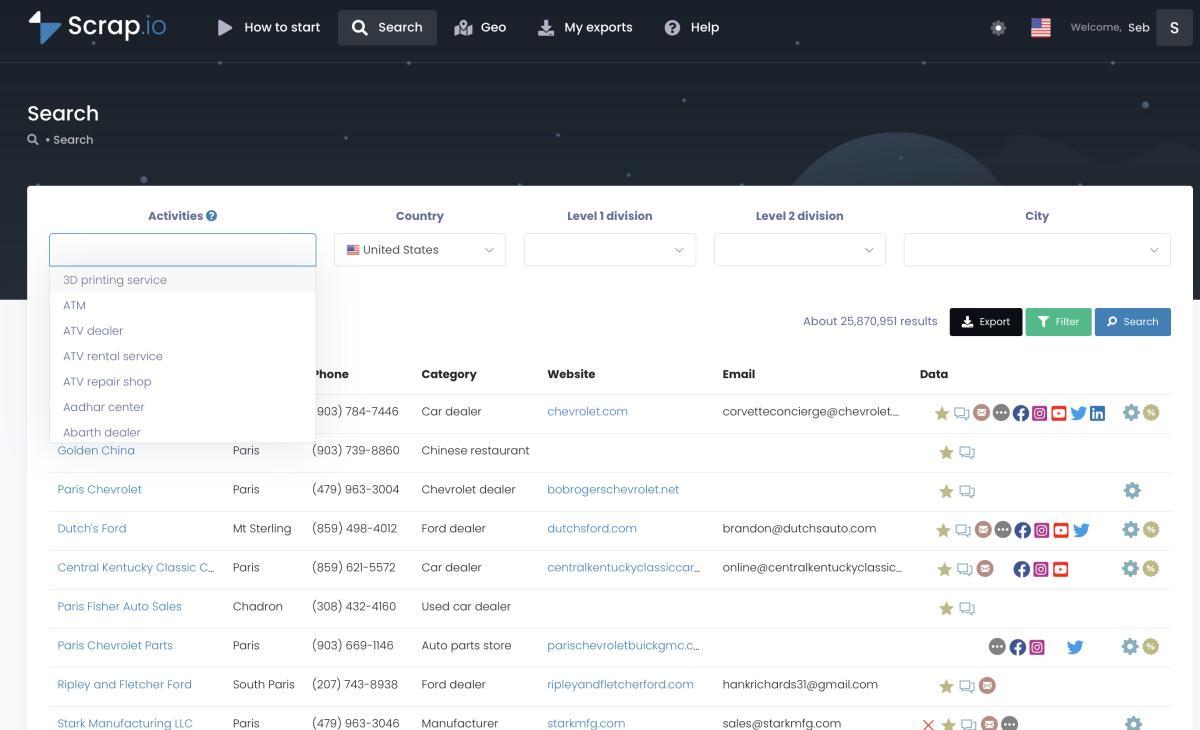
This is the big one. Google Maps has over 225 million businesses indexed across 195 countries. All that data (names, phone numbers, emails, reviews, websites) sitting there, publicly accessible. And most people are still copying it by hand like cavemen.
Google Maps lead generation for local business isn't some grey-hat trick. It's the fastest way to build targeted prospect lists for any geography and any industry. A real client case: 11,734 businesses extracted in 45 minutes. Try doing that manually. I'll wait.
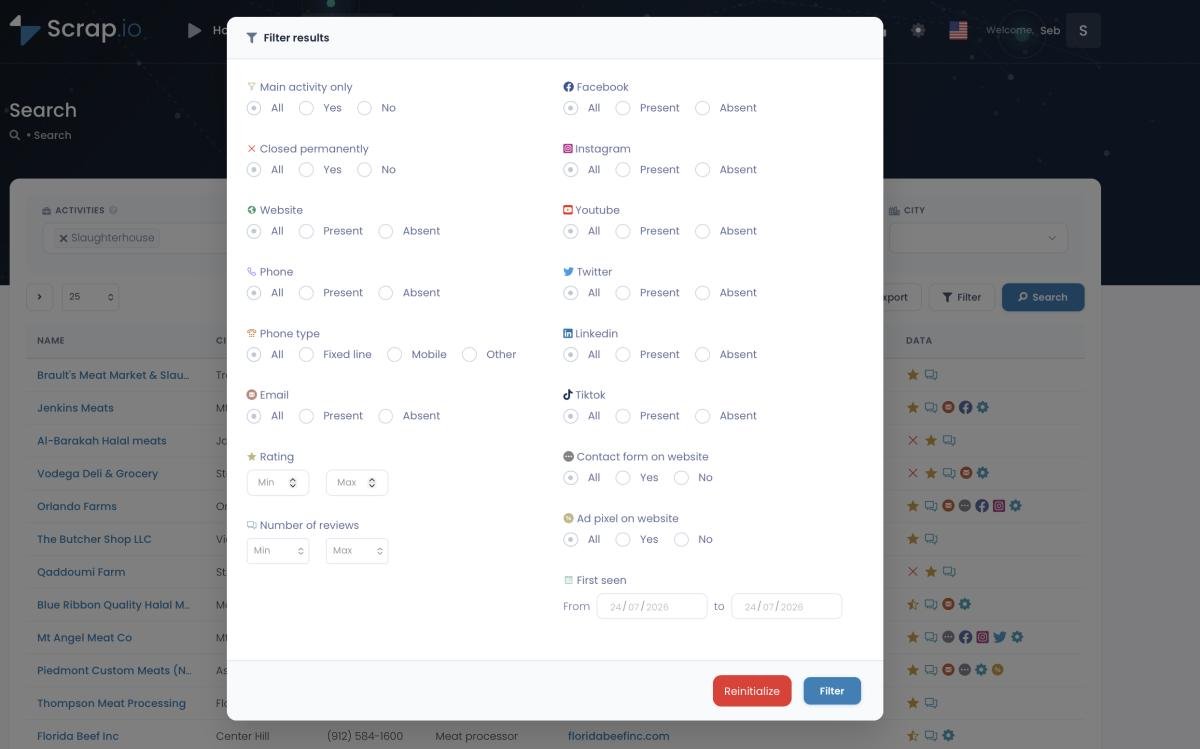
The best part? Modern tools let you filter BEFORE you export. Only businesses with an email? Done. Only those with a website but no Facebook pixel (meaning they need marketing help)? Done. You're not paying for garbage. You're paying for qualified local business leads. Every filter runs before a single credit is spent, so zero budget goes to dead ends.
Need the whole country instead of one city? That's a country-level extraction, one search, one file. Here's the walkthrough:
Video: How to Scrape Local Leads at the Country Level
2. Local SEO Optimization
Obvious? Sure. But most local businesses still get it wrong. Optimizing your Google Business Profile isn't optional anymore. It's table stakes. Complete profiles get 7x more clicks than incomplete ones. Seven times. That alone makes local seo lead generation worth the afternoon it takes to set up.
And yet I see businesses with no photos, wrong hours, and a description that says "we provide quality services." That's not a description. That's a cry for help.
The local SEO play: claim your listing, stuff it with real photos, get reviews (we'll talk about that), and post updates regularly. It's not sexy. It works.
3. Cold Email Outreach to Local Businesses
Cold email gets a bad rap. Deserved, mostly, because 90% of cold emails are garbage. But done right? B2B cold email averages a 27.7% open rate and 7% response rate (Snov.io, 2026). Not bad for something that costs almost nothing to send.
The trick with local cold email is specificity. "Hi business owner" = delete. "Hey Mike, noticed your Nashville BBQ spot has 4.8 stars but no email capture on your site" = reply. You need data to personalize. That's where finding emails from Google Maps and AI-powered cold email personalization come in. (Seriously, the difference between generic and personalized cold email is night and day.)
4. Targeted Social Media Advertising
Facebook and Instagram ads with geographic targeting can be ridiculously effective for local lead generation. A 10-mile radius around your service area, targeting business owners in specific industries, that's surgical precision for pennies compared to Google Ads.
But here's what most people miss (and it's kind of embarrassing how few agencies do this): use your scraped data to build lookalike audiences. Upload your best customer emails to Meta, let the algorithm find similar local businesses. That's not guessing. That's math. You'd be amazed how many "social media experts" don't even know this feature exists. If you're weighing channels, our breakdown of the best B2B platforms, Google Maps vs LinkedIn, is worth a read.
5. Local Networking & Strategic Partnerships
Old school? Absolutely. Dead? Not even close.
Chamber of Commerce events, BNI groups, industry meetups, these still generate some of the highest-converting leads in existence. Why? Because a warm introduction from someone trusted beats any email sequence. Period.
The smart play: combine offline networking with online data. Meet someone at an event, then pull their Google Maps data to understand their business before the follow-up call. Know their review count, their competition, their digital gaps. Show up prepared. If you want a battle-tested outbound framework, the Alex Hormozi local lead generation playbook pairs perfectly with scraped data.
6. Online Reviews & Reputation Leverage
Reviews aren't just vanity metrics. They're lead generation tools. A business with 200 five-star reviews shows up higher in Maps, gets more clicks, and converts more visitors. That's the virtuous cycle every local business wants.
And if you're selling services TO local businesses? Reviews are intel. A business with a 2.3-star average needs reputation help yesterday. That's not a cold lead. That's someone with a visible, measurable problem. Go solve it.
7. Location-Specific Content Marketing
"Best plumbers in Denver" gets searched hundreds of times monthly. "How to find a reliable contractor in Austin," same thing. Location-specific content is one of the best ways to find local business leads without paid ads.
Write about your market. Name neighborhoods. Reference local events. Google rewards hyper-local content because it serves actual user intent. And unlike ads, a good local blog post (or a dedicated local lead generation website) keeps generating leads for years. Local lead generation without paid ads? This is how. One agency owner on UK Business Forums put it perfectly: he gets 40% of his clients from blog posts he wrote two years ago. Zero ad spend.
How to Build a Local Lead Generation System
Sarah runs a web agency. She used to spend $2K/month on shared leads, the kind that five other agencies also received. Her close rate? Abysmal. Then she started extracting 500 targeted businesses from Google Maps every week. Filtered for "has website, no Facebook pixel, rating above 3.0." Her cost per acquisition dropped 80%.
That's not magic. That's a system. (A boring one, honestly, but boring systems make money.) Here's how to build yours.
Video: Scrap.io - How to Start?
Step 1: Define Your ICP
Before you scrape a single lead, answer this: who is your perfect customer? Industry, size, location, budget, pain points. Get specific. "Small businesses" is not an ICP. "Restaurants in Texas with 50+ reviews, a website, and no email marketing," that's an ICP.
Use geographic data from Google Maps to define your ICP with surgical precision. Real data beats assumptions every time.
Step 2: Source Your Leads
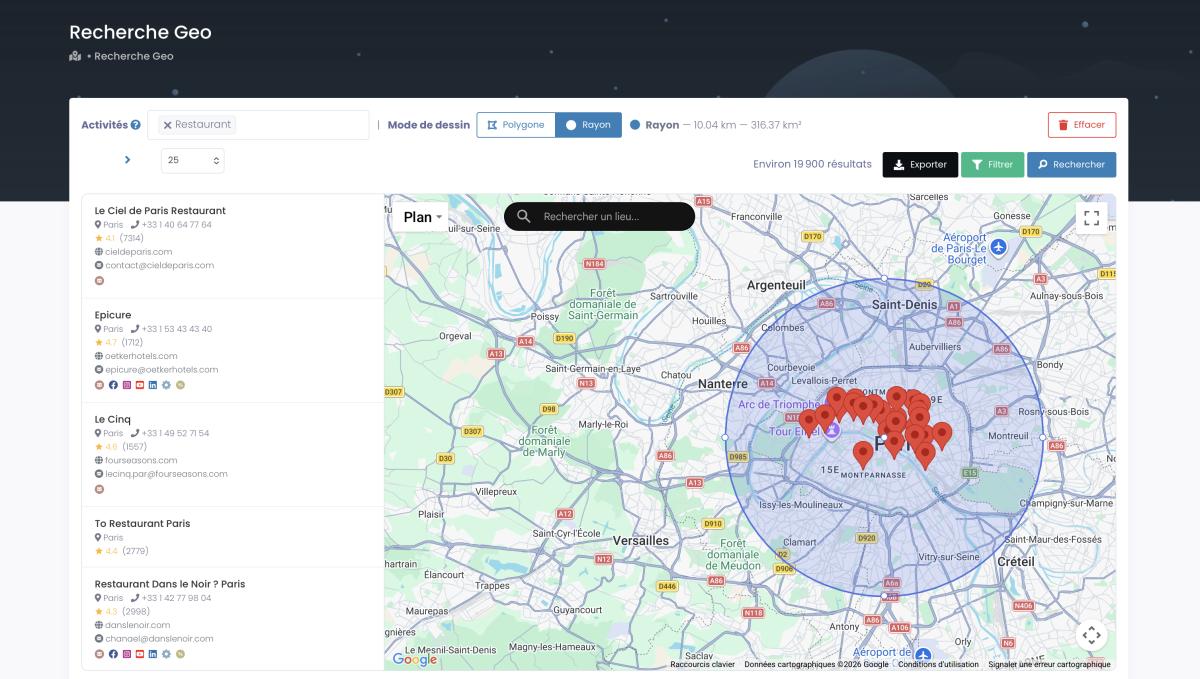
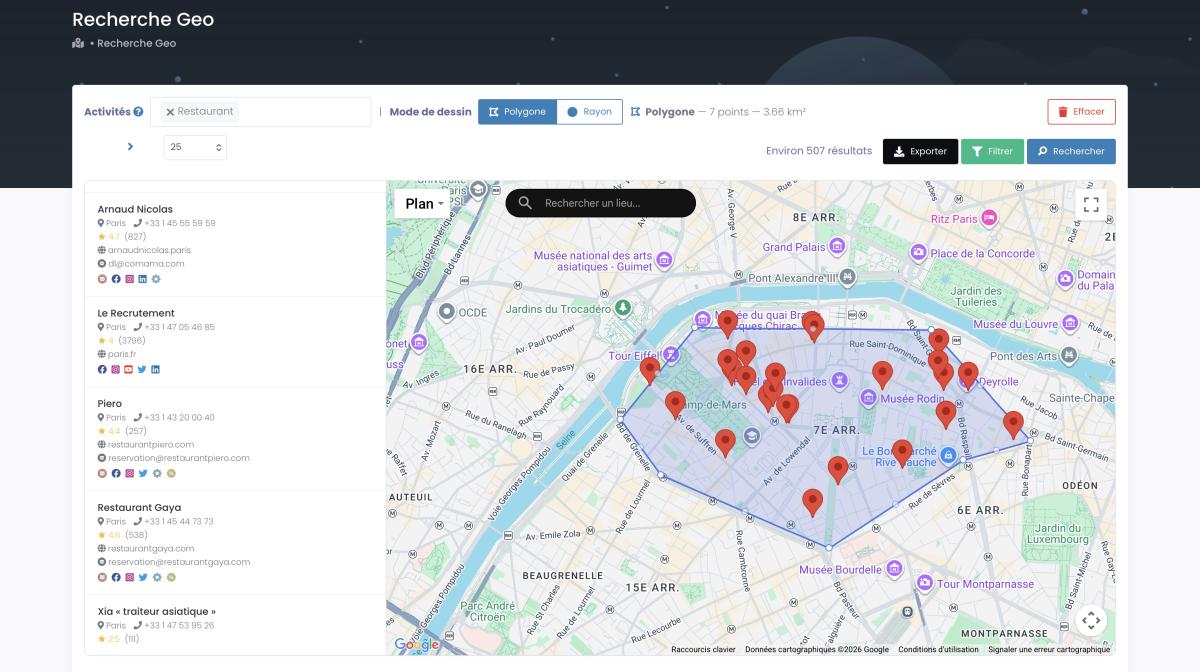
Once your ICP is locked, go get them. Google Maps is the single best source for lead generation for small local businesses: 225 million listings, real-time data, and the ability to filter by everything from review count to whether they run Facebook ads. Need a shape that isn't a whole city? GeoSearch lets you draw a radius or a hand-drawn polygon over an exact neighborhood, and every filter still applies inside it.
Oh, and also, automate it. Tools like Make.com integrated with Scrap.io can run weekly extractions on autopilot. Set it once. Leads show up in your CRM every Monday morning.
Step 3: Qualify & Score
Not all leads are equal. Obvious? You'd think so. But I still see people cold emailing 5-star restaurants with 800 reviews trying to sell them "reputation management." Come on. Meanwhile, a 2.8-star place with no website and 12 reviews? They're bleeding customers and don't know why.
Build a simple lead scoring model. Rate each prospect on fit (do they match your ICP?), digital maturity (website, social, ads), and urgency (bad reviews, missing basics). Focus your time on the 81+ scores. If you want the full theory on what separates a real prospect from noise, here's the deep dive on qualified leads.
Step 4: Outreach Sequence
Phone first. Then email. Then LinkedIn. Then a handwritten note if they're high-value enough. (Yes, people still open physical mail. Shocking, I know.)
The key is personalization. Mention their specific business. Reference their Google rating. Note something about their neighborhood. Generic outreach is spam. Specific outreach is service. Check out proven cold email strategies that actually get responses.
Step 5: Track, Measure & Iterate
If you're not tracking conversion rates by source, channel, and geography, you're flying blind. Which zip codes convert best? Which industries respond fastest? What day of the week gets the highest open rates?
Build a proper sales pipeline and measure everything. The data tells you where to double down and where to stop wasting money.
Cost Benchmarks: How Much Do Local Leads Cost?
Most local lead generation companies sell you the same lead 3 to 5 times. You pay $25-50 for a "qualified contact" that three of your competitors already called this morning. That's not lead generation. That's a lottery ticket with worse odds.
Here's what local leads actually cost by channel in 2026:
CPL by Channel
| Channel | Cost Per Lead | Lead Quality | Exclusivity |
|---|---|---|---|
| Google Maps Scraping (Scrap.io) | $0.004–$0.01 | High (filtered) | 100% exclusive |
| Cold Email Outreach | $1–$5 | Medium-High | Exclusive |
| Local SEO / Organic | $5–$15 | High | Exclusive |
| Google Ads (Local) | $15–$50 | High | Exclusive |
| Facebook / Instagram Ads | $5–$30 | Medium | Exclusive |
| Shared Lead Services | $25–$50 | Low-Medium | Sold to 3–5 competitors |
| Lead Brokers / Directories | $50–$200 | Low | Heavily shared |
Look at that gap. $0.004 per lead versus $50. That's not a marginal difference. That's a 12,500x cost difference. And the cheap one gives you better data. Bonkers. For the full channel-by-channel math, we broke down the real lead generation cost and why shared lists are usually the worst deal on the table.
Shared vs Exclusive Leads
This is the part nobody in the lead gen industry wants you to understand. Shared leads are a scam. Not technically, they deliver what they promise. But what they promise is garbage.
You pay $30 for a "qualified plumber lead in Dallas." Great. Except four other companies paid the same $30 for the same lead. So now you're in a foot race to see who calls first. And the business owner? Five calls in ten minutes from people they've never heard of. They're annoyed before you even say hello. You think that converts? Please.
Exclusive leads (the kind you extract yourself from Google Maps, from local SEO, from your own content) cost less, convert better, and nobody else has them. How much do local business leads cost? As little as a fraction of a cent when you build your own pipeline.
Real-World Case Studies
A hood cleaning company generated 77 leads in 2 months with a 52% close rate. Not a tech startup. A hood cleaning company. Let that land.
Airlite (commercial hood cleaning, US). They focused exclusively on local lead generation through targeted outreach to restaurants and commercial kitchens in their service area. Result: 77 qualified leads in 60 days, 40 closed deals. A 52% conversion rate is almost unheard of in B2B, but it makes sense: hyper-local targeting + a service every restaurant legally needs = money printer. (Source: LeadsLocal.io)
Damschroder Roofing. A family-owned roofing contractor that invested in a local lead generation system combining Google Maps data, local SEO, and targeted outreach. Their ROI? 30x return on investment. For every dollar in, thirty back out. They went from relying on referrals and yard signs to having a predictable pipeline of local homeowners and commercial property managers. (Source: 828 Marketing & Web)
Building Waters (water damage restoration). Started using local lead generation to target property managers and homeowners in flood-prone areas. Got 24 qualified calls in their first 2 weeks. For a restoration company, that's not just leads. That's immediate revenue, since water damage jobs are urgent and high-ticket. (Source: LeadsLocal.io)
SiteCompli (NYC-based SaaS). Started with a local-first approach, targeting building managers and property compliance officers in New York City. Once they nailed their local lead generation system, they scaled it nationwide. Proof that how to start a local lead generation business can also be a launchpad for something much bigger. (Source: Artisan.co)
Want the community version of these stories? The threads are everywhere. On r/smallbusiness, one owner wrote up how they "accidentally found the simplest local lead gen method" they'd ever used, and the answer, buried in 20-odd comments, was extraction from Google Maps. Over on r/b2bmarketing, a newcomer asking for advice on local lead gen got the same reply again and again: build your own list, don't rent one. The crowd figured this out before most agencies did.
Is Local Lead Generation Legal? (Compliance in 2026)
The question everyone whispers. Short answer: yes, for publicly available business data. Done right.
Extracting business information that companies chose to publish (names, addresses, phone numbers, listed emails, ratings) is legal for commercial prospecting in the US and the EU. It's public business data, not personal profiles harvested behind a login. What matters is how you use it. Under GDPR, B2B outreach leans on the "legitimate interest" basis, and CCPA in California carves out publicly available business information almost entirely. Every data point should be traceable to its public source, and every outreach email needs a working opt-out. That's the whole discipline.
This is exactly why sourcing from public listings protects you. When a regulator asks "where did this email come from?", "a public Google Maps listing, filtered by industry and location" is about the cleanest answer in the industry. For the country-by-country detail, read our guides on GDPR cold email for B2B and anti-spam compliance before your first campaign. The floor is legal compliance. The ceiling is not being annoying. Clear both and you're fine.
Common Mistakes That Kill Local Lead Gen
Only 2% of sales happen at first contact. Two percent. Read that again. That means 98% of your deals need follow-up, and yet most people send one email, get no response, and move on. Quoi. That's not prospecting. That's giving up with extra steps.
Here are the mistakes I see killing local lead generation efforts over and over:
Not following up. This is the big one. Five to twelve touchpoints is the norm before a sale. One cold email and done? You just wasted your lead data.
Going for the sale too soon. First contact should be value, not a pitch. Share an insight about their business. Point out something on their Google listing they could fix. Earn attention before asking for money.
Buying shared leads. Already covered this. It's burning cash. Build your own pipeline with exclusive data.
Ignoring mobile and "near me" searches. If your website isn't mobile-friendly in 2026, you're invisible to the 78% of near-me searchers who visit stores within 24 hours. That's not a suggestion. That's survival.
No lead scoring. Treating a 5-star business with 500 reviews the same as a 2-star business with no website? Oh, and also, that's like using the same pitch for a Fortune 500 CEO and a lemonade stand. Prioritize based on data, not gut feel.
FAQ
How to generate leads for a local business?
Start with Google Maps data extraction to build a list of businesses matching your ideal customer profile. Filter by location, industry, reviews, and email availability. Then reach out through cold email, phone, or social media with personalized messages that reference their specific business. Combine with local SEO and content marketing for inbound leads. The best local lead generation strategies 2026 blend outbound prospecting with inbound visibility.
How much do local business leads cost?
Wildly different depending on the source. Google Maps scraping: $0.004–$0.01 per lead. Google Ads: $15–$50. Shared lead services: $25–$50 (sold to multiple competitors). The cheapest, highest-quality option is building your own exclusive list from public data sources like Google Maps, fractions of a cent per contact with full data enrichment.
What is local lead generation?
Local lead generation is the process of identifying and attracting potential customers within a specific geographic area. Unlike broad B2B prospecting, it focuses on proximity, local market knowledge, and geography-specific targeting. It can be a standalone business model (local lead generation passive income) or a growth strategy for service-based businesses targeting nearby clients.
Is local lead generation legal?
Yes. Extracting publicly available business data (names, addresses, listed emails, phone numbers) from sources like Google Maps and using it for B2B prospecting is legal in the US and the EU. Under GDPR you rely on the "legitimate interest" basis, and CCPA largely excludes public business data. Keep every contact traceable to its public source and include a working opt-out in every outreach email.
Is local lead generation still profitable in 2026?
Extremely. The lead gen market is at $9.87 billion and growing 14.82% annually. With tools that extract thousands of leads for pennies, the margins on B2B lead generation for local companies have never been better. Whether you're selling leads to other businesses or using them for your own sales pipeline, the economics are brutal, in a good way. The local lead generation business model is alive and thriving.
What's the difference between shared and exclusive leads?
Shared leads are sold to 3–5 (sometimes more) competing businesses simultaneously. You're racing to call first, and the prospect is annoyed by the third call. Exclusive leads belong only to you, extracted from public sources like Google Maps, generated through your own content, or captured via your website. They cost less, convert better, and you control the timing. There's really no comparison.
Start Finding Local Leads Today
Here's the thing about local business lead generation. The data is right there. 225 million businesses on Google Maps. Real-time. Filterable. With emails, phone numbers, reviews, and dozens of other data points you can use to find exactly who needs what you sell.
The businesses that win locally in 2026 aren't the ones with the biggest ad budget. They're the ones with the best data and the best follow-up system. A solo freelancer with Scrap.io and a good cold email sequence will outperform an agency spending $10K/month on shared leads. Every single time.
Enough reading. Go build your list.
Generate a list of restaurant with Scrap.io