

There are 42,167 orthodontic practices on Google Maps in the US right now. The list a broker just sold you knows about 15,000 of them — and half those addresses bounced last quarter. That's the whole problem in two sentences.
I'll be blunt about it. Almost every "orthodontist email list" on the market is a recycled spreadsheet that started rotting the day it was compiled, then got sold to you and eleven of your competitors. You send. Half of it bounces. Your sender reputation takes the hit. And then someone in your company decides "email doesn't work for healthcare." Wrong. Your data was garbage.
So this guide does something none of the broker landing pages do: it shows you how to build a fresh, verified list yourself instead of renting a dead one. Real 2026 numbers, the buy-vs-build math nobody wants to show you, the legal stuff, and the exact steps. Let's go.
Video: Scrap.io - How to Start?
- What Is an Orthodontist Email List (and Why Most Are Broken)?
- How Many Orthodontists Are There in the US? (2026 Numbers)
- Buy vs Build: The Comparison No Broker Will Show You
- How to Build Your Own Orthodontist Email List from Google Maps
- Which Data Fields and Filters Actually Matter
- Is Buying/Building an Orthodontist Email List Legal?
- How to Cold Email Orthodontists (Without Landing in Spam)
- FAQ
What Is an Orthodontist Email List (and Why Most Are Broken)?
An orthodontist email list is a targeted database of orthodontic practices' contact details — practice name, verified email, phone, location, specialty — used for B2B outreach. Dental suppliers, aligner brands, practice-management software, marketing agencies, recruiters. They all want one. That's the clean definition. Now the messy reality.
Most of these lists are broken before you open the file. Here's why: a traditional orthodontist mailing list gets compiled once, packaged, and resold to whoever pays. Nobody re-checks it. Orthodontists move practices, retire, swap their email, get bought by a DSO. By the time the CSV lands in your inbox, a chunk of it is already dead weight.
What's inside a good orthodontist contact list
A record worth emailing needs more than an address. Practice name. A verified email that actually accepts mail. Phone. Physical location (so you can target by state or metro). Specialty — pediatric orthodontist, adult aligner-focused, surgical. And ideally a personalization hook: their Google rating, whether they run their own website, review count. Miss those and you're sending "Dear Doctor" to a spreadsheet. Which nobody replies to.
Why "verified" doesn't mean "current"
This is the trap. Brokers love the word "verified." AverickMedia even offers a "validity refund" on its orthodontist email list — which, read it again, is basically admitting the data breaks. "Verified" means the email was valid at some point. "Current" means it's valid today. Those are not the same thing, and the gap between them is where your budget goes to die. B2B data decays roughly 25–30% a year. A list verified in January is meaningfully wrong by July. That's not pessimism. That's just how contact data ages.
How Many Orthodontists Are There in the US? (2026 Numbers)
Short answer: about 10,830 licensed orthodontists, 18,000+ AAO members, spread across roughly 42,000 practice locations on Google Maps in 2026. Locations outnumber specialists — because one orthodontist can run several offices, and a lot of "orthodontic" listings are multi-location groups. Here's the breakdown.
| Metric | Number | Source |
|---|---|---|
| Licensed orthodontists (US) | 10,830 | ADA Health Policy Institute, 2024 |
| AAO members (US/Canada) | 18,000+ | AAO, 2025 |
| Practice locations on Google Maps | 42,167 | Scrap.io, Jul 2026 |
| Locations with a public email | 22,565 (53.5%) | Scrap.io, Jul 2026 |
| Locations with a website | 36,446 (86.4%) | Scrap.io, Jul 2026 |
Licensed specialists vs practice locations
Notice the gap: ~10,830 licensed specialists (per the ADA Health Policy Institute) versus 42,167 locations on the map. The American Association of Orthodontists counts 18,000+ members across the US and Canada. Why does the location number blow past the specialist count? Multi-office groups, satellite clinics, and general dentists offering orthodontics under a separate listing. For B2B outreach, the location is usually what you want — that's where the buying decision, the office manager, and the actual inbox live.
Your real total addressable market
If you sell to orthodontists, your reachable market isn't "10,830 people." It's the 22,565 practice locations that have a public email on file right now. That's your ceiling for verified orthodontist contacts in the US — and it changes every single day as listings update. A static purchased database can't track that. A real-time one can. (More on healthcare-wide targeting in this guide to healthcare email lists, and the dental-specific angle in the dental clinic email list breakdown.)
Buy vs Build: The Comparison No Broker Will Show You
Every broker page frames this as a no-brainer: buy the list, save time, start tomorrow. And sure, if you squint, buying looks faster. But look at what you're actually buying.
The hidden cost of a purchased list
Three things kill purchased orthodontist lists, and no vendor puts them on the sales page. First, decay — 25–30% a year, so you're paying full price for contacts that are partly dead on arrival. Second, they're shared. That "exclusive" file? Sold to your competitors too, so the orthodontists on it have already seen five versions of your pitch. Third, spam traps. Old scraped lists collect honeypot addresses, and hitting even a few nukes your deliverability. Providers advertise 11,000 to 30,000 records — AverickMedia lists 17,231, DataCaptive around 19,000 (a shared, non-exclusive list), others push "30K+." Big numbers. Quarterly updates. That's the tell. Quarterly means your data is up to 90 days stale the moment you buy it.
Ninety days stale before you even hit send.
How accurate are purchased orthodontist lists, really? Accurate enough to look impressive in a demo. Not accurate enough to protect your sender reputation. There's a difference.
The case for building your own
Building sounds like more work. It isn't — not anymore. When you build from live Google Maps data, the list is exclusive to you, current the moment you export it, and filtered so you only keep contacts you can actually use. Here's the honest side-by-side.
Honestly, that changes the entire equation.
| Factor | 🔴 Buy a broker list | 🟡 Build it manually | 🟢 Build from Google Maps |
|---|---|---|---|
| Data freshness | 🔴 Quarterly, decaying | 🟡 As fresh as your effort | 🟢 Real-time on every export |
| Exclusivity | 🔴 Sold to competitors | 🟢 Yours | 🟢 100% yours |
| Time to first list | 🟡 Same day | 🔴 Weeks | 🟢 ~10 minutes |
| Blacklist risk | 🔴 High (spam traps) | 🟢 Low | 🟢 Low (public, fresh) |
| Filter before you pay | 🔴 No | 🟡 Manual | 🟢 Yes |
The manual column deserves respect — building your own by hand gives you total control. It's also brutally slow, and by the time you finish, month one's contacts are already stale. So the honest winner for most teams is the third column: build fresh from the map, in minutes, exclusive to you. This is the same buy-vs-build logic that plays out in the broader dentist email list market, by the way — the dental silo behaves identically.
Before you spend a dollar, find out how big your market actually is. See how many orthodontists are in your target state — the count is completely free, no credits, no card charged for looking. Check your state count on Scrap.io →
How to Build Your Own Orthodontist Email List from Google Maps
Meet Maria. She runs a small white-label clear-aligner supplier and needed to reach orthodontists across three states — with a real email, not a contact form, not a generic info@ she'd never hear back from. She'd bought a broker list once. Forty percent bounced. So she tried building it from the map instead. Here's the exact flow she used, and it's genuinely three steps.
Step 1 — Pick your category and location
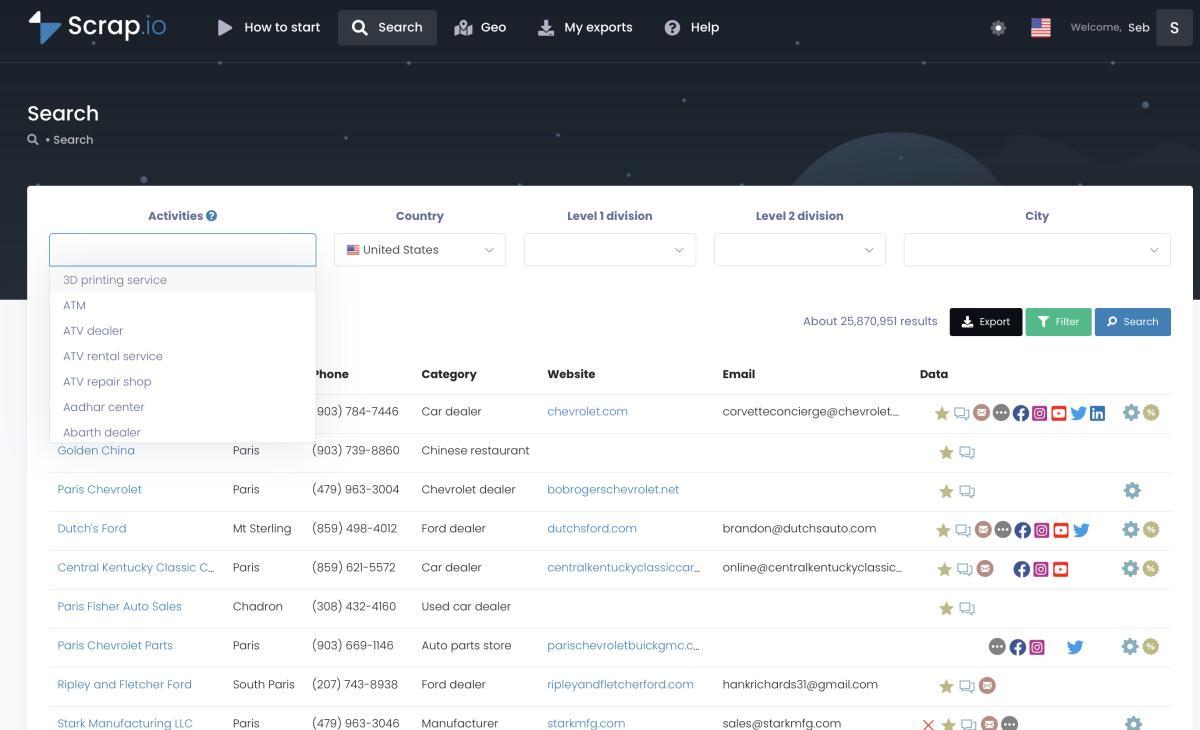
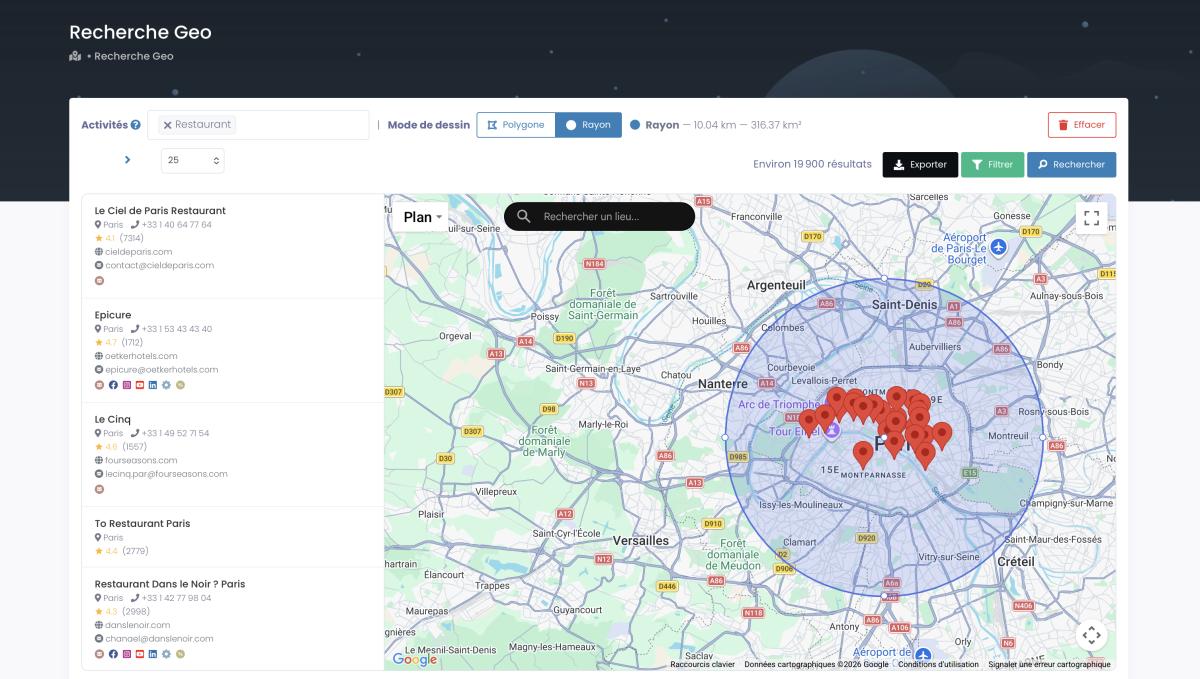
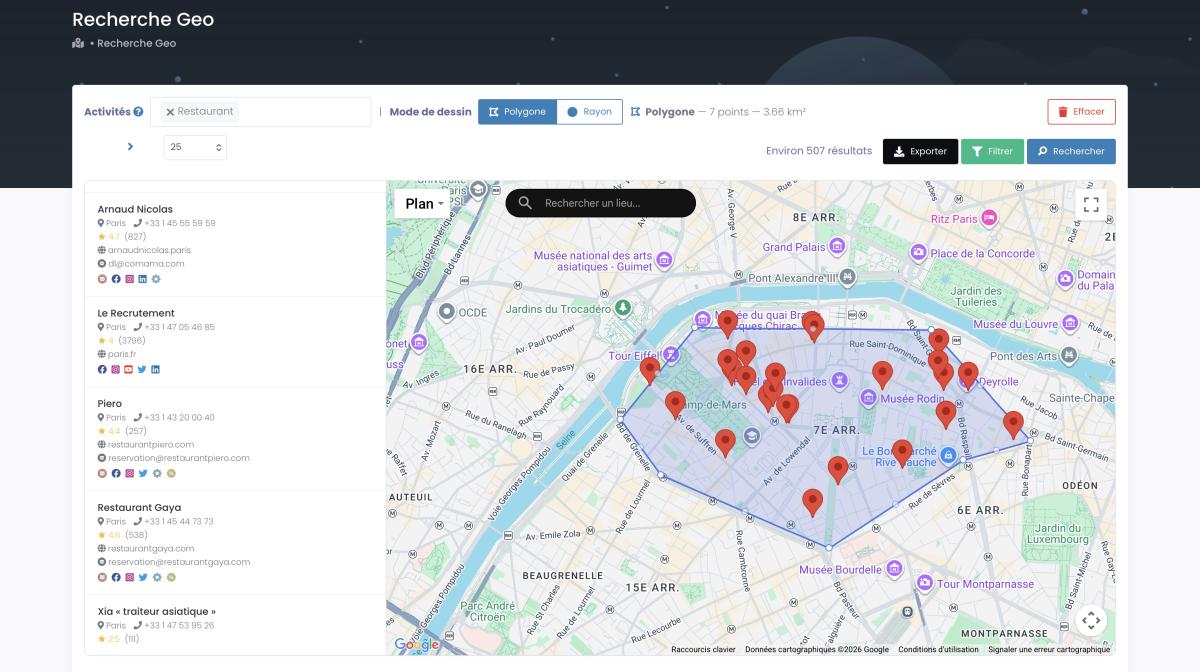
Choose "Orthodontist" as your category, then set the zone: a single city, a whole state, a radius around a specific metro, or the entire US. Want every orthodontist in Texas? Two clicks. Want everyone within a 5-mile radius of a city you already sell in — the "orthodontist near me within 5 mi" kind of targeting? Draw a radius on the map. Need a weird, non-administrative shape — one metro but not the suburbs? Sketch a polygon by hand. The count updates as you go, for free, before you spend anything.
Step 2 — Filter BEFORE you extract
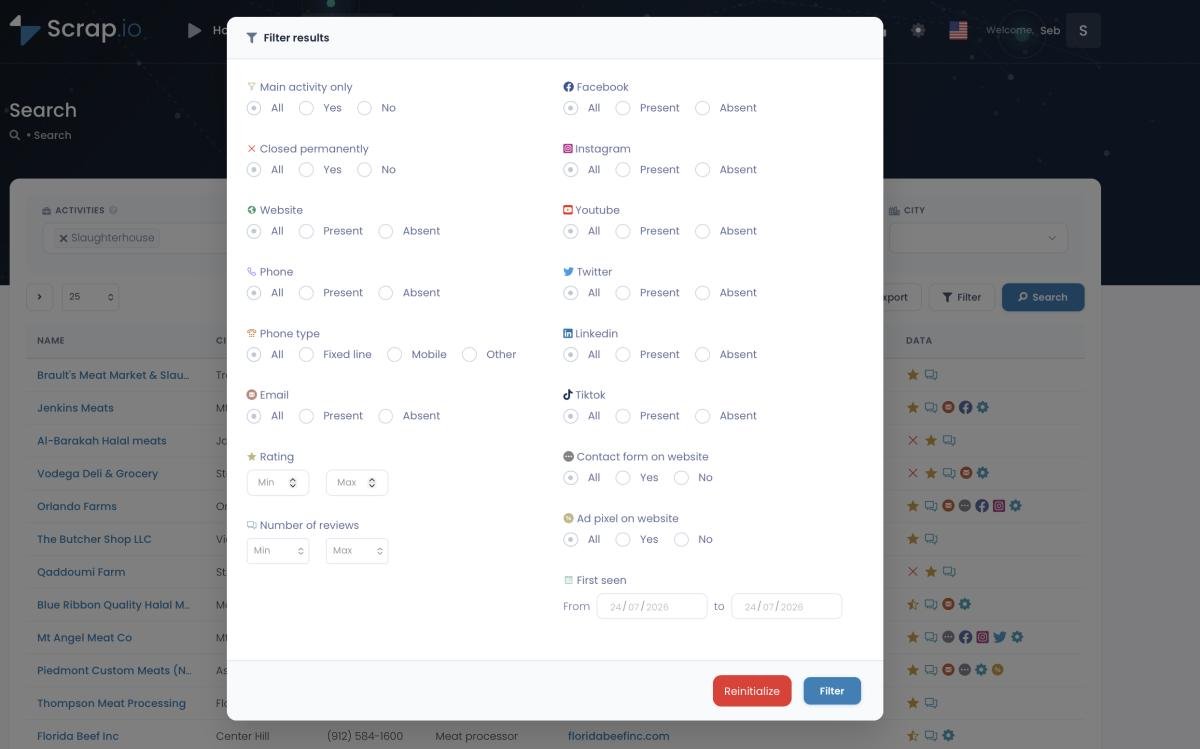
This is the part that saves your budget, and it's the part broker lists physically cannot do. Toggle "email present" so you only ever keep listings that actually have an email on file. Add "has a website," a minimum Google rating, a review-count floor — whatever matters to your pitch. Filters apply before credits are spent, so you never pay for a dead-end listing. That's the difference between buying garbage and binning it, versus never buying garbage in the first place.
Video: Finding Clients Through Google Maps Filters
Step 3 — Export, then drop it into your cold email tool
Hit export. You get a CSV or Excel file — practice name, address, phone, up to five classified emails per listing, website, social links, Google rating, review count. Load it straight into your sequencer, or your CRM. Done. Maria pulled her three-state list in one sitting. That's how to find orthodontist emails on Google Maps without touching a line of code, and it's basically the same play covered in the full find emails on Google Maps and build a cold email list guides. For the wider local-lead picture, there's the Google Maps leads playbook too.
Build your first orthodontist list in about 10 minutes — pick a category, a state, filter to email-present, export. Start your free 7-day trial (100 export credits included) and pull a fresh, filtered list from any zone you want. Start building free on Scrap.io →
Which Data Fields and Filters Actually Matter
Here's a pain point nobody warns you about: you can have 20,000 orthodontist contacts and still get zero replies, because you grabbed the wrong fields and skipped the filters that protect deliverability. Volume is not the game. Relevance is.
The 5 fields that actually drive replies
| Field | Why it drives replies |
|---|---|
| Classified email (individual vs contact@) | Write to a named person, not a black-hole inbox |
| Practice location (state/metro) | Local references and territory targeting |
| Google rating + review count | Instant personalization hook and lead scoring |
| Website presence | Signals practice size and buying maturity |
| Specialty / sub-type | Pediatric vs aligner vs surgical need different pitches |
That email classification matters more than people think. Scrap.io splits each listing into the main email, a named individual email (with first and last name pulled out), contact@, sales@, and so on. Emailing "Dr. Alvarez" beats emailing "info@" every time. Not close.
Filtering for deliverability
Deliverability starts before you send — it starts at extraction. The single highest-leverage filter is "email present": no email on file, no export, no wasted credit, no phantom bounce. From there, keep a healthy bounce rate in mind. Under 2% is ideal; anything north of 5% and mailbox providers start reading you as a careless sender and route everything to spam. Even fresh data deserves a quick verification pass before the first send — here's how to check if an email is valid without torching your list.
One honest limitation, because you should hear it straight: Scrap.io classifies phone numbers as mobile or landline for SMS targeting in most of the world — but that specific phone-type filter isn't available in the US and Canada. So for a US orthodontist list, lean your deliverability strategy on the email-present filter plus verification, not on phone-type filtering. If an outreach tool promised you US mobile-vs-landline filtering, it's probably bluffing.
Video: How to Find the Best Email to Contact?
Is Buying/Building an Orthodontist Email List Legal?
Yes — for B2B, using public business data, if you follow a few rules. Let me be honest here rather than hand-wavy, because "is it legal?" deserves a real answer, not a shrug.
CAN-SPAM: the US rulebook
The FTC's CAN-SPAM Act governs your outreach, and it's not complicated. Honest sender identity. A subject line that reflects the message. Your real physical mailing address in every email. A working opt-out that you honor within 10 business days. No opt-in required for B2B — CAN-SPAM makes "no exception for business-to-business email," but it also doesn't demand prior consent. The catch: each violating email can cost up to $53,088. Per email. So don't be sloppy.
GDPR and public business data
A practice's generic business email — office@, or an address published on their own site — generally isn't treated as personal data the way someone's private Gmail is. For US-only orthodontist outreach, GDPR mostly isn't your concern; CCPA carves out publicly available business info entirely. If any contacts sit in the EU, lean on the "legitimate interest" basis and keep that opt-out frictionless. Sourcing from data that businesses themselves published on Google Maps puts you on far cleaner footing than a broker file with murky origins.
Why purchased lists get you blacklisted
And this is the part that should actually scare you. Bought lists carry spam traps — addresses that exist only to catch senders with bad hygiene. Mail one and your deliverability tanks overnight. Combine that with a 40% bounce rate on stale broker data and you've built a machine for getting your domain blacklisted. Self-built, fresh, filtered data sidesteps the whole mess. That's not a compliance argument — it's a survival one.
How to Cold Email Orthodontists (Without Landing in Spam)
Healthcare email marketing returns roughly $36 for every $1 spent, with open rates around 41% (WebFX healthcare benchmarks). Those are fantastic numbers — if your list is fresh and your copy doesn't read like a robot wrote it. Get either wrong and you're in the spam folder with the extended-warranty people.
Subject lines that get opened
Orthodontists are clinicians. They respond to specifics, not hype. "New bracket system — 22% less chair time, here's the data" beats "Revolutionary Dental Solution!!!" every time. Drop the exclamation marks. Drop "FREE" (spam filters flag it, and clinicians judge it). Reference their specialty or their city. Keep it short — two to four words often outperforms a full sentence. Their inbox is a war zone; be the message that looks like it was meant for them.
Personalization at scale
"Hi [First Name]" is not personalization. That's a mail-merge tag pretending to be effort. Real personalization uses the fields you extracted: "Saw your Scottsdale practice has 4.7 stars but no online booking link — three ortho offices nearby fixed that and picked up new-patient volume." That email gets a reply. The generic one gets deleted.
So yeah — write like you actually looked.
The whole point of pulling classified emails and Google ratings is exactly that. For the full framework — subject lines, sequences, follow-ups — the how to write a cold email guide breaks it down step by step. And if you're pulling a doctor email list or a wider dentist emails segment alongside orthodontists, the same personalization logic carries straight over.
One more thing on data quality, because it's the quiet multiplier here: the real-time data behind all this is the same source trusted by 50,000+ professionals to run outreach that actually lands. Fresh in, replies out. Stale in, spam folder. It's not more complicated than that.
FAQ
What is an orthodontist email list?
A targeted database of orthodontic practices' contact details — name, verified email, phone, location, specialty — used for B2B outreach like supplier pitches, software demos, or recruiting. The best lists are built in real time from live sources, so addresses stay current instead of decaying in a static file.
How many orthodontists are there in the US?
Around 10,830 licensed orthodontists (ADA HPI, 2024) and 18,000+ AAO members, spread across roughly 42,000 practice locations on Google Maps in 2026. Locations outnumber specialists because many run multiple offices, which is why location-level data usually matters more for outreach.
Is it legal to email orthodontists you found online?
Yes, for B2B using public business data, as long as you follow CAN-SPAM — honest sender ID, a real physical address, and a working opt-out you honor within 10 business days. GDPR and CCPA apply to how you source the data, so stick to publicly available business listings.
Are free orthodontist email lists any good?
Rarely. Free lists — and "dentist email list free" style downloads — tend to be outdated, scraped once, and shared with thousands of senders, which means high bounce rates and real spam-trap risk. Building your own from live Google Maps data stays fresh and stays yours. A free trial that lets you extract fresh contacts beats a free file of dead ones.
Should I buy or build an orthodontist email list?
Build it. Purchased lists decay 25–30% a year, come non-exclusive, and carry blacklist risk. A self-built list from live data is exclusive, current on every export, and filterable to email-present contacts before you spend a credit. Same reason a "dentist database usa" is better self-built than bought.
Stop renting a stale list that half-bounces on the first send. Build one that's always fresh — 42,167 US orthodontic practices on the map, filtered to the ones with a real email before you pay a credit. Try Scrap.io free for 7 days, 100 export credits included. Build your orthodontist email list now →
Generate a list of orthodontist with Scrap.io