

📋 What's in This Guide
- Why Most Discovery Questions Fail on Local Prospects
- The Science Behind Sales Discovery Questions
- Pre-Call Intelligence: The "Silent Discovery" Nobody Talks About
- 30 Sales Discovery Questions for Local Business Prospecting
- How to Ask Without Interrogating
- 5 Common Discovery Call Mistakes That Kill Deals
- Is Local Data Prospecting Even Legal?
- FAQ
Gong analyzed 519,000+ discovery calls and found something pretty specific. Reps who ask 11 to 14 questions close at a 74% success rate. Those who ask fewer than 7? They sit at 46%. That's a massive gap caused by a handful of questions (Gong Labs).
But here's what bugs me. Almost every study out there, Gong included, focuses on SaaS reps selling to enterprise buyers. Huge teams. Six-month sales cycles. Multiple decision makers in a boardroom.
What about the rep calling a roofing company with three employees? Or pitching a dentist who answers his own phone between patients? That's a completely different game. And the wrong sales discovery questions will blow it before you even get started. If you'd rather start from something warmer, a solid warm calling approach changes the whole dynamic, but let's assume you're going in cold.
Why Most Discovery Questions Fail on Local Prospects
Take Mike. Mike sells reputation management software. He read every blog post about discovery call questions and memorized a perfect BANT framework. Budget, Authority, Need, Timeline. Textbook stuff.
Then he calls a plumber in Tampa.
"So, what's your current allocated budget for reputation management solutions?" Silence. The plumber hangs up. Because that question sounds completely insane when you're talking to a guy who's been snaking drains since 6 AM.
Local business owners are different. They're time-poor. Skeptical of sales calls. And absolutely drowning in vendor pitches. One local business owner on a Reddit r/sales thread said he gets "at least 5 cold calls a day trying to sell me Google stuff." Five. Every single day.
The problem isn't discovery itself. Discovery works. The data proves it. The problem is asking the wrong sales discovery questions without any local context. Using enterprise frameworks on a 3-person company sounds tone-deaf. It is tone-deaf.
Here's the gap in one table:
| Enterprise Framework 🏢 | Local Reality 🔧 |
|---|---|
| "Who's on your buying committee?" | The owner answering between jobs |
| 6-month procurement cycle | A yes or no by Friday |
| "Budget for digital transformation?" | "Can this get me more calls?" |
You need cold calling script examples built specifically for these conversations. Not recycled SaaS playbooks. And you need a solid phone-based sales prospecting approach that respects how local owners actually make decisions.
The Science Behind Sales Discovery Questions
Okay let's talk data. Because the science behind effective sales discovery questions is actually really clear.
Gong's analysis of 519,000+ sales calls found that sweet spot I mentioned: 11 to 14 questions per discovery call = 74% success rate. Reps asking only 1 to 6 questions? Just 46%. That's not a marginal difference. That's the difference between hitting quota and job hunting (Gong Labs, 519,000 calls).
One caveat on that number. Independent 2026 write-ups tend to land the winning range at roughly 70 to 74%, so treat 74% as the top of a tight band, not some magic threshold. The point holds either way: a handful of well-placed questions moves the needle more than anything else on the call.

But here's the part most people miss. In a 2025 update analyzing 326,000+ calls, Gong found something even more interesting about how top performers ask questions.
Top reps talk 43% of the time and listen 57%. Average reps? They flip it, 60% talking, 40% listening. That's a huge problem. You can't discover anything if you're the one doing all the talking.
And it gets more specific. Reps who won deals asked 15 to 16 questions total. Reps who lost? They actually asked more: 20+ questions. More questions isn't better. Better questions are better. There's a real difference.
Top performers also spread their questions evenly across the entire conversation. Average reps front-load everything, asking twelve questions in the first three minutes, then basically giving a pitch for the rest. That feels like an interrogation, not a conversation.
The Sales Collective's 2025 survey of 123,000 sales professionals backs this up from another angle. Companies with a structured sales discovery process see an 8% higher win rate. And 88% of sales leaders say a consistent process makes training way more effective (The Sales Collective, 2025).
Two names worth keeping in your back pocket when you need to justify all this to a skeptical manager:
📌 Gong (gong.io) sits on the single biggest public dataset on discovery calls: 519,000 recorded conversations. Their finding, that 11 to 14 questions correlates with a 74% success rate, is the number everyone else quotes. When you cite discovery science, this is the primary source.
📌 The Sales Collective (thesalescollective.com) surveyed 123,000 sales professionals and found teams with a structured discovery process win 8% more often. Different angle, same lesson: process beats improvisation, and it's measurable.
One more stat worth knowing. Velocify's analysis of ~3.5 million leads found that speed to lead matters enormously: responding to an inquiry in under one minute improves conversion by 391% (Velocify / speed-to-lead research). So even having the best sales discovery questions in the world won't help if you're calling a lead three days after they filled out a form.
All that to say: it's not about more questions. It's about asking the right ones, spacing them naturally, and actually shutting up long enough to listen.
Pre-Call Intelligence: The "Silent Discovery" Nobody Talks About
Here's where things get really interesting. And honestly, nobody covers this.
Before you ask a single discovery question for sales, you should already know a lot about your prospect. Not from expensive intent data platforms. From information they already made public themselves. This is basically signal-based selling for local businesses: reading what's already on the map.
I call it the 5-point Google Maps qualification. Takes about 30 seconds per business. Changes everything about your call. It's the same signal logic behind lead scoring for local leads, just applied one call at a time instead of across a whole list.
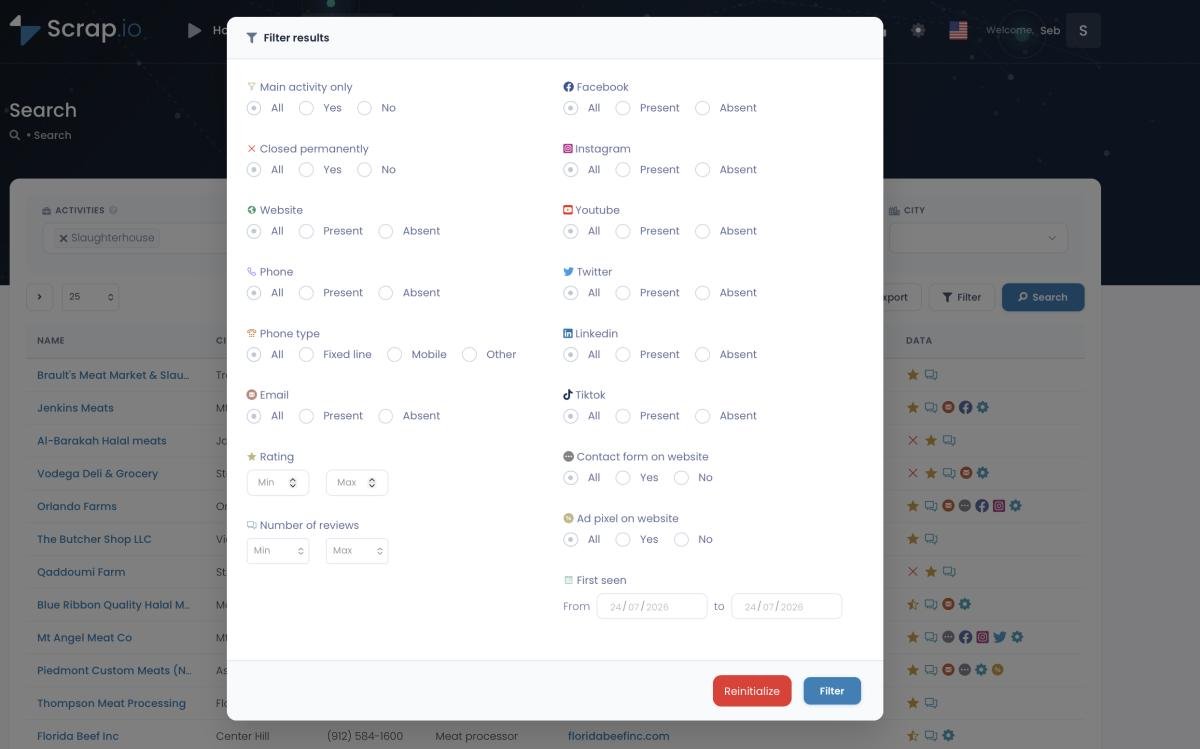
1. Rating (look for the 2.5 to 3.5 star sweet spot)
A business sitting at 2.8 stars has problems. But the fact that they're still operating means they care enough to keep going. That's your ideal prospect. A 4.9 star business? They're doing fine. A 1.2 star business? Probably going under. The middle is where opportunity lives. (This is also, not coincidentally, a great way to define your ideal customer profile for local outreach.)
2. Recent reviews (active in the last month?)
If someone left a review yesterday, that business is active and engaged. If their last review was from 2022, something's off. Recent activity tells you they're a real, running operation worth calling.
3. Website quality
No website at all? Prime target for web services. Website with a copyright date from 2018? Same thing. You can spot these in seconds and it completely changes your opening question.
4. Ad pixel presence
If they're already running Facebook or Google ads, they're spending money on marketing. That's a good sign. They understand the concept of paying for customers. Much easier conversation than convincing someone marketing matters in the first place.
5. Claim status
An unclaimed Google listing is a massive opportunity. It means nobody's managing their online presence at all. That's basically a neon sign saying "I need help."
Video: Finding Clients Through Google Maps Filters
Now imagine doing this research for every business in your territory. One by one, clicking through Google Maps. It would take weeks.
Video: How to Scrape Local Leads with Claude & Vibe Prospecting
Tools like Scrap.io let you pull this qualification data in bulk (rating, reviews, website status, emails) across an entire city in minutes. Search a category and a location, apply your filters before you spend a single credit, and export.
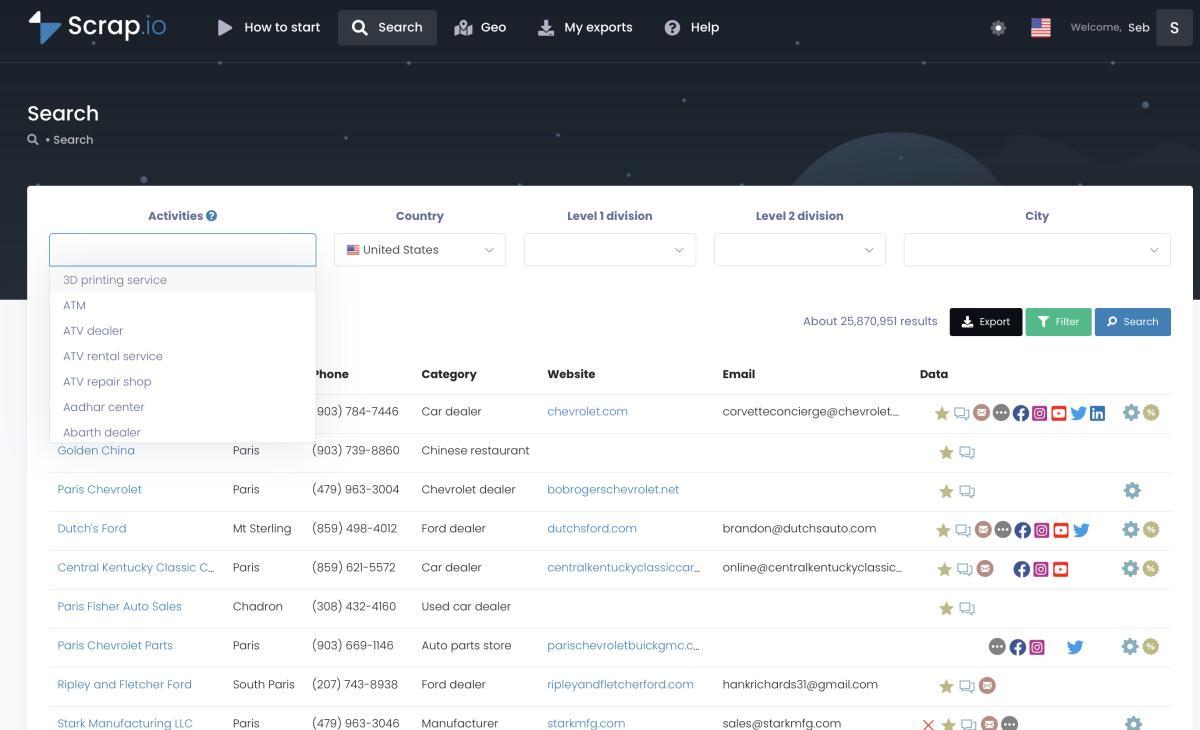
You can prospect local businesses like Hormozi does, using real data instead of guessing.
Scrap.io pulls the rating, review count, website status, and verified email of every business in a city, from 225M+ listings across 195 countries, refreshed in real time at export. Start with a free 7-day trial and 100 leads to test it on your own territory.
When you show up to a call already knowing their rating, their review count, their competitor's stats, your sales discovery questions land completely differently. That's not a cold call anymore. That's an informed conversation. And local business owners can feel the difference immediately.
30 Sales Discovery Questions for Local Business Prospecting
Alright. Here's the core. Thirty discovery questions for sales organized by stage, specifically designed for local business conversations. Not enterprise. Not SaaS. Local. Steal the whole thing as your sales discovery questions template if you want.
A. Opening and Permission (Questions 1-5)
You don't get the right to ask hard questions immediately. You earn it. These openers give the prospect control and reduce their defenses.
1. "I'll take two minutes to explain why I called, then you decide if it makes sense to continue. Sound fair?"
2. "I was looking at your Google listing and noticed something. Got 30 seconds?"
3. "I help [type of business] in [city] with [specific outcome]. Before I say anything else, is that even something you'd want to improve right now?"
4. "I know you probably get a ton of these calls. I'll be quick and honest, can I ask you one question to see if this is even worth your time?"
5. "I'm not trying to sell you anything today. I just had a question about how you're handling [specific challenge]. Mind if I ask?"
The goal here is permission. The Reddit r/sales community talks about this constantly. One rep shared their go-to opener: "What is it about what we do that you were interested in?" Simple. Direct. Gives the prospect room to talk first.
B. Current State Assessment (Questions 6-10)
Now you understand where they are. Don't assume anything. Let them tell you.
6. "How are you currently getting new customers?"
7. "What's working well for you right now with [marketing / operations / reviews]?"
8. "When a new customer finds you, where do they usually come from: referrals, Google, something else?"
9. "Are you doing anything specific to follow up with people who call but don't book?"
10. "How many new leads or calls would you say you get in a typical week?"
These open-ended sales discovery questions let prospects talk about their business in their own words. That's where the real insights come from. Not from yes/no questions that feel like a survey.
C. Pain and Impact (Questions 11-15)
This is where your pre-call research pays off. You're not guessing about their problems. You already saw them.
11. "I noticed you're at a 2.8 rating with 40 reviews, while [Competitor] has a 4.6 with 300. Is closing that gap a priority?"
12. "What happens to your business if nothing changes in the next 6 months?"
13. "When you lose a customer to a competitor, what's usually the reason?"
14. "How much would you estimate a single missed call or lost lead costs your business?"
15. "If I told you your competitor added 75 reviews this quarter, does that change how urgent this feels?"
A Reddit sales rep put it perfectly: "Why is this a problem?" Four words. But when you follow it with data you already found, the prospect realizes you're not just reading a script. You actually did your homework. And if you want to put numbers behind the pain you're probing, the right local prospecting KPIs tell you which of these problems actually costs a business money.
D. Decision Process (Questions 16-20)
Who decides, how, and when. This is where most local reps skip ahead and lose deals.
16. "Besides yourself, who else weighs in on decisions like this?"
17. "What would a 'yes' look like on your end, what needs to happen?"
18. "Have you tried solving this before? What happened?"
19. "Is there a specific time of year when you usually make changes to how you run things?"
20. "If this made sense to you today, what would your next step usually be?"
For local businesses, the decision maker is often the person answering the phone. But not always. A dentist might defer to their office manager. A restaurant owner might need to talk to a partner. Don't assume.
E. Solution Fit (Questions 21-25)
Match your offer to their reality. Not the other way around.
21. "If we could solve [specific problem] and you started seeing results in 30 days, what would that be worth to you?"
22. "What's your must-have versus nice-to-have in a solution?"
23. "What would make you say 'this was absolutely worth it' six months from now?"
24. "Have you looked at other options for fixing this? What did you think?"
25. "Is budget the main concern, or is it more about making sure it actually works?"
These sales qualifying questions help you figure out whether there's a real fit, before you waste time on a proposal they'll never accept. This is the point where discovery blends into full lead qualification, and getting the framework right saves you hours. One experienced rep on Reddit mentioned another great angle: "Can you walk me through the process?" It lets the prospect explain their own workflow, which tells you exactly where your solution fits.
F. Objection-Handling Questions (Questions 26-30)
When you hit resistance, and you will, pivot. Don't push. Ask.
26. "I totally get that. What would need to change for this to become a priority?"
27. "Your competitor [Name] added 75 reviews this quarter while you added 8. Is your current solution helping you keep up?"
28. "If price weren't a factor at all, would this be something you'd want?"
29. "What's the biggest risk you see in trying something new here?"
30. "If I could show you proof from a similar business in [their city], would that help?"
Want to show up to every discovery call with this level of local intel? Scrap.io gives you the rating, review count, website status, and email of every business in your target area, filtered before you spend a credit, so you never pay for a lead you can't use. That's what makes these questions hit differently: you're referencing real data, not guessing. You can also use that data to handle objections during prospecting with actual numbers instead of generic comebacks. Try it free, 100 leads included.
How to Ask Without Interrogating
Having 30 great discovery questions for sales is useless if you fire them off like a machine gun. The Gong data is super clear on this.
Spread questions across the full call. Top performers distribute questions evenly throughout the conversation. Average reps dump everything in the first few minutes, then switch to pitch mode. Don't do that.
Aim for the 43:57 talk-to-listen ratio. You talk 43%. They talk 57%. That's the golden ratio from Gong's analysis of 326,000+ calls. Most reps do the opposite, 60% talking, and wonder why prospects tune out.
After each answer, pause. Let the silence work. Three seconds of silence after a prospect finishes talking will get you more information than another question. People fill silences. Let them.
Use bridges instead of new questions. "That's interesting, tell me more" goes deeper without adding to your question count. Remember, reps who asked 20+ questions actually lost more deals than those who asked 15-16.
Never ask more than 2 questions in a row without giving something back. Share an insight. Reference a stat. Tell a quick story about a similar business. Discovery should feel like a conversation, not a deposition.
This approach works especially well when you combine it with a structured follow-up. You can build a sales pipeline for local leads that turns good discovery calls into actual closed deals, not just nice conversations that go nowhere.
Think about using multiple touchpoints too. Contact form lead generation can warm up prospects before you call, and smart cold email outreach helps you follow up without being annoying. And log every answer somewhere you'll actually see it again, the right CRM for your sales team turns a good discovery call into a follow-up that closes instead of a note you lose.
5 Common Discovery Call Mistakes That Kill Deals
Quick hits. If you're doing any of these with your sales discovery questions, stop.
1. Asking 15+ questions. Gong's data is clear. There's a sweet spot at 11-14 questions where success peaks. Push past that and you trigger the interrogation effect. Success drops fast.
2. Front-loading all your questions. Cramming twelve discovery call questions into the first three minutes then pivoting to a pitch. Top reps spread questions evenly. Average reps don't. Be a top rep.
3. Using generic BANT on local business owners. "What's your budget for digital transformation?" is a ridiculous question to ask a dry cleaner. Adapt your framework to the person sitting across from you.
4. Not referencing any pre-call research. If you can't mention one specific thing about their business, their rating, a recent review, their competitor, you sound like every other lazy cold caller. And you'll get treated like one.
5. Talking 60%+ of the call. The data says 43:57. Not 60:40. If you're doing most of the talking during discovery, you're not discovering anything. You're just pitching with extra steps.
Is Local Data Prospecting Even Legal?
Short version: yes. The signals behind your silent discovery (business name, rating, reviews, website, public business email) are all publicly available information. Using them for B2B prospecting is legal as long as you play by the rules: GDPR in the EU (legitimate interest for business outreach, easy opt-out, honored fast) and CCPA in California. Business data, publicly listed, traceable to its source, used for legitimate commercial outreach. That's the line.
Scrap.io is GDPR and CCPA compliant by design: public business data only, every field traceable, no shady personal scraping. Follow the same discipline in your outreach (real sender address, clear opt-out, honor "no" immediately) and you're on solid ground. Now, the questions people actually ask.
FAQ
How many questions should you ask on a discovery call?
The optimal number is 11 to 14 questions per call, based on Gong's analysis of 519,000+ discovery calls. Reps in this range close at a 74% success rate. Fewer than 7 questions drops success to 46%. More than 15 starts feeling like an interrogation, and success actually declines. The key isn't the exact count: it's asking the right sales discovery questions and spacing them naturally throughout the conversation. Quality discovery questions for sales always beat quantity.
What is the 70/30 rule in sales?
The 70/30 rule says you should listen 70% of the time and talk 30% during a sales conversation. It's a good starting point, but Gong's updated data from 326,000+ calls puts top performers closer to a 43/57 split: 43% talking, 57% listening. The principle is the same either way: let the prospect do most of the talking during discovery.
What is the 3-3-3 rule in sales?
It's a follow-up cadence framework. Make 3 contact attempts in 3 days. Then follow up 3 times per week for 3 weeks. Then 3 times per month for 3 months. It keeps you persistent without being annoying. Works especially well when you're following up after a solid discovery call and the prospect needs time to decide.
What are the 5 W questions in sales?
The 5 W's applied to sales discovery break down like this:
- Who: who's the actual decision maker?
- What: what's the real pain point?
- When: what's the timeline to fix it?
- Where: which channel or market does it show up in?
- Why: what's the motivation to change now?
For local prospecting, the "Who" is often the person answering the phone, but not always. Always confirm.
What are the 5 P's of prospecting?
The 5 P's are a quick mental checklist for outreach:
- Purpose: know why you're calling before you dial.
- Preparation: do the pre-call research (rating, reviews, website).
- Personalization: reference something specific to their business.
- Persistence: most sales need 5+ follow-ups.
- Patience: discovery is a conversation, not a close.
Nail the first two and you'll already sound different from 90% of the cold callers hitting that same prospect.
What are the 5 C's of sales?
The 5 C's are Credibility, Curiosity, Connection, Communication, and Closing. For local prospecting, the first one starts before you dial: solid pre-call intel (their rating, reviews, website) buys instant credibility. Curiosity opens the door, connection comes from referencing real data you found, and communication plus closing do the rest. Preparation earns the first four for free.
What's the difference between discovery and qualifying questions?
Discovery questions dig into the prospect's situation, goals, and pain: they're broad and open-ended ("How are you getting new customers right now?"). Qualifying questions test whether there's a real fit: budget, authority, timing, need ("Is budget the main concern, or making sure it actually works?"). You discover to understand. You qualify to decide whether to spend more time. The full mechanics of spotting qualified leads go deeper, but good calls blend both. Lead with discovery. Qualify too early and you sound like you're screening, not helping.
What makes a good discovery question?
A good discovery question is open-ended, specific to the prospect's situation, and references real data you found before the call. Generic questions get generic answers. But when you say "I noticed your competitor has 300 reviews and you have 40, is that something you think about?", that's a question based on homework. That's what separates average reps from the ones who actually close.
Start Every Discovery Call With Real Intel
Look. The sales discovery questions framework works. The data proves it. Eleven to fourteen questions. Forty-three percent talking. Spread your questions evenly. Listen more than you speak.
But the real advantage isn't in the questions themselves. It's in what you know before you ask them.
Video: Scrap.io - How to Start?
The best discovery calls start before you ever pick up the phone. When you already know a prospect's rating, their review count, their competitor's numbers, and whether they even have a website, every question you ask is sharper. More relevant. Harder to dismiss.
Try Scrap.io free for 7 days and get 100 verified local business leads with emails, ratings, and review data so you never walk into a call blind again. Filters run before extraction, so every credit lands on a business actually worth calling.
Because in 2026, showing up to a discovery call with zero preparation isn't just lazy. It's leaving money on the table. And your competitors who do their homework? They're the ones closing the deals you're losing.
Stop guessing. Start knowing.
Generate a list of restaurant with Scrap.io