

A guy I know — sells moisture detection equipment out of Tampa — dropped $1,200 on a "premium" water damage restoration email list last fall. Sent 2,000 emails. Half bounced. Another 400 went to people who'd switched careers. Twelve hundred bucks, and he got maybe 600 valid contacts out of it.
Mort. That list was dead on arrival.
That's the problem with this market. There are 60,000+ restoration businesses in the US feeding a $7.1 billion industry, and 14,000 new water damage emergencies happen every single day. Huge opportunity. But the contact data most people are working with? Garbage. Static email databases lose 25–30% of their validity per year, and in restoration — where companies pop up after hurricanes and vanish just as quick — it's probably worse.
This guide breaks down where the water damage restoration email list market actually stands in 2026, who's buying these lists (and why), and the three methods to get contacts that don't bounce. If you're hunting water damage leads and tired of paying for digital confetti, keep reading.
New to Scrap.io? This 2-minute walkthrough shows you how the whole thing works before we get into the weeds.
Video: Scrap.io — How to Start?
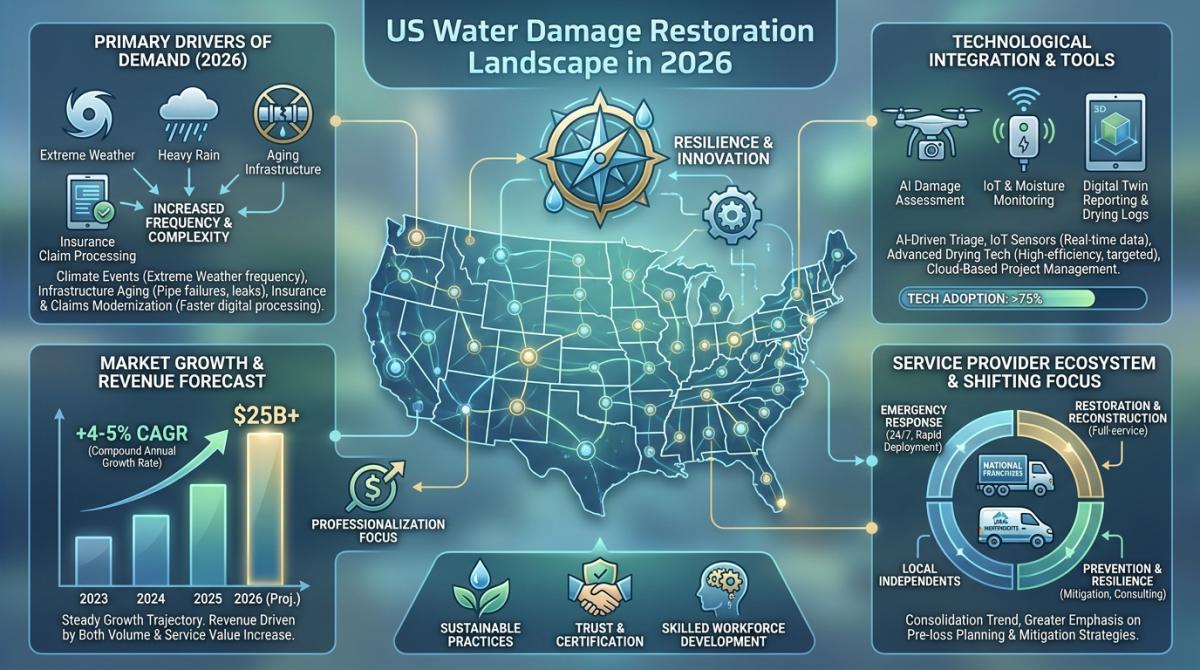
The Water Damage Restoration Market in 2026: Key Numbers
Industry Size and Growth
IBISWorld pegs the US damage restoration industry at $7.1 billion for 2026, spread across 60,020+ businesses. That's just the restoration piece though. Zoom out to the full US property restoration market and ResearchAndMarkets puts it at $55.81 billion — up 5.7% from 2025. The global water damage restoration market alone? $5.97 billion right now, on track for $8.97 billion by 2032 at a 6.93% CAGR according to 360iResearch.
Some numbers that really put things in perspective. Water damage claims represent about 24% of all homeowner property insurance claims — only wind and hail are higher. Average claim: $12,514. And water damage restoration accounts for roughly 41% of total demand across all disaster restoration categories. It's the single biggest segment. That's not a rounding error. That's the whole game.
Look at the franchise numbers and you can see where the smart money's going. SERVPRO operates 2,390+ locations in the US and Canada, and they've held the #1 spot on Entrepreneur's Franchise 500 for 23 straight years (January 2026 ranking). PuroClean crossed 505 units and just celebrated 25 years in business (FranchiseWire, March 2026).
The margins explain a lot. Water damage restoration work runs 50–80% gross margin. Reconstruction? 10–40%. That spread is why every equipment supplier, SaaS company, and marketing agency wants a piece of this audience. Everybody wants in.
Top States for Water Damage Restoration Companies
Geography changes everything when you're building a targeted water damage restoration contact database.
Florida is the obvious #1 — hurricanes, humidity, aging condos, year-round demand. California sits at #2, which surprises some people until you remember wildfires, earthquakes cracking water lines, and coastal erosion. Texas rounds out the top three with 3,200+ restoration companies, mostly clustered along the Gulf coast and in metro areas that get hammered by severe storms.
North Carolina combines coastal hurricane exposure with mountain flooding (the western part of the state gets hit harder than most people realize). And then there's Colorado. Mountain snowmelt flooding plus rapid freeze-thaw cycles create enough water damage work that the restoration market there is growing faster than some coastal states.
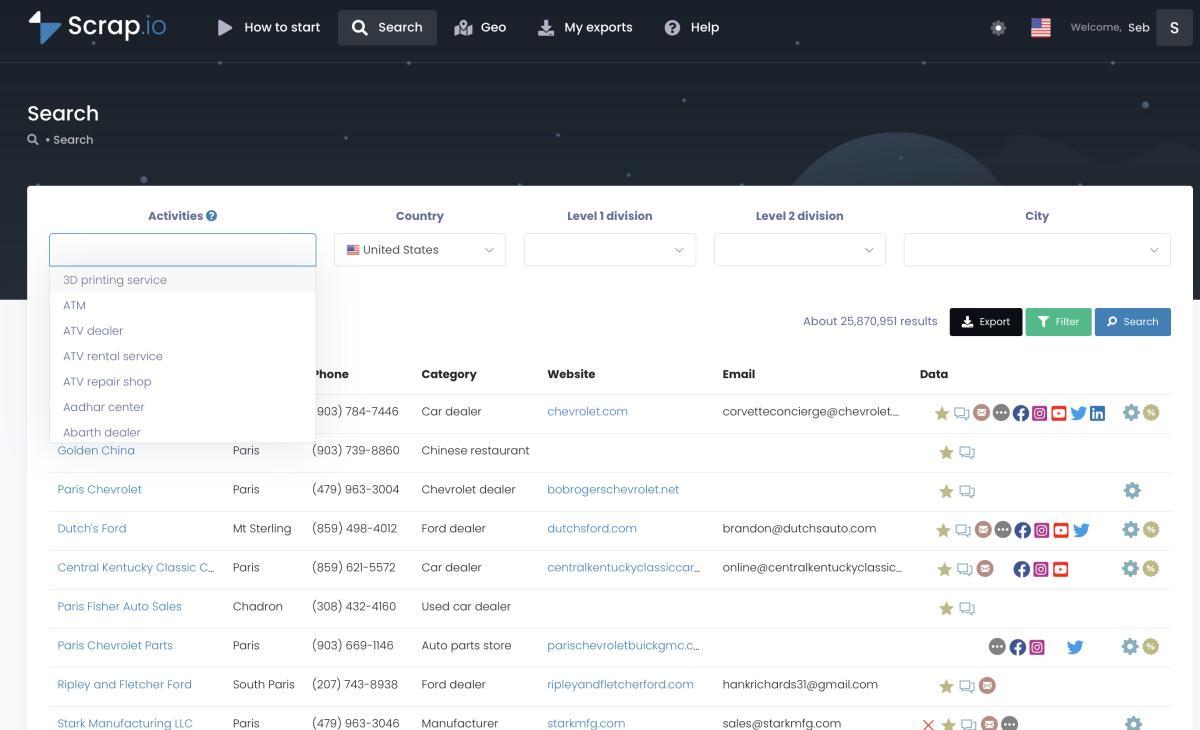
On Scrap.io right now, a search for water damage restoration pulls up about 28,106 results across the US — that's your restoration email list USA total addressable market, freshly counted this month. Not a number somebody typed into a spreadsheet in 2023.
Who Needs a Water Damage Restoration Email List? (5 Real B2B Use Cases)
When most people think "who buys a restoration company mailing list?" they picture one type of buyer. In reality, at least five completely different B2B segments are going after these contacts — and spending real money doing it.
Equipment and Supply Vendors
Dehumidifiers. Moisture meters. Air movers. Extraction units. Antimicrobial treatments. Restoration companies chew through this stuff. One equipment distributor (documented in an industry case study) pulls $800K per year in recurring revenue from just 40 restoration company accounts. Forty. That's $20K average per client per year, and the guy built his pipeline from a targeted construction company email list that he filtered down to restoration specialists.
SaaS and Software Companies
Xcelerate (xlrestorationsoftware.com) makes a CRM built specifically for restoration workflows — job tracking, insurance docs, invoicing, the whole thing. They're not alone. Dash, Albiware, iRestore, Restoration ERP (restorationerp.com) — all competing for the same pool of companies willing to pay $2K–$10K per year in software subscriptions. Get 100 restoration companies on your platform and you're doing $200K–$1M ARR from one vertical. That's not hypothetical math. That's what these companies are actually chasing.
Marketing Agencies
Water damage restoration marketing turned into its own cottage industry, and the agencies that got there first are doing extremely well. Restoration Inbound (restorationinbound.com) is probably the best-known example. Their Allklean case study? $100K+ in new business within the first month. Another client, Pure Maintenance, hit measurable ROI in under 7 months. RYNO Strategic Solutions (rynoss.com) plays the same game. All of these agencies burn through prospect lists fast — close one restoration company and you're already prospecting the next ten.
Insurance Networks
This one flies under the radar. Insurance companies fund roughly 59% of all restoration projects (Mordor Intelligence, 2025). That means insurers are constantly building preferred contractor networks — vetting restoration companies for coverage capacity, IICRC certifications, and geographic response times. An IICRC certified restoration companies list is basically gold to a claims department. If you're building an insurance agency email list alongside your restoration contacts, you've got referral opportunities going both directions. Insurer to contractor, contractor to insurer.
Complementary Contractors (Plumbers, Roofers, HVAC)
There's a thread on r/askaplumber — 20+ comments — where plumbers openly discuss referring water damage leads to restoration companies and collecting referral fees. Nobody's hiding it. Burst pipe = plumber gets the call first, restoration company gets the job second. Same thing with roofers (leak causes interior damage) and HVAC techs (they find mold during ductwork inspections all the time).
If you're a plumber, roofer, or HVAC contractor reading this — a plumber email list, roofing contractor email list, or HVAC contractor contacts database lets you build a referral network that pays you for leads you're already generating.
For context on what water damage leads actually cost: one entrepreneur on r/smallbusiness reported paying around $200 per lead through dedicated water damage lead generation companies. At that rate, even a loose referral arrangement starts printing money. (Croyez-moi — sorry, force of habit — trust me, that math adds up fast.)
28,106 US restoration companies. Real-time. Filtered before you spend a credit. Scrap.io pulls water damage restoration contact data straight from Google Maps — validated at export, not recycled from some 2023 CSV. Start free: 7-day trial, 100 leads on us. Try Scrap.io free →
How to Get Water Damage Restoration Leads: 3 Methods Compared
There are really only three ways to build a water damage restoration email list in 2026. The price difference between them is absurd.
Static Pre-Built Databases
Coldlytics (coldlytics.com) is probably the most visible player here — they compile restoration contractor email lists on demand and sell them as static files. One customer testimonial claims 200 leads turned into 2 recurring clients in 2 months. Decent conversion honestly. The problem? Those lists are frozen in time. The day Coldlytics compiles the data, it starts going stale. Contacts change jobs, companies fold, phone numbers get reassigned. Pricing runs $299–$599/month for a few hundred contacts.
Live Data Scraping (Real-Time Approach)
Completely different model. Instead of buying a CSV that somebody put together three months ago, platforms like Scrap.io pull contact info directly from Google Maps — right now, in real time. Restoration company updates their listing? New phone number shows up? Changed their email? You see it immediately.
Here's what pulling water damage leads at the national level actually looks like — all 28,106 US companies, one search:
Video: How to Scrape Local Leads at the Country Level
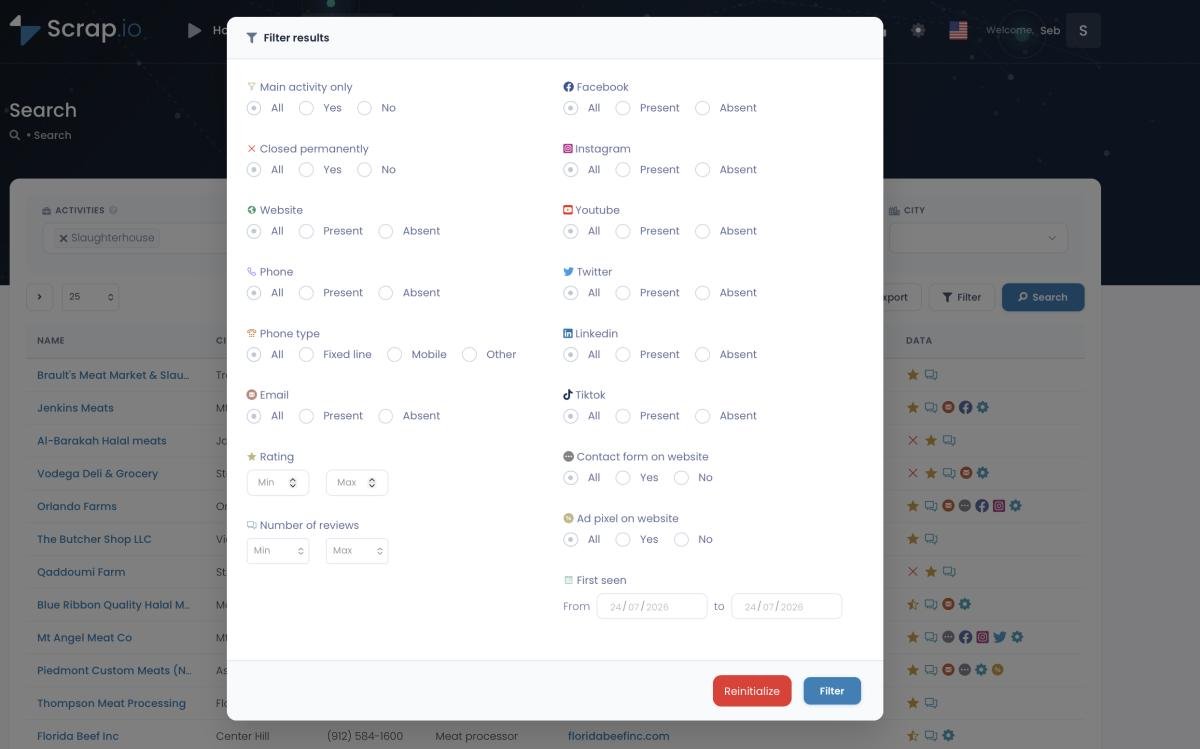
But the real advantage is filtering. You can search for water damage companies in, say, Houston — but only ones with 3+ star Google reviews, an active website, and no Instagram profile (those are the ones that probably need digital marketing help). Do that in about 30 seconds. Good luck getting that kind of granularity from a traditional list vendor. Try it manually. I'll wait. (You'll be on the phone for an hour and they still won't be able to do it.)
And because filters run before extraction, you only ever spend a credit on a contact you actually want. One credit, one establishment — counted once per rolling 30 days. Zero waste.
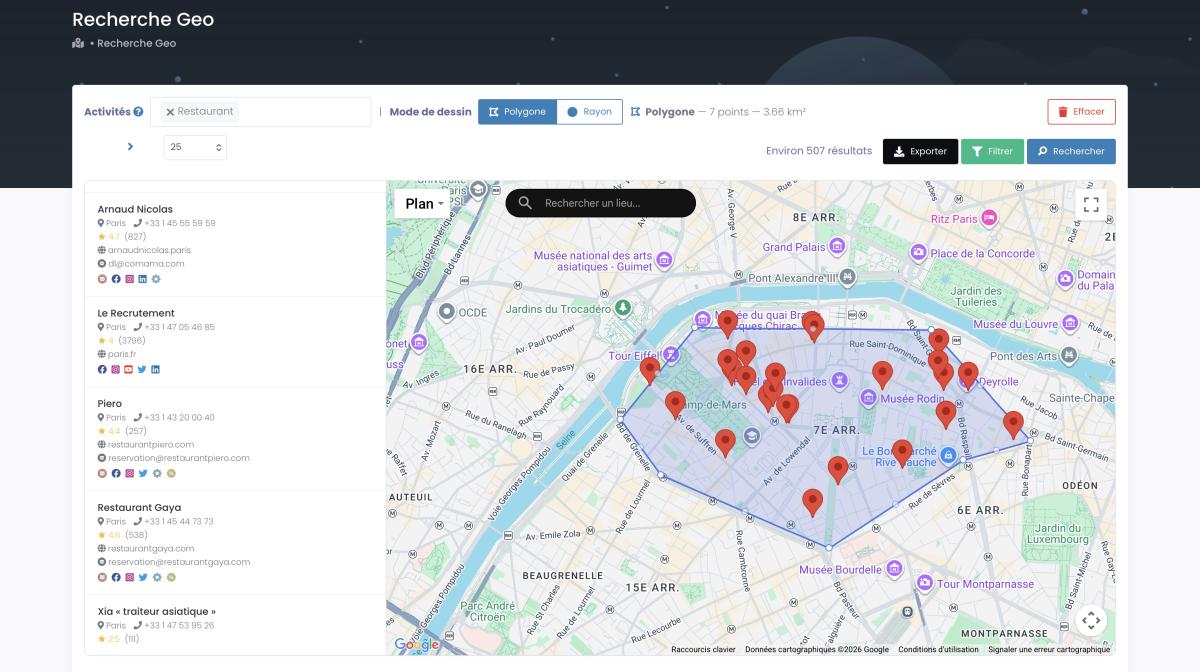
The GeoSearch tool is especially relevant for restoration. Hurricane just hit the Florida panhandle? Draw a radius around the affected zone and extract every restoration company operating within it. This is the part that static lists simply cannot do:
Video: GeoFencing — How to Find Leads Through Location?
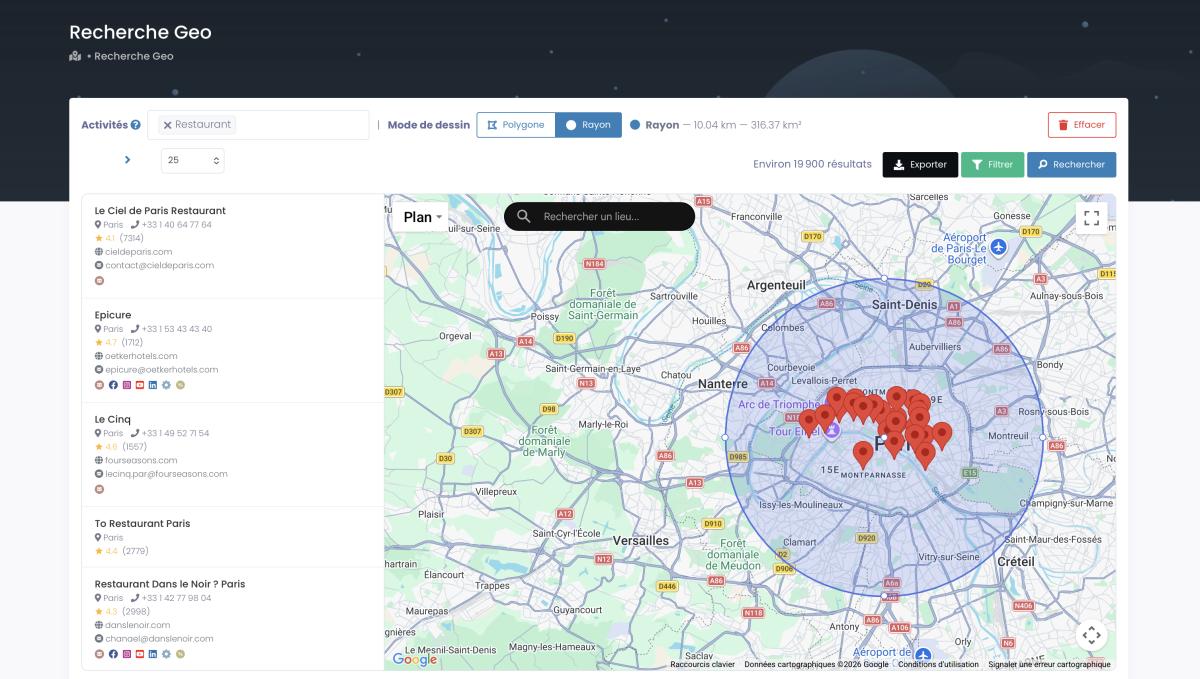
Flood zones don't follow city boundaries though. That's why there's also a polygon tool — draw an irregular shape around any disaster area and pull everything inside it (up to a million square kilometers if you really need it).
Manual List Building
Free. Brutal. You open LinkedIn, Google Maps, IICRC directories, individual company websites — and start copy-pasting into a spreadsheet one contact at a time. Fifteen verified contacts per hour is an optimistic estimate. At $25/hour labor cost, that's $1.67 per contact before you even verify a single email address. And by the time you've researched your 500th company, the first 50 have probably updated their info already.
Nobody at Scrap.io would tell you to do this — but plenty of our customers admit they tried it once, hated every minute, and never went back. We wrote a whole separate guide on how to buy email lists if you want the full breakdown of what to avoid.
Quick comparison:
| Criteria | Static Lists | Live Scraping (Scrap.io) | Manual Build |
|---|---|---|---|
| Data Freshness | Monthly/quarterly | Real-time | Variable |
| Cost | $299–599/month | ~$50/10K leads | Free (your time) |
| Filters | Limited | Advanced (geo, reviews, size) | None |
| Email Verification | Variable | Validated | Manual |
| Volume | Capped | 28K+ contacts | Limited |
What to Look for in a Quality Restoration Email List
Data Freshness and Verification
If you're buying a water damage restoration email list and your bounce rate comes back above 5%, the data's stale. Full stop. This industry moves too fast for quarterly updates — companies open and shut down with every storm season. What you want is a source that pulls from live public data (Google Maps is the gold standard) and runs email verification before you ever download a file.
What should be in the data? Verified email, company name, phone, physical address, Google star rating, review count, website URL, service categories. If any of those fields are missing, the list isn't worth your time. You'll end up doing the research yourself anyway. And doing the research yourself, as we covered, is masochism.
Filtering and Segmentation Options
Blasting the same generic pitch to 10,000 restoration companies is a waste of everyone's time. You need to slice the data — by state, by city, by review score, by whether they've even got a website. The tighter your targeting, the better your reply rates. Doesn't matter if you're going after waterproofing company contacts or water damage restoration leads — same principle.
Pricing Transparency
Any list provider that hides their pricing is probably overcharging you. The market in 2026 looks roughly like this: pay-per-lead services want $150–$250 per lead, static list companies charge $299–$599/month for a limited number of contacts, and live scraping platforms like Scrap.io come in around $50 for 10,000 contacts. You can do that math yourself.
Want to test it before you commit? Grab 100 free water damage restoration leads on Scrap.io — takes about two minutes. 7-day free trial, 100 leads included. Filter by state, review score, email presence, then export to CSV. Grab 100 free leads →
Staying Compliant: CAN-SPAM and Cold Email Rules
Yes, cold emailing restoration companies is legal under CAN-SPAM. It's B2B outreach — the law allows it. What it doesn't allow is being sloppy about it.
Every email needs: a working opt-out link, your actual physical business address, a subject line that isn't misleading, and clear identification of who's sending it. Unsubscribe requests get honored within 10 business days. This is non-negotiable stuff. We've got a full cold email compliance guide that covers the edge cases.
Cold calling is a different beast — TCPA rules require written consent in a lot of scenarios. Know the difference before you start dialing.
On the practical side: validate every single email before you hit send. Bounce rates over 5% wreck your sender reputation and it takes months to recover. Segment your lists so the SaaS pitch doesn't go to the equipment buyer. And personalize — not the fake "Hi {first_name}" kind. Mention their city. Mention a recent storm in their area. Reference their Google review count. Show them you spent 30 seconds looking at their business before emailing. That alone puts you ahead of 90% of cold emailers.
Scrap.io sources everything from publicly available Google Maps data — GDPR and CCPA compliant, every record traceable to its source. So the data collection side is clean. How you use that data in your outreach — that's on you.
FAQ
How do I get leads for water damage restoration?
Three options. Live scraping tools like Scrap.io grab real-time contacts from Google Maps — freshest data, lowest cost (~$50 for 10K leads). Static databases from providers like Coldlytics give you compiled lists that are accurate on delivery but decay fast. Or you build your own list manually from LinkedIn, directories, and Google searches. Free, but painfully slow. For comparison, pay-per-lead platforms charge $150–$250 per lead for the same contacts.
How much does a water damage restoration email list cost?
Ranges wildly. Pay-per-lead: $150–$250 per lead. Static list providers: $299–$599/month for a few hundred contacts. Live scraping (Scrap.io): about $50 for 10,000 verified contacts across the full 28,106 US companies. That last number isn't a typo.
Is it legal to send cold emails to restoration companies?
Under CAN-SPAM, yes — B2B cold email is legal in the US. You need a working unsubscribe link, your physical address, an honest subject line, and clear sender identification. Honor opt-out requests within 10 days. That's about it.
What data points should a good restoration email list include?
Bare minimum: verified email, company name, phone number, street address, Google star rating, review count, website URL, and service categories. Better providers also include social media profiles, estimated employee count, and how long the business has been operating. Anything without verified emails isn't a list — it's a guessing game.
Which states have the most water damage restoration companies?
Florida is #1 by a wide margin. California and Texas (3,200+ companies) fill out the top three. North Carolina is fourth, mostly due to hurricane exposure on the coast. Colorado is the sleeper — mountain snowmelt flooding drives more restoration work than most people expect.
Where can I get a residential water damage restoration email list?
Same place you'd get a commercial one — live Google Maps data. On Scrap.io you search the water damage restoration category across the US (or a single state), then filter by review count, rating, and website presence to isolate the residential-focused firms. It's part of the same 28,106-company database, no separate "residential water damage restoration email list" product needed. Export, segment, send.
Want to see what 28K+ water damage restoration contacts actually look like? Real-time data from Google Maps, validated at export, filtered by geo, reviews and email presence before you spend a credit. Try Scrap.io free — 7-day trial, 100 verified leads on us. Pull them in two minutes and decide for yourself. Try Scrap.io free →
Written by the Scrap.io Team. Last updated: August 2026.
Generate a list of water damage restoration service with Scrap.io