

Video: Scrap.io — How to Start?
📋 What's in This Guide
- Why UAE Businesses Can't Afford to Ignore Web Scraping in 2026
- What Is Web Scraping (And What Data Can You Extract)?
- 5 High-Impact Web Scraping Use Cases in the UAE
- Real Companies Scraping UAE Data Right Now
- Best Web Scraping Tools for UAE Businesses in 2026
- Is Web Scraping Legal in the UAE? PDPL Compliance Guide
- FAQ: Web Scraping for Business in the UAE
Why UAE Businesses Can't Afford to Ignore Web Scraping in 2026
$12.3 billion. That's the size of the UAE's e-commerce market right now in 2026 according to Mordor Intelligence. And it's projected to reach $21 billion by 2031 at an 11.3% CAGR. Those numbers are insane.
But here's what I find way more interesting than the headline figure. The businesses actually winning in this market? They all do the same thing. They scrape. Not manually copying data into Google Sheets at 2 AM (we've all been there). I mean pulling thousands of live data points every day from platforms like Noon, Amazon.ae, Bayut, and Talabat — completely automated, running in the background while they focus on actually selling stuff.
Here's the thing nobody talks about though. Manual data collection straight up doesn't work at scale. Noon alone changes prices thousands of times per day. Bayut has millions of property listings across Dubai and Abu Dhabi. Talabat menus shift weekly. And if you're still relying on some intern to track competitor pricing in a spreadsheet... I don't know how to tell you this, but you're basically flying blind while everyone else has radar.
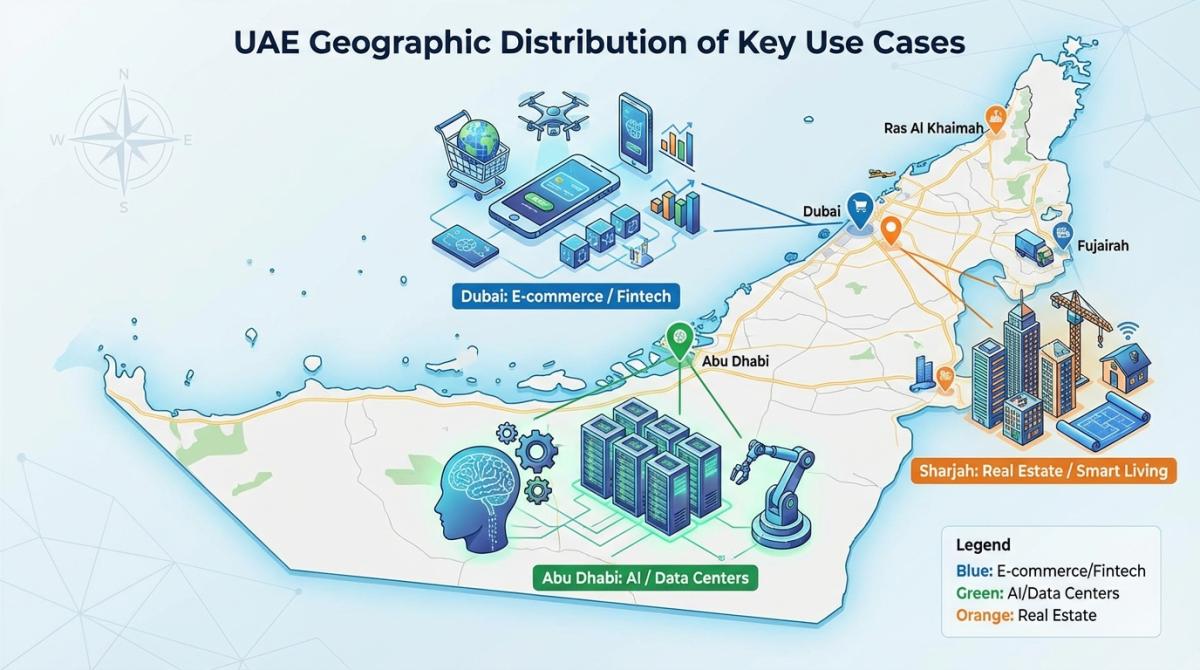
The global numbers back this up hard. The web scraping market is at $814 million heading toward $2.2 billion by 2033 — a 13.3% CAGR per Straits Research. And the UAE specifically? The country's data center market alone sits at $1.74 billion in 2026, projected to hit $3.86 billion by 2031 at a 17.3% CAGR according to Research and Markets. Abu Dhabi's G42 Stargate project is building 200MW of AI data center capacity this year.
This is not a country that's sleeping on data. Not even close.
What Is Web Scraping (And What Data Can You Extract?)
Web scraping is the process of using automated software to extract data from websites at scale. Instead of manually copying information from web pages one by one, a scraper visits thousands of pages in minutes, pulls the relevant data points, and delivers structured results you can immediately use for business intelligence, pricing analysis, or lead generation.
Okay now let me make that less textbook-y. Think of it this way. You need pricing data from 5,000 product listings on Noon. You could pay someone to visit each page and copy every price into a spreadsheet. Maybe they finish by next quarter if they don't quit first. Or you run a scraper and have all 5,000 prices in under an hour. Same data. Way less pain. And you can do it again tomorrow without anyone losing their mind.
Types of Data You Can Scrape
What surprises most people is how much you can actually pull from websites. Product prices, descriptions, stock availability from e-commerce platforms — that's the obvious one. But also property listings with full details from real estate sites. Business contact information including emails, phone numbers, and social profiles from Google Maps. Hotel rates across booking platforms. Reviews and customer sentiment. Financial data from stock exchanges.
Pretty much anything that's publicly visible on a website can be scraped. If you can see it in your browser, a scraper can grab it.
Web Scraping vs APIs vs Manual Collection
So you've got three options for collecting web data, and honestly, two of them have serious problems.
Manual collection works if you need like 50 contacts. Beyond that? Forget about it. Nobody wants that job and the data's outdated before you finish the first hundred entries. APIs are the official data feeds that platforms provide. Good in theory — but limited in practice. Google Maps API caps you at 120 results per query and bills you per request. For web scraping for data analysis at any real scale, that gets expensive fast. Web data extraction through scraping automates the whole thing. No caps on results, no per-request fees, works on basically any public website.
For UAE businesses dealing with platforms the size of Noon, Bayut, or Carrefour UAE — automated data collection through scraping is really the only option that makes practical sense.
5 High-Impact Web Scraping Use Cases in the UAE
Let's get into the specific stuff. How are UAE businesses actually using data scraping right now?
E-commerce Price Intelligence
This is the one everyone starts with. And for good reason. According to Actowiz Solutions, 81% of US retailers now use automated price scraping — way up from just 34% in 2020. UAE retailers are racing to catch up, and the smart ones already have.
Here's why it matters so much here specifically. Noon, Amazon.ae, Carrefour UAE — these platforms run dynamic pricing algorithms that adjust thousands of times per day based on demand, competitor prices, inventory, you name it. If you're selling on any of these platforms and you're not automatically monitoring competitor pricing, you're either charging too much (losing sales) or too little (leaving money on the table). Probably both at different times.
A decent web scraper monitors all of this in real time and feeds the data straight into your pricing engine. Done. No human needed.
Real Estate Market Analysis
The UAE real estate market moves fast. Like, really fast. Dubai, Abu Dhabi, and increasingly Sharjah — listings go up and come down constantly. Prices fluctuate based on government announcements, seasonal tourism, EXPO aftereffects, new metro lines... the list goes on.
Investors and real estate firms use scraping to track listing prices across Bayut, PropertyFinder, and Dubizzle in real time. Spot trends before they become obvious. Find undervalued neighborhoods. Monitor inventory levels. You can scrape Google Maps for business leads from real estate agencies across the Emirates and build targeted outreach lists without spending weeks on research. If you're specifically going after property professionals, real estate agent email lists give you a direct line to the people who actually sign checks.
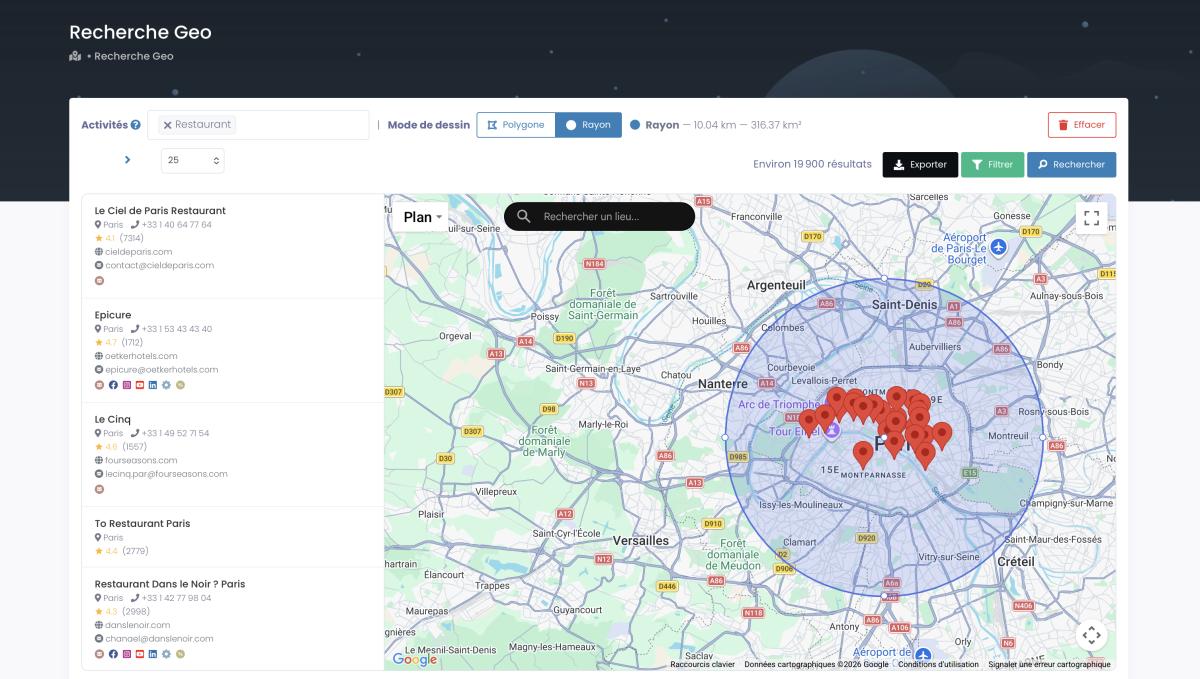
Here's a trick most people miss: you don't have to think in cities. Scrap.io's GeoSearch lets you draw a radius around a single point — say, 15 km around Downtown Dubai — and pull every agency inside it. Perfect for a catchment-area study when administrative boundaries don't match how your market actually behaves.
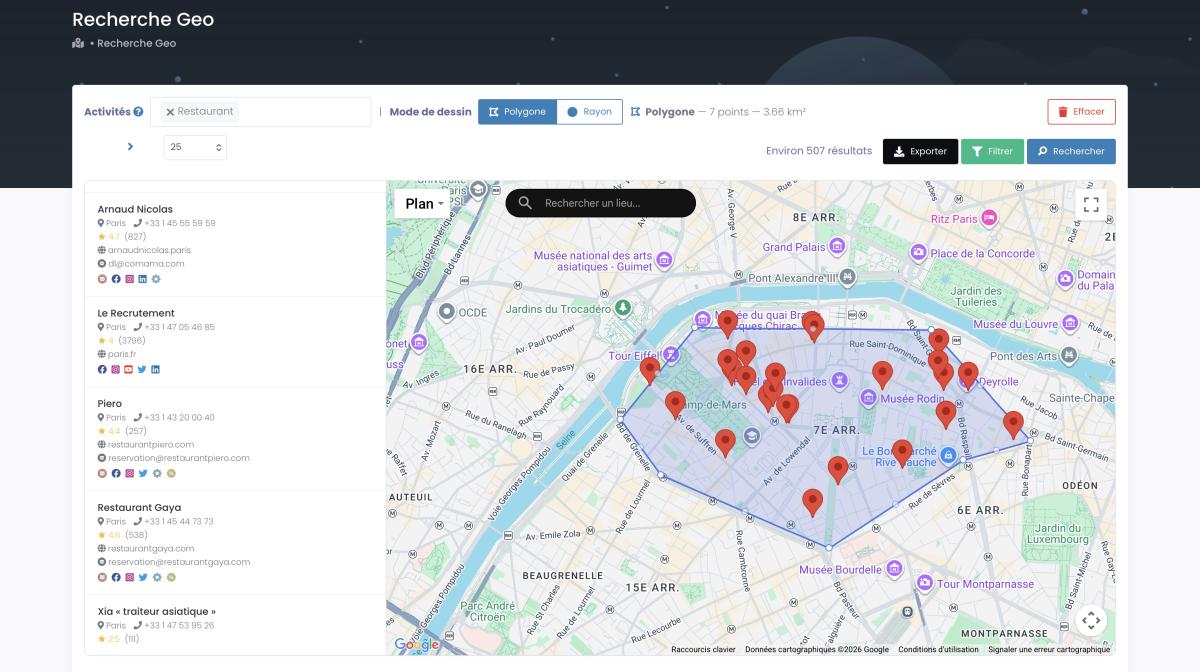
And when a circle is too blunt an instrument? Draw the exact shape by hand. The polygon mode lets you trace a specific neighborhood, a coastal strip, or a business district that no zip code will ever capture cleanly. Two clicks, no code.
Travel and Hospitality Monitoring
Dubai is one of the world's top tourist destinations. Millions of international visitors per year. Which means every hotel, airline, and travel agency is in a constant pricing war.
Data scraping from websites like Booking.com, Airbnb, Vrbo, and Tripadvisor lets hospitality businesses track competitor rates in real time. Rate parity violations, seasonal pricing gaps, competitive positioning — all stuff that used to require a full-time analyst now runs on autopilot. If you're selling B2B services to hotels, fresh contact data matters a lot. Take a look at hotel email marketing lists to see what targeted hospitality outreach actually looks like.
Financial Data and Fintech Intelligence
Abu Dhabi's fintech scene is exploding. Between the DFM and ADX, there's a ton of publicly available financial data being generated daily. Investment firms and fintech startups scrape financial reports, stock movements, earnings calls, and market news to get an edge.
BrowserCat's 2024 report found that 65% of enterprises already use web scraping to feed AI and machine learning projects. In a country where AI investment is literally a national priority, scraping is what keeps those models trained on fresh data. Algorithmic trading, credit risk assessment, market sentiment analysis — it all starts with scraping.
Local Business Lead Generation with Google Maps
Alright, this is where things get immediately actionable. And honestly, it's probably the use case most UAE businesses should start with.
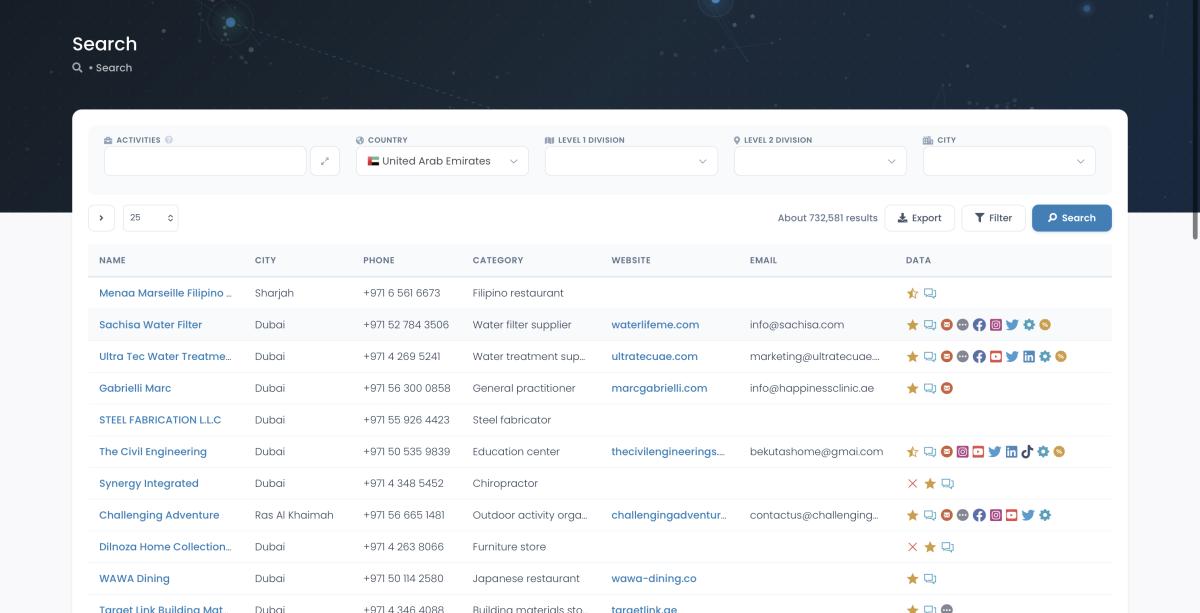
Google Maps has data on millions of UAE businesses. Names, addresses, phone numbers, websites, reviews, ratings, hours — all right there. But trying to extract this manually? I once watched a colleague spend three days building a list of 200 restaurants in Dubai. Three days. For 200 contacts. Half of which were wrong by the time he finished.
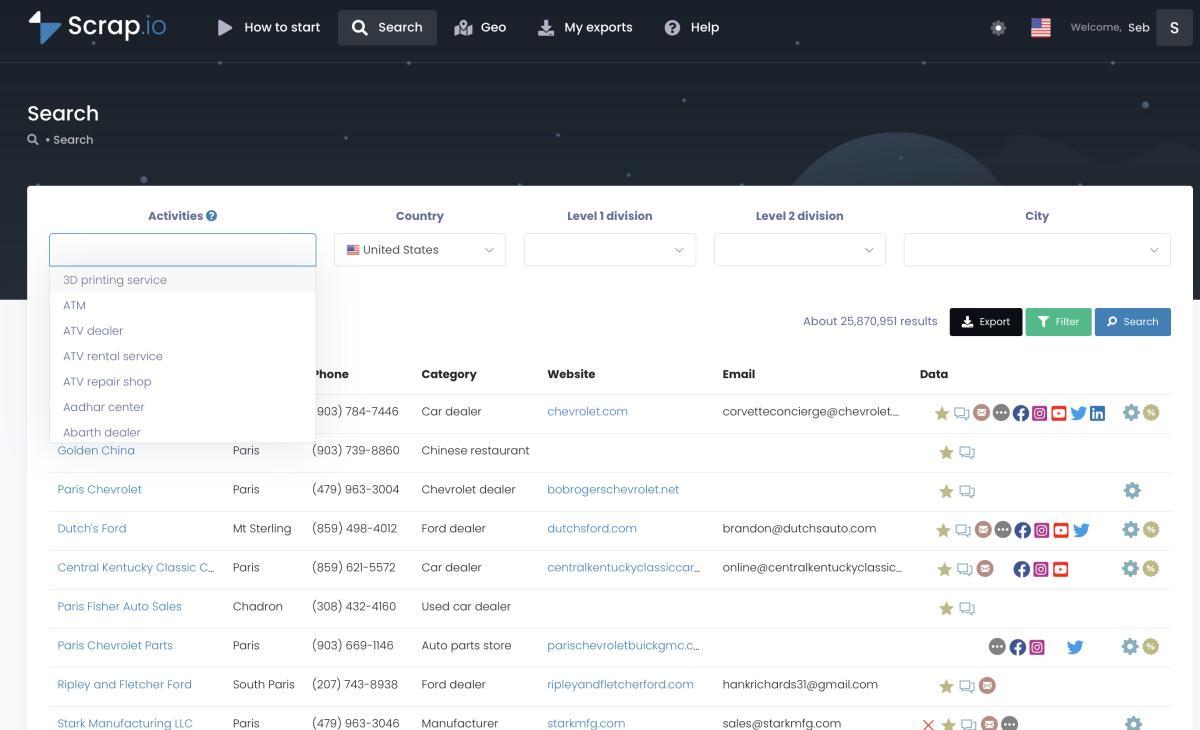
💡 Platforms like Scrap.io let you extract business contacts from Google Maps across the UAE — emails, phone numbers, social media profiles, website technologies, the whole thing. Pick a business category, pick a location, set your filters, and get a clean CSV or Excel file in minutes. Not days. Minutes.
💡 The UAE, by the numbers (Scrap.io, July 2026)
Want to know exactly what's sitting there waiting for you? Right now Scrap.io references 667,285 businesses across the Emirates. Of those, 255,675 have a website (~38%) and 176,806 expose a usable email address (~26%). That's over 176,000 direct B2B contacts you can filter before you export a single row — so you only ever pay for the leads you can actually use. Not a frozen database from last year. Real-time data, pulled the moment you hit export.
Want to see how country-level extraction actually works — the exact move you'd use to pull the whole UAE or a filtered slice of it? This one's worth 5 minutes.
Video: How to Scrape Local Leads at the Country Level?
🚀 Try it on the UAE market. Spin up a free 7-day trial, grab your first 100 leads, and pull a live segment from those 176,806 email-ready Emirates businesses. Filter for the ones with a website but no Instagram, or a great location but a weak review score — whatever fits your pitch. Start with 100 free leads →
Real Companies Scraping UAE Data Right Now
I want to be clear: this isn't hypothetical. These are five companies doing web scraping in the UAE market right now, with documented results.
Actowiz Solutions — Cross-Platform Price Intelligence
Actowiz built an AI-powered price monitoring system that scrapes both Noon and Amazon.ae at the same time. For one Dubai electronics reseller, they found 63 SKUs where the price gap between platforms exceeded AED 25. The reseller recovered 14% in margin just by adjusting pricing based on this data. Fourteen percent. That's the kind of money that was just sitting there, invisible, until someone automated the data collection.
Food Data Scrape — Skincare Brand Price Enforcement
A skincare brand in the UAE needed to enforce its MAP (Minimum Advertised Price) policy across Noon and Amazon.ae. Manually checking? Way too slow. Violations slipped through constantly. After implementing automated price scraping through Food Data Scrape, they saw 17% better sales consistency in just 30 days. That's what happens when you catch pricing violations in hours instead of weeks.
Apify — Real Estate Data at Scale
Apify built dedicated scrapers for Bayut, PropertyFinder, and Dubizzle — basically the big three of UAE real estate. Their tools extract listing data in 4-9 seconds per property and cover millions of listings across Dubai, Abu Dhabi, and Sharjah. Real estate agencies and investors use this for everything from market analysis to building lead lists. The speed difference versus manual research is honestly ridiculous.
PromptCloud — Enterprise E-commerce Monitoring
PromptCloud runs managed scraping services covering the major UAE platforms — Noon, Amazon UAE, Carrefour, Talabat. They deliver real-time data feeds for competitor benchmarking, sentiment analysis, pricing optimization. Their whole model is Data-as-a-Service: you get clean, structured data without touching any scraping infrastructure yourself. For companies that don't want to build anything in-house, it's pretty appealing.
SECL Group — Travel Price Intelligence
A travel startup worked with SECL Group to build a pricing platform that scrapes hotel and apartment rates from Booking.com, Airbnb, Vrbo, and Tripadvisor simultaneously. The result is a rate intelligence dashboard that pulls from multiple sources in one view. SECL operates across multiple regions including the Middle East, so the methodology is directly applicable to UAE hospitality. You know those comparison sites that always seem to know the cheapest rate? This is how they work behind the scenes.
🚀 Want to build something similar targeting UAE businesses? Start with 100 free leads on Scrap.io and see what real-time data does for your outreach. It's the same engine those 667,285 Emirates listings run on — fresh contacts beat stale spreadsheets every single time.
Best Web Scraping Tools for UAE Businesses in 2026
Okay so you're sold on web scraping. The next question everyone asks: which data scraping tools should I actually use? Fair enough. Let me break down the main options.
| Tool | Type | Starting Price | No-Code? | Best For |
|---|---|---|---|---|
| Scrap.io | SaaS (Google Maps) | $49/month | Yes | Local lead gen, B2B prospecting |
| Apify | Cloud platform | Pay-per-use | Partial | Developers, custom scrapers |
| PromptCloud | Managed service | Custom pricing | Yes | Enterprise, e-commerce |
| Octoparse | Desktop + Cloud | $89/month | Yes | Visual scraping, no-code |
| Bright Data | Infrastructure | $500+/month | Partial | Enterprise, proxy networks |
Why am I highlighting Scrap.io specifically for the UAE market? Because it's built around Google Maps data extraction — and Google Maps is where pretty much every UAE business lives online. You get emails, phone numbers, social profiles, website technologies, review data across 4,000+ business categories in 195 countries. But the filtering is what makes it genuinely different from everything else.
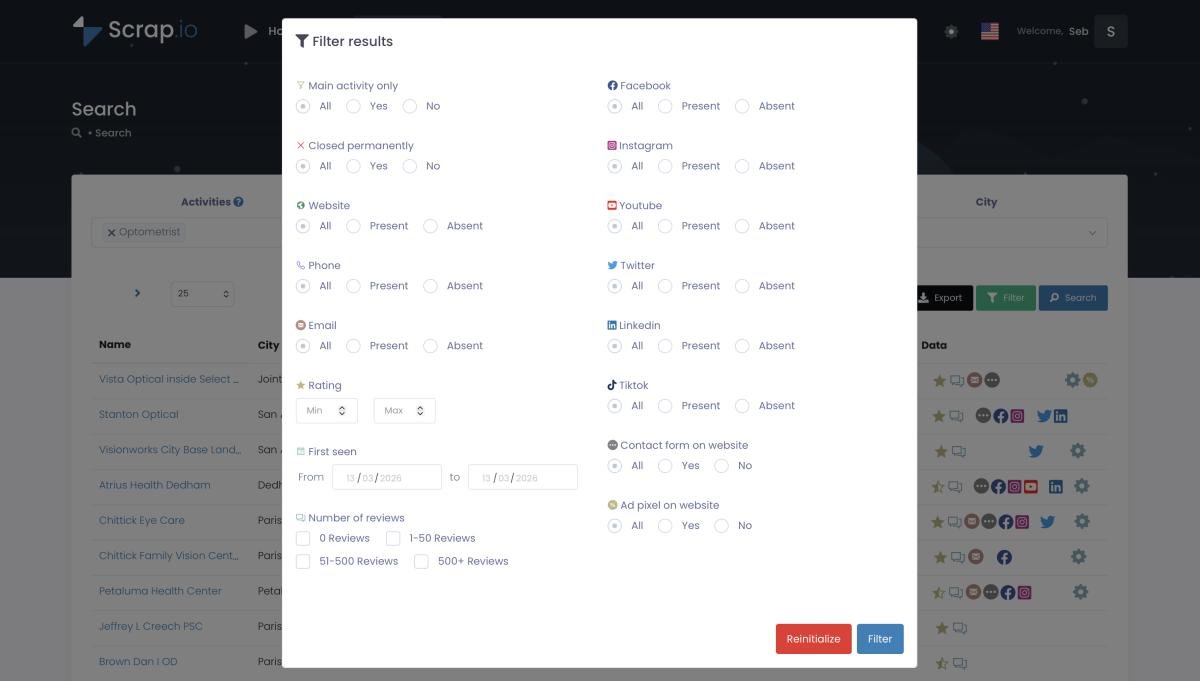
Want businesses with bad reviews who might need help? Businesses with websites but no Instagram? Businesses with emails but no Facebook page? You can filter for all of that before you export a single row. And that's not a nice-to-have — it's the difference between paying for 176,000 usable email contacts and paying for 667,000 rows where two-thirds are dead weight. The filters run before the credits do. Zero waste. For B2B prospecting in the UAE, I haven't found anything faster.
And if you want to go full autopilot, you can automate lead generation with Make.com and Scrap.io's API. Build the workflow once, get fresh leads dropped into your CRM on a schedule. Some people also pair this with a data scraping Chrome extension like Maps Connect for quick individual lookups — then use the full platform when they need to extract at scale.
AI-Powered Scraping: What's Changed
AI is transforming web scraping more than most people realize. Old-school scrapers work great until a website changes literally anything about its layout. Then they break. Someone has to fix them. The site changes again. They break again. It's an incredibly annoying cycle.
AI-powered web scrapers are a completely different animal. They understand what they're looking at on a page instead of just following hardcoded CSS selectors. Price looks like a price regardless of where it sits in the HTML. According to Scrapingdog's 2025 research, AI scrapers deliver 30-40% faster extraction speeds and hit up to 99.5% accuracy. That's a massive leap.
The really wild part is what happens when you point an AI agent straight at your data source. Instead of clicking through an interface, you just... ask. "Find me every marketing agency in Dubai with a website but no LinkedIn." Watch this in action:
Video: How to Scrape Local Leads with Claude & Vibe Prospecting?
For a much deeper dive into AI data scraper tools and how they stack up against traditional approaches, we've written a whole guide on it. Worth reading if you're evaluating tools right now.
No-Code vs Developer Tools
Let's be real. Not every business in the UAE has Python developers on staff. Most don't. And that's completely fine.
No-code data scraping tools like Scrap.io and Octoparse exist specifically for people who want results without writing a single line of code. You point at what you want, you click, you get your data. Done. Developer tools like Apify and Scrapy give you way more flexibility for custom scraping jobs — JavaScript-heavy sites, complex multi-step extractions, that kind of thing. But for 90% of B2B prospecting and lead generation use cases, no-code gets you there faster and cheaper.
The pushback I get most often? "My team isn't technical enough." Look, if you can type a search query into Google, you can use Scrap.io. That's not an exaggeration. You type a business category, pick a location, hit search. Your file's ready in minutes. There's no learning curve to speak of.
Is Web Scraping Legal in the UAE? PDPL Compliance Guide
Alright, let's deal with this one head-on because everyone asks it. Is web scraping legal in the UAE?
Short answer: yes. Scraping publicly available data is legal. But — and this is important — there are rules. You can't just go wild.
The UAE's Personal Data Protection Law (PDPL), established under Federal Decree-Law No. 45 of 2021, is the framework you need to know. The PDPL applies to the processing of personal data. Business information that companies publish publicly — their name, address, phone number on Google Maps, product prices on Noon — that's a different category than personal data. You're on solid ground scraping that stuff.
But the penalties for getting it wrong are no joke: AED 50,000 to AED 5 million. So treat compliance seriously even if you believe you're in the clear.
We've covered the legality of scraping Google Maps in detail in a separate piece if you want the full breakdown.
PDPL vs GDPR: Key Differences
If you've dealt with GDPR in Europe, the PDPL will feel familiar-ish. But there are differences that matter. The PDPL has a tighter scope — focused on data processed within or from the UAE. Consent rules aren't identical. Penalties cap at AED 5 million versus GDPR's 4% of global revenue (which can be astronomically higher for big companies). And the PDPL is still pretty new, so enforcement patterns are still forming. We don't have decades of case law like Europe does.
Bottom line: scraping publicly available business data in the UAE is legal. Scraping personal data without consent is not. Know the difference and you'll be fine.
Ethical Scraping Best Practices
Whether you're scraping data from UAE websites or anywhere else, a few rules keep you out of trouble. Respect robots.txt files. Implement rate limiting — don't blast servers with 10,000 requests per second. Only scrape public data. Never go behind login walls. Respect Terms of Service where practical. And don't touch personal data without explicit consent under the PDPL.
To put things in perspective, F5 Labs reported in 2026 that 10.2% of all global web traffic comes from scrapers — and that's after bot mitigation. It's happening everywhere, all the time. The companies doing it responsibly are the ones building real competitive advantages. The cowboys who ignore compliance? They're the ones giving the whole industry a bad name.
FAQ: Web Scraping for Business in the UAE
Is web scraping legal in the UAE?
Yes, scraping publicly available data is legal in the UAE. The Personal Data Protection Law (PDPL, Federal Decree-Law No. 45/2021) kicks in when you're processing personal data. Stick to public business data, respect website Terms of Service, follow robots.txt, implement rate limiting, and never scrape behind login walls. Do all that and you're good.
Which UAE companies use web scraping?
Tons of them. E-commerce businesses monitoring prices on Noon and Amazon.ae. Real estate firms pulling listings from Bayut and PropertyFinder. Travel companies tracking hotel rates across booking platforms. Financial firms scraping market data from the DFM and ADX. If data matters to the business — and in 2026 it always does — web scraping is likely involved.
What are the risks of web scraping?
The main ones: getting your IP blocked, legal problems if you scrape personal data without consent, data quality issues with sites that use heavy JavaScript rendering, and reputation damage if you're not following ethical practices. Mitigate all of this with rotating proxies, headless browsers, proper PDPL compliance, and respectful rate limiting. None of these are hard problems to solve — they just require paying attention.
Can I scrape data from Noon, Bayut, and other UAE platforms?
Public product listings, prices, and reviews? Generally yes. But each platform has its own Terms of Service that may have specific restrictions. Use ethical practices: respect rate limits, don't disguise your bot as a real user, and never try to scrape behind authentication. The key word here is "public" — if anyone can see it without logging in, you're usually in safe territory.
What's the best web scraping tool for UAE businesses?
Depends entirely on what you need. If you don't code and want leads fast: Scrap.io or Octoparse. If you're a developer building custom scrapers: Apify or Scrapy. If you need enterprise-grade managed services: PromptCloud or Bright Data. For Google Maps business data specifically — emails, phone numbers, social profiles across 195 countries with serious filtering options — Scrap.io is hard to beat. For context, it already references 176,806 email-ready businesses in the UAE alone, all filterable before you spend a credit.
Stop Reading, Start Scraping
Look, the UAE is sitting on one of the richest data environments in the world. $12.3 billion in e-commerce spending. A $1.74 billion data center market that's still growing. Platforms like Noon, Bayut, and Talabat generating massive amounts of publicly available data every single day. And 81% of retailers globally are already automating their data collection through scraping.
You already know this is where things are headed. The question is whether you start now or keep watching your competitors get there first.
Whether you're tracking pricing on Noon and Amazon.ae, watching the real estate market on Bayut, or building B2B lead lists from Google Maps — web scraping turns raw web data into business intelligence you can actually act on. It's not theoretical. The examples in this guide prove that.
🚀 Try Scrap.io free for 7 days and get 100 verified UAE business leads. Pull them from those 176,806 email-ready Emirates businesses, filtered to exactly who you want, updated in real time — instead of contact data that went stale six months ago. Start your free trial →
The data's there. The tools are there. Only thing missing is you hitting the button and getting started. Honestly, if you've read this far and you're still on the fence — just try the free trial. Worst case you waste 10 minutes. Best case you find your next 50 customers. Not a bad trade-off.
Generate a list of restaurant with Scrap.io