

Last month a sales rep at a cardiac catheter startup told me he'd spent $2,400 on a cardiologist email list from a "premium provider." I asked how the campaign went. He laughed. The kind of laugh that means nothing was funny.
42% bounce rate. Three spam complaints. One angry reply from a retired pediatrician who hadn't practiced cardiology since 2019.
That's $2,400 for garbage data. And here's what really gets me. This is the norm, not the exception. The cardiac device and pharma industry generates billions in revenue, yet most B2B teams are prospecting with contact lists that were stale before they even hit "purchase." Ask around and the same complaint surfaces everywhere: poor data quality is the number-one reason B2B campaigns underperform. Roughly two-thirds of marketers name it as their top killer. Two-thirds. Let that breathe for a second.
This guide is the antidote. Real data from Scrap.io's live database: 88,030 cardiologists indexed across the US right now. Real campaign examples. And a no-BS breakdown of what actually works when you're trying to reach cardiac specialists in 2026.
Video: How to Find Someone's Email Address (Hunter io vs Scrap io)
Table of Contents
- Why Traditional Cardiologist Email Lists Are Failing
- Understanding the US Cardiology Market Landscape
- Building Your Cardiologist Email List with Scrap.io
- Cardiologist Email List Segmentation Strategies
- B2B Use Cases for Cardiologist Email Lists
- Email Marketing Best Practices for Cardiologists
- Cardiologist Email List Alternatives and Comparisons
- Cardiologist Email List Providers Comparison (2026)
- Getting Started with Your Cardiologist Email Campaign
- Frequently Asked Questions
Why Traditional Cardiologist Email Lists Are Failing
Here's an uncomfortable truth that nobody selling you a cardiology email list wants to admit: the entire business model of static healthcare databases is fundamentally broken.
The Problem with Outdated Healthcare Databases
Traditional providers (InfoGlobalData, LakeB2B, MedicoReach) compile their lists once, maybe twice a year. They scrape NPI directories, buy data from third parties, slap a "verified" label on it, and sell the same file to 50 different buyers.
The problem? Cardiologists move. They change hospitals. They join group practices, leave group practices, retire. The AAMC projects a shortage of 3,010 cardiologists in 2026, growing to 7,080 by 2034. That means the workforce is churning constantly: doctors relocating to fill gaps, practices consolidating, new grads entering markets they never planned on.
Your "premium" cardiologist email database from six months ago? It's already fiction.
And the pricing is borderline insane. $700 minimum for a basic list. $2,000–$5,000 for anything with decent segmentation. For data that starts decaying the moment you download it. (Trust me, we've all tried that.)
Don't take my word for the frustration. On r/AskMarketing, one sender put the whole problem into a single question: "what could be a good email verification/validation process for near 99% email reliability? many of mine bounce even after email verification tools" (r/AskMarketing). Read that again. Even after running a verifier, the addresses still bounce. That's what a dead list does. No tool resurrects contacts that don't exist anymore. The source has to be alive in the first place.
Real-Time Data vs. Static Lists
The difference isn't subtle. It's structural. A static cardiologist mailing list is a snapshot. A photograph. The moment it's taken, reality starts diverging from what's on the page.
Real-time extraction pulls contact information from live sources (Google Maps business listings, practice websites, public directories) at the moment you need it. Not last quarter. Not "updated monthly." Right now.
Think about what that means practically. A cardiologist opens a new private practice in Austin, updates their Google Business Profile on Monday. By Tuesday, that contact is available in a real-time system. In a static database? You'll see it in the next quarterly refresh. Maybe. If someone at the vendor bothers to re-scrape that ZIP code.
Or (and this actually happens more than you'd think) you won't see it at all, because the vendor only updates their "top markets" and Austin didn't make the cut.
Understanding the US Cardiology Market Landscape
Before you build a targeted cardiologist contact list, you need to understand what you're walking into. The US cardiology market isn't just big. It's enormous and growing fast, and the competition for cardiologist attention is getting fierce. Check out our doctor email list guide for the broader healthcare picture.
88,030 Cardiologists in the US: Geographic Distribution
How many cardiologists are in the US? Scrap.io's live database indexes 88,030 cardiology practices across the United States as of September 2026. Of those, 17,534 have a verified email address publicly available through their Google Maps listing or practice website. That's your real, reachable starting universe, not a self-reported vendor count.
That's 19.9% with directly reachable email. Sounds low? It's actually standard for medical specialties. Cardiologists are notoriously protective of their contact info. But 17,534 verified contacts is still a massive starting point, and way more than most static providers can actually deliver once you subtract the bounces and dead addresses.
The distribution is wildly uneven, though. New York, California, Texas, Florida, and Pennsylvania account for a disproportionate chunk. Meanwhile...
The Cardiology Market Boom: $59.5B+ (CAGR 7.9%)
According to BioSpace and Nova One Advisor, the US cardiology market hit $59.51 billion in 2024 and is projected to reach $117.97 billion by 2033: a compound annual growth rate of 7.9%. That's not incremental growth. That's a market doubling in under a decade.
Zoom into hardware specifically and the picture is just as hot. The US cardiovascular devices market sits around $24.97 billion in 2026, up from roughly $23.33 billion in 2025, growing at about 7% annually through 2031 (Research and Markets / Mordor Intelligence). Stents, catheters, pacemakers, monitoring gear: every one of those categories is chasing the same specialists.
Why the boom? The American Heart Association reports that 122 million+ Americans now live with some form of cardiovascular disease. Heart disease remains the leading cause of death in the US. And the aging baby boomer population is pushing demand for cardiac care through the roof.
For B2B companies (device manufacturers, pharma, health IT) this is a gold rush. But gold rushes get crowded. Every cardiac device maker, every cardiovascular drug company, every EHR vendor is fighting for the same cardiologist inboxes. Which is exactly why your data quality matters more than your email copy. More than your offer. More than your subject line.
Dead wrong to think otherwise.
Regional Disparities: 46% Counties No Cardiologist
Here's the stat that should make every B2B strategist sit up. The AAMC reports that 46.3% of US counties have zero cardiologists. Not "few." Zero.
That's not just a public health crisis. It's a targeting goldmine if you know how to use it. The cardiologists who DO serve those underserved regions are overwhelmed. They need devices, they need software, they need support. And they're not getting 47 vendor emails a day like their colleagues at Cleveland Clinic.
If you're building a heart doctor email database for outreach, the smart play isn't necessarily the top metro areas where every competitor is already hammering the same 500 cardiologists. Sometimes it's the mid-market cities and rural hubs where one practice serves three counties.
Search cardiologists in your area free on Scrap.io. See real-time data for 88,030+ US cardiology practices, filtered by location, email availability, reviews, and more. Filters apply before you spend a credit, so you only pay for contacts you can actually use. Explore the map now.
Building Your Cardiologist Email List with Scrap.io
OK but concretely, what do I do? Fair question. Let's walk through how to actually build a verified cardiologist contacts list that doesn't suck.
Real-Time Data Extraction from Google Maps
Scrap.io works by indexing Google Maps in real time. The platform covers 225,676,406 establishments across 195 countries and 4,000+ categories, cardiology being one of them. When you search for cardiologists in, say, Houston, you're not querying a database that was built last quarter. You're pulling live data from what's actually on Google Maps right now.
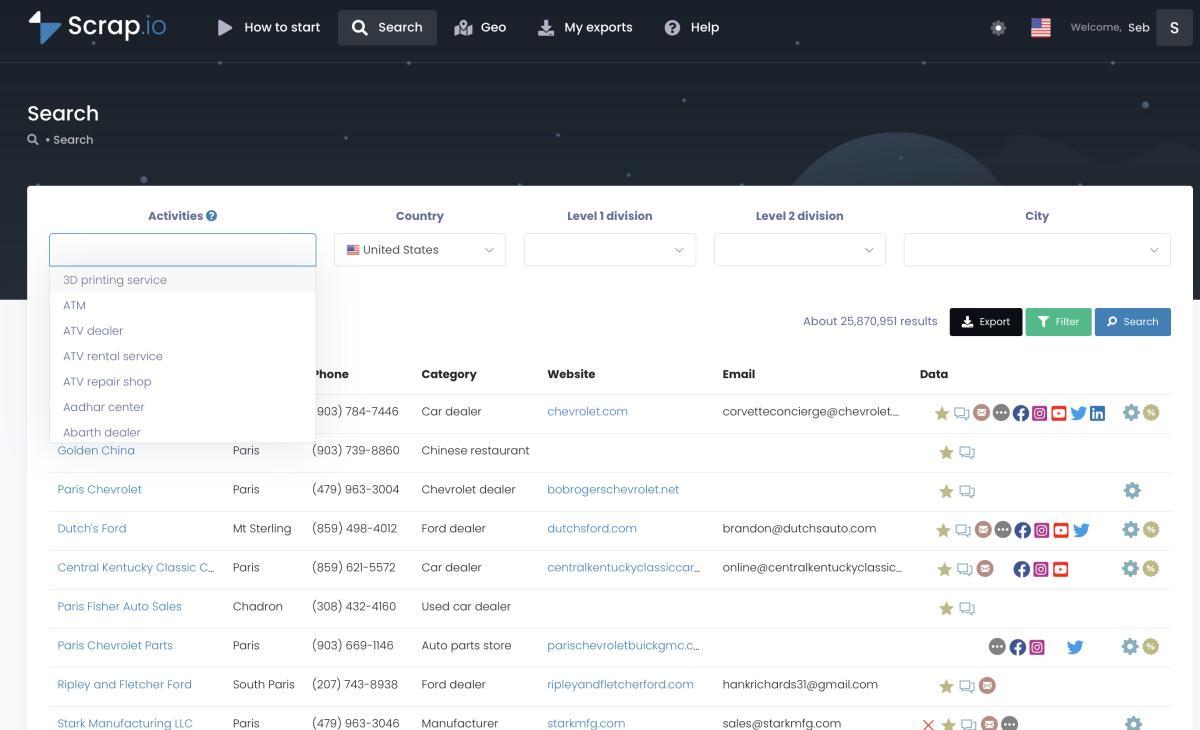
The process is simple, and it solves the question of how to find cardiologist email addresses without buying stale lists or manually scraping directories. You can learn how to find emails on Google Maps in detail, but here's the short version: search your target category (cardiologist), set your location, apply filters, export. That's it.
One credit equals one business exported. Filters are applied BEFORE credits are consumed, so you're not paying for contacts you don't want. That's a crucial difference from bulk list providers where you buy the whole package and throw out what's irrelevant.
Video: Finding Clients Through Google Maps Filters
Advanced Filtering for Precise Targeting
This is where things get interesting. Scrap.io doesn't just dump 88,030 cardiologists into a CSV and wish you luck. The filtering system lets you narrow down to exactly who you want before you spend a single credit:
- Has email: Only export cardiologists with a verified email address
- Has website: Filter for practices with an online presence
- Review count / rating: Target established practices (high reviews) or newer ones (low reviews, potentially more receptive to new products)
- Geographic precision: City, state, ZIP code, or custom radius
- Has phone number: For multichannel outreach
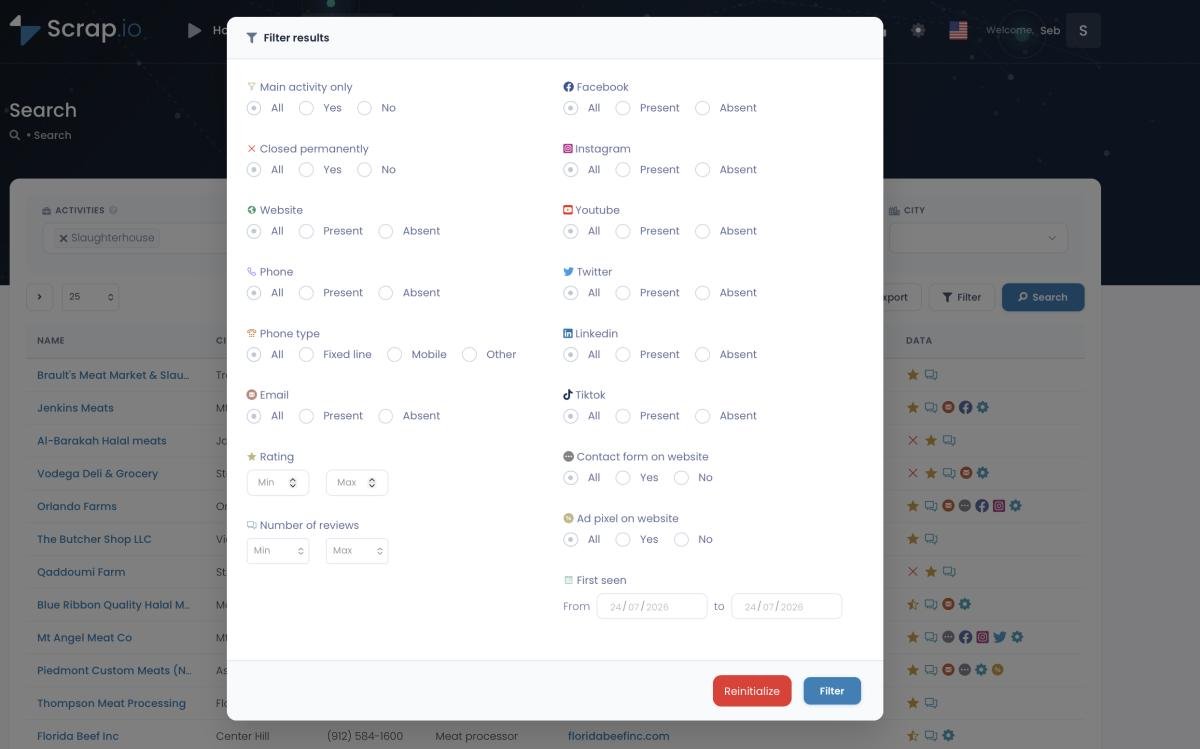
Want only interventional cardiologist email list contacts in the Midwest with 50+ Google reviews and a practice website? Done. Want a cardiac specialist email list of small private practices in underserved Texas counties? Also done. The filters are there to make your list relevant, not just large. (Spoiler: relevance beats volume every single time.)
GDPR-Compliant Lead Generation
A quick note on compliance, because this matters and most guides skip it entirely. Scrap.io extracts only publicly available business data from Google Maps. This is data that businesses themselves have chosen to publish. No scraping of private databases. No purchasing of patient data. No sketchy third-party data brokers.
For CAN-SPAM compliance (the US standard), B2B emails to business addresses are permitted as long as you include your physical address, a clear unsubscribe mechanism, and truthful headers. GDPR applies if you're targeting EU-based cardiologists. Legitimate interest typically covers B2B prospecting, but you need to document your basis.
Whatever. The point is: public data, proper opt-out, honest sender info. Not complicated. Just do it right.
First 100 leads free. Try it now. Start building your cardiologist email list with real-time Google Maps data. No stale databases, no wasted budget, and you filter to email-present contacts before a single credit is spent. Get your free trial.
Cardiologist Email List Segmentation Strategies
Blasting the same email to 17,000 cardiologists is lazy. And it doesn't work. "Segmented physician datasets = 3.2x higher engagement" according to Martal Group's 2026 healthcare benchmarks. Three-point-two times. That's the difference between a campaign that generates pipeline and one that generates spam complaints.
When building your physicians email lists, segmentation is everything. Here's how to slice your cardiology email marketing list.
By Specialty (Interventional, Electrophysiology, Heart Failure)
Not all cardiologists are the same. Obviously. But it's surprising how many B2B campaigns treat them like a monolith. The major subspecialties that matter for targeting:
- Interventional cardiologists: Perform catheter-based procedures (stents, angioplasty, TAVR). Your audience if you sell catheters, guidewires, stents, or cath lab equipment.
- Electrophysiologists: Focus on heart rhythm disorders. Relevant for pacemaker companies, ablation technology, cardiac monitoring devices.
- Heart failure specialists: Manage chronic conditions. Key targets for pharmaceutical companies (think Novartis with Entresto at $6.4B revenue) and LVAD/heart pump manufacturers.
- General/non-invasive cardiologists: Diagnostic-focused. Interested in imaging equipment, stress testing systems, ECG/EKG machines.
- Pediatric cardiologists: Niche but high-value for companies with pediatric-specific devices.
A pitch for an electrophysiology mapping system sent to a general cardiologist who does echo and stress tests? That's not prospecting. That's spam. If you also sell adjacent to cardiology, the same discipline applies to a neurologist email list: subspecialty precision beats raw volume every time.
By Practice Type (Hospital-Based vs. Private Practice)
This distinction changes everything about your approach. Hospital-based cardiologists usually aren't the decision-maker for purchasing. That's the department head or a procurement committee. Private practice cardiologists? They might be the doctor, the CEO, and the purchasing agent all at once.
Scrap.io's data includes practice details pulled directly from Google Maps, which lets you identify solo practitioners, group practices, and hospital-affiliated offices. If your product sells into institutions, pair this guide with our hospital email lists playbook and target the admin layer directly. The messaging, the offer, even the pricing structure you present should differ based on this segmentation.
By Geographic Location and Market Density
Remember that 46.3% stat, nearly half of US counties with no cardiologist? Geographic segmentation isn't just about personalizing your greeting line with a city name. It's about understanding market dynamics.
High-density markets (Manhattan, LA, Chicago): cardiologists are busy, overwhelmed with vendor emails, and harder to reach. But deal sizes are often larger. Low-density markets (rural Midwest, Appalachia, parts of the South): less competition for attention, cardiologists wearing more hats, potentially faster sales cycles but smaller deal sizes.
Build separate cadences for each. Seriously.
B2B Use Cases for Cardiologist Email Lists
Theory is nice. Let's talk about who actually uses a cardiologist email list and what results look like in the real world.
Medical Device Companies Targeting Cardiac Specialists
This is the big one. Medical device companies represent the largest chunk of B2B spend targeting cardiologists, and for good reason. Boston Scientific ($14.2B revenue) sells stents, catheters, heart valves, and structural heart devices directly to interventional cardiologists and cath labs. Abbott competes with pacemakers, ICDs, and diagnostic platforms.
But it's not just the giants. Smaller device companies need cardiologist leads for medical devices even more desperately, because they don't have 500-person sales forces doing door-to-door hospital visits.
Case in point: Kuno Creative documented a campaign for Transonic, a medical device manufacturer that used targeted eBook content to reach cardiac specialists. Results: 17,800 clicks, 200 qualified contacts, and $25,000 in attributed revenue. From a single content campaign backed by a quality list.
And another medical device company working with Kuno generated 746 leads at a 6% click-through rate using content marketing paired with demand generation. Six percent CTR in healthcare. That's huge.
Pharmaceutical Companies Launching Cardiovascular Drugs
Pharma is a different animal. When Novartis pushes Entresto (sacubitril/valsartan, $6.4B annual revenue), they don't just need any cardiologists. They need heart failure specialists who are actively managing chronic HF patients and have prescribing authority.
A broad list of doctors emails won't cut it here. You need segmentation by subspecialty, practice setting, and even patient volume. A heart failure specialist at a major academic center manages fundamentally different patients than a general cardiologist in suburban practice who sees the occasional HF case.
Email marketing for pharma also runs into additional regulatory constraints: FDA promotional guidelines, off-label communication rules, fair balance requirements. But the core principle holds: better data means better targeting means better outcomes. Oh, and also, the 41% open rate for healthcare email campaigns (Martal Group 2026) only happens when you're sending relevant content to the right subspecialty. Blast a generic message and watch that number crater.
Healthcare Technology Startups
This is where I see the most wasted money. Health tech startups (remote patient monitoring platforms, AI-powered ECG analysis, telehealth solutions for cardiology) have great products and terrible go-to-market data.
They search for a free cardiologist email list (doesn't exist, at least not one worth using), download some questionable PDF from a random website (please don't do this), and blast their entire seed-round budget on emails that bounce. Try doing that manually with 10,000 contacts. I'll wait.
The smart health tech startups are using tools like Scrap.io to build targeted, fresh lists focused on specific practice types, say, private cardiology practices with 4+ star Google ratings and a website (indicating tech-savviness). That's a fundamentally different audience than a hospital-based academic cardiologist who won't even read vendor emails.
Email Marketing Best Practices for Cardiologists
You've got your list. Now what? Because a great cardiologist email list paired with bad email practices is like putting premium fuel in a car with no engine.
Subject Lines That Get Opened by Busy Physicians
Cardiologists are among the busiest physicians in medicine. They're not reading your email during a leisurely morning coffee. They're scanning their inbox between procedures, during lunch, or at 6 AM before rounds. Your subject line has about 1.5 seconds to earn a click.
What works:
- Specificity over cleverness: "New data: 23% reduction in cath lab turnaround time" beats "Revolutionize Your Practice!" every time
- Peer references: "What Dr. Mehta at Mount Sinai changed about his TAVR workflow" (social proof from peers crushes generic benefits)
- Clinical relevance: Lead with the clinical problem, not your product. "Managing refractory angina in 2026" beats "Introducing the CardioTech 3000"
And for the love of everything, do not use all caps. Do not use "URGENT." Do not use "FREE" in the subject line when emailing doctors. They'll delete it before the preview text loads.
Compliance Requirements for Healthcare Email Marketing
This isn't optional. And getting it wrong can cost you more than a campaign. It can cost you your domain reputation permanently. Make sure you understand email authentication requirements for 2025+ (SPF, DKIM, DMARC).
The basics for how to email cardiologists for B2B:
- CAN-SPAM: Physical address in every email, clear unsubscribe link (processed within 10 days), no deceptive headers or subject lines
- GDPR: If targeting EU cardiologists, you need a lawful basis (legitimate interest for B2B is usually sufficient) and must honor data subject access requests
- CCPA: California cardiologists have the right to know what data you hold and request deletion
- HIPAA: Does NOT apply to marketing emails to physicians at their business addresses. HIPAA governs patient data, not business contact info. But people confuse this constantly.
Anyway, just set up your authentication protocols, include an unsubscribe link, and don't lie about who you are. It's not rocket science. It's barely even regular science.
Measuring Success: KPIs for Cardiology Outreach
Here's what good looks like when you're using a quality cardiologist contact database and following best practices:
- Open rate: 41% is the healthcare email benchmark (Martal Group 2026). If you're below 25%, your list quality or subject lines need work.
- Click-through rate: 3–6% for well-targeted healthcare campaigns. The medical device company case study hit 6% CTR.
- Bounce rate: Under 5% with fresh data. Generic lists routinely run 12–18% (two to three times worse for healthcare sellers). Above 20%? Stop sending immediately. You're destroying your sender reputation.
- ROI: Email marketing delivers an average of $36 for every $1 spent (DMA/Litmus). In healthcare B2B, where deal sizes are often $10K–$500K+, even modest conversion rates produce massive returns.
And don't forget multichannel. "Email + LinkedIn + phone = +28% conversions" (Martal Group 2026). Email is the starting point, not the finish line.
Cardiologist Email List Alternatives and Comparisons
I'd be doing you a disservice if I only talked about Scrap.io. So let's look at the field honestly. Check our broader healthcare email list comparison for more context, plus specialized guides for ophthalmologist email and dermatologist email list databases.
Scrap.io vs. Traditional Providers
Traditional providers like InfoGlobalData and LakeB2B have been in the game for years. They have established processes, dedicated data teams, and... that's about where the advantages end.
The fundamental issue is the business model. They compile data, package it, and sell it. You're buying a product that was manufactured weeks or months ago. And you're buying the same product as your competitors.
Scrap.io isn't a database vendor. It's an extraction tool. You pull what you need, when you need it, from the world's largest business directory (Google Maps). Nobody else gets "your" list because nobody else ran your exact search with your exact filters at your exact moment.
Cost Analysis: $35/mo vs. $700+
Let's do the math. Because the math is wild.
Traditional cardiologist email list provider: $700–$5,000 for a one-time download. Let's say 10,000 contacts at $1,500. That's $0.15 per contact. Sounds reasonable until you realize 30–40% will bounce, making your effective cost $0.21–$0.25 per usable contact. And the list degrades every day.
Scrap.io: Basic plan at $35/month (annual billing) or $49/month (monthly). Includes 10,000 credits. One credit = one business exported. That's $0.0035–$0.0049 per contact. With real-time data, bounce rates under 10%. Effective cost per usable contact: around $0.004–$0.005.
That's roughly 50x cheaper for fresher data. Fifty times. Not a typo.
Fresh Data vs. Outdated Databases
People who search for a cardiologist email list PDF download are looking for the easiest possible path. I get it. But the easiest path here leads straight to a spam folder.
Static data degrades at roughly 2–3% per month in healthcare. A list that's six months old has lost 12–18% of its contacts. A year old? You're potentially looking at 25–30% dead addresses. That's not just wasted money. It's active damage to your sender reputation. When in doubt, run your list through an email validator before you send, and start from fresh data so there's less to clean.
Fresh, real-time data from Google Maps doesn't have this problem. When a cardiologist updates their business listing, that update is available immediately. When a practice closes, it disappears. The data is self-cleaning in a way that static databases can never be.
Join 50,000+ professionals using real-time data. Scrap.io is rated 4.8 on Capterra, 4.9 on G2, and 4.5 on Trustpilot. See why teams are switching from stale lists to live extraction. Try it free.
Cardiologist Email List Providers Comparison (2026)
Enough talk. Here's the side-by-side comparison of every major cardiologist email list provider in 2026. I pulled pricing and contact counts from each vendor's site and cross-referenced with actual user reports. Some of these numbers might sting if you've already bought from one of these providers.
| Provider | Contacts | Data Freshness | Starting Price | Source |
|---|---|---|---|---|
| InfoGlobalData | 43,000 | Quarterly | $700+ | Static database |
| LakeB2B | 46,000 | Monthly | $700+ | Static database |
| MedicoReach | 17,000 | Unknown | $500+ | Static database |
| MedStreamData | 40,000+ | Quarterly | $600+ | Static database |
| Megaleads | N/A | Unknown | Custom | Static database |
| BookYourData | 30,000+ | Monthly | $400+ | Static database |
| Prospeo | Variable | Real-time | $39/mo | Email finder |
| Scrap.io | 88,030+ | Real-time | $35/mo | Google Maps live |
Look at that table and tell me with a straight face that paying $700+ for 43,000 quarterly-updated contacts makes sense when you can get 88,030+ real-time contacts starting at $35/month. I'll wait.
The contact counts for traditional providers are self-reported, by the way. Actual usable contacts after bounce and duplicate removal? Usually 40–60% of the advertised number. Scrap.io's 88,030 is what's live on Google Maps right now. You can search it and verify before you spend a cent.
Getting Started with Your Cardiologist Email Campaign
Alright, enough context. Let's build the thing. Here's your step-by-step for going from zero to a live cardiologist email list campaign. And for more outreach templates that actually work, check our cold email templates guide. It's based on data from 20M+ emails.
Video: Scrap.io - How to Start?
Setting Up Your First Extraction
Step 1: Sign up for Scrap.io (free trial, 100 leads included). Step 2: Search "cardiologist" in the category field and select your target geography, all US, specific states, or a city radius. Step 3: Apply filters. At minimum, toggle "has email" to only pull contacts with verified addresses.
That's your best cardiologist email list, custom-built for your exact target market, pulled from live data, with filters applied before you burn a single credit. The export gives you a clean CSV with business name, address, phone, email, website, Google rating, review count, and more.
List Verification and Validation
Even with real-time data, running your exported list through an email verification service is smart practice. Tools like ZeroBounce, NeverBounce, or Bouncer catch the occasional edge case: a practice that hasn't updated their listing yet, a typo in the Google Maps email field, that sort of thing. Our email validator guide breaks down which tool fits which job.
Expect 90–95% deliverability from a fresh Scrap.io extraction after verification. Compare that to the 50–70% you'd get from a static provider's list. Not even close.
Also: segment before you send. Don't blast 15,000 emails on day one. Start with 200–500, measure results, adjust messaging, then scale. Your email service provider will thank you. Your deliverability will thank you. Your pipeline will really thank you.
Launch Strategy and Follow-up Sequences
Here's a framework that works for cardiology outreach specifically:
Email 1 (Day 0): Value-first. Share a relevant clinical insight, a data point about their market, or a case study from a peer institution. No product pitch. Just demonstrate you understand their world.
Email 2 (Day 3): Light touch. Reference a specific challenge in their subspecialty: cath lab throughput for interventional, remote monitoring workflows for EP, medication adherence for HF. Include one clear resource link.
Email 3 (Day 7): The ask. By now you've delivered value twice. Request 15 minutes, not 30, not "a quick call whenever you're free." Fifteen minutes is specific enough to feel manageable for a cardiologist billing between patients.
Email 4 (Day 14): Breakup email. If no response, acknowledge it directly. "Clearly the timing isn't right, totally understand. Archiving this thread but happy to reconnect if [specific scenario] comes up." Clean exit. No guilt trips.
And go multichannel. Connect on LinkedIn between emails. If the practice phone is in your export, a well-timed call after Email 2 can dramatically increase response rates. Remember: "Email + LinkedIn + phone = +28% conversions" (Martal Group 2026).
7-day free trial, 100 cardiologist leads included. Build your first targeted list in minutes, not weeks. Real-time data from 88,030+ US cardiology practices, advanced filters, CSV export. Start now on Scrap.io.
Frequently Asked Questions
How many cardiologists are in the US in 2026?
Scrap.io's live database indexes 88,030 cardiology practices across the US as of September 2026, with 17,534 having a verified email address (19.9%). The AAMC projects a shortage of 3,010 cardiologists in 2026, meaning the existing workforce is stretched thinner than ever, which actually makes them more receptive to solutions that save time and improve outcomes.
Is it legal to email cardiologists for B2B?
Yes. B2B email to business addresses is permitted under CAN-SPAM (US), GDPR (EU, under legitimate interest), and CCPA (California). The key requirements: include your business address, provide a working unsubscribe link, use truthful sender information, and only email publicly available business addresses. Scrap.io extracts only publicly listed business data from Google Maps, which keeps you on the right side of data sourcing regulations.
How much does a cardiologist email list cost?
Traditional static providers charge $700–$5,000+ for a one-time download. These lists degrade quickly and are shared across buyers. Scrap.io starts at $35/month (annual) or $49/month (monthly) with 10,000 credits, and the data is real-time, not months old. If you want to buy a cardiologist email list the old way, expect to pay 50x more per usable contact.
What's the difference between interventional and general cardiologists?
General (non-invasive) cardiologists focus on diagnosis and medical management: echocardiograms, stress tests, medication management. Interventional cardiologists perform catheter-based procedures: coronary stenting, angioplasty, structural heart interventions like TAVR. For B2B targeting, this distinction is critical. Device companies selling stents or catheters need interventional cardiologists specifically. Pharma companies may need both. An interventional cardiologist email list is a subset requiring specialty-level filtering.
Can I target cardiologists by state or city?
Absolutely. Scrap.io offers full geographic filtering: search by state, city, ZIP code, or draw a custom radius on the map using GeoSearch. You can build a cardiologist mailing list USA-wide or zoom into a single metro area. Combined with specialty and practice-type filters, this lets you create hyper-targeted lists like "interventional cardiologists in Dallas with 4+ star reviews and an email address." Filters apply before credits are consumed, so you only pay for contacts that match your criteria.
Generate a list of cardiologist with Scrap.io