

A scraped list of 8,000 leads is not a pipeline. It's a spreadsheet. And most people treat those two things as if they're the same, which is exactly why their outreach dies in silence.
Here's the number that should sting. Backlinko analyzed 12 million outreach emails and found that 8.5% get a reply — meaning 91.5% die in the silence. That's the reality you're up against. But the wild part? Some teams scraping their own leads are pulling 15% demo-booking rates. Fifteen. Same channel. Same inbox. Completely different planet.
So what gives?
Let's call him Marcus. Hypothetical guy — but I've watched his exact situation play out dozens of times. Runs a small web agency out of Austin. Scraped about 8,000 local business contacts last year, then sent every single one the identical email about "transforming their digital presence." Response rate? 0.3%. Twenty-four replies, most of them people asking him to stop.
Marcus's data wasn't the problem. His sales playbook was. He had no lead conversion strategy — just a big list and hope.
That's what this guide fixes. If you've been wondering how to convert scraped leads into customers, what to do with scraped leads once the export finishes, or why your scraped leads aren't converting no matter how many you send — the classic "scraped leads not converting" problem everyone posts about — you're in the right place. A 5-phase system that turns raw scraped data into revenue — built on real frameworks, 2026 benchmarks, and stuff people actually tested in the field. Not theory.
Alright. Let's get into it.
- Why Most Scraped Leads Never Convert (And What the Top 5% Do Differently)
- Phase 1 — Build Your Lead Conversion Foundation
- Phase 2 — Craft Cold Emails That Actually Get Replies
- Phase 3 — Multi-Channel Escalation: Beyond Email
- Phase 4 — Handle Objections & Close the Deal
- Phase 5 — Automate, Measure & Scale
- Real-World Results: Case Studies & Benchmarks
- Staying Legal: CAN-SPAM, GDPR & Compliance Essentials
- FAQ — Converting Scraped Leads
Why Most Scraped Leads Never Convert (And What the Top 5% Do Differently)
The Real Problem: Data Without Strategy
I watch this happen constantly. Someone scrapes 10,000 leads, gets giddy about the number, dumps them into a cold email tool, writes one message, hits send. And then... nothing. Dead air.
Next step? They post on Reddit declaring cold email dead. It's not. 61% of B2B decision-makers still name email as their preferred channel for a first business contact. The channel is fine. The execution is what's broken.
The uncomfortable truth is that learning to convert scraped leads into customers has almost nothing to do with the scraping and almost everything to do with what happens after the export. You don't have to take my word for it — the pain is documented. One of the most upvoted threads on this exact topic, r/DigitalMarketing (currently ranking #1 organic on the target query, 40+ comments), opens with: "I have tried lead scraping but the thing is I send 100 DMs daily but very few of them reply — conversion is very low." That's the whole article in one sentence. Everyone scrapes. Almost nobody has a system for what comes after.
And zoom out for a second. The B2B lead generation market is projected to climb from roughly $11 billion in 2025 toward about $33 billion by 2035 — an 11%+ annual clip. Nobody pours that kind of money into a dead channel. What's actually happening: the quality bar keeps rising, and lazy mass-blasting keeps getting punished harder. Through 2026, that trend is only accelerating.
The 10-3-1 Reality Check: What Conversion Actually Looks Like
The 10-3-1 rule. Simple math. Out of every 10 real conversations you start, roughly 3 turn into genuine opportunities. Of those 3, about 1 closes.
Sounds brutal. Then you do the math and it's surprisingly workable. Lead conversion is a volume game with a quality filter bolted on top. You need conversations — but the right ones. Not a mountain of the wrong ones.
Where things actually stand in 2026: Saleshandy analyzed 53 million cold emails sent between January and June 2026 and pegged the average reply rate at 3.7%, with healthy campaigns landing at 3–5% and top performers pushing past 10% (Saleshandy, 2026). Instantly's 2026 benchmark lands in the same ballpark at around 3.7% (Instantly, 2026). A genuinely good 2026 number sits between 8% and 12%. The gap between average and great? Almost entirely personalization and follow-up.
- Open rate: ~21% average on real inbox data (higher reported numbers are inflated by pre-scanning)
- Reply rate: 3.7% average — top teams hit 8–12%+
- Meeting booking rate: 2–3 meetings per 100 emails for optimized campaigns
- Email marketing ROI: around $42 returned per $1 spent (DMA/Litmus, 2024)
- Follow-ups: roughly 42–44% of positive replies come from follow-ups, not the first email
Takeaway? Persistence plus personalization beats brute-force volume. Every single time.
Phase 1 — Build Your Lead Conversion Foundation
Define a Razor-Sharp ICP Before You Scrape
Nearly everybody skips this part. Then they sit around wondering why nothing converts.
You have to know exactly who you're chasing before you scrape a single contact. And no — "small businesses" is not an ICP. That's a Google category. I mean something like "restaurants in Phoenix with fewer than 20 Google reviews, no website, and a rating under 4 stars." Specific enough to be useful. Specific enough to write an email about.
This is lead qualification before outreach, and it's the cheapest lever you have. When you know your ideal customer that precisely, the outreach basically writes itself — you already understand their headaches. If you want to formalize it, this lead qualification guide for 2026 walks through the frameworks (BANT, CHAMP, and a data-driven scoring model built for local leads). And this lead nurturing guide covers warming the pipeline end to end.
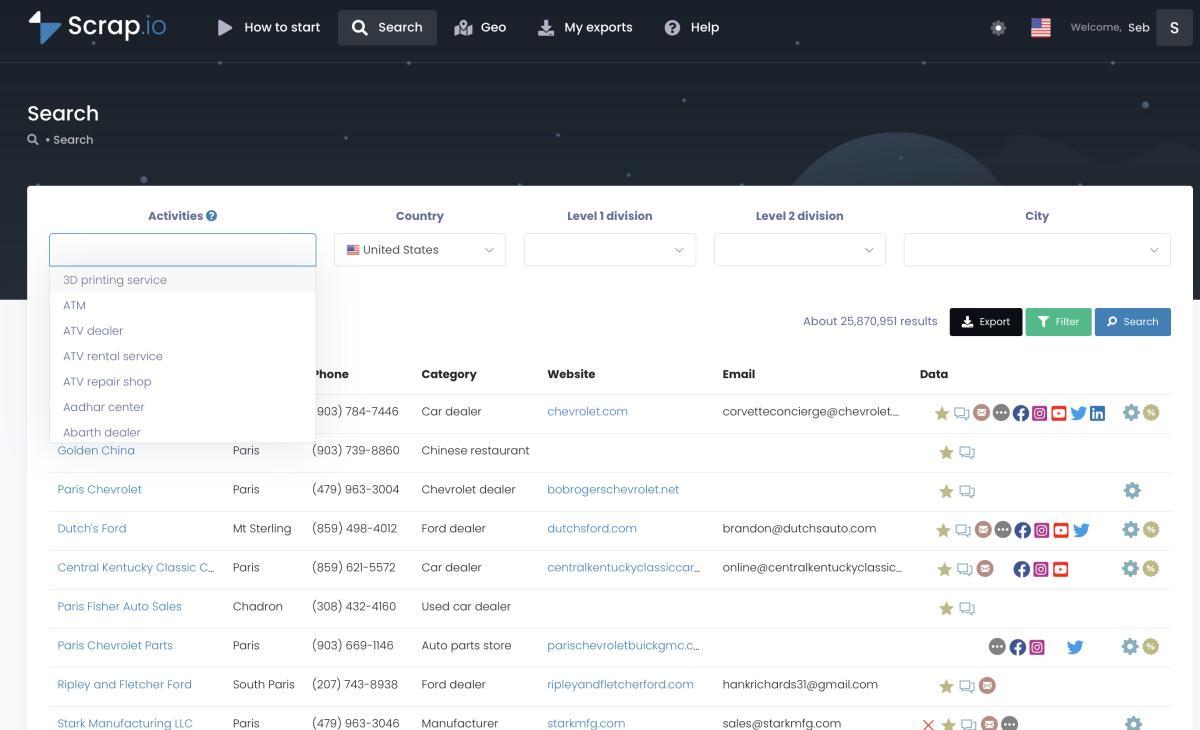
Video: Scrap.io - How to Start?
Nail the Geography, Not Just the Category
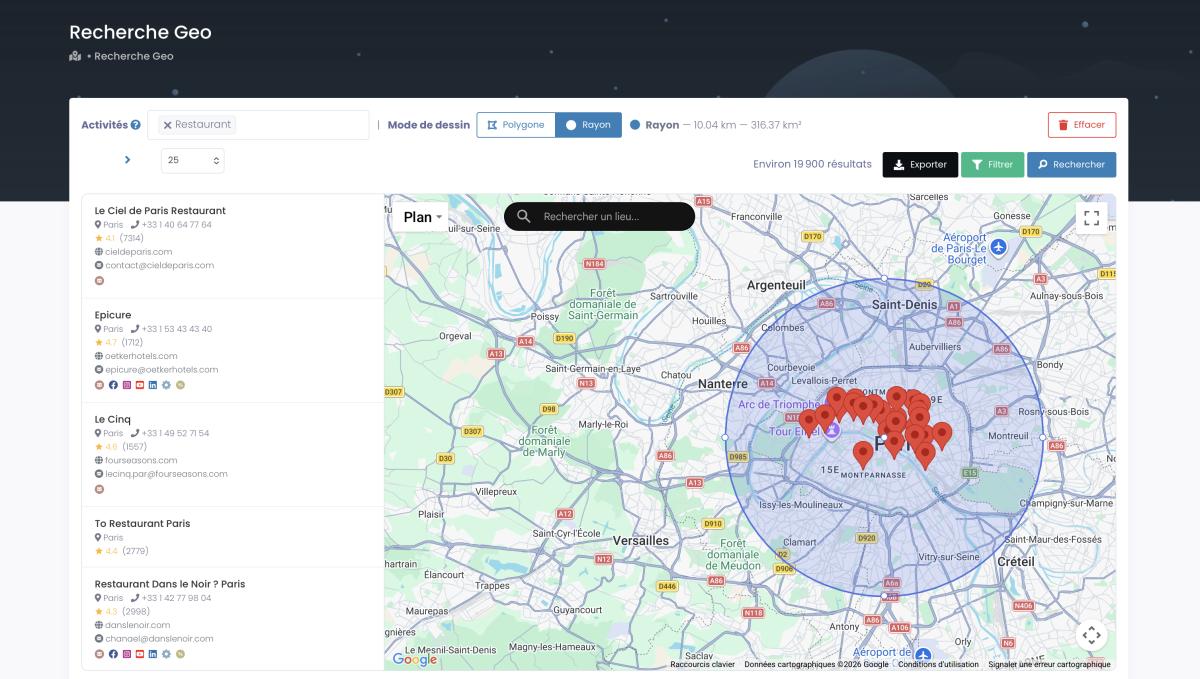
An ICP isn't only "what kind of business." It's "where." Most scraper tools force you to pick a category and a city and call it a day. But your real trade area rarely matches an administrative boundary — it's a radius around a location, or a hand-drawn shape covering three neighborhoods and skipping the fourth.
That's the whole idea behind GeoSearch: draw a radius or a polygon straight on the map and only pull the businesses inside it. It's how you actually convert Google Maps leads into clients without wasting credits on prospects 40 miles outside your service zone. Every filter still applies inside the shape.
Quality Filters That Save Your Outreach
This is where scraping absolutely destroys purchased databases. Scrape leads yourself and you get signals bought lists simply don't carry. Reviews. Star ratings. Whether they even have a website. Their tech stack. Whether they're on social or not. All of it usable intelligence.
The difference between a campaign that works and one that faceplants usually comes down to what you filter out before you ever hit send.
Here's the concrete part most guides hand-wave. Scrap.io applies filters before a single export credit is spent — so you only pay for contacts that match. And because the data is pulled live at export, you can size the exact market you're targeting. Pulled straight from the Scrap.io index on August 8, 2026:
| US restaurants (live signal) | Count | Why it matters |
|---|---|---|
| Total indexed | 663,090 | Your full addressable market |
| …with a findable email on their site | 196,933 (29.7%) | 7 in 10 have no usable email — filter them out before you pay |
| …with no website at all | 220,840 (33.3%) | Golden ICP for web agencies |
| …with email AND a rating ≤ 3.9 ⭐ | 21,409 | Reputation-help ICP — reachable and hurting |
| …with email AND no Instagram | 79,723 | "Your competitors are on Instagram, you're not" — now quantified |
| …with email, first seen on Maps since May 2026 | 2,258 | New businesses = hot buying signal |
Read that again. Out of 663,090 restaurants, only 21,409 match "has an email AND a rating under 4 stars." That's your razor-sharp ICP — the "restaurants with bad reviews who need reputation help" example, finally with a real number attached. And you pay for exactly those 21,409. Not the 663,090.
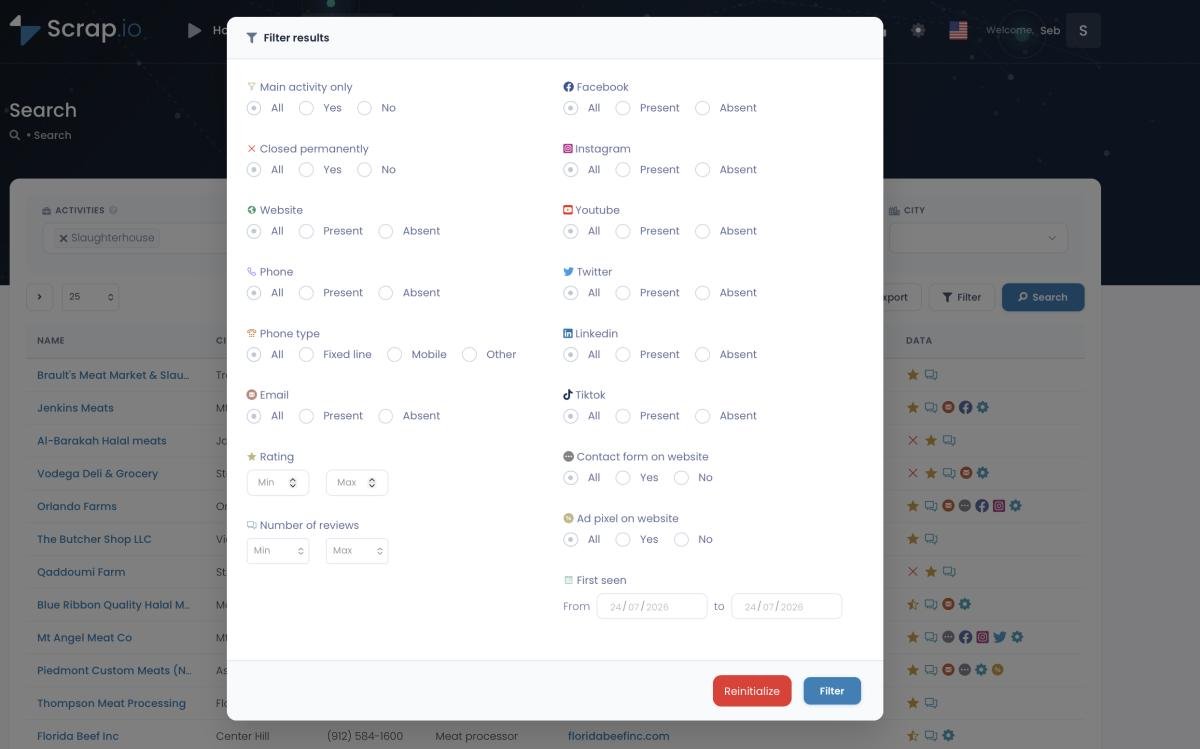
Pull the list of the 21,409 US restaurants that have an email and a rating under 4 stars. Filters apply before you spend a single credit — so you never pay for a lead you can't use. It's the same engine indexing 225,676,406 businesses across 195 countries and 4,000+ categories, updated in real time at export. Try it free for 7 days — 100 leads included.
Scraped Data vs. Purchased Lists: Side by Side
People still ask me whether they should just buy a list instead. So let's settle scraped leads vs purchased lists properly. Buying a stale batch is setting money on fire — you pay for the whole thing, then discover a third of it is dead.
| Criteria | Scraped Data (e.g. Scrap.io) | Purchased Lists |
|---|---|---|
| Freshness | Real-time extraction from live sources | Often 3–12 months old |
| Bounce rate | ~5–10% (live data) | 30–40% reported commonly |
| Personalization signals | Reviews, ratings, social, website tech, photos | Name, email, maybe phone |
| Filtering before purchase | Yes — pay only for matching contacts | No — buy the whole batch, filter later |
| Cost per lead | ~$0.005 (10K leads for ~$50) | $0.03–$0.50 per contact |
| Exclusivity | Your scrape, your data | Same list sold to multiple buyers |
| 2026 verifiable data | Every field traceable to its live source | Unverifiable — you inherit someone's old CSV |
Verify and Enrich: The Non-Negotiable Step
Blast emails at dead addresses and your domain reputation tanks. Period. Climbing back? Weeks. Sometimes months.
The data backs this up hard: verified lists bounce 40% less than unverified ones — 1.53% versus 2.55% (Saleshandy, 2026). Scraped live data is fresher out of the gate, but you should still verify your email list before sending. Even a 5% bounce rate wrecks deliverability faster than you'd think.
Then enrichment — where scraped data really shines. You've already got their Google rating, review count, whether the site is live, which social profiles exist. That's personalization ammo you flat-out cannot buy. Not even from the pricey providers.
Phase 2 — Craft Cold Emails That Actually Get Replies
Video: Why Your Google Maps Emails Don't Get Replies?
The Problem-First Email Framework
Nobody wakes up excited to read a sales email. But people absolutely wake up thinking about their problems. Every morning.
The best cold email conversion rate you'll ever hit comes from leading with the prospect's problem — not your pitch. You scraped their data. You know things about their business they've probably forgotten are public. Use it. That's the entire trick to cold email for scraped leads.
Bad approach: "Hi, we offer web design services for small businesses. We'd love to help you grow." Congratulations — you sound identical to 400 other emails in their inbox.
Good approach: "Hey Mike — noticed your restaurant in Dallas has 312 reviews but no website. Lot of folks searching for you online and landing on... nothing. Quick question: think that's costing you reservations?"
One gets deleted. The other gets a reply. Difference? About fifteen seconds of research. If you want a bank to steal from, these cold email templates have generated real revenue for real companies.
Subject Lines: 4-5 Words, Lowercase, Curiosity-Driven
Keep them short. Lowercase. A hint of curiosity. That's the whole formula — and it's backed by data: subject lines of 4 to 5 words consistently out-open every other length in Saleshandy's 53M-email dataset.
What works: "your google reviews," "quick question mike," "noticed something."
What bombs: "Revolutionary Solution For Your Business Growth!!!" or — god help you — "EXCLUSIVE OFFER Inside." One more thing the 2026 data flags: drop the "Re:" and "Fwd:" prefixes. Every major inbox provider now flags them, and they can send you straight to spam.
Personalization at Scale Using Scraped Data Points
Scraped data hands you something purchased lists genuinely cannot. Business intelligence, sitting right there in your CSV.
A single Google Maps scrape can carry the star rating, photo count, whether the listing is claimed, the website's tech stack, which social platforms they use or skip, the price range. Every one of those is a personalization hook. That's how to personalize cold emails at scale without hand-writing 5,000 messages.
No Instagram? "I noticed your competitors in the area are picking up customers on Instagram, but your restaurant doesn't seem to have an account yet." Reviews slipping? "Saw your rating's dipped a bit lately — ever thought about getting ahead of that?" There's a full guide on how to turn scraped data into personalized outreach at scale with AI if you want to automate it. (It's less complicated than it sounds — it's really just using what you already scraped.)
The 4-Email Sequence That Books Meetings
One email and done? Doesn't work. This is where most people leave the money. Lemlist and Saleshandy both land on the same conclusion: 4-7 email sequences pull roughly 3× more replies than sending just 1-3, and 42-44% of positive replies come from the follow-ups — not the opener. Most people quit at email two. So how many follow-ups should you send? At minimum, the first two, because that's where the replies actually live. This is the best cold email sequence for local businesses I've seen hold up:
- Day 0 — The Problem Opener. Lead with a specific pain point pulled from scraped data. Under 80 words. End with one question. Done.
- Day 3 — The Value Add. Don't pitch. Share something useful. "By the way — restaurants in Dallas that added online ordering last year saw about a 34% revenue bump."
- Day 7 — The Social Proof. A similar business you helped, kept tight. "We helped a spot in Fort Worth go from 3.2 to 4.6 stars in four months."
- Day 14 — The Breakup. Last email. Be direct. "Hey Mike, gonna assume this isn't a priority right now. If that changes, I'm around."
Weird thing about that breakup email — it consistently gets the highest reply rate in the whole sequence. Something about "last chance" that finally shakes people loose. Human psychology, man. If you want to go deeper on cadence and copy, here's how to write follow-ups that actually get answered — it breaks down the timing email by email.
Phase 3 — Multi-Channel Escalation: Beyond Email
Contact Forms: The Near-100% Read Rate Channel
Cold emails get buried. You know what doesn't? A contact form submission on their own website.
When someone fills out a company's contact form, that message drops straight into the owner's primary inbox. Sometimes a push notification on their phone. No promotions tab. No spam filter. It just arrives.
So when your email sequence goes ignored, try their contact form instead. Not with a pitch — with a question. "Hey, I reached out by email but figured I'd try here too. Quick question about your business — mind if I share an idea?" Near-100% read rate. Still surprises me every time.
Cold Calling With the 70/30 Rule
Their phone number is sitting right there in the scraped data. Use it — and follow the 70/30 rule. Listen 70%. Talk 30%.
Most salespeople flip that backwards. They launch into a pitch, the prospect checks out in ten seconds, everybody hangs up mildly annoyed. Instead: "Hey, I noticed something about your business online and thought you'd want to hear about it. Is this a terrible time?" Then stop talking. Let them tell you what's bugging them. If you want a script bank, these cold calling scripts that work cover 15 scenarios and the objection rebuttals.
Social Warm-Up
LinkedIn connection requests. A comment in a local-business Facebook group. A thoughtful reply on their Instagram post. None of these are your primary channel — but they do something email can't. They make your name familiar before the cold email lands.
When your email shows up and they half-recognize your name from somewhere? That flicker of familiarity changes whether they open or delete.
The 3-3-3 Follow-Up Cadence
The 3-3-3 rule keeps you persistent without becoming annoying: 3 touches, 3 different channels, 3 weeks.
Week 1: email sequence kicks off. Week 2: contact form plus a LinkedIn request. Week 3: phone call plus your final email. After three weeks with no response, move them to a nurture list and circle back in 90 days. Don't burn a bridge over one campaign.
Phase 4 — Handle Objections & Close the Deal
Quick note before the scripts: objections are almost never the real reason. Gong's analysis of 300M+ cold calls found nearly half of all objections are knee-jerk dismissals, not considered decisions. So don't argue — reframe. If Phase 4 is your weak spot, this deep dive on how to handle objections during prospecting gives you a full framework.
"Not Interested" — The Reframe Script
When someone says "not interested," they usually mean "you haven't shown me why I should care yet." Don't push. Reframe. "Totally fair. Honest question — is it because you've already got this handled, or is the timing just wrong? Either way, zero pressure." That keeps the door cracked while surfacing the real objection.
"Already Have a Solution" — The Comparison Approach
Good news: they already know the problem exists. You don't need to sell them on it. "Oh nice — mind if I ask what you're using? I've worked with a few businesses that switched and saw [specific result]. Might be worth a five-minute comparison." Never trash their current setup. Plant a seed, walk away.
"Send Me More Info" — Turning Stalls Into Meetings
Classic stall. They're exiting politely. Counter: "Absolutely. But so I send you something actually relevant instead of a generic PDF — can I ask two quick questions about your setup?" And just like that, you're in a conversation. Which was the whole point.
The 5-Minute Rule: Speed Kills (Hesitation)
This one genuinely shocked me. Dr. James Oldroyd's Lead Response Management study — run on 15,000+ leads at MIT/InsideSales and popularized by Harvard Business Review in 2011 — found that responding within 5 minutes makes you 100× more likely to connect and 21× more likely to qualify the lead than waiting 30 minutes.
One hundred times. Not double. And nearly two decades of follow-up research keeps reproducing the result.
So when someone replies to your cold email — even a curt "sure, tell me more" — you respond now. Drop what you're doing. Set up phone notifications for replies. Waiting until tomorrow is basically the same as never responding.
Phase 5 — Automate, Measure & Scale
Video: How to Turn Your CRM Into a War Machine Using Google Maps Data?
CRM Integration for Scraped Lead Pipelines
Once your playbook works manually, then you automate. Get scraped leads flowing into your CRM automatically, tagged by source, city, industry — whatever matches how you sell. Tools like Make.com can automate your CRM pipeline so the boring stuff — enrichment, scoring, follow-up triggers — happens without you. Your time goes to calls, not copy-pasting spreadsheets.
Key Metrics to Track (Lead Conversion Rate Benchmarks)
Can't fix what you don't measure. Here's what "good" looks like in 2026 — the lead conversion rate targets worth pinning to your monitor:
| Metric | Needs work | Solid | Dialed in |
|---|---|---|---|
| Reply rate | under 2% | 3–5% | 8–12%+ |
| Meeting booking rate | under 1% | 2–3 per 100 emails | 5%+ |
| Close rate (of real opps) | under 20% | ~33% (10-3-1) | 40%+ |
| Bounce rate | over 3% | under 2% | under 0.5% (verified) |
The big one is cost per lead vs. cost per customer — the whole cost per lead scraping vs paid ads argument in one line. Scrape 10,000 leads for fifty bucks, close 10 customers, and your cost per customer is five dollars. Try pulling that from paid ads. Seriously — try. (People underestimate this constantly. A whole r/GrowthHacking thread exists just arguing over the cheapest way to scrape leads — and the answers all miss that the real cost isn't the scrape, it's the wasted outreach on garbage data.) If you want to rank who to call first, this guide to scoring your local leads lays out a Fit/Interest/Urgency model built on exactly these Google Maps signals.
Austin M. pulled 11,734 businesses in 45 minutes — versus ~400 contacts a week from a virtual assistant. Start with 100 free verified leads and measure your own numbers this week.
When to Scale: The Signals That Your Playbook Works
Don't pour gas on a fire that isn't lit. Scale when you see consistent reply rates above 3%, meeting booking above 5%, positive replies outnumbering negatives roughly 2:1, and your domain still healthy. All four boxes checked? Double your volume. Then double again. For the full first-touch-to-closed-deal system, this guide on how to build a sales pipeline from scraped leads covers every stage.
Real-World Results: Case Studies & Benchmarks
Theory is nice. Sourced numbers are better. So instead of anonymous "a SaaS startup did X" claims you can't verify, here are the real, named benchmarks this playbook rests on — every one with a link you can click.
Austin M. — 11,734 Businesses in 45 Minutes
One Scrap.io user — Austin M., a CX director at a 51–200-employee company — scraped 11,734 businesses in 45 minutes. His previous method? A virtual assistant doing manual research, maybe 400 contacts a week at about $0.30 per lead. I don't even need to run the math. Scraped data at scale costs a fraction, and it's fresher because it's pulled live.
Backlinko — 12 Million Outreach Emails
Backlinko's study of 12 million emails is the source everyone quotes and few link. So here it is: 8.5% reply rate overall, but personalization lifts it by 30.5%, follow-ups can add up to 160% more replies, and contacting multiple people at the same company boosts response by 93% (Backlinko). Follow-ups aren't optional. They're where half your replies hide.
Saleshandy — 53 Million Cold Emails Analyzed
Saleshandy's 2026 analysis of 53M emails (Jan–June) is the freshest benchmark going: 3.7% average reply rate, top performers past 10%, a single soft CTA earns 78% more positive replies than a hard one, and sub-80-word first emails win (Saleshandy, 2026). Notice how none of this contradicts the sequence above. It's the same playbook, measured.
Instantly — Cold Email Benchmark Report 2026
Instantly's 2026 report puts the average reply rate around 3.7% across January–June and dives into deliverability benchmarks worth reading before you scale (Instantly, 2026). Two independent datasets, same 3.7% number. That's about as solid as an industry benchmark gets.
Dr. James Oldroyd — The 5-Minute Response Study
The "respond in 5 minutes" rule everyone half-remembers traces back to Dr. James Oldroyd's Lead Response Management research at MIT/InsideSales, popularized by Harvard Business Review. 15,000+ leads tracked. 100× more likely to connect inside 5 minutes than at 30. Not 2007-and-outdated — reproduced for nearly two decades since.
See the pattern? Every claim in this article has a name and a link behind it. That's the whole point in 2026 — Google's top organic result on this query is a Reddit thread, which tells you the SERP wants lived, verifiable experience, not theory dressed up as authority.
Staying Legal: CAN-SPAM, GDPR & Compliance Essentials
What You Can (and Can't) Do With Scraped Data
May as well address this upfront, because it comes up every single time. Is it legal to email scraped contacts?
Yes. When done correctly.
The info you pull from Google Maps listings and public business websites is public. Businesses put their email, phone, and address out there on purpose. You're not hacking anything. You're not buying stolen data. You're reading publicly posted information and reaching out — like any normal business would. That said, rules exist. Follow them.
CAN-SPAM requires honest subject lines, clear sender identification, your real physical address, a working unsubscribe link you actually honor, and opt-outs processed within 10 business days. The primary source is the FTC's own compliance guide — bookmark it.
GDPR adds (for EU contacts) legitimate business interest as your legal basis for B2B outreach, an easy opt-out, and transparency about how you collect and use data. The European Data Protection Board is the authority here. If you're emailing into Europe, our deep dive on GDPR rules for B2B cold email breaks down which countries are safe and which want prior consent (looking at you, Germany).
Scrap.io extracts only publicly available business data — GDPR and CCPA compliant, every data point traceable to its source. No gray areas.
Opt-Out Compliance Checklist
Non-negotiable. Before every campaign:
- Every email includes a working unsubscribe link
- Every unsubscribe request gets honored — no delays
- Maintain a master suppression list and cross-check before each send
- Document where each contact's data originated
- Never re-email anyone who opted out
- Process all opt-outs within 10 business days maximum
Basic stuff. But you'd be amazed how many people skip it and then can't figure out why they're landing in spam.
FAQ — Converting Scraped Leads
How do I convert leads into paying customers?
Define your ideal customer profile, scrape and filter targeted leads, verify emails, then send personalized sequences using scraped signals like reviews, ratings, and website status. Follow up 4-7 times across multiple channels and track what gets replies. The full process runs in five phases: foundation (ICP + filtering + verification), email sequences, multi-channel escalation, objection handling, and automation for scale. Google Maps leads give you business intelligence — review counts, social presence, tech stack — that makes outreach far more relevant than any purchased list.
What is the average cold email conversion rate in 2026?
The average reply rate sits around 3.7% based on Saleshandy's and Instantly's 2026 analyses of tens of millions of emails. For meeting bookings specifically, top campaigns land 2-3 meetings per 100 emails sent. Top performers — teams running personalized sequences on scraped signals — hit 8-12% reply rates consistently. The gap between average and great is almost entirely personalization quality and follow-up persistence.
Is it legal to email scraped contacts?
Yes, as long as you scrape publicly available information and follow CAN-SPAM and GDPR. That means honest subject lines, clear sender identification, a physical address, and a working unsubscribe link you honor. Publicly posted business info from Google Maps sits within established legal frameworks — those businesses chose to make their contact info public.
How many follow-ups should I send?
Four to seven emails is the sweet spot, generating about 3× more responses than 1-3. Roughly 42-44% of positive replies come from the follow-ups, not the first email (Saleshandy, 2026). The 3-3-3 cadence works well: 3 touches, 3 channels, 3 weeks. After that, move non-responders to a nurture list and circle back in 90 days.
What do I do with scraped leads that don't reply?
After a 3-week, 3-channel sequence with no response, move the lead to a nurture list — don't delete it and don't keep emailing. Re-engage after 90 days with a new angle: a fresh data point about their business, a seasonal offer, or a change you spotted on their listing. Roughly 1 in 5 non-responders becomes reachable on the second cycle.
What is the 2-2-2 rule in sales?
It applies in two contexts. After closing: check in with new customers at 2 days, 2 weeks, and 2 months to reduce churn. Before a call: invest 2 minutes researching the prospect and prepare 2 specific insights to reference. The common thread is that consistent, well-timed touches build stronger relationships than sporadic outreach.
Time to Build Your Pipeline
The numbers are sitting right in front of you. Email marketing returns about $42 for every $1 invested. The lead gen market is pushing past $30 billion. And teams pairing scraped data with personalized, systematic outreach are outperforming everyone else — especially in 2026, where generic blasting is a deliverability death sentence.
But reading about it doesn't close deals. Starting does.
You don't need 50,000 leads. You need 100 good ones. Scrape them. Filter them. Write outreach that references their actual business. Follow up more than once. Track what gets replies. Cut what doesn't. That's a lead conversion strategy. Five phases. Run it once, learn from the data, run it again better.
Try Scrap.io free for 7 days — grab 100 verified business leads from an index of 225M+ businesses across 195 countries, updated in real time, and start converting this week. Filters apply before you spend a credit, so you only pay for leads worth emailing. Start free — 100 leads included.
These contacts aren't going to close themselves. And every day you wait, someone else is already emailing your best prospects. Now stop reading and go send some emails.
Generate a list of restaurant with Scrap.io