

📋 What's in This Guide
- What Is Customer Acquisition Cost (And Why It's Skyrocketing in 2026)?
- The Customer Acquisition Cost Formula: How to Calculate CAC Step by Step
- Average Customer Acquisition Cost by Industry: 2026 Benchmarks
- The LTV:CAC Ratio, The Metric That Actually Matters
- 10 Proven Strategies to Reduce Customer Acquisition Cost in 2026
- Real-World CAC Case Studies: Who's Winning (And How)
- CAN-SPAM, GDPR & Legal Compliance When Using B2B Contact Data
- FAQ, Customer Acquisition Cost
Okay so listen. Customer acquisition cost went up 222% in eight years. Two hundred and twenty-two percent. SimplicityDX published this and honestly I had to read it twice. Brands now lose $29 for every new customer they bring in. Back in 2013 that number was nine bucks. Nine.
And here's what makes it worse. Salesforce's State of Marketing report says 54% of marketers can't figure out lead quality. HubSpot's 2024 data? 45% of companies don't generate enough leads. Period. So you're paying way more for leads that are way worse. Cool.
My buddy runs a SaaS company. Last month he told me his paid ads cost went up 30% but his close rate dropped. He's not alone. Everybody I talk to says the same thing. Customer acquisition cost is eating their budget alive.
But some companies are doing fine. Better than fine actually. They're not spending more money. They're spending it differently. This guide shows you exactly how to calculate your customer acquisition cost, stack it against 2026 benchmarks, and slash it with stuff that works, including a method that costs about 100x less than old-school lead databases.
What Is Customer Acquisition Cost (And Why It's Skyrocketing in 2026)?
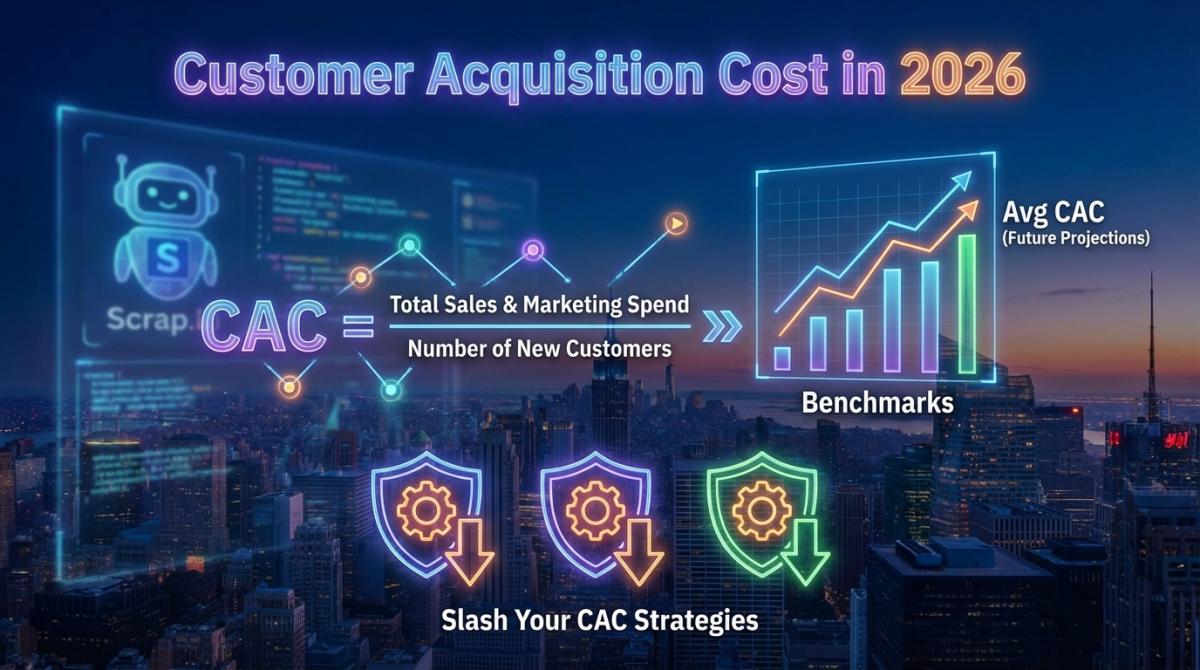
Customer acquisition cost is how much you spend on sales and marketing to get one new paying customer. Total spend divided by new customers. That's it.
Sounds simple right?
It's not.
Take Mike. He sells B2B software. Spends $85,000 a month on marketing and sales combined. His team closed 340 customers last quarter. His CAC works out to $250 per customer. Not bad until you find out his competitors do it for $180. That $70 gap? Across thousands of customers it's the difference between growing and going broke.
CAC vs CPA: What's the Difference?
People mix these up all the time. CAC is the full cost of getting a paying customer. Everything from first ad click to signed contract. CPA is just one conversion event, a signup, a download, a form fill. Think of CPA as a snapshot. CAC is the whole movie. You need both numbers but CAC tells you if you're actually making money.
Why CAC Has Become the #1 Growth Metric
The median New CAC Ratio sat at $1.76 in the latest Benchmarkit SaaS Performance Metrics report. What does that mean? For every dollar of new annual recurring revenue, companies spent $1.76 to get it. And the top quartile? They're burning past $2.00. Not great math.
And that old stat from Harvard Business Review and Bain & Co still holds. Getting a new customer costs 5 to 25 times more than keeping one you already have. The gap just keeps getting bigger.
So yeah. If you're not watching your customer acquisition cost like a hawk right now? You probably should be.
The Customer Acquisition Cost Formula: How to Calculate CAC Step by Step
The Basic CAC Formula
CAC = Total Sales & Marketing Expenses ÷ Number of New Customers Acquired
How is CAC calculated? Add up everything you spent on sales and marketing over a period, then divide by the number of new customers you won in that same window. Ads, salaries, tools, software, the lot. Example: spend $50,000 in a quarter, land 200 customers, and your CAC is $50,000 ÷ 200 = $250. That single number tells you whether growth is paying for itself.
Four steps. Really straightforward.
- Pick your time period. Monthly, quarterly, yearly, whatever makes sense for your business
- Add up every sales and marketing expense. Ads, salaries, tools, software, that expensive conference in Vegas. All of it
- Count how many new customers you got during that same period
- Divide. Total expenses by new customers. Done
Customer acquisition cost calculation example: you spend $50,000 in Q1. You land 200 new customers. $50,000 divided by 200 equals $250 CAC. That's your number.
Simple vs Fully Loaded CAC (Which One to Use)
Simple CAC counts direct marketing and sales spend only. Fully loaded? That's everything. Salaries. Tools. Office rent for your sales team. Probably even the Keurig machine in the break room if you wanted to get technical about it.
Which one matters? Both actually. Use simple CAC for comparing channels quickly. Use fully loaded CAC when you're trying to figure out real profitability. Most companies only do simple CAC and then can't understand why their spreadsheet says they're profitable but their bank account disagrees.
CAC Calculator: A Quick Template
Quick and dirty way to estimate your cost per customer acquisition:
- Monthly ad spend: $____
- Sales team salaries (monthly): $____
- Marketing tools and software: $____
- Content production: $____
- Total monthly spend: $____
- New customers this month: ____
- Your CAC: Total ÷ Customers = $____
If that number makes your stomach hurt, don't close the tab. The reduction strategies below are where it gets good.
Average Customer Acquisition Cost by Industry: 2026 Benchmarks
What is a good customer acquisition cost? Honestly it depends on what you sell. A $341 CAC is totally normal in B2B SaaS. That same number would destroy an eCommerce brand selling $30 products. Context is everything.
CAC Benchmarks Table (2026 Data)
| Industry | Avg. Paid CAC | Avg. Organic CAC |
|---|---|---|
| Fintech | $1,450 | ~$900 |
| Insurance | $1,280 | ~$800 |
| Legal Services | $1,245 | ~$750 |
| Real Estate | $1,185 | ~$700 |
| Medtech | $921 | ~$550 |
| Manufacturing | $905 | ~$540 |
| B2B SaaS | $341 | $205 |
| Construction | $281 | ~$170 |
| eCommerce | $274 | ~$160 |
| Entertainment | $260 | ~$155 |
| Health & Beauty | $127 | ~$75 |
Source: First Page Sage, Vena Solutions, Benchmarkit, 2026 data.
Fintech at $1,450 per customer. Health and beauty at $127. That's wild. If you're sitting in one of those high-CAC industries and not actively trying to fix it you're basically watching your budget disappear.
CAC by Marketing Channel
Different channels, wildly different costs. Average customer acquisition cost per channel:
| Channel | Avg. CAC | Conversion Rate | Notes |
|---|---|---|---|
| Email Marketing | $510 | 3.8% | Best ROI for B2B |
| Organic Search (SEO) | $647-$1,786 | Variable | Depends on approach |
| Paid B2B Search (Google) | $802 | ~2% | CPL at $70.11, up 5.13% |
| LinkedIn Ads | $982 | 1.2% | 92% pricier than email |
| Microsoft Bing | CPL $41.44 | - | 253% ROI, best B2B value |
| Referral Programs | $25-$65 | High | Cheapest channel. Period |
| Google Maps Data Scraping | ~$0.002/lead | - | Via Scrap.io: 11,734 businesses in 45 min |
Look at referrals. $25-65 per customer. LinkedIn? $982. For potentially the same customer. The smart play is comparing B2B lead generation platforms and putting money where the CAC is lowest. Obvious but most people don't do it. And if you want the raw numbers on what a single lead costs channel by channel, our breakdown of lead generation cost and CPL by channel goes deeper than this table can.
Geographic Arbitrage: How Location Impacts Your CAC
Nobody talks about this one enough. North America and Western Europe are 3-5x more expensive than LATAM or Eastern Europe. Midwest USA is 10-20% cheaper than coastal markets. LATAM runs about 60% less with comparable quality.
Middle East and Gulf region? $45-$120 CAC with lifetime values between $80-$200. Solid deal.
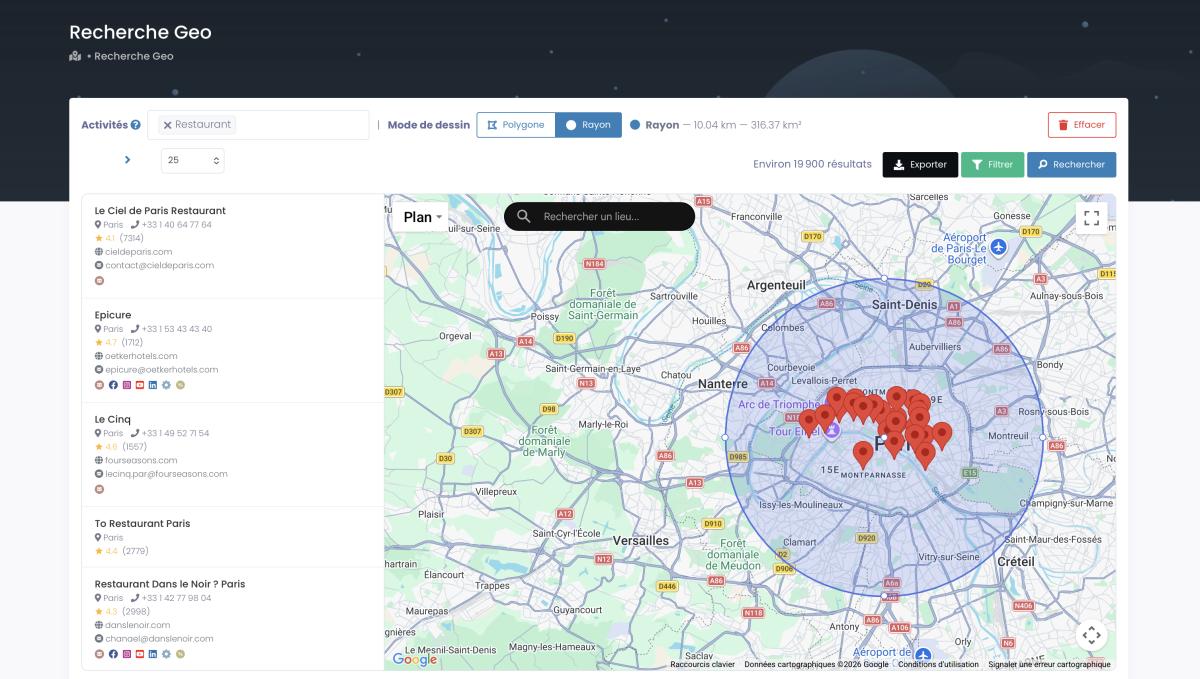
If you're only targeting New York and San Francisco you're overpaying for customers that exist elsewhere too. Geographic targeting to reduce acquisition costs is one of those strategies that sounds boring until you see the numbers. Draw a radius or a custom polygon on the map, extract only the businesses inside your cheapest markets, and your blended customer acquisition cost drops without touching your close rate.
Platforms like Scrap.io give you verified local business contacts from Google Maps data, with a free 7-day trial and 100 leads offered to test your own CAC numbers.
Stop overpaying for leads before you even count them. Scrap.io pulls verified business contacts from Google Maps across 225M+ establishments in 195 countries, and the filters run before extraction, so you only spend on fiches with an email, a mobile, or the rating you need. Counting results is always free. Start free, 7 days, 100 leads offered.
The LTV:CAC Ratio, The Metric That Actually Matters
Your CAC alone means nothing. Zero. A $500 customer acquisition cost is fantastic if your customer lifetime value is $5,000. It's a disaster if LTV is $600. Want the full breakdown of every LTV variant? The dedicated CLV for local B2B prospecting guide walks through it.
What Is a Good LTV to CAC Ratio?
A good LTV:CAC ratio is 3:1. Every dollar you spend acquiring a customer should return at least three dollars over their lifetime. Below 2:1 means your acquisition is losing money. Above 6:1 usually means you're under-investing in growth and leaving market share on the table. Most healthy B2B SaaS companies aim for that 3:1 to 5:1 window.
When Your Ratio Signals Problems (Below 2:1 and Above 6:1)
Under 2:1? You're losing money on acquisition. Either CAC is too high or customers are leaving too fast. Fix one or fix both.
Above 6:1? Sounds amazing right? It's actually not great. It means you're probably not spending enough on growth. You're leaving market share on the table.
And remember, the cost of acquiring new customers versus retaining existing ones isn't even close. Bain & Co proved the 5-25x gap years ago, and their research shows a 5% bump in retention lifts profits by 25% to 95%. Sometimes the fastest way to fix a bad ratio isn't cheaper acquisition. It's better retention.
CAC Payback Period Explained
How long until a customer pays back what you spent getting them? That's your customer acquisition cost payback period. B2B SaaS standard is 12-18 months. Under 12? Excellent. Over 24? Might have a cash flow problem before you see any return.
10 Proven Strategies to Reduce Customer Acquisition Cost in 2026
This is the part you came for. How to lower customer acquisition cost for B2B without killing lead quality. Real strategies. Real numbers behind them.
1. Define Your ICP to Stop Wasting Ad Spend
Sounds obvious. It's not. 54% of marketers struggle with lead quality (Salesforce). That usually means they haven't figured out their ideal customer profile. If you're targeting everyone you're targeting no one. Nail your ICP first. Spend money second.
2. Leverage Organic Channels (SEO & Content)
Organic search CAC ranges from $647 to $1,786 depending on how you do it. Expensive? Sure at first. But a good blog post generates leads for years. Try turning off your Google Ads for a week and see what happens. Organic doesn't stop.
3. Use Google Maps Data for Ultra-Low-Cost Local Lead Gen
This is the one most people don't know about. Google Maps data scraping through Scrap.io costs about $0.002 per lead. Traditional business databases charge $0.05 to $0.30 per contact. Do the math. That's a customer acquisition cost for local businesses that's nearly 100 times cheaper.
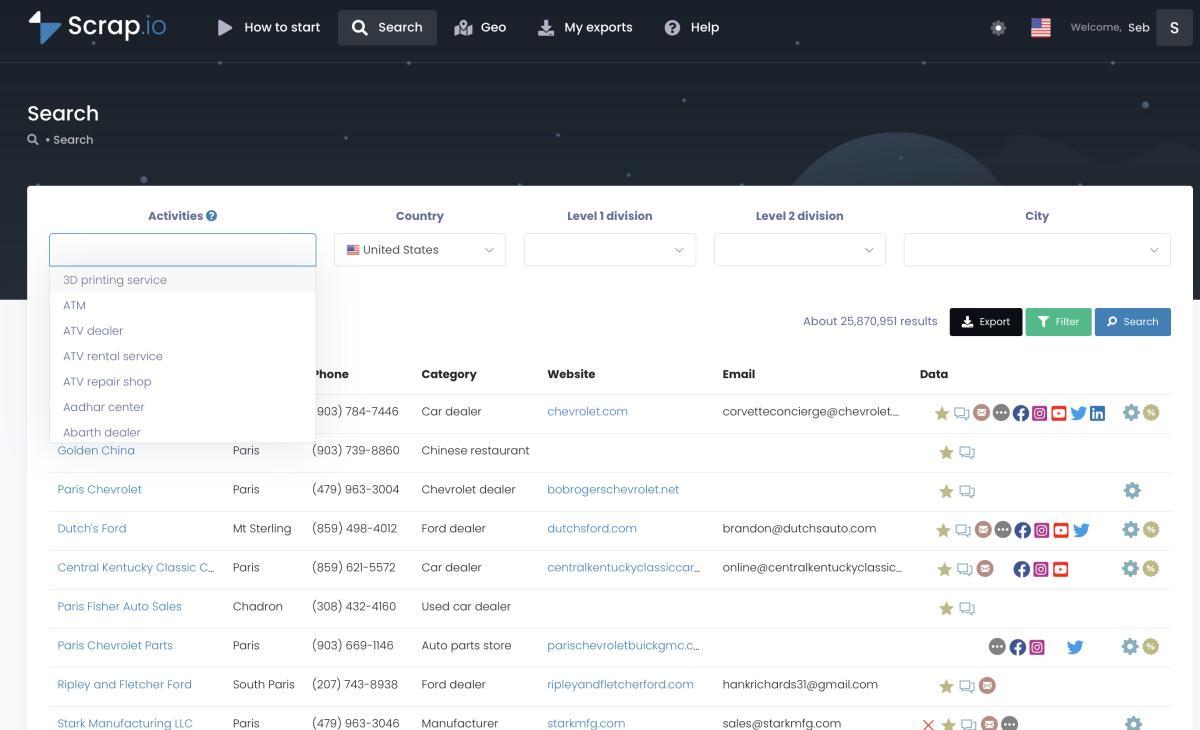
You pick a business category. Pick a location, a city, a state, a whole country if you want. And you generate Google Maps leads at scale: emails, phone numbers, social media profiles, website info. All from Google Maps listings. Public data. Legal. And fresh because it's pulled in real time. Not from some spreadsheet somebody last updated when we were all still using Zoom for everything.
Video: Stop Paying $20,000/Year for ZoomInfo, This Does More for $49/Month
4. Launch Referral & Affiliate Programs
Referral CAC: $25-65. That's the lowest acquisition cost of any channel that exists. If you don't have a referral program running right now you're ignoring the cheapest way to get customers. It's 2026. Come on.
5. Optimize Conversion Rates (CRO)
Saw this on r/SaaS back in August 2025 and it stuck with me: "Tightening the first-win experience so activation to pay happens faster. Less time in the trial = less wasted spend. Most high-CAC problems are actually retention issues wearing a CAC mask." Read that last sentence again. Sometimes your CAC isn't too high. Your funnel just leaks.
6. Automate with AI & Marketing Automation
McKinsey research on generative AI shows companies using AI for acquisition and personalization can cut their CAC by 30-50%. Not a small number. That's potentially half your acquisition cost gone. AI-powered targeting, automated cold email outreach strategy, smart lead scoring, whatever flavor of automation works for your business. Just start somewhere.
What if your next lead cost a fifth of a cent instead of $50? One Scrap.io user pulled 11,734 businesses in 45 minutes at roughly $0.002 a contact. Filter by category, location, rating, email or no-website across 4,000+ categories, then export straight to your CRM. Try it free, 100 leads offered.
7. Invest in Customer Retention to Improve Unit Economics
The 5-25x rule again. Every dollar in retention basically lowers CAC because upsells and expansions cost almost nothing. Track your local prospecting KPIs and you'll see how retention metrics move your acquisition economics.
8. Adopt Intent Data for Precise Targeting
Stop marketing to people who don't care. Intent data, search behavior, content consumption, review monitoring, tells you who's actively looking for what you sell. Your cost per customer acquisition drops because you're not burning budget on people who were never going to buy. Rank them before you dial with a proper lead scoring playbook for local leads so your reps hit the hottest prospects first.
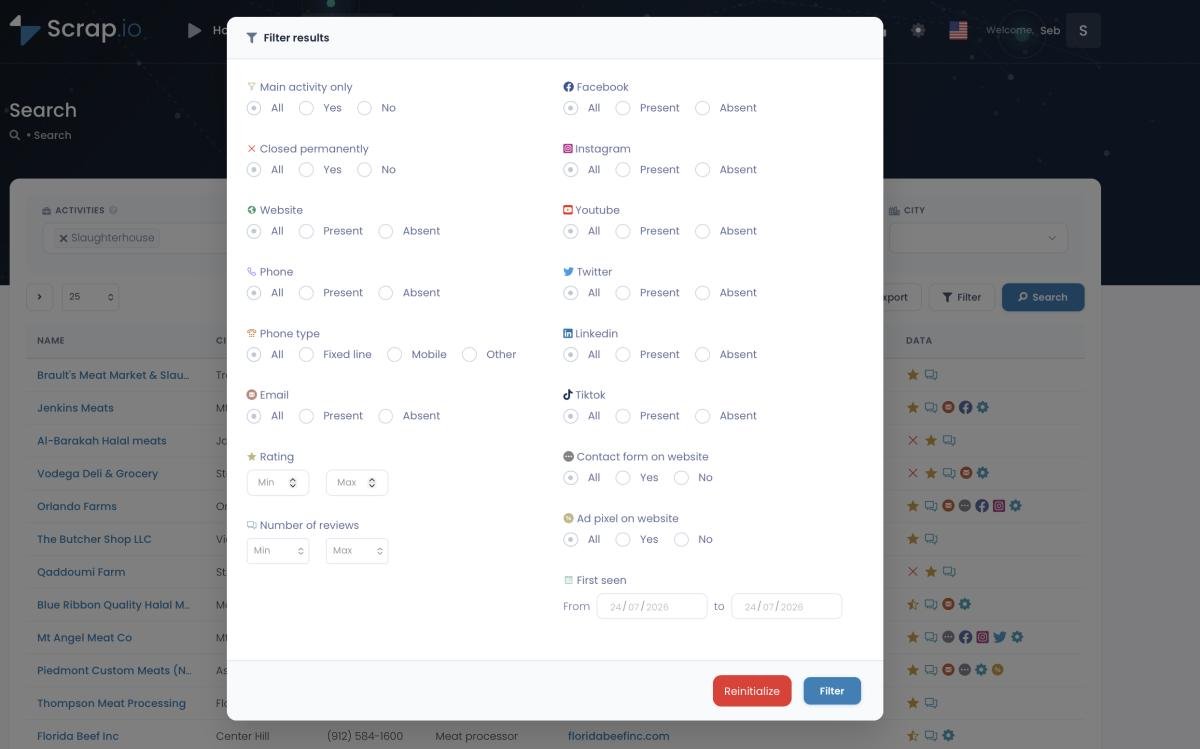
Here's the part that quietly kills CAC: with Scrap.io the filters apply before extraction. Only want businesses that already have an email and an ad pixel? Set two filters, and that's all you pay for. You never burn a credit on a fiche you can't use. Zero waste, straight to a lower cost per usable lead.
9. Exploit Geographic Arbitrage
North America is 3-5x pricier than LATAM. Coastal US costs 10-20% more than the Midwest. If your product works across regions test the cheap markets first. Build your B2B SaaS client acquisition strategies around where customers cost less. Not where they seem most glamorous.
10. Bundle Products to Increase Average Order Value
Higher AOV means you can handle a higher CAC and still keep a healthy LTV:CAC ratio. Bundling doesn't make acquisition cheaper directly. It makes your current CAC sustainable because each customer is worth more.
Real-World CAC Case Studies: Who's Winning (And How)
Enough theory. Here's what actually happened when real companies tackled their customer acquisition cost.
Duradry, 29% CAC Reduction Through Creator Programs
Duradry is a DTC brand. They built a creator and affiliate program using Shopify Collabs. Brought on 250+ creators. Generated $50,000 in affiliate sales over seven months. CAC dropped 29%. They didn't cut spending. They shifted it. Creators and referrals just convert cheaper than paid ads.
Way cheaper.
BMC Software, 49.5% Conversion Rate via Targeted Lead Database
BMC Software stopped chasing brand new leads and focused on people already in their database. Better segmentation. Better messaging. Same contacts. HubSpot documented the results: 49.5% conversion rate. 5,000 leads attracted. Over 2,500 MQLs. This is what happens when you prioritize data quality over data volume. Better data means lower CAC. Every time.
A Solo Founder on r/SaaS, 4x Lower CAC Through Automation
Found this one on r/SaaS and it's genuinely impressive. A one-person coaching platform automated its Reddit monitoring and response templates for organic acquisition. CAC dropped 4x. ROI hit 20:1. Monthly revenue reached $2-5K MRR. The founder went from 15 hours of manual outreach per week to 2 hours. No company name, no polished press release, just a founder posting their numbers in a thread. Automation isn't some future thing. It's already working for people right now.
A Payments Team on LinkedIn, $250K Reallocated by Cutting Acquisition Waste
A payments company shared its acquisition spending audit on LinkedIn and found something ugly. 42% of their CAC went to nurturing leads that hadn't responded in over 45 days. Dead leads eating live budget. They cut that waste. Moved $250,000 from acquisition into R&D. Churn dropped 18%. Sometimes reducing customer acquisition cost isn't about finding cheaper leads. It's about stopping the bleeding on leads that were never going to buy. (I'm keeping this one anonymous on purpose, the poster didn't want the company named, so take the exact figures as their self-reported numbers.)
How Google Maps Scraping Cuts Lead Costs to $0.002 Per Contact
Here's the math. Traditional B2B databases cost $50-300 per month for limited contacts. Scrap.io? Austin M. extracted 11,734 businesses in 45 minutes for local B2B prospecting. Cost per lead: roughly $0.002. How much does it cost to acquire a new customer when your lead source costs almost nothing? A lot less than what your competitors pay for stale databases.
Video: How to Scrape Local Leads at the Country Level
CAN-SPAM, GDPR & Legal Compliance When Using B2B Contact Data
What Data Can You Legally Collect?
Business publishes their email on Google Maps? Public data. Phone number on their website? Public data. Collecting it is legal under US and EU regulations. That's why Google Maps scraping works from a legal standpoint. You're not buying personal data from shady brokers. You're pulling info that businesses put out there on purpose.
Cold Outreach Best Practices for Compliance
CAN-SPAM says: honest subject lines, clear sender ID, working unsubscribe link, your real address in every email. Going international? GDPR adds consent and data handling requirements, and the safest ground for B2B is a documented legitimate interest, which our full guide on GDPR cold email for B2B breaks down country by country. Best move is sticking to data sources that only grab publicly available business info. Kills most compliance problems before they start.
FAQ, Customer Acquisition Cost
What is customer acquisition cost?
Customer acquisition cost (CAC) measures the total sales and marketing expenses required to acquire one new customer. Calculate it by dividing total acquisition costs, advertising, salaries, tools, overhead, by the number of new customers gained in a specific period. In 2026, the average B2B SaaS CAC is $341 while industries like legal services can exceed $1,245.
How do you calculate customer acquisition cost?
Four steps. First define your time period, monthly, quarterly, annually. Second sum all sales and marketing expenses. Third count new customers acquired in that period. Fourth divide total expenses by new customers. Example: $50,000 spent ÷ 200 new customers = $250 CAC.
What is a good customer acquisition cost?
Depends on your industry and customer lifetime value. The benchmark is an LTV:CAC ratio of 3:1 or higher, each customer generates at least $3 for every $1 spent acquiring them. Below 2:1 means unprofitable acquisition. Above 6:1 might mean you're not spending enough on growth.
Is CAC the same as CPA?
No. CAC (customer acquisition cost) measures the full cost of turning a stranger into a paying customer. CPA (cost per acquisition) measures the cost of a single conversion event, a signup, a download, a lead form, that may never become a paying customer. Every paying customer has a CAC; not every CPA event does. CAC is the number that tells you if the whole motion is profitable.
What's the difference between CAC and CPA?
CAC covers the full cost of getting a paying customer. CPA covers the cost of a specific conversion, a signup, a download, a lead form. CAC is the big picture. CPA is one step in the journey. You need both but CAC tells you whether the whole thing is profitable or not.
How can I reduce my customer acquisition cost?
Best strategies: define your ICP for precise targeting, go heavy on organic channels like SEO and content, use Google Maps data for cheap local lead generation, launch referral programs, fix your conversion funnel, and automate with AI. Companies using AI-driven targeting report 30-50% CAC reduction according to McKinsey.
Video: Scrap.io - How to Start?
Customer acquisition costs aren't going down. That 222% increase over eight years keeps climbing. But the companies winning right now aren't necessarily spending less. They're spending on better data and smarter channels.
A $0.002 lead from Google Maps that actually converts beats a $50 lead from some database that bounces. Every single time.
Figure out your CAC by channel. Cut what's not working. Double down on what is. And try at least one new cheap acquisition channel this quarter. Referrals, content, Google Maps leads, pick one and test it.
Try Scrap.io free for 7 days and watch what happens to your CAC. 100 leads offered, real-time data across 225M+ businesses in 195 countries and 4,000+ categories, with filters that run before you spend a credit. See for yourself how data quality moves your acquisition cost. Start your free trial, 100 leads offered.
Generate a list of restaurant with Scrap.io