

$237. That's the average price of a single B2B lead in 2026 (Martal/Prospeo). One lead. Not a signed customer. Just someone who raised a hand and said "maybe."
And if you sell into higher education? That number balloons to $982. Per lead. I read that stat three times before I believed it.
So it makes sense that thousands of businesses hand the whole mess to lead generation companies and let someone else do the hunting. Sometimes that's the right call. Sometimes it's a very expensive way to rent a pipeline you could have built yourself. This guide breaks down the best lead generation companies of 2026 (the agencies, the data platforms, the pay-per-lead outfits) with real pricing and real results (data from Martal and Prospeo). Then it shows you the one option almost nobody in the top of the SERP will mention: doing it yourself with Google Maps data, for pennies a lead.
- What lead generation companies actually do
- The 12 best lead generation companies in 2026
- How much do lead generation companies cost?
- The problem nobody tells you about outsourced lead gen
- The DIY alternative: build your own local B2B lead list
- Outsourced vs DIY: which should you choose?
- Is buying or scraping leads legal in 2026?
- FAQ
What lead generation companies actually do
Quick question: when someone says "lead generation company," what do you actually picture? A call center? A database? A guy running LinkedIn ads from a beach? All three exist, and they're wildly different businesses. Lumping them together is how people end up paying enterprise money for a service they didn't need.
There are three types. Learn the difference and you'll never overpay again. And one more thing to keep in mind up front: 61% of B2B teams now use AI for lead scoring, up from just 23% in 2024. The tooling got smart fast, which changes the math on whether you even need a company to run it for you.
Lead generation agencies (the done-for-you route)
A lead generation agency does the work for you. Their SDRs build the list, write the cold emails, dial the phones, and drop booked meetings onto your calendar. You show up and close. This is the "done-for-you" model: appointment setting, outbound, the whole thing. Belkins, Callbox, and CIENCE live here. Great when you have budget and no in-house sales muscle. Pricey, and you're renting their pipeline, not owning yours.
Data platforms (the self-serve route)
Data platforms hand you the raw material and get out of the way. ZoomInfo, Apollo, Cognism, Lusha. You log in, search their database, export contacts, and run outreach yourself. These are lead generation services in the software sense: you're buying access to data, not labor. (We ranked the best lead generation software separately if you want the full field.) Faster and cheaper than an agency. But the database is only as fresh as their last update, and you're doing the actual selling.
Pay-per-lead companies (the pay-as-you-go route)
Then there are the pay per lead generation companies. You pay a flat fee for each lead delivered, no retainer, no long contract. Sounds clean. The catch? A lot of them resell the same lead to three or four of your competitors. So you're racing to call first, and the prospect is already annoyed by the time you say hello. More on that later.
The 12 best lead generation companies in 2026
Here's the honest truth about most best-of listicles in this space: half of them are affiliate links wearing a trench coat. The #1 pick is usually whoever pays the highest commission. So take every ranking (including this table) as a starting point, not gospel. Test before you sign.
With that out of the way, here are the top providers worth your attention in 2026, across all three types. Most rank among the top b2b lead generation companies in usa, though several go global. Bookmark this lead generation companies list; you'll want to come back to it.
| Company | Type | Best for | Pricing model |
|---|---|---|---|
| Belkins | Agency | B2B appointment setting | Monthly retainer |
| Callbox | Agency (multichannel) | Cross-border SMB + enterprise | Subscription / retainer |
| CIENCE | Agency (outbound) | Managed outbound SDR | Monthly retainer |
| SalesRoads | Agency | Appointment setting, US | Monthly retainer |
| Cleverly | Agency (LinkedIn) | LinkedIn outreach | Monthly retainer |
| Martal Group | Agency | SaaS & tech outbound | Monthly retainer |
| ZoomInfo | Data platform | Enterprise B2B data | ~$15K+/year |
| Apollo.io | Data platform | SMB outbound + sequencing | Free / from $49/mo |
| Cognism | Data platform | European / GDPR data | Custom (~$15K+/yr) |
| Lusha | Data platform | Quick contact lookups | Free / from $36/user/mo |
| Seamless.AI | Data platform | High-volume prospecting | Free / from $147/mo |
| Scrap.io | DIY (Google Maps data) | Local B2B, no retainer | From $35/mo |
The best B2B lead generation companies (short version)
Short on time and just want the best b2b lead generation companies to shortlist? For done-for-you outbound: Belkins, Callbox, CIENCE. For self-serve B2B data: ZoomInfo, Apollo, Cognism. (Apollo's had its data-quality wobbles lately, so it's worth scanning the Apollo alternatives before you commit.) For local business data without a retainer: Scrap.io. Those seven cover most use cases: startup, agency, or sales team alike.
Now, results, because a name on a list means nothing without proof.
Belkins is one of the more transparent agencies out there; their public case studies show real numbers. One adtech client booked 78 meetings in six months. An investment platform hit a 9% conversion rate, closed 13 deals, and forecasted roughly $434K in new pipeline, a figure you can still see on their case-study page today. Their omnichannel plays reportedly lift booked meetings by around 30%. That's what "done-for-you" looks like when it works.
Callbox plays the multichannel game: phone, email, LinkedIn, all at once. In one managed-services campaign they signed 150 SMB clients in 90 days and generated 420 MQLs alongside 690 warm connections. ZoomInfo, meanwhile, is the self-serve giant everyone benchmarks against. Its own guide literally ranks itself #1 among lead generation companies. Useful data. Enterprise price tag. And a database you can't help but compare to doing it yourself (we'll get there).
And CIENCE? Genuinely capable outbound team. But results swing hard depending on your ICP and offer. Some clients rave, some churn after a quarter. A perfect segue into the uncomfortable part of outsourcing. Hold that thought.
Prefer to keep the budget in-house? Here's how the DIY route compares below.
How much do lead generation companies cost?
Deep breath. Here come the numbers that make CFOs twitch.
Most agencies run on a retainer between $2,500 and $19,000 per month (SaaSHero, 2026). That's the spread. A boutique LinkedIn shop sits near the bottom; a full-service enterprise outbound team sits near the top. Either way, you're committing before a single meeting is booked.
So how much should you pay for lead generation? Depends entirely on the model. Here's the breakdown.
| Model | Typical range | Ideal for |
|---|---|---|
| Retainer (agency) | $2,500–$19,000 / month | Teams wanting fully managed outbound |
| Pay-per-lead | ~$40–$500 / lead | Buyers who want volume without a contract |
| Pay-per-appointment | Higher per unit than pay-per-lead | Teams paying only for booked meetings |
| Blended CPL (all channels) | ~$237 average | Benchmarking your current spend |
| DIY (Google Maps data) | A few cents / lead | Local B2B, agencies, bootstrappers |
Retainer vs pay-per-lead vs pay-per-appointment
A retainer buys you a team and a process. Predictable, but you pay whether they perform or not. Pay-per-lead flips the risk (you only pay for what's delivered) but "delivered" doesn't mean "good." Pay-per-appointment is the strictest: you pay solely for meetings that actually land on the calendar, which is why it costs more per unit. The pay per lead vs retainer debate really comes down to one thing: do you want cost certainty, or performance certainty? You rarely get both.
And the individual leads themselves? Pricing swings brutally by vertical, anywhere from $420 to $3,080 per lead, with higher education topping out around $982 (Prospeo/CausalFunnel). Long sales cycles and high-value contracts push those numbers into orbit.
Fresh 2026 benchmarks tell the same story from another angle. OpGen Media pegs a verified content-syndication lead at $45 to $130, a LinkedIn lead-gen-form contact at $90 to $320, and enterprise programs at $150 to $400 a lead (OpGen Media, 2026). Different channels, same headache: every qualified lead costs real money long before anyone signs anything.
For context on the market itself: the B2B lead generation services market is worth roughly $3.33 billion in 2026 and is projected to reach about $8.2 billion by 2035, a CAGR near 11.9% (Business Research Insights). The narrower outsourced lead gen market sits around $4.2 billion in 2026, heading toward $7.6 billion by 2033 (CAGR ~8.9%). Translation: a lot of companies are paying other companies to find their customers. In fact, 59% of businesses outsource at least part of their lead generation, partly because outsourcing can cut customer acquisition cost by up to 65% versus building an in-house team (Alphacoast/Martal). When it works, that is. Want a deeper breakdown of the real numbers? We wrote a whole piece on what lead generation actually costs, and compared the best mailing list companies if you'd rather buy a list than build one.
The problem nobody tells you about outsourced lead gen
Meet Mike. Mike runs a 12-person MSP and got tired of prospecting, so he signed a $6,000/month retainer with an outbound agency. Month one: nice dashboards, lots of "MQLs." Month three: his sales team quietly admitted most of those "qualified leads" weren't qualified at all. Wrong titles. Dead numbers. One guy had retired in 2023.
Sound familiar?
Here's what nobody puts in the sales deck. When you outsource, the agency owns the data, the messaging, and the pipeline. You're renting all three. The day you stop paying, it all evaporates. That's not lead generation. That's a subscription to someone else's effort.
And the quality problem is real. Even strong agencies like CIENCE produce wildly different results depending on how well the campaign fits your ICP, which is why one client's glowing testimonial sits right next to another's churn story. It's not that these firms are bad. It's that a done-for-you model puts a stranger in charge of understanding your customer. Nobody understands your customer better than you.
People notice. On Reddit's r/automation, one user summed up the whole frustration in a single sentence: "Have been searching for a good lead provider that's affordable, can u suggest a name." Affordable. That's the word that keeps coming up. Because outsourcing done-for-you lead gen is a lot of things, but affordable usually isn't one of them.
The pay-per-lead crowd gets it worse. On r/hvacadvice, one HVAC owner who tracked six years of shared-lead platforms called the whole model "an auction where they charge all of us to enter", after finding out the same lead had been sold to four other companies at the same time. The platform gets paid five times for one homeowner. The five of you then compete on price to see who eats the job. That's not a pipeline. That's a bidding war you funded. (Regulators noticed too: the FTC fined HomeAdvisor up to $7.2 million in 2023 for misleading contractors about lead quality.)
So here's the contrarian take: for a huge slice of businesses (especially anyone selling to local or physical-location companies) the smartest move in 2026 isn't hiring a lead generation company at all. It's building the list yourself.
The DIY alternative: build your own local B2B lead list
Bear with me, because this sounds too good until you see it work.
Video: Scrap.io - How to Start?
Every lead generation company you just read about is pulling from roughly the same well: LinkedIn, corporate websites, resold databases. So you and your competitors end up emailing the exact same people. That's not an edge. That's a queue.
Meanwhile there's a data source almost nobody uses systematically. And it's enormous.
Google Maps is the goldmine (225M+ businesses)
Google Maps indexes real businesses with real, owner-maintained contact info. And there are a lot of them. Scrap.io alone works from 225,676,406 business listings across 195 countries and 4,000+ categories (2026). Every plumber, dentist, roofer, agency, and restaurant that never bothered with a LinkedIn page? They're on the map. With a phone number and, very often, an email. If you want the full playbook, here's how to generate Google Maps leads at scale.
That's the segment traditional lead generation companies in usa either miss entirely or charge a fortune to reach. If you want the best lead generation companies for small businesses, or specifically lead generation companies for contractors, the best lead generation for realtors, or the best lead generation companies for real estate, this is where they actually are. On the map. Waiting. Same goes if you're up against roofing lead generation companies or insurance lead generation companies for the same local accounts: the businesses are sitting on Maps, not locked inside a broker's file. Wondering how to get sales leads for free, or how to get 100 leads a day without a call center? The trial's 100 export credits are, quite literally, that.
Video: How to Scrape Local Leads at the Country Level?
Filter before you pay (zero wasted spend)
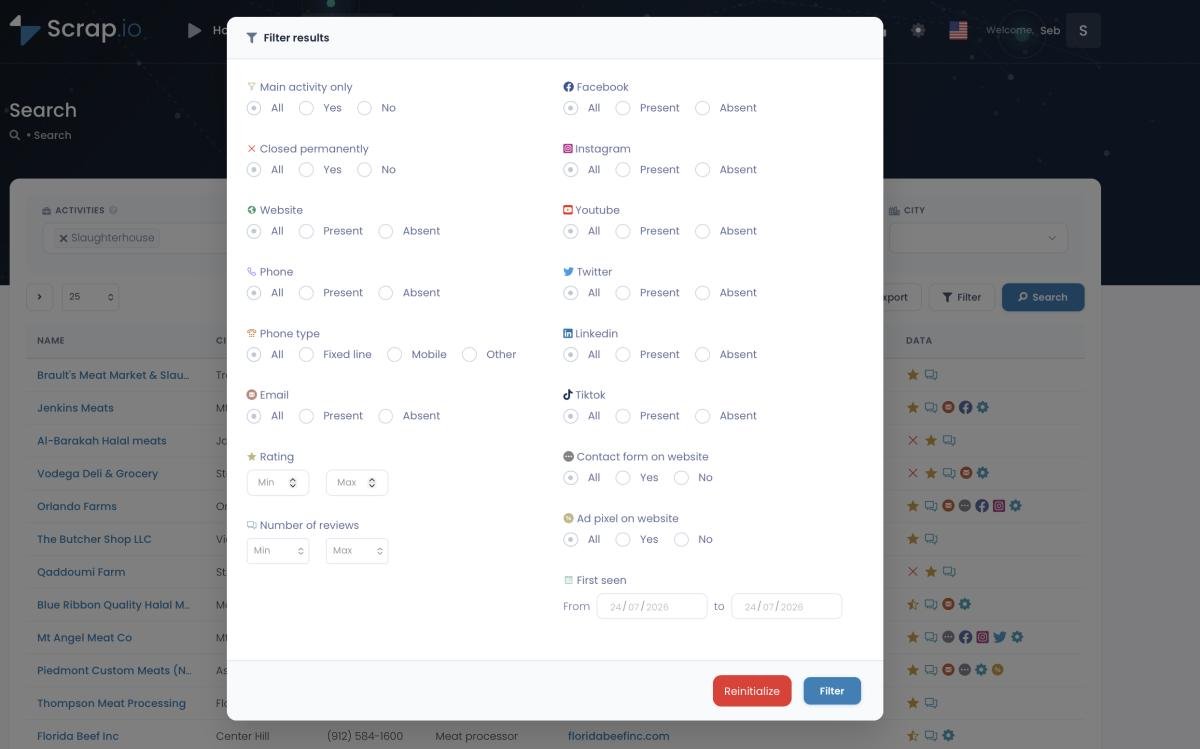
Here's the part that makes agencies nervous. With Scrap.io you filter before you export, and before you spend a single credit. Only businesses that have an email? Toggle it. Only mobile numbers for an SMS campaign? Done. A minimum Google rating, a certain review count, a website but no ad pixel (meaning they probably need your services)? Stack the filters. You only ever pay for contacts you can actually use.
Try doing that with a resold database. You buy the whole list, bounce rate and all, and pray. This is the opposite: fresh data, validated at the moment of export, no stale file someone recycled for the fifth time.
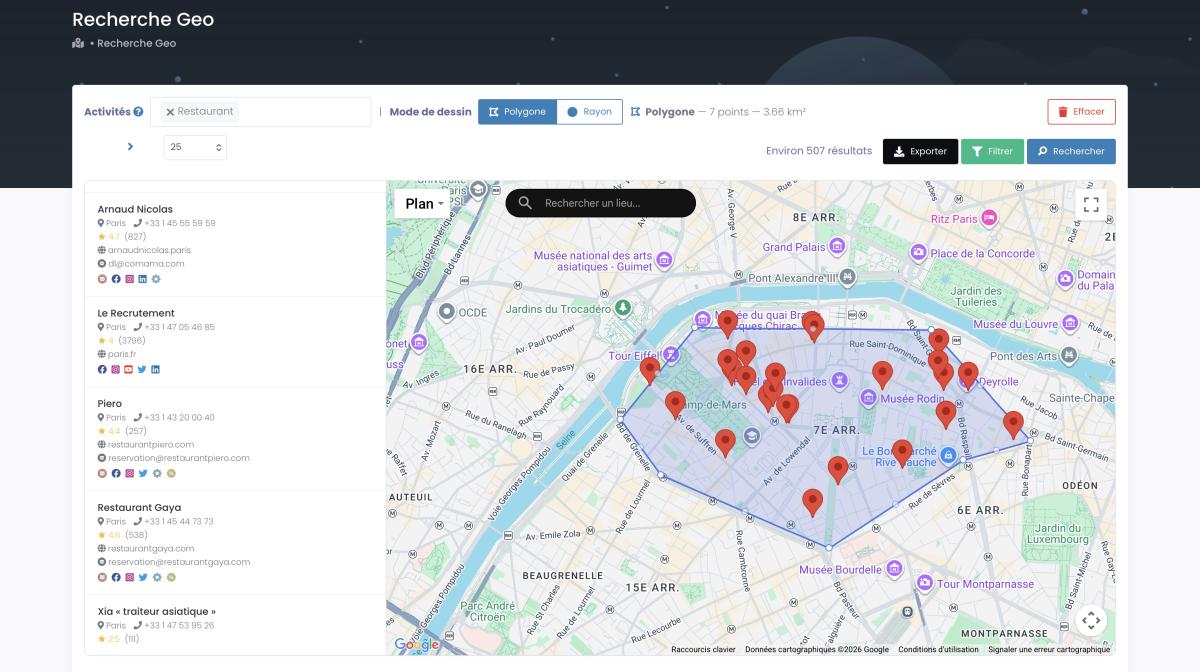
Need a shape that isn't a city or a county? Draw it. GeoSearch lets you set a radius around a point, or sketch a polygon by hand over an exact neighborhood or trade area. Every filter still applies inside it.
Map it to your CRM and automate
Once you've got the list, it exports to CSV or Excel: clean columns, ready for your cold email tool or CRM. Want it hands-off? Scrap.io connects through Make.com, Zapier, n8n, a REST API, and even an MCP connector, so you can run searches from Claude, ChatGPT, or Gemini in plain English. The whole workflow, on autopilot.
Video: How to Scrape Local Leads with Claude & Vibe Prospecting?
How fast is fast? One Scrap.io user pulled 11,734 businesses in 45 minutes. Try booking that many qualified conversations through a retainer. I'll wait.
Pull your first country-wide lead list free. Start a 7-day Scrap.io trial: 100 export credits, 225M+ businesses across 195 countries, filter before you spend, no code required. Start free →
Want the deeper playbook? We compared DIY vs professional scraping at the country level, walked through how to find emails on Google Maps, mapped out local business lead generation end to end, and weighed Google Maps vs LinkedIn.
Outsourced vs DIY: which should you choose?
So which one wins? Neither, universally. It depends on what you're selling and to whom. But most people default to "hire an agency" without ever running the comparison. Let's run it.
| Factor | 🔴 Outsourced (agency / pay-per-lead) | 🟢 DIY (Google Maps data) |
|---|---|---|
| Cost per lead | $40–$500+ | A few cents |
| Setup time | Weeks (onboarding) | Minutes |
| Data freshness | Varies (often resold) | Real-time at export |
| Exclusivity | Sometimes shared | 100% yours |
| Who owns the pipeline | The agency | You |
| Best when | Enterprise, no in-house sales | Local B2B, agencies, SMBs |
The honest read: if you're selling six-figure enterprise deals with no sales team, an agency can be worth every dollar. But if your prospects have a physical location (and you'd like to own your pipeline) DIY wins on cost, speed, and control. It's not close. The one caveat where outsourcing shines: agencies can localize teams by market. DIY answers that differently. Scrap.io covers 195 countries and extracts an entire country in two clicks, so "local" becomes a filter, not a limitation. Here's exactly how to find B2B leads by country when you're ready to go wide.
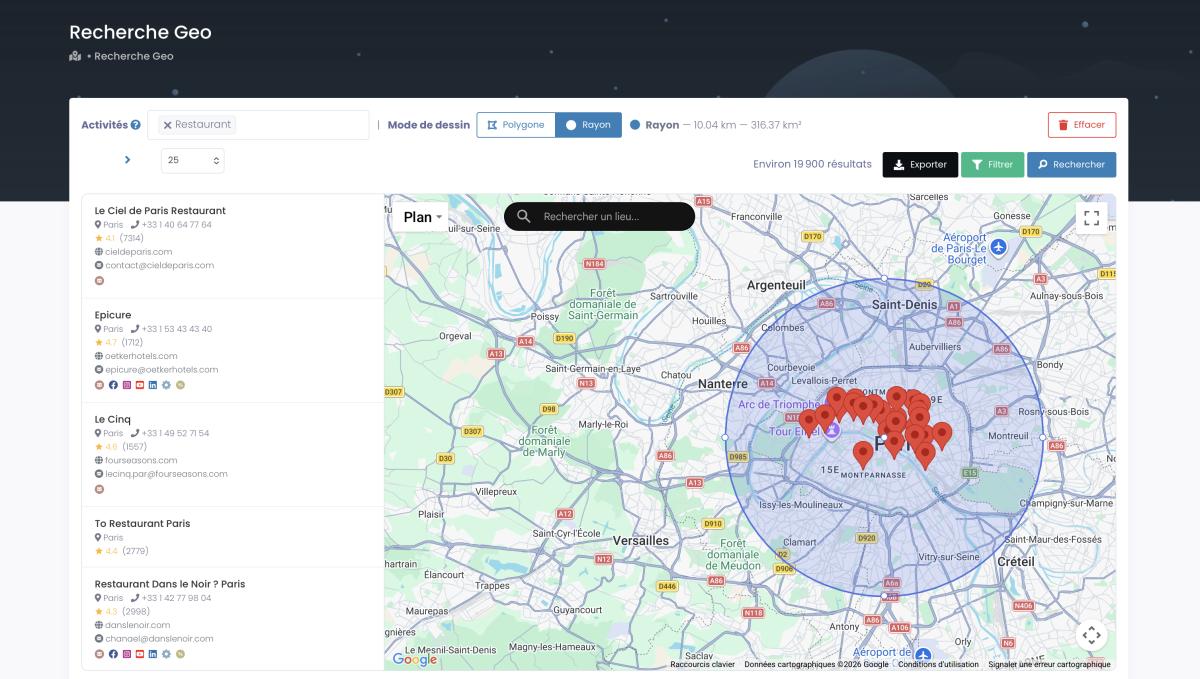
One Scrap.io user extracted 11,734 businesses in 45 minutes. Run the same count on your own market for free. Counting results never costs a credit. Try it now →
Is buying or scraping leads legal in 2026?
Fair question, and the honest answer is: yes, for public business data, done right.
Extracting publicly available business information (company names, addresses, phone numbers, publicly listed emails) is legal for B2B prospecting in both the US and the EU. Under GDPR, business contact data typically qualifies for the "legitimate interest" basis (and always include an easy opt-out). Under US rules, CAN-SPAM permits unsolicited commercial email to business addresses as long as you're honest and offer a working unsubscribe. California's CCPA carves out public business data almost entirely.
Scrap.io extracts only publicly available business data, is GDPR and CCPA compliant, and keeps every data point traceable to its source. No private profiles. No sketchy resold consumer lists. Just business details companies chose to publish on their own listings. That's about the cleanest legal footing in this whole industry. Want the full rundown? Here's our guide to cold email templates and compliance, and our comparison of ZoomInfo alternatives if you're rethinking your data stack.
FAQ
What does a lead generation company do?
A lead generation company finds potential customers for your business and hands them over as contacts or booked meetings. Some do the outreach for you (agencies), some sell you the raw contact data (data platforms), and some charge a flat fee per delivered lead. The goal is always the same: fill your sales pipeline so your team can focus on closing.
What are the best lead generation companies in 2026?
For done-for-you agencies: Belkins, Callbox, and CIENCE lead the pack. For self-serve data platforms: ZoomInfo, Apollo, and Cognism. For local business data without a retainer: Scrap.io, which extracts contacts straight from Google Maps. The "best" one depends on whether you want someone to do the work, or the raw data to do it yourself.
How much should you pay for lead generation?
Agencies typically charge a retainer of $2,500–$19,000 per month, while pay-per-lead runs roughly $40–$500 per lead. The blended average cost per lead across channels is about $237. If you go the DIY route with Google Maps data, you're looking at a few cents per lead, a different order of magnitude entirely.
Are pay-per-lead companies worth it?
They can be, if the leads are exclusive, verified, and actually match your ICP. They're not worth it when the same lead gets resold to your competitors or the data is stale. Before you sign, ask two questions: are these leads exclusive to me, and how fresh is the data? If the answers are fuzzy, walk.
Can you do lead generation yourself?
Absolutely. With a tool like Scrap.io you can pull emails, phone numbers, websites, and reviews straight from Google Maps: an entire country in two clicks, no code. It's the most direct way to generate leads for your business without paying an agency, and for local B2B it's hard to beat. Can ChatGPT do lead generation? Not on its own, but connect it to Scrap.io's MCP and it'll build your lists for you.
The bottom line
The best lead generation companies aren't a scam. Belkins books real meetings. ZoomInfo has real data. If you've got enterprise budget and no sales team, hire one and don't look back.
But for everyone else (the agencies, the contractors, the SMBs, anyone whose customers show up on a map) you don't need a $6,000 retainer to fill a pipeline. You need the right data source and a good follow-up. That's it.
Skip the retainer. Start free today, your first leads before lunch. A 7-day Scrap.io trial gives you 100 export credits and access to 225M+ businesses across 195 countries. Filter before you pay, export to your CRM, done. Start your free trial →
Generate a list of restaurant with Scrap.io