

67% of lost sales come from poor lead qualification. Let that sink in. Two-thirds of your pipeline is leaking. Not because your product sucks, but because you're chasing ghosts.
You spend hours scraping lists, crafting cold emails, booking discovery calls. And then? Half your prospects were never going to buy. They didn't have the budget. They weren't the decision-maker. Or they were just "browsing." Sound familiar?
Here's the thing. Lead qualification isn't some optional nice-to-have. It's the difference between a sales pipeline for Google Maps leads that actually converts and one that just looks busy in your CRM. And in 2026, with AI scoring, Google Maps signals, and smarter frameworks than your dad's BANT model, there's zero excuse to wing it.
In this guide, we'll break down exactly how to qualify leads, from classic frameworks to data-driven scoring using Google Maps signals. No fluff. No "it depends." Just stuff that works.
Video: Scrap.io vs Apollo, Which Tool for Which Type of Prospecting?
- What Is Lead Qualification (And Why Most Teams Get It Wrong)?
- Proven Lead Qualification Frameworks for 2026
- The Lead Qualification Process: A Step-by-Step Breakdown
- Lead Scoring: How to Rank Your Prospects with Data
- Real-World Lead Qualification Examples That Actually Work
- Your Lead Qualification Checklist for 2026
- Compliance & Best Practices for Lead Outreach
- FAQ: Lead Qualification
What Is Lead Qualification (And Why Most Teams Get It Wrong)?
If your sales team is spending equal time on every lead, you've already lost.
Lead qualification is the process of evaluating whether a prospect fits your Ideal Customer Profile (ICP) and has the budget, authority, need, and timeline to become a paying customer. It separates high-potential leads from time-wasters so your reps focus where it counts. That's the whole lead qualification meaning in a sentence: fit plus capacity to buy.
Simple enough, right? In theory, yes. In practice, that's where it gets interesting.
Most teams treat prospect qualification like a checkbox exercise. Someone fills out a form? Great, they're a "lead." But here's the reality: only 25% of marketing leads ever reach a sales team (SPOTIO). And of those that do? 79% never convert to sales (Trustmary). That's not a pipeline. That's a sieve.
So what's the difference between an MQL and an SQL? A Marketing Qualified Lead (MQL) shows interest through engagement signals: downloaded a whitepaper, visited your pricing page, opened three emails. But interest isn't intent. A Sales Qualified Lead (SQL) has been vetted. They've got the budget, they're the decision-maker (or close to it), and they have a real timeline. The gap between the two is where most revenue dies. Salesforce lays out the same MQL-to-SQL handoff and qualification process if you want the enterprise view.
And the biggest mistake? Treating every lead the same. Equal effort on unequal prospects is just expensive charity.
So how do you stop wasting time on the wrong 75%? It starts with a framework.
Proven Lead Qualification Frameworks for 2026
When Sarah's SaaS startup hit 500 inbound leads per month, her 3-person sales team was drowning. Not in revenue. In noise. They needed a system, not more hustle.
Here's a breakdown of the three lead qualification frameworks that actually hold up in 2026.
BANT (Budget, Authority, Need, Timeline)
The OG. Created by IBM back when fax machines were cutting-edge. But don't sleep on it. BANT still works for straightforward sales cycles.
| Criteria | Question to Ask | Positive Signal |
|---|---|---|
| Budget | What's your budget range for this? | Has allocated funds or clear spending authority |
| Authority | Who else is involved in this decision? | You're talking to the decision-maker (or their direct report) |
| Need | What problem are you trying to solve? | Pain is specific and urgent, not hypothetical |
| Timeline | When do you need a solution by? | Within 1-3 months (not "eventually") |
The BANT framework is great when you need speed. But it's seller-centric. It starts with budget, which can feel aggressive in consultative sales.
CHAMP (Challenges, Authority, Money, Prioritization)
CHAMP flips the script. Instead of leading with money, it leads with the prospect's challenges. More consultative. Less "so what's your budget?" on the first call.
This works beautifully for B2B lead qualification when you're selling solutions to local businesses that don't always know what they need. You uncover the pain first, then check if they can actually buy.
MEDDIC (Metrics, Economic Buyer, Decision Criteria, Decision Process, Identify Pain, Champion)
Enterprise deals. Complex buying committees. Six-month sales cycles. If that's your world, MEDDIC is your friend. It's thorough, maybe too thorough for SMB prospecting, but for $50K+ deals, it's non-negotiable.
Which Framework Should You Use?
| Framework | Best For | Complexity | Sales Cycle | Local Business Fit |
|---|---|---|---|---|
| BANT | Simple B2B, transactional | 🟢 Low | Short (1-4 weeks) | ✅ Great |
| CHAMP | Consultative selling, mid-market | 🟡 Medium | Medium (1-3 months) | ✅ Good |
| MEDDIC | Enterprise, complex deals | 🔴 High | Long (3-12 months) | ❌ Overkill |
The best framework is the one your team actually uses. For lead generation with Google Maps for B2B, a simplified scoring model often beats a complex framework. More on that in a minute. And if you want to sharpen who even makes the list before you score anyone, start by learning to define your ICP with Google Maps geographic data. Garbage ICP, garbage leads. Every time.
The Lead Qualification Process: A Step-by-Step Breakdown
Still qualifying leads based on gut feeling? Here's what a systematic lead qualification process actually looks like.
- Define your ICP (Ideal Customer Profile). Be specific. Industry, company size, revenue range, location, tech stack. Vague ICPs produce vague leads.
- Choose your qualification framework. BANT for speed, CHAMP for consultative, MEDDIC for enterprise. Pick one and stick with it.
- Set up lead scoring criteria. Assign point values to demographic, firmographic, and behavioral signals. (We'll cover this in depth below.)
- Capture and enrich lead data. This is where your lead pool quality makes or breaks everything. Garbage in, garbage out.
- Score and segment. Hot (80+), Warm (40-79), Cold (<40). Route accordingly.
- Route qualified leads to sales. Hot leads go to reps immediately. Warm leads enter nurture sequences. Cold leads? Revisit in 90 days or archive.
- Measure and iterate. Track conversion rates by score tier. Adjust weights quarterly. Your scoring model isn't a "set it and forget it" thing. Tie it to your local prospecting KPIs so you know which tiers actually close.
One stat that should terrify you: companies that respond to leads within 1 hour are 7× more likely to qualify them (Harvard Business Review). Wait 24 hours and your odds collapse. Speed isn't optional. It's the multiplier.
Video: Scrap.io - How to Start?
Lead Scoring: How to Rank Your Prospects with Data
Companies using lead scoring see 50% more sales-ready leads and a 40% conversion rate, versus just 11% for those who wing it (HubSpot). That's not a marginal gain. That's a completely different business.
Building a Lead Scoring Model
There are two types of scoring signals, and you need both.
Demographic/firmographic scoring evaluates who the lead is: company size, industry, role, location. Behavioral scoring evaluates what they do: email opens, website visits, content downloads, form submissions.
But here's where it gets practical. For lead scoring for local businesses, behavioral data is often thin. These aren't SaaS companies leaving a trail of pageviews. You need different signals. And that's where Google Maps data becomes gold.
| Criteria | Points | Why It Matters |
|---|---|---|
| Company in target category | +20 | ICP fit |
| Website active | +5 | Digital presence = reachability |
| 4+ star rating | +15 | Established, quality-conscious |
| Email available | +10 | Direct contact possible |
| 50+ reviews | +10 | Active customer base, traction |
| Recent activity / updated hours | +10 | Business is operational |
| Social media profiles linked | +5 | Digital maturity |
| Target geographic zone | +15 | Serviceable area match |
Score tiers: Hot (80+) → call today. Warm (40-79) → personalized email sequence. Cold (<40) → park them.
Want to go deeper on scoring methodology? Check out our lead scoring playbook for local leads. It covers the tactical setup in detail.
Google Maps Signals for Local Lead Scoring
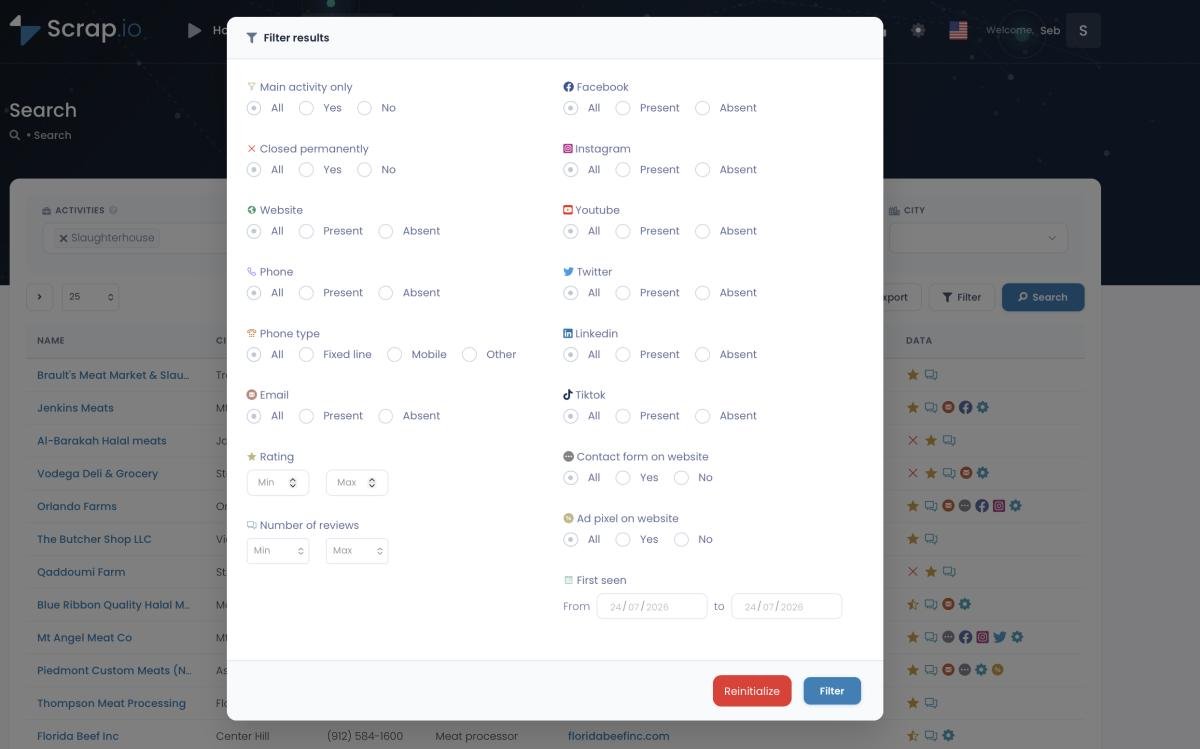
This is the part most lead qualification guides completely miss. When you're prospecting local businesses, traditional behavioral scoring (page visits, email clicks) doesn't apply. These businesses aren't browsing your website. They're running a plumbing company or a dental practice.
But Google Maps? That's where they live. And the signals are everywhere:
- ⭐ Average rating (4+ stars = quality signal, established business)
- 📊 Review volume (high volume = customer traction, active brand)
- 🌐 Website presence (active site = digitally aware, easier to pitch)
- 📧 Email available (= directly contactable, no gatekeeping)
- 📍 Location match (within your target geographic zone)
- 🕐 Updated hours (= the business is alive and operating)
- 📱 Social media links (= digital maturity, open to online tools)
This whole approach has a name now: signal-based selling with Google Maps. Read the map, score the signal, contact the ones worth your time.
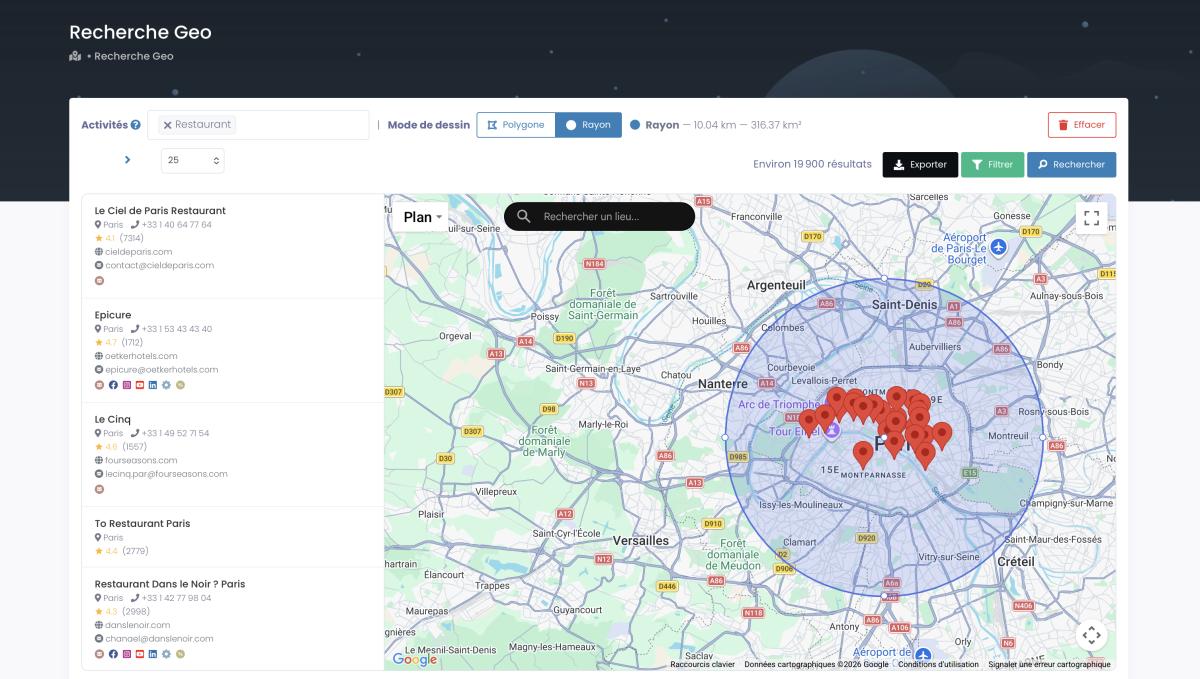
And you can narrow the pool to a precise catchment area before you extract a single row. Draw a radius around your service zone and only score businesses inside it.
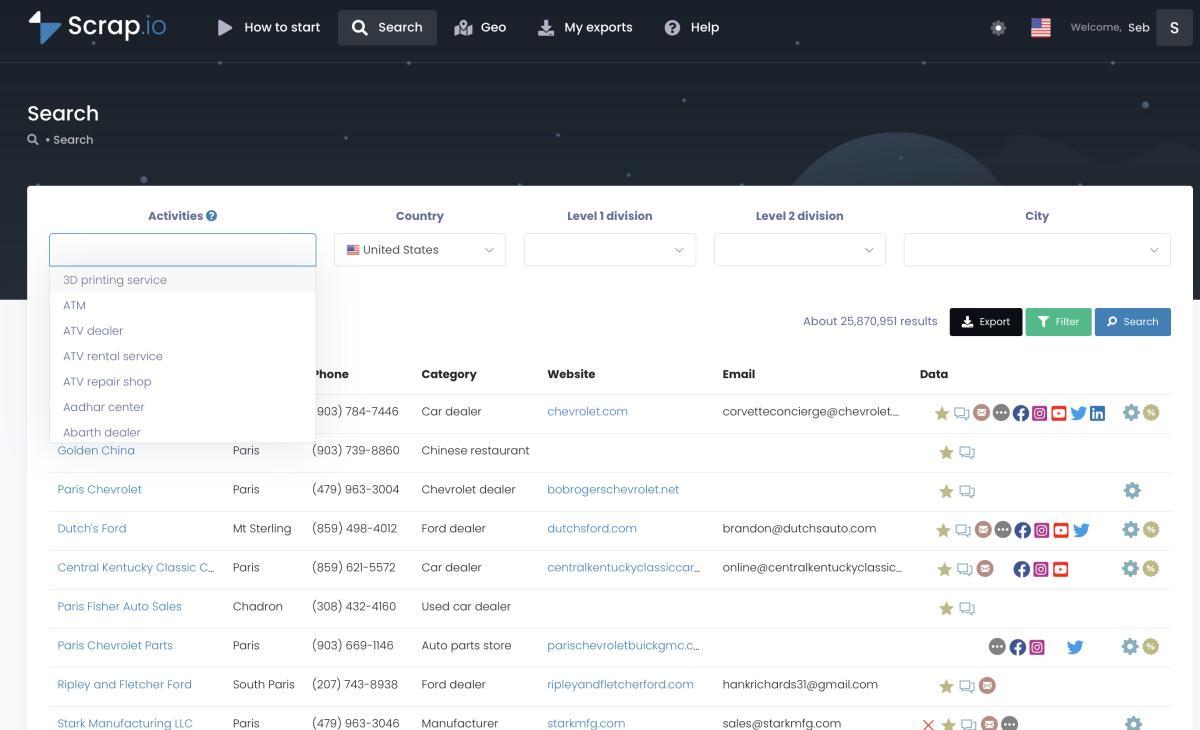
Bref, you don't need a $2,000/month intent data platform to score local leads. You need advanced filtering for Google Maps data and a simple spreadsheet. (Or better yet, a CRM integration.)
AI-Powered Lead Qualification in 2026
AI lead qualification isn't hype anymore. It's table stakes.
The numbers: AI-driven scoring delivers 40% accuracy gains over manual methods (Reach Marketing). And 54% of B2B organizations now use lead scoring, up from 44% in 2025. The adoption curve has hit the steep part.
What does automated prospect scoring with AI look like in practice? You feed enriched lead data into your CRM, set scoring rules, and let machine learning adjust weights based on which leads actually close. The system learns what a "good lead" looks like for your specific business. No more guessing. The fastest way to feed that machine is CRM automation with Google Maps enrichment, so every new record lands scored, not blank.
Video: How to Turn Your CRM Into a War Machine Using Google Maps Data?
Real-World Lead Qualification Examples That Actually Work
When Einspahr Auto Plaza, a family-owned dealership in Brookings, South Dakota, implemented a 100-point scoring system, their hot-lead emails hit a 64% open rate. The industry benchmark? 12.6%. That's not incremental improvement. That's a different sport.
Let's look at five examples of lead qualification done right. Real companies, real numbers, no hypothetical "Company X" nonsense.
📌 Einspahr Auto Plaza: A small-town auto dealer used lead scoring to segment shoppers into hot/warm/cold tiers. Result: 64% open rate on hot leads and ~50% click-through rate on test drive scheduling, versus a 9.8% benchmark. (Source: 9clouds case study)
📌 SalesHive: AI-driven B2B outreach combining email and LinkedIn with scoring automation. Their campaign generated +65% qualified leads, a +30% demo-to-close rate, and $1.2M in pipeline within 90 days. (Source: SalesHive case study)
📌 Clay + Google Maps: A team scraped Google Maps for HVAC companies in Phoenix, enriched the data with AI, and scored leads automatically. Result: 178 qualified businesses in minutes, with verified emails and review sentiment analyzed. That's lead scoring using Google Maps data in action. (Source: Clay blog)
📌 SimplerQMS: B2B email outreach with strict prospect vetting criteria. 4.4% reply rate, 21 qualified opportunities, and a $420K pipeline in 60 days. The key? They only emailed leads that scored above their threshold. Everyone else got parked. (Source: Prospeo case study)
📌 Marathon Health: 22,000 emails targeting B2B healthcare buyers. With conversational email and tight qualification: 38% open rate, $4.5M in net-new pipeline, and +211% in-market buying growth. (Source: SalesHive)
Notice the pattern? Every one of these teams scored and segmented before reaching out. Not a single one blasted their entire list. That's how you qualify leads effectively: be ruthless about who deserves your time.
Oh, and here's what people are actually saying about this approach:
"The biggest mistake I see is sales teams treating every lead the same. You need a scoring system, even a basic one. Rate them on fit, engagement, and timing. Then only call the 8s, 9s, and 10s." (Reddit, r/sales)
"We started scoring leads by Google Maps reviews and ratings before reaching out. The difference was night and day. Businesses with 4+ stars and active profiles were 3× more likely to respond to cold emails." (Reddit, r/marketing)
Your Lead Qualification Checklist for 2026
The most effective lead qualification system in 2026 isn't a 50-field CRM form. It's a simple checklist you can run in under 2 minutes per lead.
Here's a lead qualification checklist template you can copy and adapt right now:
| Criteria | Signal | Score | Tool / Source |
|---|---|---|---|
| ICP Fit (industry + size) | Matches target category | +20 | Scrap.io / CRM |
| Budget Signal | Price range $$+ or stated budget | +10 | Google Maps / Discovery call |
| Decision-Maker Identified | Owner/manager email or direct line | +15 | Scrap.io / LinkedIn |
| Engagement Level | Opened email / clicked / replied | +15 | Email platform |
| Timing / Urgency | Active need within 1-3 months | +10 | Discovery call / form |
| Google Maps Rating | 4+ stars | +15 | Scrap.io |
| Email Available | Verified email on file | +10 | Scrap.io |
| Website Active | Functional website linked | +5 | Scrap.io / Manual check |
Total possible: 100 points. Hot = 80+. Warm = 40-79. Cold = below 40. Dead simple. And way more effective than "I had a good feeling about this one."
My advice? Print this out. Or pin it in your CRM. Run every lead through it before you pick up the phone. Two minutes now saves you 30 minutes of a dead-end call later. Want a downloadable lead qualification checklist pdf? Rebuild this exact table in a doc and you've got one. No gated form required.
Compliance & Best Practices for Lead Outreach
The fastest way to destroy a qualified pipeline? Ignoring CAN-SPAM and GDPR.
Look, nobody gets excited about compliance. But one spam complaint too many and your domain is toast. Here are the non-negotiables:
CAN-SPAM (US market): Every outreach email must include a clear opt-out mechanism, your physical business address, and honest subject lines. No fake "Re:" tricks. No hidden unsubscribe links.
GDPR (if targeting EU): Legitimate interest can justify B2B outreach, but you need to document it. Data minimization matters. And honor opt-out requests within 30 days, no exceptions.
Best practices that actually protect you: Keep your lists clean (bounce rate under 2%), segment aggressively so you're only emailing relevant prospects, and always, always make opt-out easy and visible.
Scrap.io extracts publicly available business data from Google Maps. No private information. No scraping behind logins. Every field is traceable to its public source, and the platform is GDPR and CCPA compliant. That said, how you use the data is on you. Be smart about it. Data-driven outreach for qualified local business leads works best when it's permission-based and respectful.
FAQ: Lead Qualification
What does lead qualification mean?
Lead qualification is the process of evaluating prospects against predefined criteria (budget, authority, need, timeline, and ICP fit) to determine whether they're likely to become paying customers. It helps sales teams focus their time on high-potential leads instead of chasing everyone. In short: it's how you separate real buyers from browsers before you spend a minute on them.
What is an MQL vs an SQL?
An MQL (Marketing Qualified Lead) has shown interest through engagement signals like email opens, content downloads, or website visits. An SQL (Sales Qualified Lead) has been further vetted and confirmed to have budget, authority, and a real buying timeline. The difference in one line: interest versus confirmed intent.
How to determine if a lead is qualified?
Use a scoring model based on ICP fit, engagement level, and data signals like Google Maps ratings, review volume, and email availability. Run each lead through a qualification checklist. If they score 80+ on a 100-point scale, they're hot. Below 40? Park them for later.
What is the best lead qualification framework?
It depends on your sales cycle. BANT for fast, transactional deals. CHAMP for consultative selling where understanding challenges comes first. MEDDIC for complex enterprise deals. For local business prospecting, a data-driven scoring model using Google Maps signals often outperforms traditional frameworks entirely.
How does AI improve lead qualification?
AI-driven scoring delivers 40% accuracy gains over manual methods and enables real-time lead prioritization. Machine learning models learn from your historical close data to predict which new leads are most likely to convert, removing guesswork and improving lead nurturing strategies for Google Maps prospects.
Conclusion
Lead vetting isn't glamorous. Nobody's posting "just built a 100-point scoring model" on LinkedIn. But it's the thing that separates teams closing $1M+ pipelines from teams burning through lists and wondering why nothing sticks.
Pick a framework. Build a simple scoring model. Feed it real data, especially Google Maps signals if you're targeting local businesses. And for the love of your conversion rate, stop treating every lead the same.
Oh, and one more thing. If you're still manually collecting Google Maps data and dumping it into spreadsheets? That's 2019 energy. Handle objections in Google Maps prospecting with better data, not more effort.
Generate a list of restaurant with Scrap.io