

- What Is Signal-Based Selling?
- Why Cold Outreach Is Failing (And Signals Are Winning)
- The 5 Types of Buying Signals That Actually Matter
- Google Maps: The Untapped Signal Goldmine for B2B
- How to Build Your Signal-Based Selling Playbook
- Tools & Tech Stack for Signal-Based Selling in 2026
- Signal-Based Selling: Compliance & Best Practices
- FAQ
Here's a number that should ruin your Monday morning: 92% of B2B buyers already have a vendor in mind before they even start their "research" phase (Forrester, 2024). Read that again. Ninety-two percent. By the time your SDR hits "send" on that carefully crafted cold email, the deal is already half-done, and you're not in it.
So what separates the teams that show up first from the ones stuck refreshing their CRM dashboards hoping something sticks?
One word: signals.
Signal-based selling has gone from niche buzzword to the single biggest shift in B2B prospecting since the death of the cold call. And the wildest part? Most teams are still ignoring the richest signal source on the planet. (Spoiler: it's Google Maps. But we'll get there.)
This guide breaks down what signal-based selling actually is, why your current outreach strategy is hemorrhaging reply rates, which signals matter in 2026, and (here's the part nobody else covers) how to turn Google Maps data into a Google Maps lead generation machine that feeds your pipeline on autopilot.
What Is Signal-Based Selling?
Let's kill the jargon upfront. Signal-based selling is a B2B sales approach where you use real-time digital signals (intent data, trigger events, behavioral cues) to decide who to contact and when. That's it. No crystal ball required.
Instead of building a list of 10,000 prospects and blasting the same template to all of them (we've all done it, let's not pretend), you focus exclusively on accounts showing active buying signals in sales. Someone just got promoted to VP of Marketing? That's a signal. A company just opened a second location on Google Maps? Signal. A prospect visited your pricing page three times in a week? Massive signal.
The difference is night and day. Traditional prospecting is a megaphone. Signal-based selling is a sniper rifle. And the data backs it up. Signal-qualified leads convert 47% better, produce 43% larger deals, and generate 38% more closed deals per quarter (Landbase, 2026). Not incremental. Transformational.
Bref, if you're still prospecting without signals in 2026, you're bringing a butter knife to a gunfight.
Why Cold Outreach Is Failing (And Signals Are Winning)
Your sales team spends 70% of their time NOT selling. Let that marinate for a second. And when they finally do hit send on an outbound email? The average reply rate is a pathetic 3.4% (Instantly 2026 Cold Email Benchmark Report). Three point four percent. You'd get better odds playing roulette.
Meanwhile, teams using a signal-based selling strategy for B2B are hitting 18% reply rates. That's a 5.2x improvement. Same emails. Same reps. Different targeting logic.
Here's the thing nobody says loud enough: cold outreach isn't failing because your copywriting sucks. It's failing because you're reaching out to people who have zero reason to care about you right now. Timing is everything. And 75% of B2B sales engagements now originate from signal-based triggers (Growth List, 2025).
The math is brutal but simple. If you contact a prospect within 5 minutes of a trigger event, you're 21x more likely to convert compared to waiting 30 minutes. Twenty-one times. That's not a marginal improvement. That's a completely different sport.
Gartner's 2025 Sales Survey found that 61% of B2B buyers now prefer a rep-free buying experience (Gartner, 2025). They don't want to be "sold to." They want to be reached at the right moment with the right context. That's the entire promise of a signal-based go-to-market strategy. And it's not just theory. It's becoming the default signal-based marketing approach for any team serious about pipeline in 2026.
Oh, and the global lead generation industry? Projected to hit $295 billion by 2027 at a 17% CAGR (Martal, 2026). The money is following the signals. The question is whether you will too.
The 5 Types of Buying Signals That Actually Matter
Not all signals are created equal. In fact, most "intent data" is noise dressed up in a dashboard. The real question for anyone wondering how to identify buyer intent signals is: which signals actually predict a sale, and which ones are wasting your team's time? With every vendor pushing intent data for sales teams in 2026, it's easy to get overwhelmed. Let's cut through the noise, from least to most actionable.
Examples of buying signals fall into five buckets: intent signals (pricing-page visits, content downloads), trigger events (funding rounds, new hires, leadership changes), engagement signals (email opens, social activity, webinar attendance), technographic signals (tech-stack changes), and Google Maps signals (new business listings, review velocity, category updates). Here are all five, ranked from least to most actionable.
Intent Signals (Website Visits, Content Downloads)
The classics. Someone visits your pricing page, downloads your ROI calculator, or reads three blog posts about your product category in a week. These are intent signals B2B teams have tracked for years, and they work. But they only capture prospects who already know you exist.
Useful? Yes. Sufficient? Not even close.
Trigger Events (Funding, Hiring, Leadership Changes)
This is where things get spicy. A startup just raised a Series B? They're about to spend aggressively. A company just hired a new CMO? Newly hired executives spend 70% of their budget in the first 100 days (UserGems, 2025). That's not a "maybe we should reach out" situation. That's a five-alarm fire.
Trigger events are gold because they create urgency you didn't have to manufacture.
Engagement Signals (Social, Email Opens, Product Usage)
Someone liked your CEO's LinkedIn post. Opened your email four times. Attended your webinar but didn't book a demo. These are soft signals. They show interest but not necessarily intent. Good for prioritization. Terrible as your only data source.
Technographic Signals (Tech Stack Changes)
A company just ditched their old CRM for HubSpot. Or they added Slack and Notion to their stack. Technographic shifts reveal operational priorities, and if your product fits the new stack, you're walking into a warm conversation. This is how sales prospecting signals get interesting for SaaS sellers.
Google Maps Signals (New Listings, Review Velocity, Category Changes)
And here's the one nobody's talking about. Google Maps signals for B2B prospecting are hiding in plain sight. A new restaurant pops up with 3 reviews? That owner is desperate for marketing, POS systems, supplier contracts: everything. A dental practice suddenly updates its hours and adds a new category? They're growing. A business goes from 50 to 200 reviews in three months? Revenue is climbing.
Review velocity cuts both ways, too. A business suddenly collecting a wave of fresh one-star reviews is a company actively looking for help right now, which is exactly why finding companies with negative reviews is one of the fastest paths to a warm conversation.
These aren't abstract "intent scores" cooked up by some algorithm. They're concrete, verifiable real-time buying signals for sales tied to businesses you can call right now. And ZERO traditional intent data platforms capture them. None. That's your edge.
Video: Find Businesses That JUST Opened (Before Your Competitors Do)
Google Maps: The Untapped Signal Goldmine for B2B
Here's the part that should make you close this tab and go build a list. As of today, Scrap.io indexes 667,052 restaurants in the US alone. And 9,511 of them showed up on the map for the first time in the last 90 days. That's nearly ten thousand brand-new businesses, at country scale, each one a fresh "new listing" signal you can catch before your competitors even notice.
Now stack a filter on top. 199,131 of those US restaurants already expose an email on their website (roughly 30%, reachable today). That's a signal-based prospecting list no intent data platform can hand you. No $25K/year subscription. Just Google Maps signals and a smart filter.
Sounds too simple? That's exactly why it works. Everyone's fighting over the same ZoomInfo and 6sense data. Meanwhile, Google Maps data for B2B lead generation sits there with 225M+ business profiles across 195 countries, updated in real time, completely overlooked by your competitors.
What Google Maps Signals Reveal About Buying Intent
Think of Google Maps as a living, breathing database of business activity. Every update tells a story:
- New listings = recently opened business = they need EVERYTHING (accounting, marketing, insurance, equipment)
- Review velocity spikes = business is growing fast = ready for scaling tools
- Category changes = business is pivoting = new needs emerging
- Operating hours updates = actively managed business = decision-maker is engaged
- Low review count + recent listing = early-stage business = highest buying intent for services
My advice? Stop thinking of Google Maps as a place to find restaurants. Start thinking of it as the world's largest, real-time signal database for local and SMB prospecting.
How to Extract & Act on Google Maps Signals with Scrap.io
OK but concretely, how do you actually pull these signals at scale? You can't exactly sit there clicking through Google Maps listings one by one. (Well, you can. But that's a special kind of self-punishment.)
Video: Scrap.io - How to Start?
This is where scraping Google Maps data becomes your secret weapon. With Scrap.io, you filter by location, category, review count, rating, first-seen date, and extract verified emails, phone numbers, and business data in minutes. Not days. Minutes.
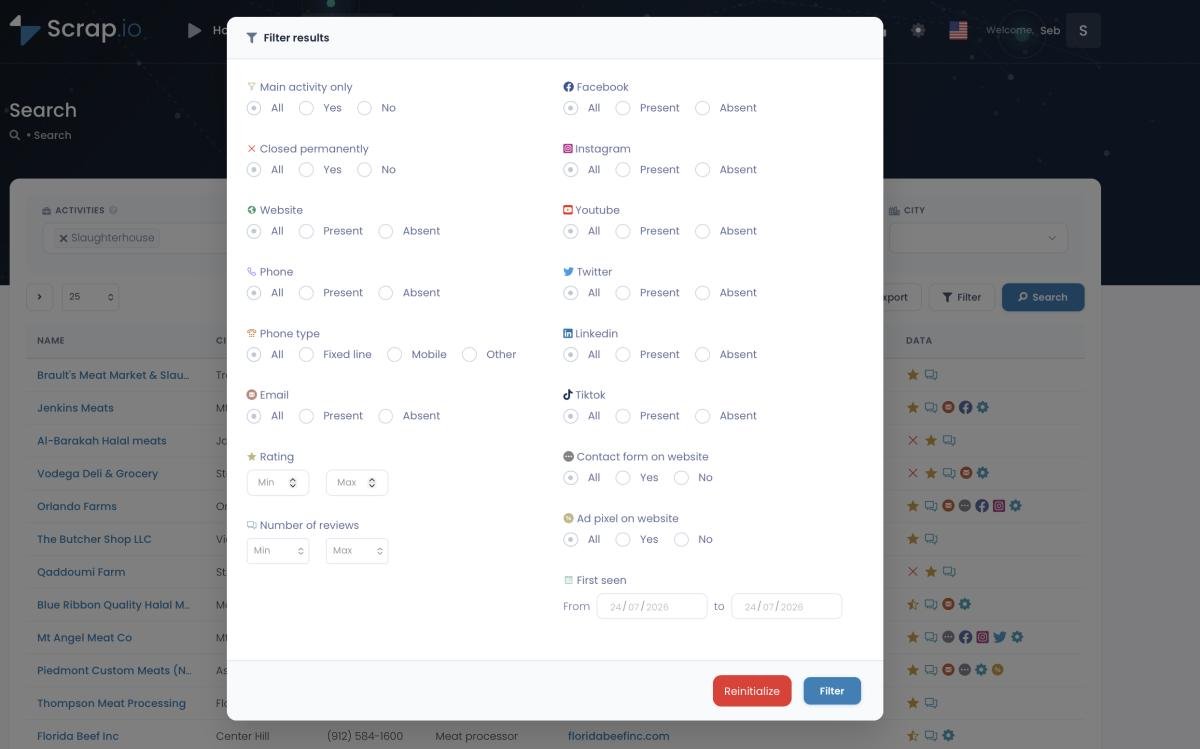
The real play? Stack filters. "Restaurants in Miami, first seen in the last 6 months, fewer than 20 reviews, with a website." That's a hyper-targeted list of businesses that are (a) new, (b) growing, and (c) reachable. Good luck getting that from Bombora.
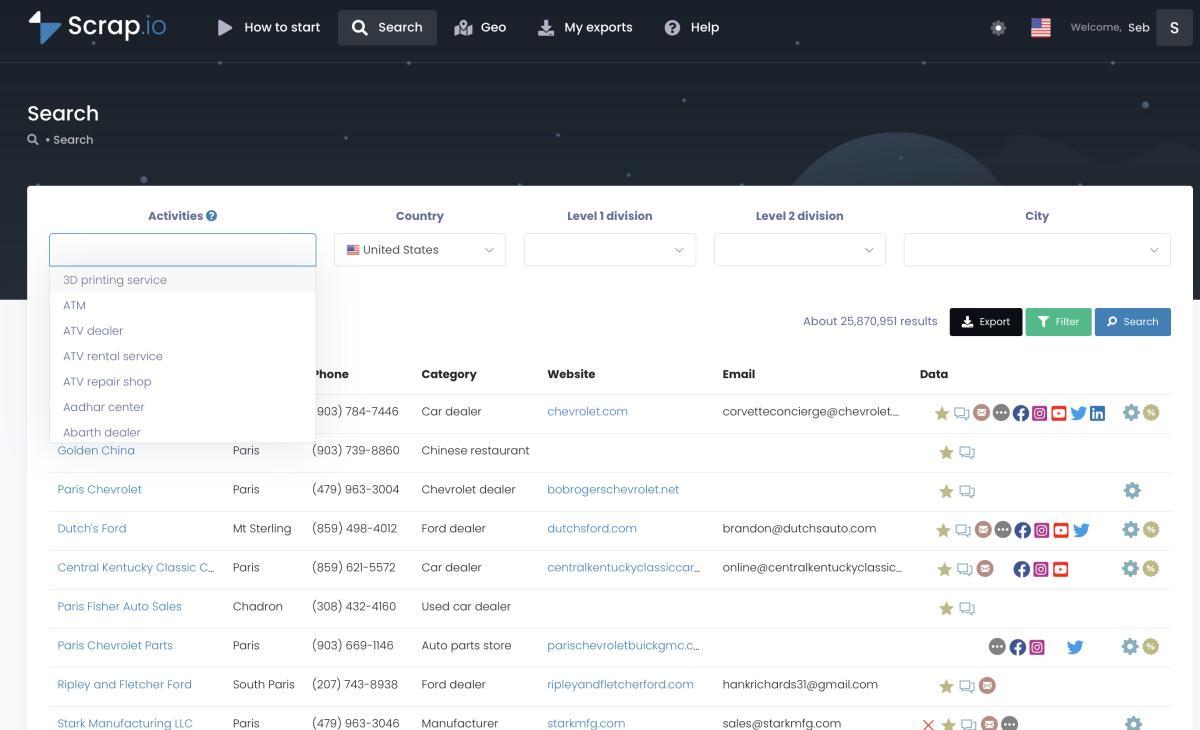
Real-World Signal Plays Using Google Maps Data
Let's get specific. Here are three signal-based selling case studies you can steal right now:
Play #1: The "New Kid on the Block" play. Filter for businesses first seen in the last 90 days in your target category and city. These owners are in buying mode for literally everything: POS systems, insurance, marketing, accounting software. Your timing couldn't be better. (Remember: 9,511 new US restaurants in the last 90 days. That play alone refills every quarter.)
Play #2: The "Growth Surge" play. Find businesses whose review count jumped 50%+ in the last quarter. Revenue is climbing, they're likely hiring, and they need tools to scale. Perfect for SaaS, staffing, and consulting firms.
Play #3: The "Underserved Market" play. Use Scrap.io's prospecting KPIs to find businesses in a specific GeoSearch radius with no website or low digital presence. These are the easiest sales conversations you'll ever have. They need help and they know it.
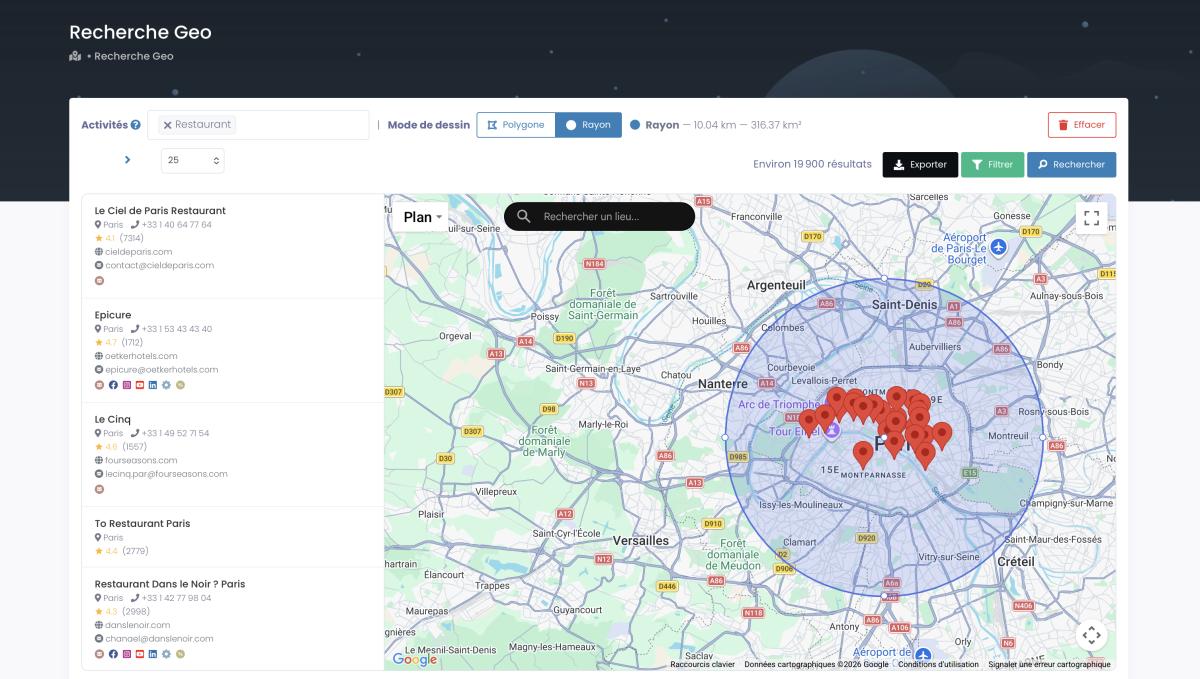
On Reddit, one user in r/b2bmarketing shared: "The signal based strategy that got us 6 new B2B clients this month (no ads)." No ad spend. No intent data subscription. Just signals.
How to Build Your Signal-Based Selling Playbook
Most teams fail at signal-based selling not because they lack data, but because they lack a system. Data without process is just noise with a subscription fee. Here's the 4-step playbook that took Frontify from guesswork to 4x self-sourced revenue and a 42% increase in sales velocity (Salesmotion, 2025).
Video: How to Turn Your CRM Into a War Machine Using Google Maps Data
Step 1: Define Your Signal Hierarchy
Not every signal deserves the same response. A pricing page visit is a medium signal. A leadership change at a target account? That's a red alert. Map your signals to your ICP and rank them by purchase likelihood. If you sell to local businesses, Google Maps signals (new listings, review spikes) should be at the top of your hierarchy. Period. And before you rank anything, define your ICP with Google Maps geographic data so your hierarchy is scoring the right accounts in the first place.
Step 2: Score & Prioritize Accounts
Stack signals for compound scoring. A business that's newly opened AND has a website AND is in your target category AND shows review growth? That's a 4-signal account. Prioritize ruthlessly. Linear did this and saw deal sizes jump 30%, response rates hit 50%, and saved 20 hours per week on prospecting (Autobound, 2025). Twenty hours. That's basically hiring a free SDR.
Step 3: Build Signal-Specific Outreach Plays
This is where most people mess up. They get the signals right, then send the same generic template anyway. Defeats the entire purpose.
Each signal type needs its own play. New business listing? Lead with "congrats on the opening, here's how we help new [category] owners with [specific pain]." Review spike? "I noticed [Business Name] is growing fast. We help businesses like yours scale [X] without the growing pains." The signal IS your opener. Use it.
And if you're struggling with what to say, check out this guide on handling objections in Google Maps prospecting. It covers the exact scripts that work.
Step 4: Automate, Measure, Iterate
Manual signal tracking is a death trap. Automate the extraction (Scrap.io + Make.com handles Google Maps signals beautifully), pipe signals into your CRM, and set up automated outreach sequences per signal type. Then track the only metrics that matter: signal-to-reply rate, signal-to-meeting rate, and signal-to-close rate. Wire it all into a real system and you can build a sales pipeline from Google Maps leads that turns raw signals into booked revenue.
Dreamdata does this internally. They use their own attribution product to score accounts by recency of signal interaction and auto-route the hottest leads to reps (Dreamdata, 2025). You don't need their exact stack. But you need SOME system that turns signals into action without a human bottleneck.
Tools & Tech Stack for Signal-Based Selling in 2026
You don't need a $30,000/year intent data platform to start signal-based selling. In fact, the most overlooked signal source (Google Maps) is accessible for a fraction of the cost. Here's what a realistic stack looks like in 2026, from scrappy startup to enterprise.
| Category | Tool | Signal Type | Starting Price | Best For |
|---|---|---|---|---|
| Google Maps Signals | Scrap.io | New listings, reviews, categories | Free trial (7 days) / from $35/mo | SMB/local prospecting |
| Intent Data | Bombora / 6sense | Topic-level intent | $25K+/year | Enterprise ABM |
| Enrichment | Apollo.io | Job changes, funding, tech stack | $49/month | Mid-market outbound |
| Trigger Events | UserGems | Job changes, champion tracking | Custom pricing | Enterprise sales |
| Outreach | Instantly / Lemlist | Engagement signals | $30/month | Cold email at scale |
| CRM | HubSpot / Salesforce | Signal aggregation | Free / $25/month | Signal-to-pipeline tracking |
Here's what most people get wrong: they start with the expensive tools. Don't. Start with one signal source you can act on immediately. If you sell to local businesses, agencies, restaurants, healthcare, or legal, your prospects are on Google Maps. That's your starting line. Compare this to other B2B lead generation platforms and the ROI math becomes obvious real fast.
For a deeper dive on Google Maps scraping tools, we've done a head-to-head comparison that's worth a read.
And honestly? Built-In used Apollo's signals and saw win rates jump 10% with ACV up 10% too. League went with Demandbase and got a 41% increase in meeting bookings (Demandbase, 2025). The tool matters less than the system you build around it.
Signal-Based Selling: Compliance & Best Practices
OK, the less fun but absolutely essential part. Can you legally use Google Maps data for prospecting? Short answer: yes, if you do it right.
Google Maps business data is publicly available information. Names, addresses, phone numbers, websites, reviews: all public. Scrap.io extracts this data in a CAN-SPAM and GDPR compliant way. But (and this is a big but) you still need to follow the rules when you actually reach out.
For email outreach in the US: CAN-SPAM requires a real physical address, a clear opt-out mechanism, and no deceptive subject lines. For the EU: GDPR requires legitimate interest or consent. B2B data under legitimate interest is generally accepted, but document your reasoning. Don't be lazy about this.
A few best practices that'll save you from headaches:
- Always verify emails before sending (bounced emails destroy your domain reputation)
- Personalize based on the signal. Generic blasts are both illegal-adjacent AND ineffective
- Honor opt-outs immediately. Not "within 10 days." Immediately.
- Keep your data fresh. Signals decay fast. A business that opened 6 months ago is no longer "new"
As one LinkedIn commenter (Frank Sondors) put it: "I'm skeptical about 'signal' based selling." Fair. The skepticism usually comes from teams that confuse "having signals" with "acting on them well." The data is only as good as your ethics and your process.
And on Reddit's r/b2bmarketing, a common question is: "How do teams build intent / signal-based marketing in-house?" The answer: start small, stay compliant, and iterate. Don't try to boil the ocean on day one. For converting those leads into actual customers, this guide on converting Google Maps prospects covers the full funnel.
FAQ
What is signal-based selling?
Signal-based selling is a B2B sales strategy that uses real-time digital signals (like intent data, trigger events, and behavioral cues) to identify and engage prospects when they're most likely to buy. Instead of blasting cold emails to everyone, you focus on accounts showing active buying signals. Think of it as replacing "spray and pray" with "detect and connect."
What are examples of buying signals?
The five buying signals that matter most in 2026 are: (1) intent signals like pricing-page visits and content downloads, (2) trigger events like new funding, hiring, or leadership changes, (3) engagement signals from email opens and social activity, (4) technographic signals from tech-stack changes, and (5) Google Maps signals like new business listings, review velocity, and category updates. Most teams stop at #1 and #2. The smart ones go all the way to #5.
How do you implement signal-based selling?
Four steps: define your signal hierarchy (which signals matter most for your ICP), score and prioritize accounts by stacking multiple signals, build signal-specific outreach plays (not generic templates), and automate the detection-to-action pipeline. You can start with Google Maps signals via Scrap.io and expand from there. Most teams see results within 60-90 days.
What tools are used for signal-based selling?
A basic stack includes: a signal source (Scrap.io for Google Maps data, Bombora or 6sense for intent), an enrichment tool (Apollo.io, Cognism), a CRM (HubSpot, Salesforce), and an outreach platform (Instantly, Lemlist). Budget ranges from $100/month for a lean setup to $5,000+/month for enterprise. The best signal-based selling tools are the ones you actually use, so start simple.
How is signal-based selling different from traditional cold outreach?
Traditional outreach targets broad lists with generic messaging: 3.4% average reply rate. Signal-based selling targets specific accounts showing active buying intent with personalized, context-rich messaging, achieving 15-25% reply rates. That's not a small optimization. It's a fundamentally different approach to how to use buying signals in sales that produces 5x better results across every metric that matters.
Generate a list of restaurant with Scrap.io