

Written by Sébastien. Last updated: November 2026.
Is It Legal to Scrape Google Maps in 2026? Court Rulings, Laws & Real Risks
Picture an agency owner in Austin. Eight people, decent revenue, doing B2B outreach for HVAC companies. She spends three weeks going back and forth internally about whether her team can legally pull business data from Google Maps. Eventually she caves and hires a lawyer. Bill comes to $2,400. His answer? "It depends."
Two thousand four hundred dollars for "it depends."
Look, the anxiety makes sense. Google's a trillion-dollar company. Their Terms of Service sound scary. And the internet is full of conflicting advice from people who've never actually read a court filing. But the legal picture around Google Maps scraping is a lot clearer than most people assume. You just have to separate what Google wants you to believe from what courts have actually ruled.
That's what this guide does. Court rulings, real risks (not hypothetical ones), the compliance stuff, practical methods. Updated November 2026, including Google's own lawsuit against a scraper and how it went. If you're building a lead gen pipeline or running competitive research across Google Maps, you'll know exactly where you stand by the end. And if you're wondering whether web scraping in general is legal, or whether this is all just one big gray area, we settle that too.
Want the full technical rundown on scraping methods first? Our complete Google Maps scraping walkthrough covers that. This article focuses on the legal side.
- Is It Legal to Scrape Google Maps? The Short Answer
- What Is Google Maps Scraping (And Why Does It Matter)?
- Google's Terms of Service vs the Law: A Critical Distinction
- Court Rulings That Define Scraping Legality in 2026
- What Actually Happens If You Scrape Google Maps?
- Legal Methods for Google Maps Data Extraction
- GDPR, CCPA & Data Compliance: What Scrapers Need to Know
- Google Places API vs Scraping: Cost & Feature Comparison
- Best Practices for Legal Google Maps Data Collection
- Frequently Asked Questions
- Making Smart Decisions About Google Maps Data Collection
Is It Legal to Scrape Google Maps? The Short Answer
Here's a fact that reframes the whole debate: Google sued a scraper in 2026. It lost the first round, and its Maps-related claims didn't even make it to the second.
Scraping publicly available business data from Google Maps is generally legal under US law. Multiple federal court rulings back this up: hiQ v. LinkedIn, Meta v. Bright Data, X Corp v. Bright Data. No login is needed to see this data. No password gets bypassed. The Computer Fraud and Abuse Act (CFAA) simply doesn't apply to information any random person with a browser can access.
Now, Google's Terms of Service do prohibit scraping. People freak out about this. But violating a company's ToS is a contract breach. It's not a crime. Those two things have wildly different consequences, and confusing them is where 90% of the fear comes from.
That distinction, web scraping legality under actual law versus a private company's service agreement, is the thing to internalize before reading anything else here. So is scraping Google Maps against terms of service? Technically yes. Illegal? No. Keep reading.
So, Is Web Scraping Legal in General?
Short version: yes, for publicly available data. Is web scraping legal in the US? Courts have said so repeatedly, from hiQ v. LinkedIn to the Supreme Court's Van Buren ruling. Is scraping legal in Europe? Collecting public business data is fine too; the GDPR governs what you then do with any personal data, not the act of collecting public information. The nuance that trips people up is simple. Public business data (names, addresses, phones) sits on solid ground. Logins, copyrighted content, and anti-bot circumvention are where the real risk lives. More on that below.
What Is Google Maps Scraping (And Why Does It Matter)?
Google Maps scraping = automatically pulling business info from listings. Names, addresses, phone numbers, websites, ratings, reviews, hours, coordinates. Stuff that's visible to literally anyone who opens Google Maps. No login. No paywall. Just public data sitting there.
Why do companies bother? A few reasons, depending on who you ask.
Say you run a 12-person roofing company outside Nashville. You could use scraped Google Maps data to find commercial property managers in zip codes you're expanding into: their phone numbers, whether they have a website, then cold-call the ones who don't. The agencies we work with describe exactly this shift, from three callbacks a week to double digits, once they swap "hoping the phone rings" for a targeted list. A SaaS founder targeting restaurants without a website does the same dance. So does a real-estate investor watching competitor reviews across three states for ratings that start slipping (often the sign an owner's about to sell). These aren't edge cases. This is how business development works in 2026.
Scale helps you picture it. Right now, Scrap.io indexes 26,916,352 US business listings on Google Maps, and 9,199,255 of them (34.2%) come with an email on file. Zoom into one trade and it gets concrete: 78,239 plumbers in the US, 46,015 with a website (58.8%), 29,255 with an email (37.4%). Globally, that's part of 225M+ businesses across 195 countries. So is it illegal to extract data from Google Maps for this stuff? No. If you want to extract emails from Google Maps or scrape phone numbers from listings, you're not alone, and you're not doing anything exotic.
Google's Terms of Service vs the Law: A Critical Distinction
OK, this is the section that clears up most of the confusion. And yeah, Google kind of benefits from that confusion staying in place. This is also where the whole "Google web scraping policy" question actually gets answered.
What Google's ToS Actually Say
Section 3.2.3 of the Google Maps Platform Terms of Service says content "cannot be exported, extracted, or otherwise scraped for usage outside the Services." Crystal clear. They do not want you scraping. Period.
Why ToS Violations Aren't Criminal Offenses
But here's the part Google's legal team prefers you don't think too hard about. Their Terms of Service are a private contract. Not federal law. Not state law. A contract. Between you and Google.
Here's an analogy that actually works. Say a coffee shop puts a sign on the door: "No laptops after 2pm." You sit down at 3pm, open your MacBook. Have you committed a crime? Obviously not. Can they kick you out? Sure. Ban you from the shop? Absolutely. Call the cops? No. Because a private rule isn't the law.
Same deal with Google's ToS. Break them, and Google might suspend your account or temporarily block your IP. Those are civil consequences, not criminal ones. The law itself does not prohibit accessing publicly available data.
Why Google Opposes Scraping (The Business Reasons)
Google's not dumb. They sell this exact data through the Places API. Free scraping cuts directly into that revenue stream. They also (legitimately) want to protect server resources and control how their data ecosystem works.
None of that makes scraping illegal. It just means Google has strong business incentives to discourage it. Once you see the ToS for what they actually are, a revenue-protection mechanism dressed up in legal language, the whole thing gets a lot less intimidating.
Court Rulings That Define Scraping Legality in 2026
Nine years, five landmark cases, and one 2026 twist: the company suing a scraper this time was Google itself. Blog posts don't determine legality. Opinions on Reddit don't determine legality. Court rulings do. And since 2017, the rulings have been remarkably consistent. These are the web scraping laws that actually matter.
| Case | Year | Ruling | Key Takeaway |
|---|---|---|---|
| hiQ Labs v. LinkedIn | 2017–2022 | Ninth Circuit ruled for hiQ | Scraping public data is not a CFAA violation |
| Van Buren v. United States | 2021 | Supreme Court narrowed CFAA | CFAA targets insiders exceeding access, not outsiders visiting public pages |
| X Corp v. Bright Data | 2024 | Case dismissed (May 9, 2024, Judge Alsup) | Platforms don't own copyright on user-generated content |
| Meta v. Bright Data | 2024 | Meta dropped claims | Logged-out scraping means no ToS agreement, so no breach |
| Reddit v. SerpApi, Oxylabs, AWMProxy & Perplexity | 2025–2026 | Motion to dismiss largely denied (Jul 31, 2026) | DMCA invoked for AI training, very different from lead gen |
| Google v. SerpApi | 2025–2026 | DMCA claims dismissed (Jul 20, 2026); refiled without Maps | Even Google couldn't hold a legal theory on Maps data |
hiQ Labs v. LinkedIn (2017–2022): The Foundation
This is the case that changed everything. hiQ Labs, a small analytics company, scraped public LinkedIn profiles to predict which employees were likely to quit. LinkedIn didn't like it. Sent a cease-and-desist. Then sued under the CFAA.
The Ninth Circuit said no. Publicly available data is publicly available data. Scraping it isn't "unauthorized access" under the CFAA. The Supreme Court's Van Buren decision in 2021 backed this up even further: the CFAA targets insiders who exceed their access, not random outsiders viewing public web pages.
One thing most articles conveniently forget to mention: hiQ and LinkedIn settled in 2023. hiQ paid damages and agreed to destroy the data. But (and this matters) that was a private business settlement. Not a reversal of the ruling. The Ninth Circuit precedent still stands, fully intact. Full case history on Wikipedia if you want the receipts. People still Google "is it legal to scrape Google Maps 2021," and the answer was yes then too.
Meta v. Bright Data (2024): Scraping While Logged Out
This one's huge for Google Maps scraping specifically. Meta sued Bright Data for scraping public Facebook and Instagram pages. Court said: if you're not logged in, you haven't accepted the ToS. No agreement, no breach. Meta dropped its remaining claims in early 2024.
Why does this matter for you? Because Google Maps data is accessible without logging in. At all. You just go to maps.google.com and there it is.
X Corp v. Bright Data (2024): Platforms Can't Own What Users Create
Twitter (now X) went after Bright Data for scraping public tweets. On May 9, 2024, Judge Alsup threw it out. The reasoning? X doesn't own the copyright on content its users post. You can't use ToS to claim ownership of things that aren't yours. The full dismissal is covered over at CNBC, and the one-liner from the ruling stuck: a platform can't "invent its own copyright law."
Google v. SerpApi (2025–2026): Google Sued a Scraper, and Dropped Its Maps Claims
Here's the 2026 headline that matters most for our exact question. In December 2025, Google filed a DMCA suit against SerpApi in the Northern District of California, accusing it of circumventing SearchGuard (Google's anti-bot system) to scrape licensed content at scale. Note what this is about: the DMCA anti-circumvention rule, not the CFAA. Different law, different fight.
And then it didn't go Google's way.
| Date | What happened |
|---|---|
| Dec 19, 2025 | Google files its DMCA suit against SerpApi (N.D. Cal.) |
| Jul 20, 2026 | Court dismisses Google's DMCA §1201 claims |
| Aug 10, 2026 | Google refiles, dropping its Maps and Shopping theories |
| Aug 24, 2026 | SerpApi files a second motion to dismiss |
| Oct 30, 2026 | Still no new ruling |
Read that timeline again. A federal judge tossed Google's core claims because Google couldn't show that SearchGuard operated "with the authority of the copyright owner." Then Google amended its complaint and quietly abandoned its Shopping and Maps theories entirely, keeping only licensed content like its Reddit deal. The full docket lives on CourtListener, and PPC Land covered the second motion to dismiss. Did Google sue SerpApi? Yes. Did it make a Maps-data theory stick? No. That's the part worth sitting with: even the owner of the data couldn't build a durable legal case around Maps listings in court.
For the full teardown of where SerpApi stands and how a public-data tool differs, see our SerpApi vs Scrap.io comparison. One standing caveat for anyone publishing on this: court dockets move, so check the latest filing before you rely on any single ruling.
Video: SerpApi vs Scrap.io: The Fastest API Is Missing One Column
The 2025–2026 Landscape: AI Training Is a Whole Different Beast
Here's where 2026 actually changes the conversation, but not in the way the scary headlines suggest.
Reddit's suit against SerpApi, Oxylabs, AWMProxy and Perplexity (filed October 2025) leans on the DMCA, not the CFAA. Totally different legal framework. On July 31, 2026, Judge Engelmayer in the Southern District of New York largely denied SerpApi's motion to dismiss, so the DMCA claims continue. The common thread with the Google case? Both are about circumventing anti-bot systems to grab content for AI, not about pulling a plumber's phone number off a public listing.
Then there's the EU AI Act, which everyone's suddenly nervous about. Quick reality check on the timeline, because the "AI Omnibus" reshuffled it. The Act became generally applicable on August 2, 2026. But the heavy obligations got pushed back: the high-risk rules now land on December 2, 2027 and August 2, 2028, while the general-purpose AI (GPAI) rules have applied since August 2, 2025. Penalties can run up to €35 million or 7% of global turnover. The Future of Privacy Forum has the clean breakdown.
Read the important part twice. It targets the training of AI models.
Because scraping Google Maps to build a prospect list for your roofing company is a completely different animal from scraping content to train an AI model. Does the EU AI Act apply to web scraping for lead gen? Not really. The machine-readable opt-out signals (robots.txt, ai.txt, TDM reservations) govern whether you can feed content into a model, not whether you can pull a restaurant's phone number for a cold call. Don't let the headlines scare you into conflating the two.
Oh, and for the historical-pattern crowd: Air Canada sued Seats.aero (a flight-data scraper) in 2023, invoking the CFAA among other claims. The lesson that keeps repeating across these cases is simple. Public data keeps winning, even when a direct competitor is the one doing the copying.
What People Actually Ask (Reddit, Quora & the Real Talk)
Forget the theory for a second. The most honest read on how people feel about this lives in the forums.
Over on r/GoogleMaps, someone posted in February 2026 asking, flat out, "Is scraping like this even legal? Are we allowed to?" Ten replies deep, the rough consensus landed exactly where the courts did: the data's public, so collecting it isn't the crime, and what you do with it is where the rules kick in. Which is, actually, correct.
A thread on r/webscraping gets more granular, digging into how far you can go with Google Maps reviews before you're touching personal data instead of business data. (Spoiler: reviewer names are the line to watch.) And the evergreen Quora question, "What are the risks with Google Maps scraping?," keeps attracting the same split: lawyers saying "it depends," practitioners saying "we've done it for years, nothing happened." Both are right. That's the whole article in one sentence, honestly.
What Actually Happens If You Scrape Google Maps?
Enough theory. Let's talk about what happens when real companies scrape Google Maps at volume. Here's the honest breakdown.
| Action | Risk Level | Likelihood | Consequence |
|---|---|---|---|
| Using Google Places API within limits | Low | N/A | Nothing. You're doing what Google wants. |
| Scraping with rate limiting & proxies | Low–Medium | Common | Occasional temp IP blocks (15–60 min) |
| Aggressive scraping, no rate limiting | Medium | Moderate | Extended IP blocks, possible account suspension |
| Scraping while logged into Google | Medium–High | Moderate | Account suspension, lose access to Gmail etc. |
| Massive scraping that damages servers | High | Rare | Cease-and-desist letter |
| Reselling raw scraped data as your own product | High | Very rare | Potential legal action |
Talk to agency owners and growth teams who've scraped Google Maps for years, some of them five-plus years, and ask how many have received a cease-and-desist from Google.
Zero.
So can you get sued for scraping Google Maps? In theory, if you damage their servers or resell their database wholesale, sure. In practice, for lead gen? The realistic worst case for a marketing team pulling 10,000 or 20,000 listings for a client campaign is that your IP gets blocked for 45 minutes. You wait. It comes back. That's it. Google saves its legal resources for situations involving actual damage: someone hammering their servers hard enough to cause outages, or a company repackaging Google's entire database as their own commercial product. Your lead gen project? They genuinely don't care.
That said, if you're scraping while logged into your personal Google account, and you lose access to your Gmail and Drive because Google suspends you? That one's on you. Just log out first. Meta v. Bright Data literally established that logged-out users haven't agreed to anything.
Legal Methods for Google Maps Data Extraction
Four paths. They're not equal.
Google Places API: The "Official" Route
Google offers its Places API. One heads-up that trips up anyone working from an old tutorial: Google scrapped the flat $200 monthly credit on March 1, 2025. In its place you get per-SKU free tiers, roughly 10,000 calls a month on Essentials, 5,000 on Pro, and 1,000 on Enterprise. Past the free tier, Place Details Pro runs about $17 per 1,000 calls on the 10K–100K band (Google's own March 2025 pricing page spells out the change). Structured data, zero blocking risk, official support when something breaks.
Where it falls apart: no email addresses at all, no social media profiles, and large result sets mean paging through call after call. And once you're past the free tier, the bill climbs fast. Our API cost calculator does the depressing math for you.
For a startup checking 50 listings a week? The API is fine. For a sales team that needs 50,000 leads with emails and phone numbers? Not even close.
Dedicated Google Maps Scrapers (Scrap.io)
Full disclosure: this is what we built. But here's why, because the gap in the market was genuinely ridiculous.
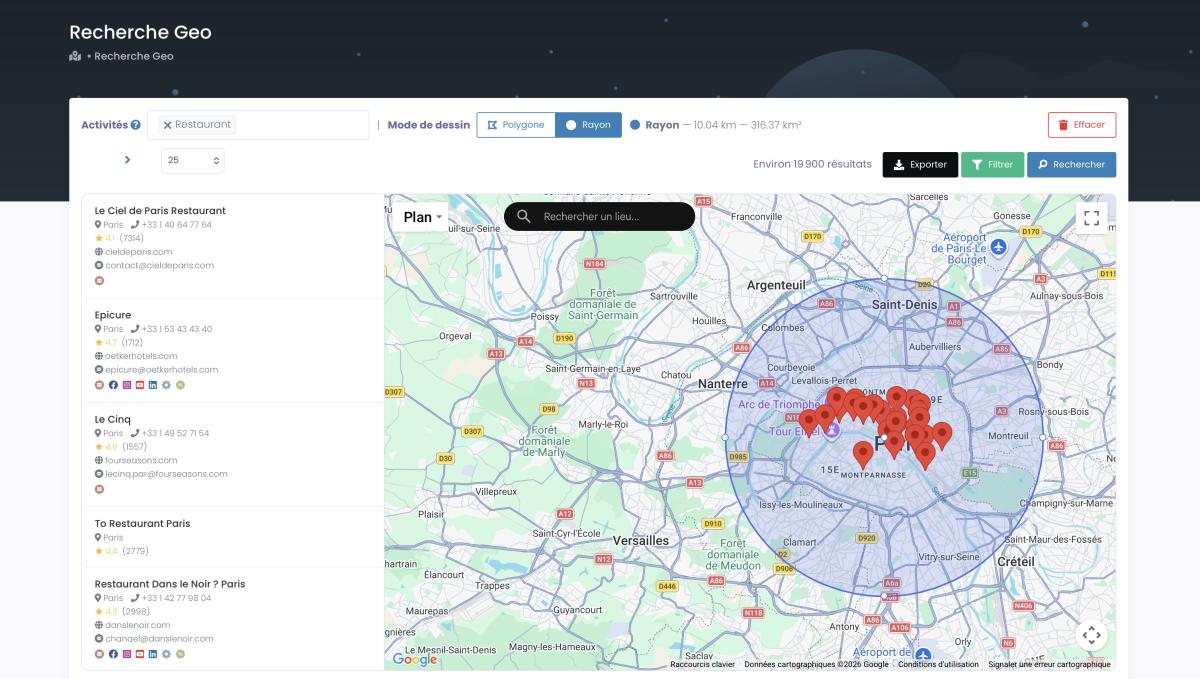
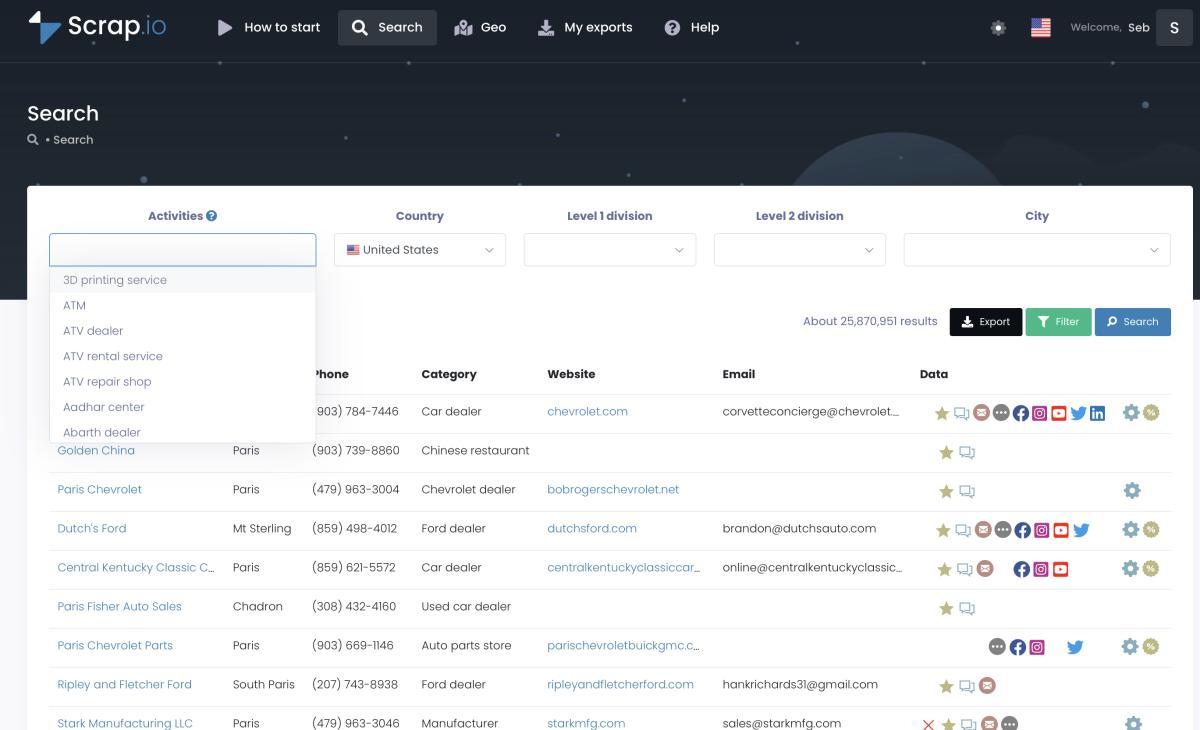
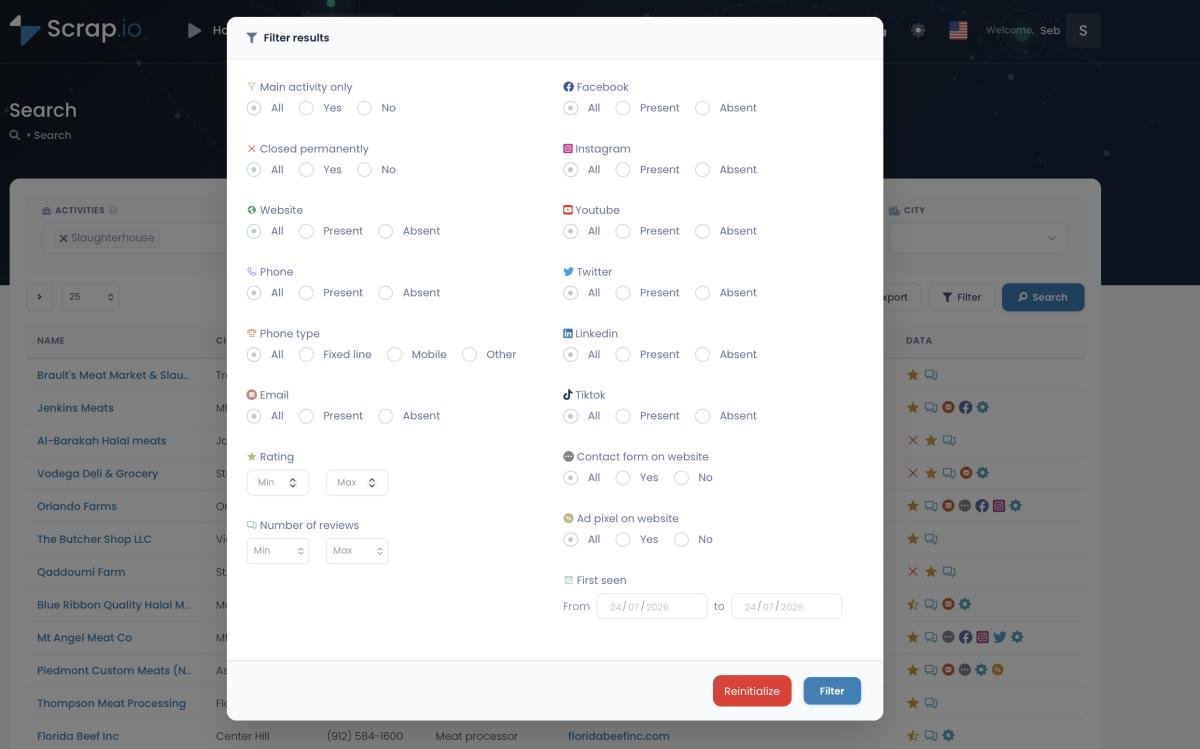
Scrap.io focuses on publicly available business data, the kind courts have repeatedly ruled is legal to collect. No code. You choose a category, a location, and whatever filters you want (rating range, review count, business status, whether a listing even has an email), then export. Filters run before extraction, on every plan, so you only spend credits on contacts you can use. That's data minimization in the GDPR sense, by the way. Emails come classified by type (contact, sales, individual, and more). Social profiles, website tech, every export column on every plan. Real-time data, refreshed at the moment of each extraction, not some stale database from six months ago. 225M+ businesses indexed across 195 countries, GDPR and CCPA compliant, every data point traceable to its source. And on the Company plan, you can pull an entire country in two clicks, or map a catchment area with no category at all.
Video: Scrap.io - How to Start?
Prefer to understand the trade-offs before you commit? We ran a full head-to-head on DIY vs professional scrapers at country level (spoiler: the DIY route pulled 52,000 French restaurants while the managed approach hit 139,000, same effort). And if you want to try the code route first, there's a tutorial on scraping Google Maps without Python. On that note, is BeautifulSoup legal? The library itself is just a parser, totally fine. What matters is what you point it at and what you do with the output, same rules as everything else here.
Third-Party Data Providers
Outscraper, SerpApi, ScrapingBee: they all handle the infrastructure, the rate limiting, the proxy rotation. But compliance? Still on you. And worth knowing before you pick one: SerpApi is currently fighting lawsuits from both Google and Reddit (see the section above). More expensive than doing it yourself, less work though. If your time is worth more than the subscription, it can be a fair trade.
Manual Collection at Scale
For tiny volumes, say under 200 listings, you can hire a virtual assistant to open Google Maps and copy-paste business info into a spreadsheet. Slow as molasses. But absolutely zero legal gray area. Sometimes boring is exactly what you need.
GDPR, CCPA & Data Compliance: What Scrapers Need to Know
Court rulings tell you whether scraping is legal. Privacy laws tell you what you can do with the data after you've scraped it. Two separate questions. People mix them up all the time.
GDPR and B2B Data: What's Actually Allowed
GDPR Article 6(1)(f) allows processing personal data when you've got a "legitimate interest." B2B prospecting qualifies. But the details matter, and Google Maps scraping GDPR compliance really comes down to which data you keep.
A generic email like [email protected]? Not personal data under GDPR. An email like [email protected]? That is personal data, because it identifies a specific human. Different rules apply.
There's also the accuracy principle, GDPR Article 5(1)(d), which most people skip right over. It says personal data must be kept accurate and up to date. Here's why that bites: 16.7% of US Google Maps listings (that's 4,508,328 of them) are flagged "permanently closed." Prospect from a frozen six-month-old file and you're literally processing wrong data about real businesses. Scrap.io's "closed / not closed" filters plus real-time extraction keep that off your list from the start.
Regardless, you still need an opt-out mechanism. You still need to collect only what you actually need. And you should document your legitimate interest basis somewhere, even a simple internal doc. Not because you'll definitely get audited, but because having that documentation turns a potential nightmare into a five-minute conversation. Our GDPR cold email B2B compliance guide walks through the whole legitimate-interest assessment if you want the deep version.
What About the EU AI Act? (The Question Everyone's Asking in 2026)
Short version: it probably doesn't touch you. The EU AI Act has applied since August 2, 2026, but after the AI Omnibus reshuffle, the high-risk obligations now land in December 2027 and August 2028. Either way, it targets the training of AI models, not B2B prospecting. Those machine-readable opt-out signals (robots.txt, ai.txt, TDM reservations) govern whether you can feed content into a model, not whether you can pull a restaurant's phone number for a cold call.
Two different worlds. If you're building a lead list, the AI Act's €35M / 7% penalties aren't aimed at you. If you're training a foundation model on scraped web content, different article, different lawyer, good luck.
US Privacy Laws (CCPA, State-Level)
CCPA targets California consumer data. Most B2B Google Maps scraping involves business entities: company addresses, company phone numbers, company websites. Publicly available business info falls outside CCPA's reach, so CCPA and Google Maps business data mostly don't collide.
The messy part? State-level privacy laws are multiplying. As of mid-2026, 24 states have a comprehensive privacy law on the books, up from 20 in January. Indiana, Kentucky and Rhode Island came into force on January 1, 2026, and fresh 2026 statutes landed in Alabama, Louisiana, Oklahoma and Vermont (the law firm Husch Blackwell tracks the full 24-state landscape). And they don't all work the same way. Texas, for one, has no revenue threshold, but its TDPSA exempts small businesses as defined by the SBA, unless you're selling sensitive data. So that two-person Dallas agency scraping plumber listings? Probably exempt, not "technically covered," which is the opposite of what a lot of 2024-era blog posts told you.
My honest advice: if you're scraping at any meaningful scale, talk to a privacy attorney once or twice a year. It costs way less than $2,400 for "it depends," and you'll actually get actionable answers.
Using Scraped Data for Cold Outreach: CAN-SPAM Rules
Planning to email people from your scraped list? Can I use scraped Google Maps data for cold email, legally? In the US, yes. The CAN-SPAM Act doesn't require prior consent. (Unlike GDPR; Europe's stricter on this.) But you absolutely must include an unsubscribe link, your physical mailing address, accurate sender info, and a subject line that isn't misleading.
For a deeper dive, our cold email compliance guide walks through the specifics for both US and EU outreach.
| Region | Key Law | B2B Scraping of Public Data | Cold Outreach Rules |
|---|---|---|---|
| United States | CCPA + CAN-SPAM | Generally permitted | No prior consent needed, but must include opt-out |
| European Union | GDPR | OK under legitimate interest (Art. 6(1)(f)) | Prior consent often required for individuals |
| United Kingdom | UK GDPR + PECR | Same as EU, legitimate interest basis | Soft opt-in for B2B, full consent for B2C |
Google Places API vs Scraping: Cost & Feature Comparison
This comes up in every conversation I have about this topic. People assume the API is "the safe choice" and scraping is "the risky choice." The reality? It's mostly about money and data completeness, not legal risk. This short video breaks the decision down better than another paragraph would:
Video: Google Maps API versus Scraping, What's the best approach?
| Criteria | Google Places API | Scrap.io | Manual Collection |
|---|---|---|---|
| Cost for 10K records/mo | ~$85–170 after the free tier | From $35–49/mo flat (10,000 credits) | Free (but your VA's time isn't) |
| Cost for 100K records/mo | ~$1,600+ (Place Details Pro) | $499/mo flat (Company) | Forget about it |
| Max results per query | Capped, paginated | Unlimited (whole zone) | N/A |
| Email addresses | ❌ Nope | ✅ Yes, classified | Manual lookup per site |
| Social media profiles | ❌ Nope | ✅ Yes | Manual lookup per site |
| Data fields per listing | Core listing fields | Every export column, every plan | Whatever you can find |
| Requires a developer? | Yes | No | No |
| Legal status | Fully compliant | Public data, court-backed | Fully compliant |
The breakeven? A few thousand records a month, as long as you stay inside the free tier and don't need emails. Below that, Google's free quotas handle it. Above that, or the moment you need emails and socials, you're overpaying for less data. Way less. Our API cost calculator shows the exact numbers by volume. And if you want the official route done right, here's our breakdown of the best Google Maps API alternative options.
Best Practices for Legal Google Maps Data Collection
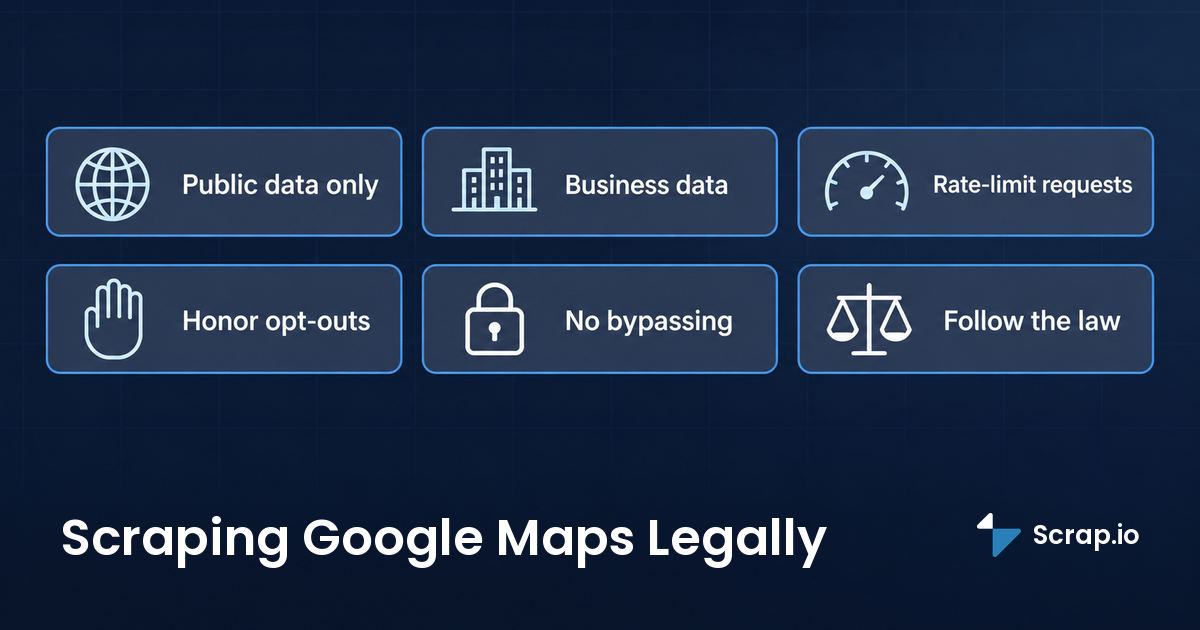
Here's the checklist. Nothing fancy. Just the stuff that lets you scrape Google Maps without looking over your shoulder, and without getting banned.
- Stick to publicly available data. If it needs a login to see, walk away. Google Maps business listings are public. You're good.
- Log out of Google before scraping. Logged in means you accepted the ToS. Logged out means no agreement formed. That's literally what Meta v. Bright Data established.
- Rate-limit your requests. One request every 2–3 seconds for manual tools. Randomized delays for automated stuff. Don't be the person who sends 500 requests per second and wonders why they got blocked.
- Rotate proxies and user agents. Spread requests across IPs. Vary your browser headers. Standard stuff, not because it's sketchy, but because it mimics normal browsing behavior.
- Write down why you're doing this. Seriously, a one-page doc explaining your business use case, your data handling process, and your compliance measures. Takes 20 minutes. Could save you weeks of headaches if anyone ever asks.
- Target business data, not personal data. Company names. Business phones. Office addresses. Websites. That's the zone. Individual personal info is a different ballgame.
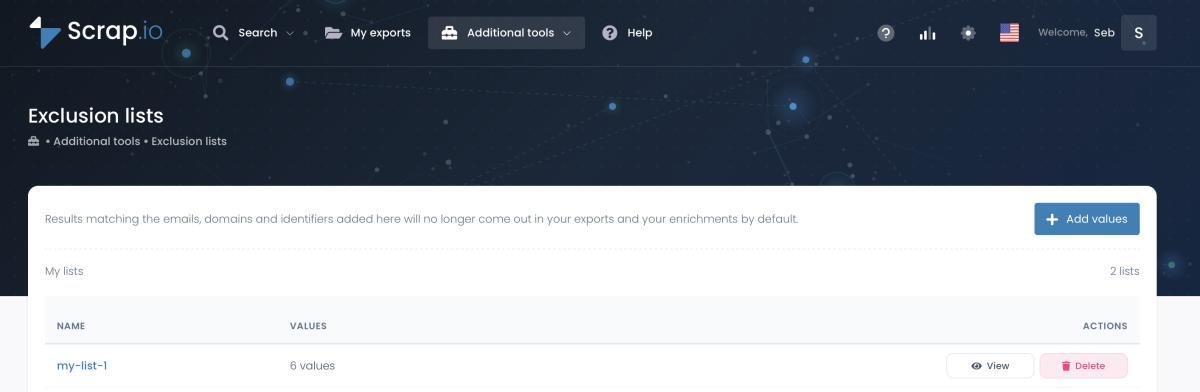
- Honor opt-out requests instantly. Someone says "stop contacting me"? Done. Remove them. And automate it: Scrap.io's Exclusion Lists strip opted-out emails and domains out of every future export automatically, so you can't accidentally re-import someone who already said no.
- Don't circumvent technical protection measures. This is the real 2026 lesson from Google and Reddit v. SerpApi. The legal exposure didn't come from the CFAA; it came from the DMCA's anti-circumvention rule, over tools built to beat anti-bot systems. Collect public data the plain way, and you're nowhere near that fight.
- Keep up with the laws. The EU AI Act has applied since August 2, 2026 (high-risk rules now pushed to December 2027), and US state privacy laws multiply every year. Check in with a lawyer annually, or at least read up on anti-spam laws and best practices before your next campaign.
For more on the technical side, our Google Maps API & reviews extraction guide gets into the weeds.
Frequently Asked Questions
Does Google Maps allow scraping?
Their Terms of Service say no. But ToS aren't the law, they're a private contract. Federal courts have consistently ruled that scraping publicly available data doesn't violate the CFAA. Google doesn't "allow" it, but courts say it's legal. So does Google allow scraping Google Maps? Officially no, legally yes.
Is a Google Maps scraper legal?
Yes, for publicly available business information. Court precedents from hiQ v. LinkedIn through Meta v. Bright Data (2024) confirm it. Don't log in, use rate limiting, focus on public data. Is scraping business data from Google Maps legal? Same answer, yes, when it's public business data.
Is web scraping legal in the US in 2026?
For public data, yes. The Supreme Court's Van Buren decision (2021) narrowed the CFAA so much that accessing public web pages simply can't be a crime under it. And the big 2026 lawsuits (Google and Reddit v. SerpApi) are about circumventing anti-bot systems under the DMCA, not about collecting public data, so they don't change the answer for business-data scraping.
Did Google sue a scraper? What happened?
Yes. In December 2025 Google sued SerpApi under the DMCA. In July 2026 a federal judge dismissed those claims, and Google refiled in August 2026 without its Maps and Shopping theories. As of late October 2026 no new ruling had been issued. The case targets circumvention of Google's SearchGuard, not the collection of public business data.
Can I get sued for web scraping?
Anyone can file a lawsuit, but scraping public business data rarely leads to one. The realistic risks are IP blocks and account suspension. Legal exposure grows if you bypass logins or anti-bot systems, copy copyrighted content, or resell a platform's database as your own.
Is it legal to scrape Google reviews?
The review text, star ratings, and counts are public business data, so collecting them is generally fine. The nuance: an individual reviewer's name is personal data, so if you're storing or processing that, GDPR and CCPA considerations kick in. So is scraping Google Maps reviews legal? Yes for the aggregate review data, but be careful the moment you're keying on named individuals. (Here's how the Google Reviews API options compare if you need that data.)
Can scraping be detected? And can you get caught?
Can Google detect scraping? In theory, unusual traffic patterns and suspicious IPs can trigger alerts. In practice, basic rate limiting and proxy rotation make detection extremely unlikely, and even when you're spotted, the consequence is a temporary IP block, not a knock on the door. Can you get caught scraping? Rarely, and the "punishment" is usually a 45-minute timeout. Or just use a managed tool and skip the headache entirely.
Is it illegal to screenshot Google Maps?
Screenshotting business listing data (names, addresses, hours) for your own use is fine, it's public info. Where it gets murky is Street View imagery: Google's Geo Guidelines restrict reproducing or republishing that imagery commercially without permission. So business data? Screenshot away. Street View panoramas in your marketing deck? Check the guidelines first.
Can I use scraped Google Maps data for commercial purposes?
Yes. Business names, addresses, phone numbers, and websites aren't copyrighted content. Courts have confirmed commercial use of publicly scraped data is fine, just don't replicate Google's exact database structure and sell it as yours.
What's the difference between a ToS violation and illegal activity?
A ToS violation is a private contract breach. You might lose your Google account. Illegal activity means violating an actual law (CFAA, GDPR, CCPA). That can mean fines or criminal charges. One gets your IP blocked for an hour. The other gets lawyers involved. Huge difference.
Is it legal to send emails to scraped contacts?
In the US, yes, with CAN-SPAM compliance: unsubscribe link, physical address, honest subject line. In the EU, GDPR applies, and you typically need a legitimate interest basis for B2B emails. Include opt-out everywhere. Always honor it.
Making Smart Decisions About Google Maps Data Collection
Here's the bottom line. Every major court ruling since 2017 points the same direction: scraping publicly available business data from Google Maps is legal under US law. Google's ToS are a business policy, not a legal fence. And the 2026 lawsuit wave doesn't change that for lead gen; even Google's own case against SerpApi dropped its Maps theory, and the real risk in those cases is anti-bot circumvention under the DMCA, not collecting public data.
That doesn't mean you should be reckless about it. Rate-limit your scraping. Know the GDPR basics if you're touching EU data. Document your legitimate business purpose. Honor opt-out requests. None of that is hard. It's just the kind of baseline professionalism that separates serious operators from people who get their IPs blocked and then complain about it on Reddit.
225M+ businesses. 195 countries. The data's there. It always has been. The only real question is whether you'll grab it intelligently, or keep paying $2,400 for "it depends."
This article is for informational purposes only and does not constitute legal advice. Consult a qualified attorney for guidance on your specific situation.
Generate a list of restaurant with Scrap.io