

Campaigns that run across three or more channels see up to 287% higher purchase rates than single-channel outreach. That's not a typo. Nearly 4x, according to Landbase's roundup of 35 multi-channel benchmarks, which traces the figure back to Omnisend.
Read that number again.
And that's the conservative end. Omnisend's 2026 omnichannel data puts the lift even higher: three or more channels drive a 494% higher order rate than single-channel campaigns, and workflows that add SMS climb about 429% higher still. Same pattern everywhere you look. More coordinated channels, more revenue.
Now here's the uncomfortable part. Most B2B teams still fire off cold emails into the void, hear nothing back, and conclude that "outbound is dead." It isn't. Their approach is. Sending one message down one channel and hoping is not a strategy. It's a coin flip with worse odds. Omnichannel outreach fixes that, and this is the 2026 playbook for doing it right: what it actually means, the framework, the real numbers, and the one thing nobody talks about that quietly breaks the whole thing.
Table of contents
- What Is Omnichannel Outreach?
- Omnichannel vs Multichannel vs Cross-Channel
- Why Single-Channel Outreach Is Dying in 2026
- The Channels That Matter (and the Job Each One Does)
- How to Build Your Omnichannel Sequence: A 5-Step Framework
- The Data Foundation: Where Omnichannel Actually Breaks
- What Omnichannel Outreach Really Delivers
- Staying Compliant Across Every Channel
- 5 Omnichannel Outreach Mistakes to Avoid
- FAQ
What Is Omnichannel Outreach?
Omnichannel outreach is coordinated B2B prospecting that unifies email, LinkedIn, phone, and SMS into a single sequenced conversation, where every touchpoint is aware of the others. One continuous message. Not four disconnected pitches shouted from four different megaphones.
That's the definition. Sit with the "aware of the others" part, because it's the whole ballgame.
Here's the omnichannel meaning in plain terms: when your prospect replies on LinkedIn, your email sequence pauses. When you leave a voicemail, the follow-up email references it. When they book a call, everything else goes quiet. Each channel knows what the others did. Compare that to the usual mess: an email, a cold call, and a LinkedIn InMail all landing within the same afternoon, all saying roughly the same thing, all clearly automated. That's the fastest way to get flagged as spam on every platform at once.
So no, omnichannel isn't "be everywhere." It's "be coherent everywhere." Big difference. And if you've been googling omnichannel meaning in marketing hoping for something more complicated, sorry, it really is just that. Coordination beats volume. Every time.
Omnichannel vs Multichannel vs Cross-Channel
People throw these three words around like they're interchangeable. They're not. And the confusion around multi channel marketing vs omnichannel costs teams real money, because they think they're running one thing when they're actually running another.
Quick gut check. Multichannel means you use several channels, but they operate in silos. Your email tool doesn't know your LinkedIn tool exists. Cross-channel is a step up: the channels can see each other in your analytics, but they still can't trigger actions between themselves. Omnichannel is the full thing: one unified profile, updated in real time, where a reply on one channel changes what happens on all the rest.
Here's the omnichannel vs multichannel breakdown at a glance:
| Dimension | Multichannel | Cross-Channel | Omnichannel |
|---|---|---|---|
| Data flow | Siloed databases | Linked analytics | Unified real-time profile |
| Channel awareness | None | Limited | Full visibility |
| Buyer experience | Disconnected, redundant | Smoother handoffs | One seamless conversation |
| Message logic | Same pitch, everywhere | Timed, but manual | Each touch builds on the last |
Why does this distinction matter so much? Because multichannel done lazily is just spam with extra steps. You're multiplying your touchpoints without multiplying your relevance. Omnichannel is the opposite: fewer, smarter touches that add up to a story. As one guide from Instantly puts it, true omnichannel is where "a LinkedIn reply pauses your email sequence automatically." The competitors at Smartlead frame the same split. Everyone agrees on the theory. Almost nobody executes it.
Why Single-Channel Outreach Is Dying in 2026
Meet the average decision-maker. She gets 120+ emails a day, ignores roughly 90% of LinkedIn requests, and sends most unknown calls to voicemail. Now try to reach her on one channel. Go on. I'll wait.
You see the problem.
Single-channel outreach forces you to compete in the single noisiest lane, against everyone else who also picked that lane. Meanwhile buyers have gone fully multichannel on you: 42% of B2B buyers report using more than 11 touchpoints during a single purchase journey, per McKinsey data cited across the industry. Eleven. And you're showing up on one.
The channel-level numbers tell the same story. LinkedIn messages pull roughly a 10.3% response rate versus about 5.1% for cold email. That's double, according to both Landbase and Martal's 2026 omnichannel statistics. But the real magic isn't picking the "better" channel. It's stacking them. Reps who combine calls, email, and LinkedIn see roughly 28–37% higher conversion rates than single-channel reps (Martal, citing HubSpot). Coordinated sequences can lift conversions by up to 37% on their own (Martal / Spotio).
Here's a signal worth chewing on: signal-based outreach (reaching out when a trigger fires, across the right channels) reportedly lands 15–25% reply rates versus 1–5% for generic cold email, according to Salesmotion's 2026 data. And email-only stacks miss an estimated 60–70% of buyer touchpoints entirely (Amplemarket). You're not just underperforming. You're invisible for most of the journey.
Single-channel isn't dead because email or calls stopped working. It's dying because doing only one stopped working. That's the distinction people keep missing.
The Channels That Matter (and the Job Each One Does)
Stacking channels only works if each one has a job. Throw the same pitch at all four and you've built a louder version of the thing that already failed. So here's the job-to-be-done for each: the actual role it plays in a coordinated sequence.
Email: the workhorse
Email is your paper trail. It carries the detail: the case study, the pricing context, the thing they'll forward to a colleague. It scales, it's async, and it's where most sequences start because reach is high. The catch? Reply rates hover around 5.1% when the copy is generic. So don't be generic. The whole difference between a deleted email and a booked call is whether you wrote cold email that gets replies: problem first, one clear ask, zero autobiography.
LinkedIn: the rapport builder
LinkedIn is where credibility lives. Your face, your mutual connections, your comment on their last post. It warms the ice before you ever pitch. Doubles email's response rate, remember. But it has a ceiling: free accounts cap around 50 messages a day, and blasting past that gets you restricted fast. So use it for connection and reference, not volume. If you want to push LinkedIn outreach at scale without tripping the platform's alarms, there's a right way, and it's slower than you'd like.
Phone: the closer of loops
The phone is for urgency and intent. A prospect said "interested" and went quiet? Call. Nearly half of B2B buyers actually prefer a phone call as the first touch, and 82% will accept a meeting from a cold call when the outreach is relevant (RAIN Group, via Martal). It's not dead. It's just wasted on people who aren't ready. Pair it with a tight script (here are cold calling scripts that don't sound like a telemarketer) and reserve it for warm signals.
SMS: the interrupt
SMS is the pattern-break. Short, high open rate, best for time-sensitive nudges to prospects who already know you. Around 84% of consumers say they're willing to receive business texts (SimpleTexting). Use it sparingly. A cold text to a stranger is a great way to torch a relationship before it starts, so SMS earns its place late in a sequence, once there's context, and only for numbers you know are mobile.
Every channel runs on contact data. Email needs a verified address, SMS needs a mobile number, calls need a landline that rings. See what a clean, enriched B2B list actually looks like. Scrap.io pulls email, phone, LinkedIn and website data straight from Google Maps across 195 countries.
How to Build Your Omnichannel Sequence: A 5-Step Framework
Enough theory. Here's how to actually build an omnichannel outreach strategy, start to finish. Five steps. Follow them in order, because each one depends on the last.
- Unify your data. One record per prospect: email, mobile, landline, LinkedIn URL, company, a personalization hook. If your channels write to separate spreadsheets, you're running multichannel, not omnichannel. This is step one because everything downstream breaks without it.
- Map the buyer journey. Where does your ICP actually hang out? Tag each lead with a channel preference. Some reply on LinkedIn in minutes and ignore email for weeks. Respect that.
- Assign channel roles. Email for detail, LinkedIn for rapport, phone for urgency, SMS for the nudge. No duplicated content. If the email explains the offer, the LinkedIn message references the email and asks for a quick call.
- Sequence the touches. Space them out, alternate channels, and let each one acknowledge the last. If email is carrying the load, lean on a proven cold email follow-up sequence so no touch quietly gets dropped. Here's a clean 14-day multichannel outreach sequence example:
Day 1 - LinkedIn: view profile + followDay 2 - Email #1: problem-first, one askDay 4 - Phone: quick call (voicemail if no answer)Day 5 - Email #2: "left you a voicemail," TLDR in textDay 7 - LinkedIn: connection request referencing the emailDay 10 - Email #3: case study, softer angleDay 14 - Breakup email: last touch, easy exit
- Measure and iterate. Track response rate by channel, cross-channel conversion, and which path converts fastest (email→LinkedIn→phone vs the reverse). Then double down on what the data says, not what you assume. Top sellers average around 6 touches per contact for a reason: persistence, coordinated, wins.
That's the omnichannel prospecting framework. Notice it's not "add more channels." It's "make the channels talk to each other." A solo operator can run this. So can an agency. You don't need enterprise software. You need a clean list and a cadence you'll actually stick to.
The Data Foundation: Where Omnichannel Actually Breaks
Okay. Here's the part every other guide skips, and it's the part that actually matters.
You can nail the framework. Perfect roles, perfect timing, beautiful sequence. And it still collapses, because you don't have the data to feed it. Email addresses for half your list. Mobile numbers for almost none. No LinkedIn URLs. The omnichannel machine needs fuel for four channels, and most teams are running on fumes for three of them.
Think about it. An omnichannel sequence is only as good as the fields behind it. No mobile number, no SMS step. No verified email, no email step. The strategy doesn't fail in the sequencer. It fails in the spreadsheet, weeks earlier, when you built a list that only had one channel's worth of data.
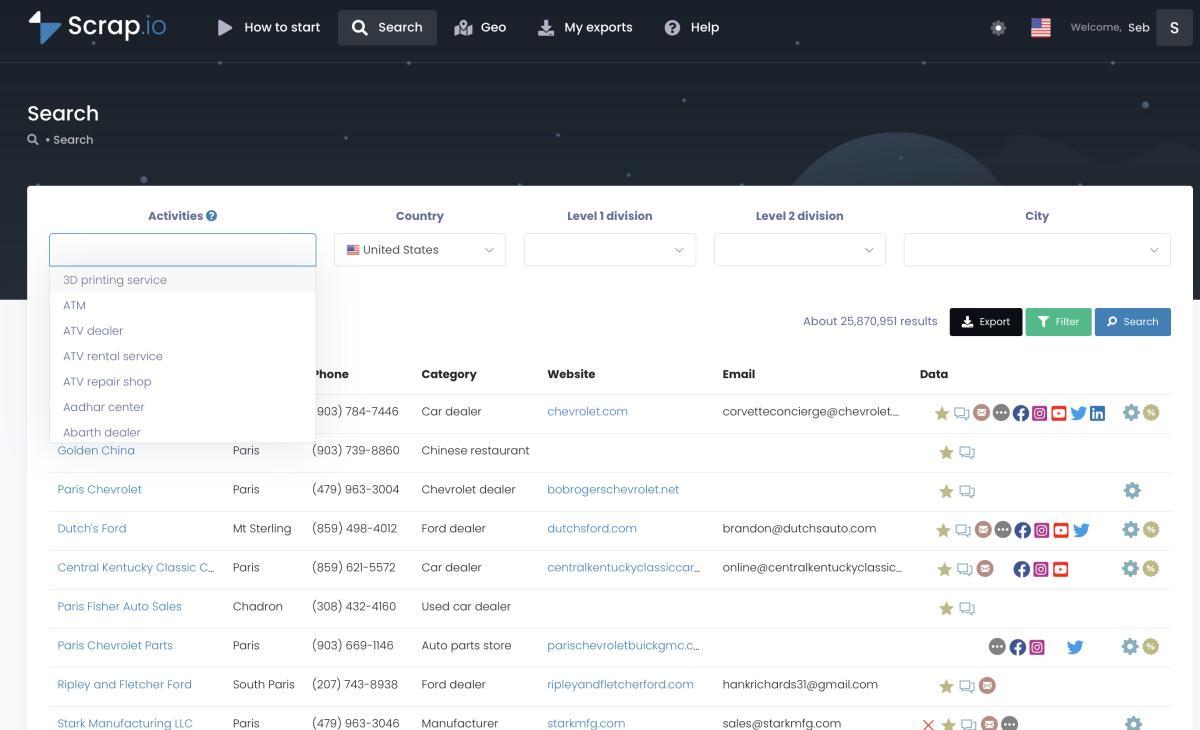
This is exactly where Scrap.io comes in, as the foundation, not the sequencer. It extracts business data in real time from Google Maps: email (classified by type: contact, sales, marketing, and more), phone (tagged landline vs mobile), website, and social profiles. The exact fields each channel needs, in one export. Search by category and location:
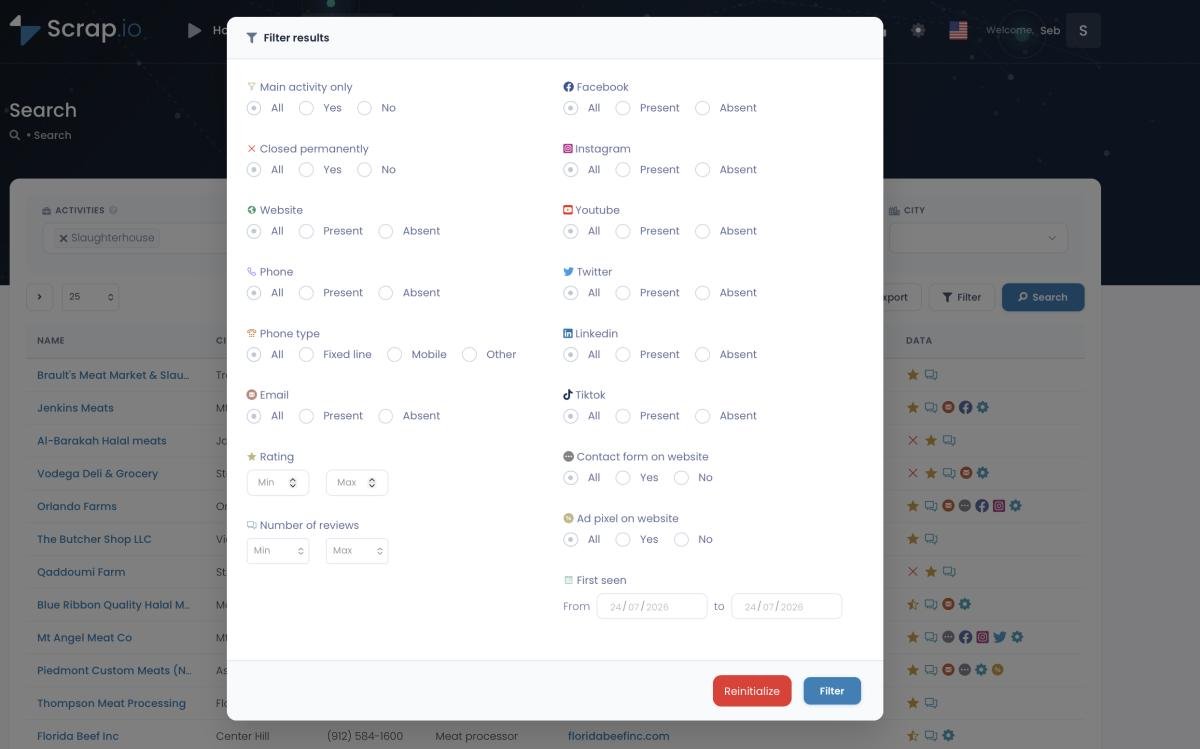
Then here's the part that saves your budget: you filter before extracting. Only pull records that have an email. Or only mobiles, if you're building an SMS campaign. Filters apply before a single credit is spent, so every channel gets its fuel and you waste nothing:
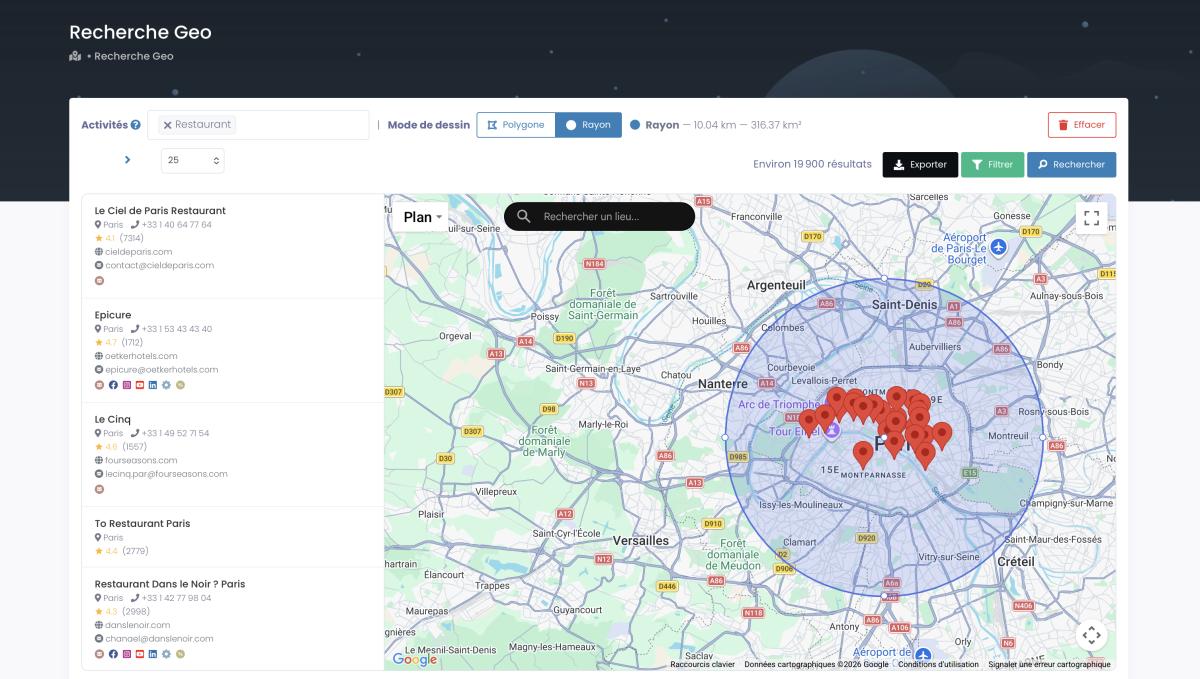
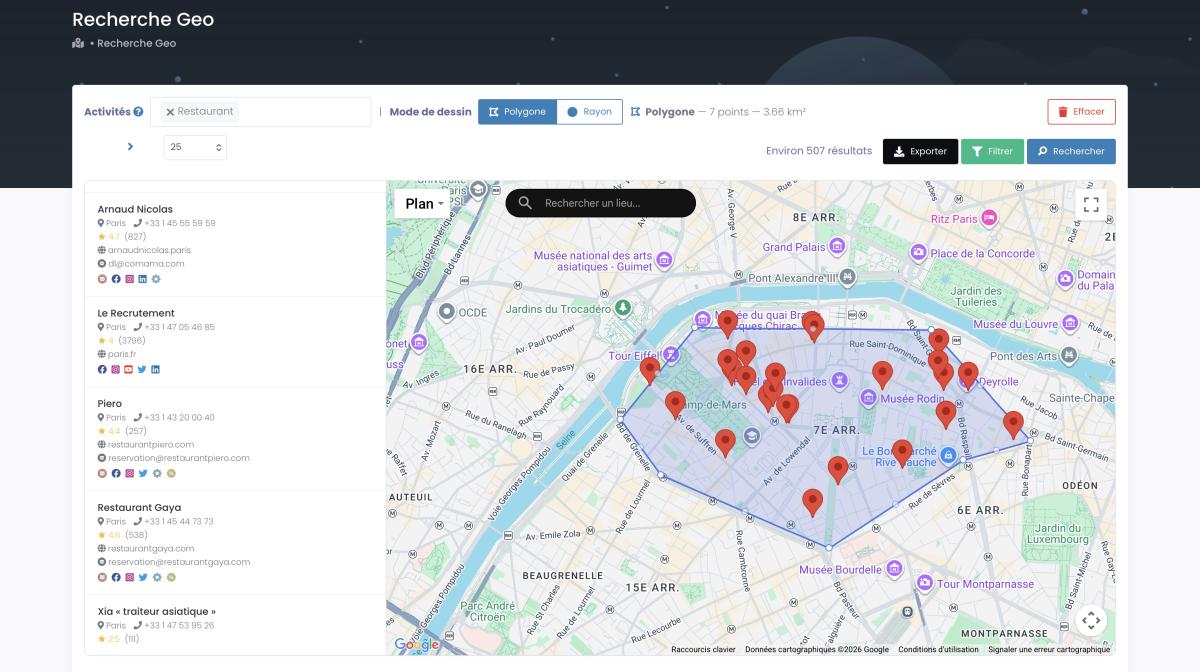
And because the data is geographic, you can target a whole catchment area (a city, a county, a region, or an entire country) with GeoSearch radius or a hand-drawn polygon. Try doing that with a classic scraper. I'll wait.
New to the tool? This two-minute walkthrough shows how to pull your first prospect list from scratch:
Video: Scrap.io - How to Start?
Want to see how teams turn this into an automated, always-on pipeline? Multi channel marketing automation starts here: pull the data, then wire it into your stack. This walkthrough shows the AI-assisted version:
Video: How to Scrape Local Leads with Claude & Vibe Prospecting?
And if your target market is bigger than a single city, you can build a target list at the country level in one go:
Video: How to Scrape Local Leads at the Country Level?
Once the list is clean, you build your prospect list once and drop it into your sequencer. From there you can automate your outreach end to end. The data is the prerequisite. Not the enterprise tool. Get that order wrong and no amount of clever sequencing saves you.
Build your multichannel prospect list in minutes: email, phone, LinkedIn and website data, filtered before you spend a credit. Real-time Google Maps extraction across 225M+ businesses and 4,000+ categories. Try Scrap.io free: 7 days, 100 leads on us.
What Omnichannel Outreach Really Delivers
Numbers in a vacuum are easy to dismiss. So let's look at what happens when a real team runs this.
Take Belkins' work for a U.S. startup investment platform. They started email-only. It worked, but it plateaued. So after four months they went omnichannel: email, LinkedIn, and intent-based calling, all coordinated around the same audience. The result over 15 months: 346 appointments booked: 285 from email, 40 from LinkedIn, 21 from calls. Look at that split for a second. Email did the heavy lifting, but a quarter of the meetings came from channels they'd have skipped entirely as an email-only shop.
The conversion story is even sharper. Lead-to-meeting conversion hit around 9%, versus the 3% their previous vendors delivered. Three times better. ROI landed at 125%, with a projected 200%+ ahead. Same market. Same product. Different coordination.
That gap is the entire argument for omnichannel.
It's not a one-off, either. Martal's own omnichannel programs report results in the same direction: a U.S. business-brokerage engagement generating 1,219 SQLs and 832 meetings over three years with a 52% lead-to-SQL rate, and a healthcare campaign moving 128 leads to 76 MQLs to 31 SQLs to 21 booked meetings with hospital decision-makers. Different industries, same lesson: coordinated beats scattered.
And the aggregate data backs the anecdotes. Omnichannel customers carry roughly 30% higher lifetime value (Landbase), companies with strong omnichannel strategies retain 89% of customers versus 33% for weak ones (Martal / Invesp), and email alone still returns about $36 for every $1 spent (Litmus). The channels compound. That's the entire point.
The results above all start with the right list. Belkins' 346 meetings began with clean, targeted contact data. The same foundation Scrap.io gives you. Pull fresh Google Maps data across 195 countries. Start free.
Staying Compliant Across Every Channel
"Multichannel cold outreach is legally risky." I hear this a lot. It's manageable, but only if you treat each channel as its own rulebook, because they genuinely are.
Email in the U.S. runs on CAN-SPAM: no prior consent needed for business contacts, but you must use honest headers, a real physical address, and a working unsubscribe. Get it wrong and it's up to $53,088 per email. Ask the security-camera firm that ate a record fine over broken opt-out links. In the EU, GDPR lets you lean on legitimate interest for B2B, provided the outreach is relevant and opt-out is easy. Canada's CASL is stricter and generally wants consent up front.
Phone and SMS are a different animal. The TCPA restricts calling and texting cell numbers without consent, which is exactly why targeting business landlines for cold calls is both safer and higher-answer-rate. Honor Do Not Call registries. And an opt-out on one channel should propagate to all of them; if someone unsubscribes from email but keeps getting your texts, that's a compliance problem and a reputation one.
The through-line? Where your data came from matters more than almost anything else. If a regulator asks "how did you get this contact," your answer can't be "we bought a list." Wondering is cold emailing illegal? Short version: no, when your data is traceable and public. Scrap.io only pulls publicly available business data, is GDPR and CCPA compliant, and every record traces back to its source. That doesn't exempt you from honoring opt-outs. It just means you can actually answer the question.
5 Omnichannel Outreach Mistakes to Avoid
Most omnichannel programs don't fail because the idea is wrong. They fail on execution. Here are the five that sink the most ships:
- The copy-paste blast. Same message on email and LinkedIn, hours apart. Prospects notice instantly and delete both. This is multichannel spam wearing an omnichannel costume.
- Spraying all four channels at once. As one sales coach put it on an ActiveProspect clip, you want to be "very thoughtful about how you approach your outreach." Coordinated, not simultaneous. Four pings in one afternoon isn't omnichannel. It's an ambush.
- Ignoring an opt-out on one channel. They unsubscribe from email, still get InMails. Compliance risk and a trust-killer in one move.
- Skimping on the data foundation. No mobile numbers, no SMS step. Missing emails, broken email step. Covered this above, but it's the number-one silent killer, so it earns a spot here too.
- Forgetting it's about the relationship. Over on r/sales, one rep stripped it down to the studs: once you take away price and product, "there's only my relationship" with the buyer. Omnichannel is a way to build that relationship across touchpoints, not a way to hit someone from more angles.
FAQ
What does omnichannel mean in simple terms?
Omnichannel means treating every channel (email, phone, LinkedIn, SMS) as one connected conversation rather than separate campaigns. Each touchpoint knows what the others did, so the experience feels coordinated to the prospect instead of like four disconnected pitches arriving at once.
What is omnichannel outreach?
Omnichannel outreach is coordinated B2B prospecting that unifies email, LinkedIn, phone, and SMS into one sequenced conversation. Unlike multichannel, where channels run in parallel and in isolation, omnichannel keeps every touchpoint aware of the others: one continuous message, not four disconnected pitches.
What's the difference between omnichannel and multichannel?
Multichannel means using several independent channels with no coordination between them. Omnichannel connects them: the LinkedIn message references the email, the call knows both already happened. Multichannel is channel-centric; omnichannel is buyer-centric and coordinated.
How many channels should an omnichannel sequence use?
Usually three (email, LinkedIn, and phone), with SMS added when you have verified mobile numbers. Top sellers average around six touches per contact. But coordination beats raw volume: three well-sequenced channels outperform five that are firing blind.
Do I need expensive software to run omnichannel outreach?
No. Enterprise sales engagement tools help at scale, but they aren't the prerequisite. Clean, enriched data is. You need email, phone, and social details for each prospect. Scrap.io delivers exactly that in one export, so even a solo operator or small agency can run a coordinated sequence without an enterprise stack.
The Bottom Line
Omnichannel outreach isn't a buzzword you sprinkle on top of the same tired cold-email blast. It's a shift from volume to coordination: from shouting on one channel to holding one conversation across several. The data is blunt about it: up to 287% higher purchase rates, double the response rate on coordinated channels, real teams tripling their conversion.
But here's the thing nobody says loudly enough. Your sequence is only as good as your list. Perfect timing means nothing if half your prospects have no phone number and a third have no email. Fix the foundation first, then build the machine.
Your sequence is only as good as your list. Start free today: 7 days, 100 leads, no strings. Scrap.io pulls real-time Google Maps data (classified emails, mobile-vs-landline phone numbers, LinkedIn and website details) across 225M+ businesses and 195 countries. The fuel your omnichannel engine actually runs on.
Generate a list of restaurant with Scrap.io