

Your reps aren't lazy. They're just spending nearly half their week playing detective — hunting down who to call, digging for a phone number that still works, guessing which businesses are even worth the effort. SPOTIO puts it at roughly 40% of a rep's time lost to finding the right prospects before a single conversation happens. Forty percent. That's two full days a week where nobody is actually selling anything.
And the wild part? Most teams treat that as normal. The cost of a bad list, the price of doing business, whatever. It's not. It's the single biggest leak in the whole funnel, and it starts at the exact moment you decide who to reach out to.
So let's fix the front of the funnel.
This is the complete guide to sales prospecting in 2026 — what it actually is, the process, the techniques that still work, the tools, and the one thing almost every guide skips: where good prospecting lists actually come from.
What's in this guide
- What Is Sales Prospecting?
- Sales Prospecting vs. Lead Generation
- The 5-Step Sales Prospecting Process
- Sales Prospecting Techniques That Actually Work in 2026
- B2B Sales Prospecting: Why It's a Different Game
- The Best Sales Prospecting Tools & Software in 2026
- Where Do Great Prospecting Lists Come From?
- Staying Compliant: GDPR, CCPA & Cold Outreach
- Common Prospecting Mistakes
- FAQ
What Is Sales Prospecting?
Sales prospecting is the activity of identifying and contacting potential customers to start conversations that turn into revenue. It's the outbound, one-to-one part of selling: an SDR finds companies that fit the profile, reaches out through calls, emails, or LinkedIn, and qualifies them in or out. Short-term, targeted, human. That's the definition of prospecting in sales, stripped of the jargon.
Notice what it is not. It's not marketing sending 10,000 emails and hoping. It's not waiting for a form fill. Prospecting is you, deciding this specific business is worth a shot, and going after it directly. Cognism frames it the same way — a deliberate act of finding and engaging qualified leads to turn them into opportunities.
Here's the thing people forget, though. What is sales prospecting really about isn't the outreach. It's the targeting. The message matters, sure. But you can have the best cold email on earth and it dies in the void if it lands in the wrong inbox. Get the list right and mediocre outreach still books meetings. Get the list wrong and Shakespeare couldn't save you.
Sales Prospecting vs. Lead Generation
People mash these two together constantly, and it causes real problems — mostly the kind where marketing and sales scream at each other in the Monday standup. So let's separate them cleanly.
Lead generation is a marketing motion. It's inbound and one-to-many: content, ads, SEO, a lead magnet that pulls a broad audience toward you. Sales prospecting is a sales motion. It's outbound and one-to-one: you pick a target and go. One casts a net. The other throws a spear.
| Sales Prospecting | Lead Generation |
|---|---|
| Owned by sales (SDRs/BDRs) | Owned by marketing |
| Outbound, one-to-one | Inbound, one-to-many |
| You choose the prospect | The prospect finds you |
| Cold calls, cold email, social | Content, ads, SEO, events |
| Short-term, targeted | Long-term, compounding |
Which one's better? Wrong question. You need both. Lead gen fills the top of the funnel while you sleep. Sales prospecting vs lead generation isn't a fight — it's a relay. But if your inbound is thin (and for most B2B teams, it is), prospecting is what keeps the lights on this quarter.
The 5-Step Sales Prospecting Process
Every functional prospecting motion runs on the same five steps. Skip one and the whole thing wobbles. Here's the sequence.
1. Define your ICP (research)
Before anything, you decide who you're chasing. Industry, size, location, the signals that say "this business has the problem I solve." Most reps skip this and pay for it later with a list of 5,000 companies that would never buy even if the product was free. Do the homework first — define your ICP properly and every step after it gets easier.
2. Build the list
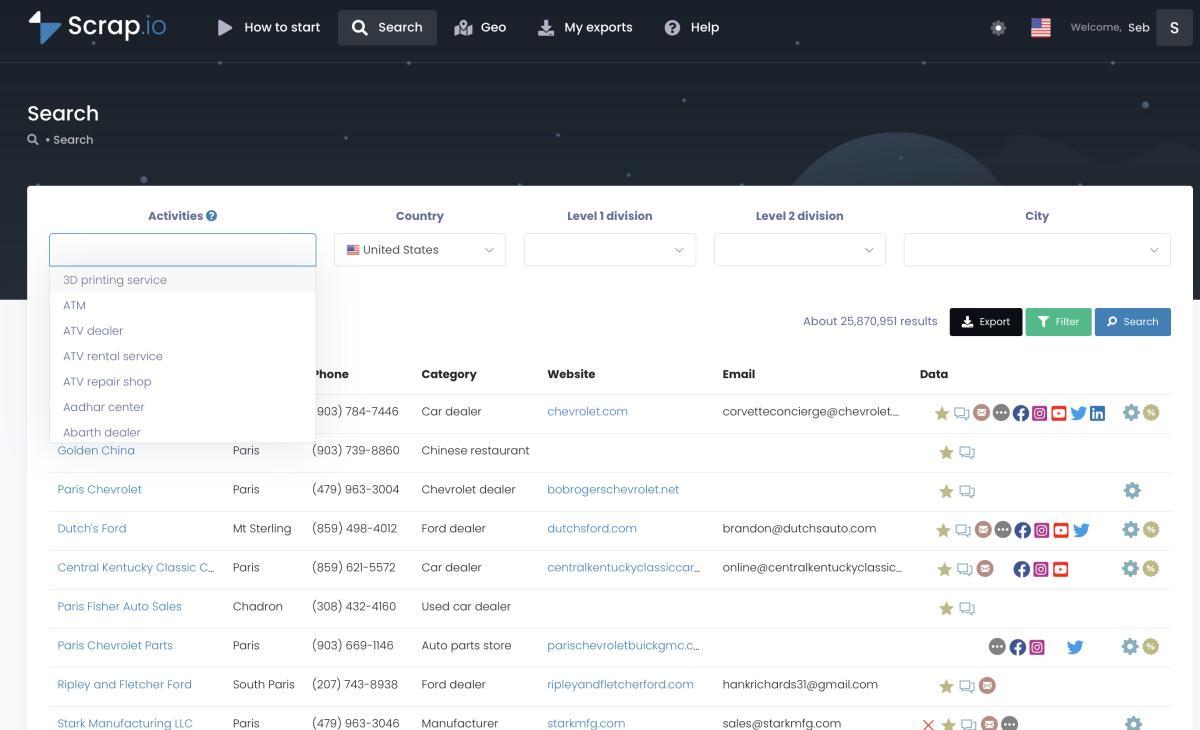
Now you turn that profile into names. This is where a lot of teams reach for a purchased list and immediately regret it (more on why that's a graveyard later). The goal: real businesses, current contact details, matched to your criteria. Not volume. Fit.
3. Qualify
Not every name on the list deserves your time. Run each through a quick filter — budget, authority, need, timeline, whatever framework fits your motion. A short list of 300 great-fit prospects beats a bloated 3,000 of maybes. Learn to spot and prioritize qualified leads before you dial, and your close rate climbs on its own.
4. Reach out
Contact. Call, email, LinkedIn message, ideally a mix. The message references something specific about their business — because a generic "helping companies like yours" pitch gets deleted in under a second. This is the part everyone obsesses over, and it's genuinely important. But it's step four, not step one.
5. Follow up
Here's the number that should sting: 80% of sales need five or more follow-ups, yet most reps quit after one or two. One or two! The money is sitting in touches three through eight, and most people leave before they get there. Build a cadence. Stick to it. Then go build a sales pipeline around it so nothing slips.
Step 2 is where most pipelines are won or lost. Scrap.io lets you build a targeted list from Google Maps in minutes — filter by category, location, rating, or whether a business even has an email, across 225M+ establishments in 195 countries. Start free — 7-day trial, 100 leads included.
Sales Prospecting Techniques That Actually Work in 2026
Okay, techniques. Not theory — the actual sales prospecting techniques that book meetings in 2026. Fair warning: some of these get dismissed as "dead" every year and then keep outperforming the shiny new thing. If you want the deep, phone-first version of this section, we've got a whole guide on sales prospecting techniques. Let's go.
Cold calling
Cold calling isn't dead. Anyone who tells you otherwise is selling you something. The average success rate hovers around 2.7%, sure — but the top 6-10% of reps blow past that, and it typically takes 5+ attempts just to connect. RAIN Group's research is blunt about it: 82% of buyers will take a meeting from a cold call if you bring something relevant. The phone still works. You just can't wing it. Need a starting point? Here's how to write a cold call script that doesn't sound like a robot apologizing for existing.
Cold email
Cheap, scalable, and brutal on your domain if you do it wrong. Real 2026 benchmarks: open rates land around 15-25%, reply rates 1-5% (average sits near 3.43% per Sopro/Martal), and conversion anywhere from 0.2-2%. Those numbers look grim until you realize the top performers hit 15%+ reply rates — purely on list quality and personalization. The gap isn't copywriting talent. It's who you're emailing. Start with the fundamentals of how to write a cold email that actually gets a reply.
Social selling
LinkedIn isn't a replacement for the phone. It's a warm-up. Engage with a prospect's posts for a week and your cold call opens with "Hey, saw your post about..." instead of "Hi, my name is..." — completely different reception. Tools like LinkedIn Sales Navigator are built for exactly this kind of targeted, decision-maker prospecting. The catch: LinkedIn is great for corporate buyers and useless for the 6-person roofing crew that doesn't have a company page. Know which game you're playing.
Referrals
The cheapest quality leads on earth, and everybody underuses them. RAIN Group found that calls to existing clients rank as a top prospecting tactic — around 51% of top performers lean on it. A warm intro closes faster and cheaper than any cold touch. The problem? Referrals don't scale on command. You can't wake up and decide to have 200 of them. So you pair them with the outbound stuff.
Signal-based selling
This is the 2026 upgrade. Instead of blasting a static list, you watch for triggers — a new location opening, a funding round, a hiring surge, a review-count spike — and reach out when the timing is actually right. It's the difference between interrupting someone and showing up exactly when they need you. Dig into signal-based selling if you want the full playbook. And multichannel ties it all together: email plus phone plus LinkedIn drives roughly +40% more engagement than any single channel alone (Martal). Stack the channels. Don't pick one.
One more thing, straight from the trenches. A widely shared take from a LinkedIn sales voice (zerotodiamond) put it plainly: "And, prospecting isn't cold calling anymore." He's right. It's a system — signals, data, multichannel, follow-up — not a single heroic phone call.
B2B Sales Prospecting: Why It's a Different Game
B2B prospecting plays by its own rules, and if you treat it like B2C you'll get eaten alive. The deals are bigger, the buying committees are crowded (22 stakeholders on the average B2B purchase now — legal, procurement, IT, finance, the works), and the cycle drags on for months.
But here's what keeps outbound alive in B2B: more than half of B2B leads still come from outbound motions, and 57% of C-level executives say they actually prefer the phone. Read that again. The most senior, hardest-to-reach buyers want a call — while everyone's flooding their inbox. That's an opening, not a closed door.
The other B2B quirk is that a huge chunk of the journey happens before you're even in the room. Buyers research on their own, they compare vendors, 82% of them look you up on LinkedIn before replying to any outreach (RAIN Group). So your digital presence and your timing matter as much as your pitch. Show up informed, show up at the right moment, and reference something real about their business. Generic B2B prospecting is a spam complaint waiting to happen.
The Best Sales Prospecting Tools & Software in 2026
The sales prospecting tools market is a jungle. Everybody claims to be all-in-one, nobody actually is, and the pricing ranges from "free" to "call our sales team" (never a good sign). Here's an honest, neutral breakdown of the main categories of sales prospecting software — including where each one falls short.
| Tool / Category | Best for | Data type | Blind spot |
|---|---|---|---|
| Scrap.io | Local & SMB prospecting at scale | Real-time Google Maps business data | Not a CRM or sequencer |
| ZoomInfo | Enterprise corporate data | Firmographic + contact | Weak on local businesses |
| Apollo.io | Mid-market outbound | Contact + sequencing | Misses off-LinkedIn local leads |
| Clay | Enrichment orchestration | Waterfall of providers | Steep learning curve, result caps |
| Salesloft | Multichannel cadences | Engagement / sequencing | Bring your own data |
| LinkedIn Sales Navigator | Decision-maker targeting | Professional profiles | No SMBs, no emails |
Notice the pattern? Apollo.io and ZoomInfo are excellent — for corporate contacts and the LinkedIn crowd. Clay is a clever enrichment layer if you enjoy building workflows. Salesloft runs beautiful cadences but expects you to feed it the data. Every one of them has the same gap: the local business economy — restaurants, dentists, contractors, salons — that never shows up on LinkedIn. That's a whole world of prospects the big tools quietly ignore.
Video: Scrap.io vs Apollo — Which Tool for Which Type of Prospecting?
50,000+ professionals already prospect with Scrap.io. 225M+ businesses, 4,000+ categories, 195 countries — rated 4.8 on Capterra and 4.9 on G2. The local leads your ZoomInfo subscription can't see. Try it free for 7 days, 100 leads on us.
Where Do Great Prospecting Lists Come From? (The Data Problem)
Here's the part nobody wants to talk about.
You can nail your ICP, master every technique, buy the fanciest sequencer on the market — and it all collapses if your data is garbage.
And most data is garbage. CRM records decay at roughly 30% per year (SalesIntel). A third of your list rots every twelve months — people change jobs, businesses close, numbers get reassigned to a pizza place. Bad data costs a rep up to 546 hours a year, according to SalesIntel. That's not a typo. Five hundred and forty-six hours dialing dead numbers and emailing ghosts.
This is exactly why buying a shared list is a waste of money. You pay for a "qualified" contact, so did four competitors, and half of it was already fiction by the time it hit your CRM. A static list starts dying the second it's compiled. Dead on arrival.
So what's the fix? Fresh data, pulled at the moment you need it, from a source that's already public and self-maintained: the map. There are roughly 250 million businesses on Google Maps, each with an address, phone, reviews, and often an email hiding on their website — and the owners update those listings themselves because Google rewards them for it. That's not a rotting database. That's a living one.
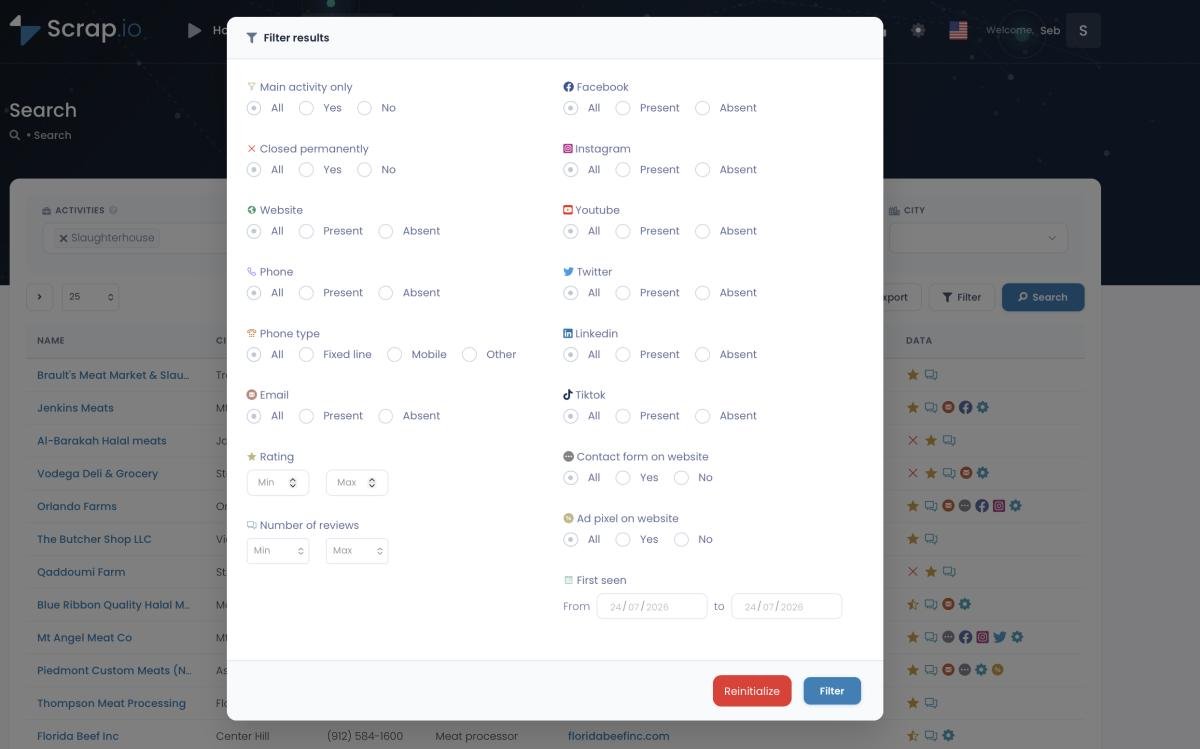
Here's the move that quietly changes the economics. Most tools make you extract everything first, then delete the junk afterward — after you've paid for it. Scrap.io flips it: you filter before a single credit is spent. Only want businesses with an email listed? Toggle it. Mobile numbers only, for an SMS campaign? Done. Rating above 4.0, has a website but no ad pixel (translation: they need marketing and aren't buying it yet)? Ten-second query, and you only pay for the rows that match. Zero waste.
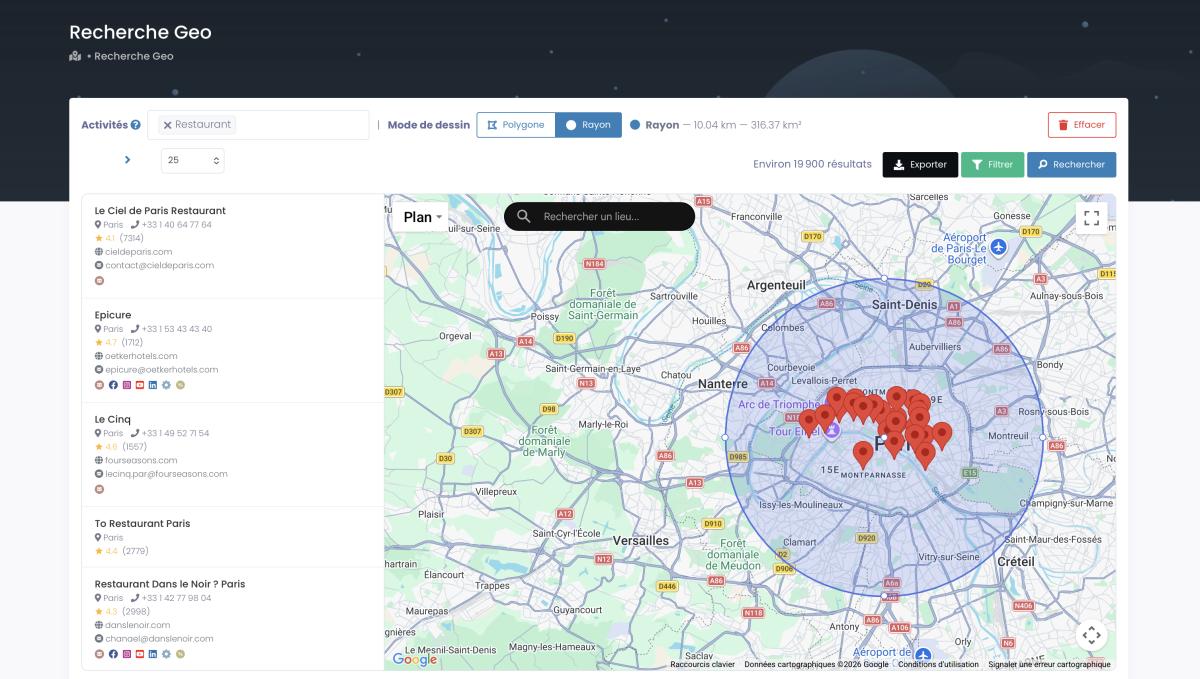
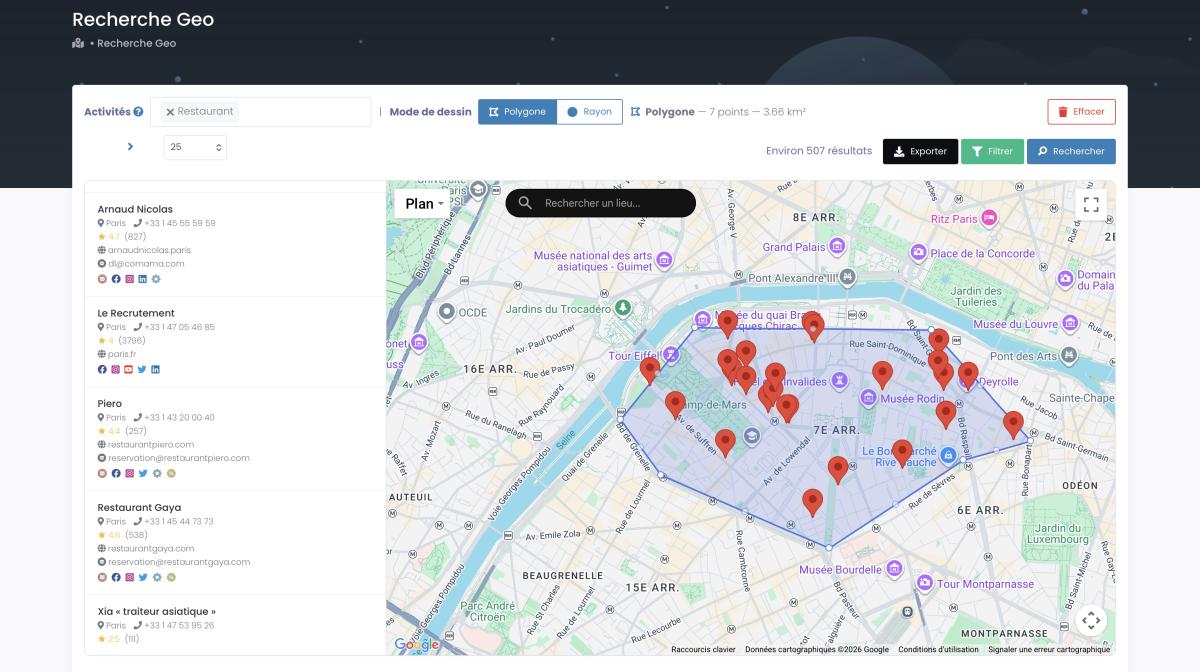
And it scales absurdly. One real agency pulled 11,734 businesses in 45 minutes. Try doing that by hand — I'll wait. You can go from a single city to an entire state or country in two clicks, or draw a custom catchment area on the map with GeoSearch. Want the full walkthrough? Here's how to generate Google Maps leads at scale, and how to track your prospecting KPIs once the leads start flowing.
Video: Scrap.io - How to Start?
Stop paying to prospect dead contacts. Scrap.io re-extracts in real time at every export, so the list you download today is fresh today — not scraped last spring. Filter before you pay, only spend credits on usable leads. Grab your free 7-day trial — 100 export credits included.
Video: How to Scrape Local Leads at the Country Level?
Staying Compliant: GDPR, CCPA & Cold Outreach
The question everyone whispers: is any of this legal? Short answer — yes, for publicly available business data, done right.
Under GDPR (EU), a company's business address or a generic info@ email generally isn't "personal data," and B2B outreach typically leans on the "legitimate interest" basis. A named individual's personal email is a different story — handle with care. Under CCPA (California), publicly available business information sits largely outside its scope. And CAN-SPAM (US) governs what you do after you extract: accurate headers, a real physical address, an honest subject line, and a working opt-out you actually honor. There's no B2B exemption, and penalties run into tens of thousands of dollars per email. So don't cut corners.
The floor is legal compliance. The ceiling is not being annoying. Scrap.io only extracts publicly available business data, is GDPR and CCPA compliant, and keeps every data point traceable to its source. Clear both bars and you're fine.
Common Prospecting Mistakes
After watching enough teams do this, the same failures show up over and over. Here are the ones that hurt most.
Buying stale lists. We covered it, but it bears repeating because people keep doing it. A shared, decayed list is money set on fire. Generate fresh, don't rent stale.
Chasing volume over fit. A thousand bad-fit prospects will always lose to fifty great ones. Volume feels productive. It isn't.
Quitting after one follow-up. Eighty percent of sales need five-plus touches. Most reps stop at one. That's not a data problem — that's a discipline problem, and it's leaving the easiest deals on the table.
Generic messaging. "We help businesses like yours grow" means nothing. "Saw your Nashville BBQ spot has 62 five-star reviews but no booking link" gets a reply. Every time. The specificity comes straight from good data.
Treating every prospect the same. A dentist in Manhattan and a plumber in suburban Dallas have nothing in common except that you found them both. Segment, or watch your reply rates crater. And if you want the objection side of the game, here's how to handle sales objections when the pushback inevitably comes.
One honest note, since we're writing this from the Scrap.io side: we've watched clients spend three weeks copy-pasting business names off Google Maps into a spreadsheet by hand, only to find half the data was outdated before they finished. That's the masochism we're trying to save you from. The manual grind isn't dedication. It's just wasted weeks.
FAQ
What does sales prospecting mean?
Sales prospecting means identifying and contacting potential customers to start conversations that can become revenue. It's the outbound, one-to-one part of selling — cold calls, cold emails, LinkedIn outreach — aimed at qualified leads who fit your ideal customer profile. Short-term, targeted, and focused on turning strangers into opportunities.
How do you do sales prospecting?
Follow five steps:
- Define your ideal customer profile (ICP).
- Build a targeted list of businesses that match it.
- Qualify each prospect for budget, authority, need, and timeline.
- Reach out across channels — phone, email, LinkedIn — with a specific, relevant message.
- Follow up consistently (five-plus touches, because that's where most sales actually close).
What are the 4 pillars of prospecting?
Targeting (a sharp ICP so you chase the right companies), Data (fresh, accurate contact details, not a rotting list), Channel (the right mix of phone, email, and social), and Consistency (a follow-up cadence you actually stick to). Get all four right and prospecting stops feeling like guesswork.
What is the 3-3-3 rule in sales?
A quick framework for outbound: 3 minutes of research on the prospect, 3 minutes to write a personalized message, and 3 minutes on follow-up. It keeps you personal without burning your whole day per lead — a practical way to balance quality and volume when you're prospecting at scale.
What's the difference between sales prospecting and lead generation?
| Sales Prospecting | Lead Generation |
|---|---|
| Sales-owned, outbound | Marketing-owned, inbound |
| One-to-one, you choose the target | One-to-many, the prospect finds you |
| Cold calls, cold email, social | Content, ads, SEO, events |
Conclusion: Fix the Front of the Funnel
Strip away the frameworks and the stats, and sales prospecting comes down to one honest truth: you can't out-hustle a bad list. Every technique in this guide — the cold calls, the multichannel cadences, the signal-based plays — compounds when your data is fresh and collapses when it isn't.
So start there. Nail your ICP, build a clean and current list, qualify hard, reach out with something specific, and follow up past the point where everyone else quits. That's the whole game. Not glamorous. Extremely effective.
Your competitors are still dialing from lists that are 30% dead.
You don't have to.
Build your first fresh prospecting list before lunch. Scrap.io gives you 225M+ businesses across 195 countries, filtered to your exact criteria before you spend a credit — trusted by 50,000+ professionals. Start your free 7-day trial — 100 leads included.
Generate a list of restaurant with Scrap.io