

Here's a number that should stop you before you paste your credit card into either dashboard: at scale, SerpAPI can cost roughly 15× more per query than Serper for the exact same Google result. Same ten blue links. Same JSON. Fifteen times the bill.
That gap is the whole reason this comparison exists.
Most "Serper vs SerpAPI" articles are written by companies selling a third SERP API, which is a bit like asking a barber whether you need a haircut. This one isn't. We sell business leads, not SERP data (different planet), so we have zero reason to crown either tool. What follows is the honest 2026 breakdown: real speed, true per-query cost, engine coverage, developer experience, and the legal stuff nobody wants to read until it bites them. And yes, there are hidden traps in both pricing pages. We'll get to those.
- The 30-second answer
- What Serper and SerpAPI actually are
- Speed: how fast is each API, really?
- Pricing: the real cost per query (and the hidden traps)
- Data depth & engine coverage
- Developer experience: docs, SDKs & AI-agent integrations
- Is scraping Google SERPs legal?
- When neither is enough: SERP data vs business leads
- The verdict: which should you choose in 2026?
- FAQ
Serper vs SerpAPI: the 30-second answer
You're a developer, you have a sprint to close, you don't want to read 2,400 words. Fair. Here's the whole thing in one table.
| Criterion | Serper | SerpAPI |
|---|---|---|
| Best for | Speed, price, AI agents | Coverage, depth, enterprise |
| Search engines | Google-focused 🟡 | 80+ engines 🟢 |
| Entry price | ~$0.30–$1 / 1,000 🟢 | $25 / 1,000 ($0.025) 🔴 |
| Free tier | 2,500 queries 🟢 | 250 searches/mo 🟡 |
| Speed (3rd-party test) | ~1.8–2.9s 🟢 | ~5.5s 🟡 |
| Legal shield | None 🟡 | U.S. Legal Shield (now in court) 🟡 |
Short version: pick Serper if you want fast, dirt-cheap Google results feeding an AI agent. Pick SerpAPI if you need multiple search engines, richer parsing, or a compliance story for your legal team. Both are legit. The "best serp api" for you depends entirely on which of those two sentences describes your project, and the rest of this page is the receipts.
What Serper and SerpAPI actually are
Quick reset, because people mix these two up constantly. A SERP API (Search Engine Results Page API) is a service that runs a search query for you, scrapes the results page, and hands back clean, structured JSON instead of raw HTML. No proxies to rotate. No CAPTCHAs to solve. No parser to babysit every time Google reshuffles its layout. That's the pitch. And it's a good one: the keyword "serp api" pulls around 12,100 US searches a month (DataForSEO, 2026), largely because AI teams now treat structured SERP data as a live knowledge source for RAG.
What is Serper?
Serper (serper.dev) is the lean one. It does Google (Search, Images, News, Maps, Places, Scholar), and it does it fast, returning JSON in a second or two. Its homepage headline is basically its whole personality: lightning speed, unbeatable price, 2,500 free queries with no credit card. It's become the default Google tool inside a lot of AI agent stacks, and we'll see exactly why in the developer-experience section.
What is SerpAPI?
SerpAPI (serpapi.com) is the Swiss Army knife. It scrapes Google, sure, but also Bing, Baidu, DuckDuckGo, Yahoo, Yandex, Amazon, eBay, Walmart, Home Depot, Apple, Yelp, YouTube, Naver, Tripadvisor: 80+ engines and endpoints in total. It parses deeper (AI Overviews, Ads Transparency, Local Services, Shopping) and wraps the whole thing in enterprise trimmings: SOC 2 Type II, ISO 27001, a "U.S. Legal Shield," and a ZeroTrace privacy mode. It's the mature, corporate option. It's also, as you're about to see, the expensive one.
Speed: how fast is each API, really?
Speed is where the marketing gets loud and the truth gets fuzzy. Serper says 1–2 seconds. SerpAPI doesn't headline a number. So who do you believe?
The most-cited third-party benchmark comes from Scrapingdog, and here's the awkward part: Scrapingdog sells a competing SERP API. Judge and jury. So read this table as "a rival's stopwatch," not gospel. And honestly, the only benchmark that matters is the one you run on your own workload.
| API | Avg response (Google Search) | Source |
|---|---|---|
| Serper | ~1.83–2.87s | Scrapingdog, 2025–26 🟡 |
| SerpAPI | ~5.49s | Scrapingdog, 2025–26 🟡 |
One caveat worth flagging, because it's a little funny. SerpApi publishes numbers that flip this result, clocking itself around 0.73s against Serper's 0.83s in its own tests. So every vendor somehow wins its own benchmark. Shocking, I know. Which is exactly why you shouldn't trust any of us, us included. Time it on your own queries.
So Serper looks roughly two to three times faster on plain Google Search, at least on a rival's stopwatch. Does that matter? Depends. If you're firing one query behind a user action, nobody notices two seconds versus five. But chain 50 SERP calls inside an agent loop and that difference compounds into real latency, the kind users do notice.
Try feeling the gap manually. Run five searches, one every five seconds, and time yourself getting bored. Now imagine your agent doing that. Yeah.
[Custom infographic, speed comparison, to be inserted here: horizontal bars, SerpAPI ~5.5s vs Serper ~1.8–2.9s, labeled "third-party benchmark, 2026."]
Pricing: the real cost per query (and the hidden traps)
This is the section people actually came for. It's also where both companies bury landmines in the fine print, so slow down here.
SerpAPI's pricing is clean and public. You pay per successful search, monthly, no long contract:
| SerpAPI plan | Price / month | Searches | Cost / search |
|---|---|---|---|
| Free | $0 | 250 | N/A |
| Starter | $25 | 1,000 | $0.025 |
| Developer | $75 | 5,000 | $0.015 |
| Production | $150 | 15,000 | $0.010 |
| Big Data | $275 | 30,000 | $0.009 |
Serper runs a credit model instead of monthly seats. Roughly $50 buys 50,000 credits (about $1 per 1,000 queries at entry) and the effective rate drops toward $0.30 per 1,000 at scale (serper.dev, June 2026). Put those next to each other and SerpAPI's entry tier is around 15× more expensive per query than Serper's, a gap Scrapingdog pegs in the same ballpark. Pricing pages change, though. Verify both on the official serper.dev and serpapi.com/pricing pages before you commit. This is the one place I won't ask you to trust a blog.
Now the traps. Because sticker price isn't total cost.
Serper's trap: ask for more than 10 results in a single query and it bills you 2 credits, not 1. Great if you only ever want the top 10. A nasty surprise if your agent quietly requests the top 100 on every call. Your credit burn just doubled. On top of that, Serper credits expire after about 6 months, so stockpiling a giant balance to "save money" can backfire.
SerpAPI's trap: unused searches don't roll over the way you'd hope. Cancel and you keep the remainder only until your renewal date, then it's gone. No permanent bank. To SerpAPI's credit, a 100-result response counts as a single search (per their own FAQ), so at least it doesn't double-charge for depth the way Serper does. Swings and roundabouts.
Is Serper cheaper than SerpAPI? Yes, clearly, and it's not close. But "cheapest google search api" and "right tool" aren't synonyms. A doubled credit charge on 100-result calls can quietly erase a chunk of that advantage if you're not watching. Read your own logs.
[Custom infographic, cost per 1,000 queries, to be inserted here: Serper ~$0.30–$1 vs SerpAPI ~$15–25, ~15× gap, red "hidden trap" tag on Serper's 2-credit rule.]
Data depth & engine coverage
Price and speed favor Serper.
Here the pendulum swings hard the other way.
Serper is Google, full stop. Lean, focused, JSON trimmed down to what an AI agent actually needs to reason over, which is exactly why the "structured SERP data as a RAG source" crowd loves it. Less noise, faster parsing, cheaper tokens downstream. If your entire use case is "give me Google results, cleanly, at volume," Serper's narrowness is a feature, not a bug.
SerpAPI plays a completely different game. Beyond its 80+ engines, it exposes specialized endpoints Serper simply doesn't have: Google AI Overview, AI Mode, Ads Transparency Center, Local Services, Shopping, Scholar, Patents, Trends, Lens. Need Amazon product data and Bing news and Yelp reviews from one vendor with one billing relationship? That's SerpAPI's whole reason to exist. The parsing is deeper too. It decodes rich SERP elements Serper flattens or skips.
So the honest framing isn't "which has better data." It's "how many engines does your project touch?" One (Google)? Serper. Several? SerpAPI. That question answers itself faster than any benchmark.
Developer experience: docs, SDKs & AI-agent integrations
In 2026, "developer experience" mostly means one thing: how little glue code do I write before this thing works inside my agent? On that axis, both tools show up prepared, but they've optimized for slightly different worlds.
Serper won the AI-agent popularity contest early. It's the default Google search tool in CrewAI's SerperDevTool, and it ships as the official GoogleSerperAPIWrapper in LangChain. There's even a community Serper MCP server floating around for agents that speak the Model Context Protocol. Wiring it up looks like this:
from langchain_community.utilities import GoogleSerperAPIWrappersearch = GoogleSerperAPIWrapper()search.run("best coffee roasters in Portland")
SerpAPI is right there too. It has an official Python library, first-class LangChain support via SerpAPIWrapper, and integrations across the usual orchestration suspects:
from langchain_community.utilities import SerpAPIWrappersearch = SerpAPIWrapper()search.run("best coffee roasters in Portland")
Two lines each. Genuinely a wash on setup. The tiebreaker is texture, not effort: Serper's docs are minimal and get you to a 200 response fast, while SerpAPI's docs are sprawling because there's simply more surface to document. Minimalism versus completeness. Pick your temperament.
One footnote for the agent crowd, because it matters later. If your real endgame is contactable businesses rather than raw SERPs, there's a third kind of connector entirely: Scrap.io ships its own MCP server for Google Maps that any MCP-compatible client can drive in plain English. Different job, same plug. More on why that gap matters below.
Video: How to Scrape Local Leads with Claude & Vibe Prospecting
Is scraping Google SERPs legal? Compliance for developers
Nobody reads this section until legal forwards them an angry email. Read it now instead.
Both APIs scrape publicly available search results: no login, no paywall, no private data. In the U.S., the landmark case here is hiQ Labs v. LinkedIn, where courts generally sided with the position that scraping public data doesn't violate the Computer Fraud and Abuse Act (CFAA). That's the shield most SERP-API vendors quietly stand behind.
But "generally legal to scrape public data" is not the same as "no rules apply." Google's Terms of Service prohibit automated access, which is a contractual matter separate from criminal law. And the moment your results contain anything resembling personal data, GDPR (EU) and CCPA (California) enter the room with opinions. This is precisely why SerpAPI markets its U.S. Legal Shield as a paid-tier feature. It's selling peace of mind to enterprise legal teams, and for some buyers that alone justifies the price gap.
Wait, isn't Google suing SerpApi right now?
Here's the plot twist that "U.S. Legal Shield" bullet point conveniently skips. Since December 2025, the company doing the suing is Google itself. Awkward.
On December 19, 2025, Google filed suit against SerpApi, accusing it of circumventing security measures to scrape and resell copyrighted content from Search, using cloaking, rotating bot identities and large bot networks (Search Engine Land). SerpApi didn't blink. Its position, on the record: "The crawling and parsing of public data is protected by the First Amendment," and the suit is an attempt to "stifle competition."
Then it got more interesting. On July 20, 2026, a federal judge dismissed the core of Google's DMCA claim, reasoning that the anti-bot system at the center of the case doesn't protect copyrighted work the way the DMCA requires. Google refiled on narrower grounds (small snippets from Knowledge Panels) on August 10, and SerpApi moved to dismiss again on August 25. As of writing, it's unresolved.
So does that "Legal Shield" still mean something? Sort of. It's designed to cover you, the customer, not SerpApi's own courtroom drama. But if you're buying SerpAPI partly for the compliance halo, know that the halo is currently in active litigation with the world's largest search engine. Weigh that how you like. If you want the fuller picture on where public-data scraping actually stands, we broke it down here: is scraping Google Maps legal.
The practical developer takeaway: public SERP data, sensible volumes, no personal data warehousing, and you're on defensible ground in most jurisdictions. Doing something spicier? Talk to a lawyer, not a blog. (Yes, including this one.)
When neither is enough: SERP data vs business leads
Here's a scenario a SERP API can't finish for you. You need to email 5,000 plumbers in Texas. So you scrape Google. You get titles, URLs, positions, snippets: a beautiful structured list of web pages. Now go find the email address, the mobile number, the LinkedIn, the star rating. The API just shrugs.
That's the gap. A SERP API returns search results. It does not return a lead. Somebody on your team gets to visit every one of those websites and copy-paste contact details by hand, which is exactly the kind of soul-crushing task one of our own users described before they switched. There's a bridge across that gap, and it's a different category of tool entirely.
[Custom schema, "SERP data vs business leads", to be inserted here: left column raw search results, right column enriched Scrap.io business record (email, phone, socials, rating, address), arrow marking the gap.]
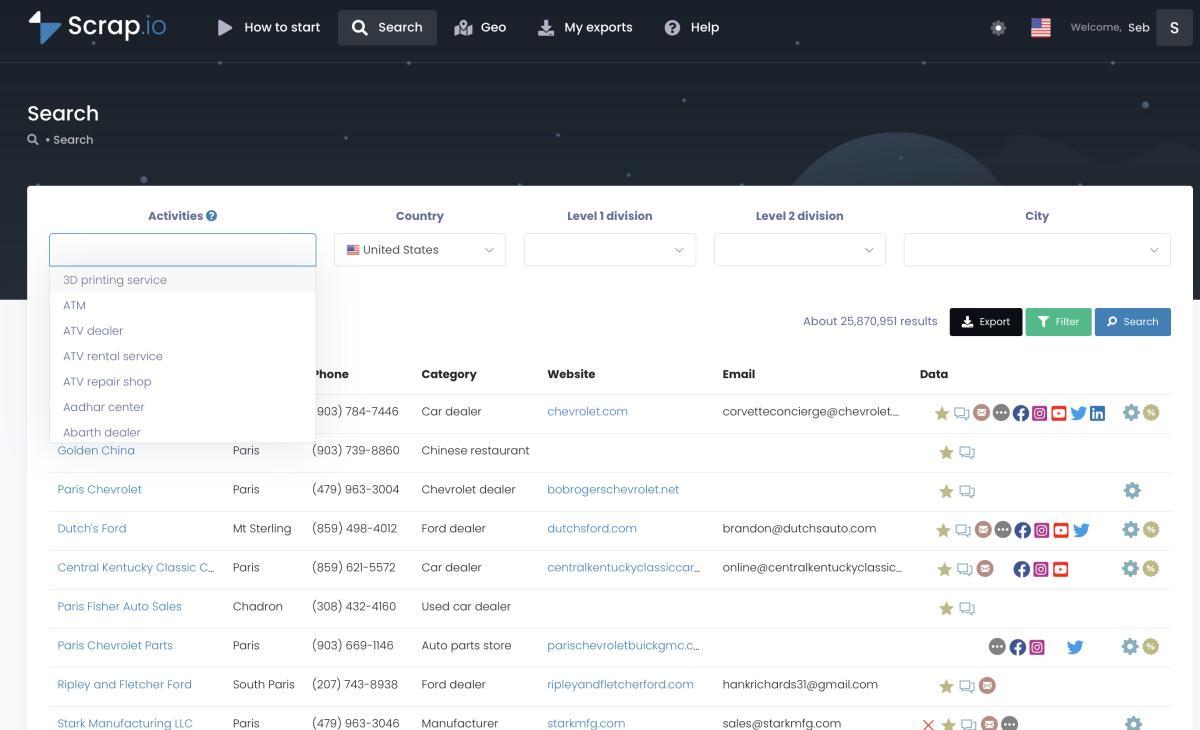
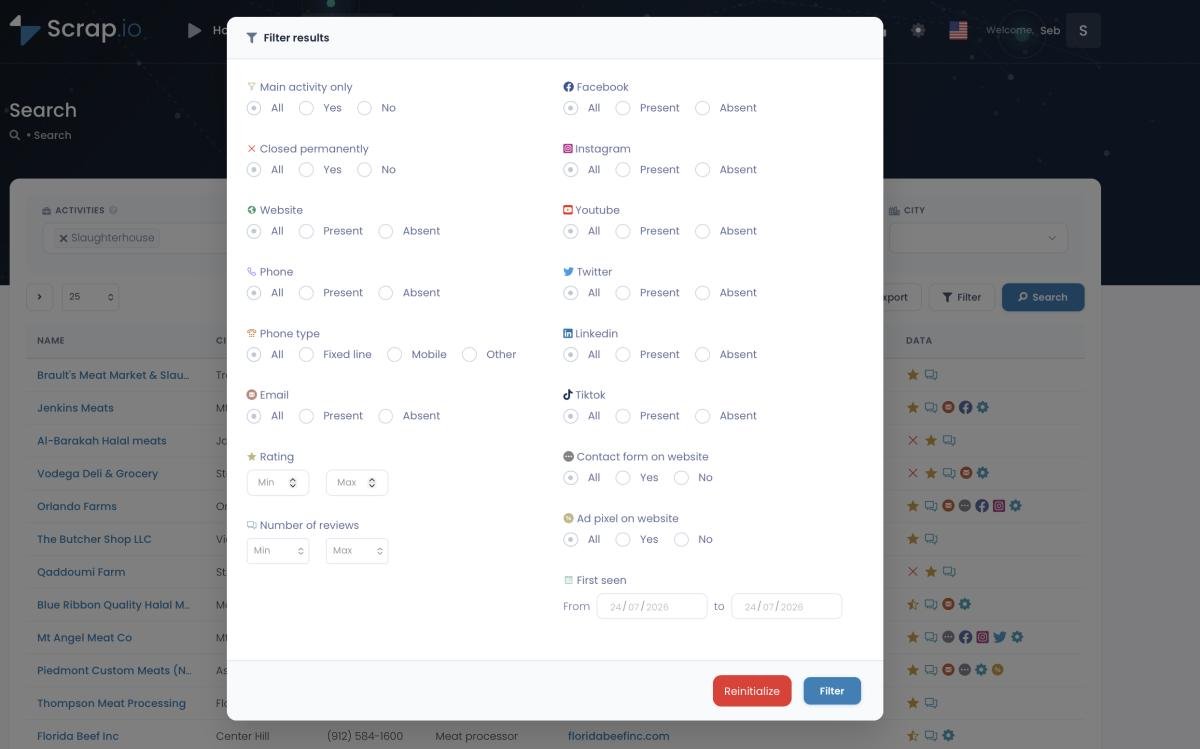
That's the lane Scrap.io lives in. Instead of scraping the results page, it extracts the business data behind each map listing in real time: emails (classified into contact, sales, marketing, finance), landline and mobile numbers, social profiles, ratings, review counts, even the tech stack on their site. It's a local lead engine, not a SERP endpoint. And because it filters before extraction, you spend credits only on records that actually match (say, only listings that already have an email), so nothing gets wasted on dead ends.
Video: Serper.dev vs Scrap.io (Tutorial & Comparison)
The scale is the part that surprises SERP-API people. Scrap.io can extract an entire territory (city, county, region, or a whole country out of 195) in a couple of clicks, no code. One real export: 11,734 businesses pulled in 45 minutes. Try assembling that from SERP JSON by hand. I'll wait.
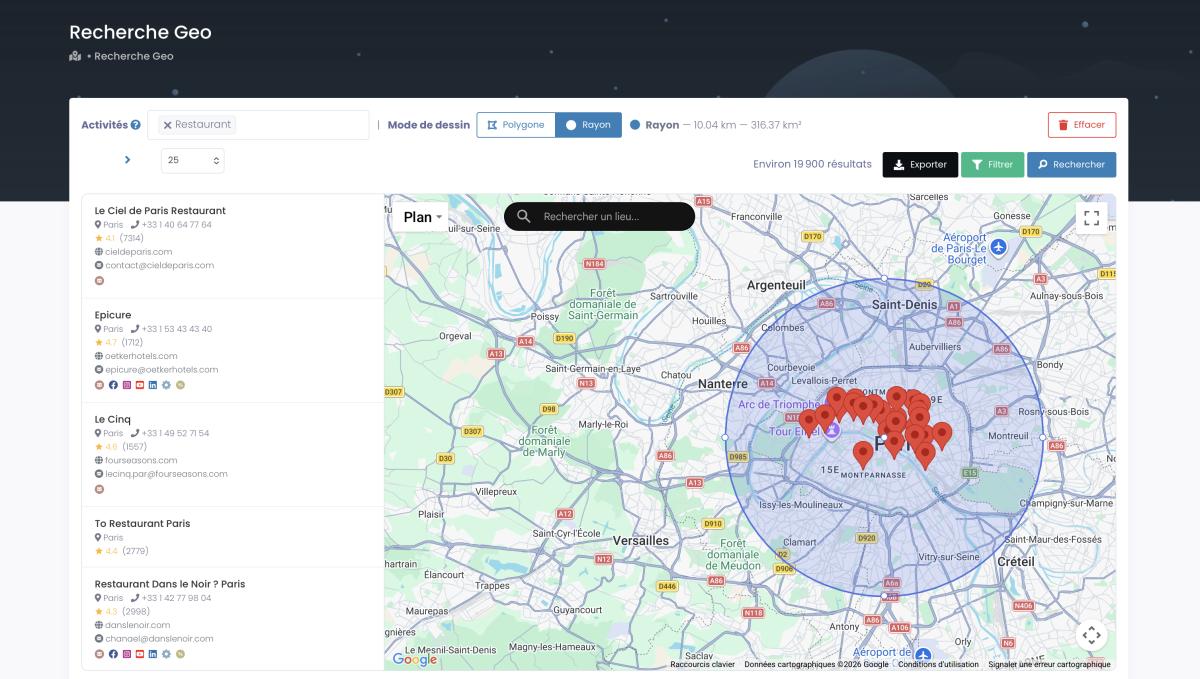
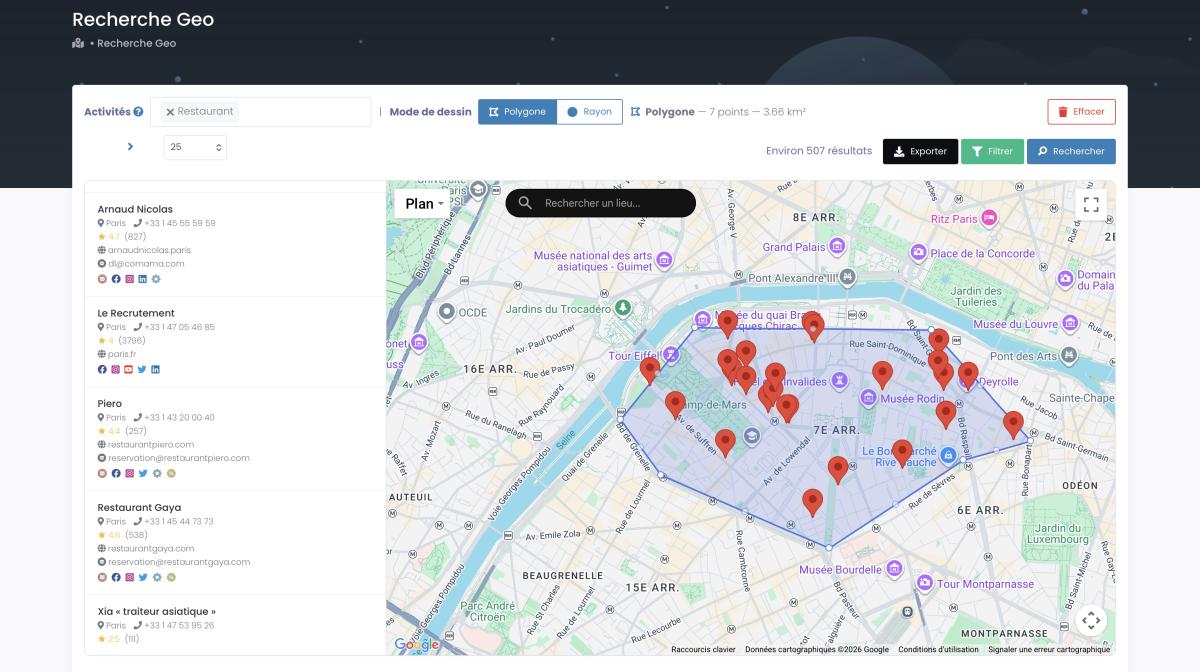
"But I'm a developer, not a no-code person." Cool. Scrap.io ships a REST API (300 requests/minute) and its own MCP server at scrap.io/mcp, so your agent can pull leads the same way it pulls SERPs. And to be crystal clear, so nobody accuses us of moving goalposts: if you genuinely want raw SERP data, a SERP API is the correct choice and Scrap.io isn't competing for that job. Different need, different tool. We're just naming the gap most comparisons pretend doesn't exist.
If you want to go deeper on that boundary, we've written it up here: SerpApi vs Scrap.io, Serper.dev vs Scrap.io, the Google Maps Scraper API, the complete Google Maps scraping guide, a piece on how AI is reshaping web scraping, and a breakdown of when scraping beats the official API on cost.
The verdict: which should you choose in 2026?
No trophy handed out here, because the "winner" changes with your use case. So, by scenario:
Choose Serper if you're building AI agents, you live inside LangChain or CrewAI, you only need Google, and you want the lowest possible cost per query. For RAG pipelines and high-volume agent loops, it's the pragmatic default. Just watch that 2-credit rule on 100-result calls.
Choose SerpAPI if you need multiple search engines, rich SERP elements, deeper parsing, or a compliance and security story your enterprise legal team will actually sign off on. You'll pay more. For a lot of teams, the coverage is worth it, though the "U.S. Legal Shield" line lands a little differently now that Google is the one suing them.
Quick aside for the people already typing it into the search bar: yes, "serper vs tavily" is a real question too. Tavily leans harder into LLM-ready answers while Serper stays a raw Google pipe. Different flavor, different article.
And if you got this far realizing that what you actually wanted was never SERP data but contactable businesses (emails, phones, the works) then neither of these is your tool, and that's fine. You were shopping in the wrong aisle. Here's the right one. If you're weighing options broadly, our roundups of the best Google Maps scrapers and the best lead generation software for 2026 are both good next stops.
Video: Scrap.io - How to Start?
FAQ
Are SerpApi and Serper the same?
No. Both return Google results as JSON, but Serper is Google-focused and built around speed and price for AI agents, while SerpAPI is multi-engine (80+ engines and endpoints) with deeper parsing and enterprise features like a U.S. Legal Shield. Same neighborhood, very different houses.
Is Serper cheaper than SerpAPI?
Yes, significantly. Serper runs around $0.30–$1 per 1,000 queries with 2,500 free queries to start, while SerpAPI begins at $25 for 1,000 searches ($0.025 each) with 250 free searches a month, roughly a 15× per-query gap at entry level. Always confirm current pricing on both official sites first.
Why is SerpApi so expensive?
SerpAPI charges per successful search (from $25/1,000) and positions itself on breadth and assurance rather than raw price: 80+ engines, deep parsing, SOC 2 and ISO 27001 certification, enterprise support with uptime SLAs, and a marketed U.S. Legal Shield. You're paying for coverage and compliance, not just the query.
Why is Google suing SerpApi?
On December 19, 2025, Google sued SerpApi for allegedly circumventing security measures, using cloaking and large bot networks, to scrape and resell copyrighted Search content. A federal judge dismissed the core DMCA claim on July 20, 2026; Google refiled on narrower grounds in August, and SerpApi moved to dismiss again. The case is still unresolved.
What does SERP API stand for?
SERP API stands for Search Engine Results Page API: a service that runs a search query, scrapes the results page, and returns clean, structured JSON instead of raw HTML, so you skip proxies, CAPTCHAs, and constant parser maintenance.
Which is better for AI agents (LangChain, CrewAI, RAG)?
Usually Serper. It's fast, cheap, natively integrated as CrewAI's SerperDevTool and LangChain's GoogleSerperAPIWrapper, and has an MCP server for agent stacks. Reach for SerpAPI instead when your agent needs multiple search engines or rich SERP elements Serper doesn't expose.
Is scraping Google SERPs legal?
Both tools access publicly available data, and hiQ v. LinkedIn generally supports public-data scraping in the U.S. under the CFAA. That said, Google's Terms of Service and privacy laws like GDPR and CCPA still apply, especially if results include personal data. SerpAPI markets a U.S. Legal Shield for teams that want extra cover, though Google is currently suing SerpApi, so watch that space. For anything unusual, get actual legal advice.
Community threads worth a read if you want unfiltered developer takes: n8n users debating SerpAPI's free-tier limits (r/n8n), the Google-API-vs-third-party debate (r/TechSEO), and the hunt for SERP alternatives (r/LocalLLaMA).
Market context: the web scraping market is projected to grow from roughly $1.03B in 2025 to around $2.23B by 2031 (CAGR ~13.78%, Mordor Intelligence), with other estimates putting it near $2.28B by 2030 at an 18.2% CAGR (The Business Research Company). The demand for structured search data isn't slowing down, which is exactly why picking the right tool now matters.
Generate a list of restaurant with Scrap.io